

What Real Vikings Drank When They Wanted Something Stronger Than Beer

We've been thinking about Vikings more than usual this summer. It would be rude not to after that pre-World Cup team Norway photo shoot. They went to a lot of trouble! There were boats and everything. Anyway, as it turns out the Vikings are kind of relatable, at least culinarily. They ate flatbread, pancakes, and sausages; and they liked a glass of beer or mead (an alcoholic drink made from honey). When they really wanted to tie one on, though, Vikings drank fruit wine.
The ancient people of Scandinavia turned to fruit wine when they wanted to party because they hadn't yet worked out the secrets of distilling spirits. Honestly, given all the pillaging they did, it's probably a good thing Sweden didn't become a world leader in vodka until much later. Back in the Viking age, the strongest drinks the Northerners could get their hands on were around the same alcohol percentage as the grape-based wines we know and love today.
This makes sense, as technically grapes are fruit too. The term fruit wine, however, usually refers to fermented drinks made of other ingredients. Many societies brewed fruit wine, and some still do. This kind of drink allows you to utilize whatever grows abundantly around you, meaning it's highly versatile. Roughly 1,000 years ago in Northern Europe, Viking booze makers would use apples, cherries, pears, and wild berries; including sloe, lingonberries, and cloud berries. Usually, fruit wine was enjoyed at feasts and was typically only affordable for wealthier Vikings and their guests.
Fruit wine is still popular today
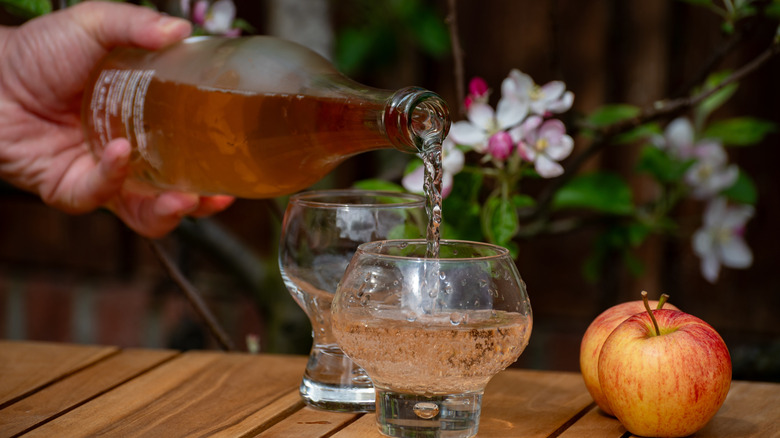
The Vikings were onto something with fruit wine, as in many places these regionally-specific beverages are still important today, particularly in colder climates where grapes don't grow abundantly. Both the popularity and production of these wines have been growing in recent years. Countries that export fruit wine include the Netherlands, Denmark, Poland, Bulgaria, Hungary, and Serbia, but you can also find berry and cherry wines being produced in the Eastern United States.
You may not think of hard cider and its pear-based cousin, perry, as fruit wine, but they do fall under the umbrella since they're fermented in the same way. Particularly beloved in England and Northern France, perry ranges from 5% to 9% alcohol by volume and cider is about the same. These drinks bear almost no resemblance to the fizzy, beer-like Busch Light Apple. Instead, they're often tannin-heavy in the mouth, lightly carbonated, and closer to a complex wine in their flavor profile.
Overall, most non-grape fruit wines retain the flavor of the ingredients they're made from, and the biggest challenge when making them is balancing the sweetness and acidity to create a pleasantly dry wine. Beyond this, they're pretty simple to make yourself, particularly if you have fermentation experience. If you want to drink like a Viking, why not put down the beer and try your hand at a DIY plum wine or cider? If that's not your bag, you can probably just wait. The increased interest in these alternative wines means you could see them on a shelf near you soon enough.