

10 Canned Olive Brands, Ranked From Worst To Best
We may receive a commission on purchases made from links.
Black olives are the ultimate finger-friendly food — who hasn't fitted the briny buds onto the ends of their fingers? We mostly encounter olives as crudité, an essential element of a relish plate, an accent on a Thanksgiving table. Black olives are a popular pizza topping and are known to add texture to pasta sauces. They are one of only a few black foods and so are a popular element of foodscapes and Pinterest snacks — have you seen these adorable cream cheese penguins?
Despite the name, black olives vary in hue. The traditional lye curing process to reduce the natural bitter compounds in olives also causes their texture to soften and their color to fade. So manufacturers add ferrous gluconate (iron), which oxidizes and turns olives an even, dark color. Consumers are used to black olives and so manufacturers make sure their olives are black. However, thanks to current moves to avoid and ban unnecessary food additives, several brands opt to skip the iron additive. Surely you've noticed olives aren't even as black as they used to be? Common colors range from brown or purple to mahogany, mossy, and dark green tinged with red.
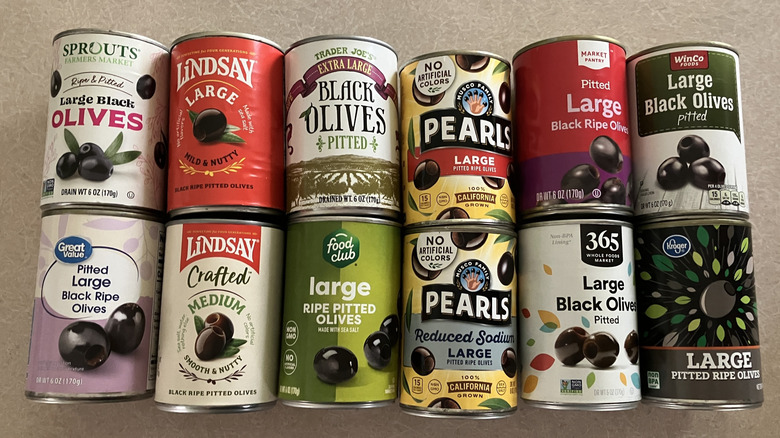
How much do differences in processing affect the taste of olives? I sampled 10 brands of canned black olives to find out. About half contain ferrous gluconate, but other than that, each brand has identical ingredients: olives, water, and salt. What differentiates the best brand from the worst is quality, taste, and texture.
10. Pearls
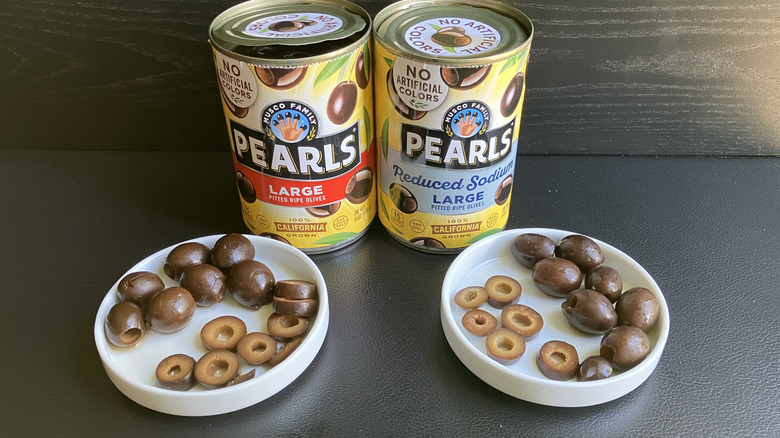
Pearls brand claims to be America's favorite olive and it is one of the most recognizable brands. So why is it ranked as the worst brand of olives on this list? The texture.
Snacking olives, sometimes called table olives, should be soft enough to yield easily to the chewing process but firm enough to give springy resistance. At a minimum, they should be firm enough to keep their shape when you pick them up, not squishy and limp, which is how these olives come out of the can. And when something isn't the texture you are expecting, primal instinctual alarms are triggered and you're compelled to "spit it out!" To the caveman brain mushy means rotten, which is why mushy, soggy, and slimy are among peoples' top most unpleasant food textures. It's most likely that overripe olives which structurally are no match for the canning process are the cause of the soggy and squishy olives. And it wasn't just a bad batch because the same sogginess is prevalent in the can of Pearls' low sodium olives I sampled. It comes down to a matter of quality.
As far as flavor, these are okay. There's no metallic aftertaste, common in other brands, because Pearls brand uses a fresh cure technique for processing olives. As such, the fruits have brown skin and muddy green flesh. The reduced sodium olives are underwhelming because they are so bland — my taste buds are primed to expect olives to be salty.
9. Great Value
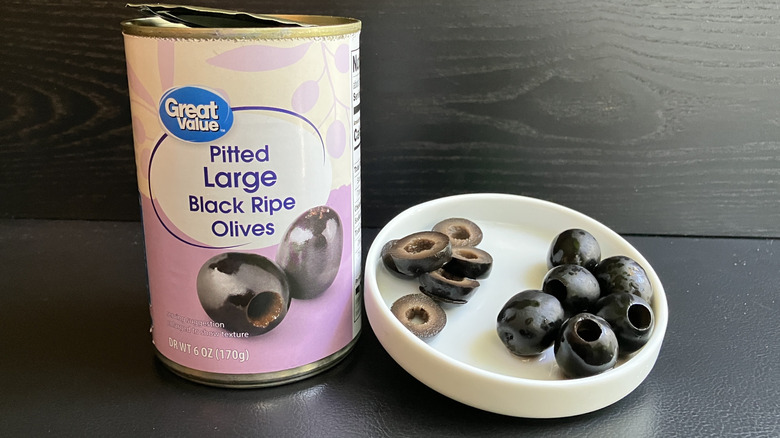
The soft texture of Great Value black olives is noticeably more consistent than the previous brand, and none of the fruits come out of the can inedible. However, this brand does rank at number nine, so obviously it has plenty of shortcomings. These olives are soft and chew like velvet, but there is a disconcerting squeakiness and an off-putting greasy finish.
Flavor is another is another disappointing element. There is potential because these olives begin with a good savory flavor and a hint of butteriness. Too bad all good flavors immediately get swamped by a salt solution laced with a sharp metallic tang. It's unsurprising the metallic undertones are present because Great Value brand uses the traditional iron-assisted processing technique, which is not only apparent in the taste but also in the classic black and gray coloring.
While most people just drain olives before using, it may be worth it to try some techniques to eliminate the metallic taste from canned goods. However, the strong salt flavor goes pretty deep. Salt is an essential part of the curing process olives undergo. It helps break down bitter compounds, enhances flavor, prevents spoiling, and preserves texture. Other brands are able to reach a saline level closer to savory than brackish, but Walmart's Great Value is not one of them.
8. Market Pantry
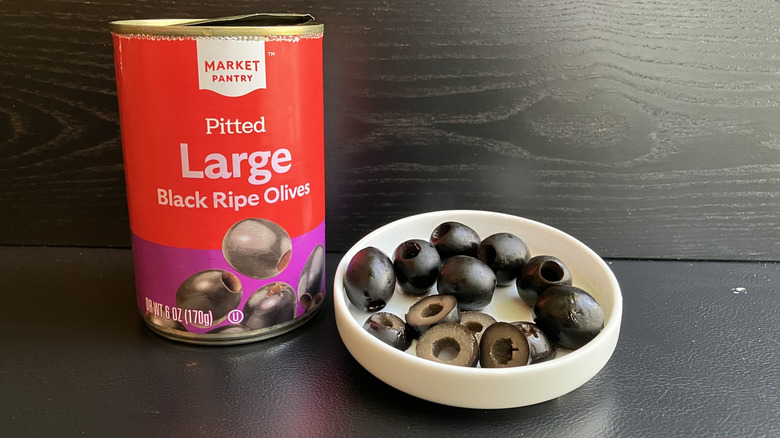
Table olives that are a dark purple or black are a common sign they have been treated with iron. These not only have the coloring but also the metallic tang which can be attributed to the processing. Another factor affecting the taste is the fact that olives are stored in metal cans and have a long shelf life. Canned foods sometimes take on the flavor of the can and while there's a fix for getting the metallic taste out of canned vegetables, most consumers aren't going to do a lot of extensive prep to snacking olives before eating them.
I just couldn't get past the metallic taste of Market Pantry brand olives. I ate as few as I could get away with, enough to notice they are just firm enough for a pleasing chew and had a hint of sweetness.
I'm not alone in disliking this Target brand. According to the ratings on the Target website there are some pretty unhappy customers, but their complaints are mostly about waxy debris or white substance sticking to the olives. There are several reasons why this happens and all are naturally-occurring and completely safe to eat, unless accompanied by a foul smell. The best advice is to just rinse the olives before eating them, which could be a good solution for overly salty olives, too. There are plenty of those on this list.
7. Trader Joe's
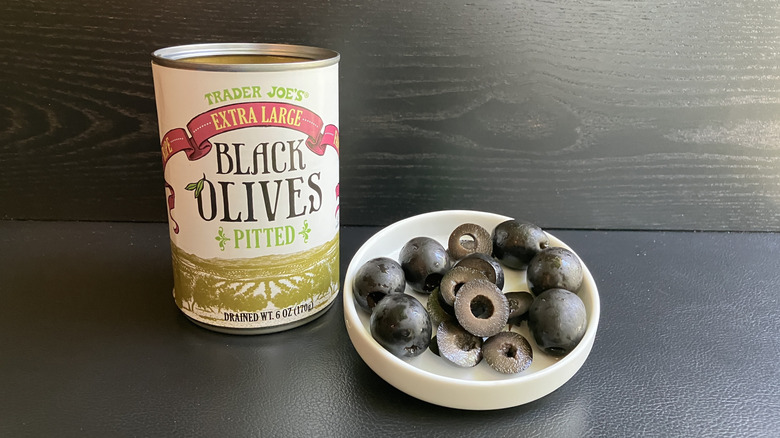
If you're shocked to discover olives are fruits, you're not alone. Instead of tasting sweet, olives are naturally bitter even when fully ripe. The curing process brings out the savory and briny notes. Often it's the one-note salty flavor olives are used for, but there are other flavors, too. For instance, under the strong salty presence of these Trader Joe's brand olives is a rich buttery taste and sharp umami flavors. I like the taste but there is a salty bitter aftertaste which caused this brand to rank lower. The olive juice is also cloudy with grease, which is a common and completely safe, but it's just off-putting.
The texture is also a problem for some of the tasters who shared their opinions with me. Of all the brands, these are the softest, which isn't bad in itself. Olives can be pleasantly plump, soft, and yielding. But many in this can are squishy and a few are downright waterlogged. Full disclosure: I bought the extra large size (that's all my location had in stock), which may have exaggerated the texture. A bigger mouthful of soggy food triggers a stronger reaction of disgust.
6. Kroger
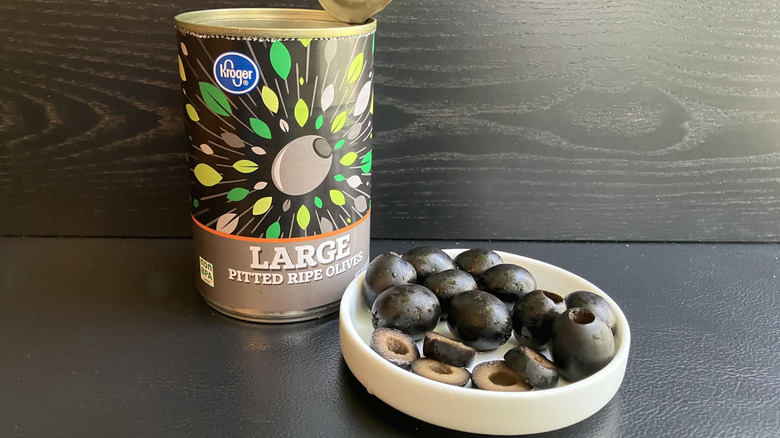
Olives are a fruit despite their popular role in vegetable salads, pizzas, and nachos. Unlike the rest of their fruit family (they are similar to plums and cherries), olives can't be eaten straight from the tree, even when they are fully ripened. They just contain too many bitter compounds, though they don't have the harmful bitter twist cacao beans do. Just like turning cacao beans into chocolate, it's a wonder anyone ever bothered to figure out how to make olives edible after that initial nasty bite. There is a slight sweetness in these Kroger black olives' mellow flavor profile. There's not enough sugars to show up on the nutrition label but olives do contain low levels of sugars — though they would rank at the absolute bottom of our list of fruits arranged by sugar content if anyone ever thought of including them.
The texture of Kroger's olives is average (which explains it's ranking here in the middle.) The flesh is firm and shreds into pieces instead of mashed into a mushy mouthful. It's good they aren't soggy, but these are also missing the creaminess some of the better brands have. Flavor-wise, this brand is not aggressively salty, and while they are processed with iron, any hint of metallic flavor is subtle.
5. Whole Foods 365
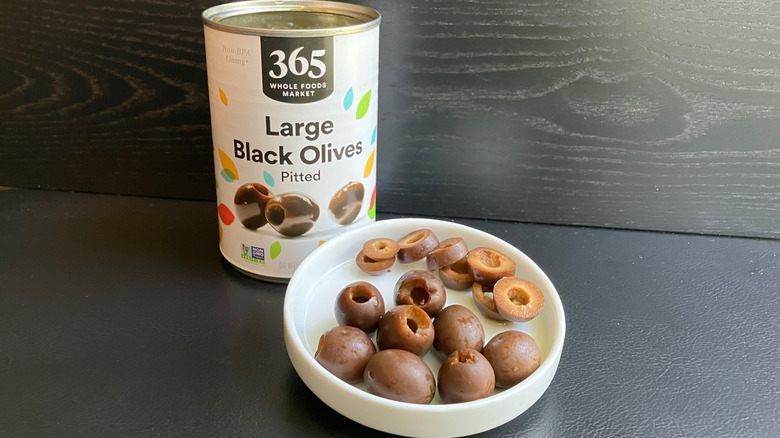
Coming in at the midpoint is Whole Foods Market 365 brand. What catches my attention about these olives is the sweet, rich, buttery flavor. Sure, they are salty, but it's more like the flavor of tears than ocean water. These are ideal for a charcuterie board. Some of the more mushy ones can be fished out, but overall the olives are as toothsome as a piece of boiled potato.
These are the most naturally color olives yet — reddish green brown exterior and tan-colored insides. Whole Foods bans over 300 ingredients from its products but iron is not one of them. The ferrous gluconate used in manufacturing canned olives is the same kind used in iron supplements. Even so, the 365 brand chooses the iron-free method which is the reason for the lighter hues.
I also really like the handy-dandy pull-top lid because it doesn't fall back into the can. Forgive the tangent but pull tops just seem much more practical, so you don't have to rummage around for a can opener or, worse, attempt to open a metal can without a can opener.
4. Lindsay
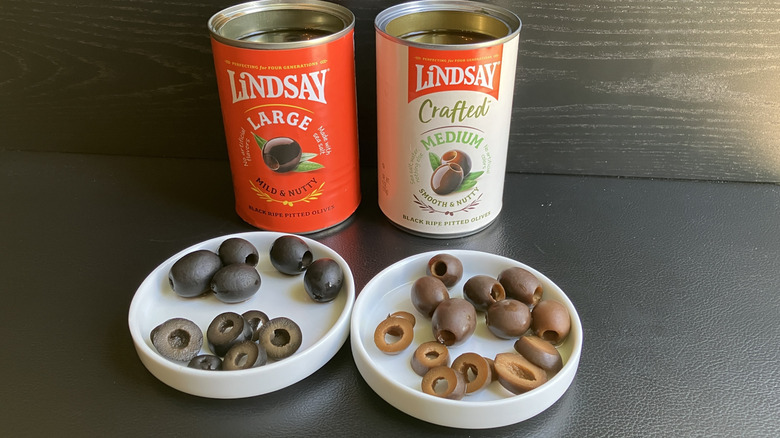
The Lindsay brand is named for the small California town that was "Olive Capital of the World" at one time. The World's Largest Olive sculpture is still there, as are the olive farmers who supply the parent company of the Lindsay brand with fruit harvested from some of the state's oldest olives groves which are over 125 years old. These are stand-out olives, not just because of the bright red label among the white and black colors the other brands use, and not because Lindsay is the only domestic brand of olives to have the prestigious international Superior Quality certification. These olives just have outstanding flavor and texture.
Never having had to describe the taste of olives before I took on this ranking assignment, I wasn't sure of anything other than "salty." The Lindsay labels offer some adjectives: smooth, mild, and nutty. Those are spot-on descriptors. The nuttiness is a rich, earthy flavor, with a mellow sweetness, and the smooth elements come from a buttery feel and flavor. The saltiness is not sharp and there's no hint of the iron that keeps the flesh nice and dark. The olives are soft enough to chew and firm enough to slice.
Lindsay has the traditionally cured olives as well as a Crafted line. The latter is processed without iron but seemingly more salt, which was a little too strong and muted some of the nuttiness.
3. Sprouts
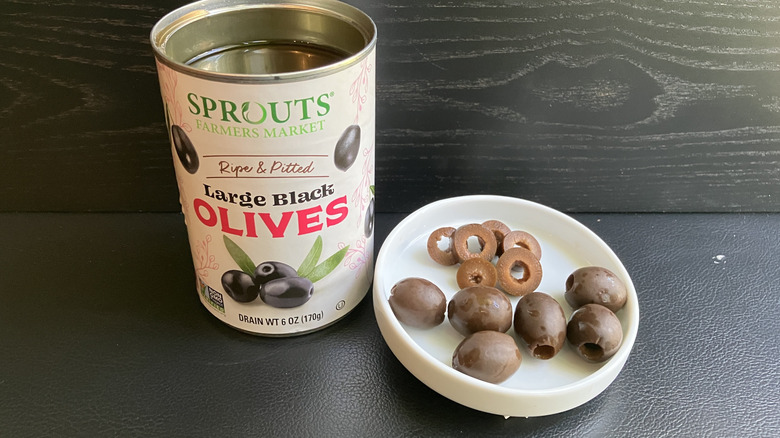
Sprouts brand olives are not as dark, salty, or soggy as other brands. Like other droop fruits, its flesh is firm but juicy. While these aren't sweet, they have an appealing mellow, rounded flavor absent of briny punches or nasty aftertastes (they're not processed with iron.) The juice reminds me of the mild brine of other canned vegetables, like corn.
Their mildness makes them a good fit for any recipe that calls for canned olives. The can actually lists suggestions including salad, pasta, cottage cheese, dressings, and scrambled eggs. I have experimented with adding extra ingredients to scrambled eggs, but I've never heard of including these little black fruits in a breakfast scramble.
The packaging also gained this brand some points. I really like the convenience and safety of the pull-tab lid and the peace of mind of the non-BPA lined can. Metal cans are the ideal storage for black olives to block them from light. While an olive tree needs a daily dose of six to eight hours of direct sunlight for its fruit to ripen, once they achieve maturity additional exposure to light causes the fruit to break down. Another thing to note: Sprouts is the most expensive brand, but that's not really significant. They cost $3 while all of the others were either $2.50 or $2.
2. Food Club
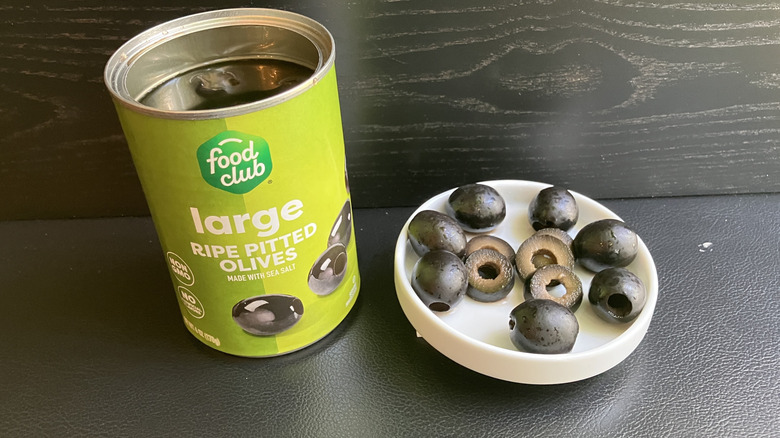
Temperature, rainfall, and even soil composition can all affect the taste of olives. So can the curing process or how ripe the fruit was harvest time. Subtle differences are probably only detected by the growers, but I must have some supertasters among my family members and friends because there were some inconsistencies in the ratings. However, I think of all the brands included in this sample, Food Club tastes most like black olives should. They are sweet and buttery and the sodium level is mild enough to allow the nuttiness to come through. They are also the ideal firm texture — I didn't encounter any soggy ones in the can.
The only reason these aren't the top winner is the fact that there is a metallic undertone that I don't detect while eating the olives but that lingers on the back of my tongue. This is not a deal-breaker for me because olives are rarely just eaten plain. They are key players in Mediterranean and Tex-Mex dishes and pair well with cheese and cured meats.
Food Club states its olives contain no artificial color, which is true because iron added during processing is natural and not a dye, just a catalyst for a chemical color change. The label also reminds consumers that olives are a cholesterol-free food. Olives do, in fact, have nutritional benefits. The buttery, black beads contain fatty acids, micronutrients, and antioxidants.
1. Winco
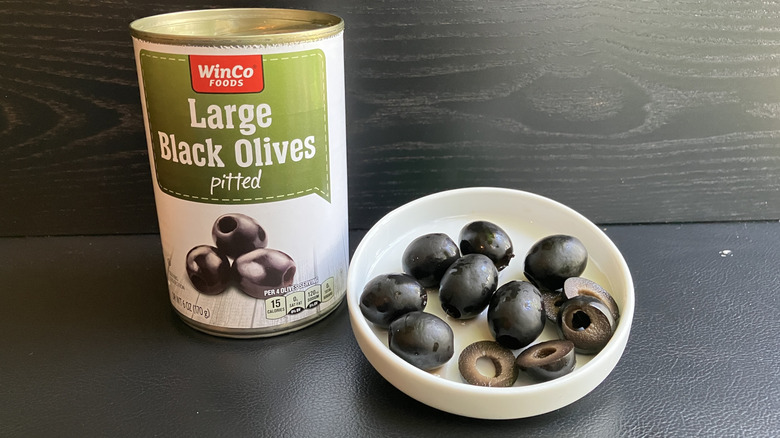
A taste of WinCo brand black olives might just be the reminder everyone needs that olives are fruits, because these taste pretty sweet, and could even be described as "fruity." Of course, these are far less sweet than even the most tart cranberry, but maybe closer to an avocado (remember they are a fruit, too.) The flavor profile is earthy and rich, but what helped this brand edge out Food Club brand for the number one spot is the milder salt flavor. WinCo uses sea salt in place of regular salt which gives these a milder, less pungent salinity.
WinCo isn't the only manufacturer that opts for sea salt — this is just the brand that put all the pieces together to make the best black olive. WinCo is even able to include iron in the processing without negatively affected the flavor of the olives or brine. These are midnight black from traditional processing, but there's no metallic tang or unpleasant aftertaste.
This is the brand I'll be stocking up on — black olives are one of the foods that should always be in your pantry, after all. The al dente texture is ideal for keeping its shape when sliced and diced so it could be used in almost any recipe. It's versatility has no limits — even the olive brine, used sparingly, can add oomph to a soup or sauce. But most likely, I'll be reaching for these little ovals of flavor for snacking because they also have a fun characteristic no other brand has — they squeak slightly when chewed.
Methodology
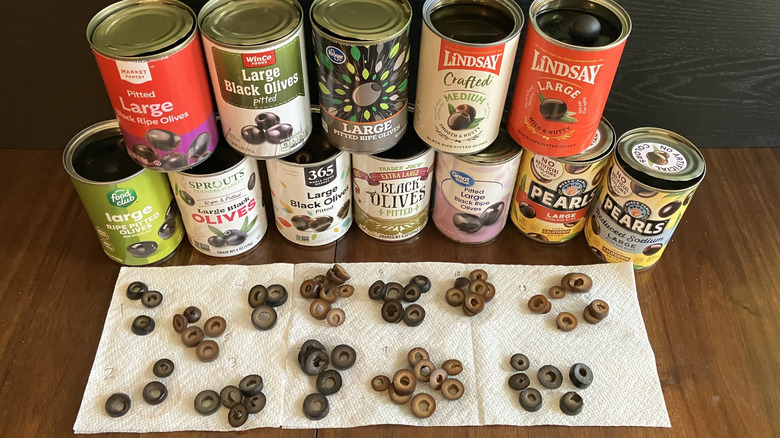
Olives are a pretty simple food, often a garnish added for color or a second-string ingredient in a recipe but not expected to carry the dish's flavor. But for those of us who enjoy throwing back a handful of olives for a snack, taste, texture, and quality is paramount. I tasted the olives of 10 different brands straight from the can. I included an additional olive product for two of them to get a better understanding of the overall brand quality.
The most important factor that affected my ratings was flavor. I was especially sensitive to unpleasant aftertastes and acrid saltiness. Olives were also rated on texture because, to me, an olive should be soft but still able to keep its shape. Those brands that had soggy or mushy olives really grossed me out and therefore lost many points.