

11 Common Baking 'Tricks' That Don't Actually Work
For some, the kitchen is a place where magic happens. For others, a series of dry cakes and burnt cookies is all they have to show for their baking efforts. You may have heard the age-old adage that baking is a science. Whether or not you agree with the statement, it's true that baking can sometimes be a labor of love, and it can be tempting to find ways to make the process simpler. After all, the trick for achieving bakery-style cookies and fluffy cakes must be hiding somewhere out there on the World Wide Web or, at the very least, in grandma's handwritten recipe cards, right?
The truth is, while there are ways to make baking simpler, many shortcuts aren't helping. Some of these tricks even cause more problems than they solve. We spoke to three experts to find out why and how they fail. Kaitlyn Venable is the director of culinary at Shipley Do-Nuts, where she handles product development and more for the chain. Stefani Pollack is the founder of Cupcake Project, where she develops recipes designed for all abilities, and The Bake Fest, which hosts virtual events for bakers. Last but certainly not least is Megan Garrelts, who has been a James Beard Award semifinalist for Outstanding Pastry Chef multiple times, and is both the founder of Cornflower Baked Goods and co-owner of the restaurant Rye. Together, they identified 11 different baking tricks that you're better off skipping from now on.
Adding extra fat to increase moisture
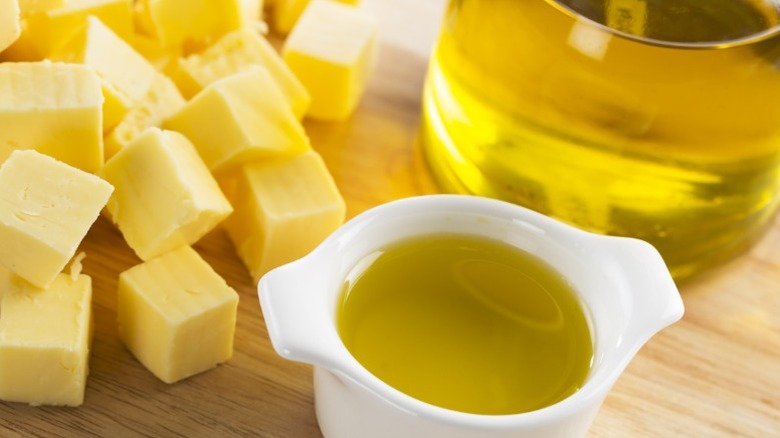
It's always disheartening to start out with a promising bowl of batter or dough, only to end up with a dry mixture that pales in comparison to the recipe photos. How much moisture is in your baked goods can be the difference between the perfect texture and one that leaves you wanting. While some fix dry cake mix with instant pudding, others reach for an extra stick of butter or another glug of oil. But before you make any hasty recovery efforts, Kaitlyn Venable has a warning. "Piling in more oil or butter usually just leads to a dense, greasy result instead of the light texture people are usually after," she says.
Venable points out that the fats that butter and oil impart are not what make baked goods moist. Instead, she says water is the primary source of that much-needed moisture. Now that doesn't mean piling in tons of extra water or milk and hoping for the best. As Megan Garrelts notes, balance is one of the key aspects of the baking process. With that in mind, pay attention to the roles of different ingredients and how they interact to avoid overcompensating and throwing off the final product.
Adding sugar to fix oversalted batter or dough
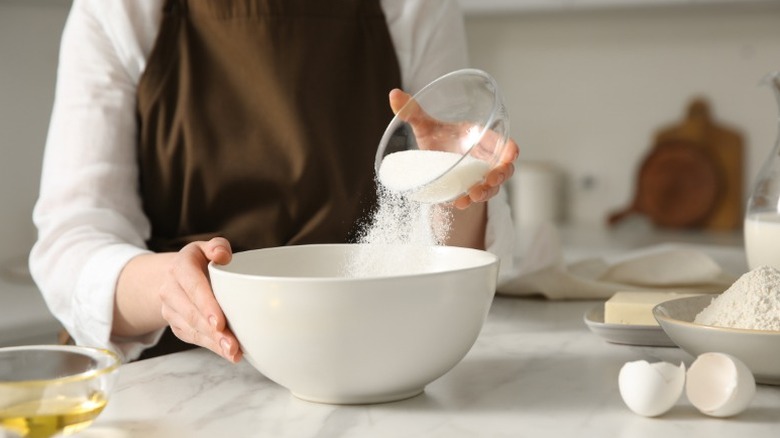
The simple fact that sugar and salt look so much alike has surely been the downfall of many a baker, amateur or not. Whether you mistook the salt for its sweeter twin and poured in heaping cups of it, or simply misjudged a recipe's measurements, this predicament can be hard to get out of. Initially, it may seem like an easy fix. Simply add in more sugar, and the salt will go into hiding. However, all three of our experts advise against this hack. Kaitlyn Venable shares that sugar can make things taste sweeter, but it doesn't fix the deeper problem. Megan Garrelts expresses a similar sentiment, saying, "Adding sugar doesn't cancel out salt, it just changes another important ratio in the recipe."
Since adding more sugar is out of the question, Stefani Pollack suggests mixing the oversalted batch with an unsalted batch instead. Venable and Garrelts back up this tip, with just one caveat to keep in mind: If you choose to go this route, time is of the essence. "Baking comes down to chemical reactions, and in yeast-leavened products, excess salt tightens gluten and can inhibit or even kill the yeast," warns Venable. That means if you wait too long, the salt may have already damaged the yeast and gluten structure. The good news is that starting over isn't against the rules. In fact, according to Garrelts, sometimes it's the best thing to do, especially if you want quality results.
Turning up the oven temperature to speed up baking
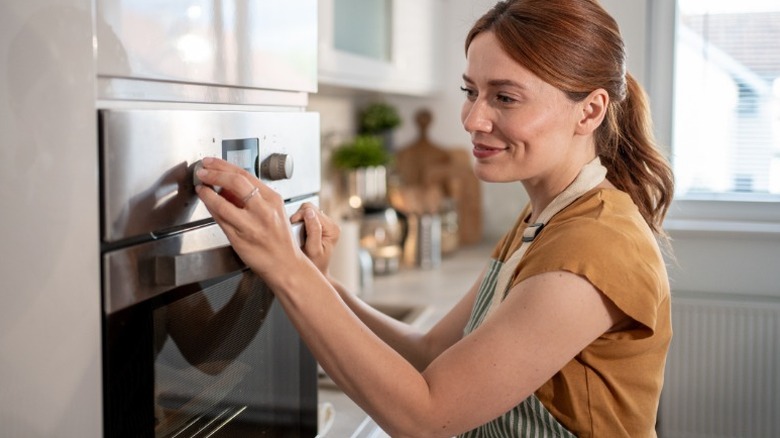
If you've ever tried baking on a time crunch, you'll know that you can't always rush the process. It's certainly tempting to crank up the oven temperature and get your masterpiece out of the oven straight into your stomach. But doing so does your baked goods a great disservice. As Megan Garrelts puts it, in baking, "one of the biggest mistakes is believing there's a shortcut for everything." If you take a shortcut like this, the end result is not guaranteed to come out as expected.
As Garrelts has emphasized, balance is key in baking. She says, "Temperature, time, and technique all matter." When you put something into the oven to bake, it doesn't heat up all at once. The heat hits the outside first and gradually reaches the middle of your creation. If the oven temperature is too high, this will speed up the baking, but not in the way you might hope. Instead of a perfect, bakery-worthy treat, you'll end up with burnt edges and an undercooked middle that could have been avoided with just a little more patience.
Skipping rest time and proofing
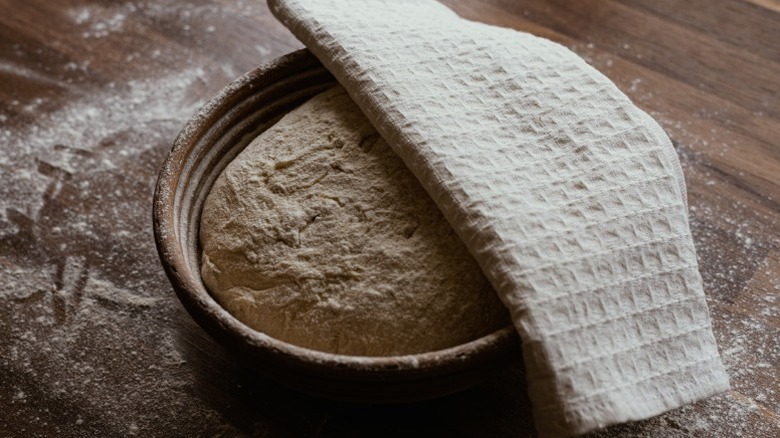
If there's one thing all three of our experts agree on, it's that rest time and proofing are non-negotiable when detailed in a recipe. According to Stefani Pollack, this is one of those cases where failing to wait means forfeiting a successful end result. Resting and proofing dough isn't just about giving yourself a hard-earned break from kneading and rolling. These steps play a key role in making your baked goods what they are. "That rest time matters for a lot of reasons: yeast activation in breads, proper hydration, and gluten relaxation in cookie dough," says Kaitlyn Venable.
Megan Garrelts similarly notes that this period of time allows baked goods to achieve the ideal flavor profile and internal structure that you're looking for. The best part is that proofing doesn't require special equipment, and neither does resting dough. While bakeries often use specialized proofers, a simple bowl, towel, and a warm location will give your dough the environment it needs without having to splurge on fancy machines. The only thing you'll need to do is resist the urge to helicopter parent your dough balls. Garrelts puts it best: "After years in professional kitchens, I've learned that patience really is an ingredient in baking."
Making shortcut donuts in the microwave or air fryer
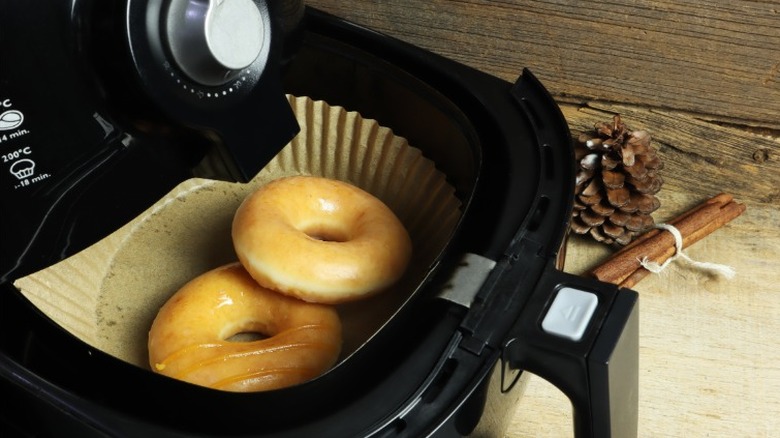
This next trick is less of a hard no and more of a gentle steer in another direction. Donuts are a popular treat for a reason. What's not to love about these golden-brown pillows of fluffy, fried goodness? Thus, it's only natural that people are itching for ways to recreate them at home, and often without the somewhat intimidating pot of oil. If you scroll through social media, you might come across something called a mug donut, or a mugnut, if you will. This treat comes together in minutes and claims to fill the donut-shaped void in your heart and stomach. But the end product is usually far from it, according to Kaitlyn Venable.
She says, "It doesn't work because it skips frying and proofing entirely, so instead of that light, airy texture with a crisp exterior, you get something closer to a dense, rubbery cake." Stefani Pollack shares the same feelings, noting that the hot oil is what sets true donuts apart from shortcut versions. Keeping that in mind, despite having "fry" in the name, air fryers can't truly fry dough either. "This one is controversial. But an air-fried donut will never taste the same as a donut coming out of an actual fryer," explains Pollack. Like microwave donuts, air fryer donuts usually lean denser and drier than a standard deep-fried donut.
Not sifting ingredients
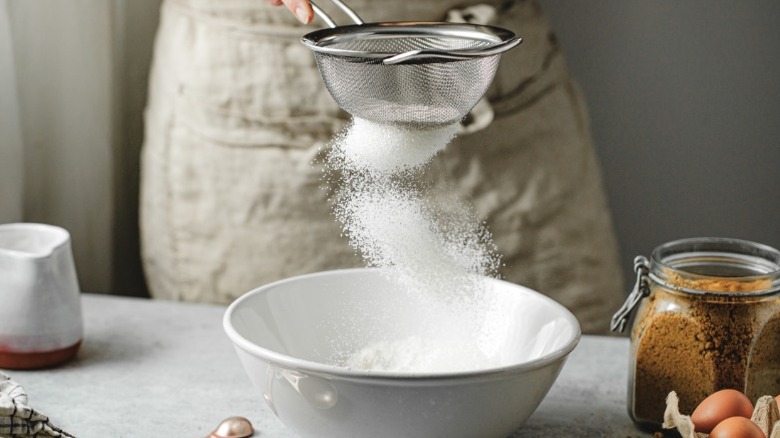
Adding ingredients to a bowl should be one of the most straightforward parts of baking. You may believe that accurate measuring is the only finicky aspect of this process, but there's one key step that many people let fall to the wayside. Sifting your ingredients is actually more important than you might think. As Stefani Pollack explains, by skipping this step, "you may end up with clumps of cocoa powder or baking powder or powdered sugar in your bake. Nobody wants that." The goal is an evenly incorporated dough or batter that tastes and feels consistent throughout.
Not only can foregoing sifting leave you with unwanted clumps, but this step also incorporates air into the ingredients. This is especially important when you're making baked goods known for their super airy and light texture. For example, angel food cakes benefit from double-sifting flour before mixing. The first sift eliminates lumps, while the second adds in air. The twice-sifted flour is then easier to incorporate, meaning you have to mix less and your finished cake comes out lighter than a balloon.
Skipping the chilling step in a recipe
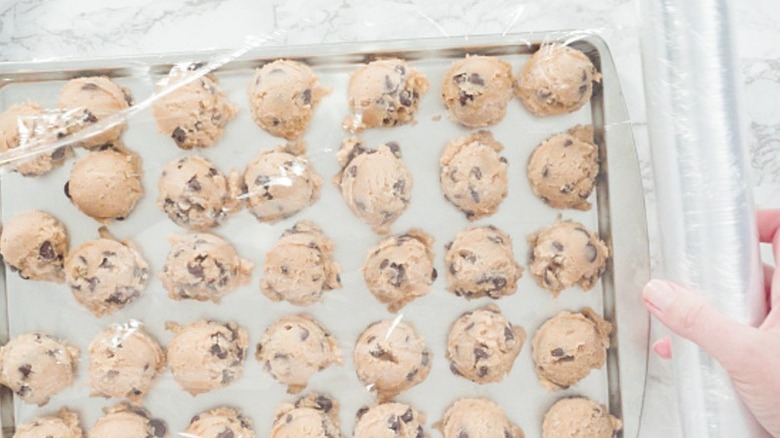
Another recipe step that often falls victim to being skipped is chilling. Like resting dough, leaving your dough for a nice, cool nap might seem like a waste of time, but it can contribute significantly to the flavor and structure of your baked goods. "If pie dough needs to be cold, there's a reason," says Megan Garrelts. When it comes to pies, specifically, chilling the dough has a couple of purposes. One is that it allows the dough to hydrate, which makes it easier to roll it out with a rolling pin. Another is that the chilled butter in the dough makes for those flaky layers that make pies so delectable. Garrelts warns against not only skipping chilling entirely, but also shortening the time. If a recipe calls for an hour of chilling, it's best to follow suit.
Pie dough isn't the only type of dough that benefits from this step. Chilling helps sugar cookies hold their shape while baking, as well. As butter melts in the oven, the cookies spread out more. Making sure the dough and the butter inside it are cold before popping your treats in the oven keeps them in place. This way, your Christmas tree and snowman cutouts won't devolve into formless blobs by the time they're baked through. Plus, even if the shape of your cookies isn't a concern, chilling can also make for more flavor-packed desserts.
Overusing the microwave as a timesaver
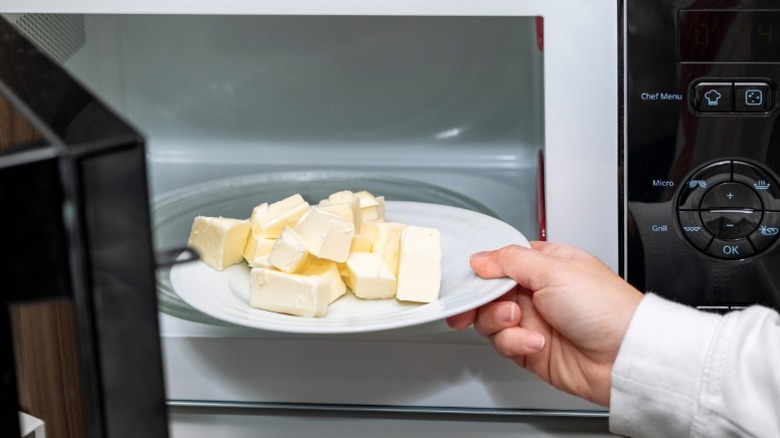
The microwave is one of those inventions that many people can't live without. Whether it's a busy weeknight dinner that gets nuked in just a few minutes or more creative TikTok-spawned food hacks, there are plenty of ways the microwave can make life more convenient. You can even use the microwave when baking. In fact, our experts note that it can be a handy tool for softening and reheating certain ingredients. But relying too heavily on the microwave in an effort to save time is where mistakes tend to happen.
"I'm much more cautious with temperature-sensitive ingredients like butter and chocolate. And I wouldn't use it to rush a process that really needs time to cool or set properly," says Megan Garrelts. Chocolate can be particularly finicky to work with and prone to error when melted in the microwave. Kaitlyn Venable warns against using the full power setting when microwaving chocolate, as it is quick to burn and clump rather than melting smoothly.
"If you are using the microwave to melt chocolate, always do just a few seconds at a time and then stir and stop before it's fully melted. It will continue to melt outside of the microwave," adds Stefani Pollack. Rest assured, you don't need to avoid the microwave altogether when baking. Being cautious when working with it makes all the difference. And another tidbit from Pollack is not to try to achieve room-temperature eggs through microwaving — that is, unless you want an omelet on your hands.
Not scraping the bowl
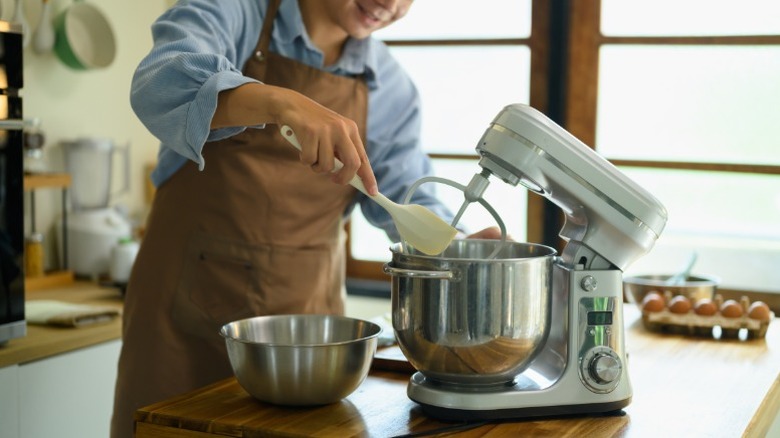
Much like sifting, forgetting to scrape can be a big mistake. Now, this isn't the kind of scraping where you get all that leftover goodness at the bottom of the bowl onto the spatula and into your mouth. Rather, this is about scraping when measuring and mixing ingredients. Without this step, "your measurements will be way off, and the end result will suffer," according to Pollack. While a scale provides the most accurate measurements, if you don't have one on hand, make sure to scrape the top of your measuring cups to level off ingredients. This ensures that you're not getting more than you asked for in the final mixture. Similarly, you'll want to scrape out any sticky ingredients to make sure you don't leave any behind when measuring and accidentally put in less than the recipe calls for.
Whether you're using a stand mixer or putting your arm muscles to the test with a standard bowl and spatula, scraping comes into play here, too. If you don't scrape down the sides of the mixing bowl, you run the risk of leaving some ingredients unincorporated. This throws off the ratios in your batter or dough, leading to adverse effects when baking. It could be as bad as baking soda clumps that leave an unpleasant metallic taste on the tongue or as simple as your mix-ins not being evenly distributed. Regardless, scraping is the simple fix that can make your confections that much more consistent.
Substituting just any ingredient
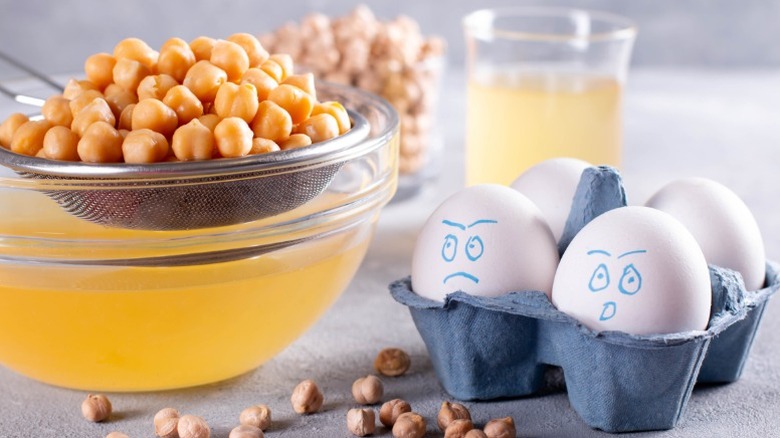
If you're someone who has food allergies or follows a plant-based or gluten-free diet, you're likely familiar with the pain of not being able to indulge in the same treats as everyone else. Baking at home can make it easier to modify recipes to match your specific needs and preferences. You can even make a boxed mix vegan. The good thing is, our experts certainly aren't against swapping out ingredients. Stefani Pollack notes that there are plenty of great options out there, such as gluten-free flours and vegan butters, that make easy substitutes. However, both Pollack and Megan Garrelts agree that, rather than assuming something will work, it's best to test first.
Better yet, these two experts prefer going straight to the source. "Take the time to look for a vegan recipe. The recipe creator has already done the hard work to make sure the recipe works," notes Pollack. She emphasizes this point even more when it comes to substituting eggs in non-vegan recipes, which can get hairy. "Ingredients have jobs beyond flavor. Eggs provide structure and emulsification, butter adds fat and texture, flour provides structure, and even sugar affects moisture and browning," says Garrelts. So next time you're looking to swap out ingredients, think of how they'll impact the final product, test them out, and, if all else fails, defer to creators who have already done the hard work for you.
Improvising in the wrong places
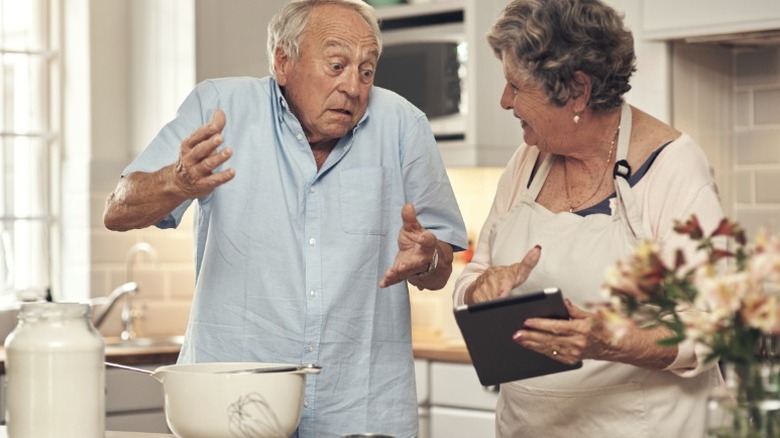
Many people grew up in a kitchen where measuring came from the heart, not a set of cups and spoons or a scale. Grandma would stand at the stove, throwing in a pinch of this and a splash of that, and the rest of the family would have to cross their fingers and hope to recreate the same flavor one day. But cooking and baking are a little bit different. That's not to say that you can't improvise at all when baking. As a matter of fact, our experts encourage bending the rules here and there, so long as you know how and when to do it. "Baking is chemistry first and art second," says Kaitlyn Venable. She notes that specific reactions form the basis of successful baked goods. Both Stefani Pollack and Megan Garrelts agree that the basics, or the foundation, of a recipe need to be solid in order for things to work out as intended.
But with a solid foundation, you can learn to improvise in a smart way. "[Baking] does require precision, but once you understand what each ingredient is doing, there's plenty of room for creativity," clarifies Garrelts. Pollack adds that other ingredients, such as nuts and spices, should be modified to suit your preferences. Once you know the basics like the back of your hand, you're free to start experimenting with recipes and, maybe one day, even developing your own.