

12 Store-Bought Milk Brands, Ranked Worst To Best
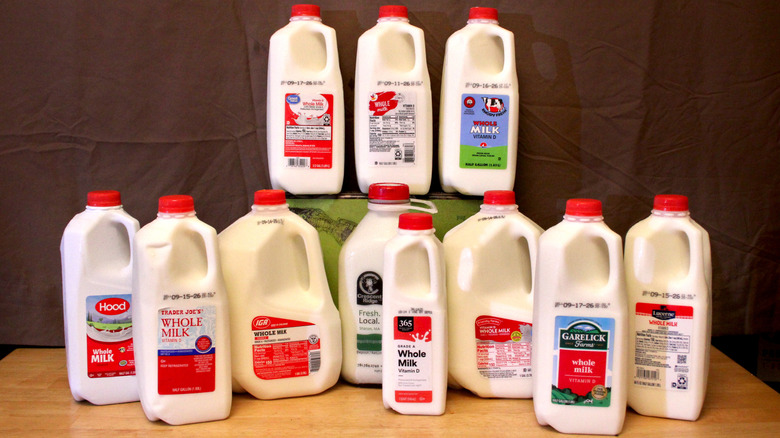
Not long ago, I was given the chance to rank and review a selection of organic milks. While there were differences between them, the organic options were surprisingly similar overall, likely as a result of the standards which must be met in order for a milk to be certified as organic. So, I couldn't decline when the opportunity came up to check out some non-organic brands and do the same.
From what I came to learn, the most important factors in making a milk organic revolve around the cows themselves. Regular cows do not require pasture grazing for the whole season, nor do farmers need to avoid antibiotics or hormone treatments. While there are definite positives for the cows when it comes to organic milk practices, most of the human health benefits are based on the suggestion that there are higher levels of omega-6 and omega-3 fatty acids in organic milk.
Whether one is better for you or not, it was interesting comparing my experience ranking the two styles. The first thing I noticed was that the subtle changes in flavor and texture were more pronounced in these non-organic varieties. As I tasted milks against each other, I was quick to notice differences in sweetness, richness, and background notes. Where a grassy, earthy, flavor was common in the background of the organic milks, these regular options were all just a little different.
12. Stop & Shop
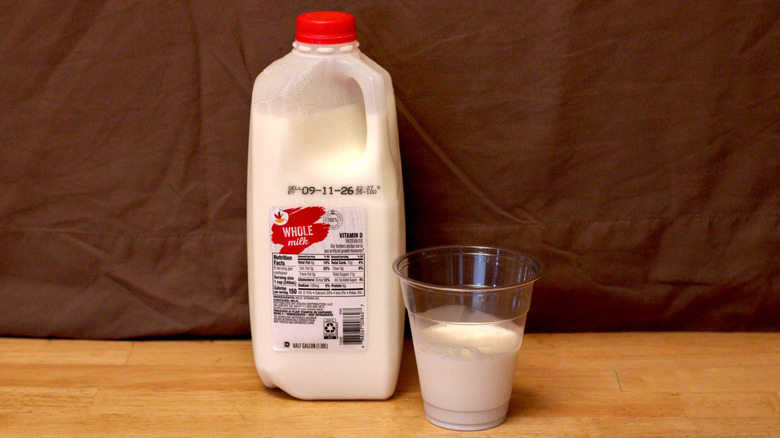
Over my time as a food writer, I've come to believe that store brands are often just as good, and in some cases better, than name-brand options. However, it's not a rule by any means. There have been more than a few that let me down. Still, whenever I try something from a retailer's personal catalog, I go into it expecting the same level of quality I'd expect from any other brand.
This expectation is especially relevant when it comes to companies that don't market themselves as discount retailers. I don't think of Stop & Shop as a discount retailer. I may not consider it high-end, but from my experience with its prices it doesn't qualify as a budget-conscious store. While it did have a density and creaminess that showed a commendable fat content, there was a strange note to its flavor combined with a very slight saltiness which left me generally unsatisfied.
Combined, the two qualities reminded me of cheese. I love cheese, but I don't want to be thinking about it while I take a sip of milk. I'm sure I wouldn't notice it in cereal, but on its own it was less than enjoyable. I'd pick up any other option on this list next time. The Takeout's taste test of Stop & Shop's orange juice resulted in a similar outcome.
11. IGA
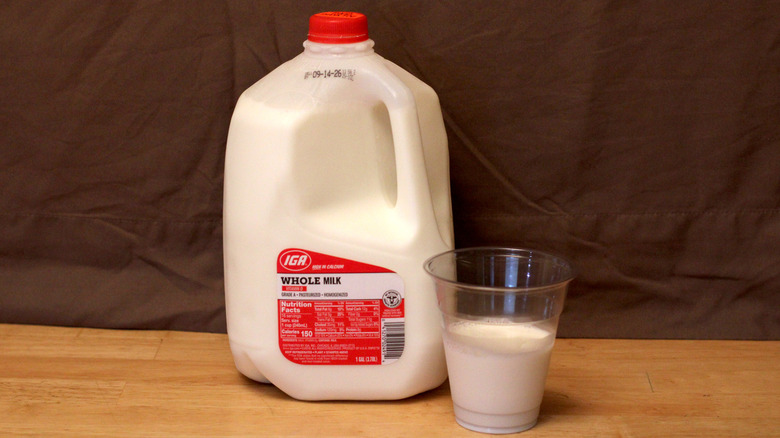
IGA, also known as the Independent Grocers Alliance, is a brand I've seen and bought many times without thinking much about it. To be honest, I didn't realize until working on this piece that the company, founded in 1926, is actually made of many smaller family-owned companies working together under a single brand. Knowing that made me wonder just how similar this gallon of milk would be to one purchased in another state.
Either way, all I could do was judge the gallon before me. My first impression upon the milk hitting my tongue was one of richness. This milk was heavy in exactly the way you want a creamy milk to be, however there was something unfavorable that caught my attention. There was a slight, almost floral, note of plastic that was more a smell than a taste. With each sip, it was there.
I couldn't place what it was. It wasn't something that made the milk taste bad, and only appeared as an after-note. I'm not sure I would have even noticed it, were I not examining each of these milks so thoroughly. However, despite the actual milk tasting just fine, that strange essence put me off just slightly compared to other competitors.
10. Lucerne Dairy Farms
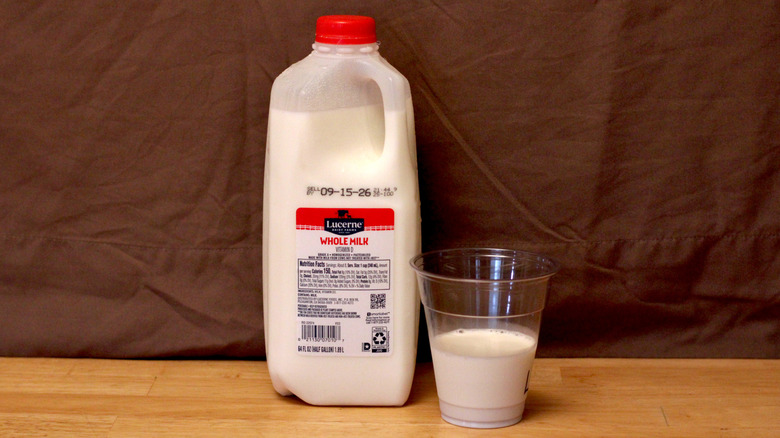
Lucerne Dairy Farms, owned by Albertsons Companies, has been producing dairy products for over 100 years. Founded in 1904, this private-label brand is produced in Washington, Colorado, Arizona, California, and Pennsylvania. I'm not sure how consistent the dairy produced by nationwide companies like this is, but assuming the quality control is top-notch, then I'd like to think I tasted the same milk someone across the country would find when trying this brand.
With a light sweetness at the front and a rich creaminess, I did find this glass to be overall enjoyable. However, like a few of our other contenders, this milk also had a slightly off note of flavor that was almost more of a scent. Each time I found something like this in a milk, it was always slightly different. What reminded me of cheese in one brand, or plastic in another, made me think of paint here.
Just to be clear, these were very light notes of flavor that would likely have been unnoticeable day to day, but they became much more drastic and clear when being compared to other milks directly. So, despite the creamy and sweet flavor, once I'd noticed that almost chemical scent it was hard to go back for another sip.
9. Good & Gather: Target
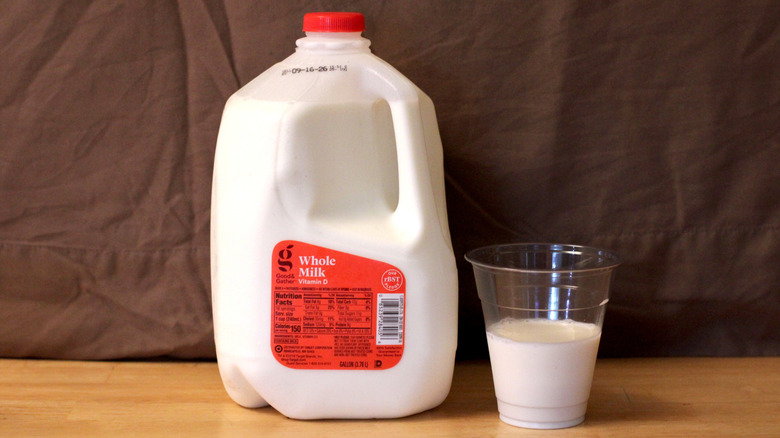
Good & Gather, a store-brand from Target, hasn't always impressed me with its quality in the past. However, I did end up liking its organic milk, even if it wasn't as good as the others I tried. Nonetheless, here I can at least say that it didn't come with any strange smells or other out-of-place notes to make it less enjoyable. To put it simply, this was a good glass of milk.
With a clean mouthfeel, this milk had a nice creaminess but lacked the thickness I usually look for in a rich whole milk. The flavor was mild and milky, but also a bit underwhelming. If I wasn't reading the label, I'd have guessed this was a very rich 2% milk. However, being whole it actually felt a bit thin and watery compared to most of the others I tried.
This was a great all-around jug that would be good for cereal, tea or coffee, baking, or cooking. It's the type of milk that doesn't stand out, but also doesn't let you down. If I was dunking cookies, I'd want something creamier and more decadent, but for most uses this would get the job done perfectly well.
8. Garelick Farms
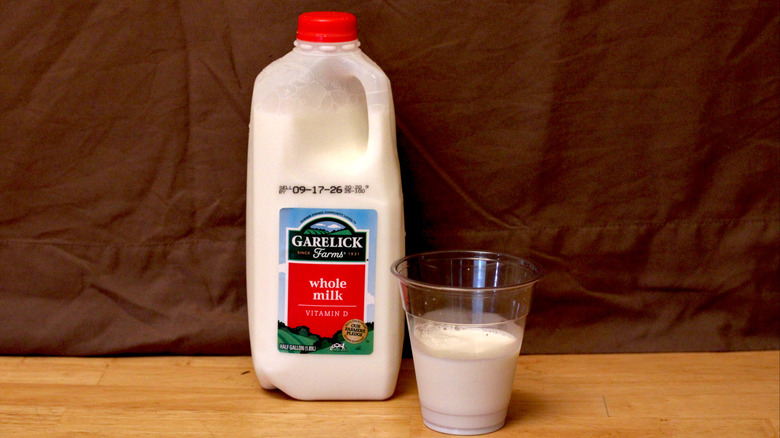
Garelick Farms, a dairy brand I've seen at stores for my entire life, began in the early 1930s. Being from Rhode Island myself, the state just next door, it makes sense that its logo has been a staple of my childhood. I don't usually buy it often, but that's because I try to be a budget shopper and name-brand items rarely end up in my home.
This was one of those times when I felt more justified than ever in being a cheapskate. True, this milk was only 12 cents more than the store-brand, but even that can feel like a splurge these days. Much like Good & Gather's milk, the Garelick Farms milk was sweet, milky, and creamy while still being a bit watery and less satisfying.
When you're trying a dozen different milks all at once, small details you wouldn't normally notice become huge in comparison. I've gotten quite good at tasting dairy, and when it came to it Garelick just lacked in the flavor department.
7. Great Value: Walmart
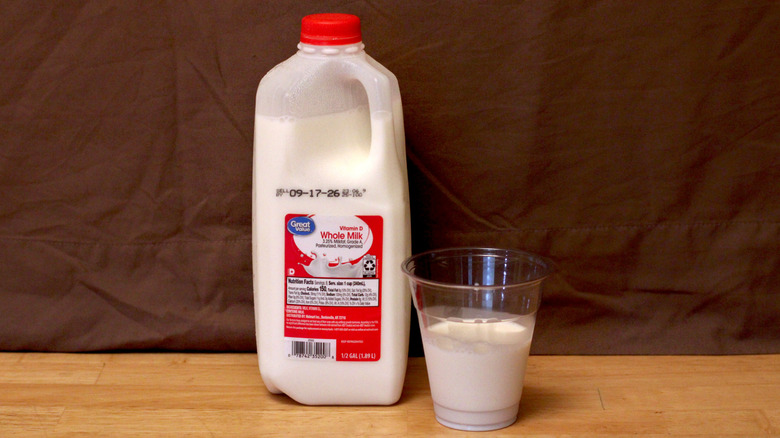
Great Value is Walmart's main discount brand for food and household supplies. I've been genuinely surprised by the quality-to-price ratio of many of its products. Recently I had the chance to try 17 flavors of the brand's ice cream, and was sufficiently impressed with the quality compared to some of the more expensive options on the market. Even when the brand's organic milk came in last on my rankings, it was still an undeniably worthwhile milk.
When I poured myself a glass, I was happy to find that I once again had a cheaply priced option that was also of genuine quality. Of all the milks I tried, this was one of the richest. It has a thick creaminess that I hope to see in a whole milk. It was the kind of whole milk that reminds you of cream without making you feel too guilty. There was a light sweetness to its finish, and throughout the tasting there was a mellow, but unmistakable, milky flavor.
While it wasn't the most delicious cup I had during this experience, it's hard to deny that when the cheapest milk on the list manages to make it halfway to the top of the ranking it's definitely worth considering as your day-to-day dairy.
6. Crescent Ridge
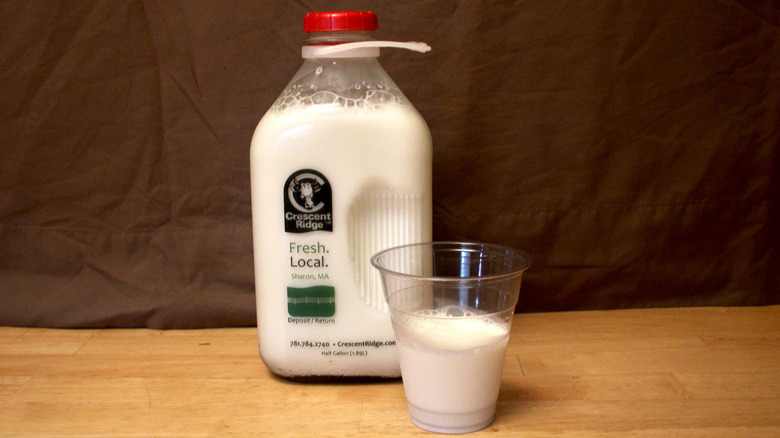
Crescent Ridge's milk was an unexpected find. It wasn't one that I went looking for, but rather one that just happened to be on the shelf at Whole Foods Market with the other non-organic milks. What caught my eye most was its expensive price tag of about $8 for just half of a gallon. Even when purchasing organic milks, only one brand was that expensive.
Another Massachusetts-based brand, Crescent Ridge actually sources its milk from Oakridge Dairy, located in Connecticut. So, unless you're from New England, you aren't likely to find it on your local store's shelves. I don't think you should be too disappointed though. I do have to admit that it was a good glass of milk. The price, though, just wasn't worth it compared to its competition. This is the only milk that really shifted based on its cost.
With a silky mouthfeel and clean milk flavor, I normally would have placed this milk at our number three spot. However, the fact that this milk was three times more expensive than any other brand on our list was too massive to overlook. This milk is tasty, but a glass bottle wasn't worth the inflated cost in my opinion.
5. Friendly Farms: Aldi
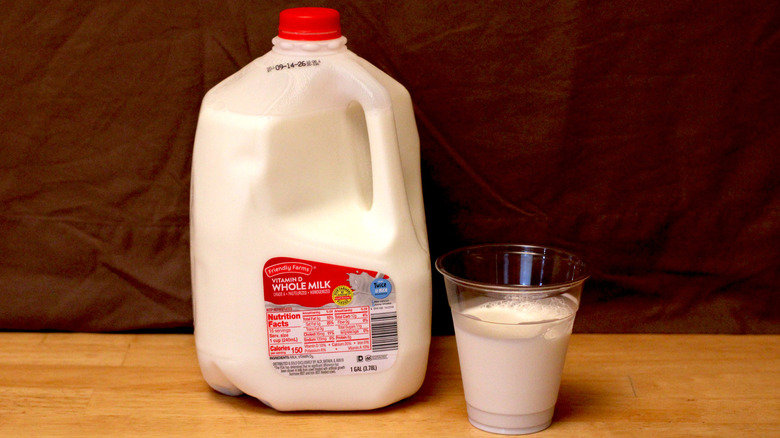
This is the perfect time to put out my personal bias warning, though I don't think bias came into play at all. I'm an Aldi shopper, but that doesn't mean I praise this brand above others. I just like a deal. Thankfully, as someone who goes through about a gallon of milk per week, it's a product I would happily pick up separately if my local grocery store didn't have one I thought was good.
While slightly less rich than a few of our other brands, Friendly Farms' milk has a bright and clean milky flavor with an almost grassy back note that reminds me of many of the organic milks I've tried. When compared to Crescent Ridge's milk, it's a bit more watery while being every bit as flavorful. Nonetheless, the fact that you could buy two full gallons of Friendly Farms for the price of a half-gallon of the previous brand speaks for itself.
Having had this both as a glass to drink, in cereal, and with cookies, I can tell you it makes for a wonderful all-around milk. It's hard to go wrong with milk, but in a time when so many people are starting to tighten their purse strings, a quality budget option you can actually be satisfied with is worth its weight in gold.
4. Trader Joe's
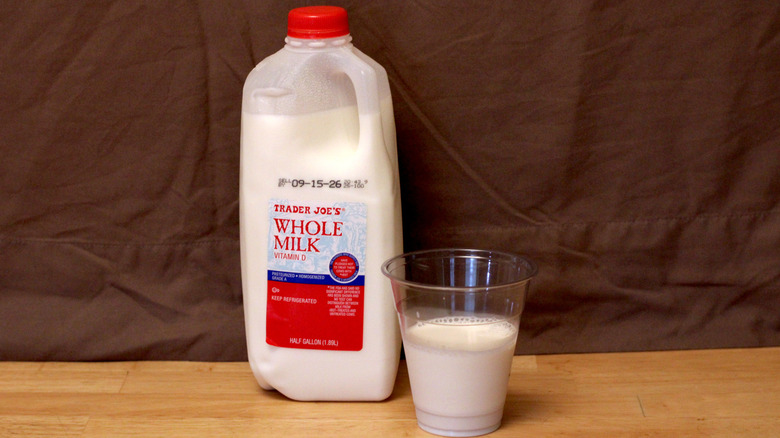
Trader Joe's is a grocer that I wish I frequented more often. Its style, feel, and products all feel welcoming and honest. If it weren't such a hassle to get to the one closest to me, I'm sure Trader Joe's would see me more often. Should that day come, there's a good chance every weekly shopping trip would include picking up a gallon of this milk.
The moment I took a sip I was inundated with a wave of rich cream before it washed away cleanly and crisply while leaving a light sweetness. The aftertaste was mellow and enjoyable in the type of way that invited you to come back. Trader Joe's milk was a perfect combination of qualities to be versatile enough for any use. Honestly, this marks the place on our list where I have to start nitpicking to place one competitor above another.
This was a glass of whole milk done correctly. From this point forth there was no way to lose points, only ways to squeak out an extra one. Not that there were official points, but the general idea stands. I guess what I'm saying is, this was a very tasty milk and only a handful were more delicious.
3. Hood
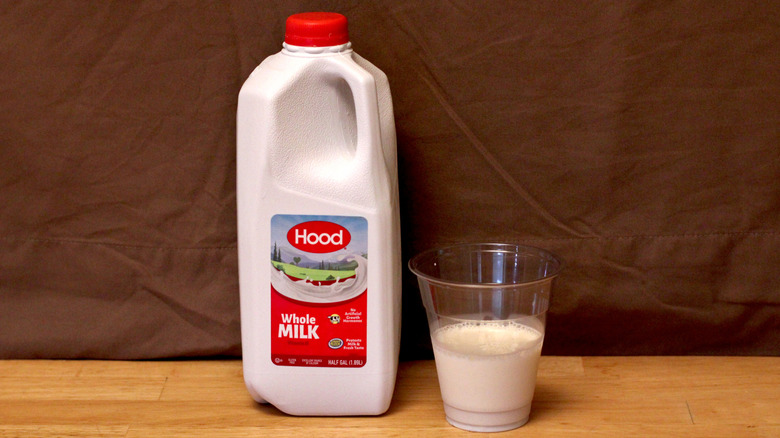
Another iconic brand, Hood milk is one I've bought many times. I've always thought it was particularly delicious and was excited to try it against some competition. I wondered if it was truly of good quality, or if the nostalgia of drinking it throughout my childhood was simply influencing my expectations.
During my first rounds of tasting, this had been paired up against Lucerne and it was an almost instant win. It wasn't until later rounds when it competed with some of the other winners that I was able to get a good feel for its place. In many ways, this milk was near identical to the Trader Joe's whole milk. The only real difference was in mouthfeel.
The Hood milk had a slight touch of dryness, but in a positive way that I've come to associate with organic milks. It also had a more full-bodied and creamy texture to go along with that lightly dry aftertaste. Seeing a name-brand product, in today's climate of shrinkflation, maintaining flavor and quality while still staying in the average price range of other competing dairy brands was just a small plus.
2. 365: Whole Foods
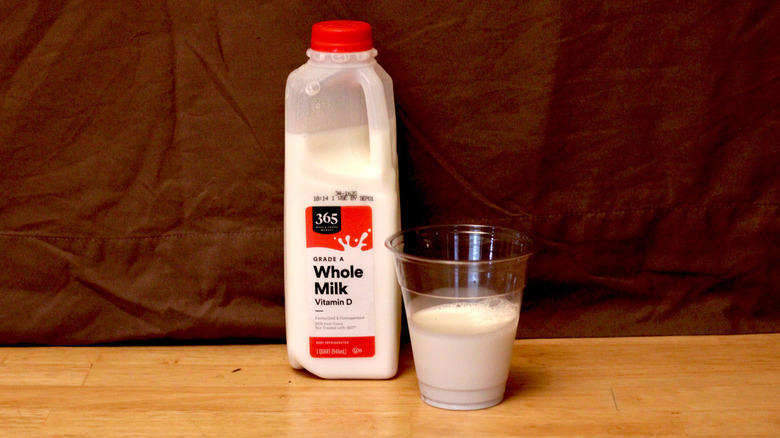
Whole Foods, as I said to my husband while we bought this milk, is a store I always want to go to more often, and then I look at the prices and remember my budget. I'm not saying the company is charging outrageous prices, in fact I generally find its products to be relatively high quality, I just can't afford to make it my regular grocer. This milk is a perfect example.
Not only was the flavor of this milk just as good as Trader Joe's, with a light grassy background and cream-forward flavor, but there was something about the way this milk finishes so cleanly that stood out. Milk can have a way of sticking to your mouth and throat in a way that feels like it takes time to fully go down, but this milk was homogenized so perfectly that it went down almost like water.
Much like the organic milks I'd tried before, this regular milk had a faint dryness and a hint of bitterness that offset the natural sweetness and fat well. While I already said that the Friendly Farms whole milk was enough for my daily needs without missing out, sipping this brand reminded me of the difference between the value brand and a more premium retailer. This glass of milk was the type of rich that almost qualifies as a treat in and of itself.
1. Rhody Fresh
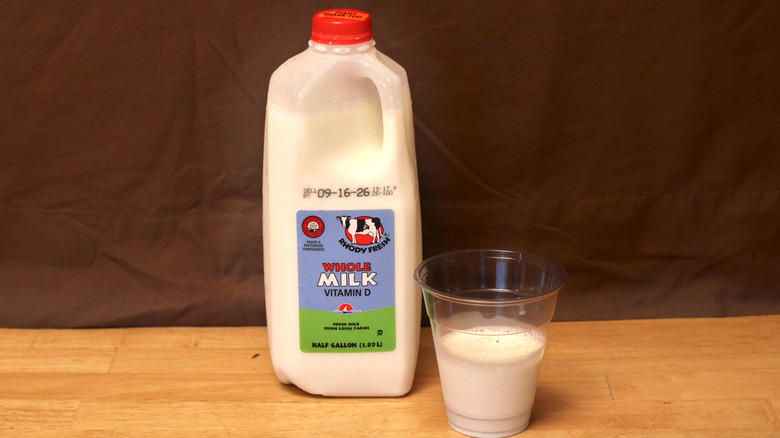
Rhody Fresh is another local brand, and you're unlikely to run into it outside of Rhode Island, or the surrounding area. While I've been seeing it in the dairy aisle for quite a while, my natural urge to stick with what I know usually kicks into gear. That's one of the reasons I love doing what I do here. Not only do I get to help let readers know what to expect from new products, but I get to try new things for myself.
This brand's milk was every bit as creamy and full-bodied as the 365 brand's, but also had a light sweetness that came in after the earthy bitter notes and grassy flavor I'm coming to learn is a staple of higher quality milks. I suppose that makes sense, after all. When cows are fed a healthy diet of grass, you can taste it in the milk they produce. I've also come to appreciate the slight dryness that coats the mouth like a good red wine, for just a moment, before sweetness and milky flavor wash it away.
When it came to putting this at the top, I would say that the main selling point of Rhody Fresh is the actual milk flavor. No matter which competitor I put it up against, this brand just tasted more like milk than the others. That may sound odd in retrospect, but while maintaining the same level of viscosity, richness, and quality, this glass managed to feel self-indulgent without slipping into tasting like cream over milk. If you visit Rhode Island any time soon, and need to pick up some milk, make sure to try this local brand while you're here.
Methodology
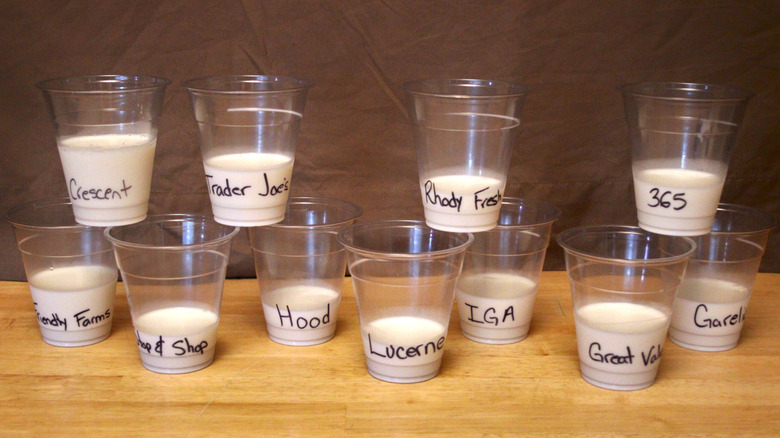
Comparing and contrasting the elements of a product like milk, where the difference between two varieties can be minuscule and elusive, requires direct comparison. In order to rank these 12 dairy brands, I decided to use a tiered bracket system. Wanting to be as unbiased as possible, I first tasted them individually to take my notes separately, before pitting them against each other directly. I hoped that by drinking each on its own, I'd be able to get a clear flavor of them and the profiles they delivered without having them influence each other.
After tasting each and making my notes and thoughts, I started the competition. I numbered cups from one to 12, and randomly poured the milks into a numbered cup, while using a video camera to track which milks ended up in which cups. I then created a bracket in which two milks would compete at a time before moving forward. Through this I was able to establish the top six brands.
In order to rank the bottom six, I created a second bracket in which they competed for their positions, with the final three milks competing against each other directly to establish which would remain at the bottom of our list.