

11 Cuts Of Steak You Should Reconsider Buying
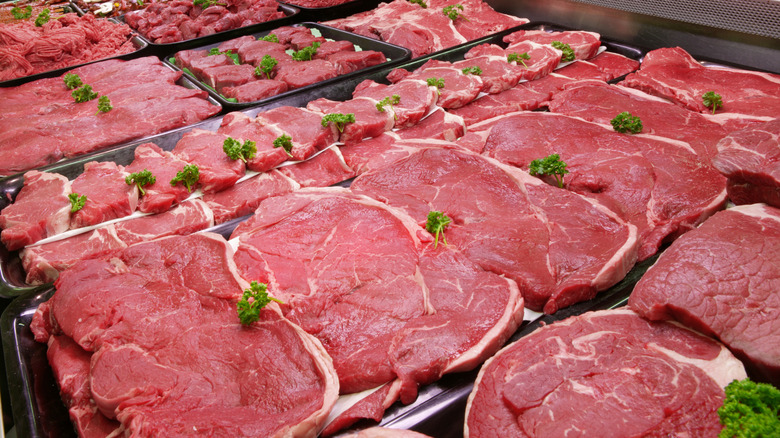
There's nothing quite like a big juicy steak, cooked to perfection. In fact, according to a consumer steak report by Meats by Linz, 70% of consumers in the U.S. consider steak one of their favorite foods. From a T-bone to a New York strip, it seems like everyone has their own opinion on the absolute best cuts of steak for juicy grilling.
While it's hard to imagine that any cut of steak would give you a bad taste in your mouth, the truth is that some cuts of beef are better suited for steak than others. Different cuts are taken from different parts of the cow, which leads to varying fat content and flavors. This is why the cut of steak can truly make or break a steak-eating experience.
To help us learn how to navigate the cuts of steak that won't work well for a succulent steak dinner, we turned to the experts. Jamie Waldron is the owner of Jamie Waldron Butchers and has over 20 years of experience within the industry. His experience has been combined with that of Gabriel Llaurado, the co-founder of Meat N Bone, an online butcher shop with more than 300 premium cuts of meat available, to help readers understand which steaks may prove more complex to work with than expected.
Top round
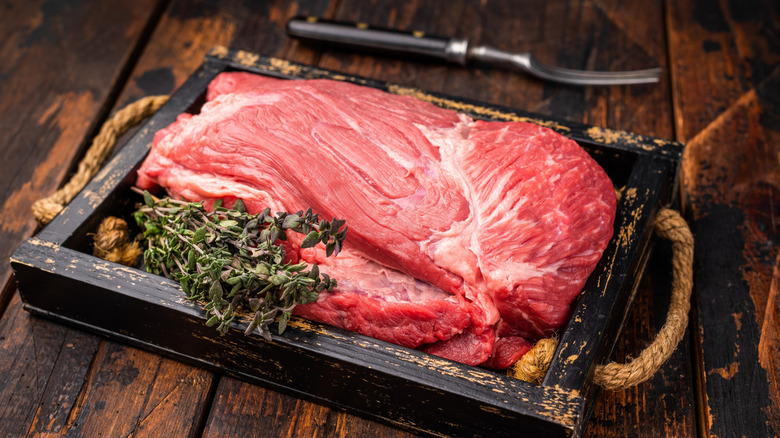
The top round is a cut that comes from the round portion of the cow, specifically from the inside of the back leg. As for trying to transform this cut into a juicy steak, Gabriel Llaurado advises that cuts from the round see a lot more exercise action than parts like the loin that don't do as much heavy lifting. As a result, he goes on to mention that cuts from portions like the round "can be tougher, but they can also have tremendous flavor. You simply have to cook them differently."
It is also important to mention that the top round cut is classified as lean. Now, at this point, you might be wondering what the heck it actually means when a meat is labeled as lean, and how this might affect the final product of the steak. Well, you see, the U.S. Department of Agriculture has specific guidelines for what can be labeled as lean meat, such as the amount of total fat, saturated fat, and cholesterol.
A lean cut of meat has less than 10 grams of total fat. Cuts like the top round meat provide a more succulent result when you use a cooking method that involves liquid, as opposed to one that is considered dry (like grilling). If you cook lean meats in liquid, the parts of the meat that normally make it chewy (the collagen found in tendons, for example) become gelatin, which helps reduce the toughness.
Eye of round
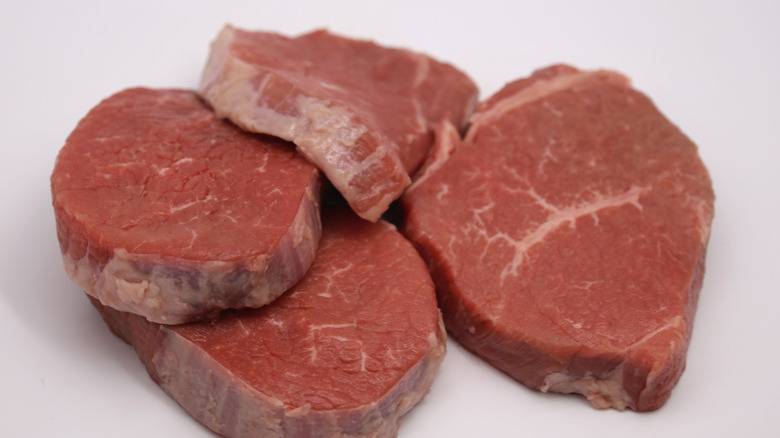
The next stop on the tour through cuts of steak that you might want to think twice about purchasing is the eye of round. Even if this cut is similar in appearance to tenderloin (at least for those of us who don't work as butchers), rest assured, you do not want to confuse them. While both are considered lean cuts of meat, the tenderloin is used so little that it remains extremely tender, which is why it is a fabulous option for steaks. The eye of round, on the other hand, is a cut that comes from a part of the cow's leg (which has many muscles within it), and so is tough.
Jamie Waldron gives it to us straight: "It's lean and tough." He goes on to clarify that the cut comes from an area that holds the muscles important for hip movement. They are "hard-working muscles," he explains. If you are dead set on making a steak out of the cut, Jamie also mentions that "you might have some success with tenderizing and quick cooking a thin steak, but I wouldn't seek it out personally." With the cut being considered lean, you may want to use wet cooking methods for the best results. There are many uses in which this cut can still shine, such as when cooked as a roast or when braised.
Sirloin tip
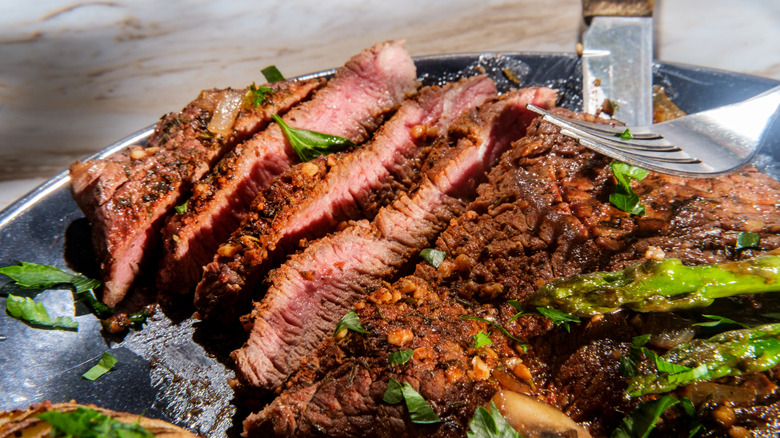
Sirloin itself is a cut of the cow that can cause confusion when shoppers spot its label in the grocery store. You will likely have at least heard of the word, and may even have fond memories of trying a steak labeled a sirloin cut. However, it is important to clarify that the cut you associate with sirloin is likely top sirloin, which handles the grill a little better due to the fact that it's less tough. Sirloin tip is a cut that actually comes from a portion of the cow named the round, despite having the word sirloin in it.
According to Jamie Waldron, the sirloin tip goes on the list of cuts he would not recommend for a nice melt-in-your-mouth steak as it comes from the cow's heavily active back leg. Gabriel Llaurado gives a great explanation of why the cuts from parts with working muscles aren't typically the best option for your steak night dinner. "Generally, the more a muscle works during the animal's life, the more connective tissue it develops and the tougher it will naturally be," he says.
When you remember that the round is located at the back end of the cow and is used for general movement, it starts to clue you in that the sirloin tip would be less tender. It makes perfect sense that top sirloin would make it on a list of the absolute best cuts of steak for juicy grilling, while sirloin tip would not.
Flank
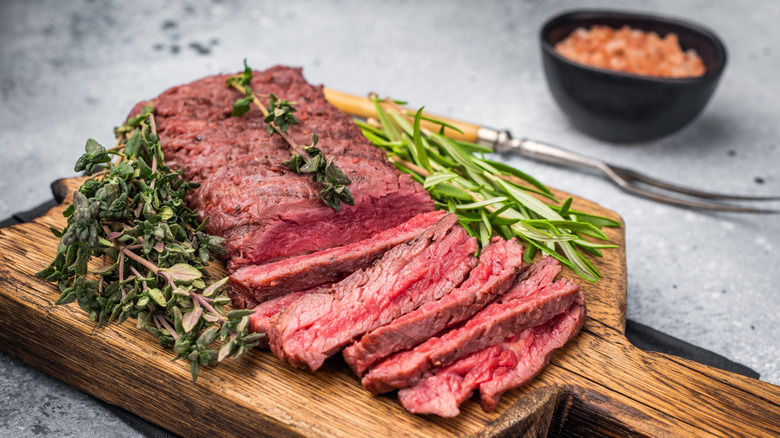
The flank steak's name isn't deceptive; this one does actually come from an area of the cow called the flank. This area is located directly under the cow's loin. The cut is known for being lean, which should give you a clue as to why it isn't high on the list of steak cuts (especially if you are looking for a thick and juicy steak). As it comes from a frequently worked muscle, it remains a tougher piece of meat due to the coarse muscle fibers within the cut.
Now, even if flank steak shouldn't be your first choice for making steak and potatoes, you shouldn't avoid this cut entirely just because of these pesky muscle fibers. Flank steak is known for both its strong and unique flavor profile and the fact that it's a low-fat piece of meat. Gabriel Llaurado reminds readers that "for tougher cuts, time, moisture, and lower temperatures can break down connective tissue."
Llaurado goes on to suggest that when it comes to flank steak, your best option is to cook it quickly to medium-rare over a high heat. You'll then want to slice against the grain and keep those slices extra thin. He finishes with a reassuring sentiment: "You can absolutely make naturally tougher cuts eat beautifully through technique."
Skirt
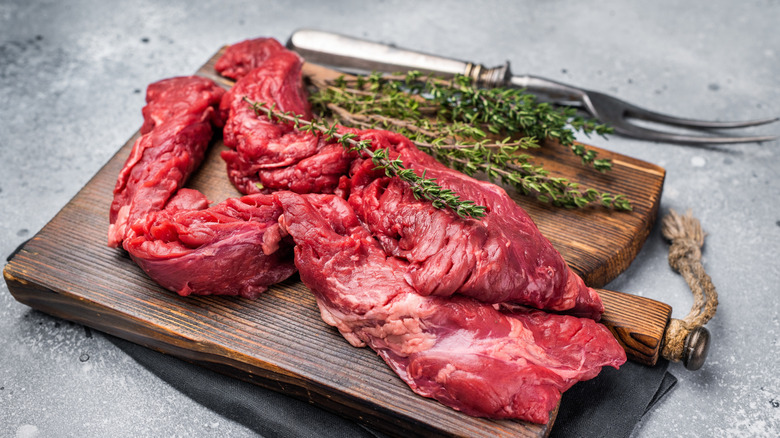
While some may know skirt steak as Bobby Flay's favorite cut of steak to make when cooking for guests, or as the absolute best steak for cooking fajitas, you may not be entirely sure of the ins and outs of this meat. And I'm talking literally here. Skirt meat has two different cuts for people to choose from: the inside skirt meat and the outside. If you were to place them side by side, you would be hard-pressed to miss the difference, as the outside is both a longer and thicker cut.
Both the inside and outside skirt steaks come from a place on the cow called the plate, which is found underneath the ribs and wedged between the flank and brisket. The meat is considered on the tougher side in general, but the inside skirt steak is even more so than the outside. As these cuts are located in the cow's abdominal and diaphragm area, they are heavily used throughout the cow's life. The result is that the meat is chewier from the constant muscle use, but also wields a powerful pop of flavor, which is why it is often praised as a cut in general (not specifically for a juicy steak).
Chuck
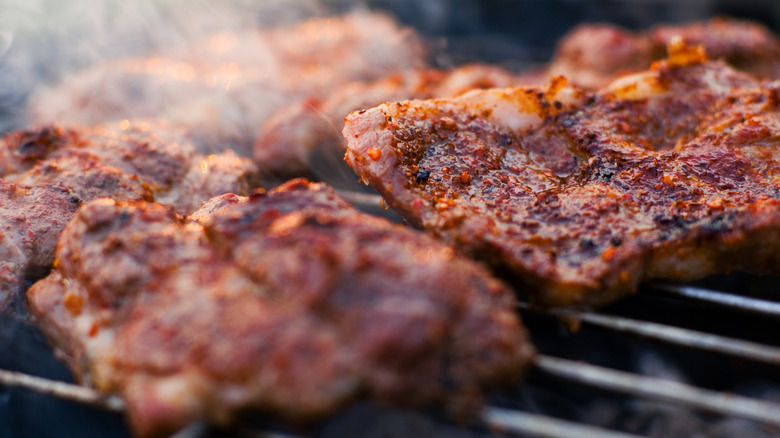
Chuck steak comes from the chuck primal area on the cow, which, in layman's terms, means it is from the shoulder of the cow. As you can imagine, a cow's shoulder has many different muscles running through it, which are necessary to help the cow move its leg. If you are catching on by now, the fac that it comes from such an active area should immediately give you a hint that this cut is on the tough side of the spectrum.
On the subject of muscles, this is exactly why Jamie Waldron advises against grabbing cuts that originate in the shoulder area for your steak night dinner. "Don't steak hip muscles or most of the shoulder," he says. "There's better cuts for grilling applications." With the reputation this cut of beef has for being tough, consumers often opt to turn it into ground beef or to cook it with a wet cooking method.
As for what cuts Waldron believes that you should snatch up instead, he goes into more detail to help shoppers out. "For grilling, I'm all for ribeyes, flat irons, and Denver steaks," he says. "They all just cook well and quickly for an easy summer dinner." He also gives a little straightforward advice on how best to cook these cuts once you've brought them home: "Salt and fire; the best ways to do a quality steak."
Bottom sirloin
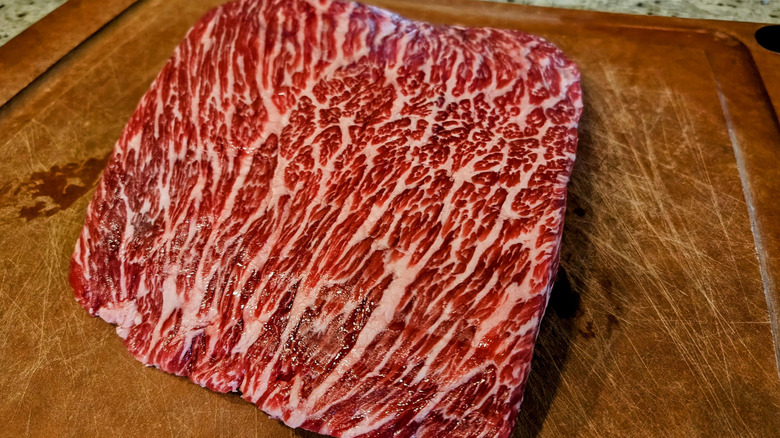
Let's go back to the area of the cow known as the sirloin. As suggested by the fact that there's a top sirloin, you would be right in thinking that there is a corresponding bottom cut. Though the sirloin area is essentially separated into several different cuts, the first separation is between the top and bottom. While top sirloin has some great options for steaking, the bottom contains three main cuts of varying tenderness.
If you must pick one cut from the bottom sirloin, you might want to go with one of the more widely used and tender cuts from this area: the tri-tip steak. Even if the meat is still considered lean, there is often a layer of fat on the exterior that can aid you in your mouth-watering steak journey. Jamie Waldron clarifies that "the fat contributes to so many things; adding moisture while cooking, a 'self baster' while high heat searing, etc." He also shares a tip for how to deal with the fat: "Never cut it off before you cook, only after."
Bottom round
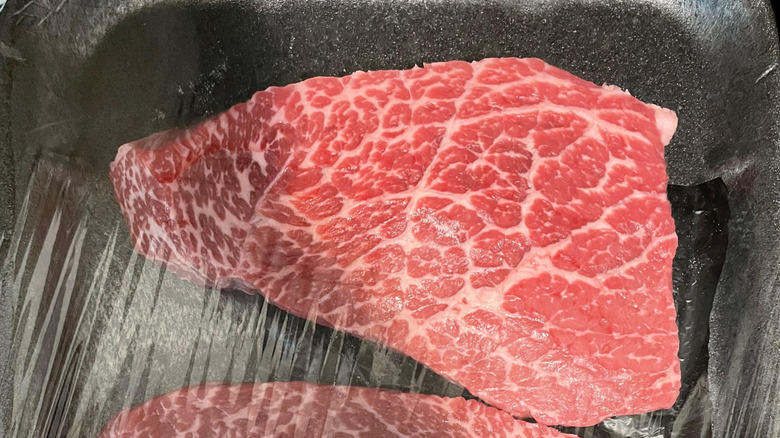
At this point, if you hear the word "round" in relation to steak, you should know that there are better ways to handle the meat type than using it for steak. With the bottom round, we are headed back to the back leg of the cow — more specifically, the outside of the leg, carcass-wise. As you can imagine, the term bottom is used because this cut of meat is taken from the spot underneath both the top round and eye of round. With how many muscles run through this area, if you are dead set on purchasing and steaking this piece of meat, you may want to first research the ways in which to tenderize tough meat.
What is important to keep in mind here, though, is that even if the bottom round (or the other cuts mentioned) are not naturally as tender, personal preference will largely dictate how good you believe your steak dinner to be. "I don't think there's a cut I would universally tell people to avoid because it really depends on what someone values," says Gabriel Llaurado. He also goes on to make the point that "cooking technique is almost as important as the cut itself. If you cook chuck roast like a filet mignon, you're probably going to be disappointed." However, if you instead braise it over the course of a few hours, he notes that it can "become fork-tender."
Cross rib
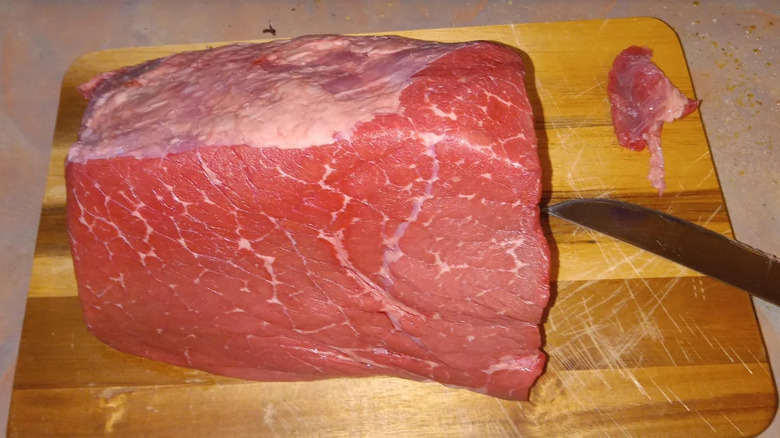
The cross rib roast is a cut of meat hailing from the chuck portion of the cow, also known as the muscle-heavy shoulder. That's why it shouldn't shock you to learn that it isn't your best option for a tender grilled steak. If you already have this cut in the fridge, consider a good slow-cooking method, such as braising, to soften the meat into a more succulent dinner. Though it is not known for its tenderness, where this cut does seem to shine is in its flavor profile. It naturally provides a strong beefy taste, which some sources compare to that of a ribeye.
Now, if flavor is what really stands out to you in a steak, you might think a more expensive option like filet mignon would deliver on expectation. However, it might surprise you to hear that Gabriel Llaurado does not agree. "Filet mignon can sometimes be overrated from a value perspective. It's exceptionally tender, and there is absolutely a place for it, but tenderness is what you're primarily paying for." He goes on to say that "compared with a ribeye, strip, hanger, or picanha, filet tends to have a milder beef flavor because it is so lean."
Cubed
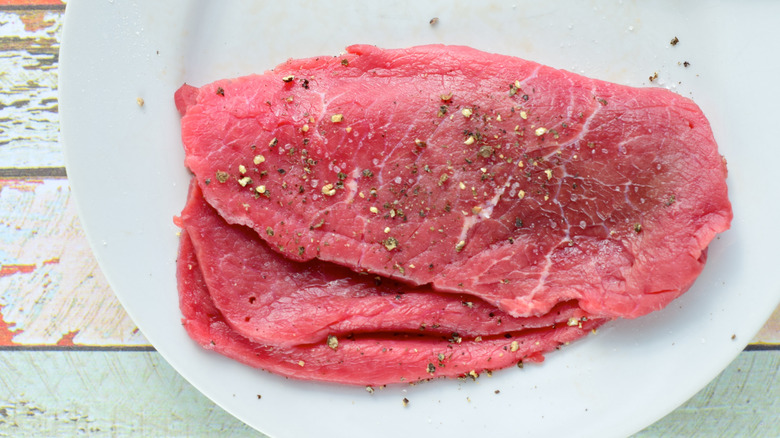
The invention of the cubed steak actually has a really interesting background. It's said that cowboys and ranchers in the 19th century tried to make cuts of steak from older cows more palatable by using a tool to whack the living heck out of the muscle fibers until they were easier to chew. This also provides you with a bit of insight into why this might not meet high steak expectations. Anything with a history of people needing to whack it with a blade-affixed stick to chew it without breaking teeth likely won't impress your guests.
At this point, you are likely wondering where this cut of meat comes from on the cow. Unfortunately, the answer is not as straightforward with cubed steak as it is with the others. Cubed steak doesn't just come from one tough area on the cow; it actually comes from several. For example, this type of steak can be taken from cuts such as chuck and round. After going through a modern-day tenderizing machine, it then gets labeled as cube steak, cubed steak, or even minute steak when sold. Due to the thinness of this type of cut, it would not meet the expectation for a thick and juicy steak dinner. However, it would make the grade for one of the best cuts of meat for chicken-fried steak.
Brisket
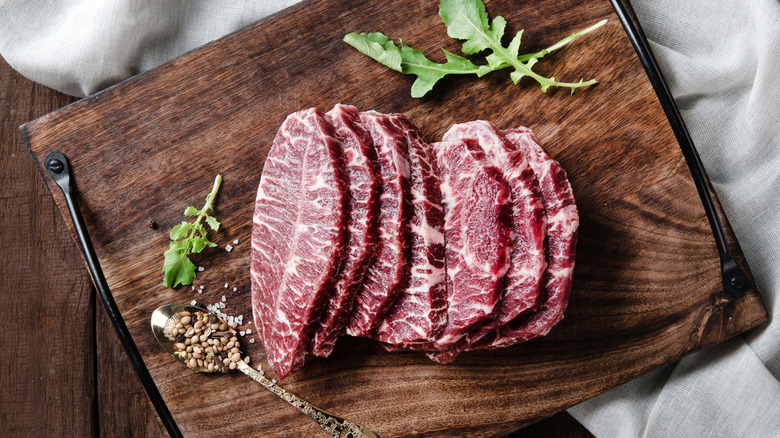
The brisket is a cut of meat from the lower chest area of the cow, sitting above the shank and below the chuck primal areas. When you consider that the word brisket is just another word for chest, this name makes sense. This cut of meat has two different parts: the flat and the point. Both are considered tough, but the point has more fat while the flat has higher muscle density.
Sometimes a brisket is sold whole, including both parts, or the parts can be sold separately. However, the problem with using either of the parts for steak is that, due to their position, the muscles found within the chest work quite hard each time the cow moves. This means that unless you cook the cut slowly at a low heat, you're going to have a consistently chewy experience.
Yet it seems that even if you avoid cuts like brisket, the cut alone is only half the story of a well-made steak. "Two ribeyes can come from the exact same part of the animal and deliver completely different eating experiences depending on the amount and quality of intramuscular fat," Gabriel Llaurado explains. He goes on to explain that beef is partially graded by the Beef Marbling Score (BMS). "As you move up the marbling scale, the steak generally becomes richer, softer, and more luxurious," he says. With this in mind, on your next shopping trip, you will be sure to pick out the perfect steak.