

11 Types Of Cheese You Can Eat Even If You're Lactose Intolerant
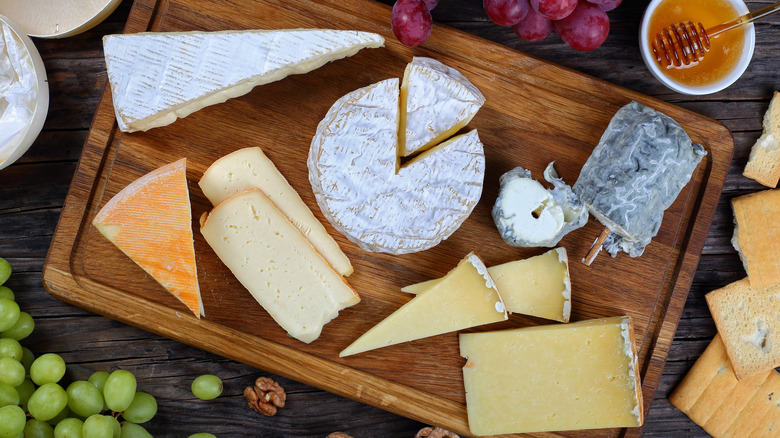
A world without cheese, to some people, would be like a world without color. If you've ever seen the meme where a waiter is standing in front of a patron grating cheese, and felt seen, you'll understand. For those who haven't seen it, the waiter asks the customer to tell him when there's enough cheese grated on his meal. The entire room fills up with cheese before the customer says to stop. The meme is a funny take on the unshakable love that some people hold for the product.
Sadly though, not everyone has the luxury of popping whatever cheese they prefer into a meal. A simple thing such as lactose intolerance can really throw a wrench into your cheese-eating plans. However, today might be the day you learn that this condition does not mean you need to completely break it off with cheese just yet. There are actually many cheese options that those with this intolerance can happily consume without facing unpleasant side effects.
To understand how this is possible, first it's important to focus on what causes lactose intolerance. Those with the condition experience unpleasant side effects when their digestive tract is met with lactose, which is a sugar found within most milk products. With this in mind, you can still enjoy the wonder of cheese in moderation with this condition. You just need to select cheese products that are naturally lower in this digestive revolt-causing type of sugar.
1. Goat cheese
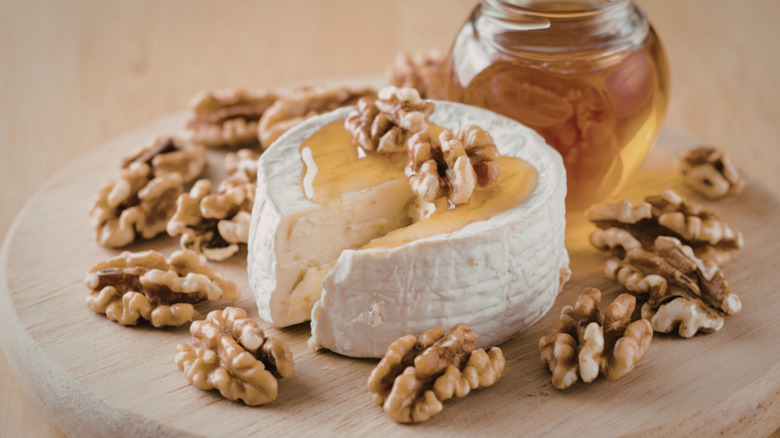
You might assume that milk, no matter the source, has lactose present in it. While it is true that all milks have this sugar present, some have lower levels to start with than the regular run-of-the-mill cow's milk. It turns out that goat's milk is one of these types, with the average amount of lactose in 100 grams of milk landing around 4.2 grams of lactose. This is slightly less than the approximate 5 grams of lactose that both skimmed and whole cow's milk provide, which is a good start for those looking to avoid the product.
While all milk (not just goat's milk) goes through the magical process of going from delicious liquid to a solid wheel of goodness, a byproduct called whey is created. The whey is a liquid that is drained away from the final product. This whey typically contains a portion of the lactose that was once within the cheese. Once the entire process has been completed, and you are looking at a block of goat cheese, there is between 20% to 30% less lactose than in regular cheese.
The lactose level of goat cheese (and cheese in general) will also decrease with the amount of time the cheese has been aged. For this reason, those with an intolerance should opt for aged goat cheese options. A fresh goat's cheese like chèvre, which has not undergone the aging process, will naturally contain higher lactose levels.
2. Parmesan
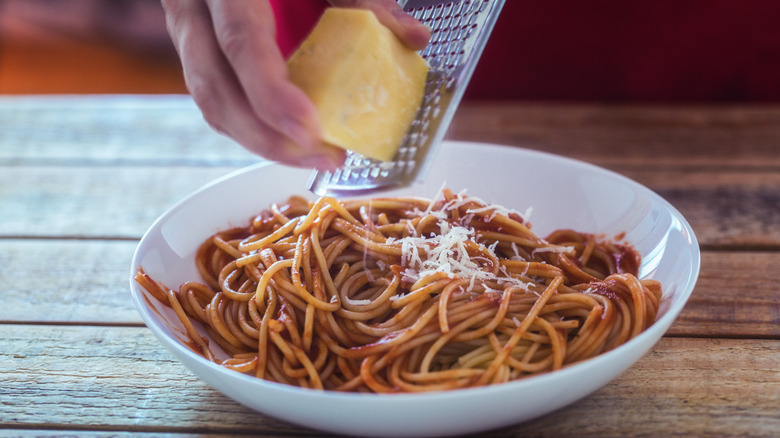
If you are a pasta lover who is trying to avoid lactose, then you can now rejoice and do a little happy dance. You won't need to strike Parmesan from your list of allowances, as this cheese ranks low on the scale for lactose content. That's correct: the savory Italian cheese with more protein and calcium than eggs is a safe haven for lactose-intolerant bellies everywhere. It turns out that Parmesan cheese goes through a long and sordid aging process before it finally reaches the cheese grater, and this is what makes it a low-lactose product.
While many cheeses still contain low levels of lactose, Parmesan is extremely close to having none at all. For a block of Parmesan that has been aged 12 months, there's only 0.1 grams of lactose found per 100 grams. When you take into consideration that a recent study shows most people with this condition can still handle about 12 grams of lactose per day, Parmesan truly seems like a safe bet.
The culprit for these low levels is that same type of bacteria called lactic bacteria. This type of bacteria naturally occurs in the cheesemaking process, not just for Parmesan, but for most cheeses (including goat's cheese). As the aging process takes place, lactic bacteria have a free-for-all feast, transforming lactose into lactic acid. So if you enjoy Parmesan, go ahead and sprinkle it all over the place during a meal — like edible confetti — without fear.
3. Swiss
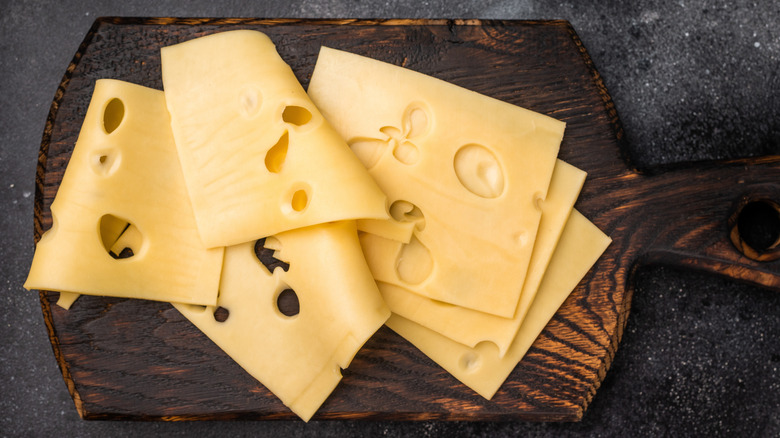
Swiss cheese you might immediately recognize due to the unique holes throughout the product. What you might not know, though, is that these holes are created naturally during the production process. The culprit for these holes is actually a bacterium with a name that will tie your tongue faster than repeating the phrase "she sells shells by the seashore" three times. Propionibacteria create carbon monoxide, which is what expands to create the holes, or eyes as they are typically referred to.
Now, as for the lactose content of Swiss cheese, there are very small amounts found within the final product. As with the others, the cheese-making process is at play here. During the creation process, there is a culture (another word for a type of bacteria used in cheesemaking) added to the mixture. The lactose to lactic acid adventure then ensues during aging.
One thing to note with Swiss cheese is that not all Swiss cheese is crafted in Switzerland as the name would suggest. In fact, the U.S. offers many varieties that are crafted within the country, though the producers use methods that were inspired by those used in Switzerland. It seems that Emmentaler is the version of this cheese that is still made in Switzerland today, while Swiss cheese is the Americanized version that was invented in the 1800s.
4. Stilton
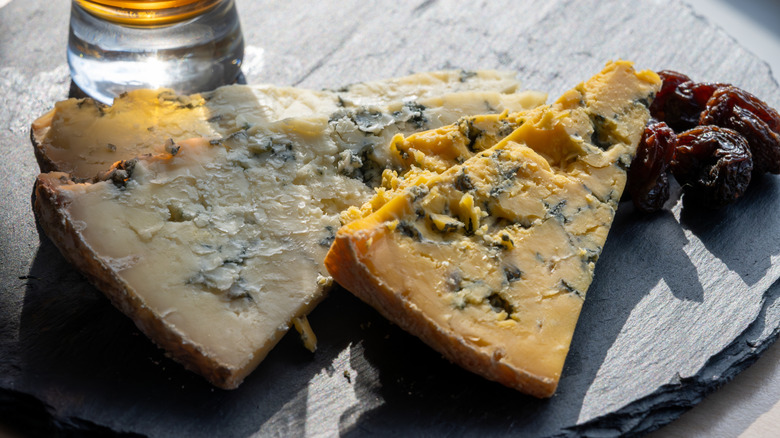
Stilton is not just any old type of blue cheese. It actually has a protected designation of origin, which means that it is restricted to only being produced within certain areas of the U.K. Not only that, but the cheese must meet a host of requirements once it has been created to bear the Stilton name. The factory actually has a person with the job title of cheese grader (not to be confused with cheese grater) come in and check if the cheese is up to snuff. If it does not meet the Stilton standard, a regular blue cheese label is slapped onto it as a consolation prize.
The good news here is that blue cheeses in general are considered belly-friendly options for the lactose intolerant. Stilton itself contains a lactose content that ranges between nearly 0% to 0.5%, an amount that those with intolerances can often handle. The lactic acid bacteria strike once more in Stilton, a true superhero to digestive systems everywhere.
While we are on the topic of blue cheeses, you might be wondering what is done to the cheese to give it that signature coloring. Well, the cheese is actually injected with mold spores during the process. That's right, the blue color is mold that has grown in the cheese. Try not to let this stop you from adding the cheese to your shopping list, though. It is said to have a nutty and salty taste that goes great with certain wines and on biscuits.
5. Aged cheddar
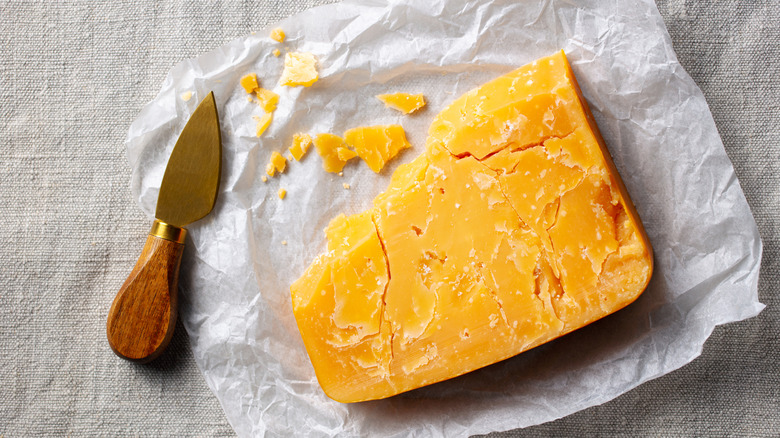
If you enjoy a good block of cheddar cheese, then this is your cue to jump for joy. This type of cheese undergoes a similar aging process as many of the other hard cheeses listed, with most of the lactose being removed with the whey created during the process. However, if you are aiming for the lowest lactose content possible in your cheddar, then you will need to pay close attention to the packaging.
If you've ever wandered into the cheese section of your local grocery store, you will have noticed that cheddar cheese comes in many different forms. If you've looked closely at the packaging, you may have seen descriptors listed on there like sharp, mild, or vintage. While these refer to the taste of the product, it also directly refers to the age of the cheese. A mild cheddar is only aged three months, whereas a vintage cheddar is aged for any time period over 12 months, for example. Again you'll find that the longer the aging process, the lower the lactose levels.
A side note here is that cheddar cheese also comes in two different colors. You can rest assured that whether you grab a white or orange cheddar, as long as they are aged the same length, the lactose content is identical. In fact, white cheddar is a lie. With white being cheddar's natural color, the only difference between the two is that the orange version has a dye added to it.
6. Asiago
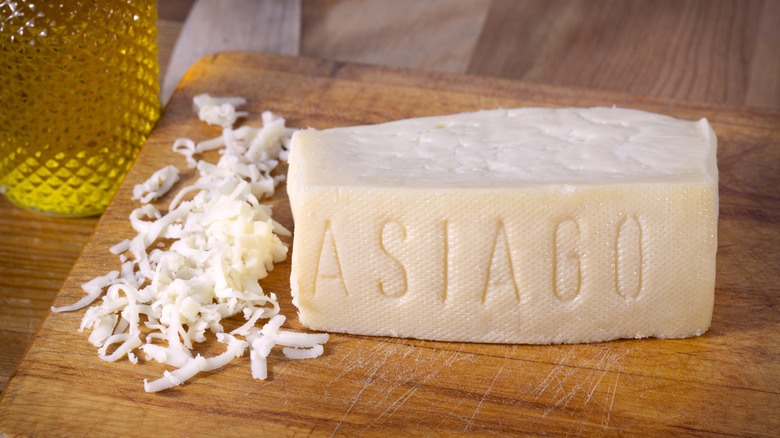
Asiago cheese is a hard cheese option that first came to be in Northern Italy. There are three different aging ranges for this type of cheese, including Asiago Mezzano which is from four to six months, Asiago Vecchio, which is 10 months, and Asiago Stravecchio, which includes anything aged over 15 months. With the golden rule of combining lactose intolerance and cheese being to shoot for the longer-aged options, you will want to aim for the latter to be safe.
If you are unfamiliar with this type of cheese, then you might be a bit hesitant when using it in your kitchen. But Asiago cheese (specifically the more heavily aged varieties) can be used in many of the same ways a Parmesan. While the flavor of the cheese is different (Asiago has a dash more powerful nutty flavoring), the aged variety of the cheese can easily be swapped out for grating in many circumstances. Think soups, salads, risotto, pastas, or even on roasted veggies. It's also a great option for adding to a cheese board, or as a snack with red or white wine. Of course, if you want to eat it just by itself as well, there's no shame in that; have at it.
7. Gorgonzola
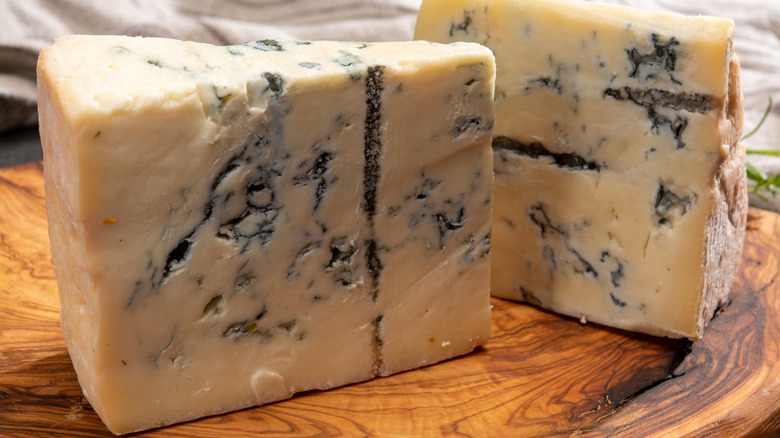
If you are a fan of the pretty blue veins in blue cheese, but Stilton just isn't your jam, Gorgonzola is one that you might want to consider. While they are both blue cheeses, Gorgonzola has completely different features than Stilton. Gorgonzola originated in Italy and is one of the only soft cheeses that have made it onto the lactose-intolerant safe list. As a matter of fact, one research center recently announced that this type of cheese is officially naturally lactose-free, with under 0.1 grams of lactose present in 100 grams of Gorgonzola.
One of the other great things about Gorgonzola is that there are two different flavor options. There is Gorgonzola dolce, which is considered to have a sweeter taste, and Gorgonzola piccante, a cheese that has a stronger flavor, with a bit of a kick to it. The dolce version is lighter, and often recommended for those who are seeking an introduction to blue cheese. The piccante, on the other hand, is considered more tart and pungent. For this reason, it's better suited for the adventurous eaters in the group. This difference in flavor is produced by the length of aging these types undergo. The Gorgonzola dolce is aged anywhere from a minimum of 50 days to a maximum of 150 days, while the piccante has a much longer range between 80 to 270 days.
8. Feta
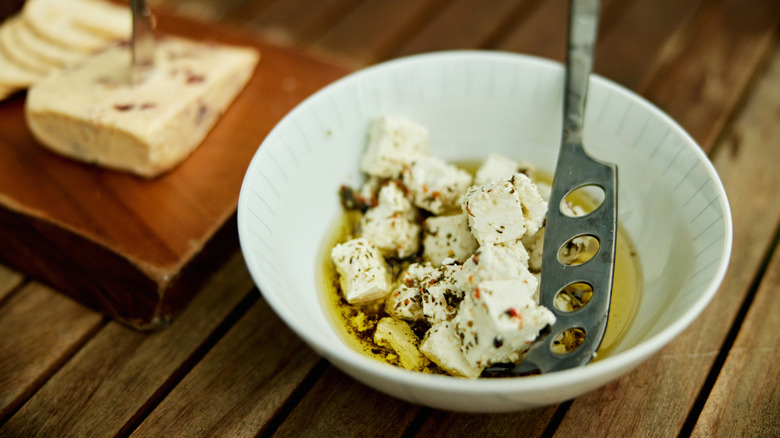
If whipped feta is one of your weaknesses, then you can sigh in relief at not having to strike it from your shopping list. If you don't know what whipped feta is, then be advised that it's a product which will change your life. You can add it to salads or into sauces. You can spread it onto toast, and pair it with honey for a kick of sweetness in dipping sauces. Whipped feta is truly the easy cheesy spread that can go on almost anything.
Now that we've gotten that out of the way, let's dive into what actually goes into making feta and the lactose levels you can expect. Traditionally Greek-made feta is created from a mixture of sheep's and goat's milk, though there are U.S. versions that do use cow's milk in production instead. Generally, within 100 grams of feta, there is an estimated 1 to 2 grams of lactose. This number will, of course, change based on how long the feta has been aged and potentially the type of milk used in production. Feta can be aged anywhere from two months to 12 months, though if you're aiming for low lactose content, remember to reach for the more heavily aged varieties.
9. Brie
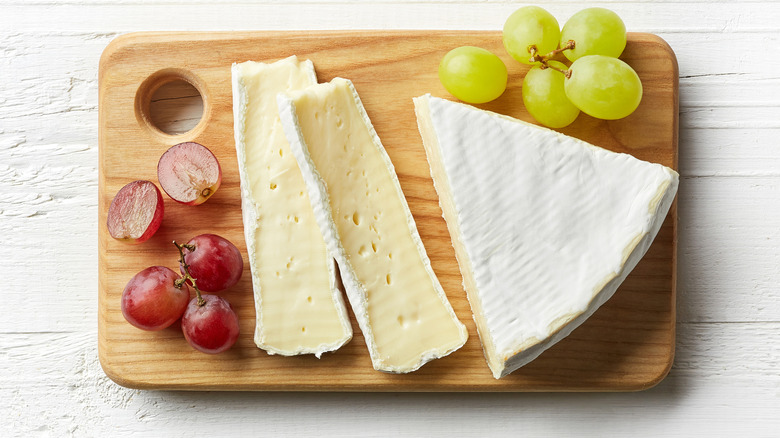
For this addition to the list, you can thank the monks who lived in Paris during the 17th century. This original brie was coined Brie de Meaux in those days, and is actually still made in France today. It originally became popular when the French emperor of the time visited the monastery where the monks were living, and fell in love with the cheese.
Thankfully, those whom lactose does not agree with can take part in falling in love with this historical cheese as well, since it has lactose levels low enough to slide through an ornery digestive system. In 100 grams of brie, there is approximately under 1 gram of lactose. While soft cheeses have the whey drained once the cheese curds are already formed (the opposite of hard cheeses that have this done prior), about 97% of the lactose is still removed during the process regardless.
If brie isn't normally on your typical grocery list and you are unsure what to do with it, never fear. There are plenty of things you can do with this versatile cheese option. If you are a fan of pastries, you can add it to a puff pastry along with jams or fruit. Or you can use it as a creamy addition to your ramen.
10. Grana Padano
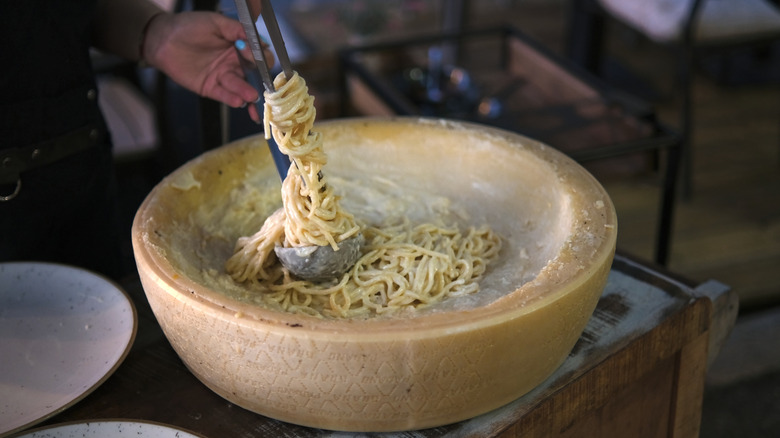
Here is another item on the list that can be attributed to the monks of long ago. It seems that Grana Padano is a cheese that was originally founded by monks who were trying to figure out a way to preserve the extra milk they had. The hard cheese that they created to fulfill this need is still being eaten over 1,000 years later. Who knew that monks were behind so many lactose-free cheese options.
Grana Padano is an Italian cheese which is traditionally produced in the Po River Valley in Northern Italy. The cheese is considered virtually lactose-free. This is attributed to the lactose-containing whey being separated out during the cheesemaking process. When this is combined with the longer aging process, which can range between nine and 24 months, the bacteria have tons of time to consume any remaining lactose.
Now on to the bit that really needs to be said about this cheese. Grana Padano cheese is not the same as Parmesan cheese. They are completely different beasts, though they can be used in similar ways. While Parmesan sways more heavily to the umami, Grana Padano has more of a nutty flavor. If you are looking to substitute one for the other, it is possible. But just be advised that there may be a flavor difference.
11. Pecorino Romano
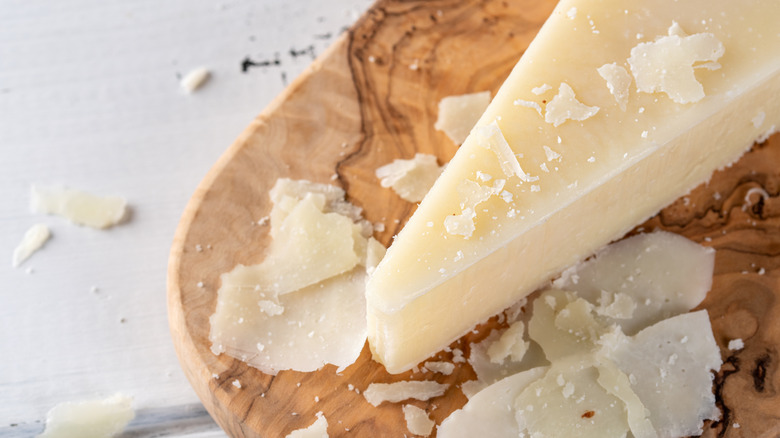
You may know pecorino Romano cheese as being one of the Roman-inspired ingredients that Ina Garten adds to her scrambled eggs. But, as you can likely guess, pecorino Romano is also a low-lactose option. This cheese might seem similar to some of the other options covered based on the way it looks, but it differs in many aspects. One of the most important differences is that sheep's milk is used as the base ingredient instead of cow's milk.
This cheese is very low in lactose content to begin with, with one study on lactose content reporting less than 10 milligrams per kilogram of cheese. But there is also some evidence that sheep's milk is easier to digest than cow's milk. It is believed that the fat and protein content of sheep's milk is easier on the digestive system. This gives pecorino Romano a little extra boost for those who normally struggle with the lactose content.
As for incorporating this type of cheese into your meals, you actually might have already been eating it on occasion without knowing. For example, if you head over to your local Olive Garden, you'll get served this type of cheese instead of Parmesan on your dish. Romano is also popular in Roman dishes like Pasta alla Carbonara or Cacio e Pepe. Of course, if you're looking for a simple snack, adding it to a snack platter will never fail.