

5 Simple Ways To Turn Basic Lemonade Into A Party Favorite
We may receive a commission on purchases made from links.
Lemonade at its simplest — water, sugar, and lemon juice — has been around for centuries. Early efforts to improve upon the original recipe, however, were a bit of a mixed bag. Pink lemonade, which is more of a color than a flavor in its own right, was rumored to have been invented in the 19th century by a circus vendor using wash water from a performer's pink tights. Also dating from that era is a vintage lemonade recipe with an unexpectedly meaty ingredient, that being calves' foot jelly. Needless to say, neither of these versions are in heavy rotation these days, although a 1944 tip about adding lemon zest to the mix still checks out.
Beyond adding zest, though, there are numerous other ways to plus-up your lemonade. The very best add-ins are ones that work to enhance the lemony tartness rather than overwhelming it (which was unfortunately the case with the sweetened condensed milk in that whipped lemonade recipe that went viral a year or so back). Certain types of produce play nicely with lemons and sugar, while lemonade can also be combined with other beverages to make distinctive and delicious new drinks.
Add floral notes
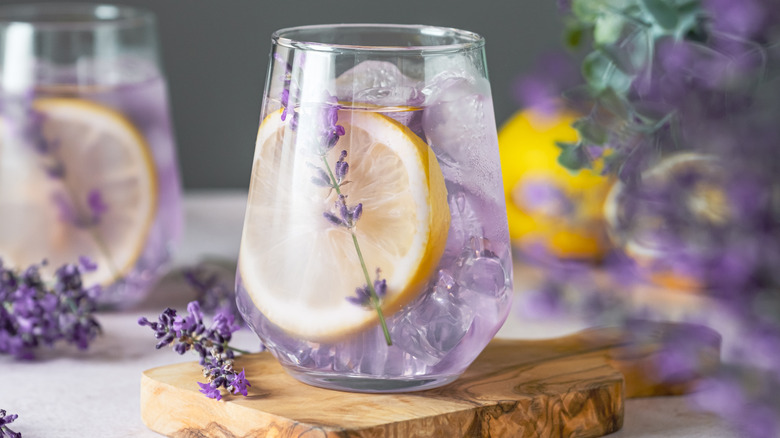
For lemonade with a subtler flavor boost, think flower power. Not the 1960s kind, but the floral flavors that have been trending since the 20-teens. Lavender lemonade is a popular menu item in certain upscale cafes, and we're waiting for the day Starbucks adds it to the menu. In the meantime, you can easily give your springtime lemonade a floral upgrade by using lavender syrup (store bought or homemade) as a sweetener. If you're looking to elevate pre-sweetened store-bought lemonade, pack culinary lavender in a tea ball and steep it in the beverage. Don't leave the lavender soaking all day, though, but check the flavor after 15 minutes to half an hour. When steeped too long, it can start to taste soapy.
Lavender isn't the only edible flower that goes well with lemons. Rose syrup makes lovely lemonade, and you can also add a few drops of rosewater to the drink. (Go easy — overdoing it may make your lemonade taste like perfume.) Hibiscus lemonade is also quite tasty, although this flower is best if you prefer tarter flavors. If not, you may need to compensate by adding extra sugar. Dried hibiscus petals, aka flor de jamaica, can be purchased online (a 4-ounce bag of El Molcajete hibiscus flowers costs $5.99 on Amazon), while hibiscus teabags are another alternative. To use the latter, make tea and allow it to cool, then substitute it for part of the water in your lemonade.
Crank up the heat
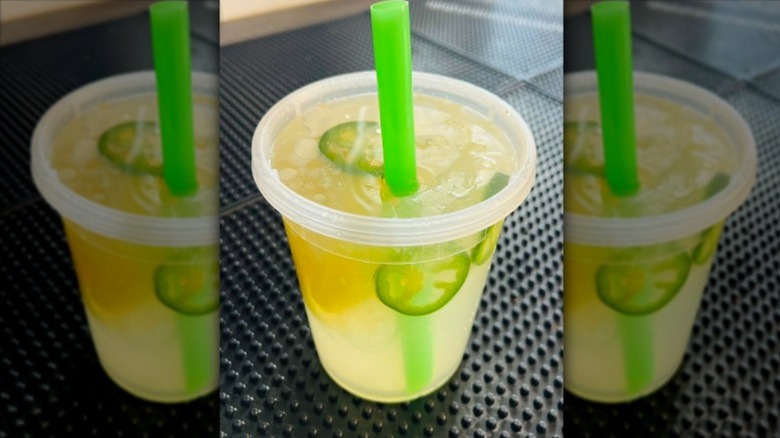
Sweet + heat is a flavor combo that's been gaining traction lately, so much so that Aldi recently offered a store brand spicy jalapeño-flavored lemonade. If you're making your own lemonade, one way to spice it up for a zestier sip is by using homemade jalapeño syrup. You could also puree a fresh pepper and add some directly to the drink (this works with storebought lemonade, too) or place a slice of jalapeño in each well of an ice cube tray, then fill with water and freeze. A few of these cubes can add a subtle hint of spice to your drink.
Other peppers can also be employed if you want something hotter or milder than a jalapeño, and you can combine these peppers with fruit as well. Mango habanero would work well as a lemonade flavor, as would pineapple or strawberry jalapeño. Dried pepper powder is another viable option for lemonade flavoring. A pinch of cayenne brings pure heat (along with a metabolic boost and digestive benefits), while chipotle powder adds smoky notes. Try making chipotle-raspberry lemonade for a spicy-sweet-tart triple threat treat.
Give it a produce pop
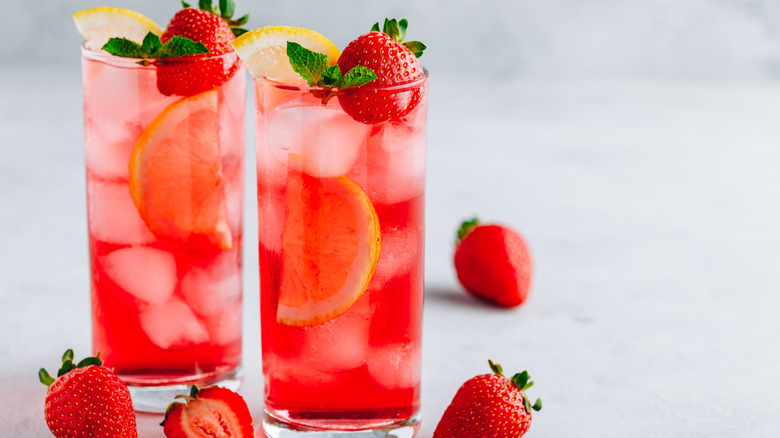
Just about any fruit can be added to lemonade — strawberries are a classic, but raspberries, blueberries, mangoes, peaches, pineapple, and watermelon all work, too, and you can experiment with kiwi, dragon fruit, or whatever else is in your produce bin. Fresh or frozen fruits both work, and even canned fruits can be used in a pinch. (If they're packed in syrup, use the liquid to replace some of the sugar and water in the drink.) Puree the fruit and stir it into the drink, or go for a more sangria-like approach and subtler fruit flavors by adding chunks of your chosen produce. You can also mix lemonade with cranberry, grape, orange, or any other kind of fruit juice you have on hand. Depending on how sweet or tart the juice is, you may wish to adjust the amount of sugar used in the lemonade accordingly.
If you're up for it, you can even try using less fruit-like fruits in your lemonade, Back in pre-pandemic days, "Queer Eye" introduced a tomato juice-lemonade combo, while in more recent years, TikTok has tried to revive the concept by using fresh tomatoes. Of course, you can always go full-on vegetable by mixing beet powder into your drink. If used with restraint, it will dye your lemonade a natural neon shade of pink (oxymoronic as that may sound) without making it taste too beet-y.
Infuse it with herbs
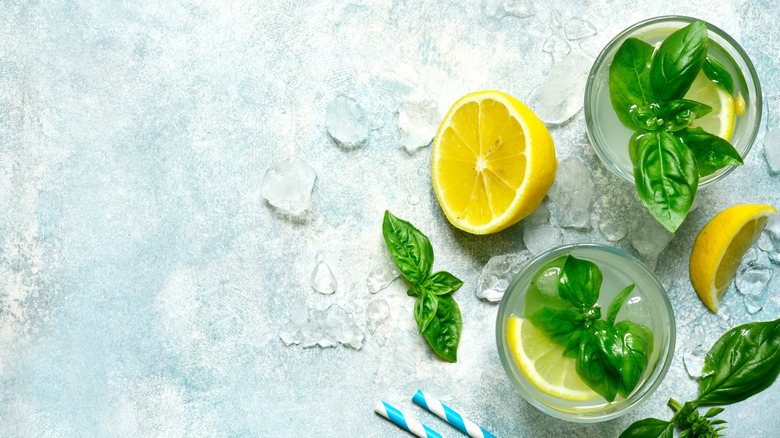
Herbal lemonade is no new idea: One of the earliest precursors of the drink is a 1,000+-year-old Egyptian beverage made with mint, citron leaves, and barley water. Lemonade with mint (but no barley) remains popular in Egypt today, where it is a blended drink made with the entire lemon, rind and all. In the U.S., we often use fresh mint as a garnish for our lemonade. To release more mint flavor, though, you can muddle the leaves in a little bit of liquid before filling the glass or make mint syrup.
Basil lemonade has become popular in recent years, and the herb can be added to the drink in much the same way as mint. It can also be blended with strawberries to make a fruit-and-herb concoction. Oregano, parsley, sage, rosemary, and thyme are other herbs that all go well with lemons. Antoni Porowski of "Queer Eye" said he once made lemonade with charred rosemary and thyme, although unlike the aforementioned tomato lemonade, it was never featured in an episode of the show. Even so, he feels it was a lovely drink and a healthy one, too.
Spike it
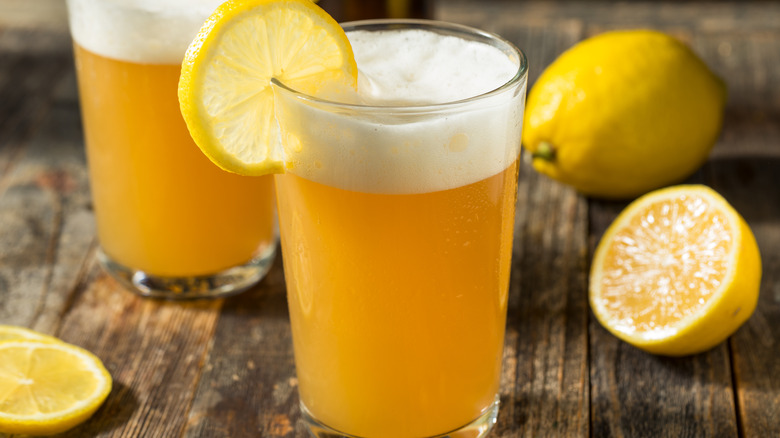
Boozed-up lemonade has long been a favorite of summertime day drinkers. Vodka and lemonade is a popular combo, but light rum will also work, as will gin, tequila, or even whiskey. (Lemonade + whiskey = whiskey sour in long drink form.) You can also add a shot to the ice tea combo created by golfer Arnold Palmer to turn it into a drink called the John Daly.
Lemonade also needn't be mixed with hard liquor. It can be used in place of orange juice to make lemonade mimosas, or combined with beer to make a classic cocktail known as a shandy. Bear in mind, though, that if you're using premixed lemonade, your shandy may not be as fizzy as one you'd get in a UK pub. The reason for this is that British lemonade is usually fizzy, whereas American lemonade is uncarbonated. You can get around this by muddling lemon wedges with sugar and adding seltzer to create your own fizzy lemonade. Another way to retain as much fizz as possible is to reduce the amount of lemonade in the recipe. Instead of using a 50/50 mix as in many shandy recipes, pour a 12-ounce beer into a pint glass and add lemonade to fill.