

7 Best And 4 Worst Private Label Brands At The Grocery Store
Everybody loves a good dupe, right? Like, who doesn't get legit thrills running up their spine when they stumble across a store's private label version of their favorite name brand treat? You know, the one that tastes just as good (if not way better), just without the eye-watering price tag that would send the Average Joe (or Jane) straight to the poorhouse.
These days, it's no secret that we're all just doing our best, looking for inventive ways to stretch every penny of our grocery budget. And private label brands? These corporate marketing inventions see that, and are more than happy to promise us consumers the same great taste, quality, and value ... for a whole lot less. Sounds perfect, except for the fact that while sometimes they absolutely deliver, other times ... ? Let's just say those dupes are real duds.
So, fellow shoppers, let's dig into the these private labels that run the gamut from oh-so-good to oh-so-bad. Are are they actually pulling their promises off, or are they simply hoping fancy packaging and a lower price will distract us from what's really inside? After all, is there really a difference between brand name and budget private labels? Those are exactly the kinds of questions shoppers have been debating for years, and for this roundup, we've sifted through glowing praise, recurring complaints, and expert explanations to see which private label brands knock it out of the park (and which ones strike out).
1. Best: Kirkland Signature (Costco)
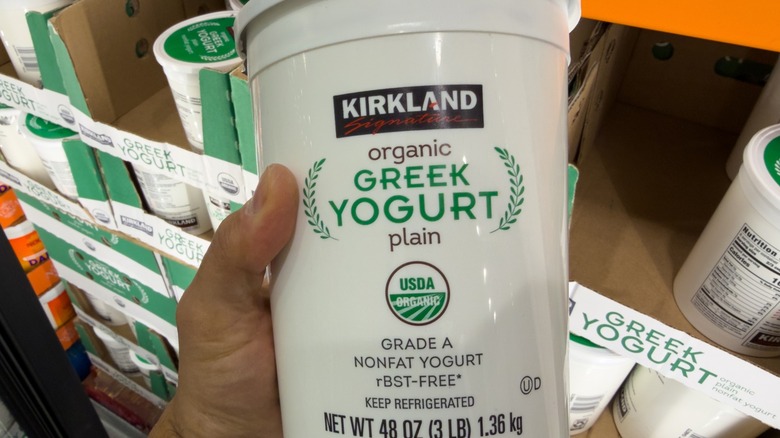
What's in a name? For Costco and its private label named Kirkland Signature, the answer to that is plenty. In this case, the moniker was a nod to Costco's close ties with the Seattle area community where it has its actual physical roots (Kirkland is a suburb of The Emerald City). And with this private label move, Costco presented Kirkland to customers not as a budget-approved second best, but as a premium product that just happens to not break the bank. And for shoppers who spent years assuming a store brand meant settling for subpar, Kirkland Signature steamrolled right over that assumption, flattening it with the most delicious of sweet and savory, surprise selections.
Rather than angling for being known as the cheapest, Costco aimed to match (or even surpass) the big names. A brave strategy that, judging by the loyal fanbase, has paid off. In fact, Kirkland has become so trusted that many Costco members don't even hesitate before tossing products into their cart. Online commenters joke they'd happily buy a Kirkland-branded anything, even an automobile (if they existed), while others insist they've never tried a Kirkland product they didn't deem excellent.
Part of that customer trust stems from how Costco develops its products. Rather than producing bargain-bin knockoffs, Costo collaborates with respected manufacturers, requiring Kirkland items to meet or exceed the quality of leading brands, while still selling for way less. Experts have taken notice, with Kirkland ranking among the most-loved private label brands for shelf-stable and freezer foods.
2. Best: Trader Joe's (Trader Joe's)
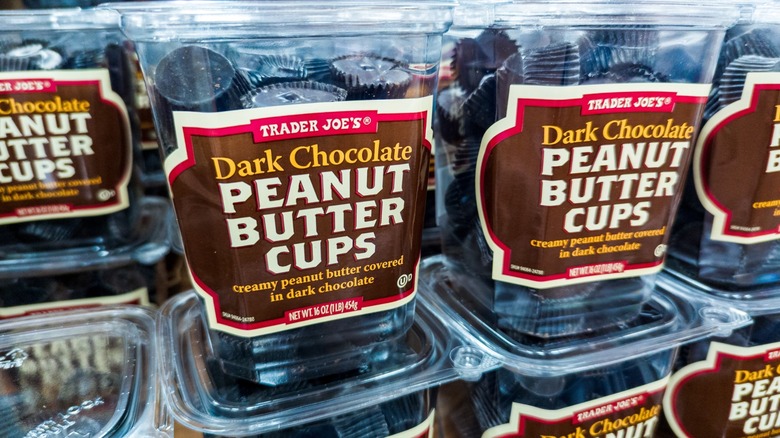
We've covered the absolute best Trader Joe's name-brand food dupes for 2026, and based on our research, that list could go on, and on, and on, and ... (you get the picture). Let's just say customers agree that Trader Joe's is clearly doing something right with its private label offerings. On that note, Trader Joe's just rolled out a new dark chocolate bark featuring jalapeños, and stoked fan anticipation is already popping up online.
Much of the success of this private label endeavor is that, unlike grocery chains that treat store brands as a low-cost consolation prize of sorts, Trader Joe's bucked that trend by focusing its offerings on product excellence (not shoddy schlock). It does this by presenting distinctive products with unique recipes, offering highly anticipated seasonal releases, and even giving customers access to rare specialty imports.
Industry analysts rank Trader Joe's among the nation's most-preferred private labels for shelf-stable and frozen foods, and shoppers praise the creativity of the lineup as much as the prices. Even though the company rarely reveals who manufactures its products, recall records have shown that both major food companies and smaller specialty producers are behind many customer favorites. Folks love Trader Joe's so much that some even claim its versions outperform the name-brand originals. Since shoppers typically won't find both options sitting side by side (the majority of TJ 's stock is solely its brand offerings), the private label naturally becomes the star of the show.
3. Best: H-E-B Brand / Central Market (H-E-B)
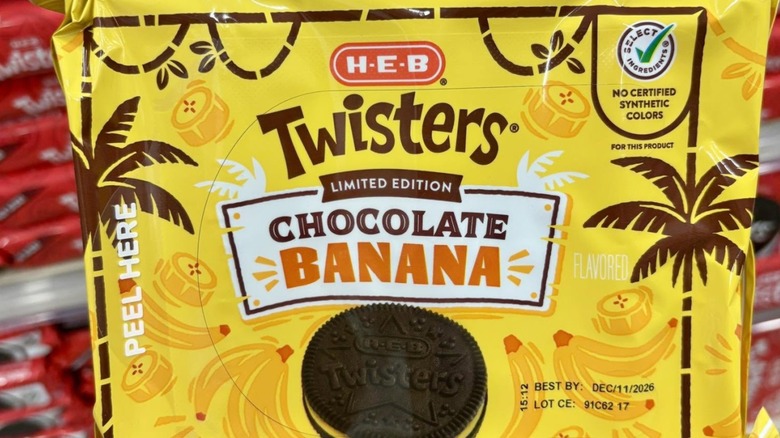
Want to talk about a regional grocery chain that inspires some real diehard devotion? Cue H-E-B, which is currently enjoying quite the borderline-obsessive lovefest across Texas. Much of this cult following can be attributed to the private label brands H-E-B has rolled out (it boasts quite an expansive family of these, in fact). The ones shoppers actively seek out? The H-E-B house brand and the more upscale Central Market Line.
Industry rankings place H-E-B among the nation's most sought after store brands for shelf-stable and frozen foods, crediting its success to a deep understanding of local tastes and a commitment to delivering products that hold their own even against the big brands. Rather than aiming to appeal to everyone, the company focuses heavily on serving Texas shoppers with region-specific flavors and premium ingredients.
That strategy has translated to an overwhelming response filled with uncurbed customer enthusiasm. Online, Texans often insist H-E-B products are not only less expensive than many national brands, but are also noticeably better. Some shoppers even joke they'll happily drive more than an hour just to stock up on such snacky snacks, while former Texans list H-E-B and its offerings as one of the things they miss most after moving away from the Lone Star State. Social media is likewise filled with videos and posts showing shopping hauls filled with new releases alongside tried-and-true favorites, showing the chain offers customers both consistency and something new (and excellent) to discover.
4. Best: Good & Gather (Target)
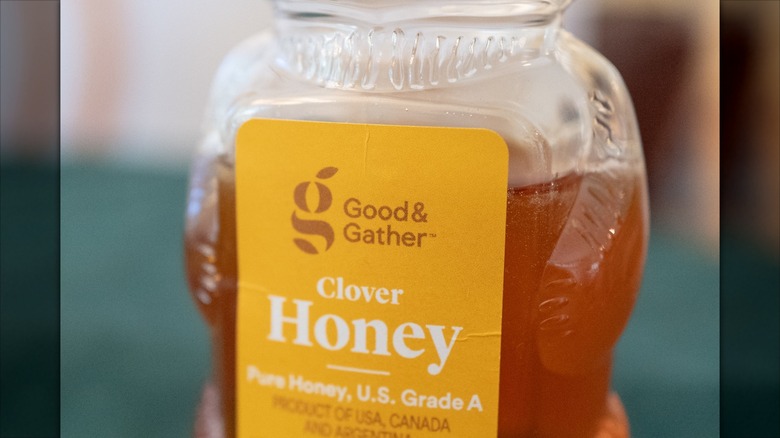
Since taking the stage in the late 2010s, Target has turned one of its private labels, Good & Gather, into a polished powerhouse more than able to bring it when compared to the quality of even the biggest national names. What exactly has skyrocketed Good & Gather to the top of Target's offerings? For starters, its 2,500 products (and counting) have all been specifically engineered to deliver shoppers with excellence in taste, affordability in pricing, and an ingredients list with no nasty artificial flavors, synthetic colors, or high-fructose corn syrup in sight.
Beyond this brilliance, Target looked to the physical design, taking great care to sidestep the gosh awful pitfall of paltry bargain-basement packaging, leaning fully into a modern, aesthetically pleasing packaging that was just the kind of sleek selection shoppers weren't ashamed to scoop up.
Thanks to this winning strategy, Good & Gather has become a multi-billion-dollar business, with fans praising everything from the stellar snacks (super yummy gummies included) to everyday staples, while claiming the products are as good as (or even better than) national competitors and cost less. Even on the rare occasion online critics have questioned the brand, regular shoppers turned avid Good & Gather fans have been quick to jump in and refute the negativity, countering with near countless recommendations and favorite finds. Now, that's loyalty.
5. Best: Specially Selected (Aldi)
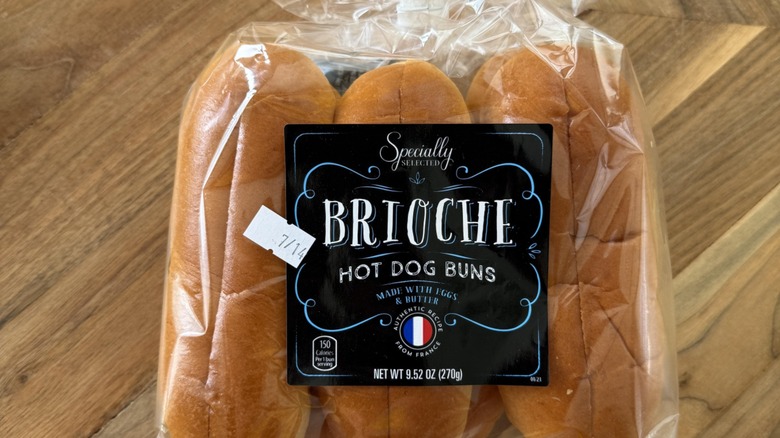
Specially Selected is Aldi's premium private label, and it has quickly become one of its biggest success stories. How? Simply by placing upscale products within the (realistic) reach of shoppers. The grocery store brand collection currently boasts more than 1,000 products, providing shoppers with an array of selections spanning from artisan cheeses to premium meats, as well as fresh bakery treats, decadent desserts, wines, and other globally inspired specialties.
All of these unique options enable Aldi clientele to effectively prepare their own copycat versions of meals (rivalling restaurant quality) at home. In light of this, it's no surprise that consumer demand for Specially Selected has surged, with data showing sales reaching record numbers. Certain higher-tier products, like the Wagyu beef selections, have seen especially impressive success, practically flying out the door (a clear representation of consumers' desire for luxury eats ... at prices that are tough to beat). Industry experts point to Specially Selected as a prime example of how private labels have managed to cast off their old, second-rate substitute reps. Now, shoppers (the younger generation especially) are beginning to view premium store brands as a financially savvy decision, one that doesn't require giving up good taste or great quality.
Aldi has placed Specially Selected in its own niche by carefully separating its value-focused products from this more elevated collection. Customers clearly appreciate the options, claiming they actually prefer several Aldi products over the big-name versions, including cereals, queso, tortilla chips, coffee, and other pantry favorites.
6. Best: Private Selection (Kroger)
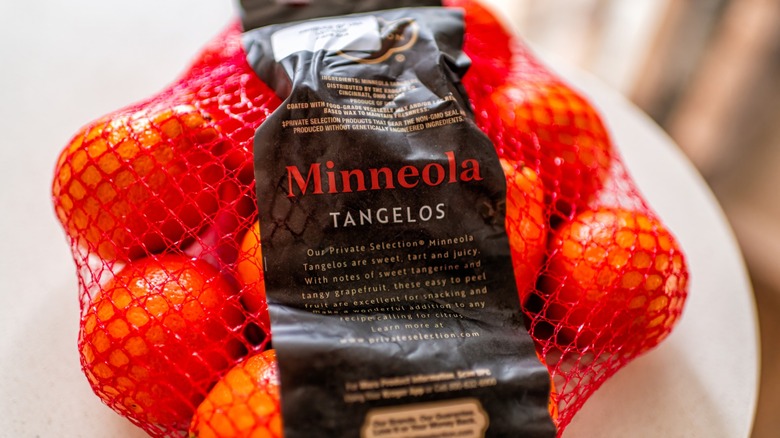
Kroger's aptly named Private Selection was designed specifically to make everyday grocery shopping feel a little more indulgent, without invoking the specialty-store price tags that would shock even the most staid charcuterie-snob. Kicking off the 2000s with premium private label energy, Private Selection has amassed a startling worth of more than $2.9 billion, offering discerning customers everything from artisan cheeses and bakery breads to premium meats and frozen pizzas, along with sauces, snacks, jams, and famously decadent ice cream.
Rather than competing with Kroger's value-focused house brands, Private Selection occupies a higher tier, aiming to deliver gourmet flavors and upscale ingredients at a price that still exists comfortably below the Beverly Hills zip code that other luxury food labels live within. That sweet spot has clearly resonated with customers, some of whom say they choose Private Selection even when saving money isn't the deciding factor.
Ice cream is among the biggest fan favorite (flavors like Blueberry Belgian Waffle inspiring especially enthusiastic praise), while croissant bread, pizzas, jams loaded with real fruit, and many more also earn shout-outs. Some shoppers even compare the cheeses directly with premium brands (looking at you, Tillamook), saying Kroger's version offers a remarkably similar experience for less. Others simply describe the entire collection as consistently dependable, noting they've yet to find a subpar product. Kroger itself describes the brand as bringing thoughtful innovation and premium ingredients to everyday meals, and the packaging certainly appears to be a special delivery.
7. Best: 365 Everyday Value (Whole Foods Market)
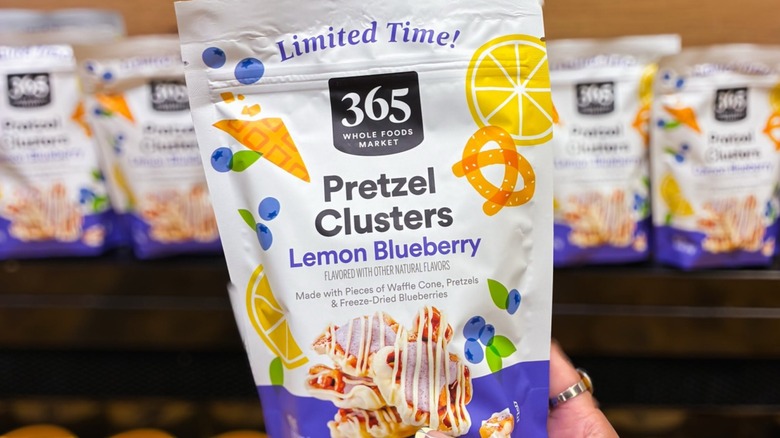
Ever heard the saying, "The joke's on you?" Well, Whole Foods certainly has, and it even created its 365 Everyday Value to solve the very problem critics love poking fun at it about. You know, the chain's reputation for carrying "Whole Paycheck" prices? Well, talk about a setup with a serious punchline (a seriously successful one, that is). Just as Whole Foods expanded nationwide in the '90s, the private label was designed to make organic and natural foods accessible to more shoppers, while leaving no wiggle room in regard to maintaining the company's famously strict ingredient standards. No small feat indeed.
It worked out, as the current line now includes thousands of grocery staples (all thoughtfully sourced and priced below many competing organic brands). The concept was no laughing matter, clearly, as it helped bring the best natural and organic groceries into the mainstream by giving shoppers an affordable way to feed their families without forcing them to accept subpar quality. For example, many 365 products avoid artificial flavors and artificial colors.
Fans deem the brand among the most reliable private labels, and social media stays abuzz with posts of grocery hauls showcasing pleased-as-can-be customers pulling carts overflowing with 365 products. These videos highlight shoppers' appreciation of how the Whole Foods private label makes it possible for them to enjoy the highest quality without having to pay an arm and a leg (maybe even a firstborn child?) for it.
8. Worst: Great Value (Walmart)
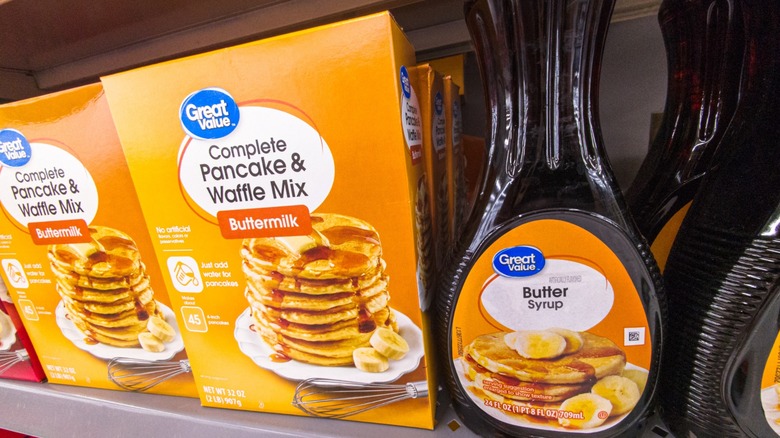
Let's talk about Great Value (or when the bargain aisle isn't always a bargain). While Walmart's private label is one of those store brands shoppers recognize instantly, those familiar blue-and-white packages filling Wally World shelves haven't been wowing shoppers recently. There's a saying that warns "You get what you pay for," and this seems to be all too true with the private label at the Wall-Mart (a scurrilous plague not even the comedy genius of Southpark can save). Suffice to say, some customers claim the savings come with a costly side of disappointment.
The biggest complaint? Consistency. According to customer conversations online, some Great Value products hit the mark, while others misfire abominably. Texture problems, weaker quality compared with name brands, and products that feel like a downgrade are recurring whinges among retractors. One shopper even shared a particularly tragic marshmallow muck-up, saying the product refused to melt during an attempt at making Rice Krispie treats. A marshmallow that won't melt?
Online debates also pop up, discussing whether Great Value packages deliver the amount customers expect (spoiler alert: they do not). To be fair, Great Value has improved some offerings over the years, and plenty of shoppers still appreciate it. But for this list, the issue is that the products presented reveal Great Value as quite the misnomer.
9. Worst: Smart Way (Kroger)
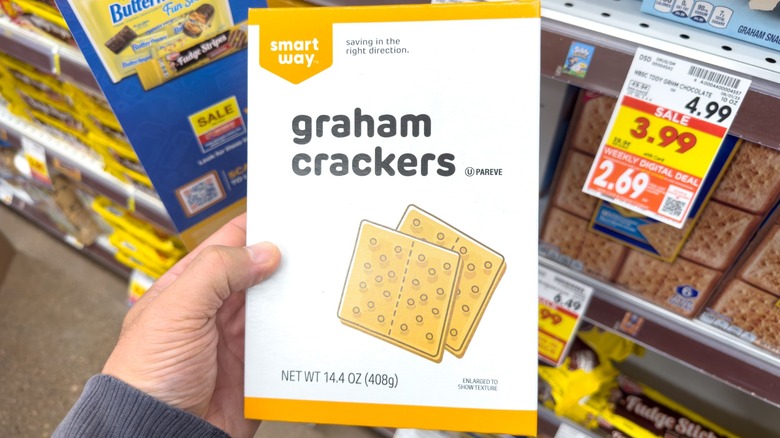
Ever played that epic party game Limbo? The one where bystanders cheer you on with an enthusiastic "How low can you go?!?" Well, it's all fun and games until a grocery giant takes the fun a little too far. We're talking about Kroger's private label Smart Way (a misnomer from the get-go, at least according to some less-than-impressed consumers).
As Kroger's most budget-focused private label option, the Smart Way mission was to give shoppers a way to spend less. But when shoppers talk about store brands, there's often a question hiding behind the savings. "What am I giving up?" And that's exactly how Smart Way found itself facing the firing squad (aka disgruntled shoppers). Some online shoppers simply joke about the brand's ultra-budget rep (mild teasing alluding to products sitting at the very bottom rung of the grocery ladder). Others claim the lower cost is noticeable once the package is opened (items lacking flavor, presenting disappointing textures, and basically bringing the bare minimum to the table).
For shoppers expecting a little more from their groceries, experiences like that can turn even a cheap purchase into a regret that reveals itself costing the consumer in other ways (loss of enjoyment, for instance). The launch itself also sparked some early concerns among grocery analysts, who questioned whether cutting prices could impact the overall quality of ingredients and products. As it turns out, those analysts just may have been onto something.
10. Worst: Berryhill (Aldi)
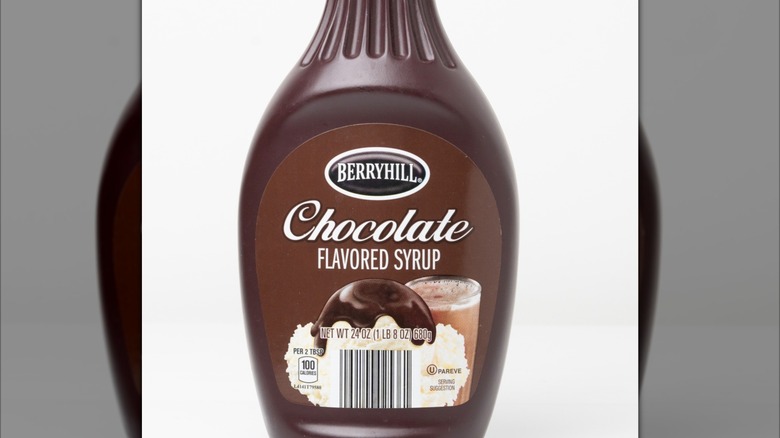
Folks have fallen victim to believing the myth that Aldi doesn't sell name brand items, but it does sell a small selection. The majority of its stock, though, is indeed made up of private label merchandise, including its Berryhill brand. Now, it's no secret shoppers have considered Aldi's dupes unreliable, even calling them out among the things people hate most about shopping at Aldi. And among those copycat labels deemed actual duds? Many customers say Berryhill is ... well ... for the birds.
And that reputation didn't come out of nowhere. While Aldi has gained a loyal following by delivering impressive quality at bargain prices, the Berryhill line has often popped up in customer discussions (and not in a good way). Berryhill was designed to offer both appealing and affordable alternatives to grocery favorites. But according to some shoppers, that should-be surefire formula doesn't always nail its intended target.
The main hems, haws, and harbingers take aim at texture and flavor. One shopper experience involved a Berryhill's sweet spread, where a single taste was enough to send multiple family members running for the hills (allegedly). Others shared similar reactions, describing the consistency as off-putting and the flavor as fake. Thus, a spread intended to elevate toast, apple slices, and much more became something people had zero interest in finishing. Berryhill syrups have also received some flack, with shoppers saying the consistency is thinner than other brands, finding it disappointing enough to skip a repeat purchase.
11. Worst: Select Ingredients / Hill Country Fare (H-E-B Lower Tiers)
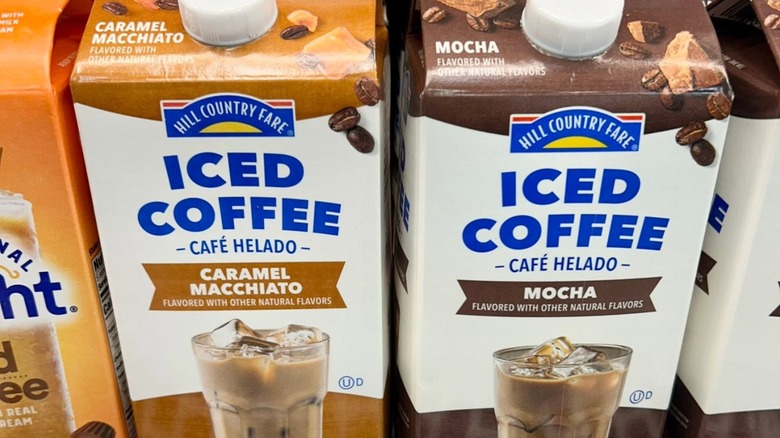
Hill Country Fare represents the most budget-focused of H-E-B's private labels. And while H-E-B has plenty of store brands that shoppers readily champion, this lower-tier offering has developed a somewhat shady rep among some customers for being a little ... let's just say ... unpredictable.
The idea behind ultra-budget brands like Hill Country Fare is to offer consumers everyday grocery basics at a far lower price. But shopper feedback calls foul on this one, pointing to a quality gap between this budget line and H-E-B's other offerings that can feel pretty noticeable. Online complaints cover a wide range of frustrations. Some shoppers have questioned the quality of specific foods, including gummy candy, cereal, hummus, and other groceries that just failed to impress. Others reported packaging issues, including containers that were difficult to open (and eating the groceries you buy is a pretty valid expectation).
There were also more concerning customer reports, including claims from shoppers allegedly discovering foreign objects in foods such as bread, tuna, even fries. While individual complaints don't represent every product or every shopper's experience, those stories understandably make people pause before tossing this budget brand into their carts.
Methodology
To determine which private label grocery brands landed on the best and worst list, we went straight to the people who know best: shoppers. We looked at real consumer feedback from customers who were either pleased as punch with their store-brand finds ... or seriously perturbed. We also considered insights from grocery and marketing experts, using measurable data and industry perspectives.