

12 Sweetest Watermelons You Might Not Think To Look For At Your Local Grocery Store
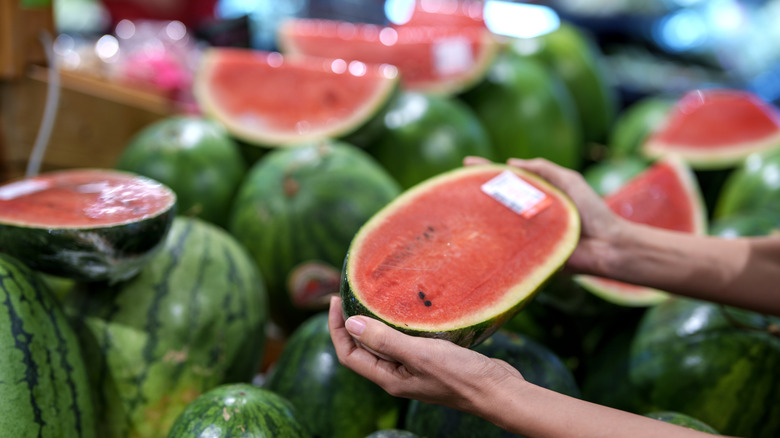
One of the sweetest ways to celebrate summer is with a juicy, refreshing watermelon. Whether you're enjoying it cut into chunks or old-school slices or on a gourmet salad with feta and candied nuts, a honeyed, ripe watermelon is always welcome on the dinner table, in a lunch bag, or in a picnic basket. When searching for the best watermelon at the grocery store, you probably look for one that has a shiny green rind, and when you slice into this delicious summer fruit, you expect to find bright red flesh and possibly black seeds, depending on the type. But, it's important not to judge a watermelon by its rind.
What you may not know is that some of the sweetest varieties of watermelon come with everything from yellow flesh to a black exterior, while others range from light pink to a honey tone. Each one has its own flavor and sweetness level, which is officially rated on the Brix scale; the sweeter the watermelon is, the higher the value. When choosing the most sugary melons, pick ones that have a Brix value of at least 11% for the best taste, as well as a yellow field spot, which indicates ripeness. Here are 12 of the sweetest, most succulent watermelons you can sink your teeth into this summer.
Mountain Sweet
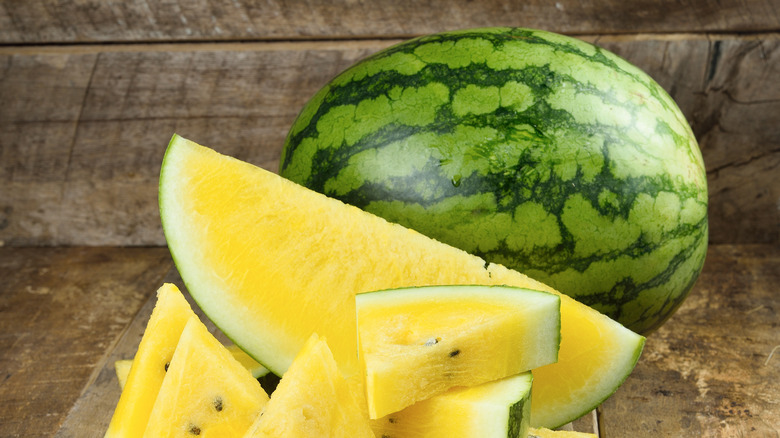
With its firm, bright yellow flesh, oblong shape, and dark green rind accented by light green stripes, the Mountain Sweet watermelon is one of the sweetest and juiciest varieties. Boasting an abundant sugar content, this watermelon variety offers exceptional sweetness that delights the taste buds. Its vibrant, tropical-colored flesh also makes it as visually striking as it is delicious, making the Mountain Sweet watermelon a standout choice for both flavor and appearance.
The visually appealing Mountain Sweet watermelon was first cultivated by Northeastern farmers in the mid-1800s. It is one of the oldest named commercial watermelon varieties and typically grows to an impressive 20 to 35 pounds. Known for its candied, juicy flavor and firm texture, the Mountain Sweet watermelon is delicious enjoyed on its own or added to a variety of light and refreshing recipes.
Elevate summer fruit salads with this yellow variety of watermelon. Its sturdy flesh also makes it an excellent plant-based alternative for grilling, serving as a flavorful substitute for steaks, pork chops, and other meats in vegan and vegetarian dishes. For a brightly colored and refreshing summer drink, make yellow watermelon lemonade, which is the ideal sweet and sour summer sipper.
Cracker Jack F1
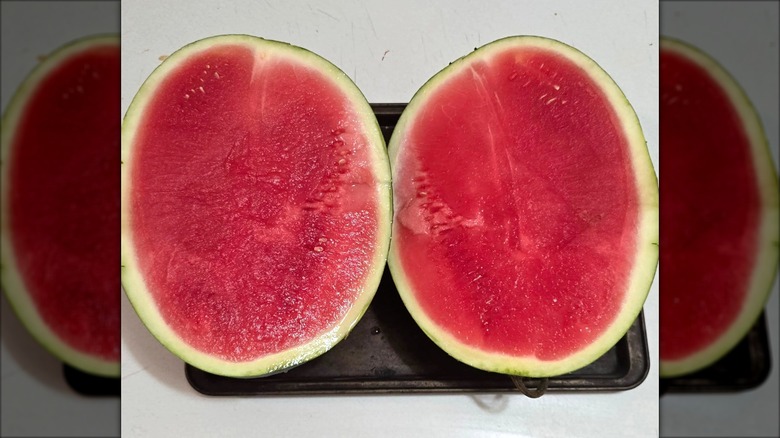
Despite its unusual name, the Cracker Jack F1 watermelon has earned a reputation for its exceptional sweetness, measuring between 12 and 13% on the Brix scale. This oval-shaped hybrid features a dark green rind with light green stripes and deep crimson-red flesh that is seedless, aside from the occasional small white seed coat. This watermelon variety is revered for its honeyed flavor and refreshingly succulent flesh.
Because it produces reliable, consistent yields, the Cracker Jack F1 is a favorite among growers and is commonly found at farmers markets and grocery stores during the summer months. Typically weighing between 15 and 18 pounds, it is well suited for commercial production. Its seedless flesh also makes it an ideal choice for summer picnics and backyard gatherings. You can easily slice it open and enjoy its sugary, refreshing flavor without the hassle of removing seeds. When preparing the watermelon for your guests, consider using one of these nine tried-and-ranked cutting methods. If you're feeling extra adventurous at dinnertime, watermelon burgers must be seen (and tasted) to believe.
Sugar Baby
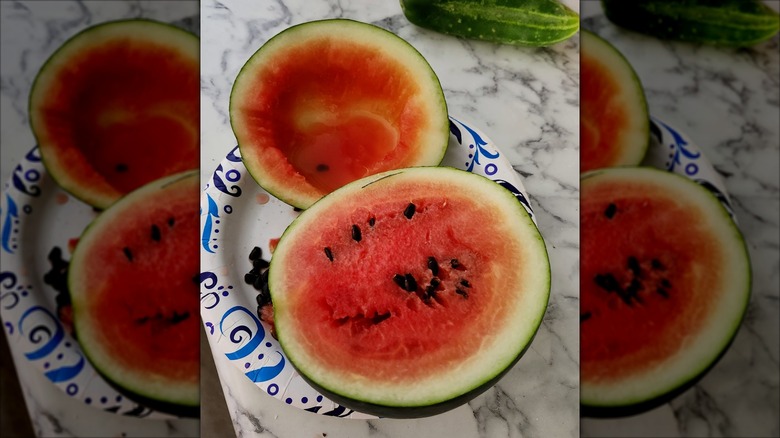
True to their name, Sugar Baby watermelons are exceptionally sweet and compact enough to fit conveniently in most refrigerators during the hot summer months. Typically weighing between 8 and 10 pounds, these small melons feature dark green rinds and juicy, reddish-pink flesh that is packed with flavor. These small melons thrive in full sun and grow best in temperatures between 70 and 95 degrees F, making them especially well suited to warm climates and tropical regions. Also, because it is smaller and less fibrous than other watermelon varieties, the Sugar Baby watermelon doesn't have an undesirable stringy or chewy texture.
Thanks to their more compact size, Sugar Baby watermelons are an excellent choice for smaller households, individual servings, or anyone with limited refrigerator space, such as students living in college dorms. They deliver all the sweetness and juiciness of larger varieties in a more convenient, easy-to-store package. These watermelons' intensely sugary, refreshing flesh is delicious on its own and can easily serve as a light, healthy dessert at summer picnics, barbecues, and parties. Try slicing these compact melons and serving them with dollops of whipped cream and sprinkles as a fun, healthier summer birthday cake alternative.
Red-N-Sweet
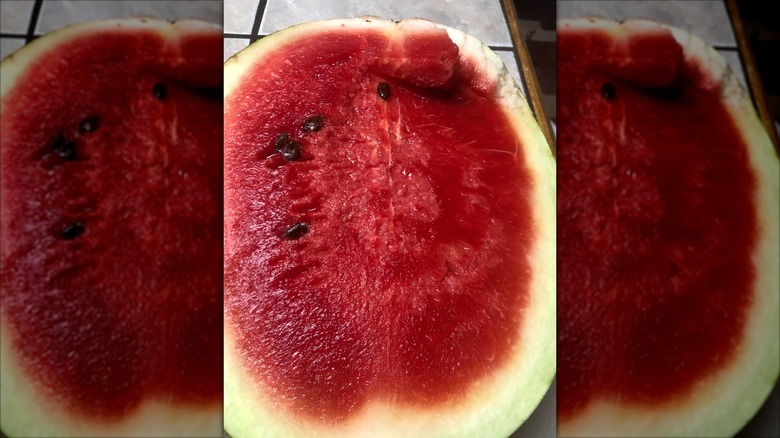
Known as one of America's sweetest heirloom watermelons, the Red-N-Sweet variety was once believed to be extinct before making a delicious comeback. The reintroduction of the Red-N-Sweet watermelon was a major inspiration for the development of the North Louisiana Seed and Preservation Program.Measuring between 12 and 14% on the Brix scale, these exceptionally honeyed melons typically weigh around 20 pounds, although some can exceed 40 pounds. Red-N-Sweet watermelons are easily recognized by their distinctive rattlesnake-striped rinds and deep red flesh, which is dotted with black seeds. Their rich, old-fashioned watermelon flavor has made them a favorite among heirloom enthusiasts, and stands out among other, blander-tasting melons.
Introduced in 1987, Red-N-Sweet watermelons were the last variety released through the Calhoun breeding program at the Calhoun Research Station. Like the program's other varieties, it was bred for outstanding flavor as well as disease resistance and dependable performance in hot, humid climates across the southern United States. Since this legendary watermelon resurfaced in Louisiana, try incorporating it into Southern culinary delights, such as spicy watermelon rind pickles or a refreshing sorbet. Sprinkle the sweet watermelon slices with salt, which provides a delicious contrast and is a decidedly Southern way to enjoy this summer fruit.
Crimson Sweet
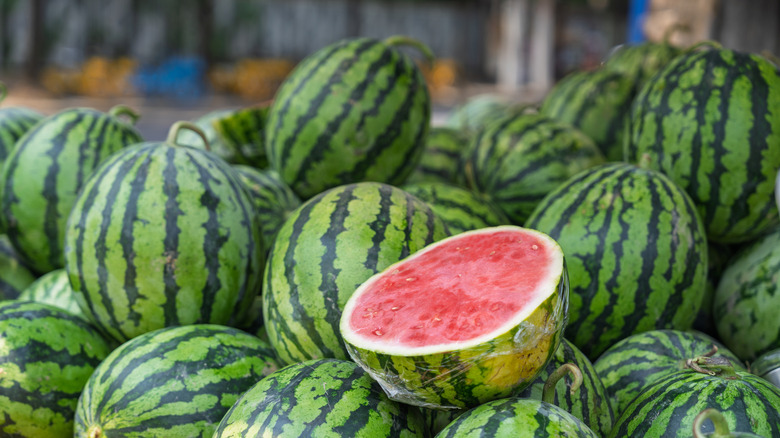
With its large, oval shape and distinctive light and dark green striped rind, the Crimson Sweet is the classic variety that many people picture when they think of a watermelon. Its crisp, bright, red flesh and exceptional sweetness have made it one of the most popular watermelon varieties for generations. First developed in 1963 at Kansas State University, Crimson Sweet is considered a quintessential watermelon variety. These large melons average between 15 and 25 pounds, and typically measure around 9.9% on the Brix scale, reflecting their candied flavor.
Typically harvested from June through September, these versatile watermelons are delicious sliced and enjoyed fresh, blended into smoothies, or added to creative summer salads. Their naturally honeyed taste also makes them a refreshing alternative to heavier desserts at summer birthday parties and backyard barbecues. Beyond their great taste, Crimson Sweet watermelons provide important nutrients, including vitamins A and C, making them a healthy summer snack. If you're feeling adventurous, it's about time you spike a whole watermelon for a sweet and boozy bite.
Densuke
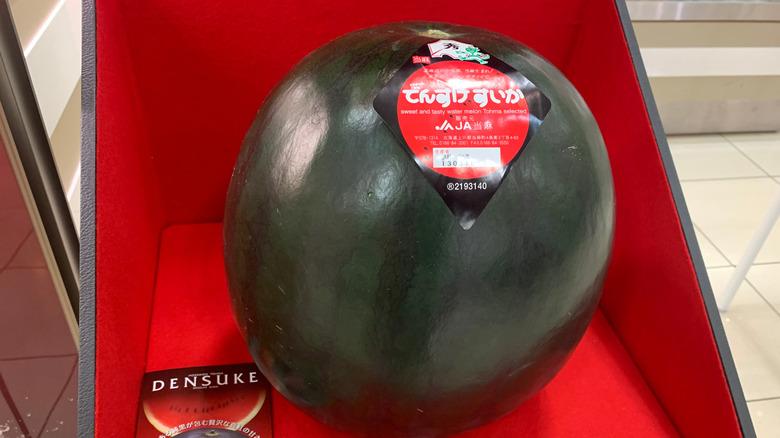
Before its juicy, candy-like flavor even reaches your tongue, a Densuke watermelon is likely to impress you with its striking appearance. These rare Japanese watermelons are known for their smooth, glossy, nearly black rinds, and crisp, deep, red flesh. Reaching levels between 11 and 13% on the Brix scale and typically weighing between 11 and 22 pounds, Densuke watermelons are prized for their exceptional honeyed flavor, refreshing texture, and distinctive appearance. First introduced in the late 20th century, this unique variety was developed through selective breeding to create a watermelon with an ideal combination of sweetness, texture, and visual appeal. While watermelons aren't typically considered an "indulgent" food, the Densuke variety challenges that assumption with its smooth, velvety flesh.
Developed in the town of Toma on Japan's northern island of Hokkaido, Densuke watermelons are among the world's most exclusive melons. Their rarity and reputation have made them highly sought after, with some individual fruits selling for hundreds or even thousands of dollars. As a result, they aren't often seen at everyday grocery stores or farmers markets, but if you're lucky enough to find one, be prepared for a luxurious watermelon experience.
Charleston Gray
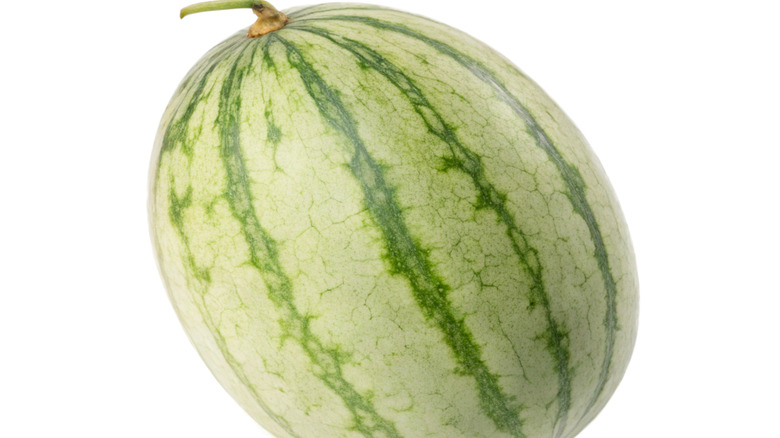
Biting into a Charleston Gray watermelon is what summer should taste like. This exceptionally sweet and full-flavored variety dates back to 1954, when it was developed by Charles Andrus, a renowned watermelon breeder and producer in South Carolina. Charleston Gray watermelons are known for their distinctive light green rinds and vibrant red flesh. Their nearly fiber-free texture gives them a smooth, velvety bite, making them ideal for enjoying fresh on their own or adding to a variety of summer dishes, including salads and fruit bowls. The sugary melon goes well with fresh, peppery basil and creamy, salty feta cheese.
These large, sugary melons typically weigh between 20 and 35 pounds, and have an impressive natural sweetness. With its combination of classic watermelon flavor, refreshingly juicy texture, and generous size, Charleston Gray watermelons are among the tastiest varieties you can find at the grocery store or farmers market. When selecting the ripest, most delicious melon, check for a deep hollow sound when you tap the rind. Doing this simple test will allow you to avoid the tragedy of underripe watermelon.
Hime Kansen
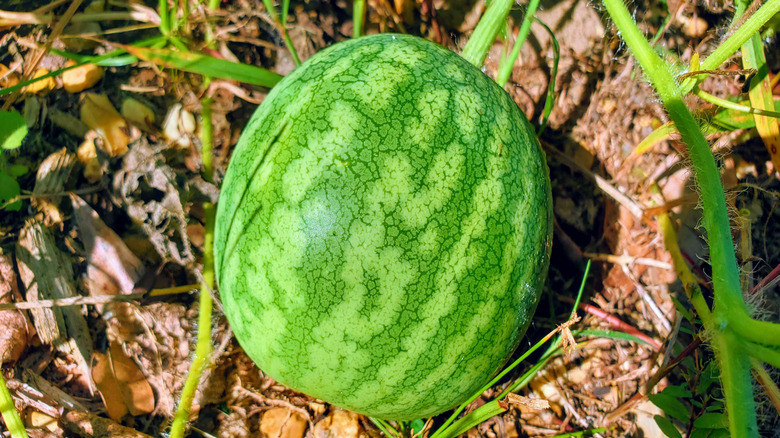
When you come across a Hime Kansen watermelon at your local supermarket, its striking appearance is likely to catch your eye first. This Japanese icebox-sized hybrid features a bright green rind with dark green stripes and a smooth exterior. Typically weighing around 6 pounds, the compact, round melon delivers impressive sweetness, measuring between 12.5 and 13% on the Brix scale. You can readily find Hime Kansen watermelons at the grocery store, but you can also grow them yourself if you live in a warmer climate with a lot of sunlight. The melons also do best in areas with sandy or light-textured soils.
Once sliced open, the very thin rind gives way to firm, juicy crimson-red flesh, which features a crisp texture and refreshing flavor. Its smaller size and sugary taste make it an excellent addition to summer salads, pairing beautifully with ingredients like feta or goat cheese, leafy greens, berries, fresh herbs, and even bacon for a savory contrast. To pick out the best Hime Kansen, or any type of watermelon at the store every time. look for fruit with a big yellow or orange "ground spot," which indicates a succulent, ripe melon.
Belmont
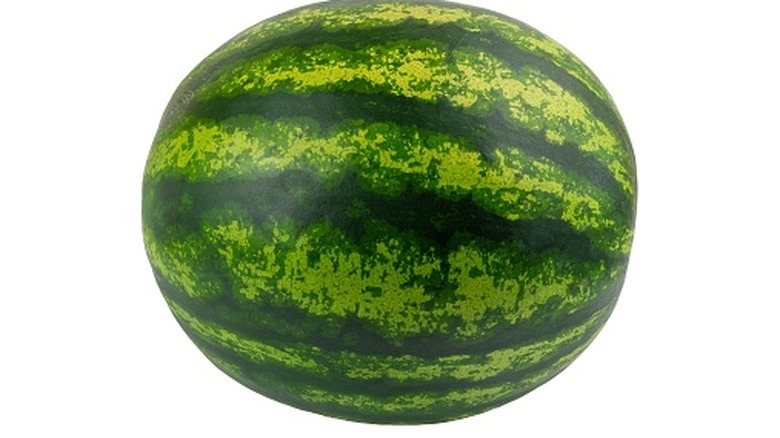
Don't let a Belmont watermelon's small size fool you because this compact melon delivers big flavor. Its deep, red flesh is honeyed, succulent, and juicy, with a firm texture that makes it an excellent choice for grilling at summer cookouts. The searing hot grill caramelizes the melon's natural sugars, and gives the fruit a subtle, smoky flavor for an unexpected twist. You can also thread Belmont watermelon chunks onto skewers and grill them with other fresh fruits and vegetables. Bred by Sakata Homegrown, a division of Sakata Seed America, Belmont watermelons typically weigh between 5 and 8 pounds.Their smaller size makes them a convenient option for picnics, smaller households, and anyone with limited refrigerator space.
Although Belmont watermelons are seedless, you may occasionally find a few small white immature seeds within their crisp, crimson-red flesh. These versatile melons are available in grocery stores across the United States and grow best in warm, sunny climates, including regions of the eastern United States and Brazil. With plenty of sunlight and fertile, loamy soil, Belmont watermelons can thrive in home gardens as well.
Orangeglo
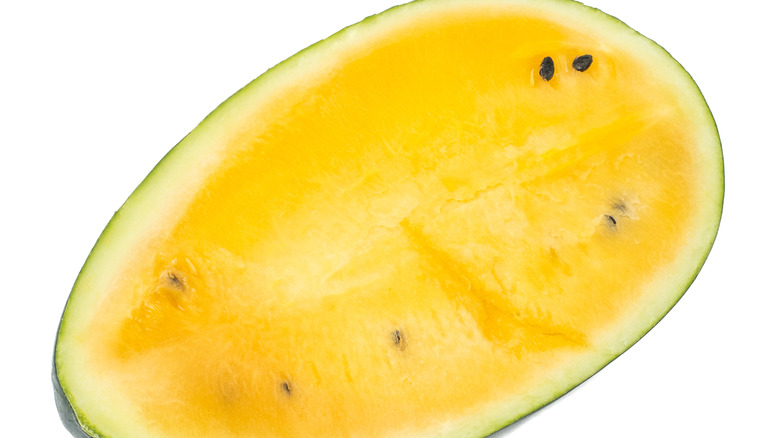
Who says all watermelons have to be red? The Orangeglo watermelon proves otherwise with its vibrant, orange flesh, eye-catching appearance, and candy-like taste. First developed in the 1960s by the Wilhite Seed Company, this unique variety features a green rind with alternating light and dark green stripes and typically weighs around 25 to 30 pounds. Measuring 10.7% on the Brix scale, Orangeglo watermelons have a bold flavor along with a firm, juicy texture. Each crisp, refreshing bite delivers a rich watermelon taste featuring subtle tropical notes.
If you want to impress guests at a summer barbecue, serve slices of Orangeglo watermelon chilled straight from the refrigerator. Its distinctive flavor also pairs well with tropical and citrus fruits, making it a great addition to salads featuring ingredients like pineapple and oranges. For an extra-refreshing treat, blend it with lime juice, ice, and a touch of honey to create a hydrating summer drink. If you're feeling adventurous, add spirits, like tequila or rum, for a festive adult beverage. As another idea, stop wasting leftover watermelon and use it for this boozy refreshment.
Tropical Sunshine RZ F1
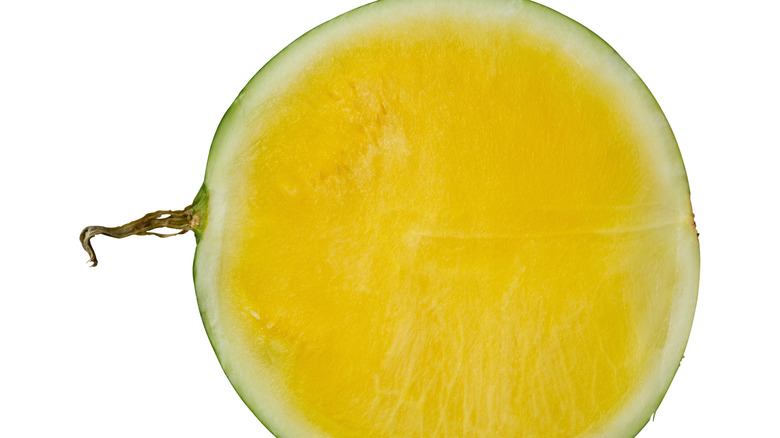
If you're looking for a watermelon variety that brightens up the table with an exotic splash of color, the Tropical Sunshine RZ F1 is an excellent choice. As strikingly beautiful as it is sweet and delicious, this unique melon is sure to stand out on any summer fruit spread. This round, seedless watermelon typically weighs between 12 and 15 pounds, making it an average-sized melon. Its dark, glossy rind with bold, tiger-like stripes provides a striking contrast to the vibrant, canary-yellow flesh. As you may have suspected, there is a slight flavor difference between pink and yellow watermelons, though they can be used interchangeably in recipes.
Reaching up to 13% on the Brix scale, this watermelon delivers impressive sweetness along with an eye-catching appearance that will make backyard barbecue guests take notice. The Tropical Sunshine RZ F1 is produced by Rijk Zwaan, a Dutch company recognized for developing a wide range of premium fruit and vegetable varieties. While traditional red watermelons get their vibrant hue from lycopene, their less-common yellow counterparts owe their color to naturally occurring pigments called carotenoids, including beta-carotene. Try adding Tropical Sunshine RZ F1 watermelon to smoothies and fruit salads for a bright pop of color.
Sangria
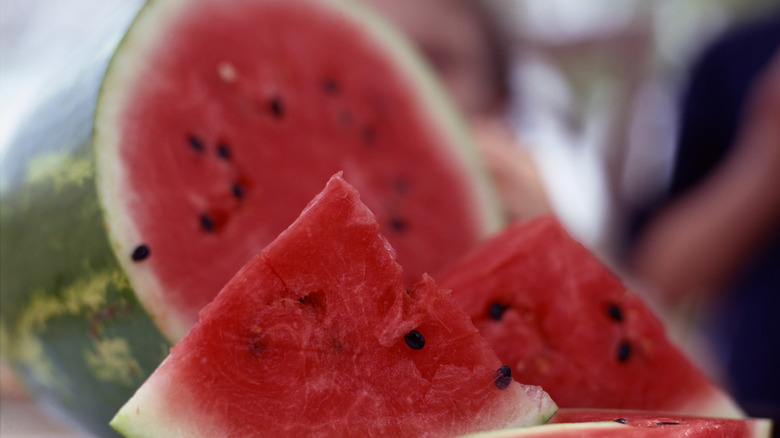
In case you were wondering, the name of this candy-sweet watermelon variety does hint at one way of enjoying it. Sangria watermelons are large, oval-shaped fruits that typically weigh between 20 and 25 pounds, and feature dark green rinds with crisp, sugary, deep, red flesh. Known for their subtle cucumber-like notes and refreshing flavor, Sangria watermelons are a popular hybrid variety among growers across the United States. Developed in the mid-20th century, these versatile melons continue to be cultivated for both commercial production and home gardens. If you happen to come across one of these honeyed melons, which measure between 11 and 12% on the Brix scale, in the grocery store or a local farmers market, be prepared for a tasty treat.
Like other watermelon varieties, Sangria watermelons are a good source of lycopene and provide important nutrients, including potassium and vitamins A and C. They are delicious enjoyed fresh on their own, but their sugary, refreshing flavor also makes them a versatile ingredient in a variety of creative summer dishes. For instance, you can add cubes of Sangria watermelon to fruit salads, leafy green salads, or sweet salsas served with cinnamon- and sugar-dusted chips. The melon also pairs beautifully with a variety of cheeses and nuts, including hazelnuts and pistachios, making it a healthy and flavorful addition to an appetizer platter. And, yes, you can use Sangria watermelons to make their namesake boozy beverage, along with other fresh ingredients, such as limes, oranges, berries, and simple syrup.