

For The Absolute Best Iced Coffee Of Your Life, Steal These Expert Tips

These days, everyone seems to be trying to save money by making homemade food and drinks, including iced coffee. As far as drinks go, iced coffee seems fairly straightforward to recreate at home. Simply brew some coffee, pour it over ice, and bam. You're left with a lovely cold beverage on a hot day with an added caffeine kick. Or for any day really, hot or cold, because let's face it, for reasons beyond our control, iced coffee appears to have a hold on us year-round. Unless, of course, you happen to be one of those people who believe hot coffee beats out iced even in the warm weather.
But as with most things, a closer look at variations in the preparation process or in the ingredients used can completely change your drink experience. The grounds used, for instance, can affect the final product, or even the type of sweetener you use. To help us navigate the world of iced coffee, we spoke to Allin, head roaster at Variety Coffee. Allin has provided us with some helpful insight and useful tips on how to make stellar iced coffee in the comfort of your own home.
Brew the coffee directly over ice
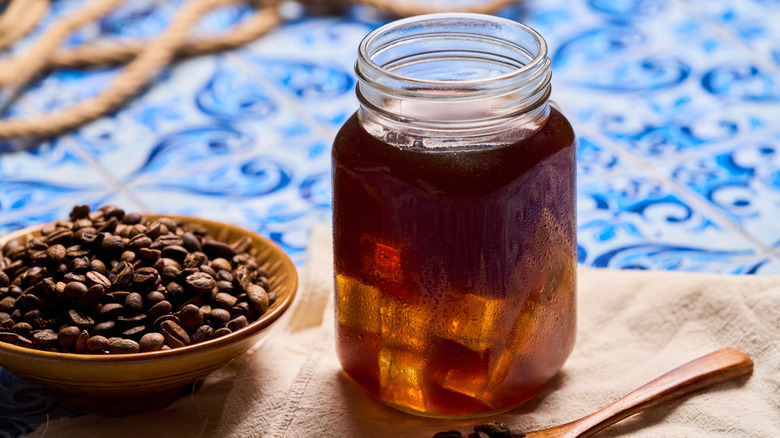
No matter your stance on iced coffee, you will likely agree that adding the ice to the coffee is one of the most important parts of the drink. The only problem with this is that even if ice is fabulous for cooling things down, it only lasts for a short time. Inevitably, the ice will melt and dilute the rest of your coffee. This, Allin says, is something that people often forget to account for when making the drink. "If you are brewing hot coffee and then pouring that hot coffee over ice, the ice melts immediately, which weakens the brew's strength," the head roaster explains.
Luckily, there is an easy solution. Allin shares, "A simple fix for this is to brew your coffee directly over ice. All you need to do is substitute ice for some of the water in your recipe." The roaster goes on to provide an example to help coffee lovers wrap their minds around the idea. "If you are brewing iced coffee in a Chemex, which typically calls for 750 grams of hot water, you can put 375 grams of ice in the bottom of the Chemex and use the other 375 grams of hot water to brew the coffee on top of the ice to ensure the iced coffee is not too watery," Allin confirms.
Use the right coffee grounds
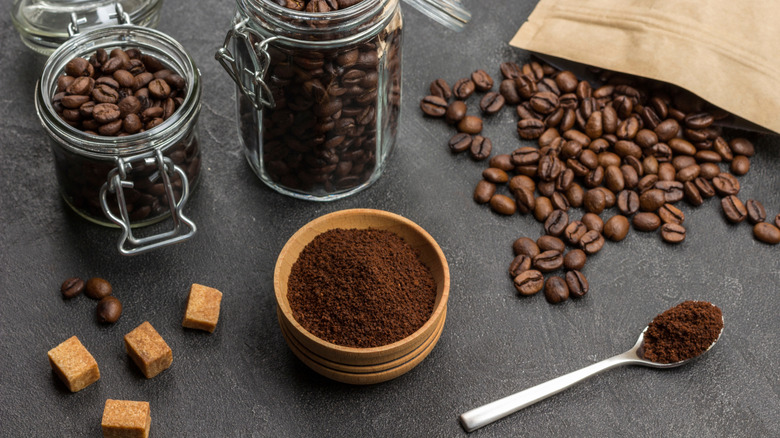
Coffee grounds come in many different shapes and sizes. From the coarse grind, which is typically bumpier with chunks, to the fine grind, which might feel almost like a powder due to its small grains, the range is wide. It's no wonder that people might need to refer to a chart when deciding what grind to use for different machine types. But it turns out these considerations are important because grind size impacts the flavor of your coffee (including iced coffee) for better or worse.
In layman's terms, water flows more slowly through a smaller coffee grind, resulting in a stronger brew faster. This also means if you use a fine grind during a coffee-making process that spans too long, your coffee's flavor will be impacted. Allin goes a bit deeper into the reasoning for this — and why it's one of the biggest iced coffee mistakes — sharing that, "Using coffee that is pre-ground or ground too fine will be over-extracted, resulting in an overly bitter and astringent brew in addition to leaving some sediment at the bottom of the glass." The head roaster continues, clarifying that when picking out the right grind for iced coffee or cold brew, "You will want to aim for a medium-coarse grind similar to sea salt."
Ensure coffee remains fresh

When you spring out of bed in the morning (or, let's face it, drag yourself out from under the cozy covers), the first thing that you might do is make your morning brew. Now there are a few things that can ruin this, such as tripping over your ornery cat on the way to the fridge or finding out that your partner used the last of the creamer and didn't replace it. But once you finally have that cup of energy-giving joe in your hands, the main thing that can go wrong is that your coffee has gone bad.
Stale coffee is a bit less obvious to detect than the warning signs that your chicken has gone off, but it will still take some of the enjoyment out of your morning. The main signs with coffee rely on smell and taste. When the taste seems dull or lacking in flavor and the smell has notes of sourness, you can safely assume your coffee has gone bad. To avoid this, Allin says that for both iced coffee and cold brew, you will want to store them "in an airtight container; both will keep in the fridge for up to two weeks."
You don't need fancy equipment to make cold brew

If you are someone who prefers a good cold brew to iced coffee, don't worry, we don't judge. Allin has provided us with some useful tidbits for cold brew lovers as well. When you first try your hand at homemade cold brew, you may have the urge to head to the nearest shop and panic-buy the most highly praised gadgets and equipment you can find on the market. It seems, though, that this is an urge you don't need to give in to. You can still save loads of money at home by batching your own cold brew without taking up additional precious counter space with new products. This is your cue to sigh in relief.
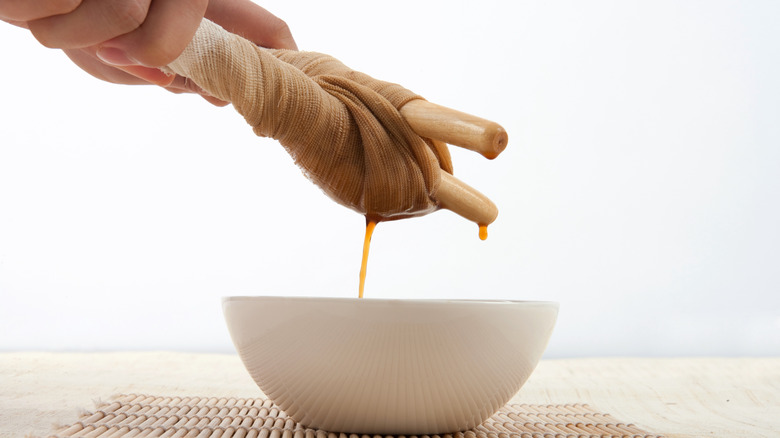
Allin gives some insight into this process, explaining, "The best thing about making cold brew at home is that you don't need any fancy equipment; all you need is coarsely ground coffee, a large container (like a mason jar), filtered water, a fine strainer (like cheesecloth), and 12-16 hours of time." As far as item lists go, this seems like one that's pretty easy to find in most households. From there, it's as easy as letting the grounds steep (on the countertop or in the fridge) for the specified time before straining them. Some enthusiasts suggest the longer the steep, the better the flavor.
Use the right type of ice

If taking a lovely photo to post on social media is your top priority when selecting the type of ice for your coffee, it's easy to see why you might head straight for options like crushed or pebble ice. While these choices might be effective at cooling your drink quickly, they also bring undesirable effects. That's correct, dilution strikes yet again. The general rule is that the smaller the piece of ice, the faster it will melt in your drink. The reason for this will have your mind flashing to images of sitting in physics class back in high school. Suffice to say, a small piece of ice has more surface area, which is what leads to it melting quickly.
When turning to our expert, Allin confirms, "Crushed, shaved, and pebble ice will make your iced coffee look super cute, but they will all melt very fast and water your coffee down quickly." The head roaster does share some tips to point iced coffee drinkers in the right direction, though, and recommends larger ice cubes. As for which options to choose in the larger ice cube world, you may want to go with spherical cubes for your next caffeine boost. They are known to melt more slowly than other larger cubed picks.
Make your own ice cubes
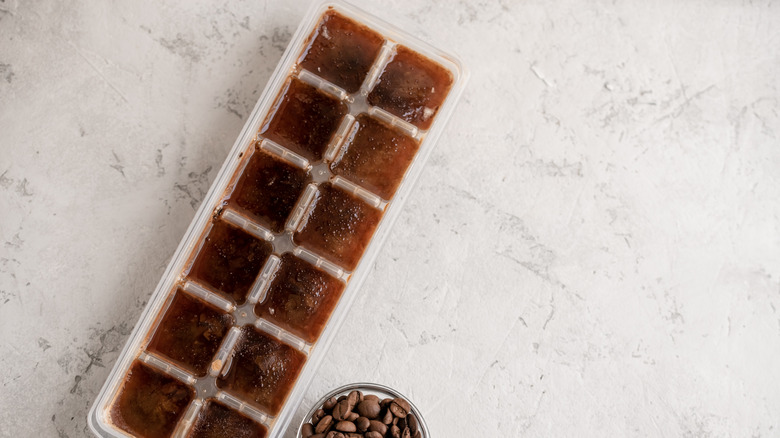
It's well known that when drinking iced coffee, side-stepping some form of dilution is a tough go. With ice being part of the process, dilution is expected no matter how you try to mitigate it. But if watery iced coffee is bothering you more than the pea bothered the princess in the story of "The Princess and the Pea," there are some creative methods you can use to avoid it entirely. Just as with any other recipe, you can swap out the ingredient you don't want (water) with something else.
"Make your own ice cubes from coffee," Allin encourages. This is as simple as brewing your favorite coffee, letting it cool, then pouring it into ice cube trays to throw in the freezer. While it might sound like a crazy thought, it seems to have actually caught on out there in the coffee wilds. Some bars proudly mention that they do this, and there are even threads on Reddit with commenters who claim the idea is helpful. Other enthusiasts also say you can add the coffee cubes to more drinks, like homemade Frappuccinos and even Irish coffee. With the coffee iced cubes being so versatile, it leaves little reason not to try this method.
Choose a liquid sweetener
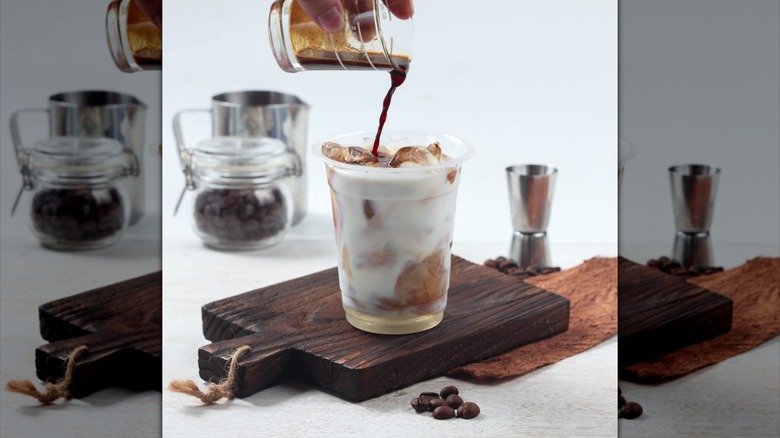
One way to enhance the flavor of coffee, or at least cut through its bitterness, is by using a sweetener. Whether you're pondering the differences between stevia and Splenda or using plain old granulated white sugar or maple syrup, there are countless ways to spruce up your usual cup of iced coffee. But what you may not have considered is that certain sweeteners don't mix well in cold beverages and can sink to the bottom of the glass instead of upgrading your drink.
For a better experience, Allin recommends trying a liquid sweetener. "People tend to prefer a liquid sweetener in their iced coffee because granulated sugar will not dissolve as easily in a cold liquid, so simple syrup is best," the head roaster explains. As far as simple syrups go, the brand possibilities are endless, but Allin does recommend Monin for flavored syrups. Scrolling through its website, the options certainly sound enticing, such as toasted coconut and blue raspberry. As an added bonus, for those looking to cut back on sugar, Monin offers a whole section dedicated to sugar-free simple syrups.
Make simple syrup yourself
If you're sensing a theme here about homemade items, you might be catching on. It seems that even though you can purchase many stellar brands and flavors of simple syrup, the best type might be homemade. A perk of this (other than saving that hard-earned cash) is that you can personalize the flavors to your taste when making the syrup. For example, if you enjoy a really strong punch of blackberry in your syrup or can't stand a hint of vanilla, you can easily tailor the syrup to your preferences.
Allin shares, "Simple syrup is extremely easy to make yourself. A basic recipe is one part hot water to one part granulated sugar, and stir until the sugar is completely dissolved." You don't even need boiling water, which can lead to excessive evaporation and a less reliable result. With these tricks in mind, you can kick your morning iced coffee up a few notches by adding as much homemade simple syrup as you'd like. The only downside is that your batch of simple syrup may not last as long as the store-bought brands. The head roaster shares, "You can store the rest of the syrup in the fridge for up to four weeks."
Try out different simple syrup flavors
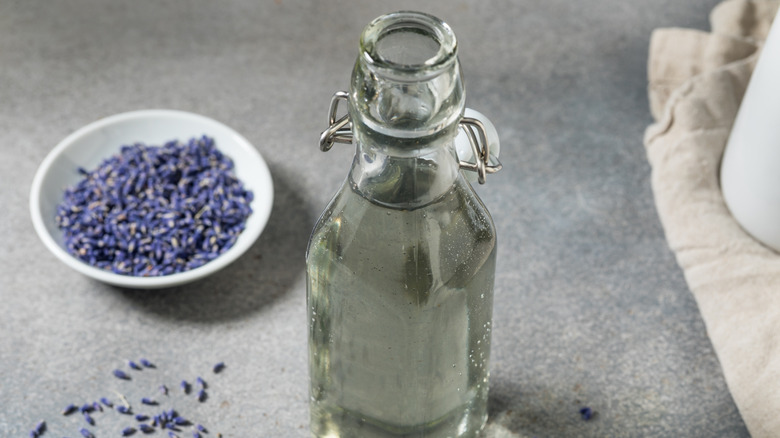
If you enjoy new flavors in your morning coffee and are up for a little experimentation, you might want to try making different flavors of simple syrup. For one, there is a world beyond granulated white sugar, and you can play around with various types in the recipe. Some other options include demerara, turbinado sugar, or even brown sugar. If you are looking for a sugar alternative, you can use honey or even combine sugar-free sweeteners like erythritol with water to make your own sugar-free version.
For something more complex than just sugar and water, you can certainly add a little extra pizzazz to the mix. Allin mentions that one way of making simple syrup actually involves fresh fruit. "My favorite way to make a flavored syrup at home is to muddle fresh fruit into some simple syrup and then use a mesh strainer," the head roaster explains. When looking at the recipes kicking around on the internet, it seems that the options are truly endless, from peach and blueberry to grape simple syrups. Some other options include vanilla and monkfruit.
Pay attention to the type of roast
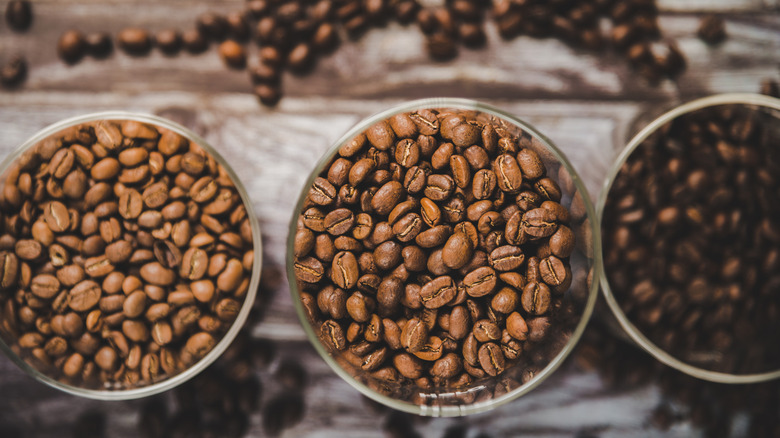
Personal preference is just part of the coffee experience, whether you are drinking iced or hot. What's more, there are several options you can tailor to your personal tastes, including the roast. The type of roast can heavily determine the flavor of the final product and its levels of acidity and bitterness. The roast level refers to how long the coffee beans are roasted and the amount of heat used in the process. Common types include light, medium, and dark, with light using the lowest heat and cook time, and dark being the other end of the spectrum.
Allin agrees that choosing the roast depends on preference and suggests considering what type of roast aligns with your iced coffee expectations. "If you want a brighter and more floral cup, you can achieve this by brewing a lighter roasted coffee (perhaps from an origin like Ethiopia or Kenya) over ice for an iced coffee that has bright and fruity flavors," Allin shares. The head roaster also mentions, "If you are looking for the more classic rich and chocolatey flavor profile, a good dark roast is what you will want to use for cold brew."
Cold brew and iced coffee have different perks

Although some people may confuse cold brew and iced coffee, it's important to clarify the pros and cons of each, starting with how much caffeine cold brew has versus iced coffee. In addition, while you can create iced coffee with any coffee-making device (all you need is access to ice), cold brew requires a more in-depth extraction process. Instead of extracting the flavor with heat and then cooling the drink down (as with iced coffee), cold brew depends on the length of time the grounds soak in water to draw out their flavor. Allin mentions, "Cold brew is often viewed as superior to iced coffee because the slow brewing method in cold water extracts less acidity, which results in a very smooth and sweet flavor profile."
Based on the process of making these drinks, each has different flavor profiles. While iced coffee is considered to have a lighter or softer flavor, cold brew is described as more of a full-bodied experience. One is not necessarily better than the other. What works better for each individual depends on what exactly they're looking for in their cup of joe. If you want something made quickly, iced coffee might be a good option. Cold brew, on the other hand, may be the way to go if you want more flavor complexity and have more time to spare.