

7 Warning Signs Your Chicken Has Gone Bad
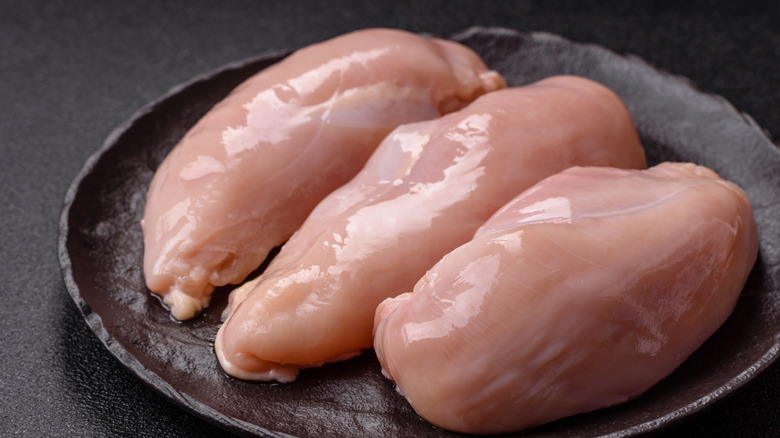
Chicken is probably the most common protein in many households. From tendies to wings and everything in between, there is no doubt that chicken is eaten by the masses. In fact, according to the National Chicken Council, Americans are expected to consume just under 108 pounds of chicken on average per person in 2026, while the estimate for 2027 shows that number exceeding 108 pounds.
But consumption numbers aren't the only high stats out there related to chicken. Salmonella contracted from raw or undercooked chicken is a major culprit of foodborne illness, affecting roughly one million people per year in the United States. That's why it's important to make sure it's safe to eat before chowing down on your chicken of choice. We brought in a few experts to provide their insight, including Chip Carter, producer and host of "Where the Food Comes From," Jorge Thomas, founder of Swaledale Butchers, and Tom Super, senior vice president of public affairs at the National Chicken Council.
So, how exactly do you know if your chicken is safe to eat? "The fast and easy (and only safe) solution, even in these increasingly difficult economic times: If there's any doubt, throw it out!" offers Carter. There are a number of signs that your food has gone bad, and it's probably wise to get familiar with them. Better safe than sorry, as they say.
You'll know by the smell
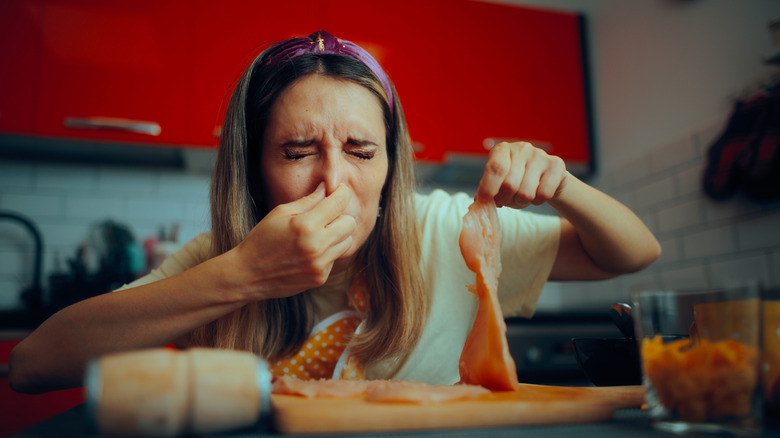
If you take chicken out of the package and are immediately hit with a foul (no pun intended) odor, that doesn't always mean it's rotten, but it's definitely a red flag to sort out. "Fresh chicken shouldn't smell of much, but vacuum-packed chicken can have a distinct smell when first opened," said Jorge Thomas.
Thomas recommends leaving it open for a few minutes, during which the smell should, in theory, fade. If it doesn't, cancel the chicken mission. Even if you intended to handcraft a delicious, homemade dinner that your kids probably won't eat anyway, you might want to just order the pizza. "If you're asking yourself if it's okay — or, like we do, yelling for somebody else to 'Come smell this, I can't tell and I don't want to throw it out' — you should probably already be stepping towards the garbage can," says Chip Carter.
What exactly does bad chicken smell like? Unfortunately, spoiled chicken comes in an array of putrid scents, and all of them are horrid. In addition to a generic rotten smell, bad chicken can often give off a sour odor. It has also been compared to the smell of rotten eggs or sulfur, which can kill a chicken craving real quick. Basically, if your raw chicken gives off any smell that seems unappealing and even makes you dry heave, throw it in the trash immediately. Seriously, if you're even thinking about heading to Google to research bad chicken smells, that's the only sign you need.
The texture is just not right
If your TikTok or Instagram feeds are not sporadically populated with videos about getting the ick from chicken, then you're probably lucky enough to have never had a weird bite. The textural issues with chicken reach far and wide, cooked and raw. Have you ever sliced into a raw chicken breast and something just did not feel right? Maybe the chicken was stringy, fell apart, or felt rubbery. Super also adds "tacky or sticky skin that stays 'grippy'" to the list of the many ways chicken's texture can be off enough to be considered a bad sign. Chicken with a slimy or slippery texture is also a no-go, while a film-like layer on top is another telltale sign the chicken is not fit to eat.
Good raw chicken should feel smooth with just a hint of moisture, but not too much moisture. Super says, "An unusual amount of liquid pooling in the packaging (beyond normal moisture) can indicate bacterial activity." Those are just a shortlist of spoilage indications for raw chicken.
If your chicken is already cooked, there are a few signs indicating that it may have gone bad. Cutting into a cooked piece of chicken and being welcomed by an overly mushy consistency is like a neon sign flashing in your face, reading "put that chicken down!" On the other side of the spectrum, if the chicken feels rubbery, that's also a clue of spoilage. The bottom line is, if something feels off, it probably is.
Coloring could be off
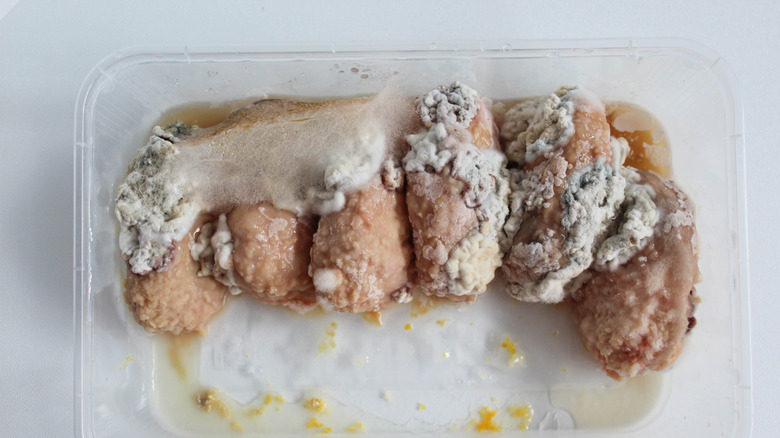
Another signal that your chicken is bad has to do with its coloring. Carter says, "You can see off-color spots sometimes that are due more to packaging than freshness." While some discoloration isn't an automatic dealbreaker (for example, it is often safe to eat yellow chicken if it's just the skin, not the flesh, that's discolored), there is a limit.
While it's not uncommon for the color of good chicken to change, it shouldn't be rampant with color imperfections. For example, those white spots that can appear on a chicken breast are likely freezer burn, and you can trim them off and use the rest. Carter suggests investigating a bit further. "Give it the sniff and touch tests," he says. "But gray is long, long gone." That is usually a bad sign, and if you are in doubt, throw it out. No questionable chicken is worth potentially getting a foodborne illness.
At the same time, bad chicken may not always be discolored. Super shares, "Raw chicken can look perfectly normal — fresh pink color, no odor — while harboring bacteria." He adds that "color is one of the least reliable indicators."
It's how far past the sell date?
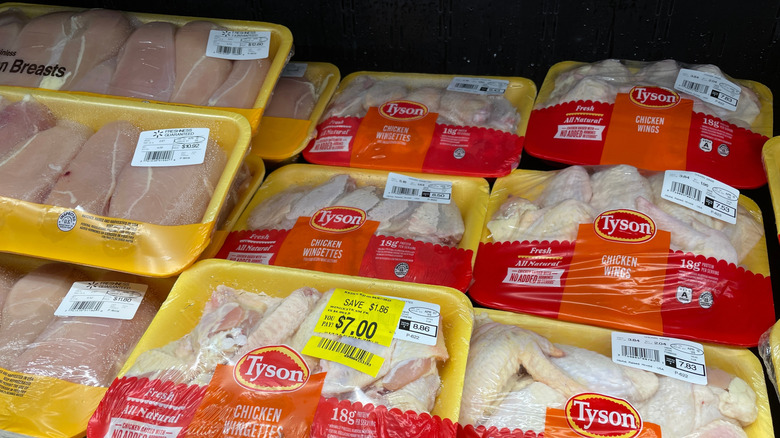
Checking the expiration date on any food product, especially raw proteins, should be standard. That date is one of your main clues to the condition of the chicken wrapped in the container. While it's not absolute, it does provide insight into the poultry's freshness. There's a small window for raw chicken. If you are not using chicken as soon as you buy it, you have about three to five days from the purchase date to either cook it or freeze it for later use. Could the chicken be ok past the sell-by date? Sure, maybe. However, you're essentially playing a game of chicken roulette if you choose to consume it past that window.
It's not a perfect science, and the acceptable time may even differ slightly depending on who you ask. If you want to adhere to FDA guidelines, the freshness window is even smaller — it states that refrigerated chicken should be eaten within one to two days. Freezing raw chicken before the expiration date significantly extends its shelf life for anywhere from nine months to a year. As Super explains, "Freezing delays, but doesn't stop, spoilage. Freezing pauses bacterial growth almost entirely, but enzymatic activity continues very slowly even at 0 degrees Fahrenheit."
So, does freezing chicken automatically mean it's safe to eat when you finally defrost it? Not according to Super, who says that "any bacteria present before freezing resume multiplying right where they left off, so thawed chicken spoils just as fast as fresh."
You left it out way too long
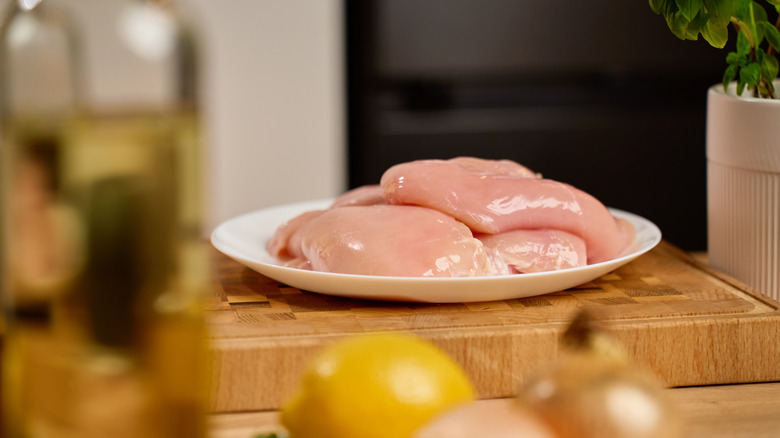
If you have ever left a protein out intending to cook it but got completely distracted or derailed from the task, you have likely experienced an immediate sense of panic. Is it still good? We've all been there, trying to convince ourselves that it hasn't been that long and it's got to be ok, right? Well, probably not.
Carter says, "Chicken is one of nature's favorite vacation spots for some horrible bacterial villains: E. coli and Clostridium and Listeria and Campylobacter and (especially) Salmonella." Before you gaslight yourself into eating the counter chicken that has been casually hanging out for a questionable amount of time, you should also know that there are more than 2,500 different types of Salmonella bacteria. While fewer than 100 of these cause most cases of human illness, many of them happen to really like chicken.
There may not be one singular golden rule of chicken safety, but there are definitive parameters you should abide by. Super's is a measurable one and non-negotiable: "165 degrees Fahrenheit, every time. Verified by a meat thermometer." Also, just because chicken is cooked, it does not mean it can sit out long without going bad. Cooked chicken has a two-hour curfew before its Cinderella's pumpkin coach moment. Remember this tidbit the next time you are at a barbecue and reach for the plate of chicken. If it's warmer than 90 degrees Fahrenheit, the safe time range decreases to an hour. Bacteria can increase in just 20 minutes, even if nothing looks awry.
You left it in the refrigerator or freezer too long
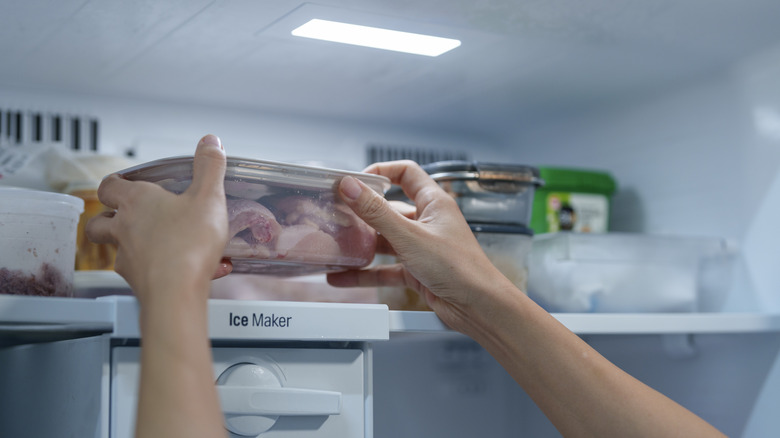
We've already talked about freezing chicken that is lingering too close to its sell-by date. Sure, it's a good practice to avoid wasting food. Just remember that there are many common mistakes and myths regarding raw chicken – including the fact that even frozen chicken has a time limit.
Freezer burn can be trimmed as we previously mentioned, but too much of it can compromise the quality and taste of the chicken. The best way to avoid it is to freeze the chicken as fast as you can. Remember, just because you can extend the raw chicken's lifespan by up to a year in the freezer doesn't mean you can skip proper thawing precautions to ensure safe eating.
Frozen chicken is better protected from growing harmful bacteria that can make you sick because the cool temperatures essentially make that impossible. But it's not impenetrable. The moment you begin the thawing process, though, all bets are off, because the door has already been opened to the potential for multiple foodborne illnesses to brew as the chicken loses its freezer force field. There are a few best practices for safely defrosting chicken, such as placing it in the refrigerator, using cold water, or using the microwave. Do not use hot water, and whatever you do, never ever leave chicken on the kitchen counter to defrost at room temperature.
The package looks swollen
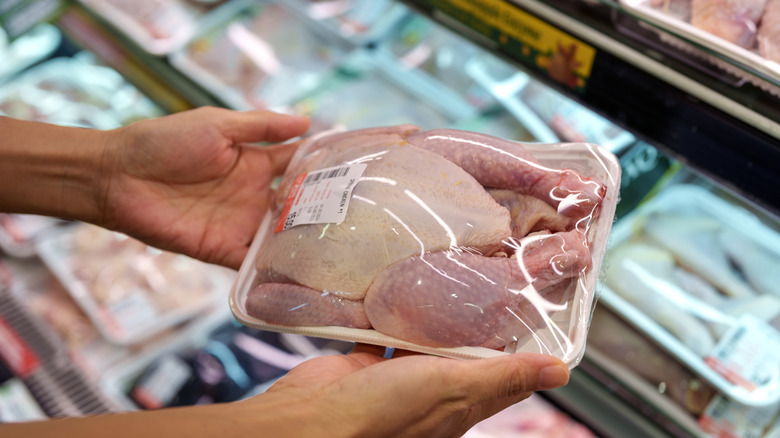
If you see a package of chicken in your grocer's refrigerator or your own, and it looks inflated, that's a problem. Puffed up packaging can be a sign of spoiled poultry. Jorge Thomas shares, "Chicken is naturally moist, but it shouldn't be sticky or slimy. Grey or green coloring is another reason to throw it away, especially alongside a bad smell. The packaging matters too. I wouldn't use chicken from a leaking, damaged, or unusually swollen pack."
Sometimes the swelling is not that deep, and she's just a little bloated, and that's so real. If that swelling comes with any type of odor, though, put the kibosh on the delicious chicken marsala you've been dreaming about since you woke up. Don't even attempt it if the sell-by date is still within reason, either. When chicken starts to spoil and is still in its tightly sealed package, it can get gas — literally. No, really, gases can be produced in those tight quarters and wreak havoc. So, unless you want the same thing to happen to your body and soul, toss it.