

Boomers Can't Stand These 10 Grocery Store Features
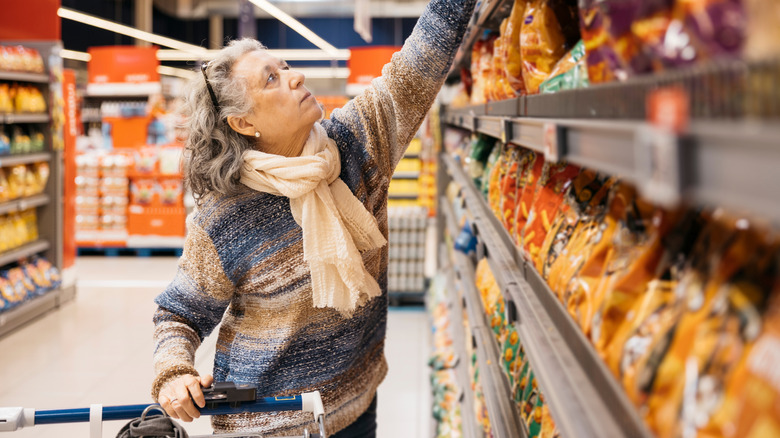
It's no secret that everyone has pet peeves they encounter in public places, and the grocery store is no exception. From lacking spacial awareness to blocking entire aisles or shelves of products with their grocery carts, people do some pretty questionable things. But what you may not expect is that some of these grievances actually vary by generation. There are some pretty obvious things that bother boomers during their weekly shop. If you see someone frowning at a self-checkout machine or sighing in annoyance because they can't find a staff member, that person is likely a boomer.
The reasons for this are varied, but what it comes down to is that those born between the years of 1946 and 1964 simply value different things during their weekly grocery run than the younger generations. Boomers grew up in a time before technology exploded and started to rule the shopping experience, and this has shaped several of their preferences. So, a trip to the same grocery store could be perceived as fabulous by one generation but rubbish to another.
1. Self checkout
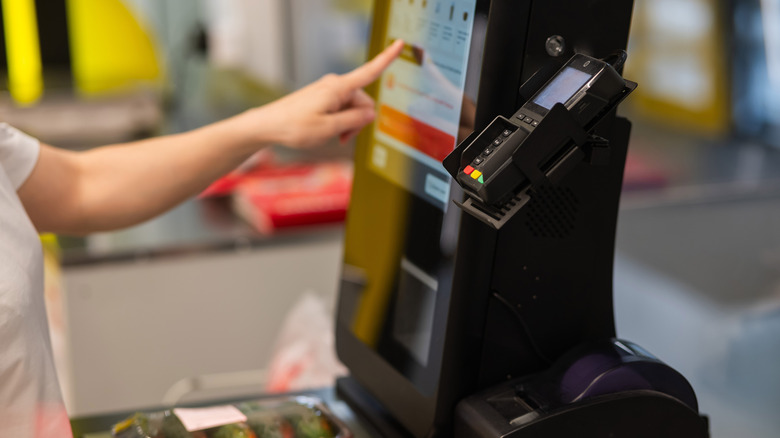
Self-checkouts are an invention that many younger generations are quite fond of. Gen Z shoppers, specifically, usually prefer this method as opposed to the cashier, as they consider it a faster and easier way to get their purchase rung up. Other younger shoppers also point out perks like being able to pack the bag the way they want and not having to drain their social battery. In fact, a recent survey found that 46% of Americans between the ages of 18 and 34 would opt for self-checkout over a cashier when given the choice.
The same survey also showcases boomers' general dislike of the automated machine checkout process. It was recorded that 75% of respondents aged 55 and older prefer a human cashier. Based on posts circulating on the internet, both from what cashiers are experiencing in-store and from boomers themselves speaking on the subject, this is caused by many different factors. For one, there are many stories over on Reddit of boomers feeling like self-checkout forces customers to do free labor. They also struggle to weigh produce, find the system confusing, and dislike the lack of human interaction. Some are so against self-checkout that they would even rather abandon their full cart and leave the store entirely if no human cashiers are available.
2. Discount grocery stores
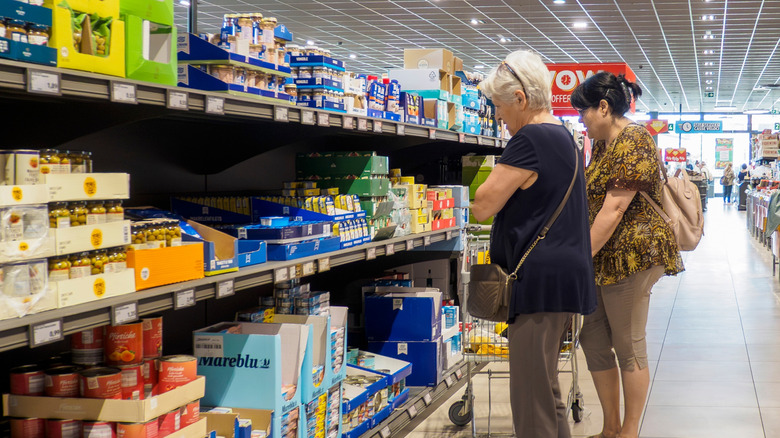
The lure of discount grocery stores such as Aldi can be quite tempting for those of the younger generation. Even though these stores are more likely to seem understaffed, younger shoppers consider the experience worth it for the discounted groceries. One survey from 2024 showed data to support that Walmart was the most preferred store to purchase groceries from for the younger generations (closely followed by Aldi for Gen Z).
Boomers and older generations were the only groups to report that Walmart is not their grocer of choice. A grand total of 32% of boomers surveyed said that mainstream supermarkets are their shop of choice for groceries. Again, what these results mostly boil down to is differences in generational values. While most younger generations hold cost savings in high regard, boomers value customer service and product quality over cheap prices. Keep in mind that while other generations may be fielding debts like mortgages and school or car loans, boomers have had more time to pay these expenses off, leaving them with higher disposable income to spend on groceries. In fact, boomers are said to hold 70% of the disposable income in the U.S.
3. Rearranged products
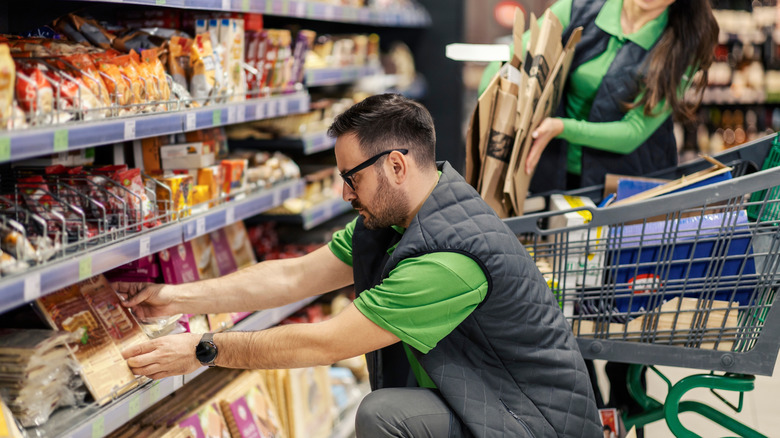
There are many reasons why a grocery store may change the placement of products. Occasionally, there are health and safety concerns, like when one grocery store wisely moved the Tide Pods away from the candy section. More often, though, it is done for the same reason that Costco sneakily moves your favorite items around: to make you buy more. The theory is that if you have to go down more aisles to find what you're looking for, you might see something else you want. Grocery stores then hope this snowballs into you suddenly buying triple the amount of items you were planning to, thanks to the treasure hunt you were sent on for bread.
Despite how common this is in stores, it seems to really frustrate those of the older generation. In fact, in a post on Facebook, asking seniors what the thing that most annoyed them about grocery shopping was, multiple answered with when stores rearrange items. When you consider the changes in mobility and balance that may happen as individuals age, this adds a whole new layer to the frustration. While younger generations may find this slightly inconvenient, a change in placement for an already struggling senior might lead to the individual skipping the item on their list entirely. This may be why the findings of one study on the issues that seniors face in grocery stores suggest that consistency was an important factor when choosing where to shop.
4. Digital coupons

Nowadays, just about everyone has access to some sort of smartphone, a trend that has led to digitizing things like coupons. Oftentimes, grocers will have coupons readily available on their loyalty program apps. There are, of course, exceptions to this; Trader Joe's is one of the outliers with neither sales nor coupons. But many shoppers are seeing things that were one paper just a few short years ago turn into digital. The younger generation seems pretty keen on the swap, with many reports of young customers happily making the change.
The boomer generation, unfortunately, is one that struggles more with this change than others, with some even mentioning that they feel this is age discrimination. This might seem like a harsh word to describe the situation, but in a recent study of U.S. adults, it was found that while 96% of those aged 18 to 29 owned smartphones, only 61% of those over 64 years old did. This leaves a pretty sizable amount of boomers (and older generations) who wouldn't have access to digital coupons unless they bring someone with a smartphone to the grocery store with them. Since the data is there, it's understandable that some older shoppers feel it's unfair that they aren't being accommodated.
5. Unmaintained shopping carts
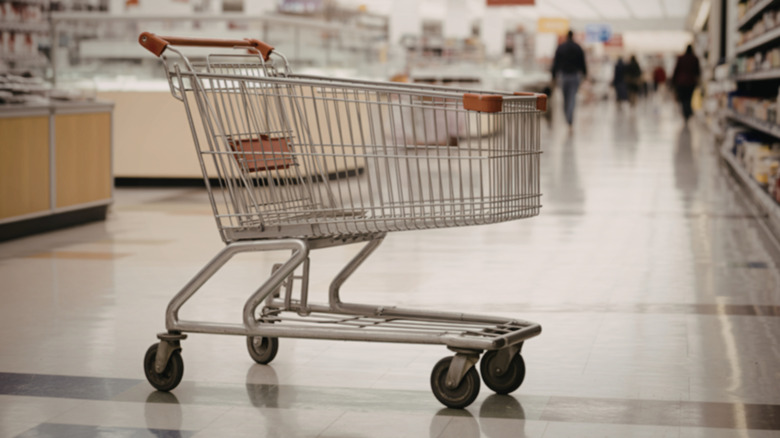
These days, supermarkets have expanded to sizes far beyond what boomers experienced during their younger years. With the increased mobility issues that many of them face, even heading to the smallest Costco in Alaska might pose problems for some. One study found 35% of seniors surveyed were unhappy with the amount of resting spots within supermarkets. With not enough spots available for boomers to catch their breath before making the journey home, or in between fulfilling their shopping list, using a shopping cart becomes a tactical maneuver for some. These carts, for example, can be of help to boomers who struggle to keep their balance or walk long distances by providing support for their weight.
While the shopping carts can be of assistance to boomers, they can equally sour the experience when something is wrong with them. In that same Facebook post, which asked what most annoys boomers about the grocery shopping experience, several mentioned getting an unmaintained cart was frustrating, the comments often referencing stuck wheels specifically. Though none of the comments elaborated on if these boomers specifically were relying on carts for walking support, it stands to reason that having a stuck wheel would make this endeavor much more difficult for the generation. When you pair this with the fact that easy swivel wheels are often mentioned as one of the features that make shopping carts more senior-friendly (as they require less effort to push), the depth of this frustration begins to make sense.
6. Off-brand groceries
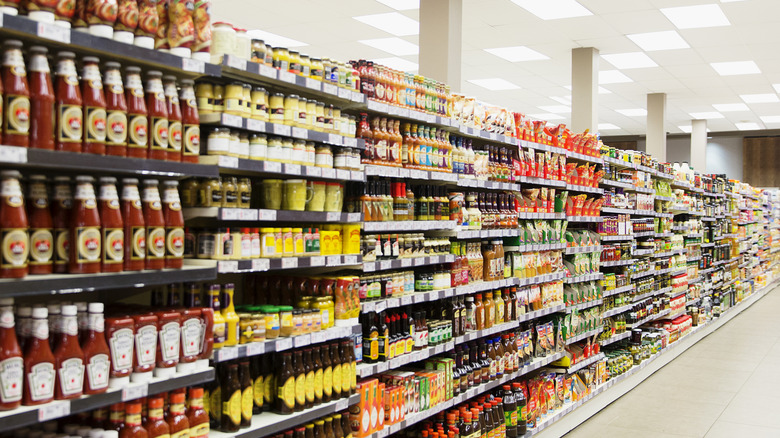
Discount grocery stores and off-brand items go hand in hand. Unfortunately, many discount grocers like Aldi or Walmart don't always have the range of brands that your-run-of-the-mill supermarket does. For the most part, it seems that baby boomers opt for well-known and established brands over private label options. When they find something that works for them, they go by the "don't fix something that isn't broken" rule, and stick to it.
In fact, data shows that 26% of boomers refuse to consider or rarely consider switching brands. This means that even if Heinz ketchup isn't America's best or cheapest option, if Heinz floats a boomer's boat, then that's what they're buying.
It seems that this isn't just a grocery thing with this generation either. One Redditor took to the website to post about her parents refusing to go with cheaper generic medicine even though they could barely afford the brand-name stuff. Many others shared their frustrations with boomers overspending on other brand-name items as well, ranging from snacks to beer.
7. Out of stock items
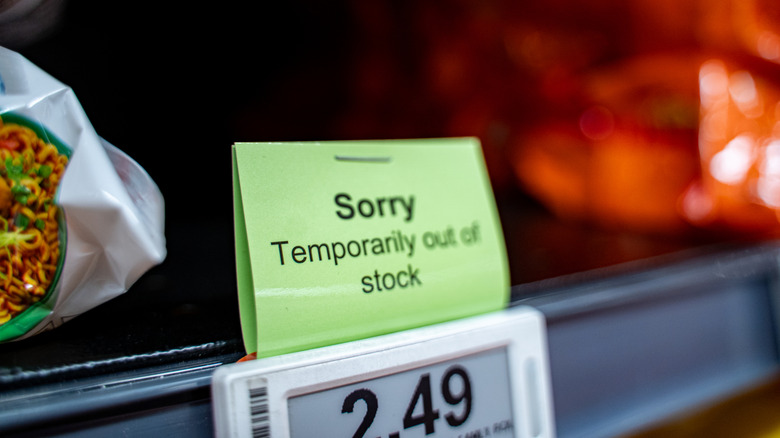
When heading to a grocery store for the usual set of suspects, it can certainly be disheartening when you get to the shelf, and one of the items is out of stock. But for boomers in particular, it seems, this is something that really ruffles their feathers. This is another frustration mentioned in the Facebook post from earlier. Several of the comments mention out of stock items as their main pet peeve during the grocery shopping experience. A post over on Reddit concurs with this, mentioning that a boomer was quite upset when the store was out of skim milk, with other retail workers chiming in with a comment on similar experiences with the generation.
As to why this phenomenon seems to bother boomers so much, there are a few possible reasons. In one recent survey of different generations and their spending habits, 73% of boomer respondants noted that they were saving money by actively seeking sale items. It stands to reason that when these sale items go out of stock, it can completely turn their carefully plotted money savings plans sideways. It's also possible that boomers see items being out of stock as a lack of adequate customer service. In the Reddit post previously mentioned, many commenters also mention that when told an item is out of stock, boomers often simply turn to a different worker to inquire about stock once more instead of just accepting the answer.
8. Fewer workers on the floor

With boomers, it's pretty clear when looking at their values that customer service is important to them. These days, though, as more processes become automated, this leads to grocery stores requiring fewer employees on the floor. Unfortunately, there are multiple stories on Reddit of boomers complaining about the ripple effects of this, such as longer lines at the checkout, slower wait times for getting assistance on the floor, and even the lack of pleasantries.
Reddit threads make it clear that the older generation seems to want to interact with other people when grocery shopping. There are many reports on the platform of boomers going out of their way to socialize, ranging from small talk to comments about their cart contents. This would explain, then, the frustration with less employees, as it provides fewer opportunities to meet their social quota.
9. Bagging their own groceries
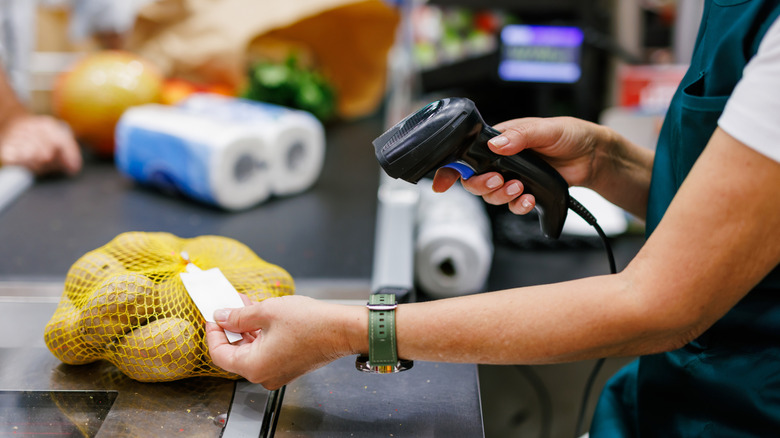
Boomers grew up with baggers at grocery stores. This employee would actually pack your groceries into bags and even help carry them to your car. These days, it's unlikely to find dedicated baggers to help you out on your shopping trip. In addition, depending on where you are shopping, the cashier may not bag your items either; you might have to bag your own groceries. This lack of bagging on the grocer's end is said to speed up the line and help eliminate the need for extra workers on the floor. At some stores now, this goes as far as even being store policy.
Different generations seem to have opposing reactions to this modern feature of grocery shopping. The boomer generation is not impressed with this. Again, the internet has plenty of people complaining about this, or stories of others witnessing boomers get upset over having to put their own groceries into the bag.
10. Buying premade meals
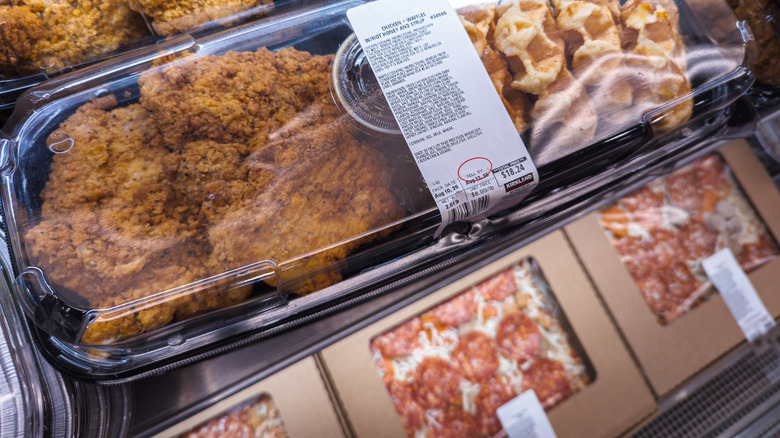
These days, a busy life seems to be the norm. Everyone appears to be rushing to and from work, social engagements, and events, or even running side hustles. With this comes a need for convenient meals, something people can just grab and eat on the way to their next commitment. At least, this is true for the younger generations.
Based on a study done in recent years, 45% of shoppers between 15 and 24 years of age reported seeking ways to cut down the prep time with meals. They do by purchasing precut items, ready-made salads, or even ready-to-cook meats. In comparison, only 29% of those aged 65 and older reported seeking these ways to cut down on meal preparation. It seems that boomers are more likely to prepare a meal from scratch.