

11 Best Ways To Cook Eggs In The Microwave
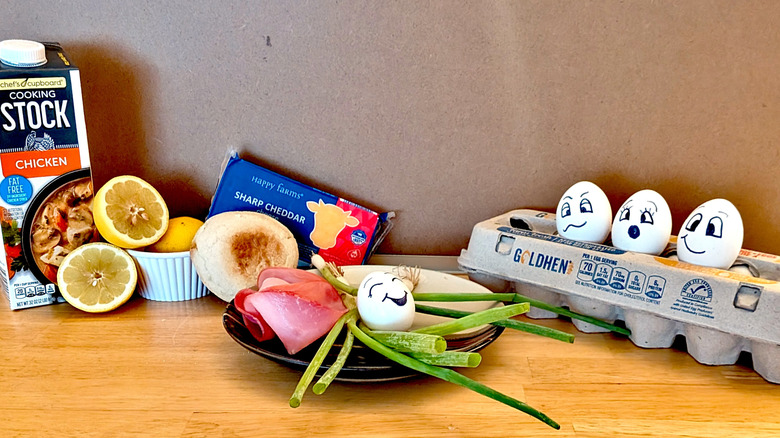
Microwaving eggs isn't a method of cooking I'd think of on Saturday morning while groggily brewing coffee and figuring out what to throw together for breakfast. According to my husband, breakfast isn't breakfast without eggs, so I always have a fresh carton in the fridge. Whether scrambled, fried, baked, or boiled, any way to get me sitting down and drinking coffee sooner rather than standing at the stove is welcome.
I searched the web for different ways to cook eggs in the microwave, and I was surprised to find that other than the microwave being the heat source, there weren't any drastic changes to the cooking process. While I've been impressed by how well frozen egg sandwiches heat up, it never really occurred to me that cooking eggs in the microwave could be a valid cooking method outside of emergency or convenience. I was surprised to find a plethora of results online when searching for different ways to use one of the most common appliances in American kitchens.
After all, I've been cooking eggs since my father taught me as a child. I'd definitely know if there was an easier way ... Right? I was in for a shock when, besides a bit of trial and error to find the right cooking times, I was able to cook every style of egg I tried in the microwave with successful results.
11. Fried egg
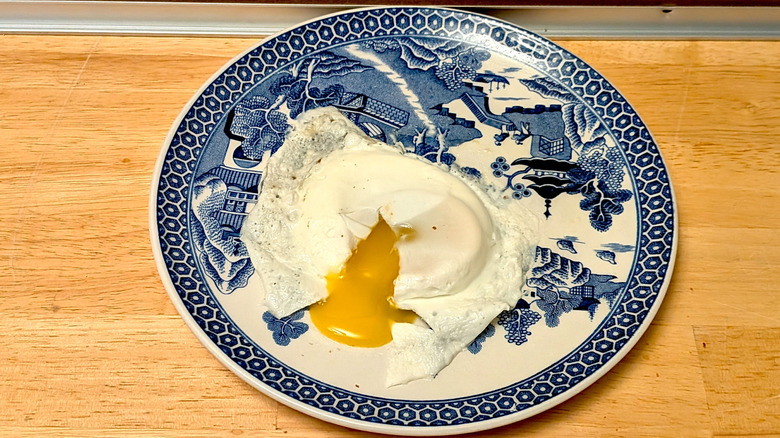
Of all the eggs I tried to cook in the microwave, this was the one that required the most trial and error. When I think of a fried egg, I think of crispy edges and a runny yolk. While I was eventually able to achieve a good runny yolk, crisping the edges of this egg was near impossible.
The process itself was simple: Spread some oil on a plate or use a little cooking spray, crack your egg, poke a small hole in the yolk, top with salt and pepper, and then microwave. Honestly, it couldn't be an easier process. Unfortunately, despite microwaving for a mere 45 seconds, what came out was a solid yolk and a slightly rubbery and tough egg white.
While I had to do a little time testing with each egg, and testing with different power levels as well, none gave me as difficult a time as this fried egg. Even when I managed to get the perfect consistency of white and yolk, it still didn't have any crisp around the edges. However, after microwaving for 50 seconds at 70% power, I was finally able to fry an egg worth eating. If you're willing to waste a few eggs while figuring out the right settings for your microwave, then there is no doubt that you can save some time and dishes using this method.
10. Soft-boiled
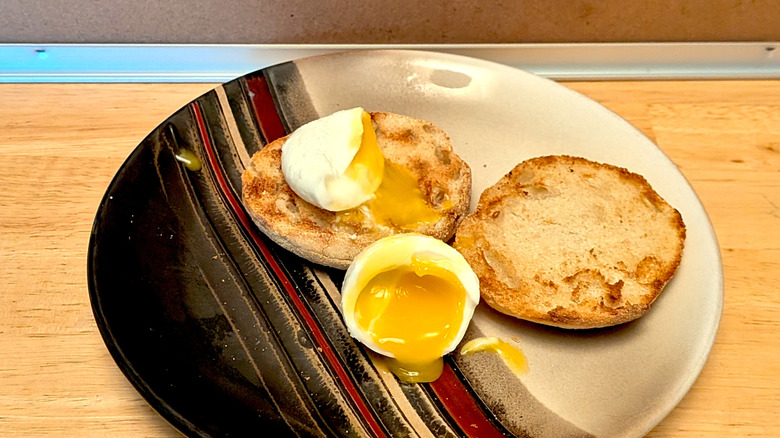
While I managed to make this egg perfectly on the first try, it was only thanks to experience from perfecting the hard-boiled eggs, which were much more reliable. While my first soft-boiled egg had a perfectly set white and a silky smooth yolk, my second and third attempts didn't come out quite as perfect. Knowing the exact time and temperature to cook an egg requires knowing your microwave, but it's not as bad when you can actually see the egg.
Boiling eggs in the microwave requires the same thing you need when doing so on a stove: water. First I microwaved a bowl of water on high for three minutes, then poked a small hole in the top of the egg to stop it from exploding. After that, I dropped the egg into the hot water, put a plate on top, and microwaved on 50% power for four minutes, before immediately taking it out of the water and transferring to an ice bath.
Unfortunately, despite the creamy yolk and perfect peel of my first, I ended up with an almost hard-boiled egg on my second try, and runny whites on my third. Without being able to see the inside of the egg, or even the cooking vessel, the time and temperature were too difficult to control or verify to make this one a reliable style to cook the same every time.
9. Steamed custard egg
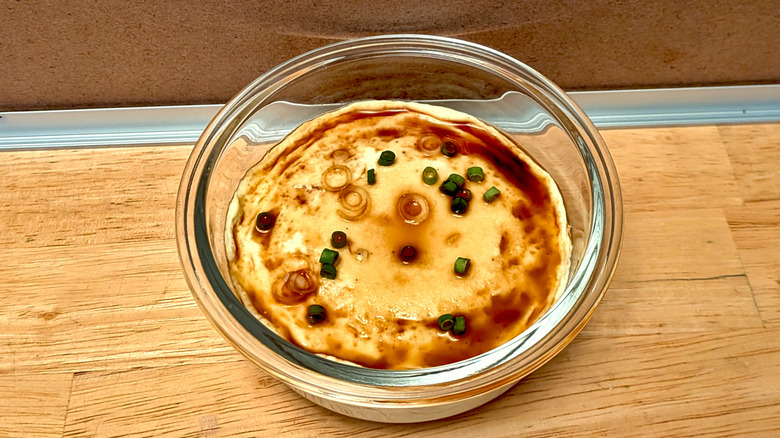
Luckily enough, I actually tried a steamed custard egg for the first time just a few months ago. Also known as a gyeran-jjim in Korean, this silky egg dish with an almost custard-like texture is often served as a side dish or appetizer. I tried my first at a local Korean barbecue restaurant topped with soy sauce and green onions, which I replicated here.
The texture is smooth and light, while almost melting in your mouth with only the slightest pressure. I remember hearing about the preparation but hadn't seen it on any menus. Since I'm a huge fan of custard and its associated texture, I was pleasantly surprised by the accuracy of the description. I was just as happy to find it so easy to replicate at home, though it did take me a few tries to get the texture right.
Whisking two large eggs with about ⅔ cup of chicken stock, I strained the mixture before transferring to a microwave safe bowl and covering with plastic wrap and poking a small hole in the top. From there I microwaved the mixture at 40% power for around seven minutes. The first two times I made these I cooked them a bit too long and the eggs and stock separated, but after lowering the power and time the end product was absolutely perfect.
8. Hard-boiled egg
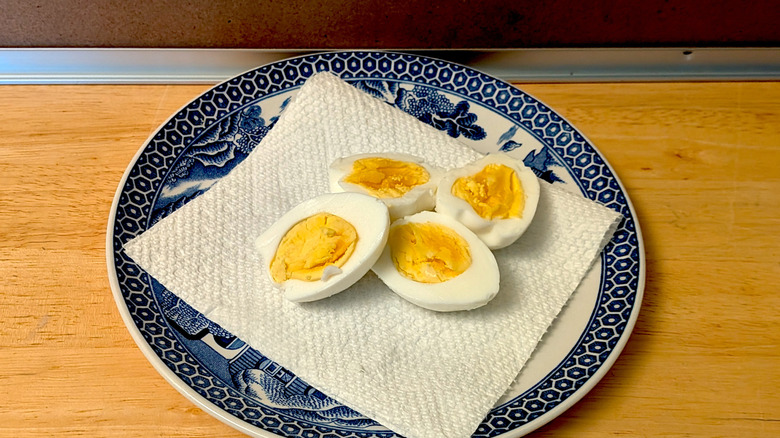
Thankfully, hard-boiled was a much more reliable experience to cook than the soft-boiled version. It uses the same method of boiling water in the microwave, piercing the egg's shell, and cooking at 50% power for six minutes. Obviously, in order to get a hard boil rather than soft, you just microwave it a little longer. Surprisingly, despite the inconsistency before, each of these came out exactly as I wanted without fail.
After being thrown directly into an ice bath for 10 minutes, these boiled eggs peeled smoothly and the whites were perfectly intact. I will say that some of the white was lost after squeezing its way out of the shell while boiling, but if that's the only downside then it's one I can live with. I'm not the biggest fan of hard boiled eggs, and if I'm going to make them it's usually for the purpose of making deviled eggs, which I tend to make in a batch.
Unfortunately, unless you have a large microwave, or only plan to make one or two eggs total, this isn't really much of a time saver compared to the normal stove-based cooking method. I had to give it points for its success and reliability, but the failure to make the process easier in any way makes it less appealing to me as a go-to method.
7. Dessert custard
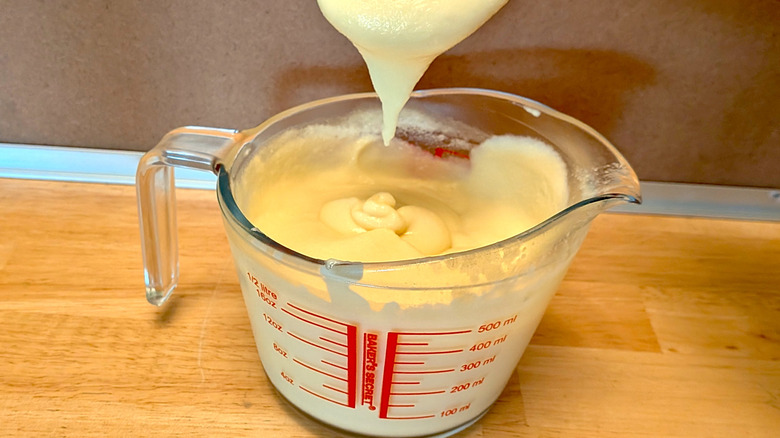
I already mentioned I love custard. It's also one of my favorite fillings to use between layers of cake. I can't begin to count the amount of time I've spent whisking over a double boiler while staring at a thermometer, terrified my custard will split and force me to start anew.
While a perfect custard has a silky smooth texture, my first try at this one had just the tiniest bit of graininess, though not enough to call it a failure. After whisking together three large eggs with a touch of vanilla and around ¼ cup of sugar, I slowly drizzled in two cups of milk I heated on high for three minutes. The mixture was thin and runny, but that was to be expected. From there it was simply a matter of heating the mixture at 50% power for three minutes, then taking it out to whisk before heating it for 45 seconds at a time at the same power level.
Vigorous whisking and smaller times between stirring worked, and the end product was delicious. In the future I think I'd use 30% power for that first heating after mixing, as it heated too quickly and lost a touch of smoothness, but a good whisking and shorter bursts of heat ended with a custard almost thick enough to hold its shape after setting.
6. Poached
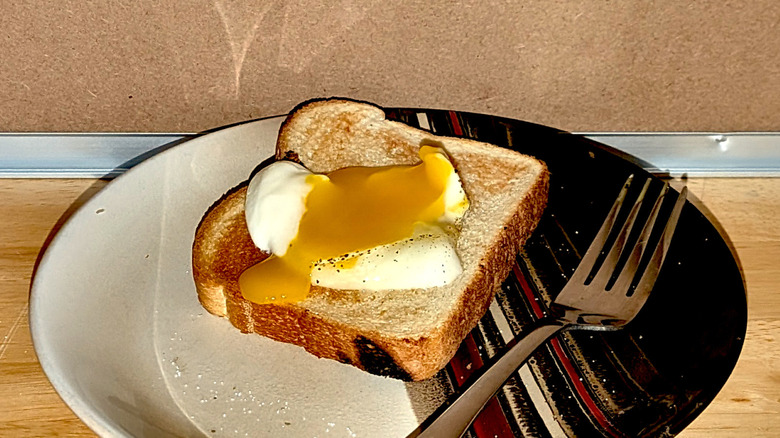
I almost never make poached eggs. Something about the texture has always put me off, or maybe just the way they look. I'm not sure, but I've only ever cooked them when requested. Thankfully that hasn't been often. Now that I know I don't need to add vinegar to water, stir, watch, and hope they come out correctly, I'll be more willing to cook them in the future.
None of the cooking methods I tried were difficult, but this may have been the easiest. How much easier can it get than putting water in a small ramekin, cracking your egg right into the water, and then poking a small hole into the yolk? After that, all there is to do is microwave on high for 60 seconds and out came a perfectly cooked poached egg.
Yes, a small amount of the white was lost when I drained the water, and it didn't wrap around the yolk as snuggly as when cooked on the stove in acidic water, but I couldn't imagine a person even noticing when put on a plate in front of them. I've avoided making eggs benedict for years in order to not have to make a poached egg, or my beloved, but difficult to master, hollandaise sauce. This microwave method of poaching eggs was so easy, that it may have already changed my tune.
5. Hollandaise sauce
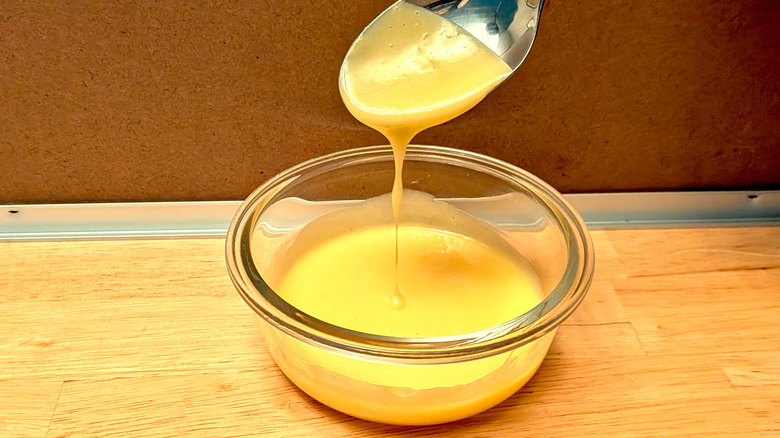
I was about to have my mind blown by how simple and perfect a microwaved hollandaise could be. Knowing that I'd never have to stand over a double boiler while desperately praying my sauce doesn't split into butter and scrambled eggs has put this lemony sauce back on the menu for more than just breakfast in my home.
Hollandaise sauce, with its bright color, sharp lemon flavor, and smooth richness, is delicate, rich, and one of my favorites. I've been known to pour it over veggies for its flavor and contrast against umami-forward meat-based entrées. The amount of eggs I've wasted while multitasking, only to look away for a moment and it see my sauce ruined, is more than I'd like to admit. I now know that making it in a microwave is far more trustworthy.
I combined two egg yolks and about a tablespoon of lemon juice before drizzling in about ¼ cup of butter. It started thin, but all I had to do was microwave for 15-second intervals on high power and whisk in between. For me, it took a total of three 15-second cycles with thorough mixing before I had a thick sauce ready for a touch of salt and pepper to taste.
4. Frittata
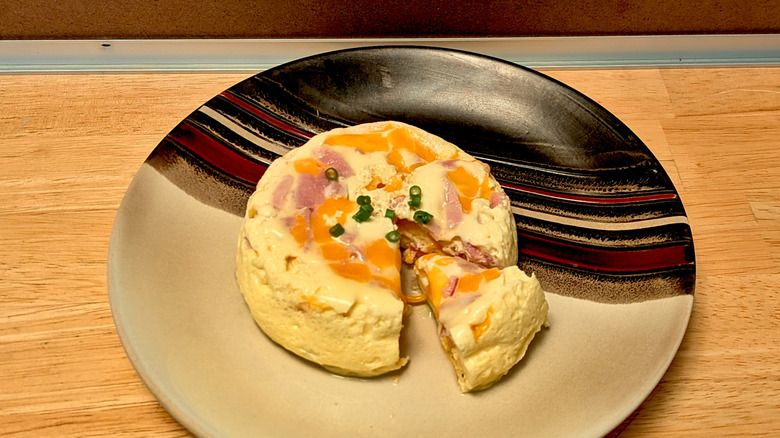
A frittata is one of my all-time favorite breakfast options. At least once a week I take whatever leftovers I have, dice them up, and sauté on the stove until they've started to crisp. From there I toss in a few whisked up eggs mixed with milk and throw the whole pan into the oven at about 425 degrees Fahrenheit for 15 minutes. The result is an easy breakfast that takes barely five minutes of prep work.
While I often consider the "leftover frittata" a signature dish of mine, I was horrified to find that this simple microwaved mix of deli ham, green onions, and cheddar was lighter, fluffier, and more juicy than any frittata I've made before. The prep work was about the same, but I simply microwaved the fillings until they were hot, added my whisked eggs, and dropped in some diced cubes of cheddar cheese before covering with plastic wrap and putting it into the microwave.
I microwaved the mixture for about 90 seconds before seeing that the top had puffed up across the entire container, but upon taking it out I saw a bit of still liquid egg on the bottom. Another 20 seconds in the microwave and I couldn't see any more liquid. Flipping the container over, I was surprised to see the most airy frittata of my life plop perfectly onto the plate ready for me to dig in.
3. Omelet
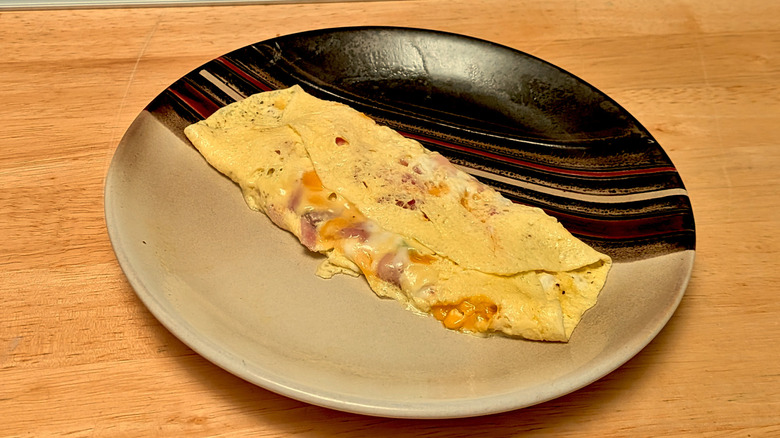
The microwaved omelet was almost too easy to believe. For years I've flipped and folded omelets only to have them break, crack, and come out looking like I didn't even try. Despite considering myself a rather accomplished home cook, something about eggs can be unpredictable no matter how much care I put into them. It's the main reason I often make a frittata instead of an omelet, which I actually prefer.
With this method, I may just start switching it up. This dish was easier to prepare in almost every sense. Using the same ingredients I did in the frittata, I sprayed a plate with cooking spray, poured a whisked egg onto the plate, spread around a generous helping of ham, cheese, and green onion, then covered it in plastic wrap and popped it into the microwave. It only took about 90 seconds, and with a quick folding over of the sides I had a perfect omelet.
This was not only the most even, thin, and precisely portioned omelet I'd ever had in front of me, but it took a third of the time to prepare and was just as delicious as anything I could imagine getting at a restaurant. The cheese was melted and stringy. The ham perfectly melded with the eggs, and the onions lightly flavored the dish in a perfect way. I can say with confidence this microwaved breakfast is going to become a staple in our home.
2. Scrambled eggs
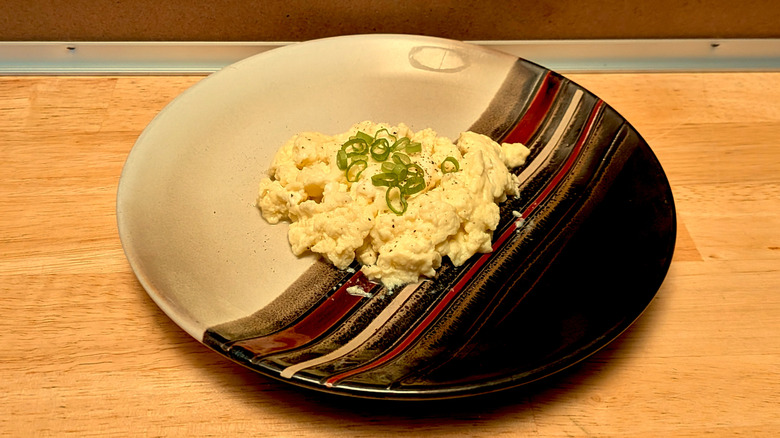
No matter how easy all the previous eggs had been, this was the most straightforward method of cooking scrambled eggs I could have asked for. I'm a fan of French-style scrambled eggs, which are a bit more runny and less thoroughly set than classic American scrambles. So, finding out that both styles can be made with little effort by using this method excited me.
After melting just a touch of butter into a small ramekin, I simply poured my scrambled egg mixture in and added a touch of salt and pepper. From there it was a matter of microwaving them for 30-second intervals at full power, and stirring between each. For my softer French scramble I ended up cooking them for 30 seconds, and then stirring every 15 seconds after that to make sure I had the texture I was looking for. For the more classic style for my husband, the 30-second method worked perfectly.
Both styles of egg came out flawlessly cooked and slid out of the buttered ramekin as if it were born to be nonstick. After adding a touch of cheese into the eggs after the second stir, I found it melted in perfectly and maintained just enough cheese pull to feel impressive without having to do any extra work. I was so impressed by this simple scrambled egg, and the complete lack of sticking to a pan while trying to not let it over-cook, that I don't know if I'll ever go back.
1. Scrambled egg patty
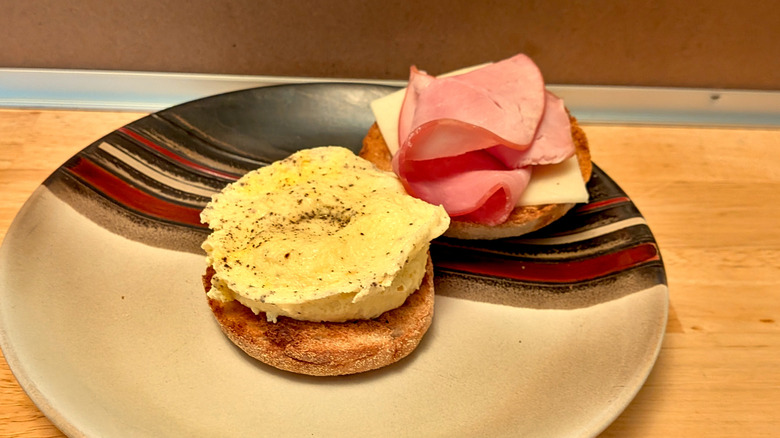
Of all the amazing results I had during these trials, none were more satisfying to me than the scrambled egg patty. Taking a bite transported me back to my teenage years working at Burger King and eating their insanely fluffy, but now gone, bright yellow and rectangular egg patties. They were salty, and almost wet, but were also beautifully textured pillows of eggy joy.
The moment this popped out of its ramekin and landed on the perfectly toasted English muffin prepared for it, my jaw dropped. While not processed or over-salted like the rectangular treats from my memory, this perfect puck of delight was so cloud-like and soft that it almost melted as I bit down. The flavor was that of pure scrambled egg, the texture as light as cotton. With a slice of ham and some cheddar, this was one of the best breakfast sandwiches I've ever made ... No. Ever eaten.
The only difference in preparation from the scrambled eggs: no need to stir. The quality difference between this patty and one you'd get from any fast food breakfast sandwich, immeasurable. What I'd normally make by baking the mixture in a cupcake tin after waiting for it to preheat, was now done in less time than it would have taken for the oven to come to temperature. While I'm more likely to go back to the omelet more often, there's no getting around just how amazing the results were with this egg patty.
Methodology
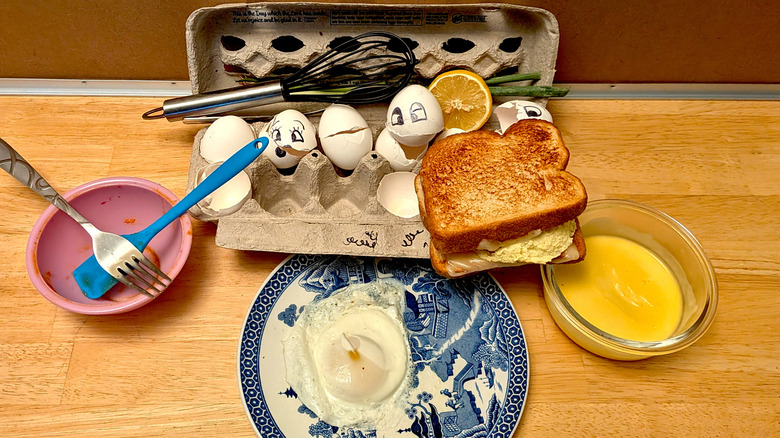
As someone who had never cooked eggs in a microwave, I knew that no matter how the process itself went, I needed the results to hold up to the quality of eggs cooked in a more traditional way. The yolks had to be rich and, when appropriate, runny in just the right way. The whites had to be firm, but not rubbery. Simply put, no matter how easy the microwave made it, I wasn't about to sacrifice the end product for ease of cooking.
So, in order to decide which ways to cook eggs in the microwave were best, they had to result in a well cooked egg, but couldn't be more complicated than the normal method of cooking. What it came down to was efficiency, cleanliness, and time. I needed to know which methods would provide a balance between those qualities and good food to a point that made the switch from the stove worth it.
Surprisingly, all I found were improvements. As a whole, preparing eggs in the microwave generally led to less dishes, better or equal quality, and a higher rate of consistency. I can't say that I expected that to be the case, but I can't stress enough how worth trying these basic cooking methods are.