

Wild Alcohol Laws We Can't Believe Are Still On The Books
If you are ever looking for an internet rabbit hole to fall into when you need a break from doomscrolling, you should look up alcohol laws. It's a vast collection, differing by state and region. One of the common threads of liquor laws is that some of them are extra bizarre and even sound made up or like a card you might draw when playing Cards Against Humanity. Alcohol is a controlled substance, so it's not completely unrealistic for there to be rules around it, but it's the granular level of specificity that pushes some over the top.
Eventually, you stumble upon the ones that go beyond legal drinking age, and you start to wonder about the origin stories of these odd but legally binding liquor rules. What happened? From animals being forbidden to consume alcohol to drive-thru cocktails getting the green light, it really is wild out there in the land of the law. Let's dive into the Pandora's box of outrageous alcohol laws.
1. Mom and dad can get drinks for their underage kids in some states

If you are under the legal drinking age, there's still hope of snagging a cocktail if you're with your parents. At least that's the deal in some parts of the U.S. While the minimum drinking age of 21 is in effect in all states, there are some loopholes. For example, roughly 30 states allow family exception. Ohio, Wisconsin, or Texas are just a few of the states where your parent or legal guardian can let you have alcohol while they are present. They can't send you with a permission slip like it's a field trip — the only way to enjoy the perfect marg is to party with your parents.
It's the kind of law that gives Amy Poehler cool mom vibes from "Mean Girls." Whether your guardian dons a pink Juicy leisure set or not, they can approve your order. It's not a complete boozy free-for-all, though. There are slight state-by-state nuances to the rules of underage drinking via family exception. For example, while the rule often extends to alcohol served in bars and restaurants, businesses still have the right to refuse service.
Some states have other exceptions to their minimum legal drinking age, such as education and religious ceremonies like communion. There are also some states where someone 21 or older can purchase alcohol for their underage spouse. Speaking of underage drinking laws, a handful of states — including Pennsylvania – have another weird one on the books. In those states, you can't even purchase non-alcoholic beer under the age of 21.
2. You can't give a moose alcohol in Alaska
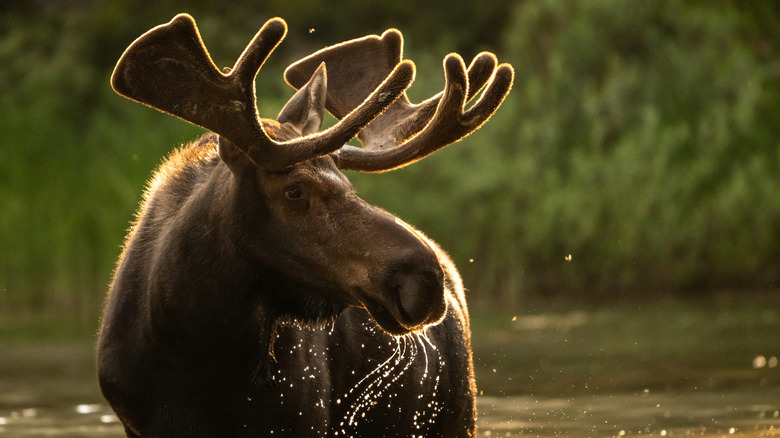
You know when you see a rule and wonder why it needs to be said out loud? Well, there are some states that have actual laws regarding the consumption of alcoholic beverages and animals. For example, if you are in Fairbanks, Alaska, and hope to tie one on with a resident moose, we have bad news. It is against the law to offer even a sip of alcohol to your friendly neighborhood moose friends.
If you are wondering how a law like this could possibly be a thing, it's all because of a moose affectionately named Buzzwinkle. He stumbled around downtown, had one too many fermented crab apples, and got into all sorts of mischief. It wasn't uncommon to see Christmas lights tangled up in his antlers. His naughty behavior ruined it for all the other moose. It's a cautionary tale that even moose can't handle their alcohol, and now there's an official law because of it.
In Sweden, the elk must have taken notes from Buzzwinkle's antics. Elk have a reputation for getting apple drunk on fermented apples before passing out in a neighbor's yard. It's also typical to see more drunken elk in the fall when the apples drop from trees. They'd better rein it in before lawmakers spring into action as they did in Alaska.
3. Helicopter bartenders are a thing in Utah
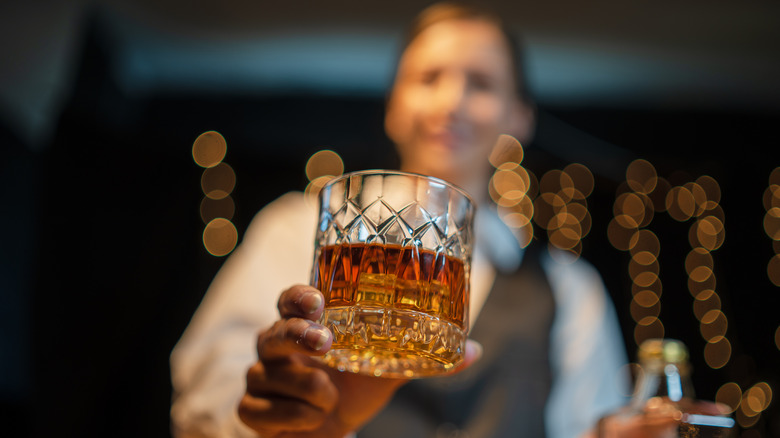
If you are the one who always ends up babysitting the friends who cannot handle their booze, you might want to frequent some of the spots where bartenders are required to micro-manage in a manner befitting helicopter parents. You know, the type who follows their child's every step to keep a close, overbearing eye on them.
For example, in Utah, bartenders are required to use an electronic metered dispensing system to have control over the exact amount of alcohol being served to patrons. It takes pouring alcohol like a pro to new levels. With the limit for primary liquor being 1.5 ounces per shot (up to 2.5 ounces total for a cocktail), you also can't order a double. That law is relatively tame, considering Utah had another one in place until the late 2010s, under which bartenders were only allowed to prepare alcoholic beverages out of patrons' sight. It was known as Zion's Curtain and tops the list of bizarre alcohol legalities.
4. In Texas, you can get alcoholic drinks at the drive-thru
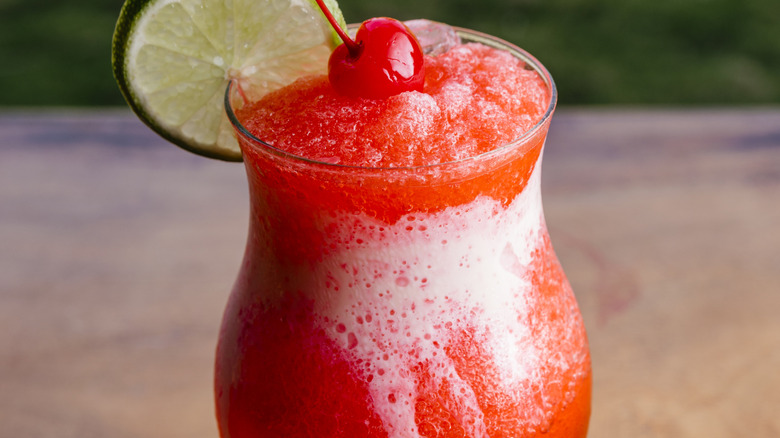
Have you ever been driving around town craving a daiquiri to go? We're not talking about drive-thru liquor stores, which exist in more states than you probably think. If you want the true to-go alcohol experience, then you might just want to book a trip to Texas. Here, you can pull your car right up to a window and secure yourself a daiquiri. Thanks to House Bill 1024, Texas is able to serve alcohol to-go, with some establishments serving mixed drinks through a little window just like fast food. If you ever dreamed of pairing fast food fries with a cosmo, the Longhorn State is the place to be.
Texas isn't the only state that offers to-go cocktails. In Missouri, to-go alcoholic drinks were given the green light in 2021, provided additional legal requirements are met. For example, you must order food, and you are allowed up to two drinks per meal. It cannot be served using a lid with a hole for a straw and has to be marked a specific way.
When you finish the drink and toss the cup in the trash, just don't let your underage kids take the garbage out. Even though they're empties, they could still contain a small amount of the drink, meaning your child could technically be considered in possession of alcohol. While there are many states that have varying laws about drinking in public or open container provisions, there are only a small number that allow patrons to procure their alcoholic beverage of choice from the privacy of the driver's seat of their car.
5. If you want to buy a cold beer, don't go to Indiana
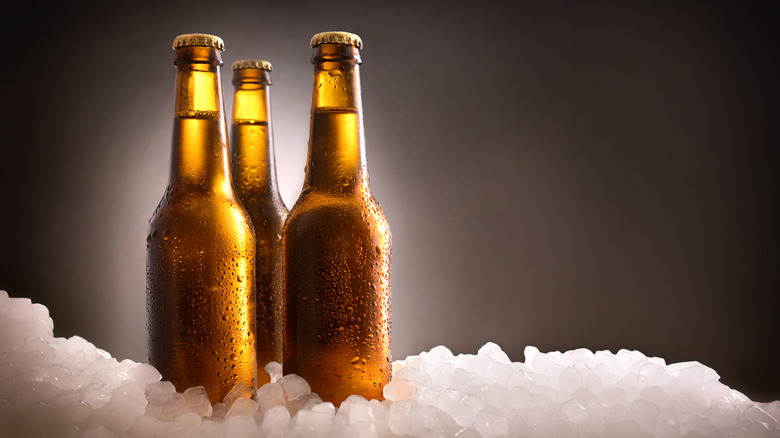
One of the more bizarre drinking laws is courtesy of a state smack in the middle of the country. If you have always wondered where in the country you might struggle to purchase an ice-cold beer, it's in Indiana. If you prefer to drink it warm, however, you'll feel right at home. A far cry from car daiquiris, Indiana is the only state to put the kibosh on grabbing a cold beer from a grocery store, convenience store, or gas station.
While some types of beer are actually meant to be served warm, there is a method to Indiana's madness regarding the temperature of beers for purchase. The catalyst for this rule is to prevent people from popping a cold one as soon as they exit the store. There are many popular beers beloved by the people of Indiana, but it's doubtful they would willingly choose to enjoy them warm. The juxtaposition of temperature restrictions in one state while being allowed to consume alcohol in your car after visiting a cocktail drive-thru in others is wild. The bottom line is that if you want to purchase cold beer in Indiana, it must be from a package liquor store.
6. Multiple states have restrictions around drinking games
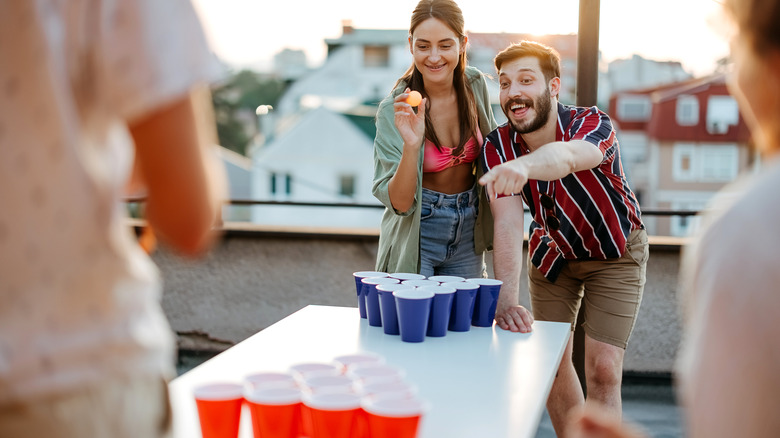
Games have long been synonymous with consuming alcohol. College kids play beer pong, people frequent trivia nights fueled by alcohol at their local bars — the list of drinking games goes on. It's not all fun and games if you hit the bars in some states. For example, in North Carolina, there is absolutely no bingo allowed if alcohol is being served.
That's not the only state to ban a combination of alcohol and gaming. If you are planning a day or night out in the Borough of Sea Girt in New Jersey that involves any type of drinking games, then you'd better make sure it's not taking place outside — it's unlawful to engage in the "playing of such outdoor alcohol related games and contests in view of the public and adjoining properties" (via eCode360).
Maine is also on the list of states concerned about the combination of alcohol and games. Drinking establishments are not allowed to host games that involve drinking or give away drinks as prizes. So, don't expect to win a bar tab on a pub quiz in Portland any time soon.
7. Red dots are a remnant of old alcohol laws in South Carolina
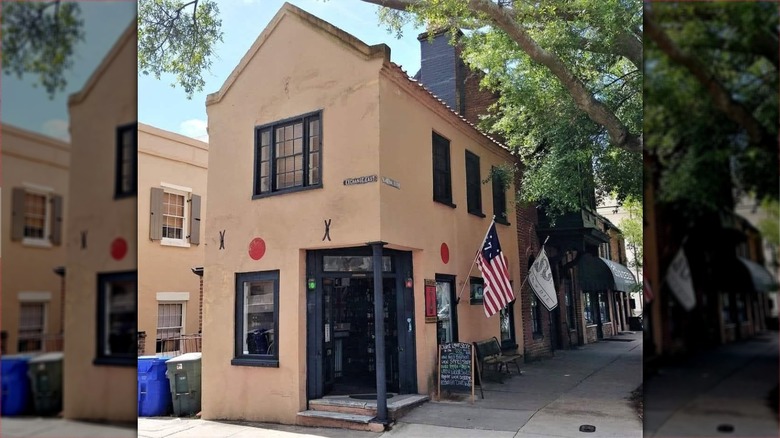
Some alcohol laws, even some that are no longer relevant, are deeply rooted in Prohibition history, and that is how South Carolina rolls. You can often spot an establishment that sells liquor in South Carolina from a mile away because of a well-known physical cue: red dots.
The very first dots appeared on an establishment owned by liquor dealer Jesse J. Fabian. Even after Prohibition ended, and South Carolina started selling alcohol, 1945 saw the state introduce some new restrictions on advertising the sale of booze. So, in order to subtly alert people to the availability of booze, establishments painted red dots on the outside of their stores. While the dots were not Fabian's original design plan, they stuck. To this day, you can still spot red dots around the state, making it a part of South Carolina tradition.
It's no secret that Prohibition was a terrible time for drinkers. While we're on the topic of the Palmetto State's alcohol laws, we need to talk about one that involves the public school system. Children who attend public schools in South Carolina are technically required to receive a little alcohol education as part of the standard curriculum. These kids get an entire lesson about "the evils of intemperance" every year on the fourth Friday of October (via South Carolina Legislature). This law has historical significance as well since it's meant to honor Frances Willard, who was instrumental in the passage of Prohibition.
8. Private clubs need to meet certain rules to sell booze in some states
If you are a member of a private club, such as a country club or lodge, in South Carolina, and enjoy the likes of an old-fashioned every now and then, there are specific laws for the liquor licenses that make that possible.
Under state law, a private club can only legally sell alcohol if it acquires nonprofit status and the appropriate liquor license. Liquor licenses allow nonprofits to sell alcohol as long as they meet specific requirements and renew the license every two years. This was previously also the case in Arkansas until 2025.
Alaska has similar rules, with private clubs only allowed to acquire liquor licenses if they're "operated for social, recreational, benevolent, or athletic purposes and not for profit" (via Justia). They must also be located in a community where the sale of alcohol is legally permitted. A club can apply for a license to serve liquor with certain provisions. While Alaska previously had more restrictive alcohol rules, the state's laws have undergone some modernization by the Alcoholic Beverage Control Board over the years.
9. The U.S. isn't the only country with niche alcohol laws
If you thought the U.S. was the only country with a laundry list of bizarre but entertaining laws around alcohol sales and consumption, you'd be wrong. International liquor laws are an entirely different beast. For example, in Japan, it is illegal to brew your own alcohol at home with an ABV of 1% or higher (unless you happen to have a brewing license). Driving a car while under the influence in Japan is, unsurprisingly, also illegal, but so is riding a bike – and anyone caught doing so risks also losing their driver's license.
In Saudi Arabia, alcohol of any kind was strictly prohibited. However, the country has slowly started reconsidering this ban in recent years, allowing non-Muslim foreign residents with a Premium Residency permit or an income over a certain amount to purchase alcohol. Iran forbids alcohol, classifying it as a punishable crime against God. In the Maldives, liquor is also strictly regulated. It is only available on resort islands, and anyone who takes it outside of the resort or is caught intoxicated off-property faces potential arrest or deportation.
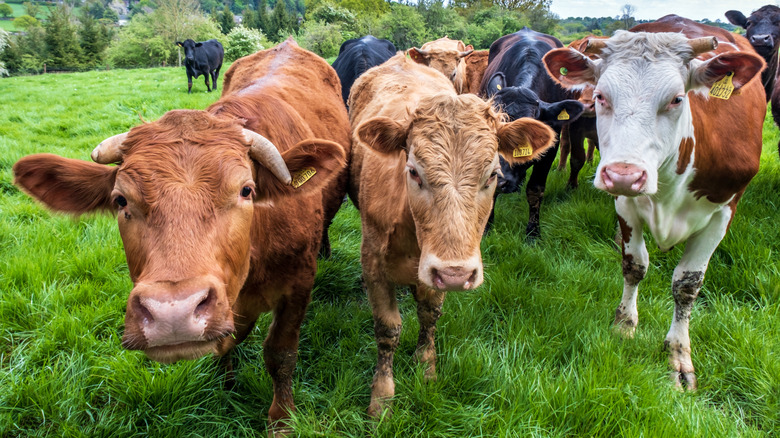
On a slightly lighter note, a law left over from the 1800s forbids being drunk while in charge of cattle in the U.K. That archaic law is technically still valid, but larger animal welfare requirements would likely cover that issue even if it were abolished. Let that be a warning to all people of the U.K. who plan to indulge before looking after the herd — you might need to hire a cow sitter.