

The Popular Type Of Beer You Should Always Serve Slightly Warm

It's hard to beat a perfectly ice-cold beer (Germany even has the perfect ice mold to keep beer cold). However, as much as we love a frosty brew on a hot summer day, colder isn't always better. In fact, you may find that one popular beer style tastes better when it's served lukewarm: stouts.
Stouts are kind of like fine cheese, in the sense that it's a shame to consume them fresh from the fridge. The complex flavors of the dark, warm-fermented ales are typically best appreciated at about 50 to 55 degrees Fahrenheit (light American lagers, in contrast, can be enjoyed from as low as 35 degrees Fahrenheit). Stouts often contain notes of coffee, caramel, and chocolate, which are muted by frigid temperatures. Letting the beer warm slightly releases these flavors and aromas and reduces bitterness, resulting in a more enjoyable drinking experience. To enjoy your stout at the optimal temperature at home, you can simply let the beer sit outside the fridge for about 15 to 20 minutes before serving.
Should all stouts be served slightly warm?
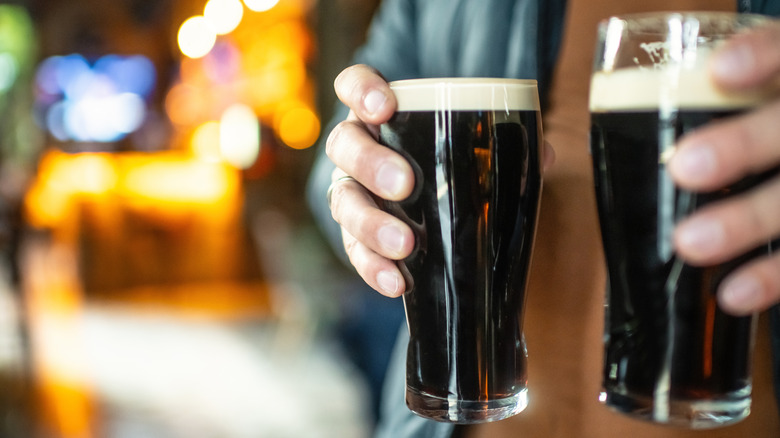
Almost all stouts should be served above standard refrigerator temperature, which is no more than 40 degrees Fahrenheit. However, not all stout varieties are created equal, and some demand a warmer temperature than others. Luckily, there are some loose guidelines you can follow to help determine a stout's ideal serving temperature. Generally speaking, the darker and stronger-flavored the ale, the warmer it should be served. Additionally, while beer color isn't always associated with alcohol content, higher-alcohol brews tend to taste better at higher temperatures. Bold, high-ABV imperial stouts, for example, are ideally served closer to 55 degrees Fahrenheit, while a perfectly poured lower-alcohol Guinness can be enjoyed at between 43 and 45 degrees.
This begs the question: how warm is too warm to serve a stout? While taste is subjective, the golden zone for almost all stouts and palates falls between 40 and 60 degrees Fahrenheit – anything above 60 degrees is probably going to taste unpleasantly flat and stale. Luckily, if you do let your beer warm up on the counter a bit too long, it's still perfectly safe to drink, although the flavor won't be optimal. If you're looking for more ways to boost your beer serving game, here's the right way to hold your beer (spoiler alert: you're probably doing it wrong).