

10 Weird McDonald's Lawsuits Not Enough People Know About
McDonald's has built its reputation on more than just burgers and fries. Yes, the fast food darling arguably has the world's tastiest French fries (in our opinion, at least), but it also nails everything from perfectly crispy Diet Cokes to endlessly snackable McNuggets. Even the Big Mac and its signature sauce have a seriously loyal following. It's these offerings that allow its large global fan base to overlook some of the chain's more glaring flaws, such as the perpetually "broken" ice cream machines.
The truth is that it's not all sunshine and hot apple pie pockets for McDonald's. The chain has a long — and sometimes off-the-wall — legal history, with cases that feel more like something from a scripted reality show than a formal legal proceeding. It's faced various lawsuits over the years, involving everything from serving hot food that's just too hot to misleading menu items.
Despite the array of McLawsuits, the fast food empire is still going strong and continues to serve its menu of burgers, fries, nuggets, and more. Even these 10 lawsuits could not take down the house of Ronald McDonald.
McRib bait and switch
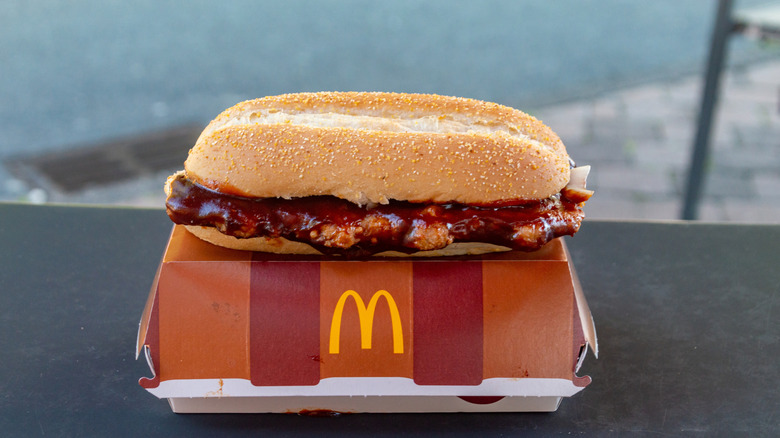
The McRib sandwich has garnered its fair share of chatter — good, bad, and ugly. While some outright despise the sandwich, others enthusiastically await its limited stints on the menu. It's a divisive menu item, yet it hasn't been axed completely, so clearly it performs well enough to justify its regular cameos.
One of the biggest debates about the McRib focuses on what meat actually makes up the controversial sandwich. In 2025, the questionable meat content became fodder for a class action lawsuit. The misleading marketing rubbed too many McRib critics the wrong way — so much so that they decided to take McDonald's to court.
The gist of the ongoing lawsuit was that customers felt duped into paying a premium for a McRib when it's not even made from rib meat. In the lawsuit, four plaintiffs alleged that the McRib is made from other, less costly cuts of pork, including the shoulder, scalded stomach, heart, and tripe. Words such as "fraud" were mentioned in the legal documents. The plaintiffs even went so far as to claim that being misled over the McRib had financial and psychological implications. McDonald's denied the accusations, insisting that the case "distorts the facts" (via The Independent).
A spiked Diet Coke
There is no scenario where any fast food customer expects to visit the emergency room after sipping a fresh fountain soda from Mickey D's. Unfortunately, in 2016, one McDonald's patron in Utah experienced a wild series of events after drinking his seemingly normal Diet Coke. The effects that followed his fizzy beverage were so intense that they led to a hospital visit and a lawsuit in 2018.
After losing feeling in his arms and a brief blackout episode resulting in a trip to the emergency room, testing and an investigation by police found that the man's Diet Coke contained buprenorphine (also known by its brand name, Suboxone). Typically used to treat opioid withdrawal symptoms, it's certainly not so typical in a McDonald's Diet Coke. The lawsuit also added that the spiked drink conflicted with another medication he was already on and the situation could have been fatal.
While both sides argued the validity of the case and McDonald's role, the lawsuit alleged that an employee who "had posted about disrespecting McDonald's customers through the drive-thru window" — and later quit his position after talking to police — spiked the soda (via Business Insider). Also complicating the case was the fact that authorities received the wrong footage from the restaurant, only to later learn that footage from the day in question had been automatically deleted.
McDonald's Monopoly was rigged by a former cop
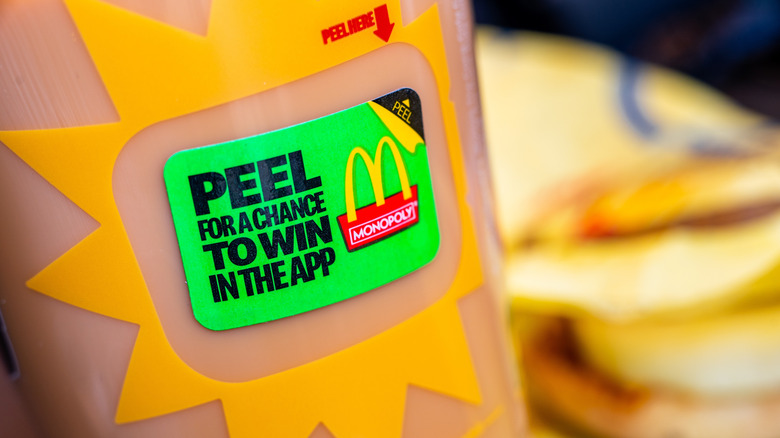
McDonald's has conducted its own special brand of the famous Monopoly board game for years. People get really into it when those tiny paper squares show up to play. But the seemingly innocuous version of the game previously landed McDonald's in some legal trouble.
For years, former police officer Jerry Jacobson ran a scheme that allowed others to cheat the McDonald's game. Jacobson was head of security at the printing company that made the game pieces and devised a whole system that would give people in his network the winning pieces in exchange for a portion of the monetary prize. This scheme ran for more than a decade before a tip led to the FBI's involvement in 2000.
Ultimately, more than 50 people were convicted. To make amends with cheated customers, McDonald's gave $10 million to 55 random customers. But after a subsequent class action lawsuit, it later gave another 15 random customers $1 million each — however, it did so without conducting a Monopoly promotion after a separate lawsuit over the game. The whole debacle was juicy enough to land a docuseries about the dirty Monopoly operations. In 2020, HBO released "McMillions," a six-part series based on the McDonald's Monopoly scheme.
Paying the price of a consistently broken ice cream machine
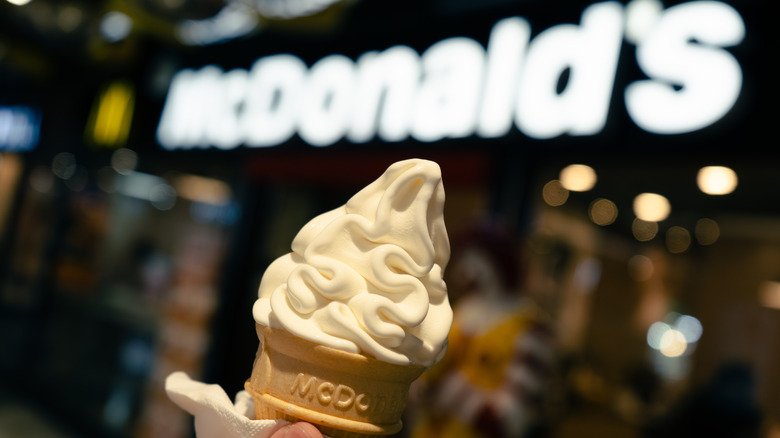
There's a long list of beloved McDonald's desserts, but those who prefer ice cream are often out of luck, since the machines have a reputation for being broken. The lack of ice cream leaves a trail of disappointed customers who just want to finish their McDonald's meal on a sweet note. In fact, it's such a widespread problem that a site exists to find out whether your local Mickey D's has a functioning ice cream machine. But that's not even the most dramatic detail about the chain's classic and creamy soft serve. An entrepreneurial couple previously launched a startup, Kytch, that invented a solution to McDonald's perpetual ice cream woes. It was great until it wasn't, and the couple ended up suing for up to $900 million in damages.
Once other franchises got word of Kytch's problem-solving gadget, the folks over at the parent company got involved. That's where everything went sideways. McDonald's warned franchisees that the device could pose a safety concern and potentially affect the warranty of their machines.
Things escalated quickly as the pair claimed that one of its partner companies used confidential information to create a competing device. That set the stage for the couple to then go after McDonald's. The corporation ordered its franchise owners to ditch the clever gadget at the center of the lawsuit, and it put a major dent in the start-up company's earnings. McDonald's later agreed to a tentative settlement.
Customers did not ask to be burned by their order
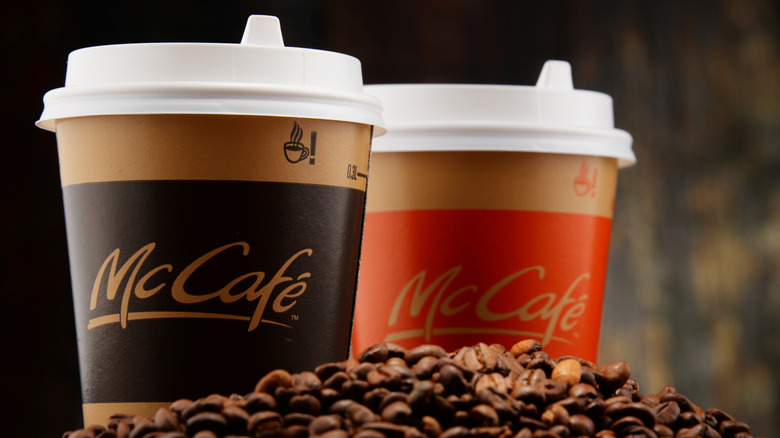
Diet Coke isn't the only menu item to thrust McDonald's into the legal system. The chain's coffee has also landed the restaurant chain in some hot water (pun intended) on more than one occasion. In 2023, a woman in San Francisco alleged that her coffee was served so hot that she sustained severe burns as a direct result of the spill. The case alleged that the employee who served her coffee did not put the lid on properly. Instead of perking herself up with a nice sip of coffee, the customer received several burns when the burning hot java came pouring out all over her lap. She also alleged that she was dismissed by employees who ignored her when she asked for assistance following the incident.
As we said, this wasn't the first time a customer was burned by McDonald's coffee. In 1994, a 79-year-old woman was also a victim of scorching hot coffee. She went on to sue the world-famous fast food icon for her pain and suffering. She was awarded $2.7 million in punitive damages before reaching a settlement with McDonald's after an appeal. During the '90s, the chain's coffee was served at 180 to 190 degrees Fahrenheit, but the woman's lawyer alleged that the coffee she was served was dangerously hot, causing her injuries.
Scorching nuggets do not make a Happy Meal
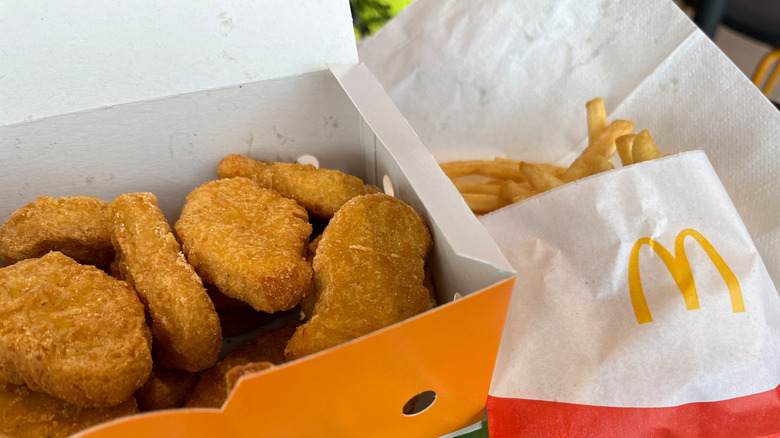
Coffee is just one menu item allegedly served hot enough to cause injuries at McDonald's. In 2023, a family in Miami sued the Golden Arches over excessively hot chicken nuggets. When the family ordered McDonald's for their 4-year-old daughter, the Happy Meal came with much more than the highly anticipated toy. Upon opening the box of McNuggets, the child received second-degree burns that required a visit to the ER and was left with a scar.
McDonald's lawyers argued that its chicken had to hit a certain temperature to eliminate the risk of salmonella. However, jurors concluded that the chain should have warned customers about the risk that comes with kids' meals served at such high temperatures. Without that information, a Happy Meal can turn unhappy with a single bite of a scalding nugget. The family ultimately won its lawsuit against McDonald's — although the jury decided that the chain wasn't negligent and the product wasn't defective — and was awarded $800,000.
The lawsuit worth a quarter of a pound
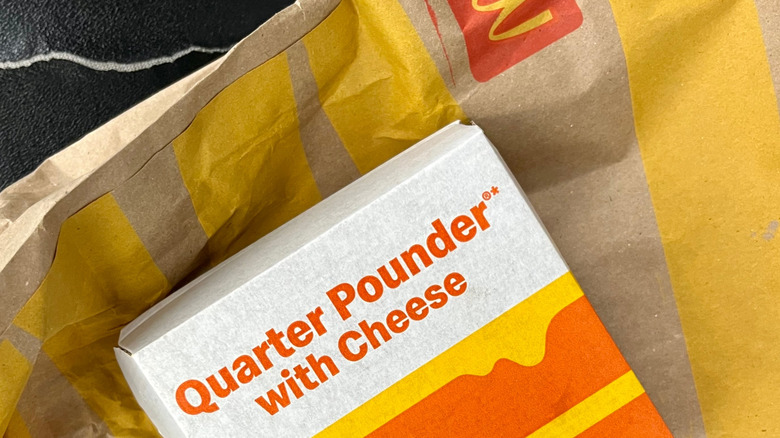
If you have ever wondered how serious McDonald's customers are about its burgers, the answer is very serious. Many customers flock to McDonald's for a Quarter Pounder and also because of the convenience and value of meal deals. However, in 2018, two customers were left incensed over the fact that McDonald's Quarter Pounder was the same price with or without cheese. They were so fired up that they filed a $5 million class action lawsuit against the home of Ronald McDonald.
This isn't the first time in McDonald's history that customers have had gripes about its prices. However, the fast food chain stood its ground and emerged victorious on the basis that cheese is not a superfluous charge for menu items. The judge on the case ultimately dismissed the claims against McDonald's with prejudice, preventing the plaintiffs from filing the same case in the future.
McDonald's was named in a lawsuit over sex work
In 2012, a former McDonald's employee filed a lawsuit in California alleging that her pay was so low while employed at the fast food chain that she was essentially forced to pursue sex work at a legal brothel on the Nevada border. To complicate matters further, the lawsuit also named her ex-husband and his company, which owned the franchise where she worked at the time. She alleged that he wrongfully terminated her from her position to pressure her into further sex work.
Her grievances with McDonald's also included its alleged lack of due diligence and training when agreeing to sell a franchise to her former partner, plus its stance against unions and what she described as unsatisfactory health insurance. However, the court ended up dismissing her case with prejudice, meaning she received none of the lost wages, special damages, or other compensation she sought in her complaint.
A hot pickle sparked legal drama
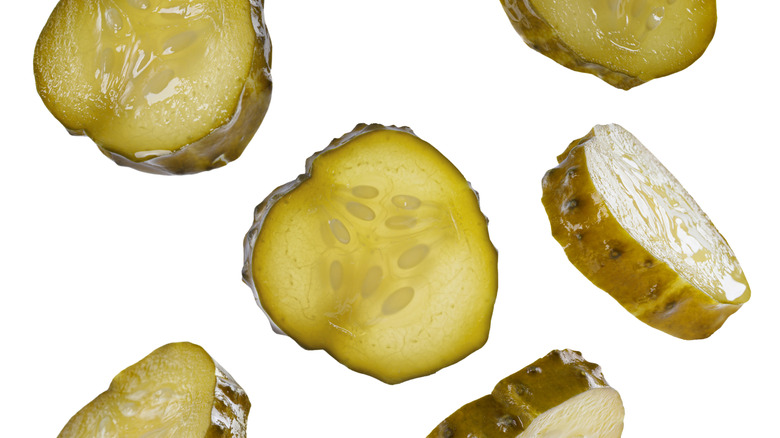
Coffee and chicken nuggets from the Golden Arches are not the only culprits blamed for customer injuries. In 2001, a customer at a Knoxville McDonald's location claimed to have been injured when a steaming hot pickle slice slipped right off her burger patty two years prior, burning her face. To be specific, she allegedly suffered second-degree burns on her chin and said that the excruciatingly hot pickle left her disfigured.
She sued for $110,000, but wasn't the only one to complain. Her husband also sought $15,000 in damages after alleging that the infamous pickle was responsible for "losing the services and consortium of his wife" (via Deseret News). The plaintiffs' counsel called the pickle defective and dangerous. McDonald's maintained that there was nothing amiss with their pickles. When all was said and done, McDonald's settled out of court with the customer.
McDonald's was blamed for weight gain

In 2011, McDonald's was sued by a man in Brazil who claimed that he gained too much weight eating at the establishment. He blamed the free lunches he received as an employee at Mickey D's, as well as the pressure he faced to try food every day in the name of quality control. McDonald's was later ordered to pay the former employee $17,500.
This isn't the only court case tied to weight gain. In 2003, two teenagers sued the burger chain over claims that it didn't provide enough information about the health impact of regularly consuming its food. McDonald's argued that its nutritional information was readily available.
A judge ruled in favor of the fast food behemoth, arguing that the teenagers were responsible for what they chose to eat and saying, "Nobody is forced to eat at McDonald's" (via CBS). Few people flock to their closest McDonald's for healthy, nutritious meals. However, the chain has made several tweaks to its Happy Meals over the years to make them slightly healthier.