

13 Store-Bought Olive Oils For Bread Dipping, Ranked
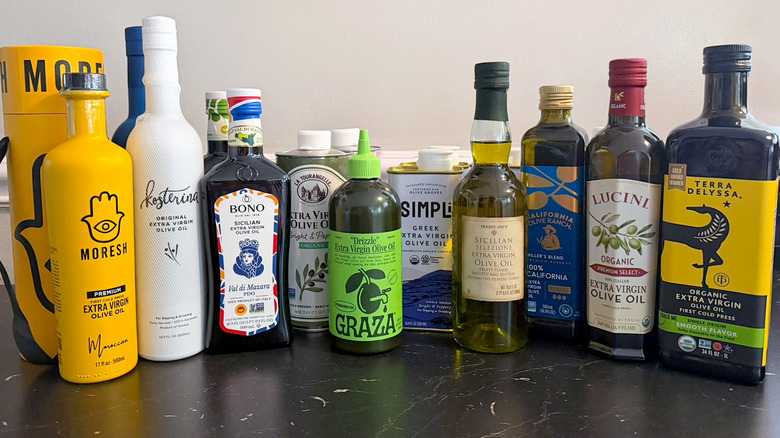
When dipping a rustic, crusty bread — crunchy on the outside, airy and soft within — into olive oil, some people like to add extra elements such as herbs, spices, garlic, cheese, or balsamic vinegar. But when you're working with a truly great extra virgin olive oil, there's no adornment needed. High-quality olive oil pairs beautifully with bread on its own, offering fruity, herbal, and even peppery notes that linger on the palate in a way that only the lovingly pressed juice of fresh olives can achieve.
While our favorite oils will likely always be artisanal, small-batch versions sourced directly from the producer, we don't always have the time — or, let's face it, the money — to snag that premium bottle. A more common scenario sees us standing in the supermarket, trying to choose a new olive oil for cooking, salad dressings, pasta sauces, and, of course, bread dipping. So let's take a look at some of the more popular store-brand extra virgin olive oils, which typically cost between $15 and $25 for a bottle, and rank them based on performance for bread dipping.
13. Moresh Premium Moroccan Extra Virgin Olive Oil
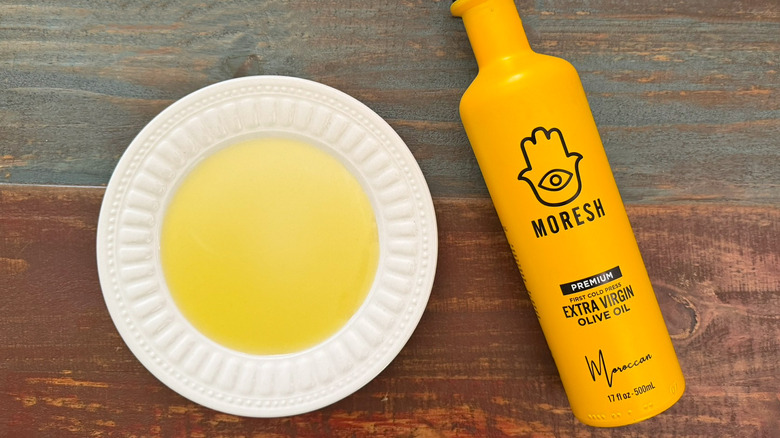
This Moroccan oil comes in a coated glass bottle – one of the best ways to store olive oil, as it blocks the light, which can quickly degrade the contents. The brand also offers features related to traceability. Entering the universal product code and lot number on the website, for example, displays information about your bottle's history. In this particular bottle's case, the harvest date — which is of utmost importance, since oil quality degrades over time — is listed as 2024/2025, suggesting that this is from the fall 2024/winter 2025 harvest, which is not the most recent one.
From a taste perspective, this one is particularly flat. There just isn't much intensity or concentration, and it struggles to deliver flavor that matches even bland bread. Though Moresh has additional premium options that can be ordered directly from its website and would probably work better in raw form, this everyday option is probably better suited for cooking or baking than for bread dipping.
12. Trader Joe's Sicilian Selezione Extra Virgin Olive Oil
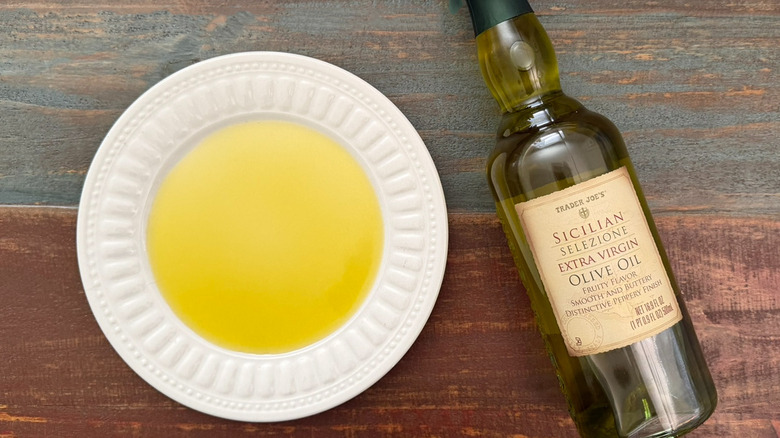
Trader Joe's Sicilian Selezione Extra Virgin Olive Oil is one of the store's premium choices. Described on the label as "no ordinary olive oil," this Trader Joe's offering is made exclusively with Italian olives, blended from three local varieties for the chain.
Impressive though this may be, it's disappointing that this oil comes in clear glass, which does not protect it from light damage. While clear glass may be pretty to look at, it's not doing the actual oil — or that oil's consumer — any favors. This oil also lacks a harvest date on the bottle, though the back label indicates it is from the "current harvest" (whatever that means).
As such, when this oil proved pretty mediocre, it was hard to know if this was related to the storage or the oil itself. Without tasting it at the source, we'll never know. It's muted, lacking those telltale fruity or herbal flavors, though there are admittedly some buttery notes. The finish here offers a touch of spiciness, but compared to some of the better oils here, it is not at all distinct. At $10.99, this is the lowest priced oil on the list, but it otherwise fails to stand out.
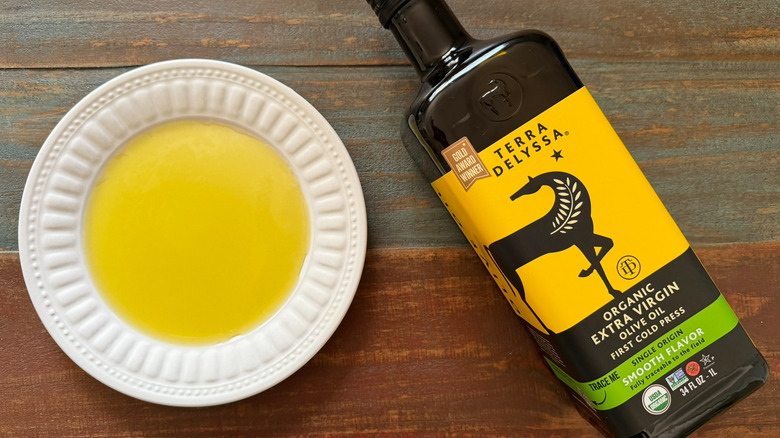
11. Terra Delyssa Organic Extra Virgin Olive Oil
Tunisia hasn't built quite the same reputation as other oil-producing regions like Italy or Spain (yet), but it consistently ranks as one of the world's top producers by volume. Historically, the country has mostly produced bulk oil that's then blended with oils coming from (and subsequently labeled as being from) more famous locales. More recently, however, Tunisia's olive oil market has begun to shift towards more artisanal bottles.
On the palate, this oil backs up the label's promise of a smooth flavor, offering some slight fruity and buttery notes, along with a hint of peppery tingle on the back end. Otherwise, it's relatively mild and clean, lacking the aromatic and flavor intensity to be considered a great bread-dipping oil.
This oil comes in a dark glass bottle, which offers good light protection, and similar to Moresh (made by the same parent company), it has traceability features via a QR code and the website. In this case, while the website provides info such as the bottling date, filtering date, blending date, and laboratory analysis date, it does not include the harvest date. In sum, though this one is not ideal for bread pairing, it is a reasonable everyday choice that's versatile enough to work for a variety of uses.
10. La Tourangelle Organic Smooth & Fruity Extra Virgin Olive Oil
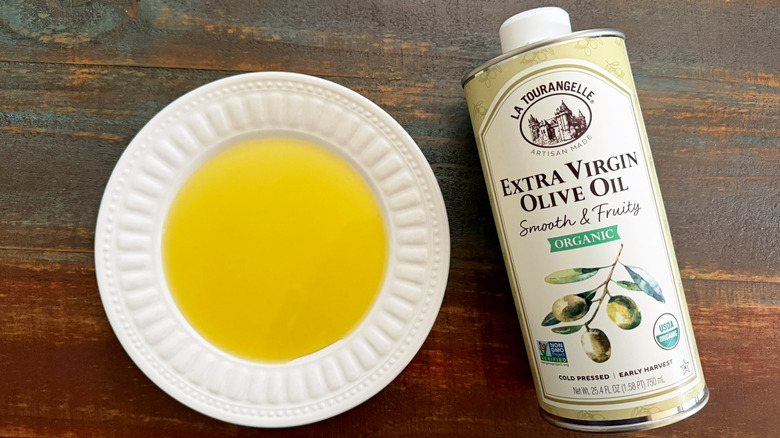
A French-American olive oil company that produces Spanish and Californian extra virgin olive oil, La Tourangelle makes a big deal of its packaging. It uses tins instead of glass bottles — which, of course, helps keep light damage to a minimum. This smooth and fruity oil is made mostly with Spanish Arbequina olives, known for their buttery, subtle flavor, and a hint of the bolder Picual.
It's a decent oil for what it is, but the flavor is moderate enough that it's never going to be a standout oil for bread dipping. Milder oils generally tend to taste fattier and greasier, lacking the lively notes showcased by more robust oils. This one also offers some vegetal notes — artichoke, perhaps? — as well as a slight spiciness on the finish. It's a decent choice for an everyday oil for cooking and other uses, but it doesn't quite stand up to bread like some of the more flavorful options on this list.
9. SIMPLi Greek Extra Virgin Olive Oil
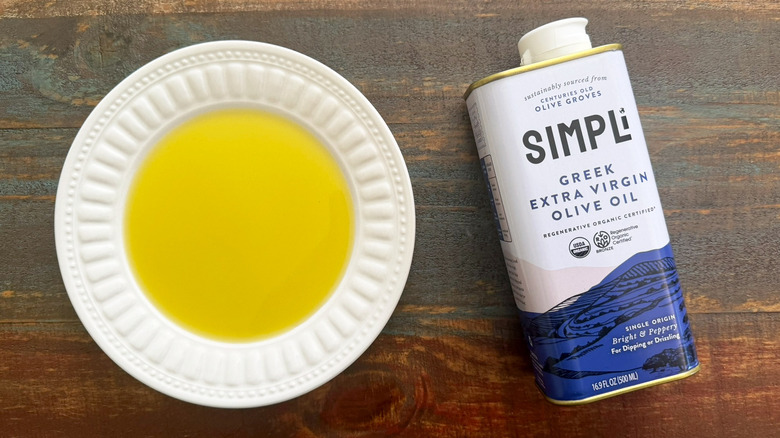
SIMPLi's oils also come in a tin that is not only attractive for the table, but offers excellent UV blocking for the oil within (even if it doesn't provide a harvest date). SIMPLi is also the only brand featured on this list that uses Regenerative Organic olives — a certification that not only covers all the tenets of organic farming but emphasizes the health of the entire farming community, including animals and farmers.
This is a monovarietal oil made from Koroneiki olives, sourced entirely from Greece, though no specific region is specified. It's described on the label as bright and peppery, and while there is indeed a reasonably satisfying pepper note on the finish, it is otherwise rather flat, struggling to match the flavor of the bread when used as a dipping oil. As such, when looking specifically for a dip that pairs well with bread, we prefer another SIMPLi olive oil (more on that later).
8. Graza Drizzle Extra Virgin Olive Oil
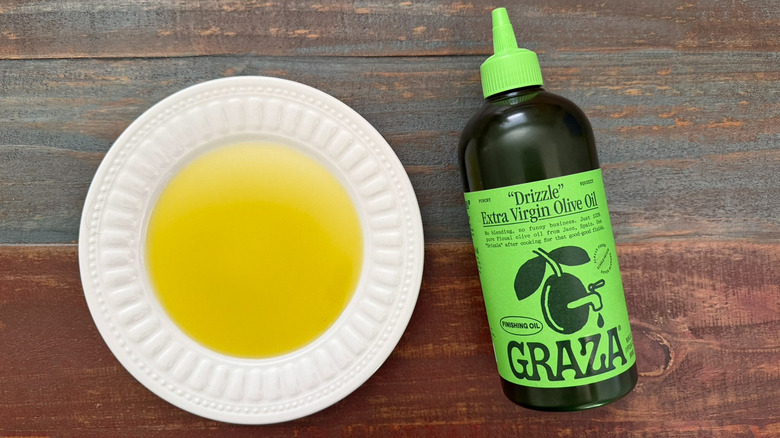
Graza has taken the extra virgin olive oil market by storm, mainly because of its clever marketing and useful squeeze-bottle packaging. But is the oil any good? We grabbed a bottle of Drizzle, its finishing oil — aka the highest in quality for raw preparations such as bread dipping — to find out.
Drizzle is made with Picual olives — known for their flavors of tomato leaf and grass – that are harvested in October, which is early for their home of Jaen, Spain. This, Graza suggests, gives Drizzle a bolder flavor than its other extra virgin olive oil product, Sizzle, which is harvested in November. (Though riper olives do make for a mellower final oil, the term "early harvest" gets used often in olive oil marketing, but has no regulated meaning.) The label includes a bottling date, but does not specify the year of harvest.
Ultimately, Graza Drizzle is a solid finishing oil, offering the aggressive herbal notes associated with Picual in a fresh yet balanced way. The limitation of a monovarietal oil, especially with Picual, is that it can exclude fruitier or peppery notes, in this case owing to the properties of the variety. In other words, those who look for strong herbal notes will be satisfied, but those who prefer an oil that showcases different flavors (or that's more harmonious) might prefer others on this list.
7. Bono Sicilian Extra Virgin Olive Oil PGI
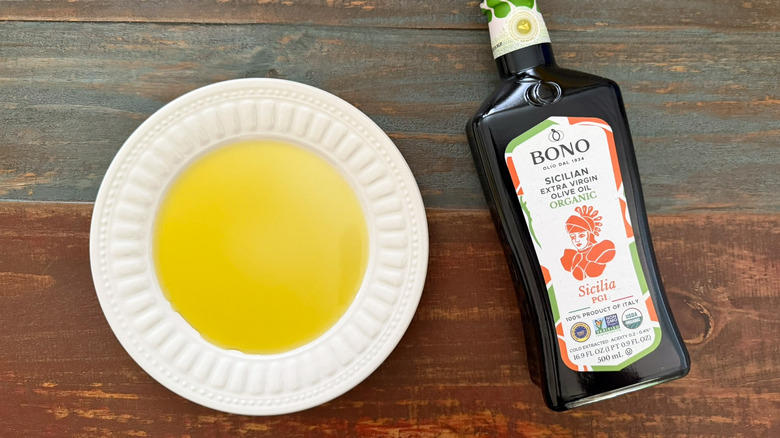
This oil features a delicate fruit flavor, alongside herbal notes and a persistent, peppery finish. Though it isn't quite as complex as Bono's PDO oil (which we'll discuss later), it's a solid choice from the supermarket, robust enough to shine through when paired with flavorful bread but also supremely balanced.
Many of the olive oils on this list market themselves as "single origin," an unregulated marketing term with no official definition. Sicilian giant Bono — the island's largest producer, ranked sixth in Italy by World Olive Oil Ranking — makes the only oils on this list that use the European Geographical Indication classification system, governed by a regulatory body to ensure compliance. In this case, the product carries the Protected Geographical Indication (PGI, or IGP in Italian), requiring that all the olives used come from Sicily, and have a maximum yield of 24% (meaning that 100 kilograms of olives produce 24 kilograms of oil). It is also organic.
6. SIMPLi Spanish Extra Virgin Olive Oil
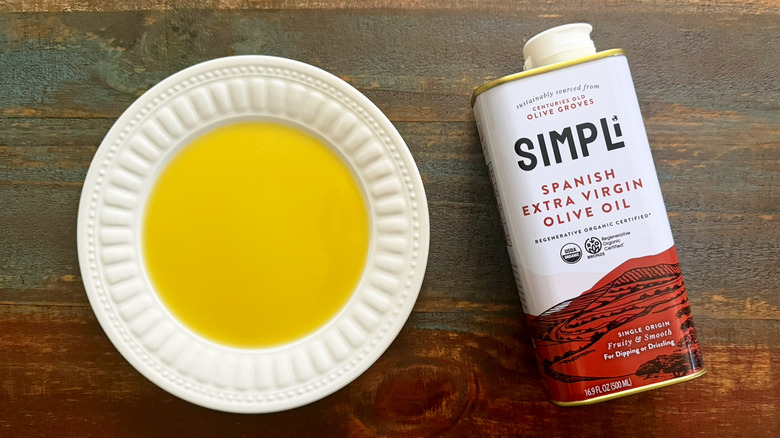
Though this oil is marketed as being fruity and smooth — compared to SIMPLi's bright and peppery Greek oil, which tends to work better in the bread-dipping context — I found that this Spanish oil offers far more flavor. That made it my top pick for bread dipping of the oils described as "smooth". Even though we generally recommend bolder flavors when pairing olive oil and bread, this is a great option for those who prefer milder oils.
The fruitiness is particularly notable here, as it is the most uniquely olivey (for lack of a better way to phrase it) of the oils included on this list. Whether one seeks out that specific flavor or not is obviously a matter of personal preference, but it certainly stands out here. Though, as noted, it is described by the company as "smooth," it does also feature enough spicy bitterness on the extended finish to convey a lively feeling of freshness.
5. Kosterina Original Extra Virgin Olive Oil
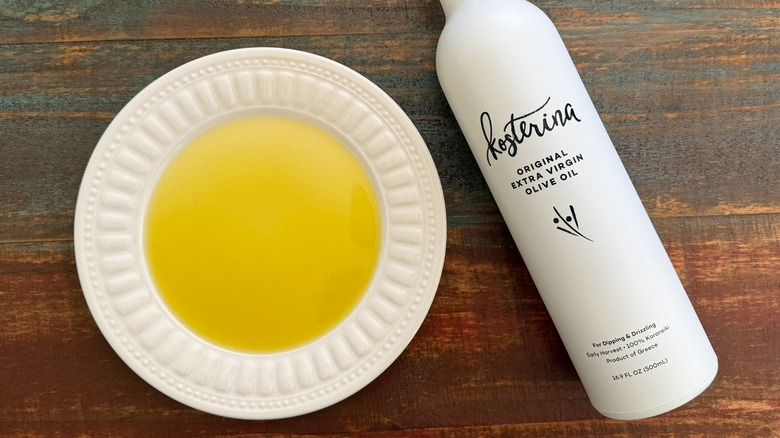
Kosterina Original Extra Virgin Olive Oil has all the markings of an excellent oil, including a coated glass bottle to prevent light spoilage, a clear harvest date printed on the bottle, and transparency of place — in this case, olives grown in the Peloponnese peninsula of southern Greece, as well as the island of Crete. The olive used in this oil, Koroneiki, is world-renowned for its herb-forward aroma and flavor, especially when harvested early, and its zesty, extended finish, all while remaining well-balanced.
Kosterina's extra virgin oil from Koroneiki is a solid example, wafting from the bottle with a variety of raw green herbal notes. Though not overly aggressive — it's probably medium on the robustness scale — it offers moderate intensity through the mid-palate, which eventually gives way to a pleasant bitterness in the end. Though slightly pricier than the other oils on this list (a 16.9-ounce bottle costs around $30 at Whole Foods), it's a justifiable splurge for raw preparations such as bread dipping, and would make for an excellent bougie foodie gift.
4. Bono Sicilian Val di Mazara Organic Extra Virgin Olive Oil PDO
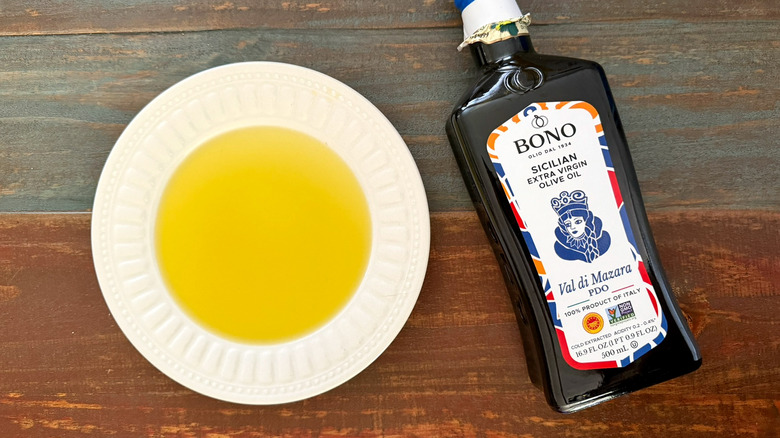
Interestingly, the sample we received of Bono Sicilian Val di Mazara Organic Extra Virgin Olive Oil PDO was several years old. The good news is that the oil remained fresh, offering bold herbal notes and that classic Italian chalky bitterness that both stood up to dipped bread and lingered on the palate for an extended period.
Though it was disappointing that we weren't able to try a more recent harvest, the fact that this one still impressed suggests that a 2025 harvest might perform even better. (Do be wary when buying, however, as some companies may wait until their older harvests are sold out before releasing the new one.) It's also worth pointing out that Bono's Val di Mazara has won four golds and three silvers at the past seven NYIOOC World Olive Oil Competitions.
Like Bono's other oil, this is classified within the EU's Geographic Indication system, though it carries the even stricter Protected Designation of Origin (PDO, or DOP in Italian), which requires all the olives to be grown organically in Val di Mazara, a region that spans all of Sicily's Palermo province and part of Agrigento, with a maximum yield of 22%. At least 90% of the olives used must also be the local varieties Biancolilla, Cerasuola, or Nocellara del Belice. Bono clearly indicates a harvest date on its bottles and offers a QR code with additional tracing information — though, unless one is interested in where the oil was bottled, the website doesn't add much.
3. La Tourangelle Organic Bright & Peppery Extra Virgin Olive Oil
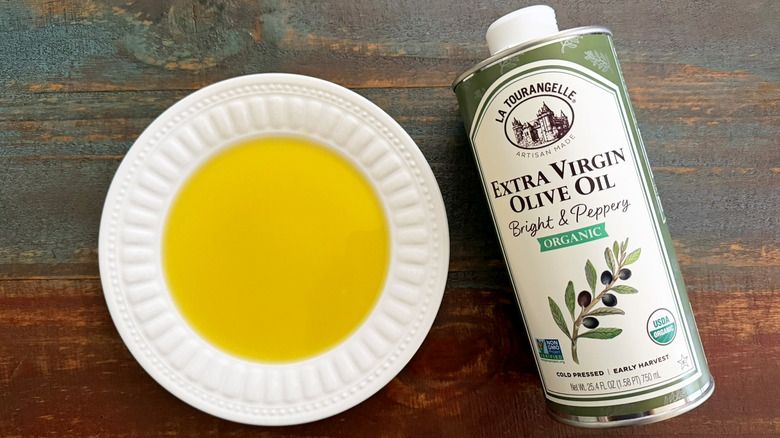
As previously noted, La Tourangelle prides itself on its tins, which protect the oil from light damage. Frustratingly, the company does not include harvest dates on its bottles, making it difficult to know how old the bottle is. The one we tried was outstanding, but mileage may vary when buying from retailers that don't take oil storage seriously.
This oil is a Spanish blend of Arbequina and Picual, just like La Tourangelle's smooth and fruity oil. However, judging by its flavor, this one uses a higher percentage of the latter. Unlike Graza's Drizzle, the addition of Arbequina as a foil to the Picual nicely rounds out the flavor.
Being honest, this oil flirts with being a little too bitter, with that flavor note dominating the finish, and persisting long after one has swallowed. This, however, works in the oil's favor when paired with bread, allowing it to hold its own even with robust loaves, remaining present and prominent throughout the experience. Those who prefer milder oils, of course, may not enjoy this experience.
2. California Olive Ranch Miller's Blend Premium Reserve
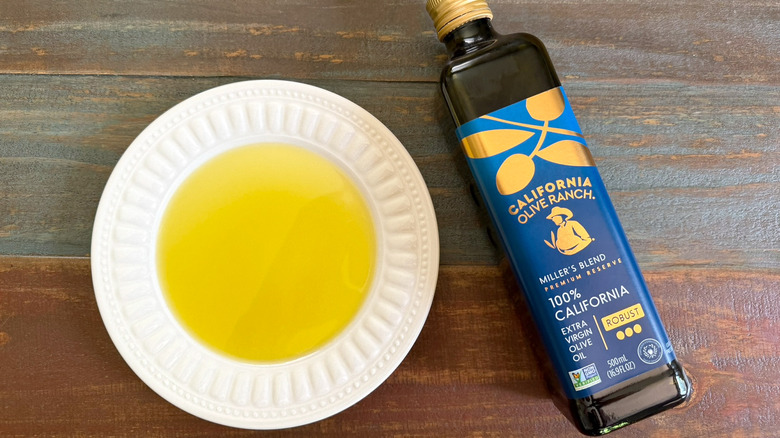
Since California Olive Ranch was founded in the late 1990s, the company has developed a reputation for offering some of the best quality olive oil one can find at major retailers, consistently winning awards and showing up in recommendations of olive oils that are 100% extra virgin (a desirable quality in an industry rampant with fraud and adulteration). While its California and global blends are versatile everyday oils, those seeking a more premium experience for raw usage look to the brand's reserve collection.
In this particular case, we tried the Miller's Blend, a combination of Arbequina, Arbosana, and Koroneiki olives. Like all of California Olive Ranch's oils, this has a clearly marked harvest date — in this case, October to November 2025. This excellent oil offers a lovely balance of distinctly fruity notes, combined with green herbs and a profound spiciness. While not our absolute favorite on this list, this robust option is an excellent choice for bread dipping and is sure to please a discerning crowd. Case in point: At the recent NYIOOC World Olive Oil Competitions, it took home silver in 2025 and 2026, and gold in 2017, 2023, and 2024.
1. Lucini Premium Select Organic Extra Virgin Olive Oil
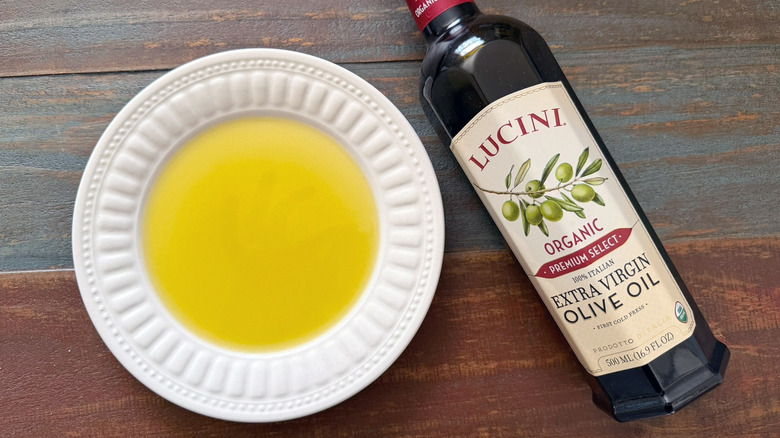
This is an interesting case because Lucini – which has been owned by California Olive Ranch since 2015 – does not offer as much transparency as some of the other brands, even with the lot lookup tool available via a QR code on the label. It is, for example, labeled as "Italian," but no additional details are specified in terms of the region or olives used. Despite that, the harvest date is included, and it is also certified organic.
Instead of standing on fancy write-ups on the orchards or lab analysis, this oil simply relies on its fantastic flavor. It is everything that a lover of Italian oil should desire: bright notes of grassy herbs, nuts, spicy black pepper, and that telltale bitterness that lingers seemingly forever after taking a bite of bread dipped in this oil. It's just so alive. When it comes to store-bought oils, Lucini's Premium Select Organic is truly the cream of the crop, and absolutely deserving of its seven straight gold medals at the NYIOOC competition from 2020 to 2026.
Methodology
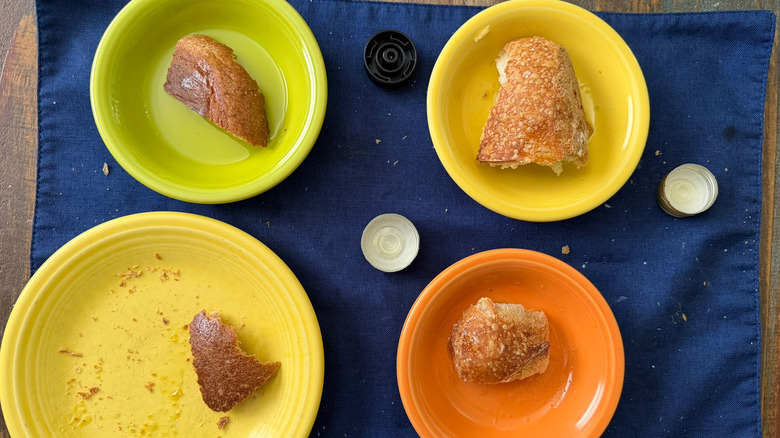
To determine the rankings of these olive oils, I sampled each oil raw with two types of bread — one bolder and one milder, but both rustic styles made for this context. I tried the oils right after opening (oil oxidizes and degrades once exposed to air), as well as over the ensuing days. I looked for oils offering strong, typical flavors that added to the experience of eating bread, including notes of fruit, grass, herbs, pepper, and spice.
While more delicate oils have their use, in this particular case, I sought prominent flavors that held their own alongside the bread. For this exercise, I only included pure extra virgin olive oils, meaning I didn't include any flavored or infused options. In some cases, samples were provided by the brand.
A caveat with tasting olive oil is that its age and the amount of time it's sat in storage play a huge role in how it ultimately performs. Firstly, aging olive oil does not make it taste better, as some believe. Secondly, since many oils lack a harvest date on the label, it can be difficult to know their exact provenance. Thirdly, if the oil has been exposed to light or heat, it can degrade quickly. As such, it can be difficult to know whether a given bottle accurately illustrates the producer's quality standards or was mishandled along the way. In this case, of course, I could only taste and evaluate the bottles to hand.