

For Perfectly Cooked Pork Steak, Always Use This Cooking Method
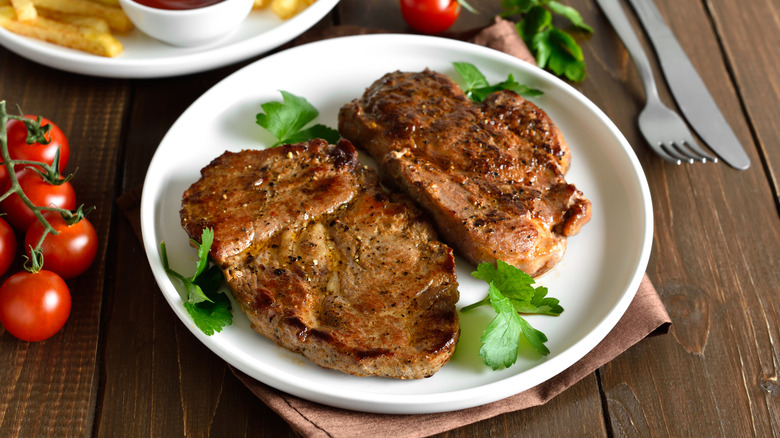
Most steakhouses tend to be pretty beef-centric, to the point where some (such as the beginner-friendly Longhorn Steakhouse) incorporate cattle references into their name and logo. As it turns out, though, the most underrated cut of meat for steak doesn't even come from a cow. Pork steaks may not be something you typically see on a restaurant menu, but if you cook them at home you should follow a method recommended by Scott Thomas, the barbecue blogger behind The Grillin' Fools. As he told The Takeout, "The absolute best way to cook pork steak is the reverse sear method." As his website's name implies, he also employs a grill or, more specifically, a smoker. If you don't have a dedicated smoker, though, there's no need to purchase an expensive piece of equipment because transforming your grill into a smoker is almost too easy.
Once you've got your smoker set up, Thomas advises: "Season [the pork steak] and then slow smoke it to around 160 degrees Fahrenheit, then crank up another grill to north of 500 degrees and give it a quick sear on both sides. Then slather it in sauce and put it back on the smoker to thicken that sauce." He doesn't give any specific times but says that you want to keep smoking the seared meat until it reaches a fairly high internal temperature: "The sear and extra smoke session should get those pork steaks past the 180 degrees we need to finish rendering the fat and collagen." As the pork cooks, you can reapply the barbecue sauce every 15 minutes if you wish, but it isn't necessary to do so.
Pork steak needs to be cooked to a higher temperature than pork chops
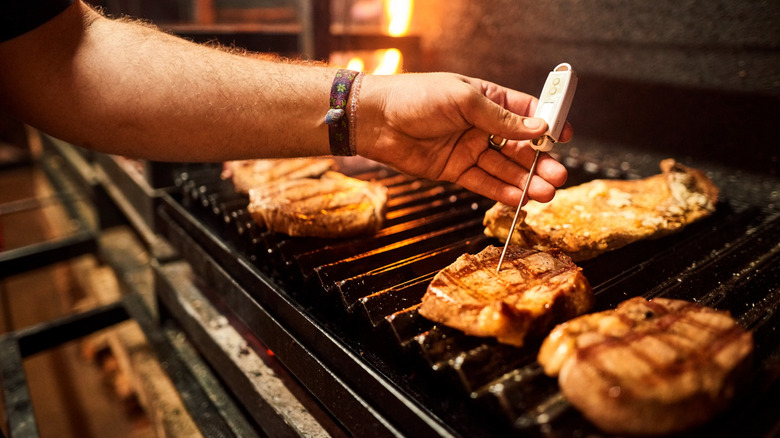
Isn't 180 degrees a rather high temperature for pork? After all, the USDA says it's safe to eat at 145 degrees. To sear a pork chop perfectly without drying it out, you might even want to leave the meat medium-rare. That said, pork steaks are a whole different story. For one thing, while pork chops come from the loin, pork steaks are cut from the shoulder. They can also be quite thick (up to two inches), although thinner, ½-inch ones also exist. The primary reason they need higher temperatures comes down to their composition.
As Thomas pointed out, "Pork steak ... has a lot of collagen, so it can't be cooked like a pork chop to the USDA recommended 145 degrees. It needs to be cooked north of 180 degrees to get that fat and collagen to render." Even though it takes longer to cook pork steaks than chops, there is an upside: "The good news is the rendered fat and collagen makes the pork steak extremely tasty and very hard to mess up," said Thomas.
Other ingredients you need to cook the perfect pork steak
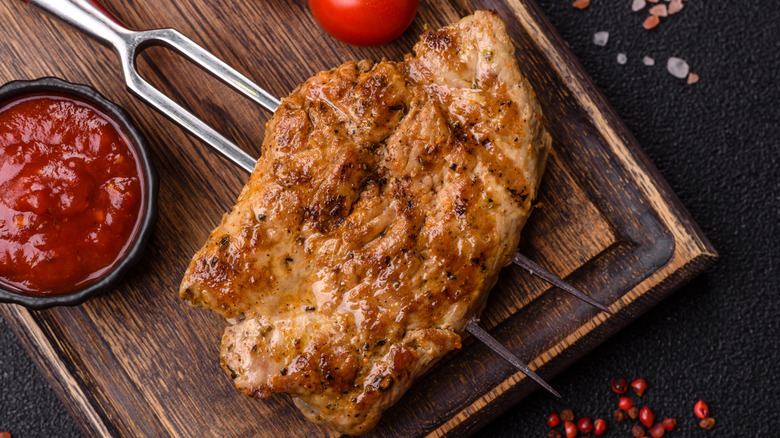
Some cuts of beef steak are so lean they should always be marinated before grilling, but the same doesn't apply to pork steak. As Thomas sees things, "Honestly, it doesn't need a marinade. It is so well marbled that it just doesn't need it." He went on to say, "Seasoning is a must. I prefer paprika-based, sweet rubs, and some salt."
Even though Thomas' cooking technique calls for the pork steaks to be coated in barbecue sauce after they're seared, he doesn't seem to be a fan of additional sauce served on the side. "While the traditional pork steak is sauced, personally, I just like them seasoned with a rub and no sauce most of the time. Every once in a while, I like them slathered in sauce, but my go-to is a simple rub," he opined. Should you feel differently, here's our ranking of popular store-bought barbecue sauces. You can also make homemade barbecue sauce with just a couple of components: brown sugar, ketchup, vinegar, and water, along with your choice of spices and seasonings.