

14 Regional Cocktails From Across The US You Need To Try
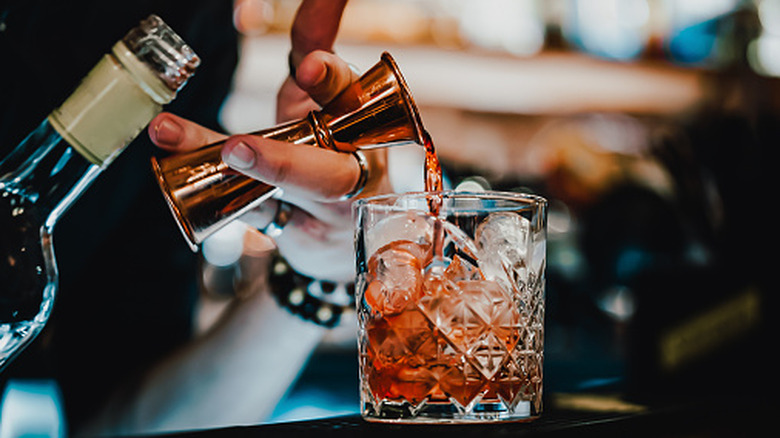
There are a lot of classic cocktails that you can simply walk into any bar and order, and the bartender will reliably know how to quickly throw that cocktail together with ease. Dirty martini? Manhattan? Old fashioned? You want it. You got it.
However, the cocktail world is far vaster than the classics and, just like there are certain foods or ingredients that are staples exclusively within particular cities or states, there are also cocktails that have only caught on within certain geographic boundaries. These are cocktails that, if you were to try to order them in, say, an average hotel bar in New York City, the bartender is probably going to just look at you in confusion. That said, just because not everyone knows about these cocktails yet, and they haven't been embraced on a national, widespread scale, that doesn't mean that they're not every bit as tasty as the classics.
Here are some great regional cocktails from across the United States that you need to try. Maybe you can convince your favorite local barkeep to add them to their repertoire, maybe you'll have to channel your own mixology skills at home — or maybe you might just need to start planning a quick getaway to these cocktails' hometowns.
Café Brûlot
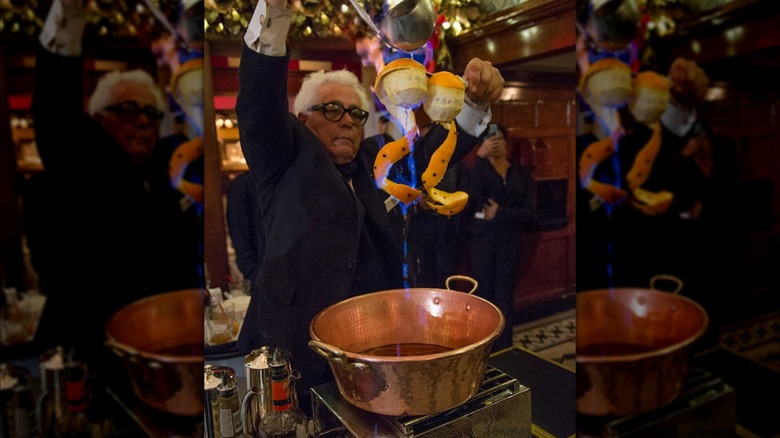
Admittedly, if you do try to make the Café Brûlot at home, you're probably going to want to keep the fire extinguisher handy. This cocktail is an after-dinner drink that originated in — and more or less stayed in — New Orleans. Just like everything the city does, the Café Brûlot is beautifully bold and thoroughly entertaining.
As to who exactly created the cocktail, stories differ. Some say a pirate popularized the drink due to its theatrical preparation, which mesmerized onlookers so much that they became easy pickpocket targets. Whatever the case, you can now find it at a handful of classic New Orleans restaurants.
So what exactly is it? The ingredients include cognac or brandy, coffee, sugar, cloves, cinnamon, and lemon and orange peels. Over the course of several steps, and incorporating some specialty equipment (such as a Brûlot ladle), the liquor and coffee mixture is set ablaze. Whoever is preparing the drink will then use a ladle to pour the flaming liquor down the orange peel — which is one big strip — several times, before serving.
The Alabama Slammer
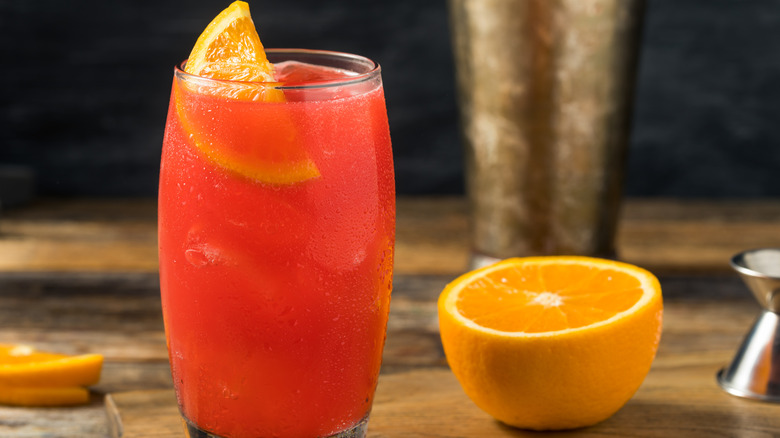
The Alabama Slammer is notably less dramatic, but still packs a punch. It's theorized that the drink first appeared at the University of Alabama, sometime in the 1960s or 1970s, where the ingredients were served up in shot form. The beverage consists of sloe gin (which is gin infused with sloe berries, if you're not familiar), amaretto, Southern Comfort, and orange juice. Over time, the drink evolved from a shot to an actual full-size cocktail, with recipes appearing in bartending guides in the 1970s and 1980s.
Since then, the Alabama Slammer has extended beyond the state lines, appearing in places like the 1988 movie "Cocktail," with Tom Cruise, as well as even at TGI Fridays at one point. However, it's not easily found in many restaurants today. Make it yourself at home — it's definitely convenient enough — and enjoy it in either shot or cocktail form. It's sweet and boozy all at the same time.
Alaska Duck Fart
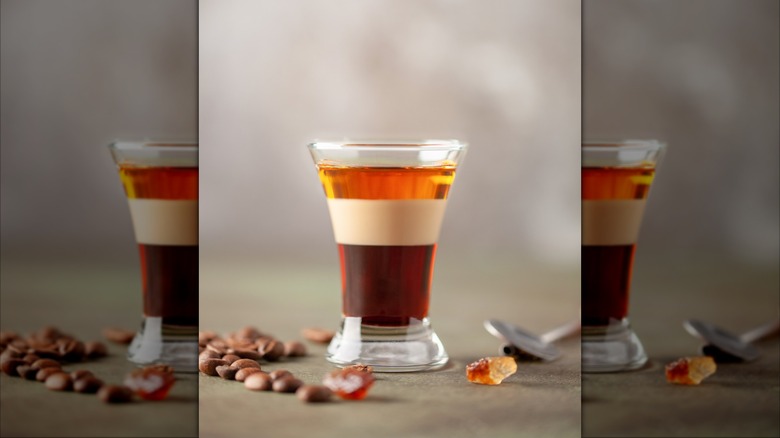
Who doesn't love a drink with a creative name? This is a layered shot that's gained notoriety in Alaska, as its name suggests. It's a mix of Kahlua, Baileys, and Crown Royal, for a shot that goes down exceptionally easy, sweet and reminiscent of coffee — and some say that for the best flavor, you have to stick with those three brands of alcohol in particular.
So where did it come from and why is it called a duck fart? As for its origins, that's easy enough and undisputed. At an Anchorage bar in 1987, a patron had ordered several rounds of layered shots, and the patron asked for Crown Royal atop her B-52 in place of orange liqueur (a B-52 is typically layers of Kahlua, Baileys, and Grand Marnier). This created the duck fart, which proceeded to catch on throughout the city.
The name's origins are a little more dubious. Credit is given to everything from the creating bartender's duckbill hat to the noise the patron made after giving the drink a try. Perhaps someone maybe had a few shots too many and just thought "duck fart" was too funny a name to pass up.
Elmo Cola
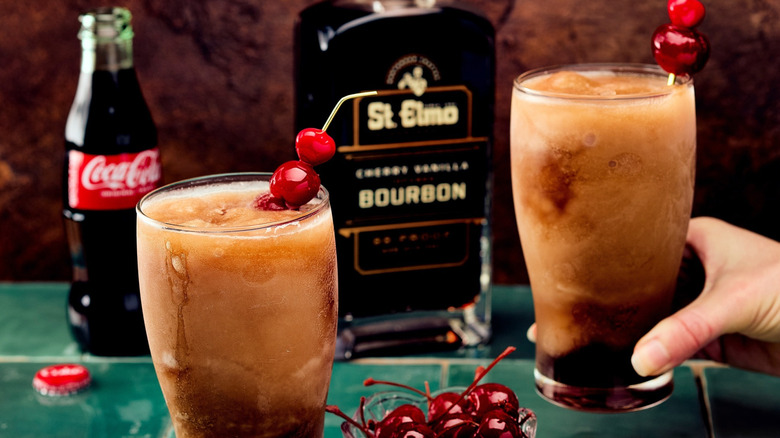
No, it's not named after everyone's favorite red, furry monster. Instead, Elmo Cola was invented at the St. Elmo Steak House in Indianapolis (one of the oldest steakhouses in the country) and is now a cocktail favorited throughout the state. Unlike other drinks on this list, though, that have long and storied pasts, Elmo Cola is relatively new, only first served at the restaurant in the 2010s. The cocktail is relatively simple, too, and contains vanilla-infused bourbon, cherries, cherry juice, and Coca-Cola.
Once introduced, this drink became the steakhouse's bestseller quite quickly, and versions of the cocktail began spreading to other establishments, with a ready-to-drink version even selling at area grocery stores. The restaurant also released its own branded bourbon whiskey, already infused with cherry and vanilla, for fans who want to make their own Elmo Cola at home, and need that perfect, 88-proof bourbon base. At its core, it's easy to see why this has become a regional favorite as quickly as it has; if you love cherry or vanilla Coke, as well as a classic bourbon and Coke, chances are likely you're going to like Elmo Cola.
The Orange Crush
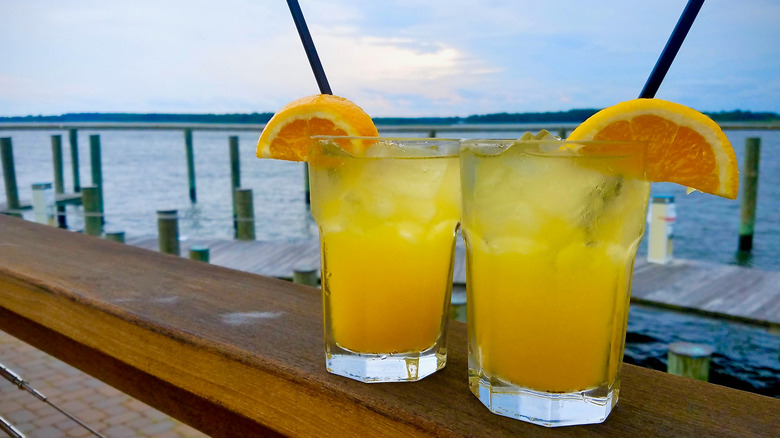
Some regional cocktails have mostly just cemented their status as a regional favorite due to popularity at area watering holes — nothing's really official. But when it comes to the Orange Crush, the state of Maryland took things further, with the governor naming the Orange Crush the state's official cocktail in 2025.
Much like the Alabama Slammer, the Orange Crush is straightforward and offers a fruity, citrusy, sweet flavor profile that even those who aren't a fan of stronger spirits can get behind. The ingredients include orange juice, vodka, triple sec, and lemon lime soda.
While the cocktail's status as the official state cocktail is relatively new, though, the cocktail itself is not. It was invented in Ocean City several decades ago, with multiple restaurants taking credit. The cocktail was the perfect fit for the beach destination and now it's none too difficult to find one in the area.
Boilo
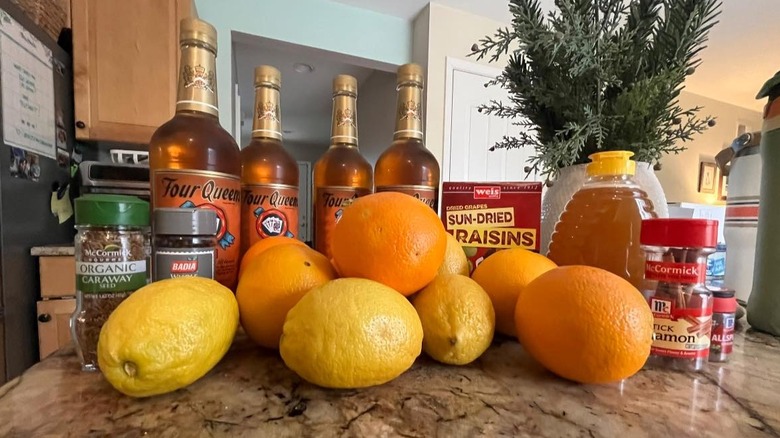
If you're looking for a new, warm, and festive holiday drink to share next season, you could do far worse than boilo. Immigrants brought this strong punch to Pennsylvania. While they likely called it something else, as it was picked up by the broader community, the name "boilo" stuck, possibly referencing the cooking process necessary to this drink's creation. However, some say that you should never actually boil the mixture, and others caution that you definitely shouldn't let it boil over, as that's a potential recipe for disaster, if alcohol meets flame.
Individual recipes differ, but common themes emerge as you compare them. Citrus juice and ginger ale go into a pot, alongside honey, raisins, and warming spices like cinnamon. After this mixture simmers for a while, you strain the spices out and then add your alcohol. Four Queens whiskey is the regional favorite, but Everclear makes its way into the pot as well on occasion. You can return the pot back to the heat, but that's not preferable to some, as it burns off some of the alcohol.
The Mexican Martini
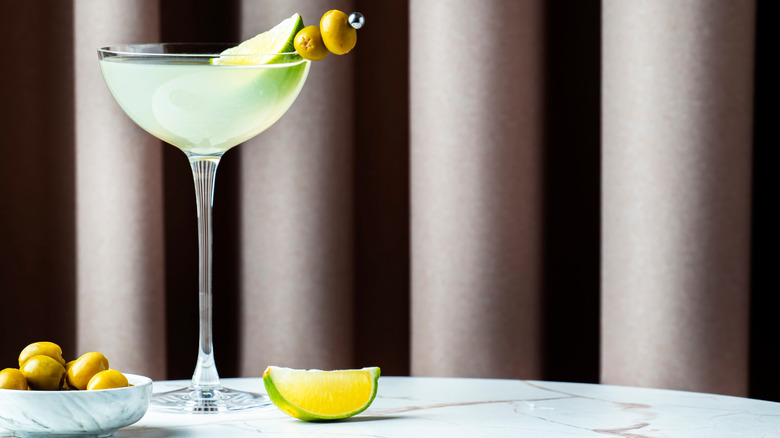
It's not a martini, but it might actually be from Mexico, if you believe the stories. Whatever the case, this cocktail that's gained fame in Austin, Texas, holds its own unique appeal, taking ingredients both from a classic margarita and a classic dirty martini. Tequila, Cointreau, lime juice, and olive brine combine in a cocktail shaker, before being garnished with both olives and a lime wedge.
The cocktail supposedly originated in the 1980s, when a bar employee enjoyed something similar in Mexico and it was added to a long-standing restaurant's cocktail menu. However, as is the case with many regional-favorite cocktails, numerous origination stories exist and multiple restaurants lay claim to the idea. Luckily, you don't have to travel to Austin to investigate the matter for yourself. This is a cocktail you can easily make at home with items you likely already have on hand, if you have a well-stocked bar cart.
The Hummer
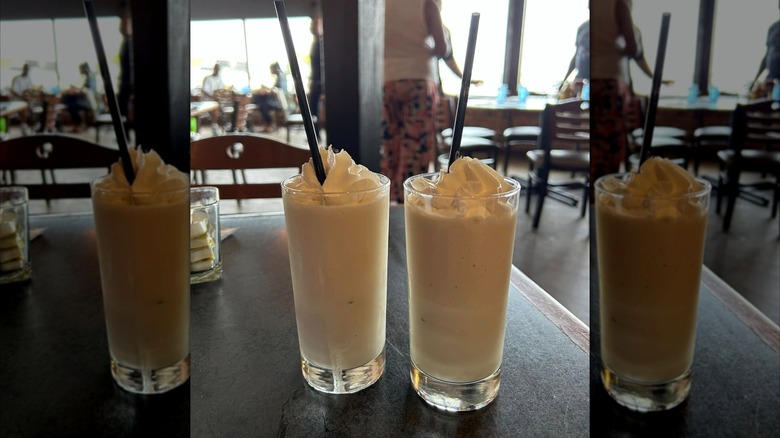
The Hummer is Michigan's signature drink, which doubles as a boozy dessert. Another after-dinner drink, The Hummer blends rum, Kahlua, and vanilla ice cream, with maybe some ice, all into one glass for a decadent indulgence. Again, multiple people have been credited with the cocktail's advent, but it's more or less agreed that it came onto the Detroit scene in the 1960s.
You can now conveniently find Hummers at bars throughout the state, and while many still love the classic, simple blend of ice cream and booze, more recently, bartenders have been getting creative with the old-school recipe. For example, some are swapping out the ice cream for ingredients like coconut sorbet or the traditional light rum for banana rum. However you mix it up, though, you're guaranteed a delicious drink that goes down dangerously easy. If you like a grasshopper — a creamy mint cocktail that was once popular across the United States — you're bound to like a Hummer.
The Horsefeather
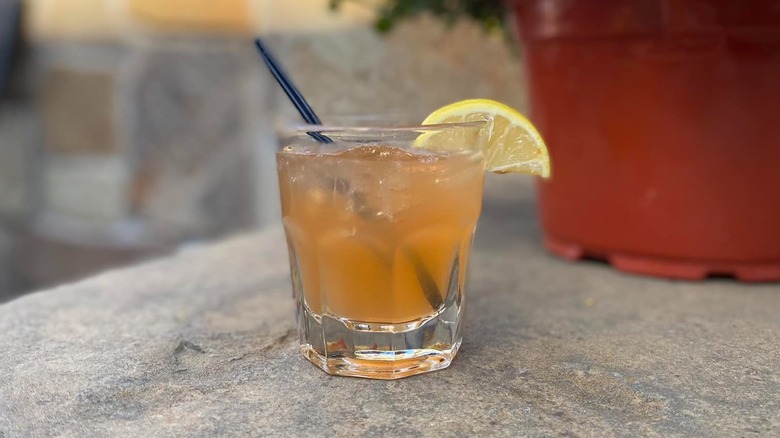
The Horsefeather is a Kansas City, Missouri, favorite that combines rye whiskey, ginger beer, and bitters, before topping it all off with a lemon wedge. While the drink itself is simple and accessible, though, the story behind the cocktail is questionable and convoluted.
Some have said that the drink made its way to Kansas City from Lawrence, Missouri, a college town home to the University of Kansas. Many give the credit to a Lawrence bartender — but that bartender noted that they didn't create the Horsefeather from scratch, so much as adapting an old recipe from "The Bartender's Bible." Others theorize maybe the cocktail was created during Prohibition and just managed to stick around in some form or fashion. Meanwhile, similar recipes from the area date back to the 1890s, though the drink wasn't called the Horsefeather at that time. Wherever it came from, whatever the case, it's not at all difficult to find around the city today, embraced by both bartenders and regional whiskey brands alike.
Spanish Coffee
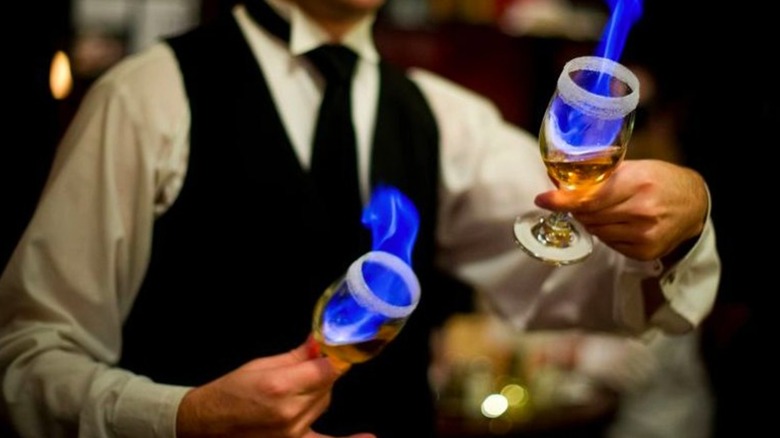
Invented at Huber's restaurant in Portland, Oregon, in the 1970s, Spanish Coffee holds similarities with both the Café Brûlot and boilo. It's a warm, winter favorite, and comes with a side of drama. The ingredients list is short: rum, triple sec, Kahlua, and coffee, with whipped cream and nutmeg for topping. However, the preparation turns an otherwise simple drink into a skillful display — and, just as is the case when making Café Brûlot, keeping a fire extinguisher nearby may be prudent.
Here's how it happens. The bartender lights a glass of rum on fire. Then, they add the triple sec and Kahlua, but using the Spanish pouring method often reserved for Txakoli wine. They lift the bottles up into the air, pouring the triple sec and Kahlua into the flames from a great height, creating an even bigger fire. The coffee is added last, along with any toppings.
If you don't have an upcoming trip to Portland in the cards, you can make this one yourself at home. However, home mixologists caution that, if you do, you should always use tempered glass and, for an elevated touch, make your own whipped cream.
Beertini
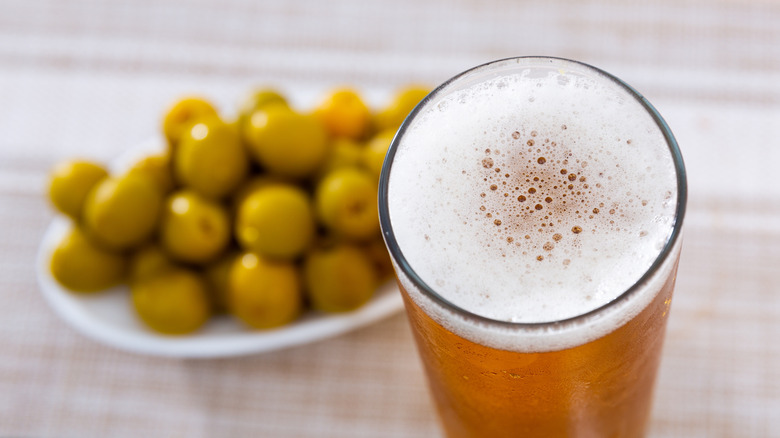
Another riff on a classic dirty martini, the beertini, sometimes also called a Midwest Martini, is the answer for those who love the brine-y, savory appeal of enjoying an olive or two as you imbibe, but who don't really care for the vodka or gin in a dirty martini. The best of both worlds, the beertini is also probably, hands down, the easiest regional cocktail to make on this list. You literally just pour your favorite light beer into a glass and toss in some olives.
Possible to find in Wisconsin, Minnesota, and North Dakota, among other nearby states, no one knows quite where the beertini came from, but the combo of beer and olives seems a natural fit. Light beer is cheap and plentiful. Olives are often available at gatherings where drinks might be served. Just like you might throw a few peanuts into your beer, why not an olive (and if you haven't heard of adding peanuts to beer or Coke, well, you might just not be in the right part of the country)?
As is the case with many classic, regional cocktails, modern bartenders have taken new approaches to the beertini. Some might add actual olive brine to the beer, while others might serve the beer with a shot of gin or vodka.
Aspen Crud
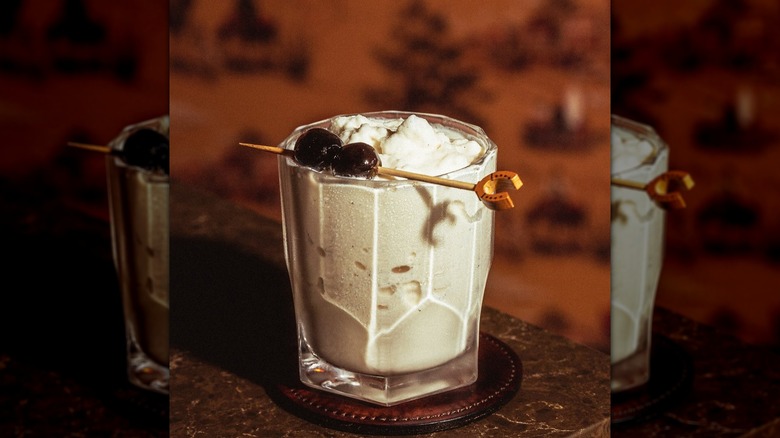
Admittedly, the name sounds a bit ... unappealing. Crud? You want to drink crud? But don't write off the Aspen crud just yet. This is a drink that's not only historic but also just as tasty as the Hummer.
This drink came about during Prohibition and was a way of getting around the rules that so many during this era didn't quite care for. Some say that those who wanted a strong drink could go into a soda fountain and order the crud, and they'd get a vanilla milkshake with a few shots of whiskey added in, on the sly; others say that "the crud" referenced vanilla milkshakes that customers would sneakily spike with their own alcohol. The result was the same, though: a boozy treat you could drink without hiding it.
Thankfully, today, you can order the Aspen Crud without fearing the law, or you can make one yourself with your favorite bourbon and vanilla ice cream, blended with ice. If you're in Aspen, though, go to the bar-turned soda fountain-turned bar again that started it all: J-Bar.
Picon Punch
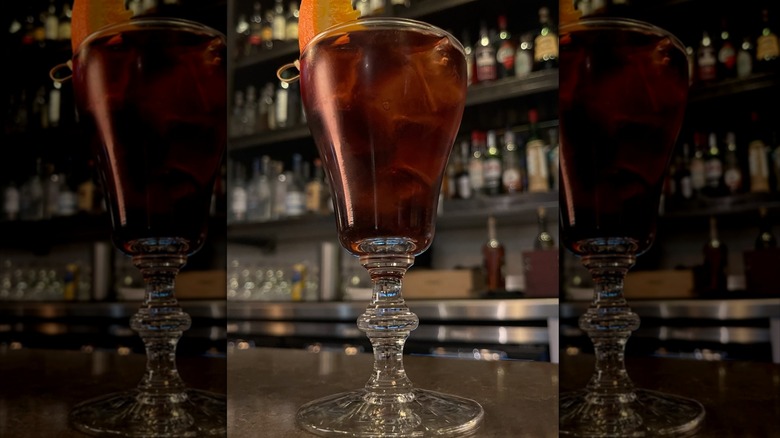
Not too far away, in Nevada, Picon punch is a state favorite. That said, the drink was not invented in Nevada. A Basque-American cocktail that consists of orange liqueur, grenadine, club soda, and brandy, it was actually invented in California.
The story goes that, in the 1800s, a man named Gaétan Picon invented Amer Picon, a bitter, 78-proof liqueur. Amer Picon gained popularity in France before making its way to the United States, where it was sold as medicine. The actual Picon punch cocktail was then invented in Basque-American boarding houses, before spreading in popularity around the turn of the century, making its way to nearby states like Nevada.
Today, Nevada by and large claims the drink and has even made it the state drink (after several past efforts were not successful, the state finally achieved this goal in 2025). A restaurant dubbed Louis' Basque Corner, which opened in the 1960s in Reno, likewise calls itself the home of Picon punch.
Cherry Bounce
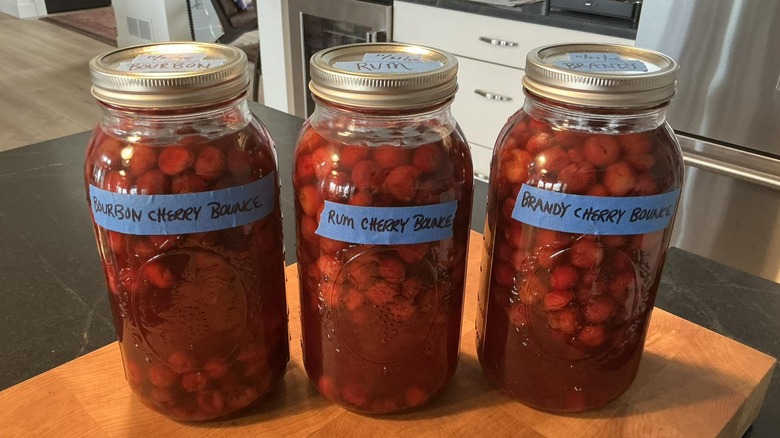
Cherry bounce, with its delightful name, goes way back. Supposedly George Washington was a big fan, but it's North Carolinians who've taken the drink on as their own, starting as far back as the 1800s. During this time, a moonshining man who earned the nickname "the Cherry Bounce King," was selling cherry bounce made from whiskey, cherries, and honey, that was supposedly so good that people would come from far and wide to buy it. He also founded a Cherry Bounce Festival. The locals didn't require much convincing that this was a drink worth keeping around and, so they have. The festival is still going and North Carolinians are no stranger to a cherry bounce recipe.
The hardest part of making cherry bounce? The wait. After combining the cherries and alcohol, as well as sugar and any desired spices like cinnamon or nutmeg, you have to let the mixture sit in a jar, for at least seven weeks, one week in the sun and six weeks in the dark. As such, whether you want to incorporate cherry bounce into broader cocktails or top it with sparkling soda, or simply sip on it, you'll have to prepare in advance.