

11 Additions That'll Make Your Brunch Mimosas Unforgettable
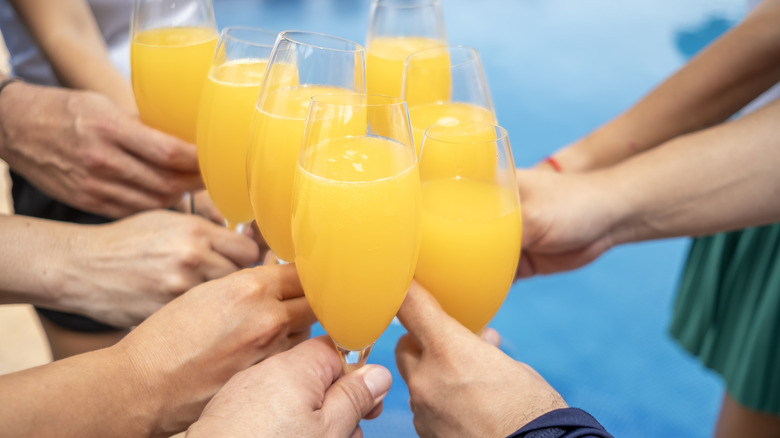
Who doesn't love an easy, laid-back brunch? Especially one that begins with everyone's favorite brunch-time drink — the mimosa. At its core, the mimosa shines with simplicity and elegance. Sparkling wine and citrus — what could possibly go wrong? But as chefs and bartenders will tell you, the very simplicity you love can lead to boredom and predictability. Truth be told, the mimosa could do with a few subtle tweaks that push the boundaries of creativity.
This spirit of experimentation was on full display at the Nassau Paradise Island Wine and Food Festival, where some of the region's most exciting culinary voices shared their secrets to elevating everyone's favorite mimosa. Among them was Chef Deja Rutherford of Kitchen Culture, known for her exciting, flavor-forward approach; Chef Chellcy Martin of Vell Monkey Foot, whose seasonal, ingredient-led cooking segues seamlessly into easy advice to shake up the best aromatic cocktails; and Dre Hall, bartender at Atlantis Resort in the Bahamas, who helped us focus on getting our fundamentals right.
They're joined by Umberto from Mionetto Prosecco, who brings a deep understanding of sparkling wine to the discussion; Chef Julie Lightbourn of Sip Sip, who breaks down some of the easiest flavor hacks; Chef JJ Johnson, known for bold, globally inspired flavors; and Chef Antonia Lofaso, who isn't afraid to rethink the mimosa altogether. Together, their insights make one thing clear: even small adjustments can go a long way toward elevating your next brunch pour into something far more enjoyable.
Spike it with gin or vodka
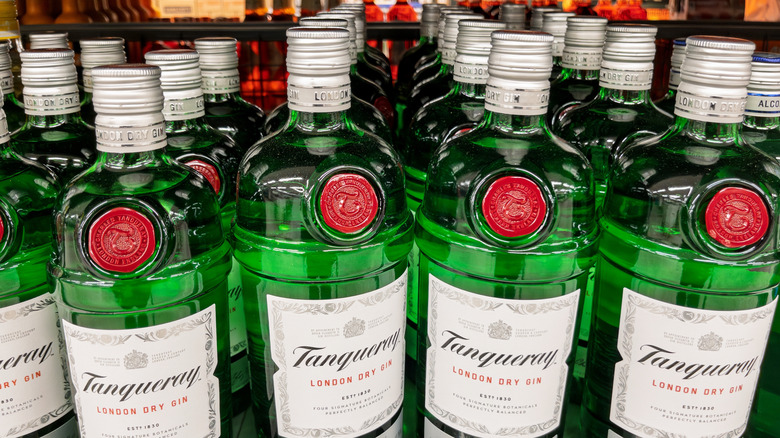
If we are talking classic mimosa, we all know the drill. Sparkling wine plus orange juice makes for a wonderfully refreshing little beverage. However, with such basic ingredients, care needs to be taken to ensure the best quality, or the drink might end up feeling a bit flat. One of the easiest ways to elevate this brunch staple is to treat it like a proper cocktail. And to do so, you need to start with a helpful splash of a complementary spirit.
Chef Deja Rutherford explains her process: "You add multiple different fruits, and then you add a gin or vodka." With even this small shift, the drink gains a welcome depth. Now, you are not only relying on citrus for flavor. You are building layers. There will be fruit, bubbles (non-negotiable), and an added spirit. When it comes to quantity, Chef Rutherford doesn't hold back: "For me with alcohol, more is better." Whether it's your brunch-time sipper or boozy poolside libation, the logic still holds. If you want to transform your mimosa from something light and fruity to a cocktail with more character, reach for your trusty gin or vodka bottle. Gin, in fact, works particularly well with its botanical notes that pair seamlessly with the citrus. Vodka is the cleaner option as it boosts alcohol content without interfering too much with existing flavors.
Add a few drops of Campari for bittersweet balance
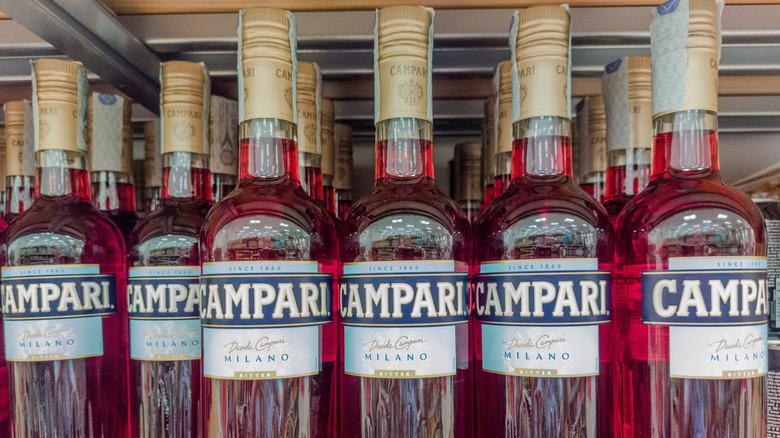
The orange juice in a mimosa brings the sweetness and punch, and the sparkling wine adds lift and brightness. Without a counterbalance, however, the drink may feel a little one-dimensional. Umberto from Mionetto Prosecco recognizes this shortfall but offers a simple solution for us all to use. "I personally will add the touch of Campari to give a little bit of bitterness," he says. The technique is intentionally minimal. "You prepare the mimosa, and then you just splash with a couple of drops of Campari to make that great balance between the acidity of the orange ... [and] that bitterness of the Campari."
Even this small addition can fundamentally change the very structure of your mimosa. Campari — one of many gorgeous Italian spirits — has a distinctly bittersweet profile. There are notes of citrus peel and herbs with an underlying current of spice. A few drops added to a mimosa is all that is needed to give it a more grown-up vibe without changing its basic nature. The key here is a light hand. Think of Campari as seasoning to bring out the best in this already delicious drink.
Try grapefruit or a grapefruit-orange blend
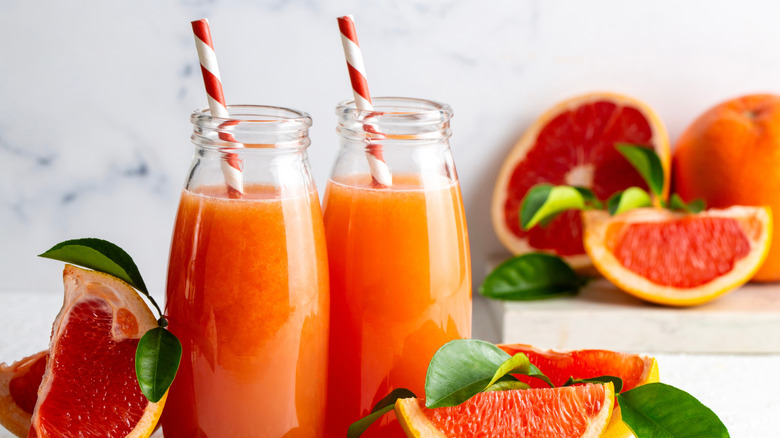
Now let's get to tweaking the basics. Orange juice is obviously a no-brainer for mimosas. According to our experts, however, it's not always the most interesting choice. If you feel like mimosas are starting to feel a little predictable, one easy level-up is to try different citrus juice pairings. Chef Deja Rutherford has just the modification for you: grapefruit! Although she recognizes grapefruit isn't a go-to for many, she shares, "Ooh, I do love a good grapefruit. I'm not going to lie." And when asked about pairing it with orange juice, the answer is immediate: "Of course." For her, the combination of grapefruit and orange hits a sweet spot that a standard mimosa often misses.
By adding grapefruit juice, you're building a subtle, bitter edge to the drink. This helps rein in the sometimes overwhelming sweetness of orange juice. Now, grapefruit juice on its own might be a bit too much for some palates, but blending the two juices creates a harmonious blend that is both familiar and complex. Win-Win. Another benefit to adding grapefruit juice is that its more pronounced flavor stands out better against the sparkling wine, keeping the drink crisp from the first sip to the last. A 50:50 blend with orange juice is a safe starting point, but you do you, and adjust the mix depending on how bold you like your drinks.
Add lychee juice or puree for a floral twist
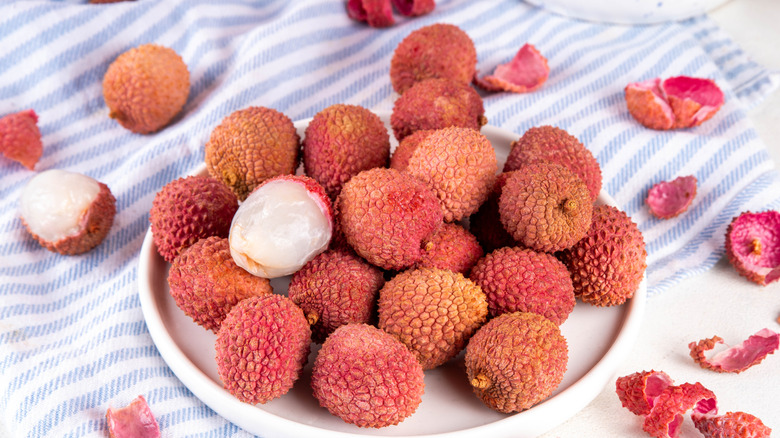
Sometimes you just need to move away from the expected. Here's where tropical fruits step in to save the day. If you've mastered the art of eating lychee, you will understand and appreciate the soft, floral sweetness it brings to any dish or drink. When asked about how to upgrade mimosas, Chef Chellcy Martin put it simply: "It's going to sound cliché ... I think lychee." The appeal is obvious once you try it. Lychee has a natural sweetness, but it's not cloying.
When it comes to how to use it, Chef Martin keeps things flexible. "I like to add the juice in. I also love purees. So, it all depends." Both approaches work, but they create slightly different results. Lychee juice blends seamlessly into the drink, giving it a subtle lift without changing the texture too much. A puree, on the other hand, adds body and makes the mimosa feel a bit richer and closer to a bellini-style cocktail. Martin also suggests using whatever is in season, such as a basil strawberry lychee mimosa. "I think that's really refreshing," she notes. The combination of floral lychee and herbaceous basil creates an unexpected twist to a brunch classic.
Stir in pineapple-ginger for a bright, spicy kick
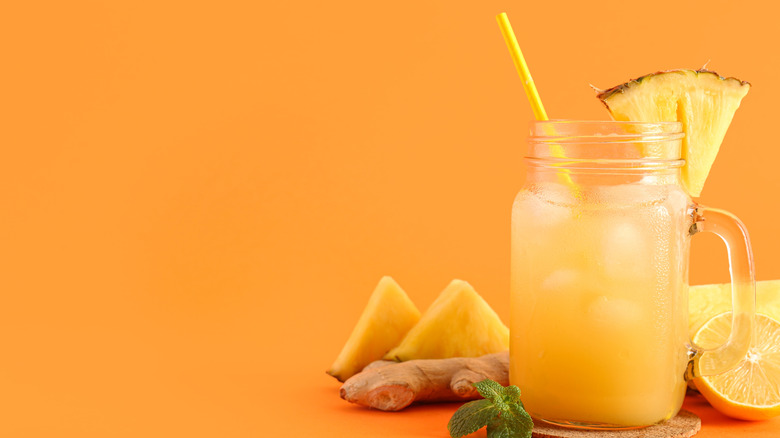
Some of our experts don't play around when it comes to upgrading a mimosa. Chef JJ Johnson's idea may be novel, but the intention behind it is clear — it's all about building a robust flavor base before anything else. His advice: "I take the pineapple-ginger lemonade from Fieldtrip, my restaurant, and I put a little bit in the bottom, and then you have a pineapple, lemony, gingery mimosa."
Pineapple-ginger is one of those combinations that is unusual, warm, and creative without going over the top. Chef Johnson's "little bit" is what matters here. Pineapple, with its acidity and natural sweetness, is an obvious pairing with sparkling wine. However, the addition of ginger cuts through the drink's fruitiness and bubbly nature. Together, they create a mimosa that feels more structured and impressively sharper. If you don't have access to ready-made pineapple-ginger lemonade, never fear, it's simple to recreate. (Martha Stewart always recommends using fresh juice for cocktails, anyway.) Just stir a squeeze of lemon into freshly squeezed pineapple juice, then a touch of grated ginger or ginger syrup for a softer effect. You can store this mix and use it sparingly. After all, this is a mere taste booster and should not overshadow the entire drink.
Use tangerine juice instead of orange
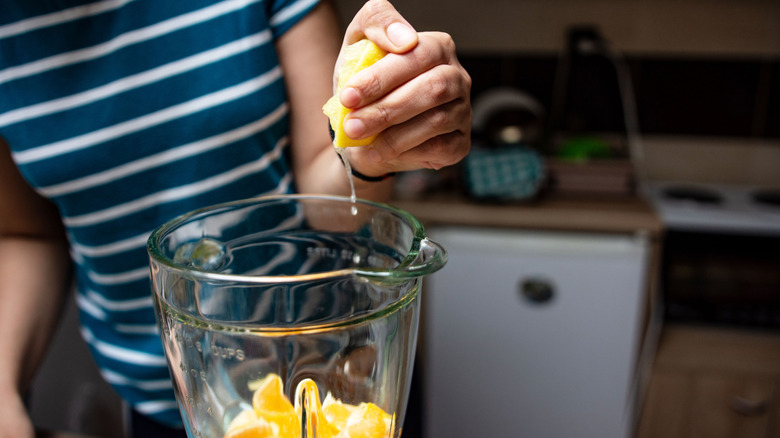
For Chef Julie Lightbourn, creating an unforgettable mimosa should be straightforward. A resounding "Absolutely" was her answer when asked if tangerines could replace orange juice. It's a clean, horizontal swap that instantly softens the citrus tang of a regular mimosa. After all, tangerines are naturally sweeter and less acidic than most oranges, giving the drink a more balanced flavor. The best part? You still get that familiar citrus brightness, but without the slightly harsh edge that orange juice can sometimes bring. The result is arguably easier to drink (and therein lies the lure).
Tangerines are also more fragrant with an almost floral undertone. This adds a subtle aromatic shift to your mimosa without overpowering it. The little orange fruits also pair particularly well with prosecco, where those softer notes can shine rather than compete. If you want to take it a step further, aim for freshly squeezed tangerine juice for a bigger impact. (You'll want to avoid any bad batches of the tiny oranges when shopping.) While packaged versions can work in a pinch, they often lack the oomph and brightness that make this swap worthwhile.
Turn it into a Bellini with peach puree
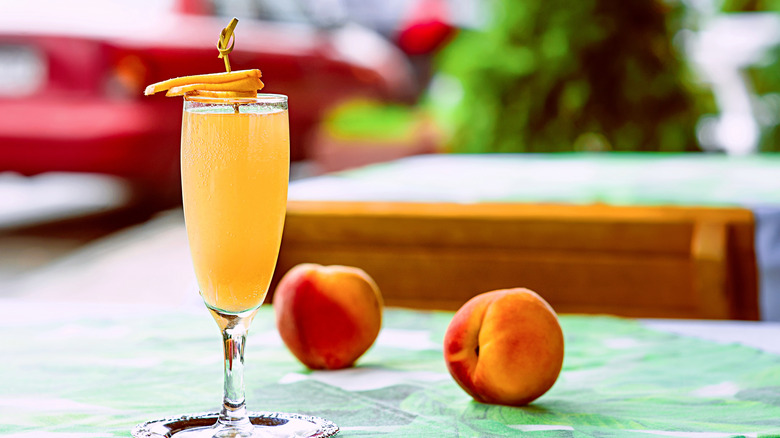
Some experts believe that after a certain point, the best way to upgrade a mimosa isn't to tweak it but to pivot entirely. So, if you lean toward fruity flavors, Chef Antonia Lofaso suggests keeping things simple and turning your mimosa into a Bellini. "I don't drink anymore," she says, "But that being said ... I'm more the Bellini. I love the peach puree." And when it comes to choosing between the two, she reiterates, "Bellini all day long." So, it's no surprise, given her penchant for a Bellini, that she is all for swapping orange juice in a mimosa with peach puree, turning the drink into something softer and naturally sweeter. While citrus tends to feel overly acidic, peach brings a mellowness to the drink, making it more polished and, dare we say, sophisticated?
Texture plays a role here, too. A good-quality peach puree adds body to a mimosa and gives the drink a slightly richer and rounder finish. If fresh peaches are in season, it's worth the effort to make your own puree. Otherwise, a high-quality, store-bought version works just as well. Keep an eye on the ratios, though, so the fruit enhances rather than overwhelms the wine.
Add fresh herbs like basil or mint
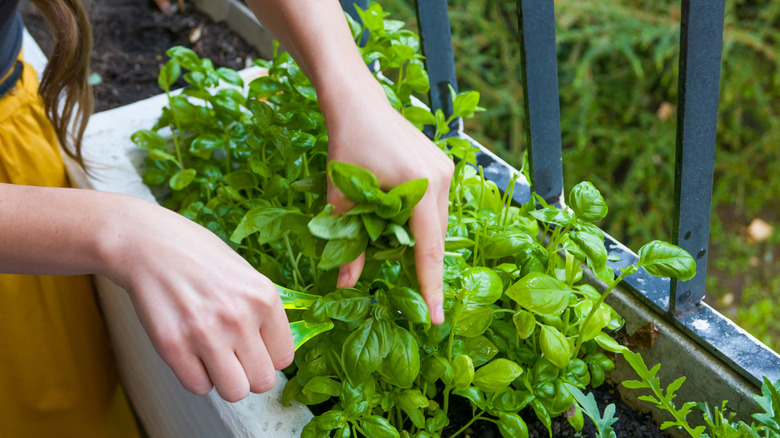
For an easy twist to a simple mimosa, think aroma for a change. Fresh herbs might seem like an unusual addition, but they can completely change how the drink is experienced. Chef Chellcy Martin builds her flavors around what's available. "I also like herbs ... it depends on what's in my garden," she states. Keep in mind, though, there are tricks to getting the most out of fresh herbs. For example, crush them lightly before adding to the glass to release oils or muddle them gently for a stronger infusion. Overall, the flexibility of adapting the drink to the season can go a long way toward creating a specific mood.
Chef Martin's go-to mimosa combination includes basil with fruits like strawberry or lychee. Basil adds an almost savory note that surprises the palate. Another option is mint, which is more familiar and helps enhance the drink's freshness without demanding too much attention. Much like when creating craft cocktails, choose herbs that add interest to the drink's flavor and engage the senses.
Use frozen fruit ice cubes for flavor and presentation
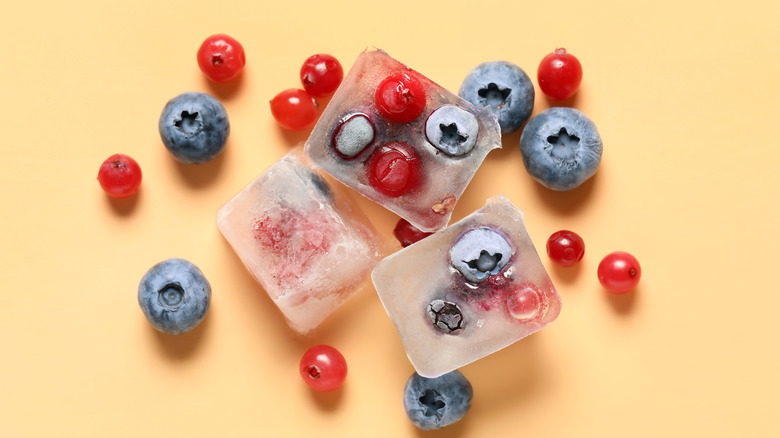
Ideally, a good mimosa (or any cocktail, for that matter) should stay lively and flavorful from the first sip to the last. However, here is where dilution shows up and plays party pooper. As the ice melts (if you're using it at all), the drink can quickly lose its balance. But, there is a simple hack to counter this pesky problem, and it comes in the shape of jewel-like frozen fruit ice cubes.
The idea is simple: instead of plain ice (boring!), freeze pieces of fruit into cubes, and use those in your glass. As they slowly melt, they don't water the drink down but only add more delicious flavor and texture. Berries are the easiest place to start. Strawberries, raspberries, and blueberries all freeze well and release just enough juice to enhance the drink without overpowering it. You may want to be prudent about too much blueberry muddying the look of your drink, however. Citrus segments like orange, blood orange, or even grapefruit work well too, adding bursts of brightness as they thaw.
If you want a more polished look, blend fruit into a light puree before freezing for more evenly colored ice cubes. For best results, pair your frozen fruit with the flavors already in your mimosa. Strawberry cubes with a strawberry puree base, citrus cubes with a grapefruit blend. Planning ahead can make for a more cohesive, prettier brunch-time drink.
Choose a high-quality prosecco or champagne
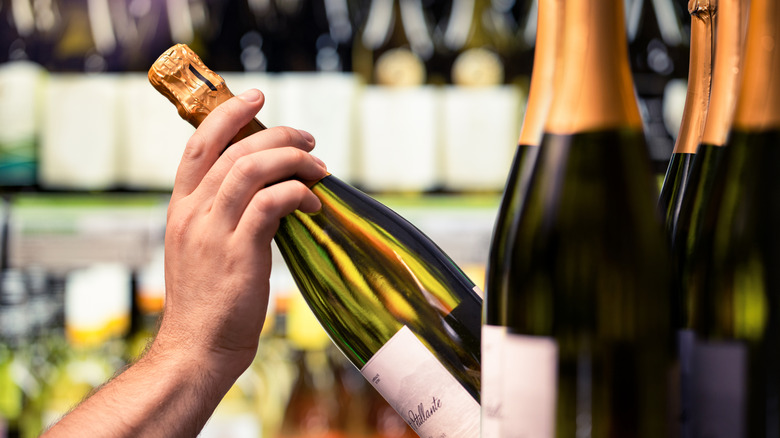
Our experts hinted that it's time to talk about the excellence of your ingredients. When a cocktail like mimosas relies on only two ingredients, each one better be the best you can find. After all, there's nowhere to hide here. If any component is sub-par, it will show in the final drink. And most people tend to cut corners on the bubbles. When you choose between champagne and prosecco, weigh your options carefully. Bartender Dre Hall emphasizes the point without hesitation: "The champagne or prosecco [should be] a premium brand, it's the base for the mimosas." Cutting corners on the bubbles is one of the easiest ways to turn a celebratory beverage into something uninspiring or worse, forgettable. Hall suggests skipping the cheaper brands because it takes the "best of two premium ingredients for it to be a really good drink."
Prosecco and champagne bring far more than just effervescence to the glass. They do the heavy lifting and provide aroma, texture, and mouthfeel to a mimosa. Plus, you get plenty of mimosas per bottle of champagne. A dry or extra-dry bottle balances the juice perfectly, highlighting the fruit without letting sweetness dominate.
Use less juice to keep the drink balanced
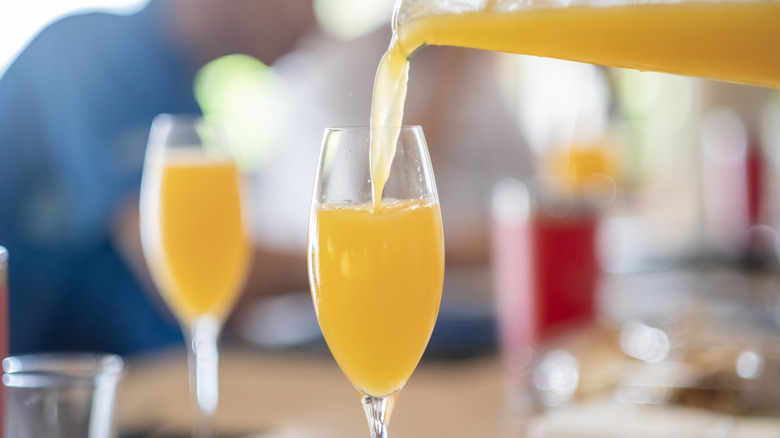
We end with a word of caution. Our experts have seen this mistake played out frequently, and it's easily avoidable. They refer to the tendency to overload your mimosa with juice. While orange juice (or any juice for that matter) makes a mimosa easier to drink, too much can quickly overwhelm the sparkling wine element. Chef JJ Johnson points out just how simple the solution can be: "It should only be a splash. People put too much orange juice in mimosas." This small adjustment preserves the delicate balance between juice and bubbles, and lets both components shine equally.
Ideally, what you want is a drink that is light and effervescent. So when chefs suggest a "splash," what they usually mean is one part juice to three parts sparkling wine. This is the golden ratio to keep the acidity in check and maintain the integrity of the carbonation. It also leaves room for all the creative add-ins we have discussed so far, like fruit puree, a touch of Campari, or a hint of fresh herbs, without letting any one element overtake the entire production.