

How Many Olives It Takes To Make A Bottle Of Olive Oil
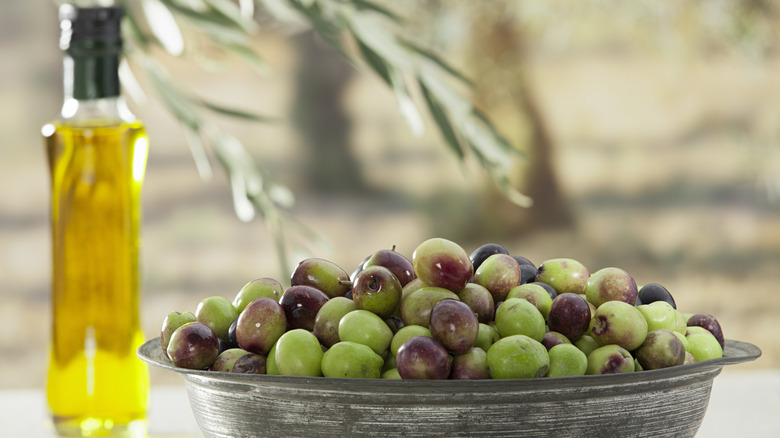
Olive oil is known as liquid gold for good reason. Whether you use it to whip up restaurant-worthy canned beans or make perfect fried eggs, the tasty and nutritious cooking oil is an indispensable ingredient for millions of home chefs, and that value is reflected in the price tag. Olive oil is one of the most expensive cooking oils in the grocery aisle, but you might feel better about shelling out over $20 for a bottle of Ina Garten's favorite store-bought olive oil when you learn how many olives it takes to make a bottle of the Mediterranean pantry staple.
Amounts can vary widely based on harvesting time, ripeness level, olive variety, climate, and weather conditions, but it generally takes at least 4 to 5 kilograms, or over 11 pounds, of the oily fruits (yes, olives are a fruit) to produce a standard 1-liter bottle of regular olive oil. However, if we're talking premium quality extra virgin olive oil, it can take up to 10 kilograms, or more than 22 pounds, of olives to make a single liter of liquid gold. In other words, the olives that go into one bottle of EVOO could weigh roughly as much as the world's heaviest (and creepiest) carrot. For a perhaps more relevant comparison, it typically takes just over 2 kilograms, or roughly 5 pounds, of canola seeds to make 1 liter of canola seed oil (which you don't need to avoid).
The role of olive ripeness in oil production
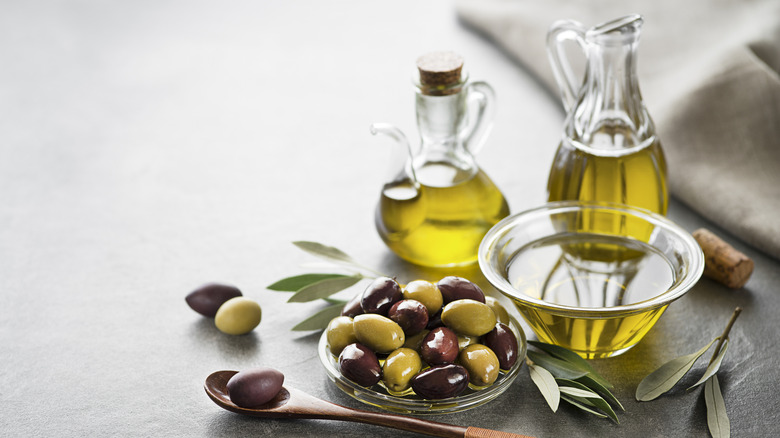
One of the biggest factors that influences the amount of olives it takes to make a bottle of olive oil is the ripeness level of the fruits at the time of harvest. The fat content of olives increases as they mature, which means that olives harvested earlier in the season, when they're less ripe, have a lower fat content and therefore produce much less oil than late-harvested olives. Early harvest olives may have as low as 7% fat content, while riper late-harvest olives can reach 25%. That means late-harvest olives could yield over three times as much oil as olives harvested earlier in the season.
However, oil made with early-harvest olives is highly valued for its vibrant, peppery flavor and high antioxidant content. Late-harvest oil, while still delicious, is characterized by a much milder flavor and slightly reduced health benefits. As such, early harvest olives are usually used to make pricier extra virgin olive oils, which is why it takes so many more olives to produce a bottle of premium EVOO. No matter what kind of olive oil you prefer, here's what you need to look for when buying olive oil in bulk.