

4 Cheeses To Stop Eating And 7 To Choose Instead
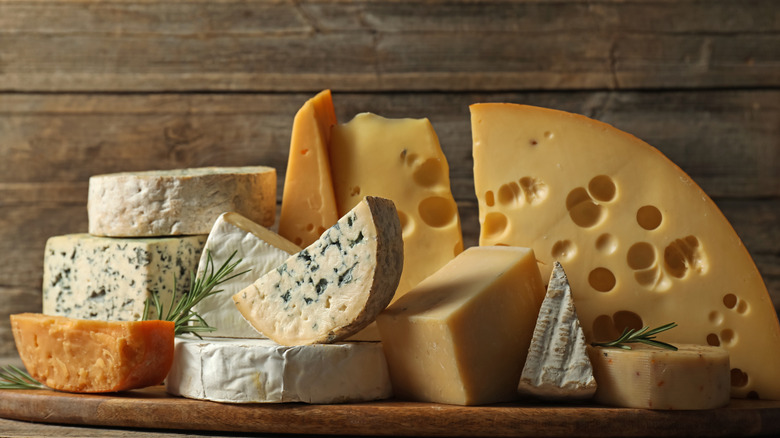
Is there any food in the world as versatile, varied, and all-around tasty as cheese? You can eat it at breakfast, lunch, and dinner; as part of your dessert; or in the middle of the night, standing in the light of the open fridge door. It comes sliced, shredded, cubed, or in a giant wheel.
However, for all of the wonders of cheese, this ingredient gets a little bit of a bad rap. Whenever someone's supposedly watching their health, often one of the first things to go is cheese. You're not going to see that health-obsessed individual chowing down on a cheeseburger, digging into a plate of mac and cheese, or savoring some cheese fries. They're likely to request the cheese be left off their salad or pasta.
But why? Even if you are trying to follow a healthier diet, there's no reason that you need to nix cheese from the menu. While, yes, some cheeses are less nutritious than others, many still provide a wealth of health benefits and they can be a perfectly normal part of a balanced diet. Here are some of the cheeses you should be eating on the regular, as well as those you can leave off your plate, if you so choose.
Stop eating: American cheese
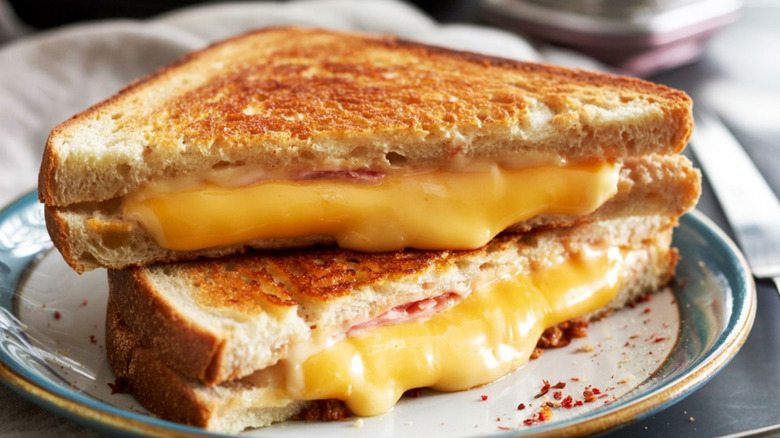
You've likely eaten a lot of this cheese in your lifetime — as a part of a crispy grilled cheese sandwich, for example, or melted atop a burger — but could you really tell someone what American cheese actually is, if they asked you? American cheese — bright fluorescent yellow-orange and sold sliced and wrapped in plastic — originated with the founder of Kraft in the 1910s. In the beginning, the cheese was designed to last longer than your typical cheese, without drying out or going bad. But now, we know American cheese as the go-to for ooey-gooey-melty goodness.
So, what's in it? Actual real cheese (or a blend of different cheeses) is combined with an emulsifying agent and liquid, before this mixture is molded into the desired shape (like a flat slices). The emulsifying agent may be, in many cases, sodium phosphate or sodium citrate, and it's what's responsible for that easy melt.
The problem with American cheese and why you might want to stop eating it (or at least eating as much of it) isn't necessarily just the fact that it's a processed food. Most American cheese is also high in sodium and saturated fat. Just one Kraft American slice contains 230 milligrams of sodium, or 10% of your recommended daily intake. Meanwhile, it contains 2 grams of saturated fat, which may not sound like a lot, but it's 10% of your recommended daily intake.
Choose: Feta
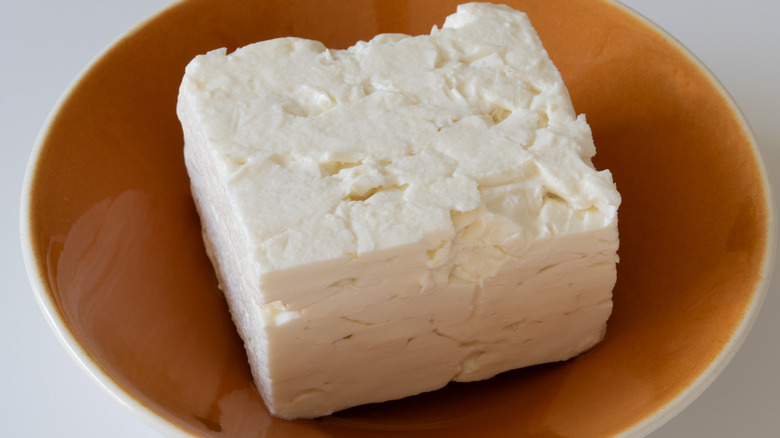
Feta cheese is one of mankind's earliest recorded cheeses. It's thought that feta was one of the first cheeses that we began making, once people started domesticating sheep and goats.
There are plenty of good reasons why this cheese has been kicking around as long as it has — its health benefits, among them. Feta is a nutritionally well-rounded cheese that, while not perfect in every aspect, is perfect enough that it should be making its way into your fridge on a regular basis. It offers 4 grams of protein per ounce. That single ounce also gives you about 14% of the calcium you need each day. The cheese is also relatively low in calories and fat, as compared to similar cheeses.
That said, as you're shopping for feta cheese in the grocery store, make sure you're getting the real deal. True, authentic Greek feta, which has protected designation of origin (PDO) status, is made with at least 70% sheep's milk and no more than 30% goat's milk, and will always feature a yellow and red PDO seal. It always will clearly state the cheese was made in Greece.
Choose: Parmesan
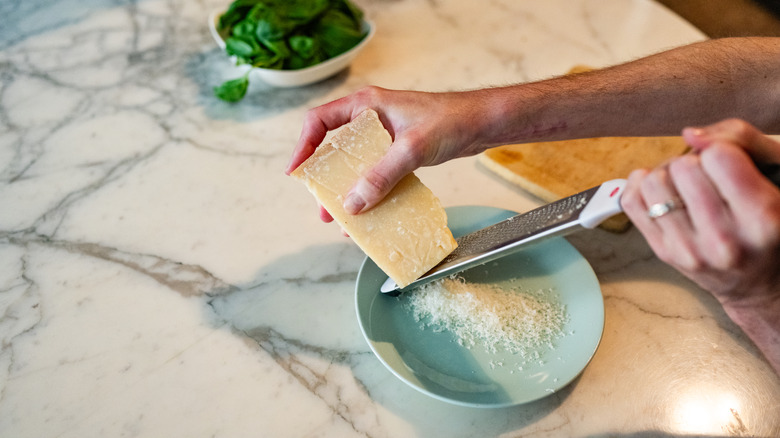
Like feta, the umami-rich Parmesan has also been around for a while, though feta may have a few centuries on Parmesan. As of today, Parmesan has gained status as a staple in most American households, even if those households are just holding onto a green tube of pseudo Parm for their next quick pasta night.
And speaking of pseudo Parm, it's worth noting there's a big difference between Parmesan in the store, and Parmigiano-Reggiano. In order for a cheese to be called Parmigiano-Reggiano, it must meet certain ingredient and manufacturing requirements. The definition of Parmesan is a lot looser and up to brands' interpretations.
However, whatever the brand of Parmesan you pick up, you can reliably expect that it'll offer a nice amount of protein and calcium. It also contains phosphorus, potassium, magnesium, and vitamin A. Meanwhile, it's one of the handful of cheeses that are lactose-free, making it suitable for those with lactose intolerance or similar sensitivities.
Stop eating: Spray cheese
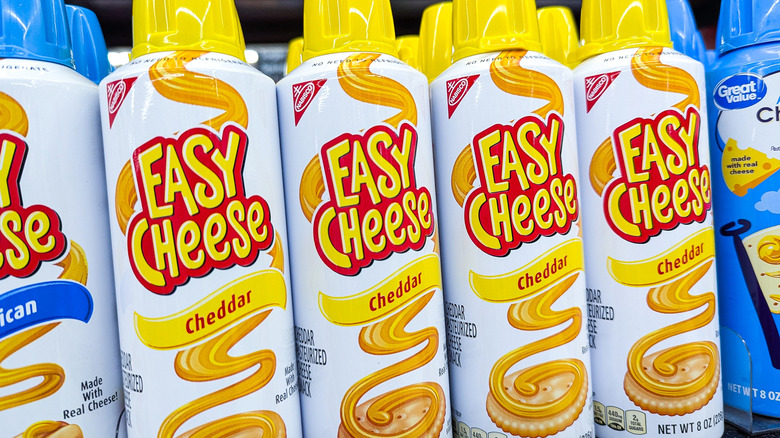
Yes, it's not quite the same thing as American cheese, but it's definitely in the same family. Packed in a can and easy enough to spray on some crackers as a snack or directly into your mouth, spray cheese is one that you should rethink eating.
In an interview with Mashed, certified trainer and nutritionist Jamie Hickey noted that, while you might eat this ingredient in moderation, overall, spray cheeses are "basically lab-made creations masquerading as a dairy product." According to Hickey, while spray cheese does contain real cheese, it also contains a lot of chemical ingredients that can be rough on your body. For example, sodium phosphate, he said, is linked to kidney disease and renal failure (it keeps the spray cheese's ingredients from separating). Meanwhile, sodium citrate, which similarly keeps the mixture clump-free, is linked to tooth erosion. Then, there's sorbic acid, a preservative that some are allergic to, and that can cause skin rashes.
Choose: Cottage cheese
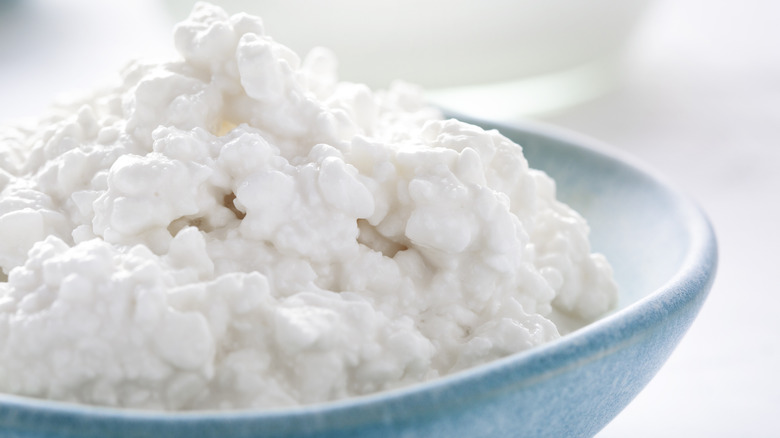
On that note, if you've yet to jump on the cottage cheese bandwagon, now's the time. This ingredient isn't just for the fitness influencers trying to up their protein intake. While ½ cup of low-fat cottage cheese does indeed offer 11 grams of protein, it also offers so much more. It contains calcium, potassium, vitamin D, and vitamin B12. It can likewise help with blood sugar control and gut health.
All that said, there's no need to adopt any of the sometimes-horrifying cottage cheese "hacks" that you see promoted on TikTok or Instagram — because some of them are really, really bad. Using cottage cheese in place of queso, adding it to your guacamole, or creating fake cottage cheese cookie dough is probably just going to make you sad, even if you are filled with protein.
Instead, use cottage cheese and it's creamy texture and slightly tangy flavor in places it actually works (versus trying to shoehorn it into a place where it doesn't). For example, cottage cheese makes the perfect chili topping, adding depth. You can also use cottage cheese in your lasagna (it's more budget-friendly than ricotta, which is a boon if you're bemoaning high grocery prices).
Choose: Mozzarella
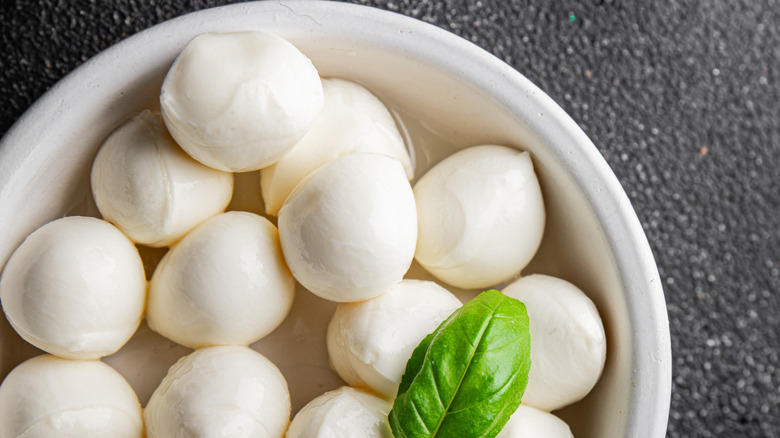
Good news: No one's asking you to give up your cheese pizza or mozzarella sticks. Well, you might need to in some cases, if you're especially worried about sodium or fat consumption, but if it's just the cheese you're thinking about, you're golden. Mozzarella comes packed with all sorts of good stuff.
Mozzarella can basically go head-to-head with meat products when it comes to protein. An ounce of mozzarella and an ounce of cooked meat both contain about 6 grams of protein, on average. Additionally, mozzarella is considered a low-sodium cheese. It contains about half the sodium that's in some of our other recommended healthful cheeses you should be eating, such as feta and Parmesan. A serving of mozzarella is only going to give you about 3% of your daily recommended sodium intake. It's also lower in saturated fat and contains nutrients such as calcium, phosphorus, and zinc, while containing probiotics, too.
Always prefer the from-scratch route if you can take it? You can actually make your own mozzarella cheese at home with just two ingredients. You'll need milk, vinegar, some basic kitchen supplies, and a little patience, but it can be done.
Stop eating: Cream cheese
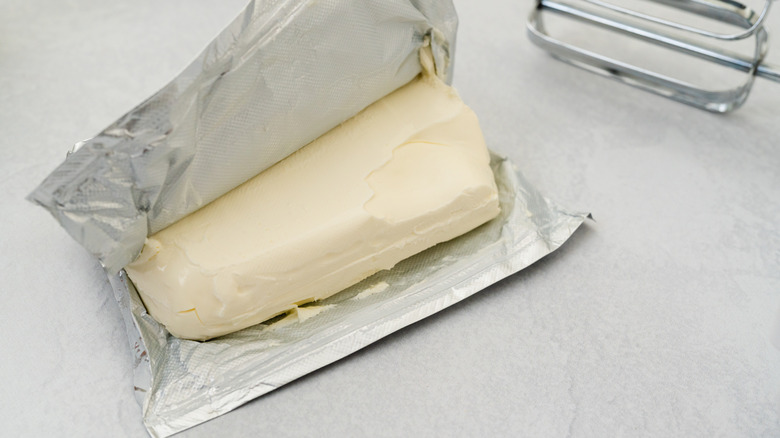
While cream cheese may be a necessity in some recipes, it's also an ingredient you should really consider eating less of, particularly if you're worried about your heart health. Even just 2 tablespoons of the average cream cheese (and, if we're honest, a lot of us are eating more than just 2 tablespoons of the stuff) can contribute a lot to your daily intake of both fat and saturated fat.
Those 2 tablespoons contain 10 grams of total fat and, since nearly 6% of that fat is saturated, you're going to be at 15% of your recommended fat intake for the day and 30% of your recommended saturated fat intake for the day before you even slather the cheese onto your bagel. Additionally, you'll be getting about 10% of the daily cholesterol recommended for those with existing heart disease.
It's possible to make healthier choices, though, without giving up cream cheese in its entirety. For example, you can opt for a low-fat cream cheese and avoid cream cheeses that contain extra add-ins that increase the sugar or sodium content. You might also sub your cream cheese out in recipes where appropriate, with a healthier cheese such as ricotta or cottage cheese.
Choose: Ricotta
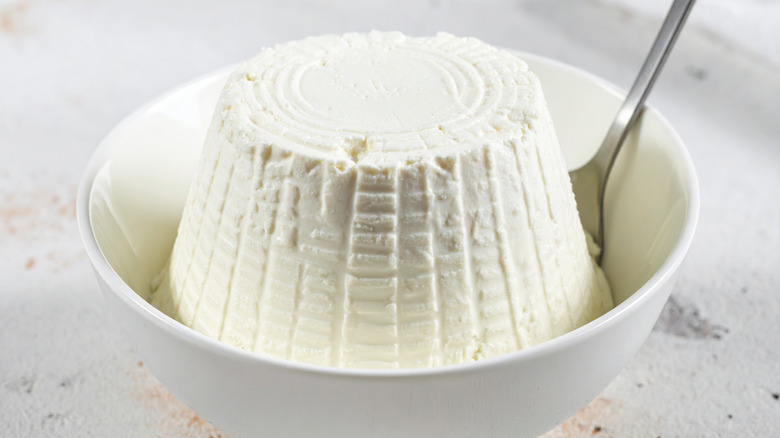
Did you know that ricotta isn't actually considered cheese? Instead, it's an ancient dairy byproduct. When acid combines with whey, what we know as ricotta forms on the whey's surface. Still, it's used as a cheese enough, so we're going to consider it one here.
Ricotta is a healthful cheese choice for a few reasons. It's low in sodium and fat. It contains vitamin K, vitamin A, and vitamin B12. It's low in calories. All the while, it contains up to 11 grams of protein and plenty of calcium, up to 10% of your daily recommended requirement.
That said, the amount of protein and calcium you get from your ricotta will differ depending on the type of milk this not-cheese was made with. Low-fat and fat-free milk make the highest-protein ricotta. Full-fat and part-skim milk make the highest-calcium ricotta. As such, the best ricotta for your health is going to depend on your individual health goals.
Choose: Goat cheese
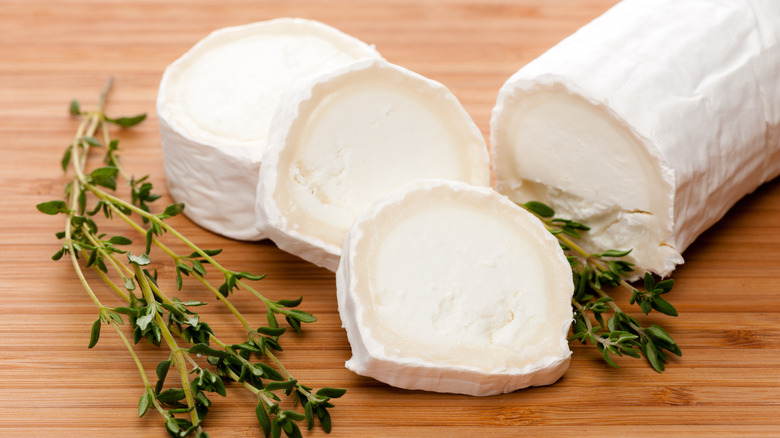
With its tangy, unmistakable flavor, goat cheese can be a bit polarizing. You either like it or you don't. However, one thing that we can all like is the fact that goat cheese comes with an array of health benefits, and some of these benefits exist precisely because the cheese was made with milk sourced from a goat versus a cow or sheep.
For example, the body metabolizes the fatty acids in goat cheese faster than it does the fatty acids in cow cheese. This improves satiation, which can lead to better weight management. Additionally, goat milk contains only one kind of beta casein protein, compared to the multiple types you'll find in cow's milk, making goat milk-derived products like cheese easier to digest. When you add in goat cheese's high calcium content, probiotics, vitamin B2, selenium, potassium, zinc, copper, iron, magnesium, calcium, and phosphorous — well, even if you don't care for the taste, you may just find that this is a cheese you need to add to your diet, stat.
Not sure how you should incorporate more goat cheese into your diet, beyond adding it to yet another salad? Consider using it to enhance your macaroni and cheese. The goat cheese will melt more easily than cheeses made with cow's milk, and you'll enjoy all the health benefits you get from choosing goat cheese over cow's cheese, in one of your favorite comfort foods.
Stop eating: Pre-shredded cheese
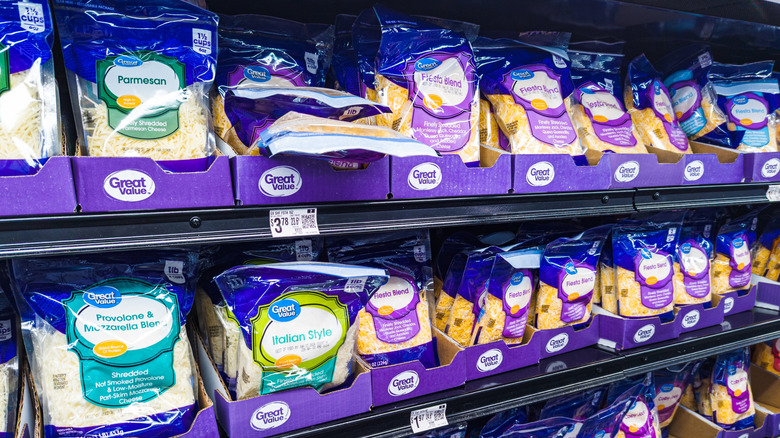
Admittedly, the reason you should stop eating pre-shredded cheese isn't because it's less nutritious than its un-shredded counterparts. Instead, it's all because shredded cheese really can't give you top-tier results in the kitchen.
One big thing that's probably messing you up is the coating on shredded cheese. You may have never noticed it before, but if you dump out a bag of shredded cheese into a bowl, you'll see that there's a powdery substance mixed throughout the cheese. This is cellulose. It ensures the cheese doesn't fuse together in one big ball in the bag, during transit and storage. At the same time it's keeping the cheese from clumping, though, it's also keeping your cheese from properly melting. Yeah, it'll melt eventually, but the melted cheese won't be as gooey and consistent as cheese without that cellulose (or even American cheese). Plus, while cellulose is a very popular food additive found in a range of products, from spices to ice cream, it is frankly a bit gross to think about. It's made from wood pulp or cotton lint.
All the while, you're probably paying more for shredded cheese than you would for a block of cheese. Additionally, you're likely really limiting your cheese options by sticking to the store's shredded selection, versus checking out what's on offer in block or wheel form and then shredding it yourself.
Choose: Swiss
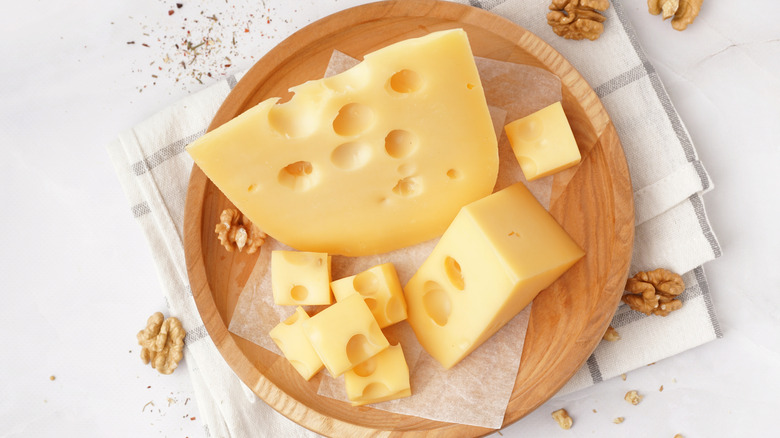
If you're looking for a slice of cheese to add a little extra flavor and a few health benefits to your sandwiches, but now you're sadly forgoing your American slices, consider Swiss. Swiss cheese offers nutrients such as vitamin A and B-12, calcium, phosphorus, and protein. It also contains a few essential amino acids that you might be less familiar with, such as valine (an essential amino acid used to create energy, improve immunity, and enhance muscle growth), isoleucine (an essential amino acid that helps control blood sugar, improve energy, and quicken recovery) and L-tryptophan (an essential amino acid that's required for serotonin production). Furthermore, Swiss is low in lactose, though not entirely lactose-free, like Parmesan is. Still, it has such as small amount of lactose that it's generally well-tolerated by those with an intolerance.
The only downsides to Swiss cheese are the higher levels of sodium and fat that you might find in this cheese compared to others (though it still doesn't have as much sodium as cheddar cheese). However, so long as you're monitoring your overall sodium and fat intake and ensuring you're eating a balanced diet, it shouldn't be an issue.
Static Media owns and operates The Takeout and Mashed.