

12 Expensive Fish Chefs Say Are Worth The Splurge
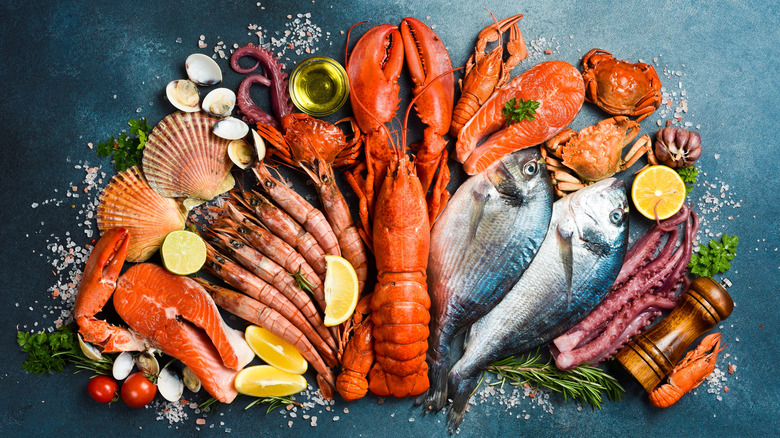
While it's possible to get a can of tuna or mackerel at the grocery store for a minimal amount of money, by and large, seafood is considered a more expensive ingredient. Seafood dishes like lobster tail and seafood towers are often some of the most expensive items on pricey chain restaurant menus. In some cases, diners and shoppers will publicly bemoan seafood's lofty cost, like when Costco shoppers bashed the high prices of the store's lobster tails and crab legs.
Sometimes, it is true that expensive seafood isn't worth what stores and restaurants are trying to charge (looking at you, canned lobster). However, there are other instances where seafood can be worth the splurge.
To find out how exactly you should spend your hard-earned cash, we talked to a range of chefs from restaurants around the country to get their opinions on the fish and seafood that are most worth the money. We also asked them for their tips on how to cook that fish perfectly, so you don't end up making a mess of your financial investment. Here's what they had to say.
Chilean sea bass
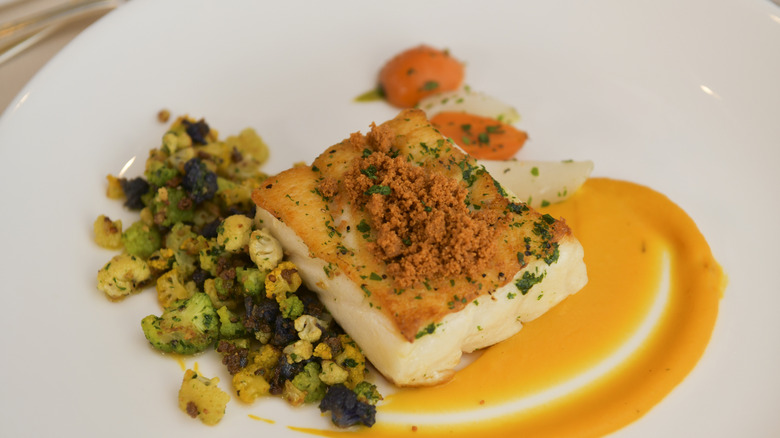
Multiple chefs we spoke to mentioned Chilean sea bass (also known as the Patagonian toothfish) as an expensive fish that's worth the price. Executive chef Zanali Malik of C&S Seafood and Oyster Bar in Brookhaven, Georgia (with additional locations in Cobb County and Sandy Springs), called this fish one of the ugliest in the ocean, but also one of the most buttery and delicate in flavor, with a firm, flaky texture. Similarly, executive chef Kitipoom "Nicky" Khanarat of Lalyn in New York City described the fish's texture as silky, and noted it's a very forgiving fish, with a natural fat content that makes it suitable for gentle pan-searing.
"When cooking this fish, I use copious amounts of butter in the pan to sear [it] and also [use the butter] to baste the fish. I baste with thyme and garlic cloves after searing and placing in the oven. It's so versatile as it can be served with any style of cuisine, but one of my favorite preparations is sea bass Oscar," Malik said.
Another quick tip? Chef Laurent Tourodel of LT South Beach says to make sure you dry the fillet thoroughly before cooking it, as that'll ensure you get the best sear possible.
Black cod
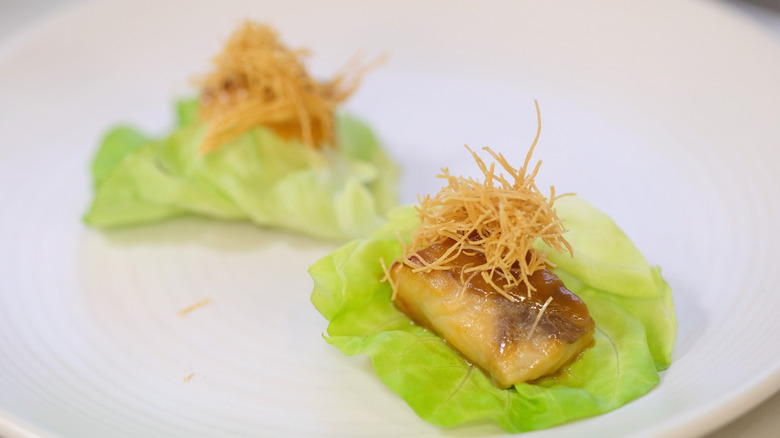
Chef Laurent Tourodel likewise recommended Alaskan black cod, sometimes also called sablefish, for your next seafood splurge. Tourodel highlighted its high omega-3 content, delicate texture, and versatile nature, as well as its sustainability — it's wild-caught off the shores of Alaska.
Chef Zanali Malik concurred. "Whenever you can find sablefish in the store, buy it all up! Known as the cheesecake of the ocean, this fish is beyond buttery. When cooking this fish, it is forgiving," he said. "Overcooking will still allow it to be moist because it contains the [highest] amount of omega-3s in any fish in the Pacific. The flavor and texture are flaky, moist, and slightly sweet. Searing in a cast iron is my favorite method because I serve it skin-on, allowing it to get a beautiful crisp. I love a nice filet of sablefish with lemon beurre blanc and haricot verts."
If you need some step-by-step instructions, chef Luis Durand of U Omakase in Brooklyn, New York, advises marinating the black cod in shio koji for 24 hours before pan-frying the fish skin-down on high heat until crispy. Then, transfer the fish to a 350-degree Fahrenheit oven for three minutes before serving it with a spicy butter or lemon butter sauce.
Ora King salmon
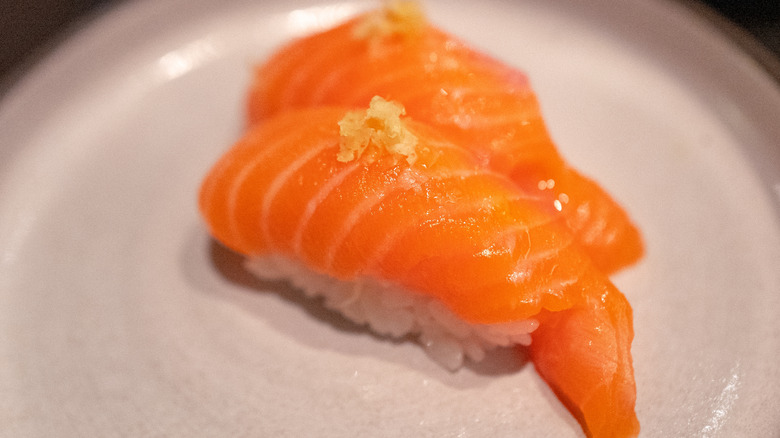
Both Diego Alonso Ortega Oneto, executive chef at The Ritz-Carlton, Sarasota, and chef Laurent Tourodel referred to Ora King salmon as the Wagyu of the sea, but it turns out, they're not the only ones who feel the fish earns this recognition. Ora King salmon is known as the Wagyu of the sea throughout the culinary world.
"It performs exceptionally well across a range of preparations, from curing and crudos to searing and roasting," said Oneto. Tourodel further pointed out that the salmon is sustainably farmed in New Zealand and is known for its high oil content and clean flavor. Possibly due to that clean flavor, he recommended keeping your seasoning minimal when you cook this fish (or eat it raw).
And don't be put off by the fact that the fish is farm-raised — a phrase you shouldn't use when ordering fish, as it can be misleading. Done properly, farm-raising fish can be sustainable and environmentally friendly, and wild-caught fish isn't by nature always sustainable anyway.
Turbot
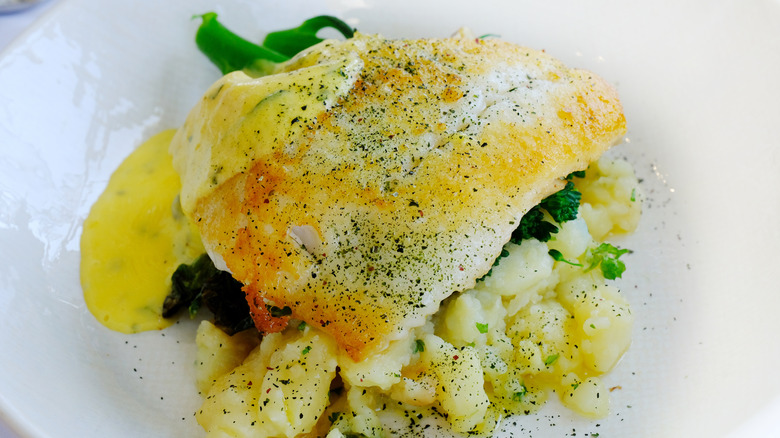
Salmon, cod, and bass are relatively familiar fish, but do you know turbot? A flat fish found from the Mediterranean to the Norwegian Sea, it's popular in high-end dining establishments and, in fact, is the fish Ina Garten always purchases while in Paris. She personally bakes it in a sauce with crème fraîche, two types of mustard, shallots, and capers. You're not going to find turbot at your neighborhood grocery store, though, and you'll probably pay a pretty penny for it at a specialty seafood shop. However, this is another fish that chefs say is worth the splurge.
According to Andy Quinn, executive chef and owner at The Noortwyck in New York City, turbot is "like halibut's smaller brother but packs so much flavor and deliciousness. If you can manage to source turbot, it cooks great whole, baked in the oven with a splash of Champagne and plenty of lemon juice and soft herbs. Put this in the center of the table at a dinner party and become the envy of your neighborhood."
If you do go out and manage to get your hands on this fish, avoid purchasing the biggest fish on display. The bigger the fish, the older and the drier. While the fish can grow to weigh more than 30 pounds in the wild, you're going to want something that's a little closer to 2 pounds.
Lobster
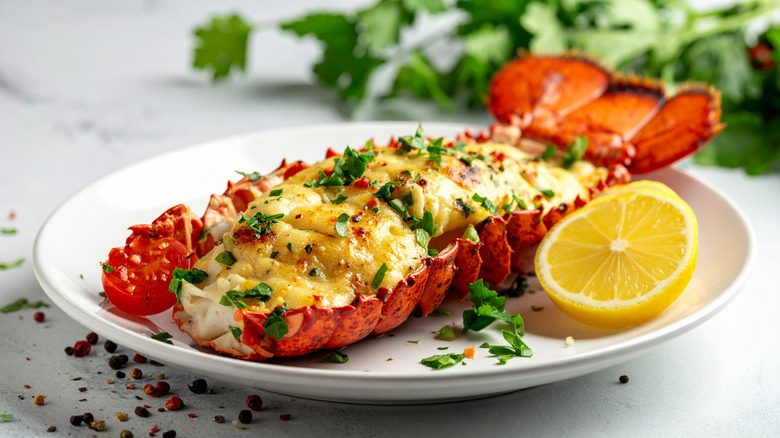
We all know lobster as a luxurious seafood choice, but that wasn't always the case. The story goes (though it is contested) that, when the first Europeans began settling in the American colonies, lobsters were so plentiful that they were incredibly cheap. They were washing up on shore in piles the height of a small child. They became popular with the poorest of the poor due to this abundance. It wasn't until the late 1800s and early 1900s that lobster gained its reputation as a delicacy, a reputation it maintains today.
So, is lobster worth the price, or should it be relegated to peasant food once again? According to chef Andy Quinn, this is some seafood that's worth your splurge. A classic, he said, it's a crowd pleaser and oh-so-versatile. "Grill it, steam it, turn it into lobster salad for rolls. Split one in half and enjoy with your loved one for a great romantic meal. It works every time," he added.
Dover sole
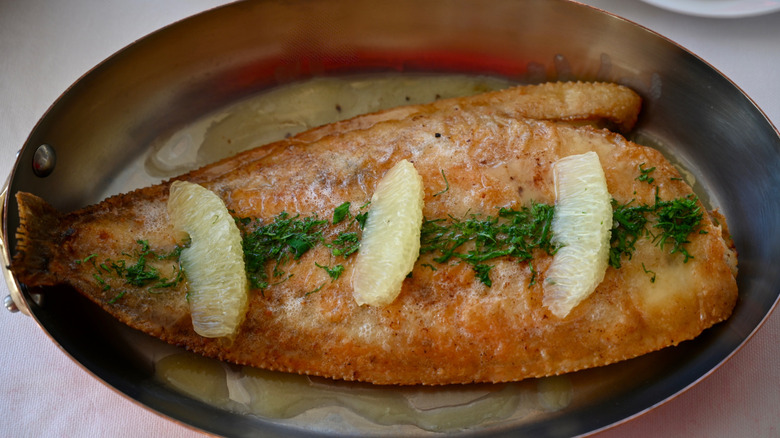
Multiple chefs pointed to Dover sole as a good pick the next time you want to splash out on a seafood purchase. According to chef Diego Alonso Ortega Oneto, "Dover sole is best prepared simply and deboned. Its natural delicateness pairs beautifully with extra virgin olive oil, fresh herbs, and sea salt. It shines alongside a white wine reduction such as godello or albariño, finished with capers and lemon oil."
Chef Andy Quinn warned, though, that there's not a ton of meat on the fish's bones, and if you overcook the fish, you'll likely struggle with picking through them (that is, if you don't debone the fish, per Oneto's suggestion). However, Quinn assured, if you get it right, you'll be well-rewarded. He cooks his sole with brown butter and capers.
Another point in the Dover sole's favor? It's one of the fish with the lowest levels of mercury. It is also relatively high in protein and low in fat. If you're convinced now that you need to go out and buy this fish, just be careful. If the price tag seems fishily affordable (pun intended), the seller may be trying to pass off the cheaper arrowtooth flounder in its stead.
Red snapper
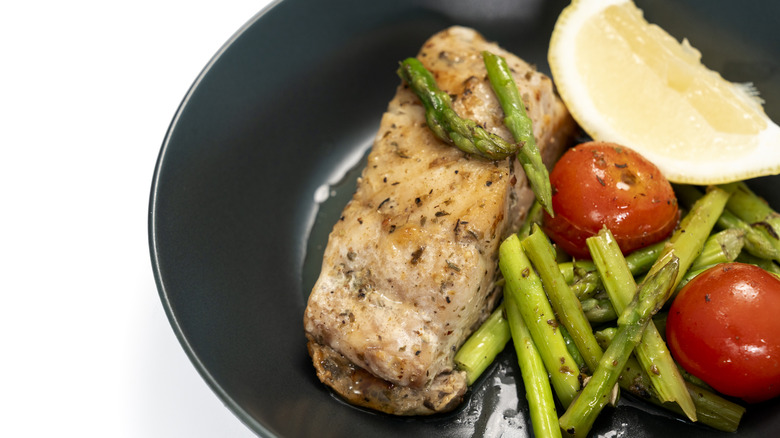
Chef Diego Alonso Ortega Oneto told us that red snapper — which is found throughout the Gulf of Mexico and from the southern United States down to northern South America — is a very versatile fish that you can enjoy both cooked and raw. Use it for crudos or tartare, or sear or roast it. Light seasoning is key, and he recommended crafting a red snapper crudo that incorporates coriander blooms and a lime and passionfruit vinaigrette.
Chef Ryan VanDusen, executive chef at SkyBeach Resort in St. Petersburg, Florida, claimed that red snapper is one of his favorite fish, calling it approachable and not too fishy — and while he admitted that, in Florida, grouper is the crowd favorite, snapper is even more accessible and versatile.
"Whether you leave the skin on or off, [red snapper is] a great option, but a crispy sear on the skin adds an extra layer of texture and flavor," he said. "I especially love serving snapper with a tomato-based broth. It works wonderfully in a cioppino-style preparation with mussels, clams, and shrimp, or in a saffron-tomato broth with Israeli couscous and topped with shaved fennel and herb slaw, or green onion and preserved lemon relish. The acidity of tomato and citrus really enhances the flavor."
And if you go to the store and accidentally pick up yellowtail snapper rather than red (or if that's all that's available)? No worries. That's a chef-approved pick, too, per executive chef Carlo Mirarchi at Ezio's in Miami.
Halibut
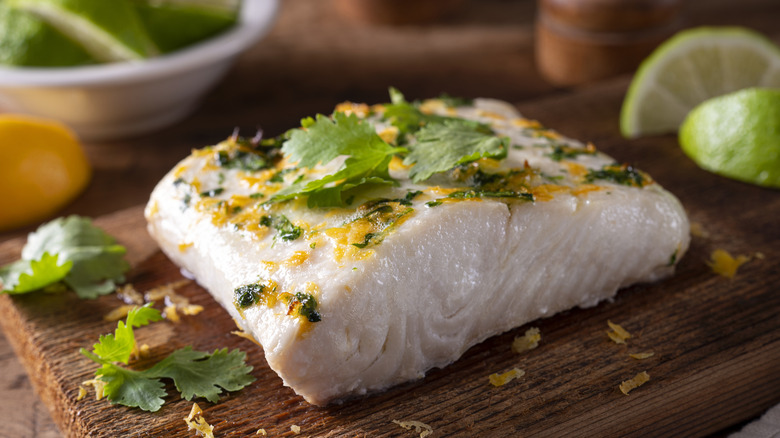
Chef Ryan VanDusen said that halibut, with its richness and meatiness, is a go-to order for him when dining out. Additionally, because it's such a versatile fish, it's pretty much excellent no matter how you cook it. Plus, because it's lean, it can hold its own against richer flavor profiles.
He described, "Butter-poached halibut is a classic preparation, but I love combining it with bold, hearty flavors. One of my favorite ways to serve it is with a bacon consommé sweetened with a touch of maple syrup, alongside charred grilled brassicas for a smoky balance. Finished with a bright pomegranate relish, it becomes a dish that feels indulgent, flavorful, and approachable for everyone."
Executive chef Zanali Malik also said he was a big fan of halibut — specifically Alaskan halibut — and said it was a good fit for a bouillabaisse and paired well with both pestos and curry. One of his favorite preparation methods, though, is to layer the fish with basil, roll it in prosciutto, and then sear it before finishing it off in the oven. You can use a cake tester, he noted, to test for doneness.
Arctic char
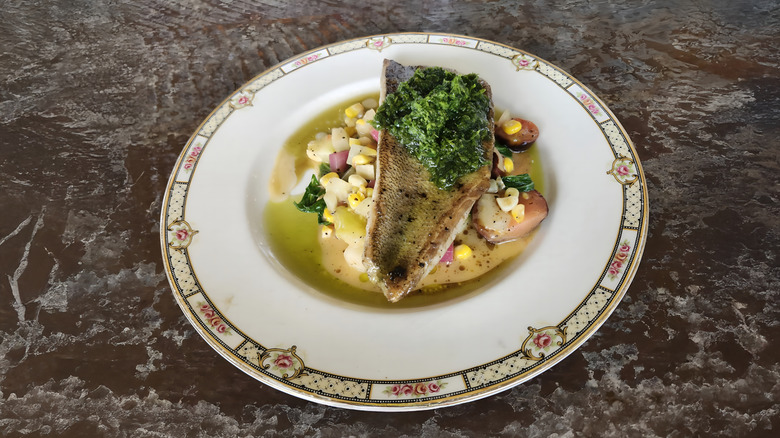
Arctic char might be another fish that you're not overly familiar with, but if you've yet to get acquainted and you're more and more thinking about how your eating patterns and sustainability intersect, this is a fish you need to know. A more sustainable alternative to salmon, Arctic char has been ranked by the Monterey Bay Aquarium Seafood Watch as a "Super Green" species, which means that the fish ranks the highest possible for environmental sustainability, per the organization's standards, and it's expert-approved as a healthy food, too — and it's the only fish that's received this ranking whether it's wild-caught or farm-grown.
While farmed Arctic char is available year-round, wild-caught is only available for a few weeks, and chef Ryan VanDusen says you should snap it up when you can get it. "It's like a cross between salmon and trout, with a beautiful color, a delicate texture, and a rich but approachable flavor that appeals to a wide range of people," he said. "Because it's available in early fall, I love pairing it with seasonal ingredients like butternut squash. It also works wonderfully with hearty greens like kale, mushrooms, currants, or even creamed spinach and crispy shoestring potatoes. It works well with widely available produce. It's also excellent smoked and served as an entrée, and for an extra layer of flavor, topping it with trout roe is a great finishing touch."
Hamachi
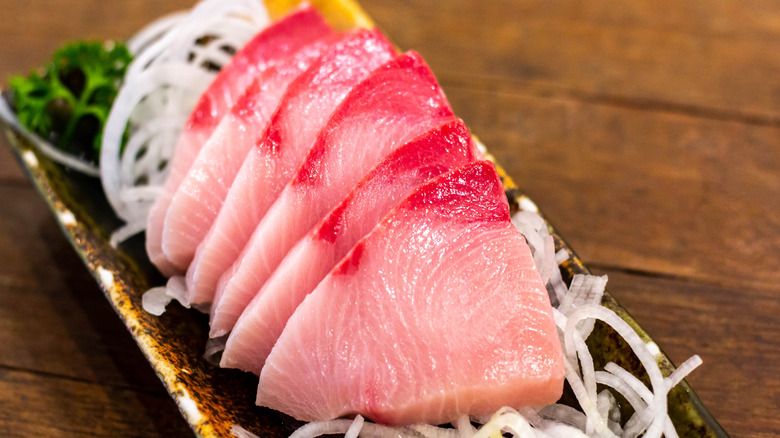
Hamachi is a very specific type of yellowtail, sushi-grade and often farm-raised. However, make note that yellowtail in this instance is not yellowtail snapper (which we already discussed above), and it's not yellowtail tuna. Instead, hamachi yellowtail encompasses three types of amberjacks. While hamachi is often used in sushi, thanks to its buttery, firm texture, it's also used in a variety of other raw dishes — and it's the personal favorite fish of executive chef Wilfredo Reyes at Casa Sensei in Fort Lauderdale, Florida.
"It has a rich flavor and clean texture that makes it great for sashimi or simple preparations where the quality really stands out," he said. However, he added, if you're using this fish (or any others) for making sushi at home, it's not just the fish that you have to worry about.
"One of the most important things when preparing sushi at home is the rice — the texture and how it's cooked matter just as much as the fish," he explained. "Focus on cooking the rice properly, getting the rolling technique right, and keeping a good balance between ingredients and flavors so the fish can really shine."
Tuna
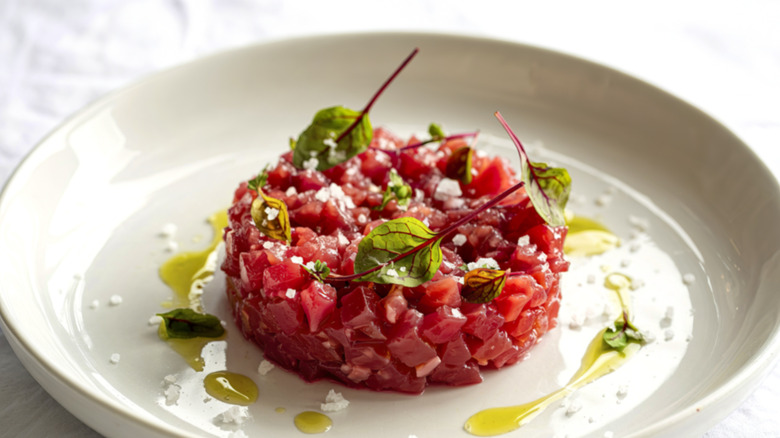
Yes, yes — you can buy tuna on the cheap. However, we're not talking about the canned stuff here. If you really want to, you can spend big bucks on tuna, and several chefs say it's worth doing so if you really care about quality.
For example, chef Wilfredo Reyes says a high-quality tuna is going to give you a better flavor and texture, so opt for spending more on it if you're going to use it in a raw dish like sashimi, rolls, or tartare. Not sure what exactly constitutes a high-end tuna? Take a page from chef Nicky Khanarat's book. Otoro, the fatty cut from the Japanese bluefin tuna, offers "extraordinary richness and [a] melt-in-the-mouth texture."
"Even a small portion feels indulgent," he said. He recommended that you serve it as sashimi with sea salt and fresh wasabi.
Chef Diego Alonso Ortega Oneto offered a few other ways to use your fresh tuna — on tostadas or lightly seared as tataki. He also noted that fresh tuna "pairs especially well with marinades and Asian-inspired preparations, such as Nikkei cuisine, which blends Peruvian flavors with Japanese ingredients."
Giant Carabinero shrimp
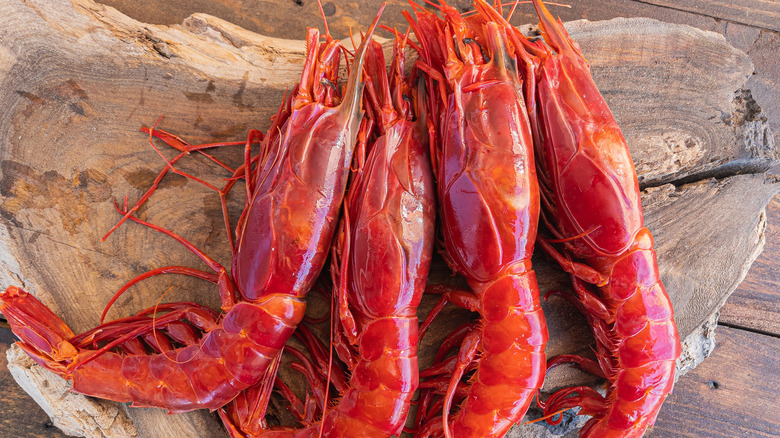
These are not your average shrimp. A favorite of chef Andy Quinn, giant Carabinero shrimp hail from Spain and Portugal. Quinn described them as "striking visually, super-sweet, and umami-rich. It's basically the best shrimp you will ever eat and totally worth the splurge."
Carabineros shrimp (or prawns — technically they are prawns, but the two words are often used interchangeably) are the largest in the world, and they boast a bright red hue that doesn't fade upon cooking. You don't have to take a pro's word for it, though, when it comes to these crustaceans' desirability. Foodies on Reddit rave about the prawns' smell, flavor, and appearance, with some calling them "the king of seafood." One commenter mentioned them going for $95 each in a Miami Beach restaurant, though that didn't stop tables from ordering them by the dozen. Another mentioned how they're "expensive but produce incredible results and customers' faces are worth it when they see them plated."
If you, too, manage to get your hands on some Carabineros prawns, start easy and simple. Clean them, remove the shell from the tail only, season them with salt, and grill them for just a minute or two per side, before giving them a squeeze of lemon.