

14 Old-School Food Brands That Don't Exist Anymore
We may receive a commission on purchases made from links.
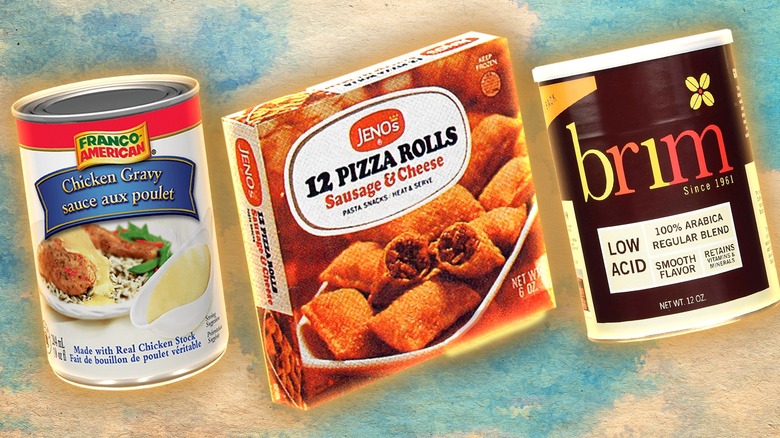
Some food and drink brands seem destined to last forever, like Coca-Cola, Heinz, Kellogg's, and Hershey's. Others, which once nourished and filled bellies of households across the world, have somehow now been lost to time. The Takeout is revving up the time machine to revisit these old-school food and drink brands of yesteryear and give them some much-needed modern love and respect.
Some of these brands have given the world such indelible products that are still being gobbled up today, like Chex, Pizza Rolls, SpaghettiOs, Baby Ruth, and Butterfingers, but have had their originator's names scrubbed from the packaging due to acquisitions, mergers, and loss of name recognition cache. Our trip into the past covers every aisle of the grocery store, from baked goods named after a First Lady and a once hip decaffeinated coffee brand to the brand that helped America warm up to frozen egg rolls. While these brands may be dead, that doesn't mean they can't come back to life in the future. Perhaps this article can help stir up some hunger or thirst for their return?
Bel-Air
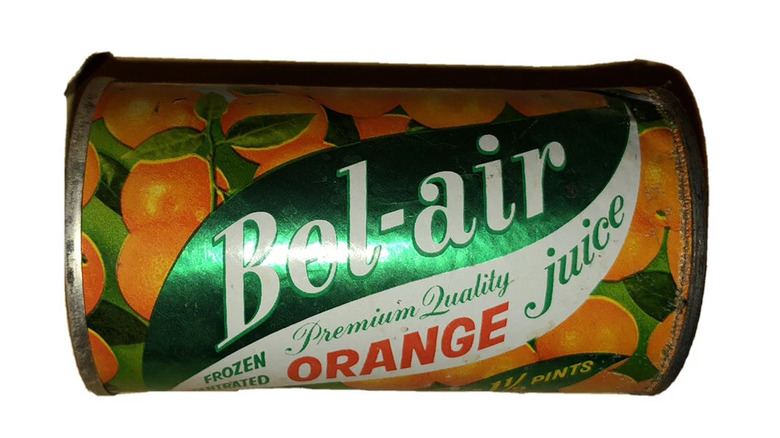
Grocery stores often have sub-labels to sell its own products under a different name. Safeway had been doing so since the 1930s, when it acquired Edwards Coffee, Lucerne Butter, and Lydia Wright Baking Company. By at least the early 1950s, it launched a frozen food line with the fancy name Bel-Air, which was billed as low cost but high quality.
Frozen peas were Bel-Air's original flagship item for sale, and the line quickly went on to include a variety of items, ranging from veggies like spinach and corn, fruits such as strawberries, and orange juice concentrate. Later, more meal-ready items like waffles, french fries, and TV dinners joined the catalog.
The air in "Bel-Air" became deflated by the end of 1997, when Safeway decided to fold the name brand. Like many other sub-brands for the grocery chain, it was simply folded under the Safeway name. Safeway merged Albertson's in 2015, and eventually began to peddle the latter's frozen food line: Signature Select.
Brim Coffee
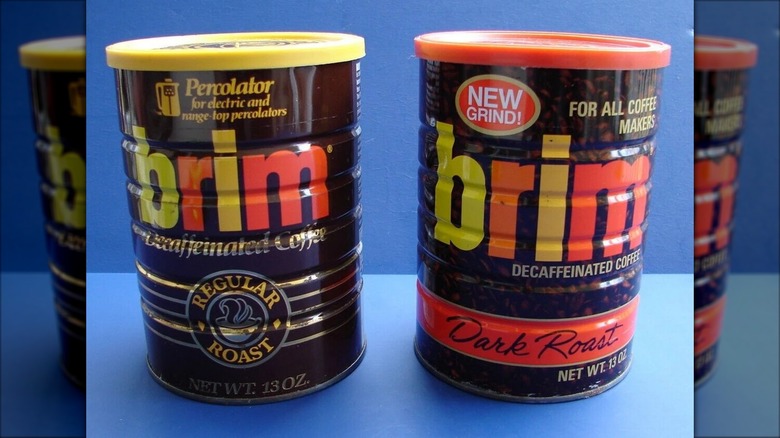
Sanka de-caffeinated coffee launched in 1923, and in 1961, its parent company, General Foods, introduced another caffeine-free brew into the mix: Brim. Brim later was famously tagged with an ad-campaign that asked drinkers to "fill it to the rim ... with Brim!" (via YouTube).
By the mid-1970s, decaffeinated coffee was making inroads with drinkers, and General Foods was pushing Brim as the hipper of the two. A General Foods spokesperson told the New York Times in 1975, "market research showed a growing market of caffeineconscious people that Sanka was not reaching." They added, "Our approach to this situation was Brim, an exciting new product with a youthful, 'with it' image."
General Foods stuck with Brim for a couple more decades, before being discontinued around 1994. The brand name lay dormant until 2008, when it was acquired by River West Brands who were hoping to revive it. Brim later became the property of Sensio Inc, who in 2014 flipped the script and made Brim the name of a coffeemaker. Brim now seems to be out of the coffee game altogether, as the coffeemaker ceased to publicize wares sometime after 2021.
Chun King
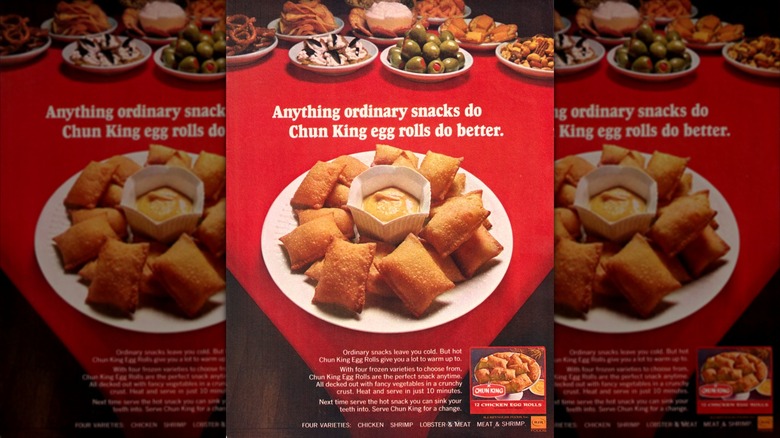
Jeno Paulucci sensed an untapped market when he launched Chun Ming in the 1940s. Palucci told The Clarion-Ledger in 1978, that "Most of the Chinese food being sold was really bland stuff," adding, "Mamma added some spices and we had something good." It initially started selling canned goods like chop suey and vegetables before moving onto a line of frozen foods, and helping to popularize egg rolls nationwide. One of Paulucci's innovations for frozen dinners was the Divider-Pak, which kept sauces and meat separate. In 1966, Paulucci sold Chun King to tobacco giant R.J. Reynolds for $63 million.
By the mid to late '70s, Chun King lagged behind rival La Choy, which had been in business since 1922. In 1986, the company now known as RJR Nabisco sold all of its frozen food lines including Chun King to ConAgra, but held onto canned goods under the name. By 1995, ConAgra had acquired all products under the Chun King name, and had also owned La Choy, selling both lines concurrently.
Chun King products were advertised for sale until at least 2002 in the U.S. and 2004 in Canada, before its name disappeared for good sometime thereafter. In 2023, a company by the name of Healthcare IP, LLC filed a trademark application for "Chun King," but was abandoned a year later since the name was not in use.
Curtiss Candy Company
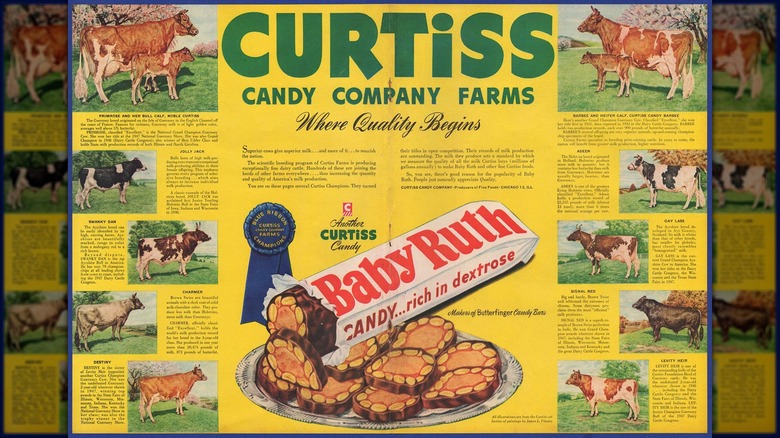
Chicagoan Otto Schnering started The Curtiss Candy Company in 1916, honoring his mother's maiden name. Its early line of candies included the Honey Comb Chip, Polar Bar, Jolly Jacks, and Marsh-O-Nut Dipp. The core products became the Baby Ruth, supposedly named for U.S. President Grover Cleveland's late daughter, and the Butterfinger candy (not chocolate) bar, which debuted in the early 1920s. Other once popular candies the company sold were Cocoanut Grove, Buy Jiminy, Ostrich Egg, and Peter Pan.
At the time of Schnering's death in 1953, "The Candy Bar King" and his company had sold 23 billion Baby Ruths. Eleven years later, the company was acquired by Standard Brands Inc. The "Curtiss Candy" brand lived on, even after Standard Brands merged with Nabisco in 1981.
In 1990, Nestlé Foods Corp. became the new stewards of Baby Ruth and Butterfinger, and officially removed the good Curtiss name from the beloved bars. Today, the two candies are a part of Ferrero's vast catalog, which also includes Crunch bars, Tic Tac, 100 Grand, Famous Amos, Keebler, Froot Loops, and Rice Krispies.
Dolly Madison
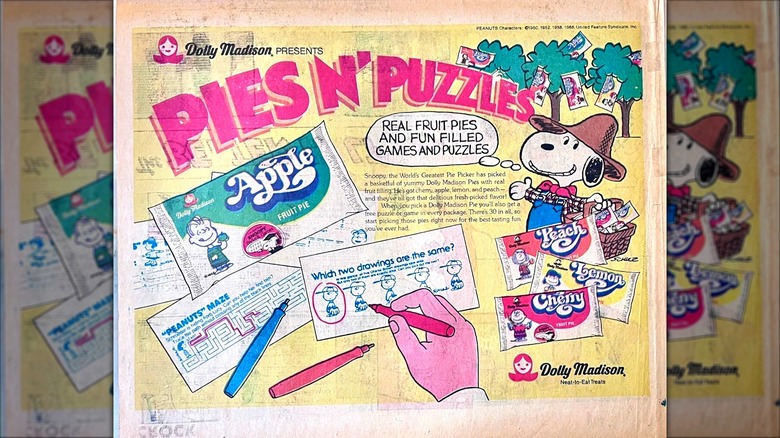
President James Madison's wife Dolley had her wholesomely good name later used to sell a variety of products, from ice creams, popcorn, wine, and perhaps most famously in the 20th century — baked goods. By the late 1920s, the Schulze Baking Co. had been selling a popular butterscotch gold layer cake under the moniker Dolly Madison Cakes (dropping the "e"), and even used a silhouette of the First Lady in print ads. In 1937, a larger merger of bakeries brought the Dolly Madison line under the control of Interstate Bakeries Corporation.
By the 1960s, Dolly Madison started to focus on snack cakes, and by the end of that decade launched the popular creme-filled Zingers. In the following decade, the cake maker entered into a memorable partnership with Charles M. Schulz's "Peanuts" comic strip, where the likeness of Charlie Brown and the gang started gracing beautiful packaging of fruit pies and forgotten items like Razzys, Koo Koos, and Googles.
After Interstate Bakeries went bankrupt, Hostess and Dolly Madison brands, once rivals and now jointly owned, were acquired in 2013 by Apollo Global Management and Metropoulos & Co. The new company went by Hostess, which finally moved forward with Dolly Madison re-launch in 2018, with an eye on retailing in vending and mini-marts. That comeback was short-lived, and today, Zingers are sold under the Hostess name.
Franco-American
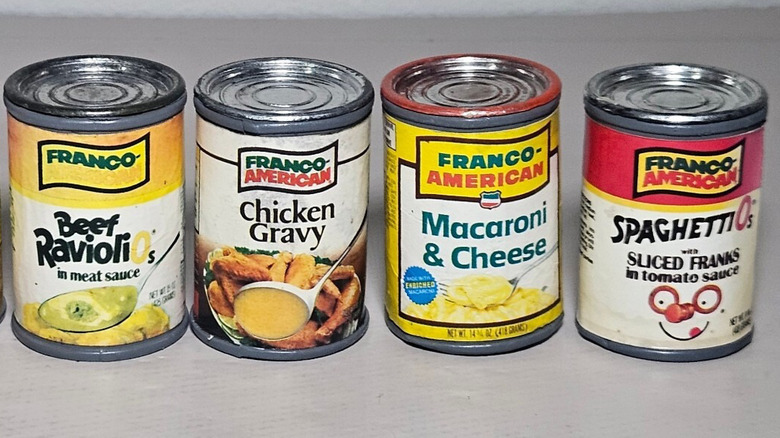
Parisian chef Alphonse Biardot moved to America, and along with his sons Ernest and Octave started a simmering soup company in 1886 under the fitting name Franco-American. By the dawn of the 20th century, the company offered a wide variety of items from French soups (mock turtle, chicken gumbo), "invalid" soups (chicken broth), truffled game pâté (partridge, quail), ready-made French entrees (veal and green peas, tongue in tomato sauce), and plum puddings.
In 1915, Campbell's Soup made its first ever acquisition, bringing Franco-American into the fold. In 1939, macaroni and cheese — another discontinued canned food we miss — joined the line-up, then spaghetti with meat sauce a dozen years later. In 1965, Franco-American introduced its signature product: SpaghettiOs.
The Franco-American name came to an end in 2004, with SpaghettiOs and the like being branded under parent company, Campbell's. Campbell's spokesperson Juli Mandel Sloves told AP, "The Campbell's name scored much higher in terms of quality and nutritional profile, so it made sense to leverage the equity that's in the Campbell brand and associate it with some of our other products."
Hires Root Beer
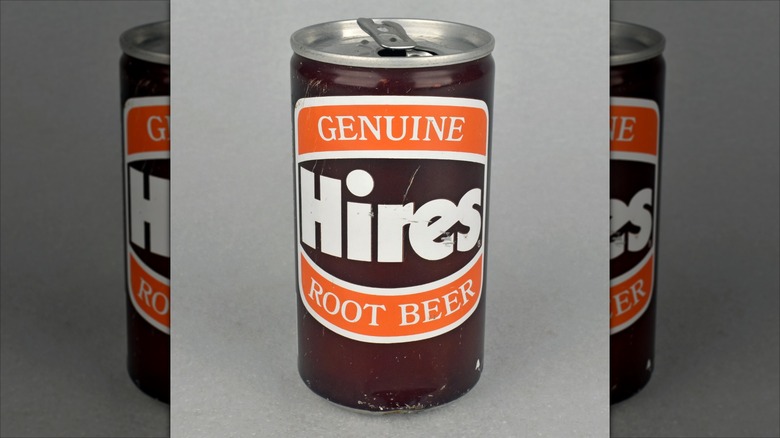
Pharmacist Charles Hires found his calling on his honeymoon in 1875 after being blown away by the taste of homemade root beer, and set forth to brew his own. Its working name was Hires Root Tea, but ultimately his "Beer," which debuted in powder form, was brewed from 16 different roots, barks, herbs and berries. The rise of soda fountains, and adorable print advertising, propelled Hires Root Beer into a popular beverage, and within two decades, was selling north of 3 million packets a year.
By 1960, Hires owned a quarter of America's root beer business, and was sold to Consolidated Foods. In that same year, to try and keep pace with Coke and Pepsi, Hires altered its formula to add a more acidic and sweetened flavor. The brand bounced around ownership thereafter, with companies like Crush International, Procter & Gamble, and Cadbury Schweppes having a turn at keeping the tap flowing. In 2008, the latter spun off its U.S. beverages unit to form Dr. Pepper Snapple Group (later Keurig Dr. Pepper), and began to focus its root beer attention more on A&W and less on Hires.
Hires then became harder to find in stores, and was last listed on the company's website sometime in or around 2022. While the trademark was registered and renewed in 2024, it's essentially become a discontinued root beer we'll probably never drink again.
Howard Johnson
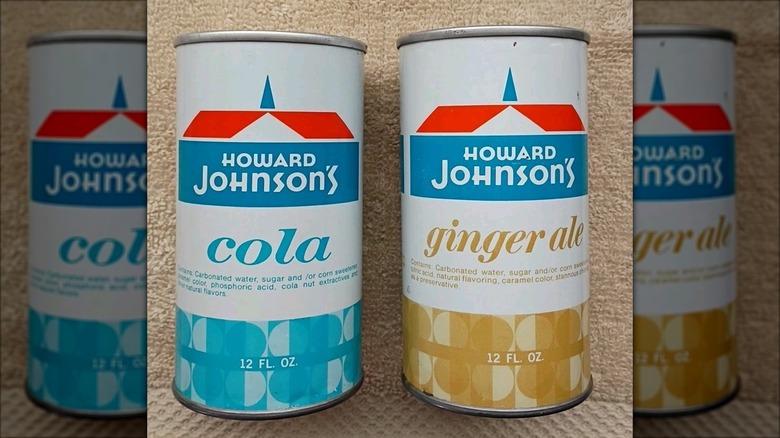
Howard Johnson made his name selling ice cream in Quincy, Massachusetts, before expanding his brand with a chain of restaurants and motor lodges featuring a hard-to-miss orange roof. HoJo's, as it was lovingly called, was at the top of its game in the 1950s and '60s, and capitalized on its popularity by selling grocery goods under the name with the help of chefs Jacques Pépin and Pierre Franey in the test kitchen. The line of frozen food products launched in 1955, with savory suppers including halibut au gratin, lobster newburg, fried clams, and clam chowder, and later items like Toastee muffins, mac and cheese, branded ice creams, and sodas lining shelves.
Howard Johnson's saw a steady decline in the ensuing decades, although frozen foods under its name continued to be produced by various companies until 2008. The final remaining food vestiges related to Howard Johnson's were its restaurants, as loved by Don Draper in "Mad Men". The loss of the Times Square one prompted Chef Pépin to pen a New York Times piece where he said "Howard Johnson's reliable, modestly priced food embodies the straightforwardness of the American spirit."
The very last restaurant to carry the name Howard Johnson was located in Lake George, New York, but closed its door in 2022. The name lives on only in a chain hotel form, currently owned by Wyndham.
Jeno's
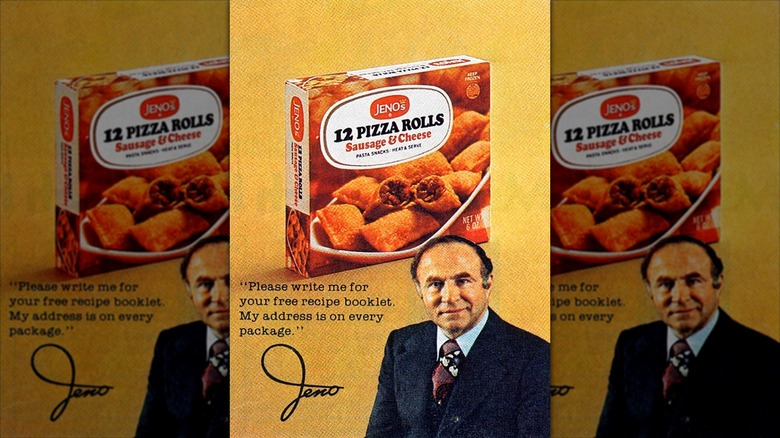
After finding success with Chun King, Jeno Paulucci branched out into a line more aligned with his heritage: Jeno's Italian Foods. This company sold pizza mixes, spaghetti, and sauces by at least 1958, but things really heated up in the following decade when it branched into frozen foods. In 1967, Jeno's introduced budget-friendly frozen pizzas that retailed for 39 cents, and it would launch a bite-size Pizza Rolls — an appetizer that would forever revolutionize snacking.
Pillsbury wanted a piece of the frozen pie business, and acquired Totino's in 1975, and another brand called Fox Deluxe. When it acquired Jeno's a decade later, it was firmly in control of half of the frozen-pizza business. In 1993, Pillsbury began to transition away from the Jeno's name, and started selling the Pizza Rolls as "Totino's by Jeno's," complete with a tag on the box that noted "same great taste now from Totino's" (via X).
Jeno may have invented Pizza Rolls, but after a redesign by 1995, his name was removed from the packaging. Jeno's name brand continued to sell frozen pizzas, before being retired for good by 2019.
Morton Frozen Food
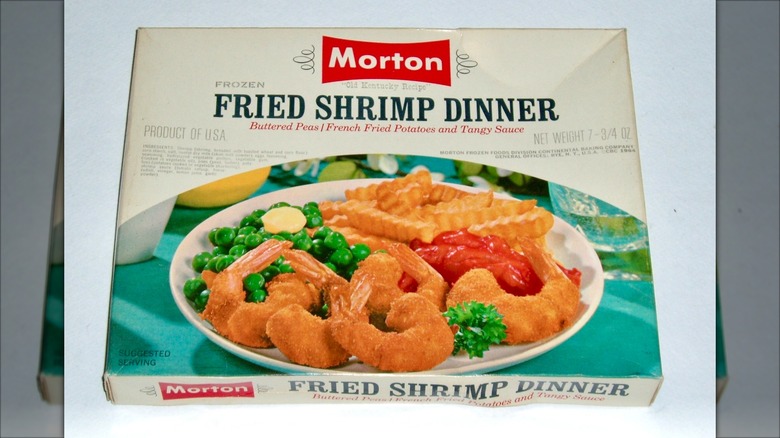
Originally founded as the Morton Packing Company of Louisville in 1940, the company made inroads in American homes in the following decade with its Morton Frozen Food line, featuring sweet and savory pies, casseroles, and breads. The company was acquired in 1955 by Continental Baking, who helped propel it to become the United States' largest producer of pot pies, fruit pies, and cream pies by the tail end of the 1960s.
In 1986, Morton exchanged hands from RJR Nabisco's Del Monte frozen food line to ConAgra, who continued the brand's life for several decades. Morton was still turning out pot pies as cheap as three for $1 in 2006, before disappearing from shelves sometime after.
There was a brief resurgence of Morton Pot Pies, sold at Walmart in 2016, but poor sales ended this run. The trademark for the brand was cancelled in 2024, so fans pining for Honey Buns under the brand name will just have to keep hope alive.
Patio Foods
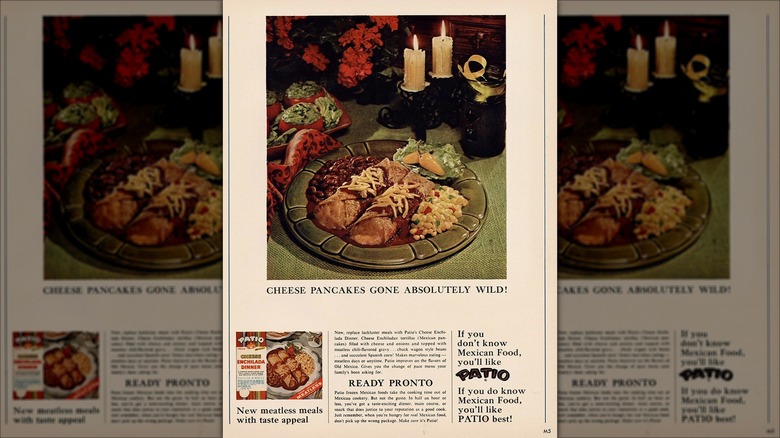
The Stumberg family got into the frozen food business by selling vegetables, but an oversaturated market required a quick pivot. Louis Stumberg recalled to the San Antonio Light in 1986, "We had this packing plant and we needed to find something to pack, and the bottom hadn't fallen out of the frozen Mexican food market — it didn't exist." Starting in 1946, under the name Patio Foods, the family started selling frozen tamales, enchiladas, and Mexican dinners across Texas, heating frozen meals over their car's engine block to demonstrate the idea to grocery stores.
The company's fortunes expanded in the 1950s, when TV dinners became the norm. Patio added more foods to its line-up, like burritos, tacos, and even Italian and barbecue dinners. The family sold Patio to R.J. Reynolds in 1967, and when the latter acquired Del Monte, made a new food division where the Mexican line continued to sell. Like label-mate Jeno's, it found a new home at ConAgra when it purchased Del Monte in 1986. In 2011, Patio switched hands to J&J Snack Foods, who kept the name alive with burritos until they were discontinued by 2020.
Ralston Purina
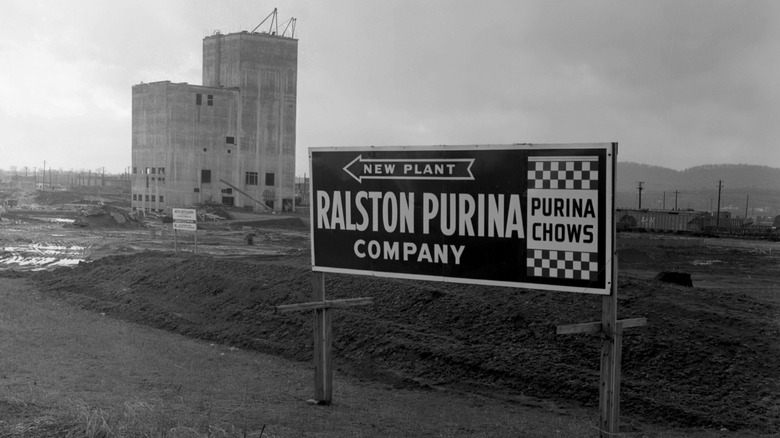
In 1894, the Robinson-Danforth Commission Company got into the farm animal feed business, and soon after, in the people feeding business. Within two years, the company secured an official endorsement of the Ralston Health Club of America to help promote "the only perfect and by far the most beautiful breakfast food in the country" (via The Boston Globe). In 1902, the company capitalized on the popularity of its cereal and renamed itself Ralston Purina, the latter word a twist on "purity." It spotted a famous red and white checkerboard pattern logo, which came from a childhood memory of founder William H. Danforth, who'd seen a mother dress her kids in a cloth using that specific pattern.
In the 20th century, the name Ralston Purina was emblazed on a wide variety of household products, from Dog Chow, Meow Mix, Tidy Cat, Chex, Chex Mix, Cookie Crisp, to even flash-in-the pan ones like a Nintendo Cereal System. The company had also at one point owned Jack in The Box, Eveready Batteries, and Beech-Nut.
Over time, Ralston Purina sold off various divisions, like its animal feed one in 1994, Ralcorp cereal line to General Mills in 1996, and soy protein unit to DuPont in 1997. The end for Ralston Purina came in 2001, when new owners Nestlé S.A. announced the merger with one of its own divisions to form Nestlé Purina PetCare, headquartered in St. Louis. Today, it's known as Nestlé Purina, with Ralston's name long forgotten.
Sunshine Biscuit Company
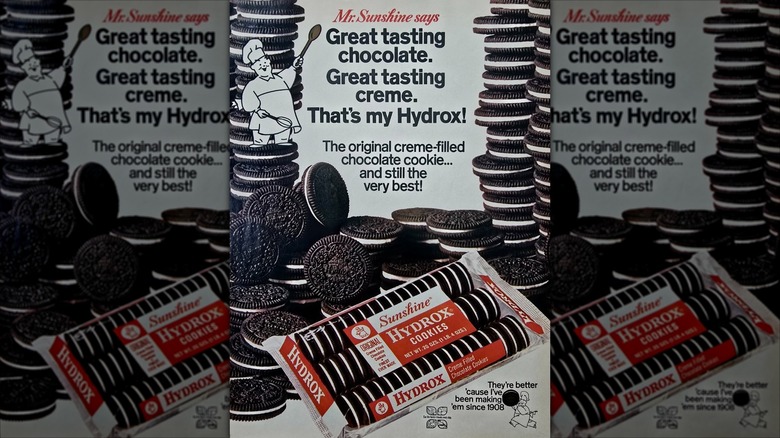
The Oreo is the most famous creme-filled chocolate cookie sandwich, but a nearly identical one beat it to market by four years. The Hydrox cookie (a portmanteau of hydrogen and oxygen) was introduced in 1908 by the Loose-Wiles Biscuit Company, which itself formed in 1902. While it didn't invent the Cheez-It, which came into this world in 1921, Loose-Wiles acquired the company that did — Green & Green Company — in 1932.
Another one of Loose-Wiles' signature products was Sunshine Biscuits, which the company adopted as its new name in 1946, and was recognizable with its smiley, portly chef mascot logo. Other famous products under the rays of Sunshine included crackers like Krispy saltines and Hi Ho, and cookies such as Vienna Fingers and Chip-A-Roos.
In 1996, Keebler acquired the Sunshine Biscuit Co., boosting its reach to one of every four cookies or crackers sold. Keebler turned out to be a good steward of Sunshine's products, as it was able to boost sales of Cheez-Its by a third in just a year. However, they weren't so keen on Hydrox, and replaced them with a similar cookie named Droxies in 1999. Hydrox was acquired by Leaf Brands in 2015, who brought them back from the dead.
Wilson & Co.
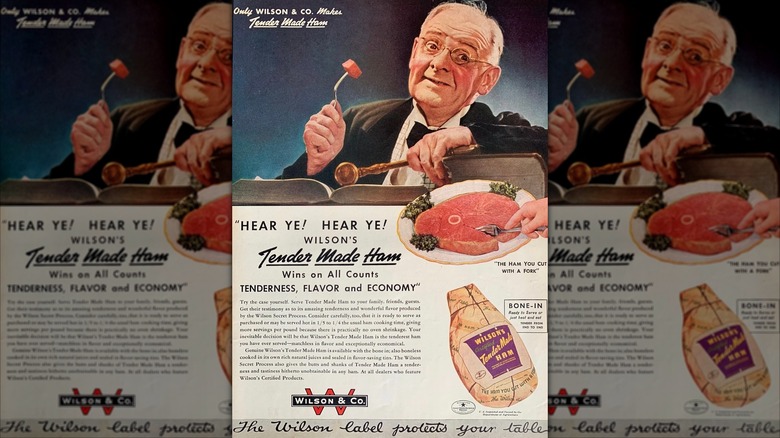
Thomas E. Wilson became president of Sulzberger & Sons in 1916. A year later, he renamed the meat packing company Wilson & Co. Promising in ads that "The Wilson label protects your table" (via the University of Chicago Library), the company sold a wide range of food items from dairy products and canned vegetables to meats, catsup, and a slew of beef and pork products. Beyond the kitchen, the company sold mattresses, sporting goods, cosmetics, textiles, and health care products.
Wilson passed away in 1958, and nine years later, the namesake company he founded was acquired by Ling-Temco-Vought, Inc. The new owners divided the company into three: Wilson & Co. Inc., which handled meat, Wilson Sporting Goods Co., and Wilson Pharmaceutical & Chemical Corp. The meat company changed hands several times, and its final owner, Tyson Foods Inc., dropped the Wilson brand name in 2002.
The sporting goods division is the final remainder of the famed Wilson name. At one point it was owned by PepsiCo, and since 1989, the Finnish company Amer Sports Oyj has been slapping Wilson's good name on sportswear and equipment.