

4 Absolute Best Tricks To Make Your Boring Steak More Flavorful
We may receive a commission on purchases made from links.
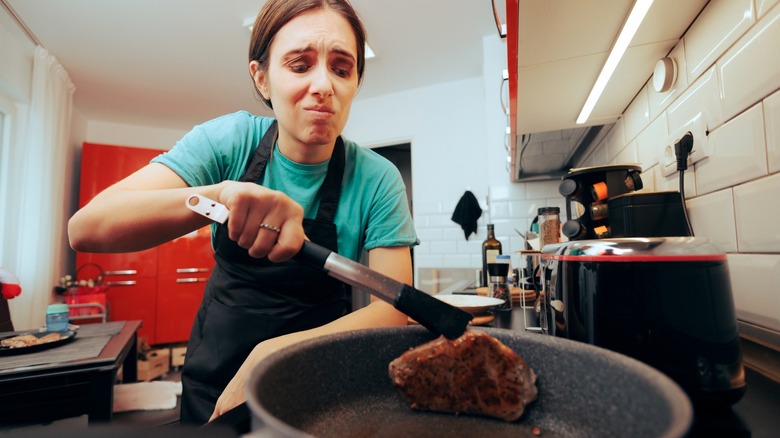
Some would say a boring steak is better than no steak at all, but why settle for mundane meat when you could have something that makes your taste buds sing? Especially when there are so many ways to achieve that goal. Some tricks, like pairing steak with compound butter, can elevate the flavor after it's cooked. But according to experts in the field, there are a few cooking techniques that guarantee a flavorful, perfectly seared steak without dressing it up afterward.
The Takeout spoke with over a dozen culinary professionals about techniques that can take a steak to new heights at the New York City Wine & Food Festival that ran from October 15 to 18. While they all have their own unique methods, many commonalities were shared. From how it's seasoned to the type of fat used to achieve a crusty sear, every step you take when cooking a steak significantly impacts what ends up on the dinner table.
Some of our experts, one being John Doherty of Blackbarn Restaurant, mentioned that starting off with a thick, well-marbled piece of protein is the first secret to success if you want a flavorful steak to grace your plate. Yet once you have that in hand, there are a few tricks of the trade to keep in your back pocket if you want a quality piece of meat to live up to its potential.
Plan ahead and season in advance
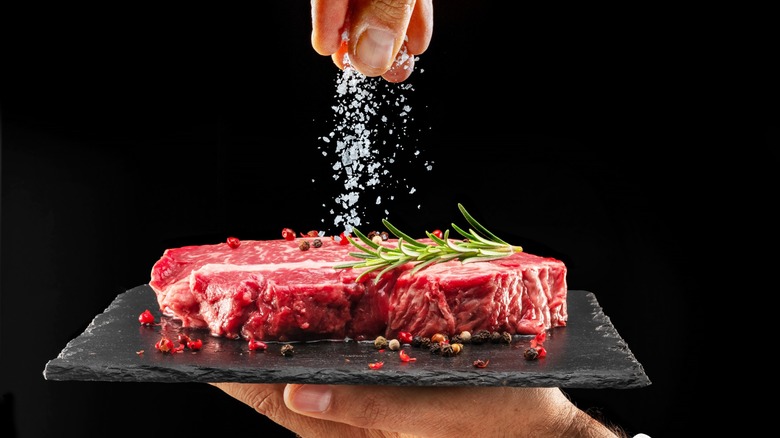
One of the most common suggestions from our experts is that choosing when to season a steak matters more than what to season it with. Whether you're a fan of giving beef the Dalmatian treatment or you like to create a flavorful dry rub for your protein, timing is everything. And according to these masters of meat, seasoning should happen further in advance of cooking a steak than you might think.
Culinary guru Andrew Zimmern says, "Salt the day beforehand." Jet Tila thinks even longer is necessary, suggesting folks leave a seasoned steak in the fridge for two days before cooking it. He says, "And it'll look dry and funky. That's how you get a restaurant crust at home." Of course, some people prefer a more complex approach to seasoning, but timing is still key. Joe Calderone highly recommends using a dry rub on steaks. "And my little secret is to do it twice, 12 hours before and then right before you grill again," he says.
However, the 12 hours to two days rule wasn't a consensus among all the experts. Although seasoning in advance was still advocated, some don't think it needs to sit for quite as long. Pedro Moreira says, "Salt it a couple of hours before. Let the salt soak in, pat it dry, and then sear it." Whether you go two days or two hours, Danny Garcia says don't skimp on the main component of any steak seasoning. "90% of people, when they cook at home and when they cook, they don't use enough salt. Just use enough salt and you're good."
Rest steak before and after cooking
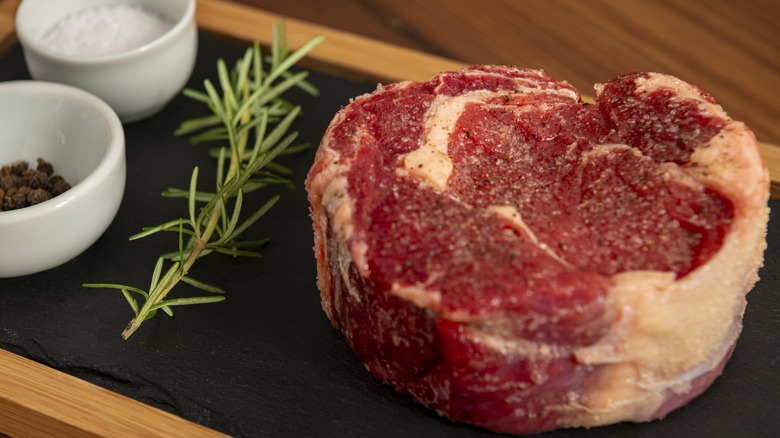
Most know that whether you're cooking the best cut of steak for beginners or something that requires a bit more know-how, letting it rest afterward gets you a more flavorful, juicier piece of meat. However, some chefs say resting it before it hits the heat is equally important. George Ruan says that a steak should be at room temperature before cooking. "Make sure you let it sit," Ruan says. Geoffrey Zakarian, author of an upcoming book called "Original Food: Recapturing the Joy of Eating," agrees. He says, "Rest the steak before you cook it and after you cook it. So pull a steak out of the fridge two hours before you cook it."
The idea behind this technique, called tempering, is that a cold steak will cook faster on the outside than in the middle. This could result in less even cooking, possibly leaving a gray band around the edge of the beef. While not everyone agrees with this method, it's hard to argue with experts who swear by it.
Then again, searing steak on a pan or the grill isn't your only option. If you don't have time (or forgot) to let your meat come to room temperature, employing your oven's broiler function can help achieve an even cook. As for how it's done, JJ Johnson says, "Bring it the highest to the rack, put it on there, let it sizzle one side, super caramelized, turn the oven off, let it rest inside the oven. [sic]" He indicated that letting the steak cook for about 10 minutes before letting it rest in the oven should produce a beautiful medium temperature.
Many roads lead to a crusty, flavorful sear
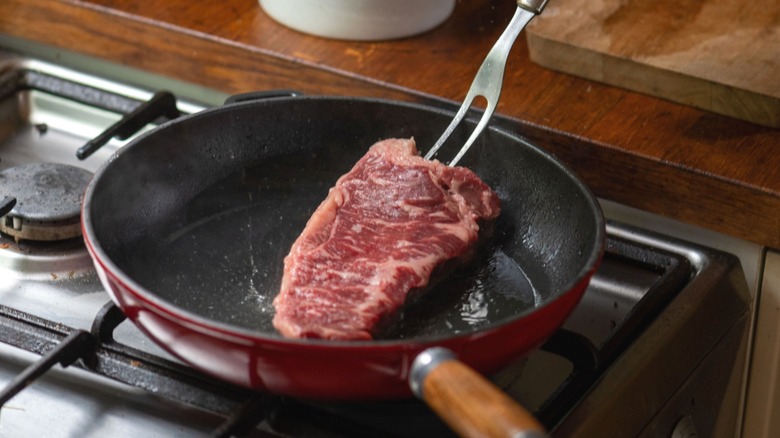
According to the experts we spoke with, there are multiple ways to achieve a perfect sear once a steak is finally ready to be cooked. Tom Gardner of Watch Hill Oysters recommends adding mustard to the steak before searing to help the seasoning adhere to the meat. Another chef suggested avoiding a common seasoning element until the end of cooking. Jackie Carnesi says, "I don't do pepper before the sear because I feel like it burns."
It doesn't just stop at seasoning options. The age-old question about whether to use butter or oil when searing a steak may never be resolved even among the group of chefs we talked to. Sarah Raffetto of Petite Pasta Joint says, "I really like to sear them in a pan with butter and a bundle of garlic, herbs, rosemary, thyme. And just keep basting it, tilting the pan and getting a really good crust." Yet, Andrew Rea takes the opposite approach and uses neutral oils. He says, " ... Like vegetable oils, canola, just something that isn't going to smoke. Stay away from olive oil."
Surprisingly, one expert suggested forgoing butter or oil. Jet Tila says, "Put your cast iron skillet on the stove for at least five minutes and put your steak straight on there. No fat, no nothing." It just goes to show that nobody has all the right answers, and sometimes a test-the-difference-yourself approach is best.
Don't flip too early and cut the steak correctly
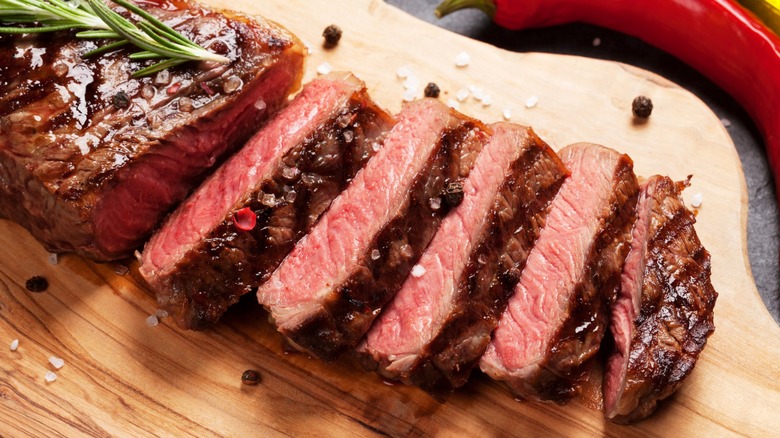
There are different schools of thought regarding flipping a steak as well. Some claim that turning over several times produces the best results. Yet others contend that one flip is all you need. It's unclear where Andrew Zimmern lands, but he says, " ... At least for three, four, five minutes to get a good crust on each side of the steaks." Zimmern also suggested gently weighing the meat down for a picturesque sear.
After all is said and done, you should come away from the grill or pan with a steak that's worthy of a professional chef. Crusty outside, juicy inside, and flavorful throughout. However, there is one more thing people should keep in mind so all the work that went into cooking an exquisite steak doesn't go to waste.
Big Chris Farella, the co-founder of Brothers Smokehouse, urged folks to pay attention to how they cut their meat. "Also, make sure you cut it against the grain. There's a lot of amazing cuts on a cow, on the beef or whatever, and you can totally ruin them if you don't cut it correctly." That means slicing into a steak perpendicular to the muscle grains running through the protein. Cutting with the grain, no matter how well the steak is cooked, will result in a chewy bite that otherwise could have been blissfully tender.