

The Healthiest Canned Soups At The Grocery Store
We may receive a commission on purchases made from links.
For a lot of us, canned soup is a go-to when we want something that ticks a few specific boxes. It's exceptionally convenient, often cheap, and not difficult to find canned soup that touts some sort of health benefit. However, just because a canned soup may claim a health benefit on the label, that doesn't make it healthy, per se. Canned soup is notoriously high in sodium. It can also get pretty high in fat. The unhealthiest canned soups at the grocery store really pack in the cholesterol and added sugar, too.
That said, it is possible to find healthier options out there. You just might have to look a little bit harder for them, and you might have to make some trade-offs. For example, while some canned chilis might be among the unhealthiest due to their sodium content, some varieties may be a pretty good choice for those who're looking to up their protein and fiber. Likewise, some bisques may be sugary, but others may be relatively low in sodium.
We've pulled some of the best canned soups from the grocery store that will give you a range of health benefits, while also acknowledging that they might not be perfect in every single way (check out our methodology at the end). As always, make your decisions based on your own personal health goals and see which of the below might be an ideal fit for your needs.
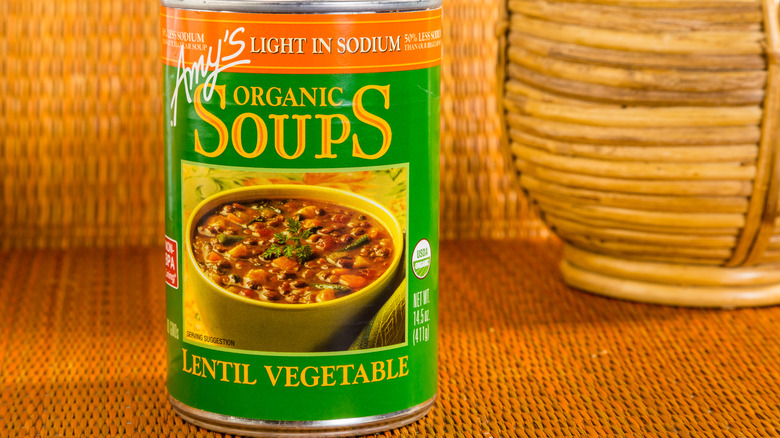
Amy's Light in Sodium Organic Soups Lentil Vegetable
If you can find a version of a soup that you like in a light or no-sodium variant, that's a big green flag and one of your best options overall. As mentioned, canned soups are notoriously high in the salt department, so if you can reduce the sodium, you'll be better off (even if you do add a sprinkling of salt to your bowl at home).
Amy's Light in Sodium Organic Soups Lentil Vegetable has a lot going for it. It has at least 50% less sodium than the regular version of the soup. While the sodium is still there at 530 milligrams per can (or 23% of your daily recommended value), it could be worse — and you are getting a lot of good stuff at the same time. For instance, while eating the entire can of soup will only amount to 260 calories, you're getting 15% of your daily recommended protein and 29% of your daily recommended fiber. You're also getting 25% of your daily recommended iron and 20% of your daily recommended potassium. All the while, all the ingredients are items you can pronounce and recognize, and the soup is suitable for consumers with a range of dietary needs.
Campbell's Mediterranean Lentil
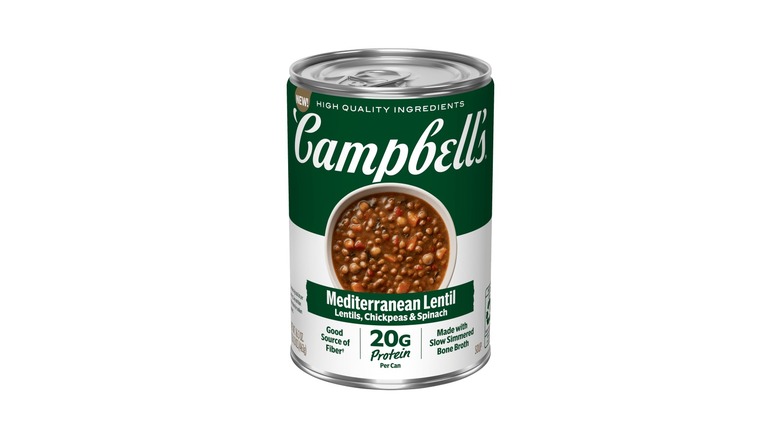
Campbell's Mediterranean Lentil is quite similar to Amy's Light in Sodium Organic Soups Lentil Vegetable. It does admittedly contain a fair amount of sodium (49% of your daily allotted value in the entire can), but you get 32% of your daily fiber, 30% of your daily iron, 20% of your daily potassium, 35% of your daily folate, and 25% of your daily niacin. The ingredients in this soup are also easy to pronounce and mostly recognizable to the average shopper.
One difference (and a plus in Campbell's favor)? While the first ingredient in the low-sodium Amy's soup is water, the first ingredient in this soup is chicken bone broth. Unless you've potentially been living under a culinary rock for the last few years, you know that bone broth is a big deal in the health and foodie community. Unlike regular broth or stock, bone broth requires a slightly different, longer cooking process that can contribute extra nutrients, such as protein (a can of this soup contains 20 grams).
Hormel Chili Vegetarian with Beans 99% Fat Free
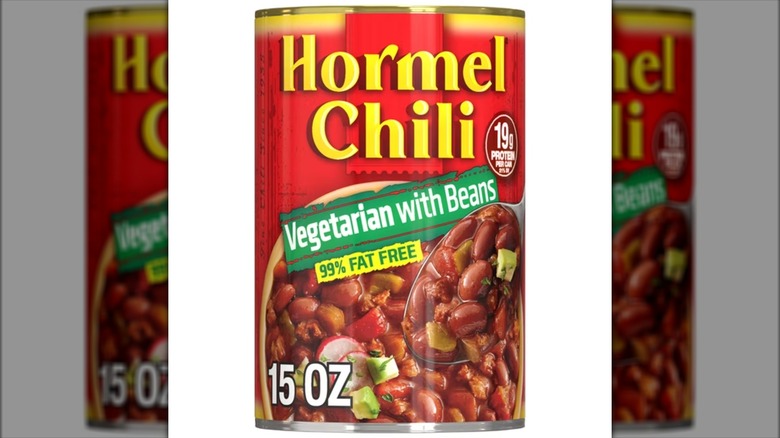
Typically, yes, chili is one of the less healthy canned soups you can buy at the grocery store. But if you are going to buy one, you could definitely do worse than Hormel Chili with beans. In just one 200-calorie serving, you get 25% of your daily fiber and 12% of your daily protein. You also get 10% of your iron and 15% of your potassium. Meanwhile, the product is 99% fat-free. Even the sodium isn't horrifically bad, at 36% of your recommended daily allotment in a single can.
Just make sure that you don't confuse Hormel's vegetarian chili with its plant-based chili. There's a big difference. The plant-based chili contains 69% of your daily sodium in a can, or 1,590 milligrams, even if it does technically contain more protein and fiber. While 2,300 milligrams of sodium is considered the daily ceiling for most adults, the American Heart Association clarifies that, ideally, most adults wouldn't consume more than 1,500 milligrams of sodium per day.
Amy's Light in Sodium Organic Soups Chunky Tomato Bisque
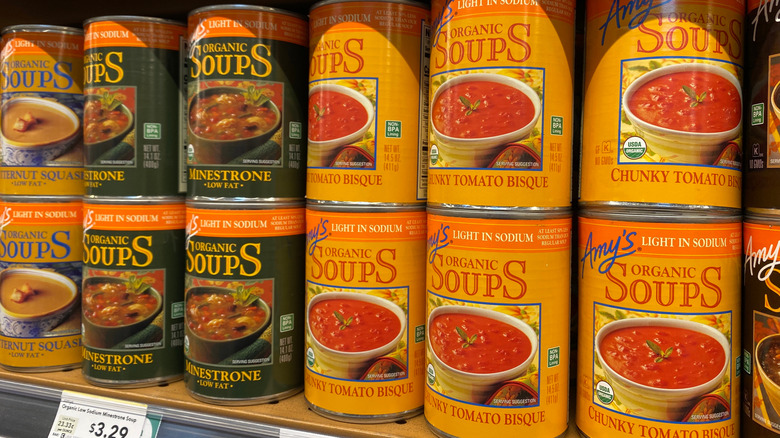
As we previously noted, some store-bought canned bisques can be considered unhealthy because they often contain sugar and fat. However, they can also offer health benefits, as seen with Amy's Light in Sodium Organic Soups Chunky Tomato Bisque. That makes this one of those soups that can be healthy depending on your goals, but that will likely require a trade-off.
This Amy's soup contains 14% of your daily fiber, 30% of your daily iron, and 20% of your daily potassium per can, and the entire can only contains 210 calories. Additionally, the list of ingredients is short and, as with Amy's products in general, you can easily recognize each and every one.
So, what's the tradeoff? Well, the sodium isn't that bad compared to the majority of canned soups, at 520 milligrams per container. However, the soup does contain 20% of your daily saturated fat and 26% of your daily added sugars. As such, you'll need to weigh what's most important for you and your nutritional goals.
Campbell's Southwest Black Bean
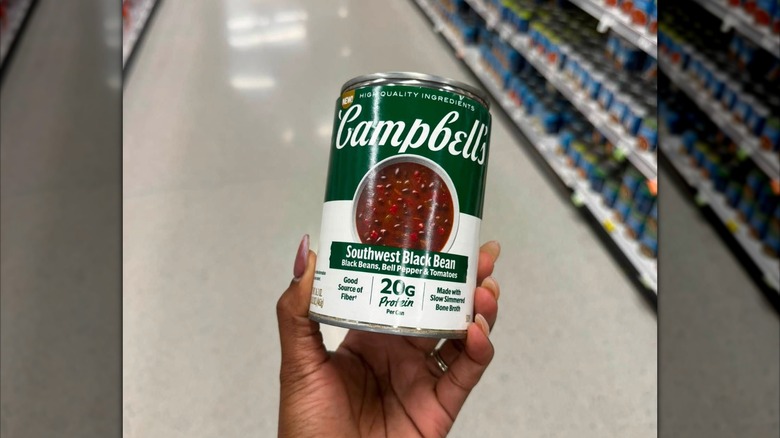
It seems like protein-infused products are everywhere these days. Some are products you would never even ask for. Protein in your soda? Do you really want that? However, that said, having a little extra protein in your bean soup feels more normal. Beans and protein go together.
So, if it's a high-protein canned grocery store soup you're looking for, consider giving Campbell's Southwest Black Bean soup a try. Yes, it still has some sodium in there (49% of your daily value for the can), but the soup makes up for it with very little fat and absolutely no added sugar, plus 46% of your daily fiber, 23% of your protein, 10% of your calcium, and 25% of your potassium. You also get 30% each of your folate, niacin, and iron. Basically, this soup provides you with a robust foundation upon which to build the rest of your diet.
The ingredients list isn't too bad at all, either. The first ingredient is, again, chicken bone broth, which goes a long way toward adding protein and some nutrients. Otherwise, the ingredients are just black beans, tomato puree, peppers, diced tomatoes, and less than 2% of a few other flavorings.
Progresso Mediterranean-Style Lentil
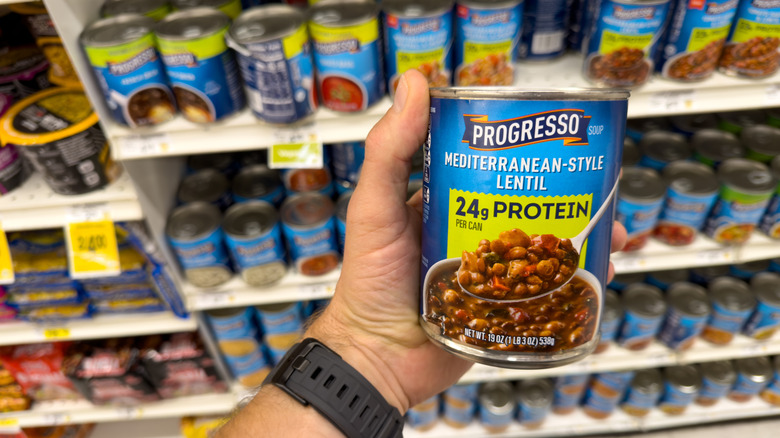
You're going to notice a few trends across this list. One, protein-heavy soups are popular now, meeting the health demands of modern consumers. Two, if a soup has lentils in it, there's a good chance that it's decently healthy. The Progresso Mediterranean-Style Lentil soup exhibits both these facts.
In each can of this soup, you're going to get 32% of your daily fiber, 28% of your protein, and 30% of your iron, all for 340 calories. The downside is the sodium. It's high, at 58%. That said, if you're watching it for the rest of the day and your aim is to get more fiber and protein, you could make this soup part of a very healthy diet. Plus, the ingredients list is short and simple: water, lentils, tomato puree, chickpeas, peppers. You have 2% of some additives (nothing too crazy; think modified food starch and soy lecithin) and seasonings.
Healthy Choice Chicken with Rice
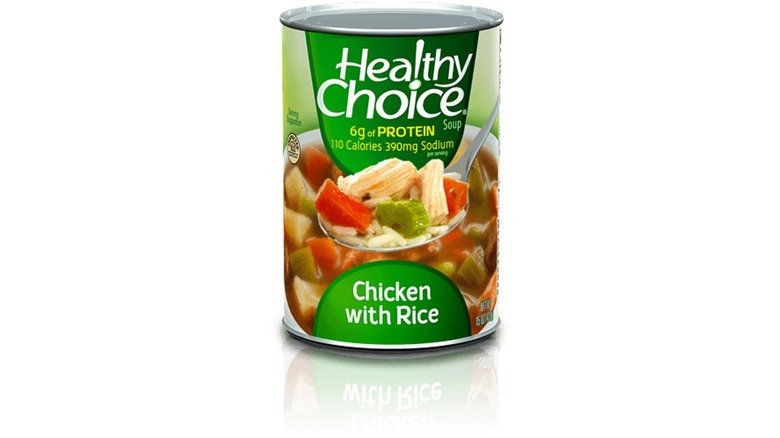
Sometimes, the simplest canned soups might be the healthiest choice, depending on your unique health goals. Take Healthy Choice's chicken and rice soup, for example. You can eat the entire can, and it only contains 190 calories. Plus, you get 18% of your daily protein, 20% of your potassium, and 7% of your fiber. You do get 30% of your recommended sodium intake, but again, it could be worse, especially for a can of soup that isn't marketed as low-sodium.
Additionally, the ingredients are pretty simple with just chicken broth, chicken, carrots, white rice, and celery, plus your usual 2% or less in extras such as sugar, chicken fat, and flavorings. The soup gets pretty decent reviews on the Healthy Choice website as well.
While this soup isn't the best across the board — for example, the ingredients aren't described as organic, and you do have that sodium — if you're looking for a soup with very few calories and a decent amount of protein, Healthy Choice's chicken with rice delivers.
Amy's Light in Sodium Organic Minestrone Soup
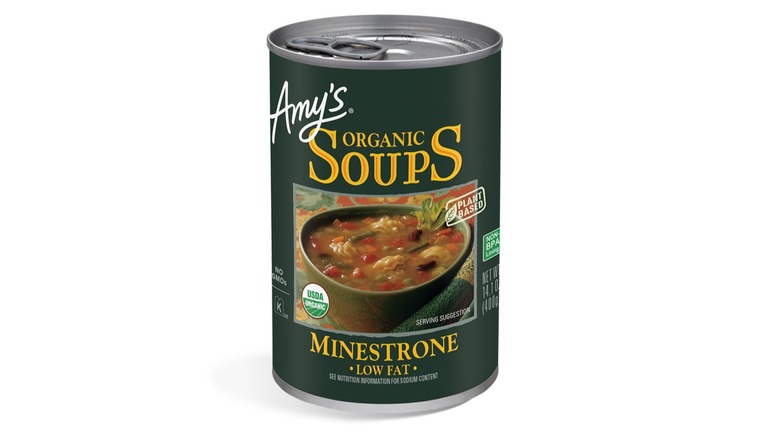
Some Italian-style soups can really pack in the sodium, plus extra fat and carbs from pasta and other ingredients. That's why, often, when you're looking for a healthy soup at the grocery store, you should possibly steer clear of the Italian-inspired offerings. However, Amy's Light in Sodium Organic Minestrone Soup is a bit of an outlier.
This plant-based soup doesn't contain any of the salty, fatty meats you might find in other similar Italian canned soups. It's low-fat, low-calorie, and, as the label says, light in sodium. You're consuming less than 20% of your daily sodium allotment in this entire can of soup, which also contains just 190 calories. Meanwhile, you're getting 21% of your daily fiber, plus a decent amount of iron and potassium. The soup is packed with veggies, too, including tomatoes, onions, peas, multiple types of beans, carrots, potatoes, and more. Additionally, while it's not gluten-free, it is free of dairy, soy, tree nuts, and corn, and it's kosher.
Progresso Southwest-Style Black Bean
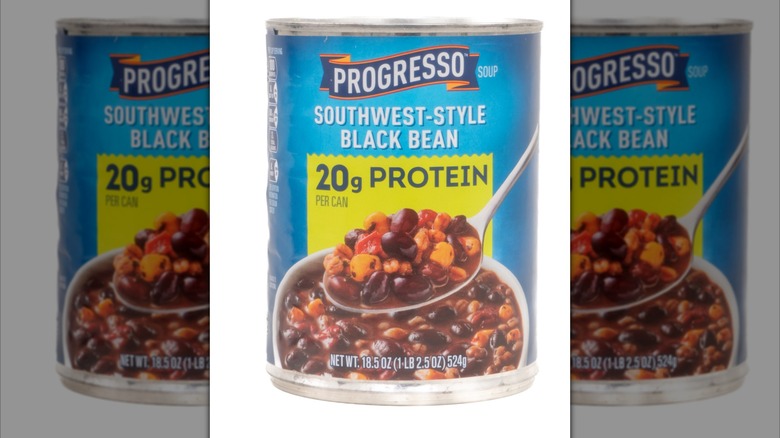
And we're back to the protein-heavy soups. Progresso Southwest-Style Black Bean comes with a few caveats, and it's healthiest for a specific type of consumer: The consumer who wants fiber at all costs. If you eat the entire can of this soup, you will get 85% of your daily fiber. If it's fiber you need, you've got it. You'll also be well on your way to fulfilling your daily needs for iron and potassium.
Where does this soup fall short? Sodium. An entire can contains 310 calories and a lot of good stuff — but the soup does contain 1,240 milligrams of sodium, which equals more than half the daily recommended intake in a single dish.
All the while, though, the soup's main ingredients can be narrowed down to water, tomatoes, black beans, corn, barley, and roasted red bell peppers. As such, as with most things in life, weigh up the pros and cons. If you're not concerned about the occasional sodium indulgence but you're desperate for some fiber, this may be just the soup to fulfill your health needs.
Campbell's Lemon Pepper Chicken Soup
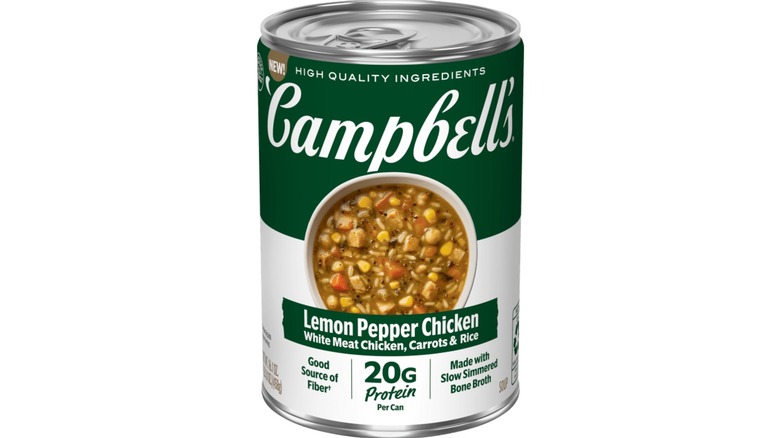
Campbell's is known for a few different soups. Tomato. Chicken and noodle. Condensed soups. You may never have heard of its lemon pepper chicken option, but if it's protein and fiber you're after when seeking a soup to meet your health needs, this might just be the soup for you. It contains 32% of your daily protein per can and 25% of your fiber. There's no sugar. Its primary ingredients are bone broth, chicken, carrots, chickpeas, rice, corn, celery, and kale.
Uniquely, this soup also offers 40% of your daily vitamin K per can. That's not a vitamin often listed in a soup's nutrition profile, but it's a vitamin you should be thinking about nonetheless. Vitamin K is necessary for blood clotting and healing.
The soup also provides 45% of your daily niacin and 20% of your daily potassium. Unfortunately, the only downside here is that the sodium content isn't ideal, at 48% of your daily recommended allotment per can.
Annie's Organic Chicken Noodle Soup
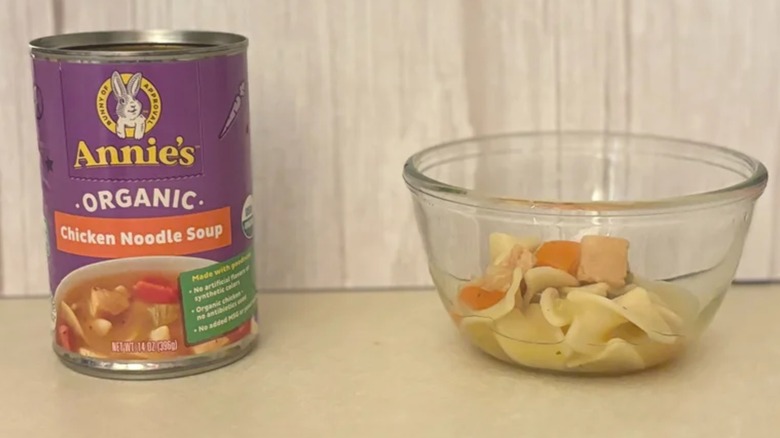
Like Amy's, Annie's is another great, high-quality brand that often offers healthier versions of some of your favorite foods. Annie's Organic Chicken Noodle Soup is no exception. An entire can is just 180 calories, and while you're not getting much in the way of protein or fiber, all the ingredients are very straightforward and recognizable. The top ingredient is chicken broth, not water, and the other primary ingredients are exactly what you'd expect from chicken noodle soup: chicken meat, carrots, egg noodles, and celery.
Yes, it contains 52% of your daily sodium, but let's make a chicken noodle soup comparison. If we pull out a can of basic, old-school Campbell's Chicken Noodle Soup, you'll find slightly fewer calories per can (150), but also a whopping 92.5% of your daily sodium. Additionally, the ingredients are a lot less familiar, including items like sodium phosphate and monosodium glutamate. So, if it's a low-cal chicken noodle soup with recognizable ingredients that you're after, Annie's has your back.
Progresso Chicken Tortilla Soup
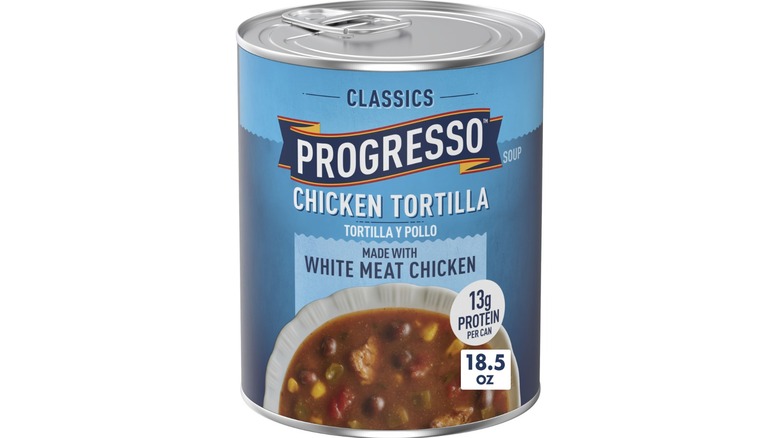
Progresso's Chicken Tortilla Soup also gets props for having a good amount of fiber, relatively few calories, and relatively wholesome ingredients. Meanwhile, it's not branded as low-fat or low-sodium, so you still feel like you're getting the full soup experience.
Each can of the soup is just 180 calories, and you get 24% of your daily fiber in each can. You also get 20% of your protein, plus a nice amount of potassium and iron. You do get about 54% of your daily sodium, though (but this far into the article discussing canned soup, what do you expect?).
Again, we're looking at minimal main ingredients here, such as chicken broth, tomatoes, green sweet peppers, chicken meat, corn, and black beans, alongside 2% of some basic flavorings and familiar additives. So, if you want fiber and protein but few calories and you're not necessarily worried about the sodium aspect, this might be a soup that fits easily into your health and nutrition goals.
Amy's Organic Soups Pasta Fagioli
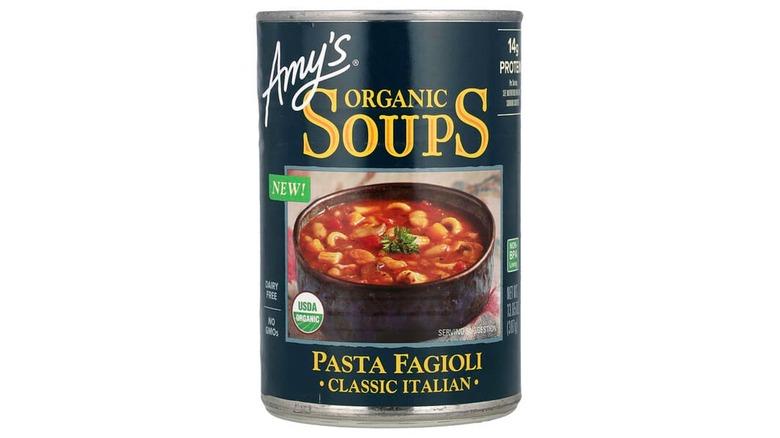
As discussed, a lot of Italian-style canned soups can raise nutritional red flags, but if you're really wanting something that's a bit on the heartier side and you're willing to make sacrifices in a few areas to get it, you should look to Amy's Kitchen Organic Soups Pasta Fagioli. Yes, you're going to get 43% of your daily sodium in a can, but you're only going to be consuming 310 calories, and you're going to be getting 50% of your daily dietary fiber and 20% of your daily protein, plus 35% of your iron and 20% of your potassium — not a bad tradeoff.
The ingredients are pretty impressive, too, with lots of vegetables front and center, before we even get to the pasta, which is made with organic durum wheat semolina flour. If you're really worried about the sodium, you can cut it down by splitting the can of soup with someone else. Alternatively, you can use the tried-and-true methods of fixing an overly salty soup. For example, you can just add a bit of no-salt liquid to the saucepan, whether that's dairy, a low-sodium or salt-free broth, or simply water.
Methodology
To determine the "healthiest" soups on grocery store shelves, this article considered the general population's health needs and presented soups that offer specific health benefits, even if they might contain a handful of undesirable ingredients or downsides, balancing the pros and cons. Factors taken into consideration include protein, fiber, vitamins and nutrients, fat, calories, and sodium, as well as types and number of ingredients and suitability of soups for various dietary needs and allergies.
Depending on each individual soup's nutrient profile, it may be healthier for some consumers than others. Additionally, an effort was made to include a range of soup styles and types, as well as a range of brands.