

8 Overpriced Sandwich Chains That Just Aren't Worth It In 2026 (And 2 That Still Are)
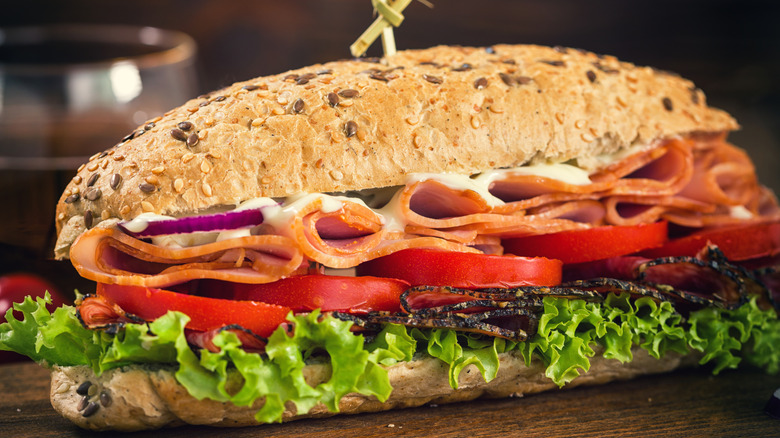
It's remarkable that something as simple as putting ingredients between slices of bread can have such a legacy in America. The first printed mention of sandwiches in the U.S. was a tongue sandwich in an 1815 cookbook. What started as a folly for the upper classes grew in popularity in the late 19th and early 20th centuries as hoagies, grinders, subs, and po'boys gained traction in Italian American communities and beyond.
Delis and neighborhood joints proved pretty quickly that sandwiches were delicious and everybody loved them. So it's no surprise that Pete's Super Submarines, later renamed Subway, rose to prominence in 1965. The first sandwich chain to become a household name can now be found in more than 100 countries around the world. Other sandwich chains have appeared since, from Jimmy John's to Firehouse Subs and more, all built on the concept of fast, freshly prepared sandwiches made your way right in front of you.
Fast forward to today, and many sandwich chains are struggling to keep their doors open, facing closures because of shifting consumer preferences, rising competition, increasing overheads, and reduced foot traffic. The bottom line is that dining out is expensive for most people these days, so when they do, they're pickier about where they spend their money.
With rising costs and a saturated market, the heyday of the sandwich chain looks well and truly over. Here is a roundup of the eight overpriced sandwich chains that just aren't worth it (and two that still are) in 2026.
Subway
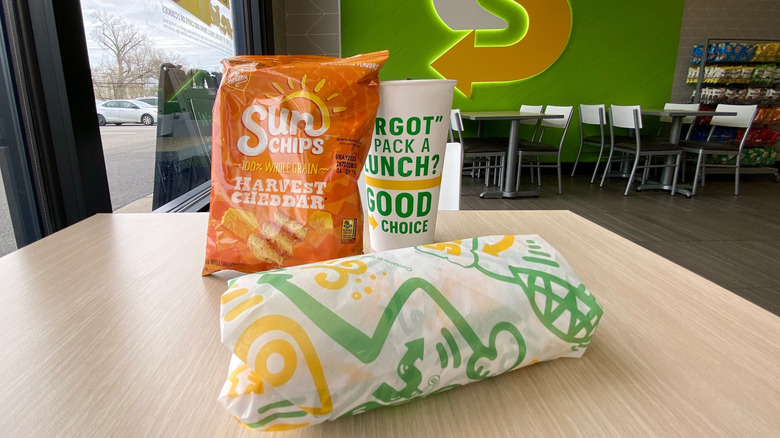
Subway may well be the inaugural mega-sandwich chain in the U.S., but it has been struggling for a while. In 2023, Subway was sold to private equity firm Roark Capital, which also owns sandwich chains Jimmy John's and Arby's (more on them soon), which has led to chopping and changing upstairs, cuts in quality, and a legion of dissatisfied franchisees.
Subway may still be the biggest sandwich chain by overall numbers, but it has lost ground to other fast food giants beyond the sandwich category. In 2012, Subway's sales made it the second-largest restaurant chain in America, only behind McDonald's, but it is now down in 10thplace. Is it mere coincidence that Subway ditched its incredibly affordable and enticing $5 footlong in 2012, the same year it started its decline? Subway's Sub of the Day is still $4.99, but that'll only get you 6 inches of sandwich these days. Sandwiches like The Beast now cost a whopping $17.
Subway's slogan may be "Eat Fresh," but this former employee on Reddit says differently: "Worked there...the bread comes into the store in little frozen tubes, gets thawed, proofed, baked. It's actually genius but this process does not produce a truly fresh baked bread taste. If the bread isn't good, it doesn't matter what you put inside."
The combo of inflated prices for a simple sandwich and ingredients that don't pass the taste test makes Subway an overpriced sandwich chain that's just not worth it anymore.
Arby's
From McDonald's chefs admitting to patties becoming smaller to Chipotle's CEO telling customers "If you want more, just ask the team member," shrinkflation is a part of life for consumers these days. Arby's is another restaurant chain feeling the heat for making things more petite. In 2025, a lawsuit was filed against Arby's for "deceptively selling its fries and beverages in smaller sizes which are now substantially smaller than the old sizes."
While this lawsuit claims the portions are decreasing, the prices are going the other way. According to a current Arby's employee on Reddit, "In 2025 alone, we had four separate total menu price increases. Four. At the start of 2025 a BNC was about $5.23 at my location, getting closer to mid 2026 same sandwich is $7.37 over a $2 increase in a years time but it's the same small tiny 3 oz of meat sandwich...That same BNC is about to be over $8 come August."
Arby's has been quietly closing dozens of restaurants across the country in recent years, losing 48 stores between 2024 to 2025 alone. It seems people have been voting with their feet, and walking straight past Arby's to "get the meat" for less money elsewhere.
Jimmy John's
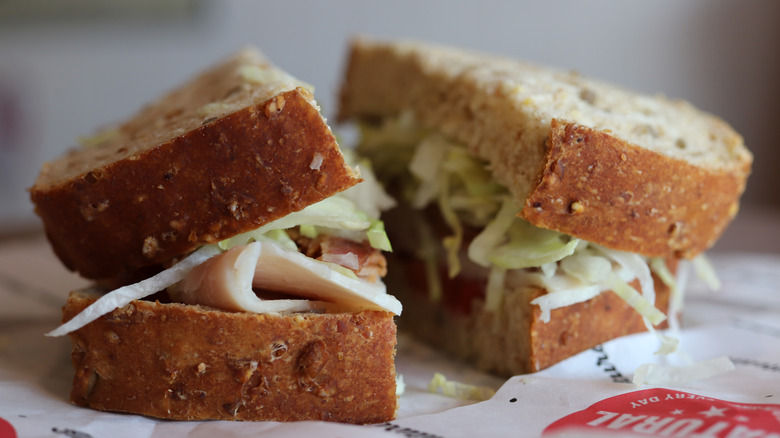
Founded by another teen, 19-year-old Jimmy John Liautaud, in 1983, Jimmy John's quickly became known for dishing out super-fast, simple sandwiches to a college-kid-focused clientele. However, customers are abandoning the once-beloved sandwich chain as franchises close throughout the country, accelerating since Inspire Brands, a Roark Capital subsidiary that also owns Arby's, bought a controlling stake in 2019.
Three of the most noteworthy closures are in Cincinnati, Ohio, where a lawsuit claims a franchisee did not pay workers the state's minimum wage. It's not just individual franchise owners to blame for Jimmy John's declining popularity. According to research by FinanceBuzz, Jimmy John's is one of five restaurants analyzed that have raised prices at more than double the national inflation rate over the last decade. The research cites an 8-inch club tuna that rose from $5.75 in 2014 to $9.10 a decade later, and can be as pricey as $13 and up if you order through a third-party delivery app.
One Reddit patron sums up how many feel about the chain, saying "Jimmy John's is increasing their prices so frequently they just slap the tags on the board" and "Jimmy John's is a poster child for ensh**ification. They used to offer fast, free delivery, good prices, and quality food. Now it's $20 for a sh***y sandwich with hard bread and soggy lettuce. There's one literally 3 minutes from my house and we're 'out of their delivery area.'"
Firehouse Subs
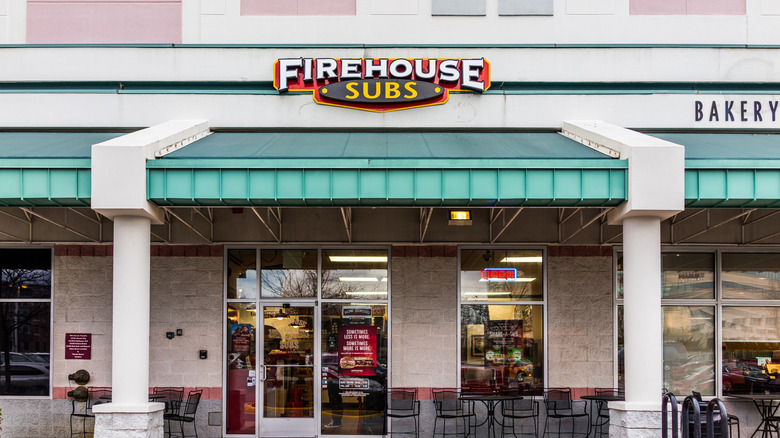
Two former firefighter brothers opened Firehouse Subs in the early '90s. The recognizable firehouse theme appears in 1,450 franchises across the country. Restaurant Brands International, which also owns Burger King and Tim Hortons, acquired Firehouse Subs in 2021 for $1 billion. It has been slowly adding more Firehouse Subs locations to its growing portfolio, surpassing 100 new restaurants in the U.S. and Canada in 2025, and expects to add 150 to 200 new restaurants per year by 2028. But corporate growth plans don't always translate into sandwich success for the customers at the counter.
The chain has been putting out fires, especially around price increases and declining quality. According to one Reddit user, the pricing and quality are "absurdly out of balance" at Firehouse these days: "Got a medium sized sandwich combo (drink and chips) and it was $16.03. The sandwich LOOKED bad....they put all the meat in the middle so when they cut it in half it looked abundant.....but there was no meat anywhere else in the sandwich. The melted cheese appeared curdled. The pickle looked like it was carried in someone's pocket throughout the morning hours before being plunked into my order."
At my local Firehouse Subs, you're paying $18.69 for a combo with the menu's most expensive sandwich, the Smokehouse Beef and Cheddar Brisket Combo. Restaurant Brands International is putting a lot of its eggs into the Firehouse Subs basket. Unless it gets a handle on price and quality across the already-opened franchises, the brand's future remains uncertain.
Jersey Mike's
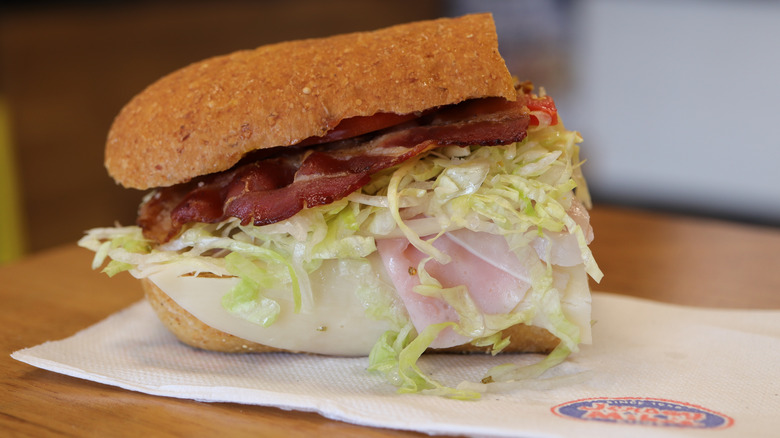
Blackstone, a private equity firm, acquired Jersey Mike's in 2024. Under new ownership, Jersey Mike's filed for an IPO to list on the New York Stock Exchange in July 2026. The sandwich chain reported another year of growth in 2025, adding about 240 new locations. However, corporate optimism doesn't necessarily make investing in a single sandwich worthwhile for customers.
From underage workers to yesterday's bread used for hot sandwiches, Jersey Mike's was never short on scandal in the years leading up to the takeover. Since Blackstone took the wheel, loyal customers claim the sandwiches on offer have taken a big hit in quality. One Reddit user claimed an eye-watering price at her local franchise, but isn't happy with the quality anymore: "I pay close to $30 here in Chicago because I like my giant 13 with double meat. But lately I have been disappointed with my local spot, so I seldom go. I've been going every few months only to be reminded of my disappointment."
another Reddit user said: "I got a regular sub from Jersey Mike's earlier today and it seemed to me that the sub's size was noticeably smaller compared to the last time I got one of the same size (which was before the acquisition)." No official reports confirm smaller sandwiches, but the public's general disgruntlement with corporate takeovers, along with reports of a downturn in quality, makes Jersey Mike's an overpriced sandwich chain to avoid in 2026.
Panera Bread
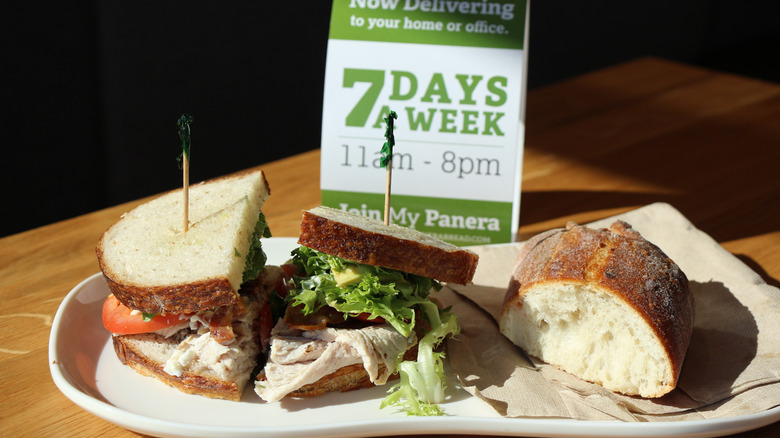
Panera Bread's downfall has been slow. Originally named the St. Louis Bread Company when it opened in the late '80s, the chain soon became known for offering a more upscale place to enjoy a quick bakery-style treat, soup, salad, or sandwich. The age-old tale of a private investment buyout has led to unsurprisingly negative results, including the end of popular in-house baking and a 2024 menu overhaul that frustrated customers, lowering ingredient quality by relaxing sourcing practices. Panera's CEO, Paul Carbone, says he regrets cost-cutting measures he signed off on, like swapping the salad base from 100% romaine lettuce to a mix of romaine and iceberg.
Freshness concerns among customers are rife, and one employee on Reddit provides a revealing look behind the curtain: "Everything but produce and dairy comes in frozen, including bagels, cookies, breads of all kinds, soups, Mac and oatmeal." Meanwhile, another Reddit user had this to say about the price hikes: "We got some sandwiches, soups, and drinks and it was almost $70!!! And the quality has gone down on top of that. Who is eating at this place anymore?"
Panera is also closing down all nine dough facilities in 2026 as part of the company's Panera's RISE strategy to turn the chain around. These closures will lead to a loss of 399 jobs. Bread has gone from being baked in-house to being baked at Panera Bread facilities to being baked by third-party bakers, so no one knows what the quality will be when the closures happen.
Which Wich
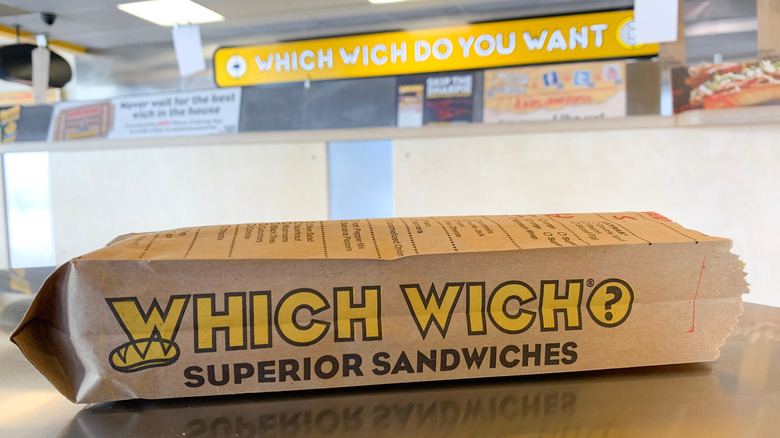
Founded in 2003, Which Wich is a relative newcomer among bread-based behemoths. The chain boasted 430 locations at its peak in 2018, but a rough few years have left just 183 as of 2026, proving you don't need a private investment firm to tank a company.
Despite Which Wich dishing up some of the best quality bread among sandwich chains, there remains a big gap between the bread that is turning customers off. According to one Reddit user, "I remember years ago when one opened up close to me before they got big. I went quite a few times and thought it was pretty solid. Though I haven't been in awhile I feel like pretty much every sandwich joint that has gotten popular since the mid 00s has gotten sh**ier in quality and more expensive."
Which Wich prices can skyrocket pretty quickly. While prices vary depending on location, the classic Wicked sandwich in the large size can be over $20, and that's before any add-ons like drinks or a side. Perhaps Which Wich's future-proofing lies overseas, with its U.K. expansion given the green light in Swansea, Wales in 2026.
Quiznos
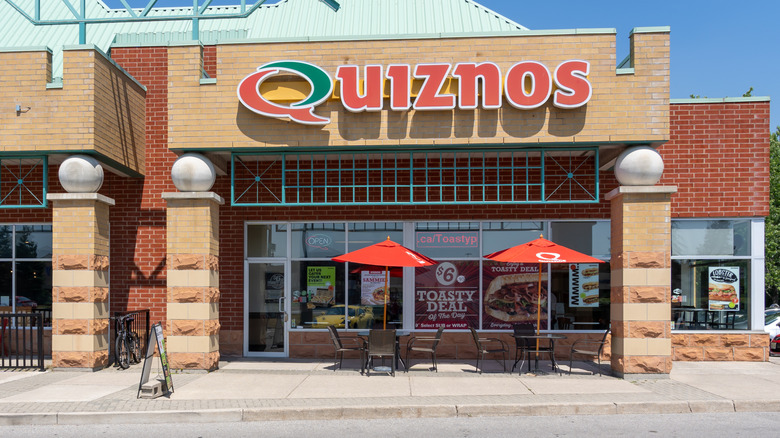
Quiznos arrived on the Denver culinary scene in 1981, bringing a host of delicious toasted submarine sandwiches. By 2007, the chain had expanded to nearly 5,000 locations across the U.S., but it has been in slow decline ever since, with only 125 locations left. So, what happened to Quiznos? According to this Reddit user, corporate treatment of franchisees has long been a problem: "I'm a Quiznos kid. My parents had 3. I grew up in the back room. Worked there many years. ... Forced [franchise] purchases, they drove everyone into the ground."
This story signals the mismanagement to come, which accelerated when the company sold a 49% stake to JP Morgan Partners, saddling it with hundreds of millions in debt and 1,000 locations closed. Subway's $5 footlong proved too much for Quiznos to keep up with. Quiznos sold to a private equity group (surprise, surprise) called REGO Restaurant Group in 2018, and things have only gotten worse since.
Customers report the age-old story of price increases and declining quality. "20 years ago Quiznos was delicious. There was one on my college campus... I went there EVERY day it was so good. Now, the only one I know of is the one in Terminal A at Denver International Airport. It's overpriced and the sandwiches taste half as good as they used to," said one Reddit user. These days, a large premium sandwich like the Black Angus at Quiznos will set you back at least $13.
Still worth it: Jason's Deli
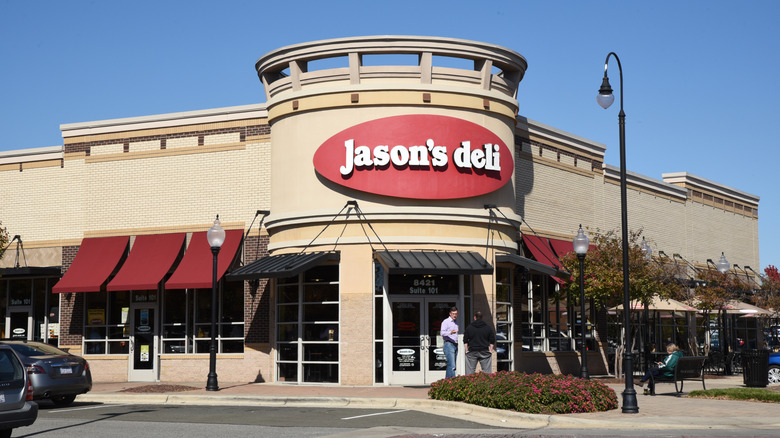
At Jason's Deli, every dine-in customer gets free ice cream, and you can get unlimited trips to the salad bar for $14.99. "That's the best deal of any restaurant in this economy. Possibly the best deal in the country unless you consider a QT hotdog and a banana a meal," according to one enthusiastic Reddit user.
The sandwiches, however, have come under scrutiny for being more expensive than they once were. However, at least Jason's Deli is happy to talk about it and doesn't sneak around shrinking sizes and raising prices. Jason's Deli replied with this honest X post when somebody questioned the rising costs for a sandwich like the Deli Cowboy, which will now set you back around $16, "Hi! Unfortunately, we have had to raise menu prices over the years because of the continuing higher food and labor costs. We did it to keep serving the high-quality food and ample portion sizes people value!"
If you plan to split a sandwich and go ham at the salad bar, you can get a three-course meal for two for under $30, which is nothing to be sniffed at in 2026.
Still worth it: McAlister's Deli
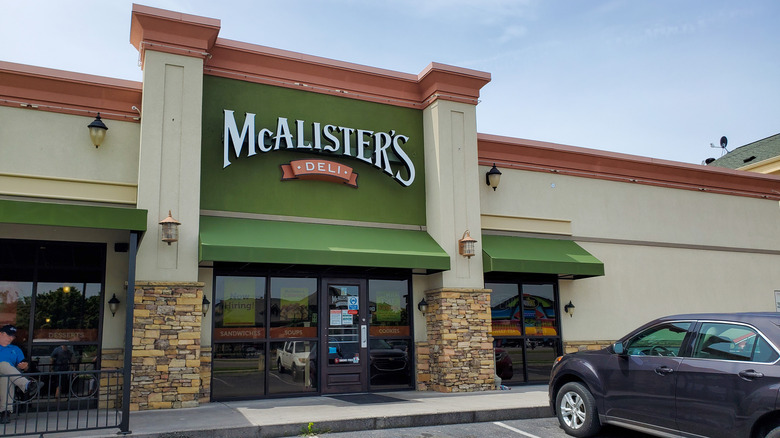
While individual McAlister's Deli franchises close from time to time, like the Brentwood, California location that closed this year after operating for 20 years, the overall number of McAlister's Delis is currently at its peak at 585, and counting. Southern Rock Restaurants, one of the brand's largest franchisees, operates 165 McAlister's Delis and has 73 more in development.
So, how is McAlister's Deli swimming while other sandwich chains are sinking? In 2020, McAlister's Deli raised prices significantly, including the famous Choose 2 menu, which increased from $7.69 to $10.59. However, McAlister's Deli has stopped big price rises, with prices increasing only 30 cents, between $10.69 and $10.99, since then. This isn't the only deal available in-store; the chain rolls out seasonal offers like last year's Fall Meal Deal, including half of the classic McAlister's Club sandwich, a cup of soup, and a cup of McAlister's Famous Tea for $9.99. Earlier this year, the restaurant also introduced a high-protein vegetarian menu that makes non-meat eaters feel like they're not an afterthought.
The classics keep people coming back, like the refillable sweet tea and the unique giant spud you won't find at just any sandwich chain.
Methodology
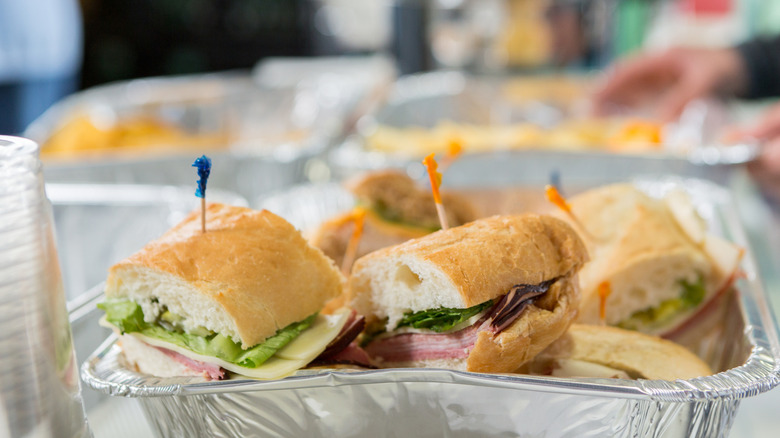
Dining out in 2026 isn't a decision to take lightly, and neither was choosing any of these sandwich chains for this list. I scoured hundreds of real customer reviews across multiple platforms, dove into scientific studies on why people buy what they do when they choose to dine out, and reviewed statistics and up-to-date menus to track price increases in recent years. This research gave me insight into what a sandwich chain needs to do to satisfy customers amid widespread inflation and shrinkflation.