

7 Best And 5 Worst Classic American Beers
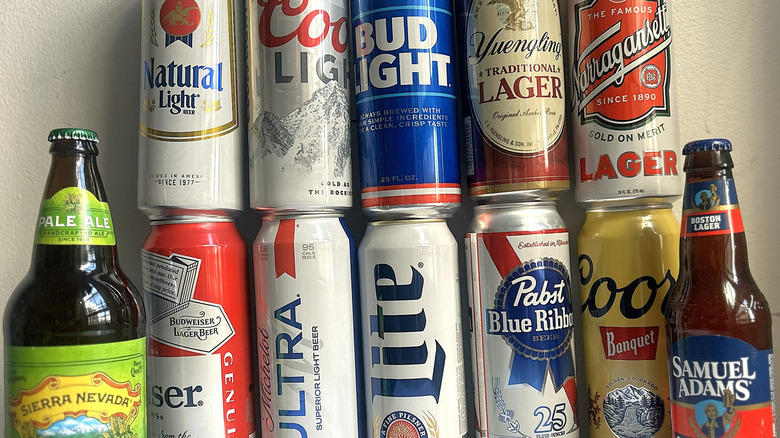
German immigrants can be seen as responsible for building America's beer industry — something that's obvious in a few of the biggest American brewing names — and the products that they, and others, have produced for the U.S. market have become legendary stateside brands. What even is America without the likes of Budweiser, Coors, Miller, and Michelob? What would American craft beer look like sans Samuel Adams and Sierra Nevada? And would Pennsylvanians be drinking without Yuengling? (Okay, they'd probably find something to drink, but still.)
Some of these famous labels are so ingrained in our national consciousness they might as well be a bald eagle perched on Lady Liberty's torch while wearing a John Deere hat. A question needs to be asked however: After many decades and, in most cases, centuries, how does the beer itself hit?
We tasted, we tested, and we picked the seven best and five worst classic American beers. This assessment might not matter when just grabbing any cold whatever from a cooler at a summer cookout. Something has to wash down the ribs. But for those who are curious as to where these legacy bad boys stand these days, have a read. See if you agree. If not, we can discuss it over a beer. Just not the bad ones.
Best: Coors Banquet
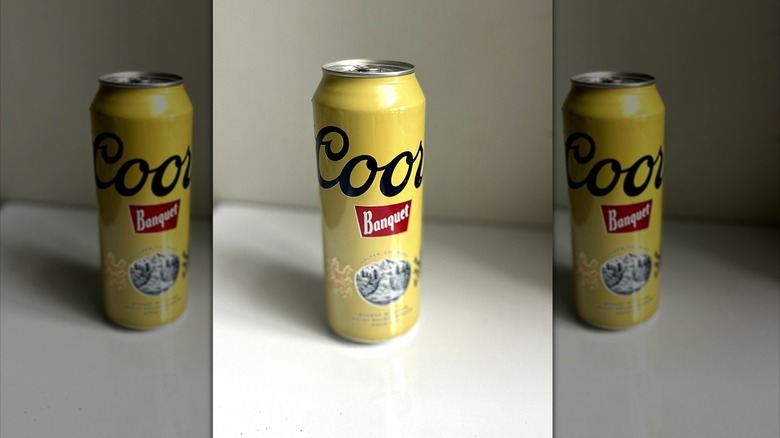
It's the original beer from 1873, when Adolph Coors set eyes on the Rocky Mountains and opened his brewery under the shadows of those snow-capped sentinels. In the long years since, it has been surpassed in ubiquity by its offshoot Coors Light, which is way more common a sighting in beer aisles. Still, Banquet's OG-ness just reinforces its status as a classic. So, how is that Rocky Mountain taste after all these years?
I could see why Coors Banquet was a favorite of miners. Coming out of a hole in the earth, covered in soot, you're going to want something that refreshes you along with providing a light buzz. As far as flavor goes, it is surprisingly rich for all its mildness. There are subtle sweet, even fruity notes in there, which you don't really get until the finish.
As is common with an old-school American lager, it's very clean and lacking almost any kind of bitterness. The one downside, for me, was the characteristic Coors aftertaste that kind of sits there. Nothing overwhelming but just this lingering, filmy taste that doesn't do it for me. All in all, though, still worth the swig.
Worst: Budweiser
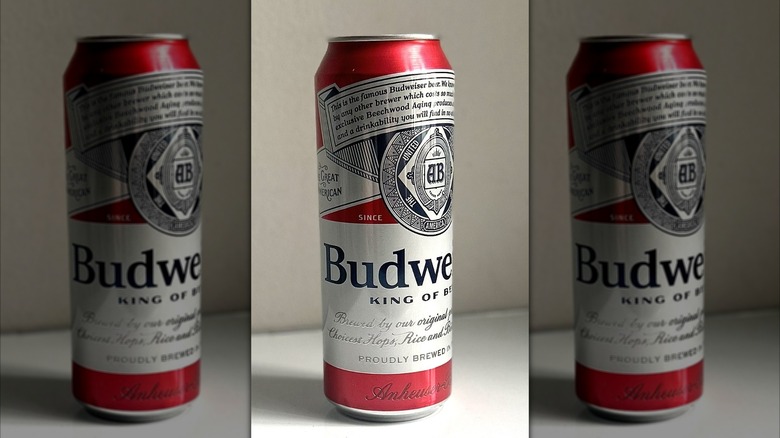
The so-called King of Beers has never shied away from the self-aggrandizing declaration — even from its very beginnings way back in 1852. And in terms of sales, Budweiser has certainly been right at the apex of the American beer industry. Going into the 2000s, Budweiser was the top-selling single beer in the country for decades. Even when it was toppled in 2001, Bud Light was the usurper. So, what's the quality of a swig of original Bud nowadays?
For me, not great. There's something muddled about the flavor, now that I've had it for the first time in a while. Unlike Coors, which is pretty distinct, original Bud is just tough to put your finger on. It's pretty full-bodied for an American pale lager, yes, and there is a small hint of sweetness.
But it almost feels like it can't figure out which way to actually go. Is it more towards hoppy? Is it more towards crisp? Does it want to touch on bitter? I don't know, maybe? Instead of being balanced with these elements, it feels more unsure of itself. Budweiser's recipe has gone through reformulations, so perhaps that has contributed to the identity crisis.
Best: Miller Lite
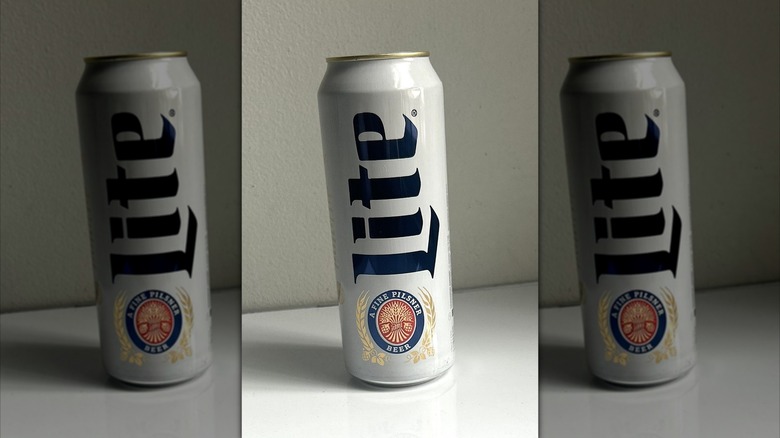
The first successful mass-produced light beer to hit the market in 1975, Miller Lite gained serious traction by using famous athletes in commercials to promote the reduced-calorie beer offering. It remained one of the top-selling American brews for several decades, and a suitcase of the cans is still a common sighting at many an outing and get-together. But what are you getting a suitcase of exactly?
As compared to other light beers on the list, Miller Lite definitely gives you a bit more body, a bit more richness. You're not going to get overwhelmed by any of it, but in this case, it works in the beer's favor. And there is a subtle, not sweetness exactly, but something akin to that in the aftertaste that surprises you a bit.
Overall, a nice balance. You don't feel like you're missing anything despite the "lite" label, and there's enough in the DNA to make it distinct. Miller Lite may have whiffed on its 2026 collab with Pringles, but the beer is still solid.
Worst: Bud Light
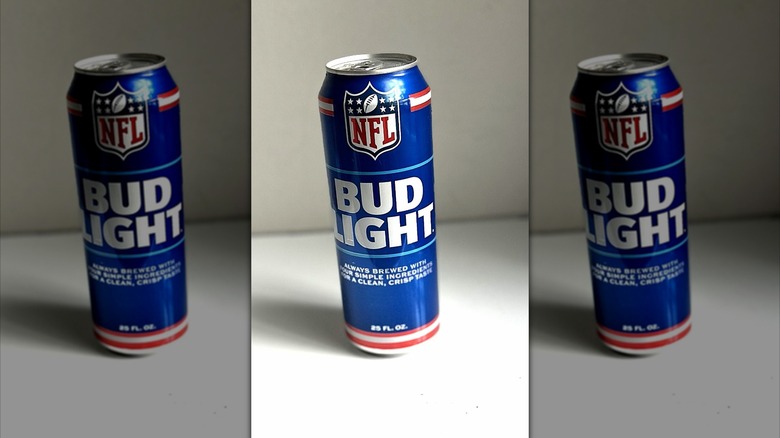
Bud Light was first released in 1982 in response to Miller Lite's debut in 1975 and subsequent success. As mentioned, it eventually overtook its parent Budweiser as the best-selling beer in the country during the early 2000s, holding on to the top spot for the following 22 years (until an anti-woke boycott derailed the train in 2023). Bud Light even tried pivoting into flavored hard seltzers, with mixed results. Yet, how is the original beer-flavored beer holding up?
I'll admit, I was never a fan of Bud Light. And upon re-entry, I'm still not. The immediate aroma that hits me is, if you'll excuse the descriptor, vomitous. This doesn't have anything to do with a messy experience I may have had with Bud Light as a youth (because we know a bad time with a certain alcohol can linger in the psyche). No, this is just the effect on me, independent of anything. Now, to actually drink it.
Yeah, the aversion is confirmed after one swig; not for the same reason as the aroma though. Actually, weirdly, the opposite. The actual beer — so light as to almost be nonexistent — makes zero impression on me. It really tastes like nothing. If Bud Light and Budweiser found a happy middle together, it could potentially be an ideal beer. But as it stands, the two on their own falter.
Best: Yuengling
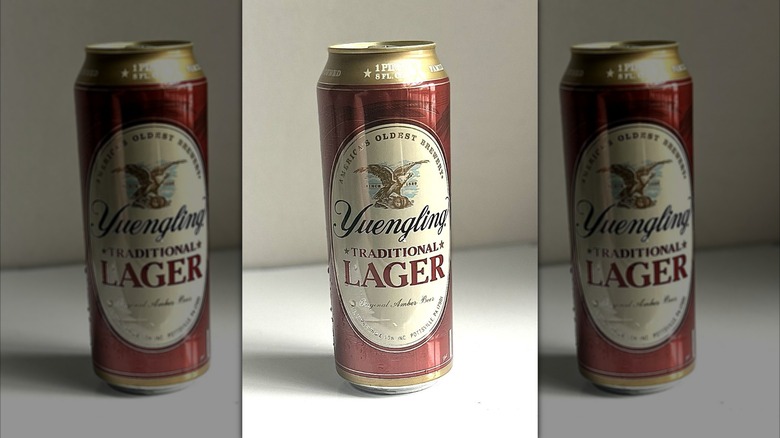
Yuengling can trace its brewing history all the way back in time to 1829 — nearly 100 years before Prohibition. The Pennsylvania original is old as hell in all the best ways. It's still privately owned by the Yuengling family nearly two centuries on, and its place in the pantheon of American beer is well-secured. So, is it tasty?
I'm going to remain objective about this because, personally, I'm not the biggest Yuengling fan. I should, on paper, love it. It's a rich, amber, Bavarian-inspired beer that offers way more fullness and coziness than most of the other good ol' American brewskis.
Where it goes wrong for me — and again, totally a subjective taste thing — is that it kind of flattens out at some point in the taste journey. (And yes, the name "Taste Journey" is available for an up-and-coming sexy R&B band.) Still, I have to give Yuengling its props because it is obviously a high-caliber beer. I've gone with it many a time on draft when other taps haven't inspired me despite my misgivings.
Worst: Michelob Ultra
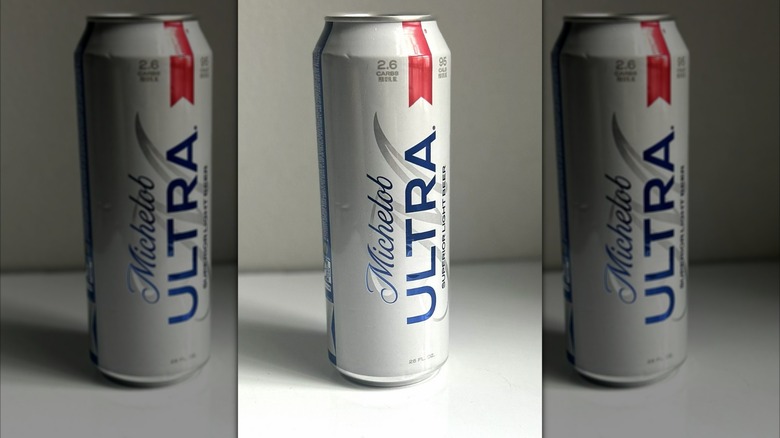
If not the healthiest macro beer to drink, Michelob Ultra is certainly one of them with its low calorie and carb count. Released in 2002, Michelob Ultra was aimed specifically at the health-forward and active beer drinker (making the huge leap of faith that that was, in fact, an actual species of human). It's paid off, and in 2025, Michelob Ultra became the biggest selling beer in America. Good on Anheuser-Busch. But how does it taste?
Like a lot of pop music, sales does not necessarily equal quality. How is this the best-selling beer in the country? It has to be a health thing because it is super low in calories and all that, but the beer itself? I'm sorry, this might be the worst one on the list.
When you drink it, it tastes almost diluted. It not only lacks any discernible modicum of flavor, it somehow manages to leave an unpleasant aftertaste — which is almost amazing, like, chemically. I mean, it would be amazing if it wasn't so objectionable. This is beer for people who don't like beer.
Best: Pabst Blue Ribbon
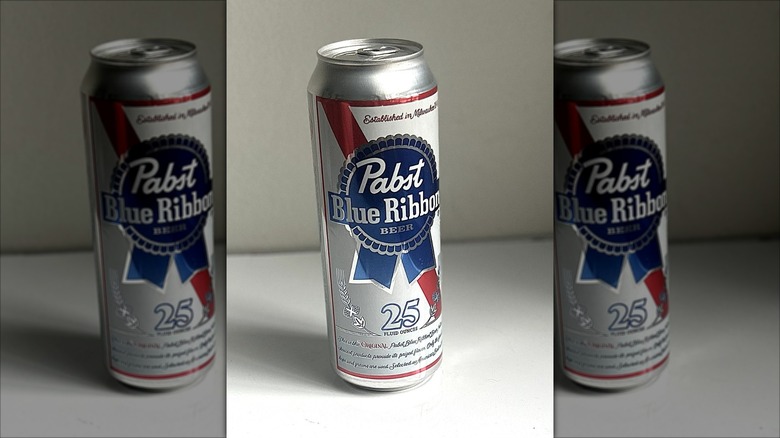
Pabst Blue Ribbon was winning beer awards when American brewing was still in its infancy — hence, the Blue Ribbon in the name. PBR did survive an existential crisis in 2018 after a legal slugfest with its contract brewery at the time, MillerCoors, but thankfully things were settled and Pabst kept on truckin'. Does the bargain brew still deliver on its acclaimed pedigree?
Man, PBR is just so dang drinkable. It has all the usual-suspect ingredients as your other high-profile American lagers — the malted barley and the cereal grains and the corn syrup and all that — but the way it comes together just gives you such a cohesive, unified drink.
"Clean" can be an overused word when it comes to this style of beer, but PBR absolutely earns it. Nothing off-balance, no lingering, unpleasant aftertaste, no searching for flavors that aren't there. You're just happy with what you've got. Happy equals good beer. Good beer equals happy. This is math I like.
Worst: Coors Light
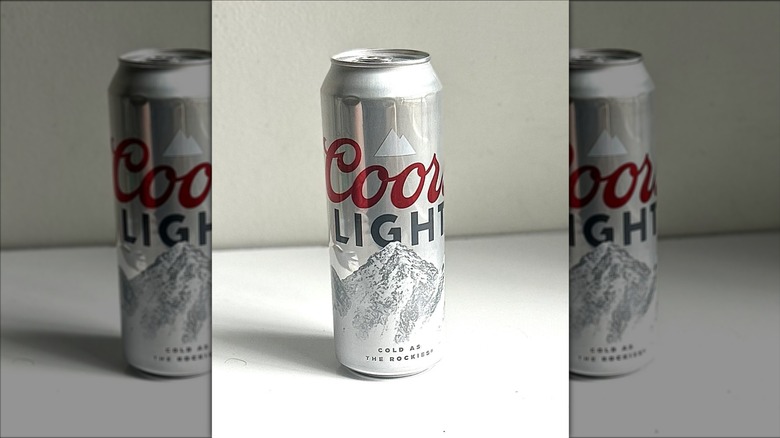
Credit Coors Light for trying to freshen things up with a random collab. We mean, of course, the Cheez Its made with Coors Light beer cheese. Hey, you're never too well established to try something new. And although this snack is tempting to try on my off hours, it's the stalwart beer alone that I have under the microscope at this juncture. Coors Light may have been consumed by literally billions of people by now, but is it actually any good?
Well, to me, it falls in with Bud Light. In that, it's something that functions purely as a delivery system for 4.2% ABV. It doesn't have the off-putting aroma that Bud Light has, but it has the same blandness, the same inertia of flavor. Yes, I get it, it's a light beer, and light beers are engineered to be a slighter, lower-calorie experience.
But it doesn't give a beer like that an excuse to be unsatisfying. Light beers can still be robust. The problem with Coors Light is that it just isn't. On a hot day, under the sun, food sizzling on the grill, this'll do the job. But I wouldn't call this a good beer.
Best: Narragansett
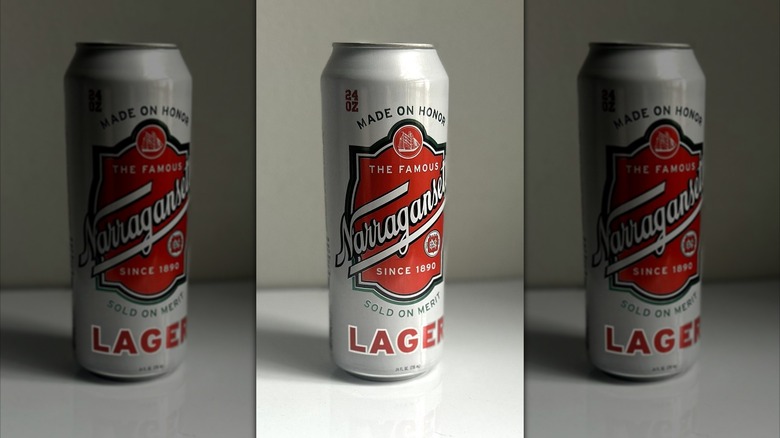
Six German immigrants founded Narragansett beer in 1890 in Cranston, Rhode Island. Serving as the beer pride of Rhode Island ever since, 'Gansett is an easy grab when looking for a tallboy to take to the park, watch a ballgame, or wash down a stuffed quahog. It may be known as one of the delicious cheap beers you wish you tried sooner, but how is it when tried now?
In short: still delicious. It's light, crisp, clean, with hints of sweetness that are calibrated perfectly. It's both refreshing and edifying as a beer-drinking experience. There's a reason a man as discerning as Captain Quint from "Jaws" would make this his beer of choice.
It's just pretty remarkable a bargain beer that's been around for this long delivers the goods. It's not flavorless, it's not bloating, and it has just the right amount of flavor notes to distinguish it. You feel like you could drink 100 of them and still be able to accomplish things. You can't, and you won't, of course. But long live the 'Gansett nonetheless.
Worst: Natural Light
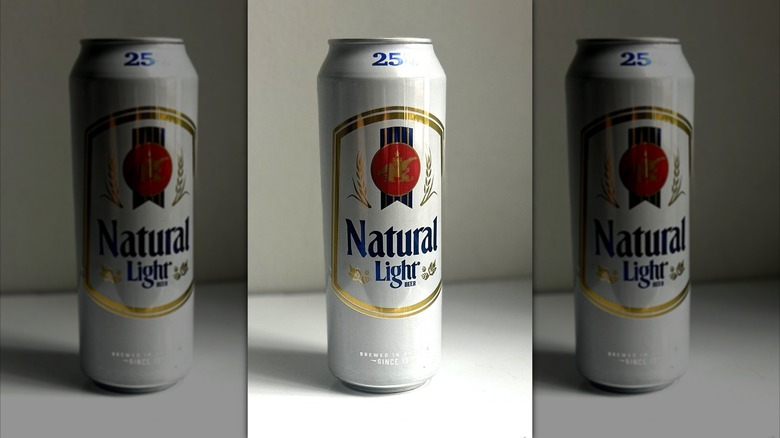
Released with the express purpose of being waistline-friendly, Natural Light was introduced by Anheuser-Busch in 1977, predating the company's other reduced-calorie offering, Bud Light, by a few years. Natural Ice would come along in the mid-1990s as a budget-friendly, higher-ABV offshoot (one of the few brewing instances where the "light" version came first), but Natty Light will always be the original. How does it hold up?
Before I get into the hard truth, you have to give Natty love just for being the forerunner of cheap beer that college kids and twentysomethings could scrap together money to buy. For that alone, it deserves its kudos.
As far as the actual drink, though, there's really not much there. I'd put it much lower than Miller Lite but perhaps more than Bud Light. There is a wateriness to it, even for a light beer, that just gives you an empty-full feeling when drinking. And the flavor notes are just barely anything — whatever the minimum needed for a beer to drinkable.
Best: Samuel Adams
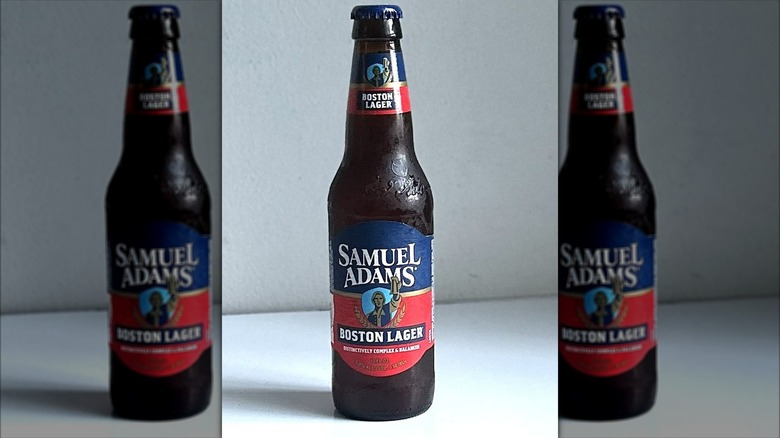
A proper forerunner of the craft brewing boom that began nearly half a century ago, Samuel Adams has certainly reached classic status in the annals of American beer (the fact that it's named after a Founding Father never hurt). The flagship brew of Boston Beer Company is an easy go-to for many folks browsing the beer section. But has the original lost its touch in terms of taste?
In short: no. The Vienna-style amber lager is still a joy to drink. The malty sweetness with the floral notes, the slight spiciness balanced with the muted bitterness, and a crispness the entire way. This is just a good, hearty beer to sit down with, not overwhelming you with the ingredients like many craft beers do.
And this is a craft beer, despite how far it has come. You still get that artisanal sense when you drink it. Listen, just ask the Scottish fans during the World Cup who drank the Boston Beer Company Taproom dry. It's fair to say the Tartan Army likes it, and Scots know a thing or two about alcohol.
Best: Sierra Nevada
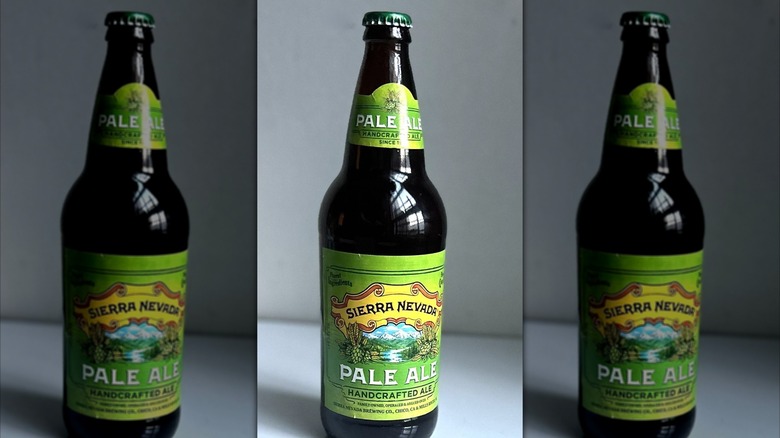
Founded in Chico, California, in 1979, Sierra Nevada is one of craft brewing's heavyweights. Its signature pale ale is as commonly found in grocery stores across the country as any of the macro-brew giants. This is a testament to the quality that's always been a part of the Sierra Nevada name. And, unlike many other craft beers that made it big, it's still privately owned and operated by its founder, Ken Grossman.
It may be the best beer to pair with a tuna steak, but how does it stand on its own? As anyone that's had a Sierra Nevada could tell you, it stands very well, and it stands in an interesting middle ground for a beer. Being an American Pale Ale, it straddles the hoppy world of the IPA with the accessibility of American lagers or even amber lagers.
You certainly get all the piney, floral, citrusy hits when you're drinking it, and it does almost tip into being heavy on the palate. Almost. And that's the genius of Sierra Nevada — it never runs past the tipping point. This may not be a beer snob's beer at this point, but it's a beer drinker's beer.
Methodology
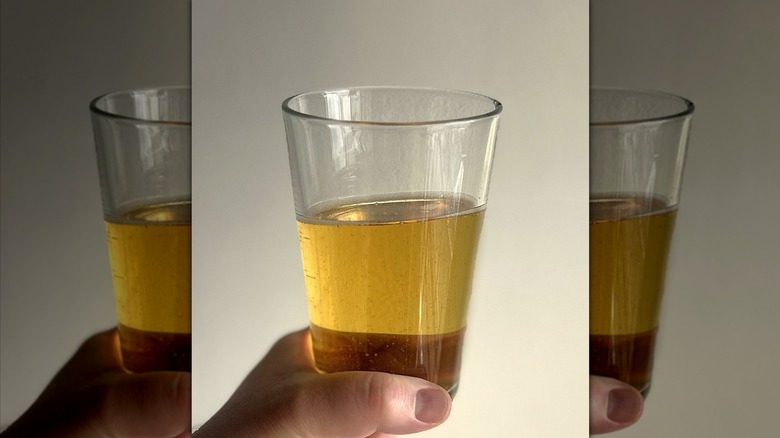
Obviously, the biggest challenge here was trying to approach every sip of each well-known, time-tested beer as if I had never had one before. Turning your tongue back into a tabula rasa is no easy thing, but is was important to measure up each brew on its own — without the weight and familiarity of the brand wrapped around its packaging. After all these years, what is the bias-free state of these iconic beers?
As far as the metric for judgment, it came down to the same old, trusted attribute: taste. How does it taste in a sip, how does it taste as a swig, how does it taste when not masked by frostiness, i.e. room temperature. I also tried to judge each beer on the merits of its type — in other words, it wasn't about comparing, say, a lager to a pale ale. Other elements such as color and aroma were also factored in, but flavor was first and foremost. We're meant to ultimately drink the stuff, right?