13 Beers Everyone Drank In The '80s
We may receive a commission on purchases made from links.
Imagine a time before everyone and their mother had a microbrewery, serving up craft beers across the country. It's hard to believe there was an era when an IPA wasn't an acronym on everyone's lips, or when consumers started to prefer beers with no actual alcohol content to be found within the bottle.
Welcome to the 1980s, when light beers started to light up the industry, and imports like Heineken and Corona were also making big inroads into America. This decade was also one of the last times such domestic brands, with higher caloric counts, like Budweiser, Michelob, Miller High Life, Coors, and old standbys like Old Milwaukee and Old Style were in style.
While there were plenty of beers that drinkers soaked up in the '80s, The Takeout assembled a baker's dozen pack of brands to crack open a memory can of. Let's rev up the tasty time machine and travel back to that scene, where glowing neon signs happily reminded us that it was always "Miller Time."
Budweiser
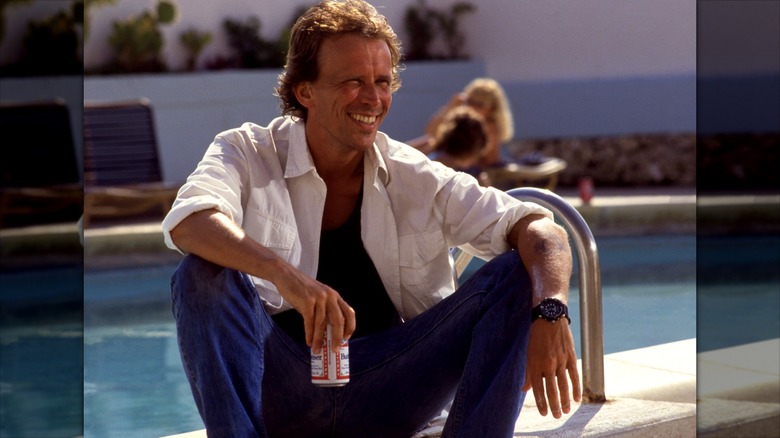
After a trip to the Bohemian city of České Budějovice (which was also known by its German name Budweis), Carl Conrad fell for its Czech lagers and decided to brew one himself back in St. Louis. Budweiser was born in 1876, and after Conrad declared bankruptcy in 1883, Anheuser-Busch assumed brewing duty on the beer that same year. Budweiser would go on to be one of the most successful beers of the second half of the 20th century, which began when it toppled Schlitz in 1957 to earn the number one bestselling spot in the nation. It held that throne until 2001, when its 1982 Bud Light offshoot overtook it.
The '80s provided one of the more memorable decades in American pop culture, and Budweiser was often a large part of it. For the last Super Bowl of the decade, which the brewery had an exclusive right to, viewers were almost as glued to the "Bud Bowl" ads. Played over various breaks in the actual game, this commercial game pitted bottles of Bud against ones of Bud Light on a stop-motion gridiron, as they were to the actual game. There was also a popular "label conscious" poster of three women wearing swimsuits that formed the brand's logo, which hung proudly on teenagers' locker doors and dorm room walls on college campuses. On the big screen, When Goose and Maverick needed a refresher after high-flying in 1986's "Top Gun," they grabbed a a familiar friend in the shape of a Bud.
Busch
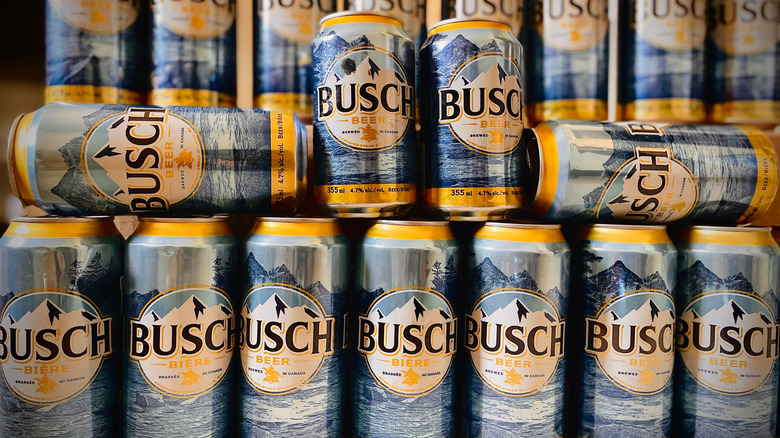
Anheuser-Busch brewing company also owned the St. Louis Cardinals baseball team and had an eye to name the stadium after Budweiser. When that idea of a beer-sponsored moniker ran afoul with the league, the company decided in 1953 to honor the family by calling it Busch Stadium. Two years later, not so sneakily, the brewer debuted a new beer called Busch Bavarian, although the latter part of that name disappeared from cans starting in 1978.
In the 1980s, good things were still happening with the Busch name. The Cardinals won three pennants and a World Series at Busch Memorial Stadium in 1982, and Busch also made plenty of sponsored splashes, underwriting a NASCAR racing series, and partnered with Charlie Daniels' tour. Ads famously implored consumers to "Head for the mountains of Busch ... beer," and they did, but they didn't have to go to an actual mountain. By 1989, Busch was sold in 41 states and tied with Coors Light as the nation's fourth-best selling beer.
Speaking of light beer, Busch had remained a holdout until the very end of the decade. After years of development, it finally switched on the Busch Light in the summer of 1989, which eventually overtook its forerunner.
Coors Banquet
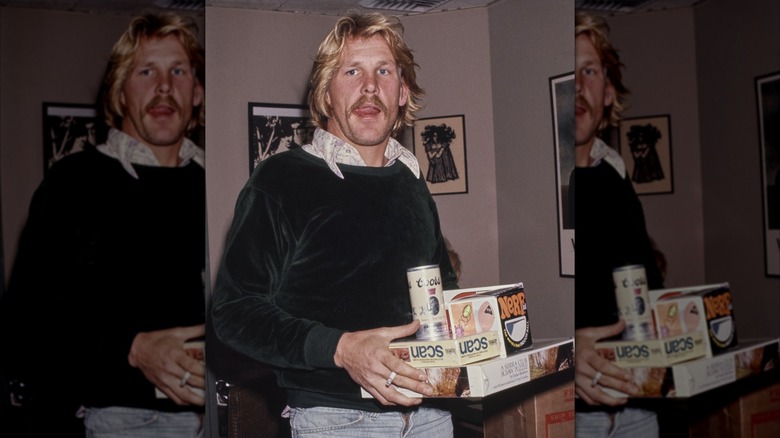
Adolph Coors got to brewing his golden beer in Golden, Colorado back in 1873. The area was rich with miners looking to whet their whistle while eating dinner after a hard day's work, and Coors was often the answer. After the mining boom ended, and prohibition had ended too, Coors honored those miners by dubbing its signature brew "The Banquet Beer," officially in 1937.
At the dawn of the '80s, Coors was the fifth largest brewery, but was making moves to battle with its rivals. While it had tried and failed with a light beer in 1941, it had better success when it introduced Coors Light in 1978. Coors had long been sold mainly in western states, which led many to bootlegging it across state lines that don't have the pleasure. In the '80s, Coors expanded its reach across the country, and by 1991, was being sold in all 50. Bottles and cans even made appearances in "Lethal Weapon," and got E.T. super-drunk.
Trying to keep up with the cold hotness of Miller Genuine Draft, in 1987, Coors removed the tag "The Banquet Beer" from its label, and replaced it with "Original Draft." While the formula didn't change, it turned into a hullabaloo that drew comparison to the 1985 New Coke fiasco. Fans were confused and in some cases outraged, and the beer reverted to its old name within a year. Missteps aside, Coors Brewing as a whole ended the '80s on a high note, with record sales in 1989 outpacing 1988's by 7%.
Corona Extra
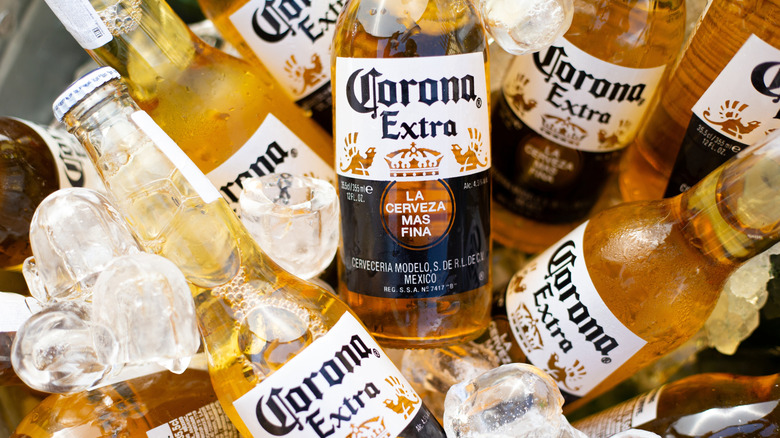
Mexico's Grupo Modelo introduced Corona in 1925, and within 10 years became the brewery's best seller. While Americans on vacation south of the border enjoying stuffing a lime into its long neck bottle with a painted logo, the United States wouldn't get its first official taste of the popular yellow brew until Barton Beers began importing it 1979. What started as a push in the southern and southwestern United States eventually became an all-out love affair for the entire country by the decade's end. Corona was a breakout Mexican beer, as the major leading imports at the time hailed from Europe or Canada, with Heineken as the undisputed leader of the 6-packs.
The vibes of the beer attracted all kinds of drinkers. It was known as a yuppie drink and counted among its biggest fans, laidback musician Jimmy Buffet, who aligned so much with the beachy spirit that he asked his manager to make a sponsorship happen. The brand name even inspired a 1984 song by the band Minutemen, which later served as the theme song for the "Jackass" series.
From 1984 to 1987, Corona saw its sales more than quadruple; demand was so high that supply had to be loaded on cargo ships and transported to the West Coast. Unfounded rumors circled in 1997 that the beer had been contaminated with urine, which deflated sales. Yet, Corona still saw strength in numbers, especially after introducing a light beer version in 1989. That same year, The Washington Post dubbed Corona Extra "the trendiest beer of the decade."
Heineken
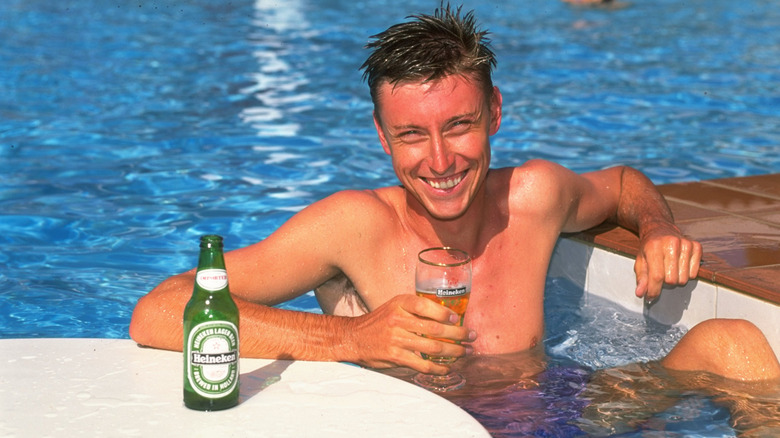
Gerard Heineken started brewing his own namesake beer in Amsterdam back in 1873. Americans got their first taste of the beer when Prohibition ended and it arrived on our shores in 1933. That jump-start on the competition helped make it one of the biggest imported beers in America through the company Van Munching of New York. By 1980, Heineken accounted for 50% of the entire U.S. import business; even some bars in New York had customers evenly choosing between its green bottle and a good old Budweiser.
Despite not leaning on a spokesperson in ads, letting the beer speak for itself, it still found its way into popular culture. The Beastie Boys name-checked the brew on their song "Slow Ride" as a pairing with Kentucky Fried Chicken, and David Lynch made light of it in his 1986 film "Blue Velvet" (see the Pabst Blue Ribbon slide for more on that).
As the decade pressed on, Heineken's hold on the marketplace was challenged by other imports like fast-rising Corona, Dos Equis, Foster's, and ones that didn't have to travel too far, like Canada's Molson and Moosehead. However, as the '90s began, Heineken was still the best selling import of them all.
Michelob
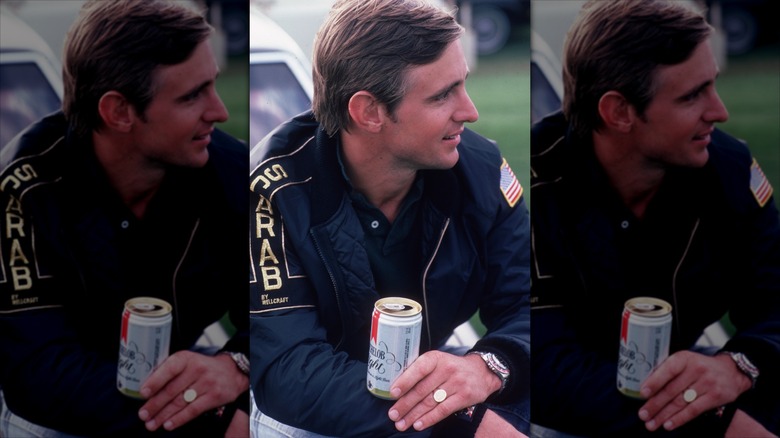
In 1896, Anheuser-Busch set out to make one of the finest beers and the result was Michelob. This premium product was long available only on draft, and even included fans like former Yankee slugger Joe DiMaggio. In 1961, the unthinkable happened and Michelob was sold outside of bars for the first time ever, finally housed in bottles and with a distinctive teardrop-shape. It was thought of and marketed as a super-premium beer, and by 1984, Michelob had upwards of 75% ownership of the category.
Its ad campaigns catered to the changing times, with some playing into yuppie culture, and later tapping rock giants like Eric Clapton, Steve Winwood, and Genesis and their evening-themed hits to help sell the image that "The Night Belongs to Michelob." It further cemented its rock bona fides by sponsoring a Lorne Michaels-produced music show called "Michelob Presents Sunday Night." However, like most of these classic beers, sales slipped as the decade wore on; by 1989, it had dropped 31% since 1981.
Miller High Life
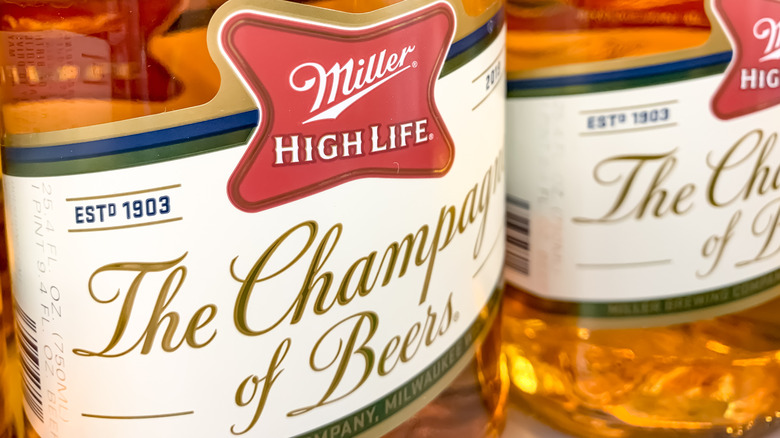
In 1903, the Miller Brewing Company introduced a beer it hoped would elevate drinking beyond bars and saloons with Miller High Life. This new entry warranted a special bottle, with a shape that helped it define its forever tagline, "The Champagne of Beers."
In the '70s, the clever jingle "If you've got the time, we've got the beer — Miller Beer" helped remind people to make drinking one an appointment, and that message carried on into the next decade with the next campaign "Welcome to Miller Time." The brand stayed relevant by sponsoring NASCAR Bobby Allison's 1983 Winston Cup championship NASCAR race car, as well as launching the Miller High Life Rock Network, supporting up-and-coming bands like the Fabulous Thunderbirds and Josie Cotton. High Life was asked for by name by Da Mayor in Spike Lee's 1989 film "Do The Right Thing," and was even used, can too, as fuel for the time machine DeLorean by Doc Brown in 1985's "Back to the Future."
At the beginning of the '80s, there were over 21 million barrels of High Life sold in cans and bottles. Things got complicated for the brand with the surge of lite beers, including Miller's own, as well as the introduction of the cold-filtered offshoot Miller Genuine Draft in 1985. Sales dipped to an estimated 12.8 million barrels in 1985, before falling to 7.8 million barrels by 1987. Despite the dips, that still represented a large number of customers living the High Life.
Miller Lite
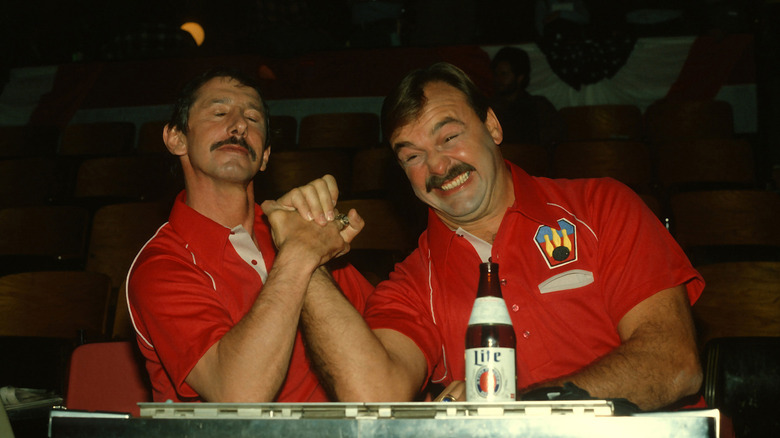
Inspired by the success of one of its newer acquisitions, Meister Brau Lite, Miller Brewing Company reformulated it into its own low-calorie beer. In 1975, Miller Lite debuted nationwide, and was backed by ads featuring athletes and celebrities enjoying this drink that "tastes great," but was also "less filling." That trend continued into the '80s, with the likes of Dick Butkus, John Madden, Mickey Mantle, Billy Martin, and Rodney Dangerfield knocking back some on camera, in a series of ads that numbered over a hundred. The most memorable of them all centered around Bob Uecker, who famously would utter, "I must be in the front row!" as an usher showed him to his seat in one of the last rows in the upper deck (via YouTube).
These ads helped to propel the athletes' recognition well beyond the field, and even helped warm NBC up to the idea of greenlighting a little comedy that took place in a bar called "Cheers." They started airing in the '70s, and by 1985 Miller had moved up five places to become the second biggest brewery in the country.
Before the decade came to a close, Miller and actor Randy Quaid threw the ”Biggest Party in History” in cities across Texas. The 1989 soirees and marketing campaign cost the company $15 million, which they saw as money well spent as almost half a million people raised a glass in Miller Lite's good name, while enjoying the sweet tunes of The Who.
Old Milwaukee
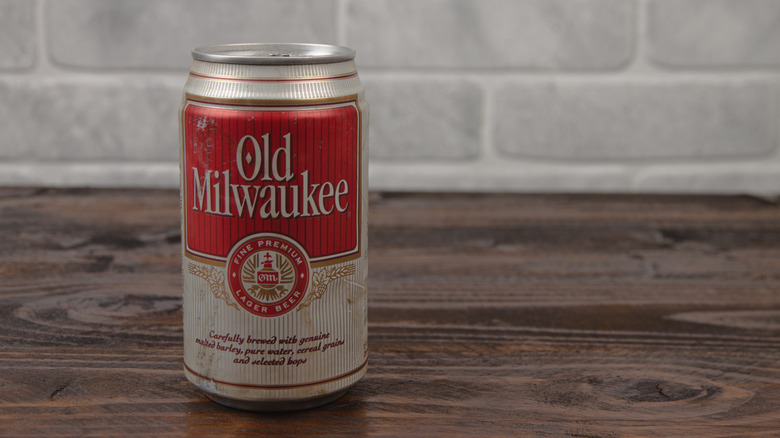
Amidst Prohibition, the Joseph Schlitz Brewing Company released a new beer named after its hometown — Old Milwaukee, which was billed in 1929 as "the answer to America's prayer" (via The Daily Times). By the 1980s, Schlitz was the third largest brewery, and agreed to have its holdings, including Old Milwaukee, purchased by the smaller Stroh's in 1982.
Five years after Lee Hazlewood and Ann-Kristin Hedmark sang the praises of "Old Milwaukee" beer, the Queen of Country Music, Kitty Wells dropped the ditty about drunk truth-telling with "Old Milwaukee's Talking" in 1980. The beer's name was also seen going round in circles, emblazoned on NASCAR driver Tim Richmond's Pontiac from 1983 to 1985.
By the end of the decade, Old Milwaukee was Stroh's best-selling brand. The low-priced beer owned 30% of that category's market share, even with Miller throwing its own similarly named beer into the mix — Milwaukee's Best. Old Milwaukee and other brands under the Stroh's umbrella were almost acquired by Coors in 1989, and a decade later, they fell under the new ownership of Pabst Brewing Company.
Old Style
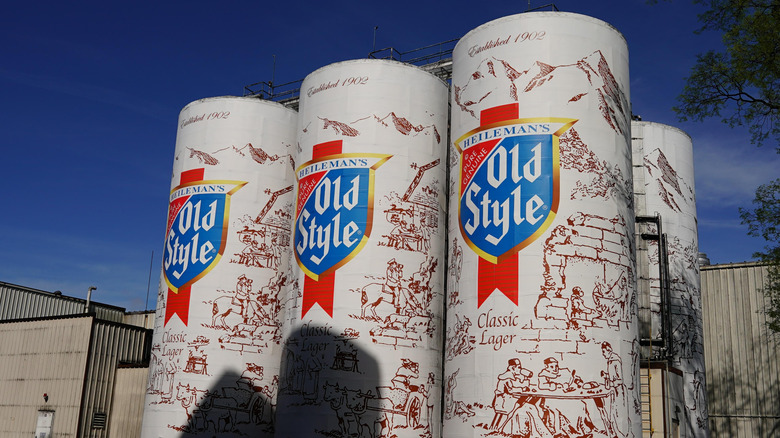
G. Heileman Brewing Company of La Crosse, Wisconsin introduced a beer called Old Times Lager, but after unsuccessfully trying to trademark that name, moved forward in 1902 as Old Style Lager. Old Style beer was primarily a Midwestern beer, with its attention centered largely around the Chicago market. Its suds became intertwined with the Windy City when it became the official beer of the beloved Cubs beginning in 1950, while its crest logo shared space on the sign of taverns and bars across the city. A neon sign even made a cameo in a "The Blues Brothers" bar scene in 1980. All of this helped to make it a top selling local beer in Chicago by 1980, outselling Budweiser, Schlitz, Pabst Blue Ribbon, and Miller High Life combined.
During that decade, Heileman's made more of a nationwide push with Old Style, introducing the brew to former beer deserts such as Texas, Florida, California, South Carolina, North Carolina, and Virginia. By the end of the '80s, that all added up to making it the 10th highest-selling brand of the decade.
Pabst Blue Ribbon
The Pabst Brewing Company dates back to 1842, but didn't earn the Pabst name until 1889. Its Best Select beer won awards, and owner Frederick Pabst started selling bottles with physical blue silk ribbons tied around the necks. Customers began to ask for the beer by its adornment; by the 1950s, the ribbons found a permanent home in the beer's logo. In the '80s, Pabst was at one point the sixth-largest brewer in the U.S. That made it quite the attractive property, and after a failed try by G. Heileman Brewing Company in 1984, Paul Kalmanovitz purchased the company a year later.
PBR (as it is affectionately known) played into its blue-collar roots in ads, including one set in a factory starring a young Jeff Daniels and Denzel Washington. It also won a permanent place in pop culture thanks to David Lynch's 1986 film "Blue Velvet" when Dennis Hopper scoffed at the idea that someone's favorite beer could be Heineken and retorted, "F*#k that sh%t, PABST BLUE RIBBON!" (via YouTube).
Schlitz
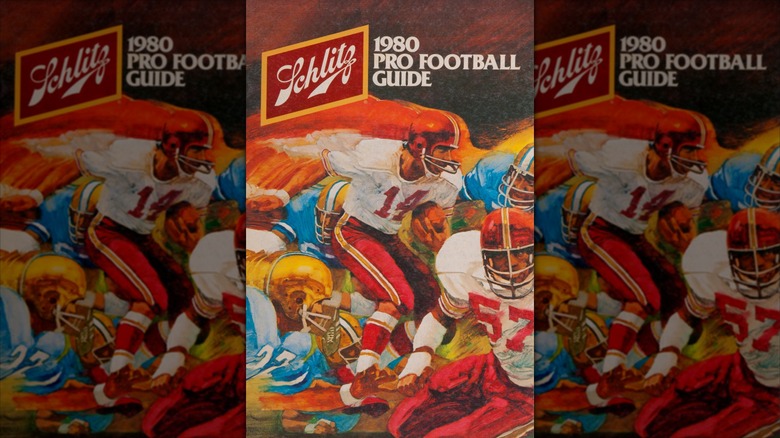
Joseph Schlitz took over a Milwaukee tavern brewery, founded by August Krug in 1849, and soon renamed it after himself. After Prohibition it was one of the world's best selling beers, and rightfully earned the self-proclaimed nickname, "the beer that made Milwaukee famous." Hoping to capitalize on that fame, the nation's fourth-largest brewery, G. Heileman Brewing Company of Wisconsin, tried to acquire it before losing out to Stroh's. Schlitz sold for $495 million in 1982, and with it in the catalog as a now can-only drink, made Stroh the third largest brewer in the country.
Schlitz made sweet music in the '80s by tapping Mickey Gilley and the Commodores to promote the beer, and Kool & the Gang its malt liquor. The latter brew also employed a bull in TV spots that routinely crashed through walls, and even made a cameo in the 1984 comedy "Johnny Dangerously." Schlitz also sponsored the 1982 New Orleans Jazz and Heritage Festival, which helped to put 400,000 cups of its beer into the hands of partying concertgoers. The rocking didn't stop there, as Schlitz started a campaign called "Schlitz Rocks America," sponsoring tours of Fleetwood Mac and The Who.
Sadly, the future for Schlitz doesn't look too rosy, as current owner Pabst Brewing Co. has announced its slow discontinuation in 2026. Zac Nadile, Pabst head of brand strategy, said in a statement to Milwaukee Magazine, "Unfortunately, we have seen continued increases in our costs to store and ship certain products and have had to make the tough choice to place Schlitz Premium on hiatus."
Stroh's
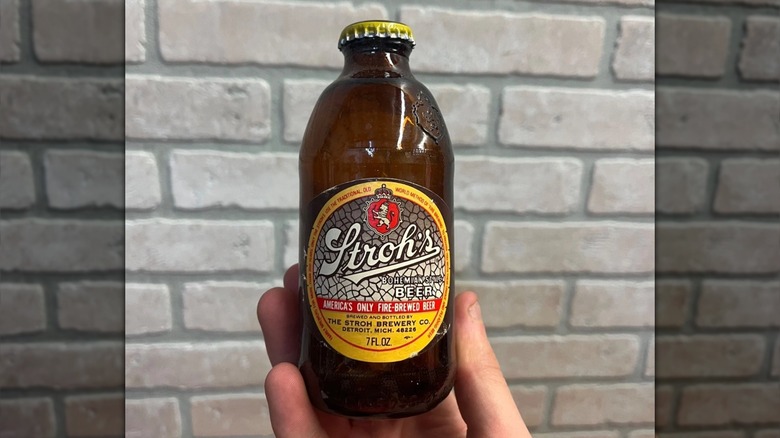
Bernhard Stroh came to Detroit and put his German brewing roots to good use starting in 1850. Initially called the Lion Brewing Company, by 1885, the family name was adorning labels.
The Midwestern brand continued to thrive into the '80s, even when other Motor City brewers like Schmidt, E&B, and Pfeiffer disappeared. To help keep its name out there, it employed a dog named Alex in a series of memorable fetching ads, was the beer supplier for the 1982 World's Fair in Knoxville, Tennessee, and also splashed its logo on a sponsored NASCAR car of driver Mark Martin. The '80s were the last glory time for the beer, and the brewery as well, after acquiring Milwaukee's Joseph Schlitz Brewing Company to become the country's third-largest brewery.
Eventually, Stroh's couldn't keep up with the bigger players and was surpassed by Coors. Bad moves like being slow to the light beer scene, and even offering 15-packs of beers for the price of a dozen didn't help matters either. The company would be sold off in pieces, with Pabst acquiring Stroh's and many of its other beer labels in 1999, which over time lessened Stroh's presence on shelves.