

10 Unhealthiest Whole Wheat Breads On Shelves In 2026
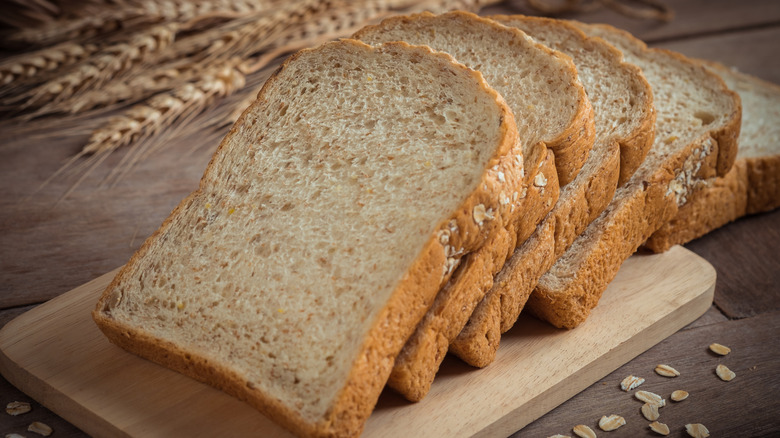
We may receive a commission on purchases made from links.
We as a society have understood the healthiness of whole wheat bread for some time, knowing that flour that includes the wheat plant's bran, germ, and endosperm is generally more nutritious and contains more fiber than its refined cousin, white flour. Beyond that, the more savvy among us have even learned about the marketing tricks companies use to imply a product contains more whole grains than it actually does (such as, for example, using the term multigrain).
That said, even if you know to look for terms such as 100% whole wheat, to see if the first ingredient listed is indeed whole wheat flour, or even to seek out the Whole Grains Council's Whole Grain Stamp, while these things do indicate the usage of presumably health-friendly whole grains, they don't necessarily mean that the end product is, in fact, healthy.
Of course, healthy is a relative term. Life is all about balance, and many products contain both healthy and unhealthy elements, making it difficult to declare any single product — especially one that's mass-produced or manufactured — as decidedly healthy or unhealthy. With that in mind, we thought it would be a good idea to examine the whole wheat bread available today with some of the most unhealthy ingredient lists, which may be best avoided by discerning consumers. Without further ado, let's take a look at some of the unhealthiest whole wheat breads on shelves in 2026.
Sara Lee Delightful Soft & Smooth Wheat
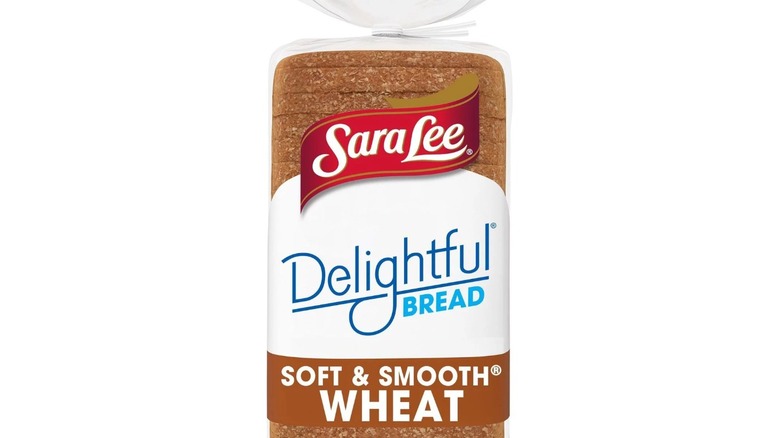
Sara Lee's Delightful sub-brand is promoted specifically as something for health-conscious individuals, but as we will see with a number of choices on this list, the breads with the loudest health claims can still contain some of the most questionable ingredients. This one, for example, notes in large text on its label that it's only 45 calories and 6 grams of net carbs per slice, along with no added sugar. Instead of sugar, however, it contains a sugar substitute named maltitol, which belongs to the same group of ingredients as sorbitol or xylitol.
Although maltitol is generally considered to be safe for human consumption, there are a few things to be aware of regarding its use. It is a manufactured product, for one, not a natural sugar. While it has been shown to raise blood sugar and insulin levels at a slower rate than regular sugar — likely a good thing for diabetics — it still has a glycemic index, which means it can still impact blood sugar levels. It's a potential surprise for a product that boldly claims there is no sugar added (especially in something like bread, where adding a sweetener isn't strictly necessary). In addition, maltitol has been connected with stomach pains, gas, and even diarrhea in some individuals.
Pepperidge Farm Light Soft Wheat
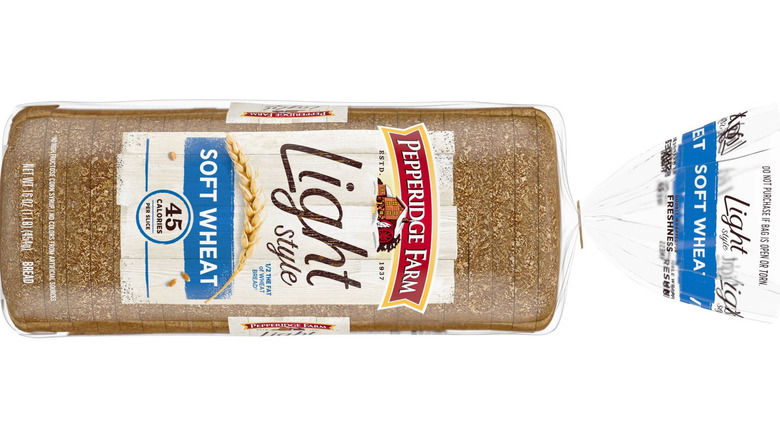
This product is Pepperidge Farm's answer to the aforementioned Sara Lee "lighter" option, and while it also lists whole wheat flour as its first ingredient, it too contains a potentially concerning sugar replacement. (Again, it is worth asking, why does bread even need to be sugary?) Instead of the aforementioned maltitol, this product uses sucralose as a sweetener, which is perhaps best known as a primary ingredient in Splenda. This artificial sweetener is popular because it contains no calories and is apparently 600 times sweeter than sugar, so smaller amounts can be used.
That being said, while sucralose is approved by the FDA, some studies have shown associations between long-term sucralose intake and increased risk for heart disease, cerebrovascular disease, and some cancers. Other studies have suggested that sucralose intake may impact gut bacteria and potentially promote inflammation in the GI tract. As such, while the occasional intake of sucralose does not seem to be definitively problematic, this may not be a bread that health-conscious consumers would want to consume daily.
Schmidt Old Tyme 647 Wheat
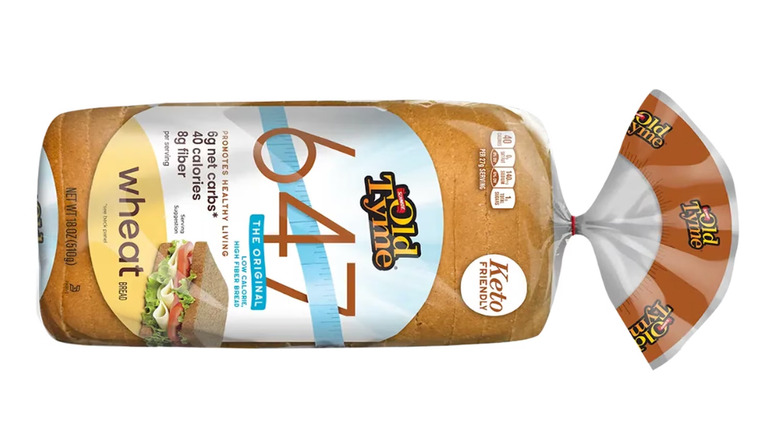
Another in the genre of light, marketed-as-healthy bread brands is Schmidt Old Tyme's 647 label. While this bread does contain a whopping 8 grams of fiber per slice — a nice number, for sure — and only 1 gram of added sugar, and there isn't one particular ingredient that stands out as particularly concerning, the total number of ingredients — more than 20, by our count — does suggest that this falls squarely into the category of ultra-processed bread.
While this loaf is high in fiber and whole wheat flour is listed prominently within its ingredient list (third, to be precise), it sits behind modified wheat starch, again pointing to the highly processed nature of this product. Compared to the aforementioned lighter bread options from both Sara Lee and Pepperidge Farm, this one is, all things considered, probably a better choice for health-conscious eaters — but it still isn't among the healthiest whole wheat breads on the market.
Wonder Small 100% Whole Wheat
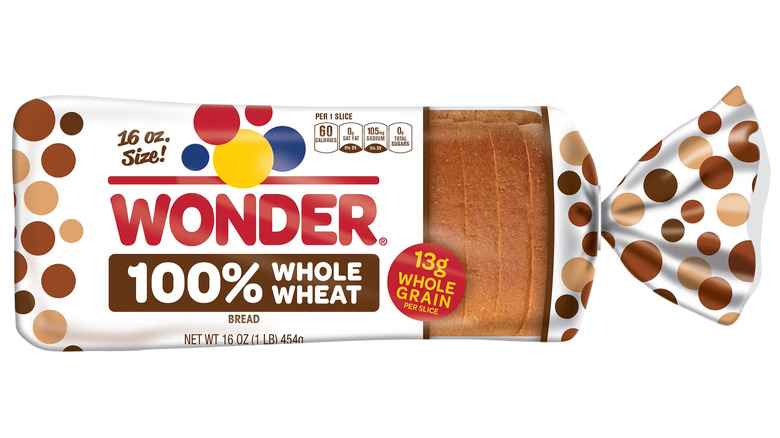
Speaking of breads with too many ingredients, Wonder Small 100% Whole Wheat's ingredient list contains a whopping 27 by our count. That being said, the bread itself doesn't necessarily contain all 27, since the list actually states that it contains "one or more of" a long list of dough conditioner options.
That said, if the brand name Wonder isn't enough to signify ultra-processed — it is, after all, the most iconic American brand of processed, sliced bread — the fact that the company lists so many possible dough conditioners seems to cement the idea that this bread is more engineered than baked. While each dough conditioner ingredient on its own may not be particularly concerning, the idea that Wonder needs to rely on such a wide variety of potential conditioners to achieve a specific texture is a good reminder that so many of these grocery store products are more industrial than artisanal, even if they do contain lots of seemingly healthy whole wheat flour.
Signature Select Bread 100% Whole Wheat
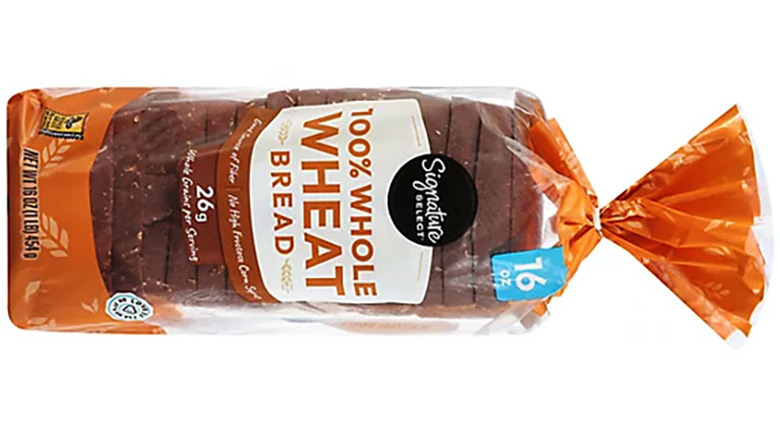
One of the types of bread that may contain multiple dough conditioners is a store-brand (sometimes called generic) product, which is typically sold at a lower price than name-brand alternatives. This certainly seems true for the Signature Select brand, sold in the Albertsons family of stores, which includes Safeway, Acme Markets, Vons, Pavilions, Star Market, and more.
In addition to dough conditioners, Signature Select's whole wheat option also contains artificial sweeteners sucralose (see Pepperidge Farm Light Soft Wheat section above) and acesulfame potassium, as well as preservatives such as calcium propionate and sorbic acid. While reasonably high in fiber (3 grams per 43-gram slice) and low in sugar (1 gram per slice), the fact that the bread contains several dough conditioners, preservatives, and artificial sweeteners makes it a less appealing choice for those seeking a minimally processed whole wheat bread — even if its overall nutritional profile isn't overly terrible.
Great Value 100% Whole Wheat Round Top Bread
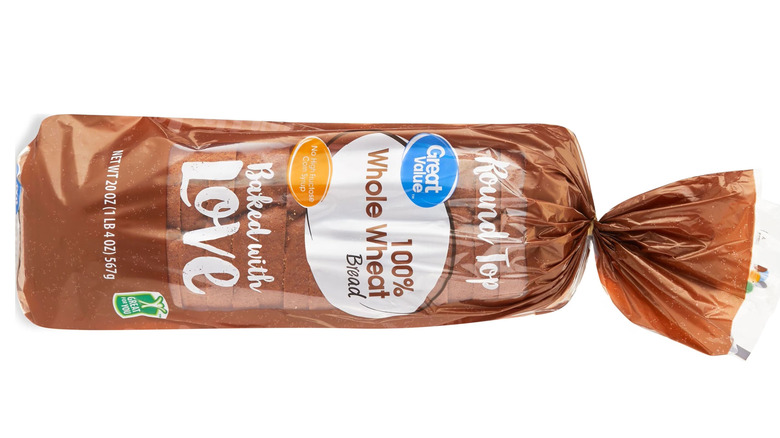
Another entry in the inexpensive store brand category, Walmart's Great Value Whole Wheat Bread is only about $2 a loaf, but does warrant further consideration from a nutritional standpoint. In particular, this bread, which is reportedly made by Sara Lee, contains an ingredient called DATEM — an acronym that is derived from its full name, diacetyl tartaric acid esters of mono- and diglycerides — that is commonly used in processed bread products.
The FDA recognizes DATEM as generally being safe to use in foods. However, some data suggest that long-term exposure to industrial emulsifiers — a category that includes DATEM — may have a negative impact on gut bacteria and metabolism. Much older studies have also linked it to potential heart fibrosis and adrenal overgrowth in rats, although its impact on humans is far less documented. To be fair to DATEM, the picture does still seem unclear related to prolonged use, but habitual consumers of products containing DATEM should at least be aware of these potential concerns.
Sara Lee 100% Whole Wheat
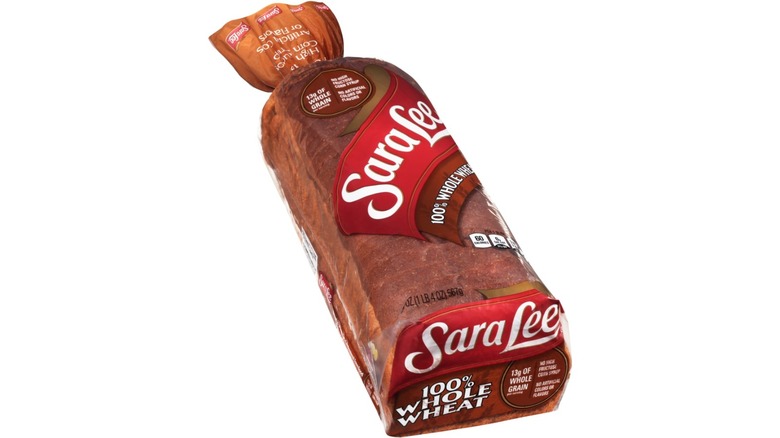
Another common problem with packaged, processed whole wheat bread that we haven't yet discussed is sodium. As in, many of these breads can contain way too much sodium per serving. The FDA, in fact, has released suggested guidelines for brands looking to (voluntarily) reduce sodium content, proposing an average of 3.5 milligrams per gram for whole wheat breads such as these, with an upper boundary of 4.6 milligrams per gram. This Sara Lee option sits at the highest end of that boundary at 4.6 mg per gram.
This bread also outs itself as ultra-processed, not only due to the inclusion of DATEM and several commercial preservatives, but also because of its generally gummy texture. Though probably not the worst option on this list — and certainly better than the same brand's Delightful line, with its artificial sweeteners — this generally isn't a whole wheat bread that we'd recommend for those concerned with eating healthily.
Bowl & Basket 100% Whole Wheat Sliced Bread
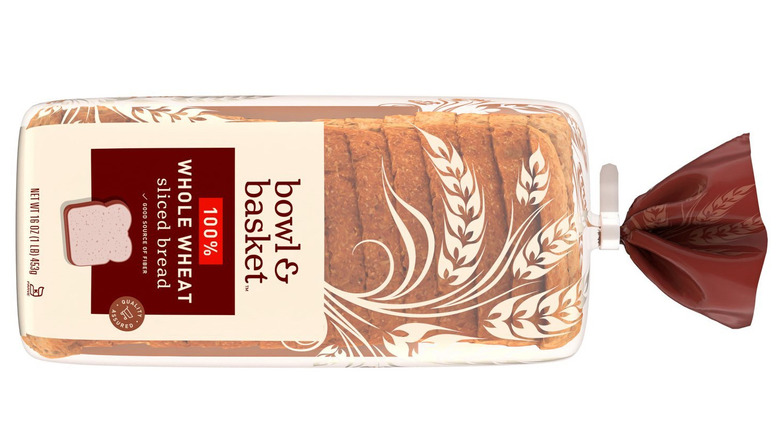
A store brand that is available at Wakefern properties such as ShopRite, The Fresh Grocer, Price Rite Marketplace, and more, this bread features both dough conditioners and preservatives, and is even higher in sodium than the Sara Lee loaf mentioned just above. That said, we also want to call it out for another noteworthy (in a potentially bad way) ingredient: high-fructose corn syrup.
To be clear, the argument about whether high-fructose corn syrup is any worse, from a health perspective, than regular sugar is one that has raged for the past several decades with no definitive, indisputable answer as of yet. That said, some studies have shown higher levels of C-reactive protein (CRP) after consuming high-fructose corn syrup in comparison to sugar, potentially indicating a raised inflammatory response. While it is certain that eating either too much high-fructose corn syrup or too much sugar is generally unhealthy, those who have a particular aversion to the former will surely want to avoid this bread from Bowl & Basket.
Dave's Killer Bread 100% Whole Wheat
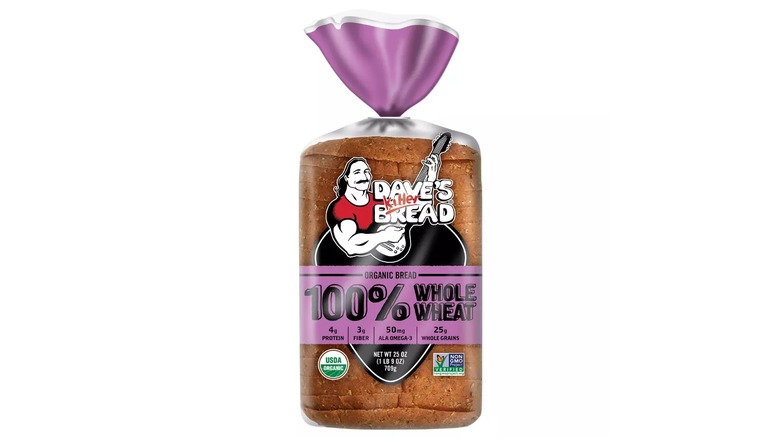
A few years back, it became worldwide news when Ireland's Supreme Court ruled that the bread served at Subway didn't qualify as bread, because it contained too much sugar. Since then, it's become quite common to see American bread compared to cake by Europeans, especially on social media. Considering that, this option — Dave's Killer Bread's 100% Whole Wheat bread — certainly isn't doing Americans any favors.
In our recent ranking of whole wheat breads, from best to worst, the slices from Dave's Killer Bread had the most sugar per gram — 4 grams per 42-gram slice — of any on the list. Not to mention the fact that the bread itself was actively sticky, as if the sugar was leaching out of it. While this loaf from Dave's Killer Bread is arguably one of the better-tasting on today's list, there's simply no need for that much sugar in any savory bread. (Unless, of course, it is indeed supposed to be cake.)
Pepperidge Farm Farmhouse 100% Whole Wheat
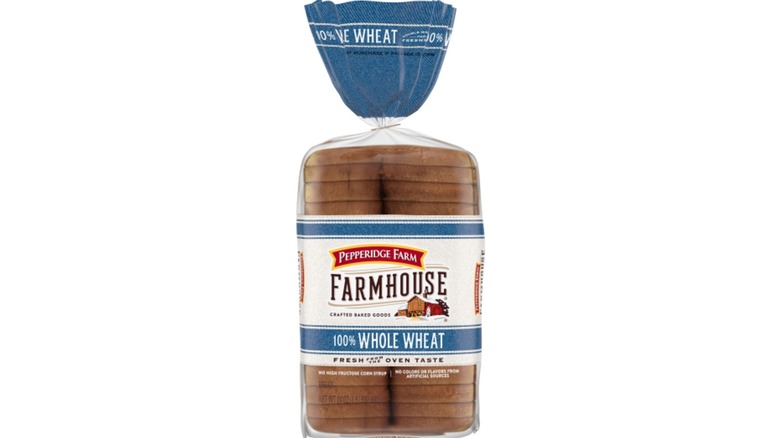
This choice from Pepperidge Farm is the most delicious option on this list. It is wonderfully light and fluffy, is made from 100% whole wheat, and contains a solid 4 grams of fiber per slice. As such, there are many reasons to buy and enjoy it. Still, however, there are some drawbacks here to be aware of, especially for those counting calories.
For one, the slices in this bread are some of the thickest and heaviest on the market, coming in at a gargantuan 49 grams per slice, which translates to a whopping 130 calories. In addition to that — and this is partially due to each slice's large size — this bread also includes 4 grams of sugar per slice. While that's not quite as much per gram as Dave's Killer Bread, it is still an abnormally high amount of sugar for a savory bread item. In sum, while this is a tasty bread, anyone concerned about calorie or sugar counts should probably consume it in moderation.
Methodology
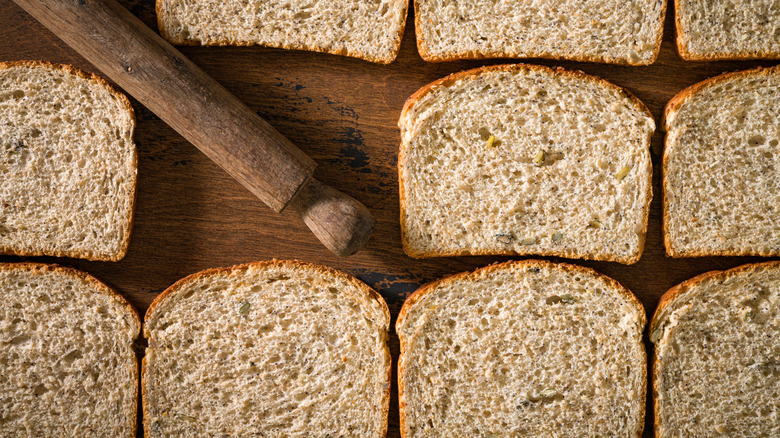
As stated in the introduction, calling a foodstuff healthy or unhealthy is typically a matter of opinion, or at least based on shades of gray. That said, to determine breads to be included in this list, we focused on several things. First and most importantly, we reviewed ingredient lists, looking for heavy use of artificial sweeteners, preservatives, dough conditioners, and other items that might not be found in homemade bread. We also reviewed calorie counts and levels of sugar, sodium, and protein per serving.
While we do occasionally mention published studies that link (or call out associations between) some of these ingredients and negative health effects, this article is for entertainment purposes only and should not be considered health advice.