

12 Celebrity Chef Tips For Flawless Grilling Every Time
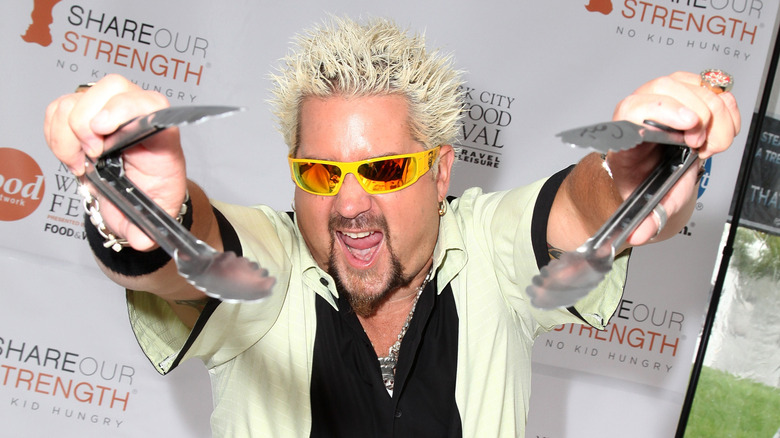
Grilling seems simple at first. All you do is start a fire under a grate and throw on some meat, right? Well ... it's not quite that easy. As any naïve home cook has discovered, you can walk out onto a back deck with a great degree of confidence and a plate full of raw burgers and, just a short moment later, walk back inside with sadness and the equivalent of burnt hockey pucks.
Though, at its most basic, grilling requires little in the way of equipment, it still requires a good degree of know-how. Never fear, though. If you're determined to master your barbecuing this season, you have plenty of resources and experts that are ready and willing to give you their top advice. From Guy Fieri to Alex Guarnaschelli to Michael Symon, we're taking a look at some of the best celebrity chef tips for ideal grilling to see what the pros say. Adopt a few of their practices and you may just find that your next grilling experience is more culinary victory than fiery doom.
1. Use an instant-read thermometer
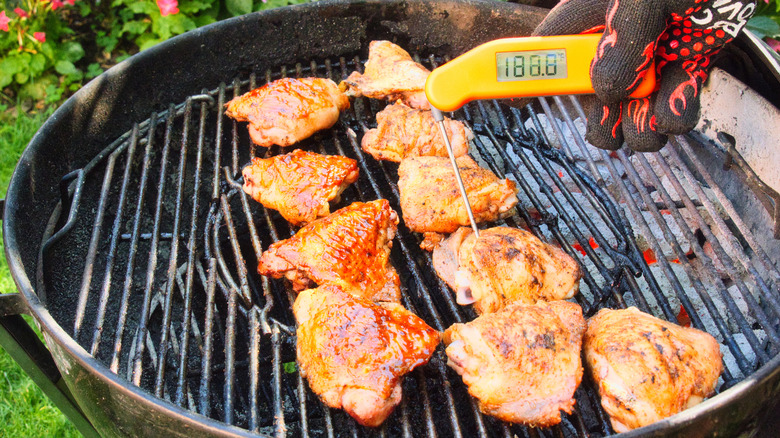
If you don't own an instant-read thermometer, and you're wondering why all of your grilling projects aren't quite turning out the way you might like, now may be a good time to buy one. At the 2024 Food & Wine Classic in Aspen, star chef Tyler Florence advised that it's great tool to have on hand. With an instant-read thermometer, you don't have to just rely on exterior color to tell you whether or not a piece of meat is finished cooking on the grill (because an otherwise succulent-looking steak could still be dramatically bloody in the middle — or, worse, gray and leathery).
That said, even if you have a good instant-read thermometer, it's not going to help you all that much if you don't actually know what temps you need to cook all your grilled foods to. When you use a thermometer to check heat levels while grilling, it's important to also recognize that as the meat rests before slicing, its internal temperature will rise further after you take it off the grates.
2. Keep the equipment simple
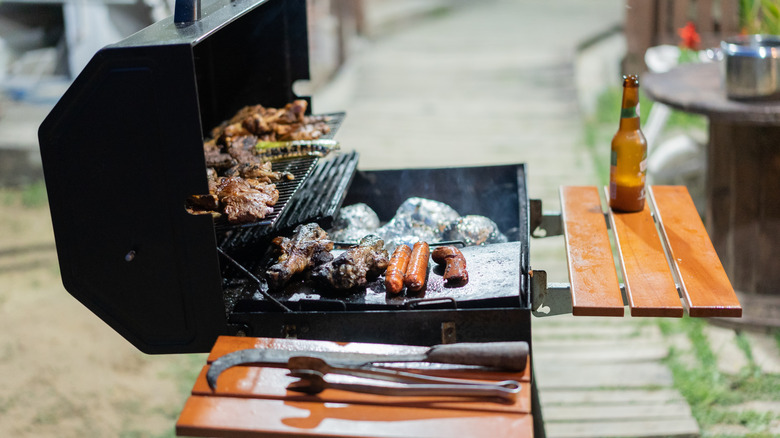
There's a lot of grilling equipment that you could potentially buy. The industry offers up tons of gizmos and gadgets that promise to make you a better barbecue maestro. However, you don't always need all of those products in order to turn out a truly good meal — sometimes, just the basic tools will do the trick.
One of celebrity chef Bobby Flay's big tips is to keep your equipment simple, relying on just the essentials (via Today). What does that look like? Well, Flay keeps his equipment staples to the following: tongs, a spatula, brushes, potholders, and a scraper. The point, though? You don't need a ton of barbecue gear to be a good grill master. All you need is a little bit of practice and to follow advice from the experts.
3. Keep one side of the grill cold
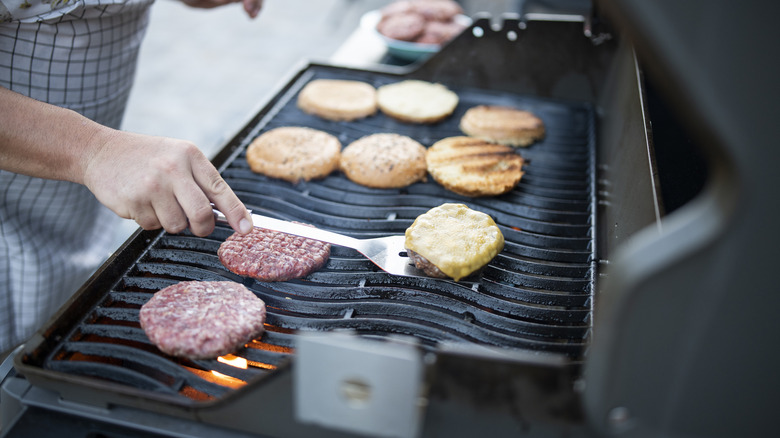
One of the most difficult parts of cooking on a grill is managing the temperature, particularly if you're dealing with a charcoal grill. When cooking over that open flame, it's just a fact that, without certain equipment you might not ever be 100% confident that the grill has reached your desired temp. It's not like your standard oven that will beep incessantly at you once it climbs to the perfect temp for, say, baking a cake. In your quest to get your grill to the correct temperature for whatever you're cooking, though, don't neglect to keep one area of your grill on the cooler side, advises celebrity chef Michael Symon.
In an exclusive interview with Tasting Table, he says, "Have it set up so one side's hot and the other side's basically off." This, he explains, will give you a place to put grilled items as you cook your way through multiple other foods. It's especially important for things like thicker vegetables that you might want to char over higher heat and then finish off over lower heat.
4. Preheat the grill
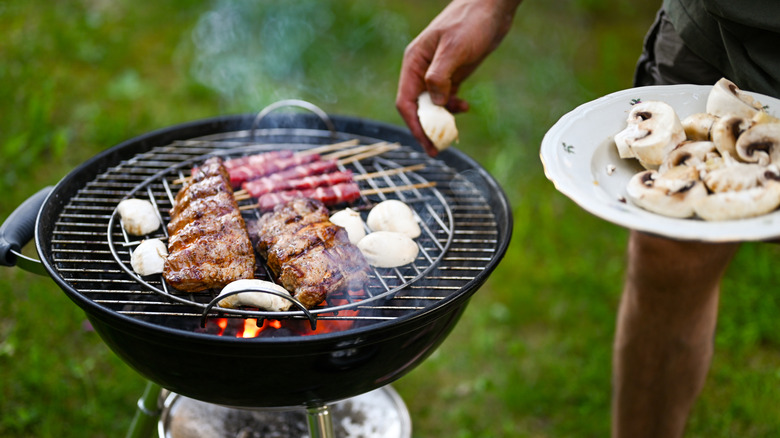
Preheating is a good rule for just about anything that you're cooking. You don't want to start with a completely cold surface. So, when it's time to grill, you want to preheat the grill first, according to star chef Curtis Stone (via the Montgomery Advertiser). Not only will doing so lessen your cooking time and ensure a more even cook, but it'll help you avoid any unnecessary sticking.
Additionally, putting your food onto cold grill grates and then letting everything come up to temperature simultaneously can cause the food to lose too much moisture, resulting in it being too well done. Plus, because the grates aren't actually hot when you add the food to them, you're not going to get any of that great searing action.
Don't worry, though — you don't have to preheat your grill for all that long. Just 10 minutes can do the trick! If you're preheating a propane grill, light it, turn the heat all the way up, close the lid, and wait. When you come back, the grill will be ready to go and you can adjust the heat as necessary.
5. Dry the food
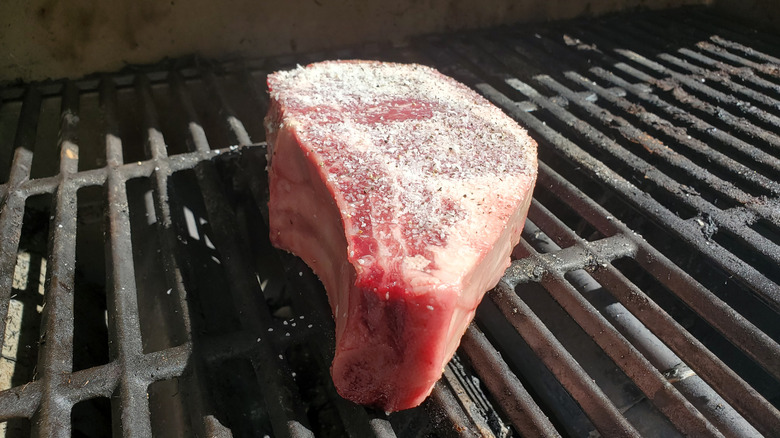
Another tip from celebrity chef Curtis Stone? Before you add your meat to the grill, give it a good, quick dry. You don't want to just pull that steak or burger, or even chicken breast, from the pack and simply slap it onto your preheated grates. The residual moisture from the meat being packed and defrosted in your fridge is your enemy.
It all comes down to science. The scientific process that's responsible for your meat browning and searing to grilled perfection is called the Maillard reaction. Long story short, the Maillard reaction is what happens when amino acids and sugars undergo a chemical reaction and produce the scents, smells, and flavors we associate with properly browned foods. It's why a grilled chicken breast tastes better than a boiled one.
However, this reaction requires a certain temperature range (280 to 330 degrees Fahrenheit). Water cannot reach the temperatures necessary for the Maillard reaction. So, if your cut of meat (or whatever you're grilling) is covered in moisture, it can't sear until all that moisture evaporates naturally. The food can still cook, of course, but it's not going to sear — meaning you could end up with an overcooked dish before any searing actually occurs. To save you from this awful fate, get rid of that moisture by drying off your food before it hits the grill.
6. Temper the meat
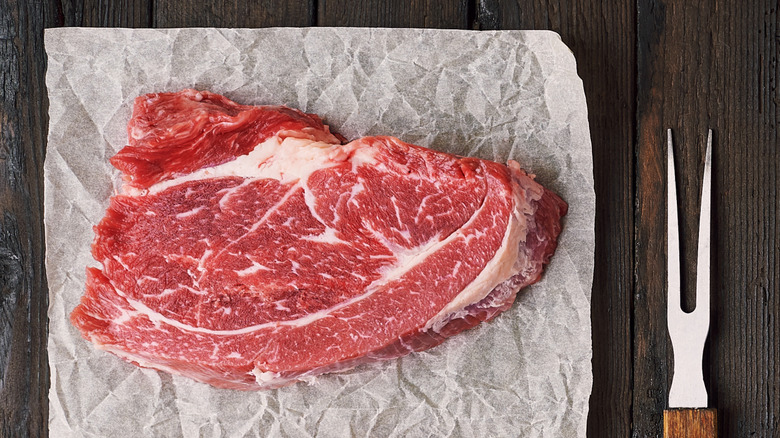
A lot of chefs will tell you to temper your meat before it goes on the grill — including celebrity expert José Andrés (via Good Housekeeping). "Tempering" might sound a little fancy, but it's really not. It just means taking the meat out of your fridge before you put it on the grill, and letting it come to room temperature before cooking. By doing so, you can, again, avoid negatively affecting the Maillard reaction. Remember — the Maillard reaction requires a certain temperature, and the longer it takes for cold, just-from-the-fridge meat to get to that temp, the longer it has to cook on the inside before actually searing up the way you'd like on the outside.
Chef Andrés recommends letting the steak sit out for a few hours before cooking. However, you want to keep food safety in mind, too. Best practice (at least safety-wise) is to never leave raw meat out of the fridge for more than two hours. Otherwise, you risk the meat floating into the USDA's "danger zone," where it reaches 40 degrees Fahrenheit and begins to accumulate bacteria at a rapid rate — and no one wants to be dealing with foodborne illness-causing bacteria while they're trying to work the grill.
7. Grill your beef to medium
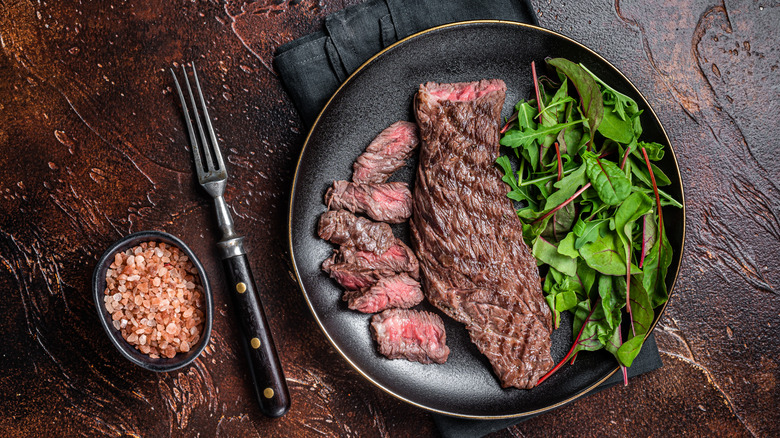
A lot of home cooks have some very strong feelings on what temperature is correct for cooking beef. Some will swear by a nice medium rare. Others think that well done is the way to go every time.
As for grill master Bobby Flay, he's recommending that you always grill your beef to medium. In an exclusive interview with Mashed, he admits that his preference for grilling both steaks and burgers to medium only is a bit of a hot take. It's controversial but justified.
"I think there's some peer pressure on us to order red meat rare and medium rare, whether we like it or not, because that's what we've been told to do," he says. However, he recommends if you're grilling certain cuts of beef, you have to grill it until the fat begins to melt, in order to get a truly juicy bite, every time. As such, medium might be a better pick than rare or medium rare.
8. Keep the lid on
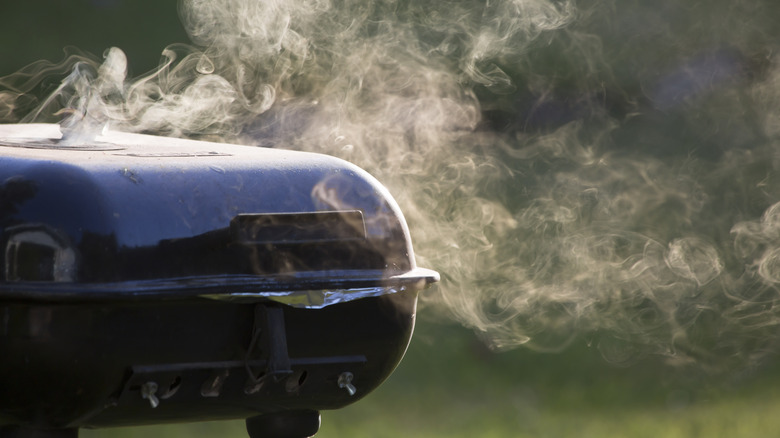
One of the most difficult aspects of the cooking process is just knowing when to leave things be — in this case, keeping the lid on the grill. There's always this urge to open things up and poke around. Then, though, you find that all your poking leads to food that's not cooking fast enough at best; at worst, you end up trying to scrape a not-nearly-even-done-yet piece of chicken or beef off the grates and then that protein falls apart.
So, along these lines, Bobby Flay encourages you to simply keep the lid on. Stop messing with your grill and let it do its work. When you're opening the lid, over and over again, just to get a peek at the cooking process, you're letting out heat. You're also letting out moisture. As a result, the meat takes longer to cook, the heat isn't evenly distributed, and ultimately you end up with a subpar product.
The only caveat to this rule? While Flay says that you should keep the lid on for items that take overall longer to grill, like beef and chicken, you should leave the lid off for items that are at risk for burning if you don't keep a close eye on them (like seafood or non-proteins).
9. Think seasonally about what you're grilling
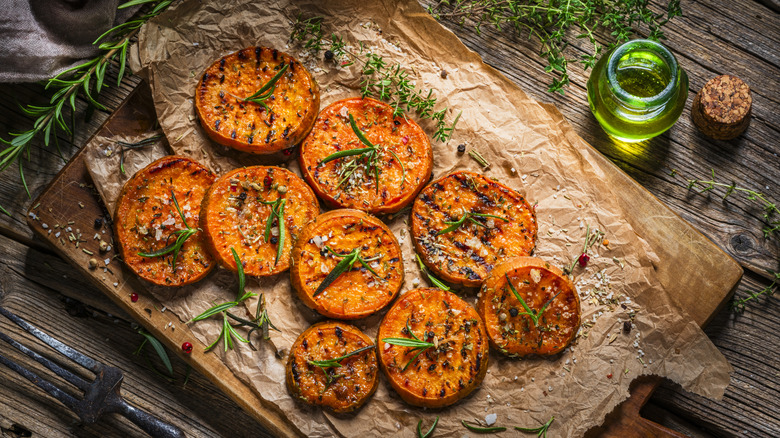
If you've been convinced that you need to add some unexpected vegetables to your grill, how do you actually pick what goes onto the grates? Well, star chef Marcus Samuelsson has a few ideas. In an interview with Chowhound, Samuelsson recommends opting for seasonal vegetables first.
In the summer, he says, you could grill up some corn, tomatoes, or chiles. However, you can broaden your idea of what to grill once the mercury starts to dip. During those later fall and winter seasons, it might be more appropriate to smoke or barbecue those hardy fall or winter vegetables, like sweet potatoes.
If you're still unsure about what to throw on the grill besides meat, really attempt to open up your mind to the possibilities. Seasonal fruit is a great option (and even if you don't eat it straight off the grill right away, grilled or smoked fruit can translate into a great sauce or cake or ice cream topping, or even a cocktail addition). Cauliflower and potatoes gain extra flavor from a smoky session on the fire as well.
10. Grill underrated ingredients
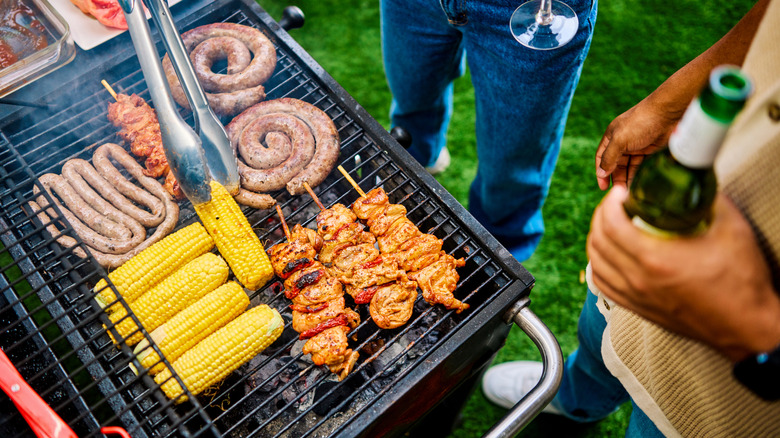
Yes, we all use our grills for the typical staples like hot dogs, burgers, chicken, and steak. Don't let your grill become a mere carnivore's playground, though. You can do so much more. The grill, though often depicted as a landscape for meat alone, can cook up delightful servings of veggies and more. And even if you want to stick to the meat, you should really branch out beyond your Walmart meat department!
Chef Michael Symon tells Tasting Table that one of his favorite cheap cuts of meat to grill is beef cheeks — and, yes, he did acknowledge that those can be difficult to find for the average folk. However, if you can find it, grill it. As for the most underrated vegetables to grill, he named root vegetables, including celery roots, beets, and cabbage.
Meanwhile, chef Alex Guarnaschelli likewise turns to non-protein items for grilling, such as fruits like peaches and pineapple. Chile peppers are also a favorite. According to Guarnaschelli, you can also grill your herbs, like thyme sprigs, letting them char and then combining them with a simple syrup for use elsewhere, per People.
11. Don't move the food too much
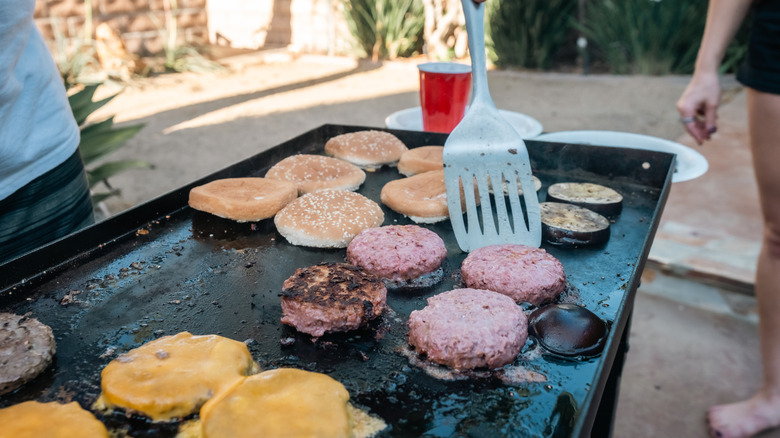
Along the lines of not opening and closing your grill cover too much, you also don't want to move the food too much, either. Put down the tongs and stop all that shuffling, flipping, and flopping.
Oh, the food seems stuck? Still leave it! While, yes, you might assume that, if you try to flip a food and it's stuck, that means that it's burnt to the cooking surface and you should've moved it earlier, that's not the case at all (or, at least it's not in a lot of instances).
The rule of thumb, at least according to Bobby Flay (via Food Network), is that, if food is still sticking to the grill, it's not done cooking. Sometimes, when food seems stuck, it's because it hasn't had time to cook long enough to caramelize, at which point it will naturally pull away from the cooking surface all on its own. So, let the food stay where it is.
12. Don't forget to grill some sides
Obviously, for anyone trying to up their grill game, it's important to never, ever forget all of the sides. After all, what's a steak without some grilled asparagus? Celebrity chef Guy Fieri agrees, and recommends really focusing in on your side dishes. Maybe that looks like throwing some vegetables onto the grill. "I know everybody likes to make the protein the center of the plate, [but] to me, what really is the exciting factor is where are we going to take the vegetables?" he tells Us. "My veggies are usually what speaks to me about where I'm going to take [a meal]."
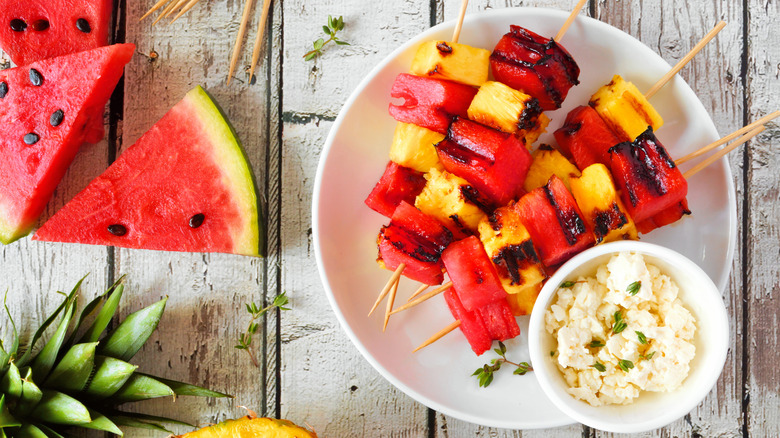
Luckily, you have tons of options for grilled side dishes. If you do want to throw some sides on the barbecue alongside the main attraction, consider making some tandoori-style cauliflower, grilled salsa, or even grilled cheese and bread. You could also make some watermelon and pineapple kebabs, using the grilled fruit in both savory and sweet dishes. If you're using a smoker, throw some potatoes into the mix for a side dish your guests are sure to never forget.
Static Media owns and operates The Takeout, Mashed, Tasting Table, and Chowhound.