

13 Oldest Beer Brands Across The US
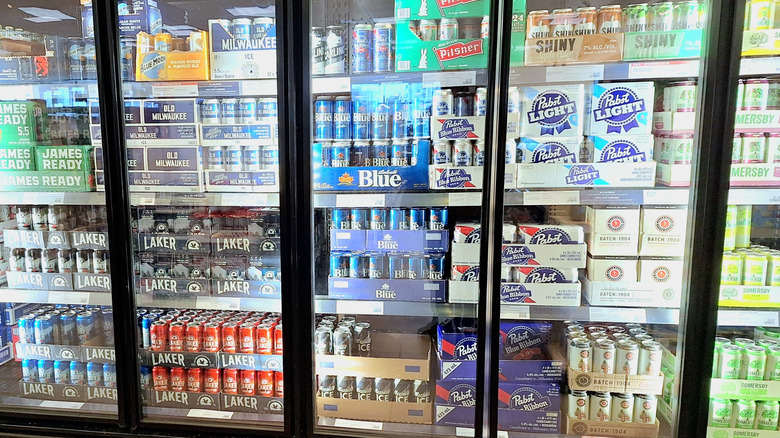
Beer is an old friend to humanity, kind of like the dog or the wheel. We've been making beer ever since our cave-dwelling days, and the fermented companion goes back to the very beginnings of agriculture. Since that time, our beer has gone from cliffside hollows to mass-production breweries, and from ancient staple to big business. Certain beers have even become some of the most famous and enduring brands in American history.
And we do mean enduring. A number of beers for sale in your grocery store today trace their origins to decades before the Civil War, from all over the country (not just Wisconsin, believe it or not, although the state is well represented in this regard). Several of them are household names, while others are regional, rare, and even fighting for resurrection. Yet, they all have a long and winding story to tell.
Here are the 14 oldest beer brands in the U.S. (Note: it's the labels that are dated and ordered, not necessarily their breweries.) Readers may have their own preferences over others on this list, but they all must have been doing something right to last this long and keep on trucking. If there are a few you've yet to try, well, where have you been?
Schaefer (1842)
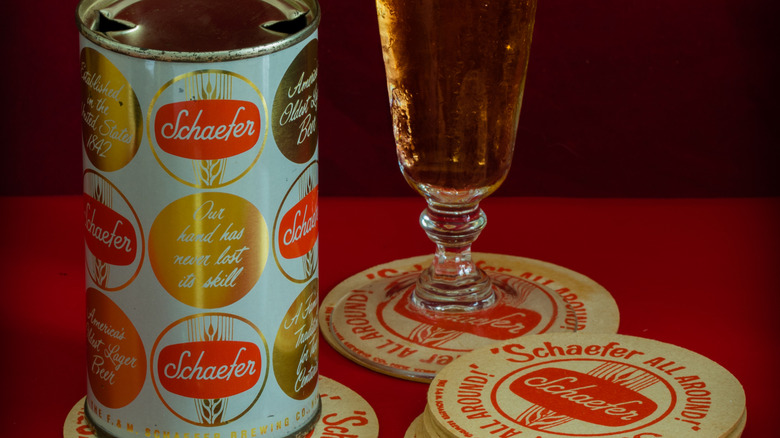
A true New York original, Schaefer beer is so old that its founders immigrated from what was then the independent kingdom of Prussia, predating the unification of Germany in 1871. Frederick Schaefer arrived in America a year before Maximillian did, in 1838, and began work at a Manhattan brewery.
By 1842, the suds-soaked siblings were able to buy that same, modest brewery. This was the place where Schaefer beer was born, popularizing lager in the U.S. Eventually, Maximilian's son, Rudolph, took over the family biz and relocated to a fancy new factory in Williamsburg, Brooklyn (a spot that these days is home to a small, waterfront greenspace right on the East River called Schaefer Landing).
While Schaefer was once a powerhouse in beer sales, its star had waned by the late '70s. The company was subsequently sold to Stroh Brewery Company in 1981 and then flipped to Pabst in 1999, where it became something of an afterthought label. Although still in circulation as of 2026, Schaefer is a pioneering lager that we rarely see people sip on nowadays.
Miller (1855)
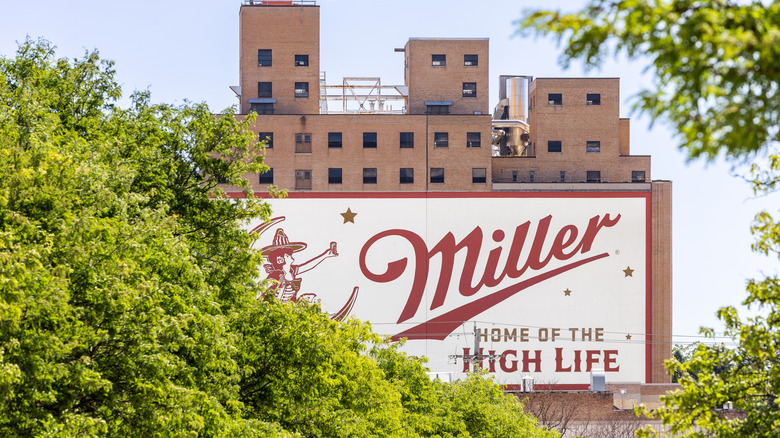
Miller Lite, Miller High Life, or both have been in the top five best-selling beers every decade since the 1980s. The Miller brand is now owned by the massive brewing conglomerate Molson Coors, but its history dates back to Frederick J. Miller's purchase of Milwaukee's Plank Road Brewery in 1855.
Miller had to change course when Prohibition hit, just like every brewery in America. Just like Coors, it powered through the alcohol ban by making soda and malt syrups. Miller added to its portfolio by acquiring the Milwaukee's Best brand in 1961, and in 1975, the company left a unique mark on the industry by releasing the first commercially successful light beer: the aforementioned Miller Lite.
As one of the legacy alpha beermakers in the U.S., Miller spent the following decades solidifying its lofty position by purchasing a myriad of breweries and brands — until the merged corporation of Molson Coors came along and absorbed it, buying out its remaining shares in 2016. After all these years, Miller Lite still holds up as one of the best American light beers and one of the most recognizable names in beverages, period.
Point (1857)
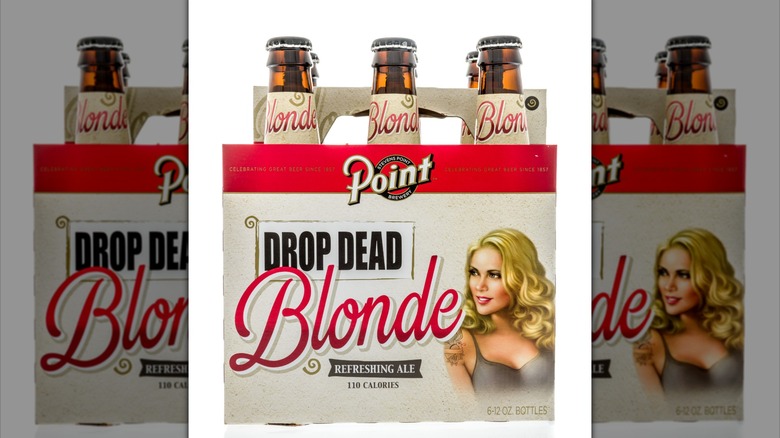
We're in Wisconsin for another beer-making institution that started (and was even part of) in the depths of American history. When Civil War troops were sipping on your suds, you know you've been around a helluva long time. So is the case with Point. The brand name derives from the town of Stevens Point, where the beer was founded and is still made.
It was in 1857 when two men, Frank Wahle and George Ruder, started up the Stevens Point Brewery on Water Street. As mentioned, in 1864, the brewery was sending its beer to undoubtedly very grateful Union soldiers (Wisconsin provided more than 90,000 fighters for the Northern army).
Although the Great Depression saw an unfortunate number of Wisconsin's breweries shut their doors, Stevens Point managed to stay in operation. Point beer was very much just a Badger State thing for more than a century, not sending its first case of beer out of state until 1970, for an exhibition in Washington, D.C. Still going strong, Point opened a $1.1 million tap room in 2024, so locals and beer pilgrims alike could enjoy a fresh, historic draft.
Schell's (1860)
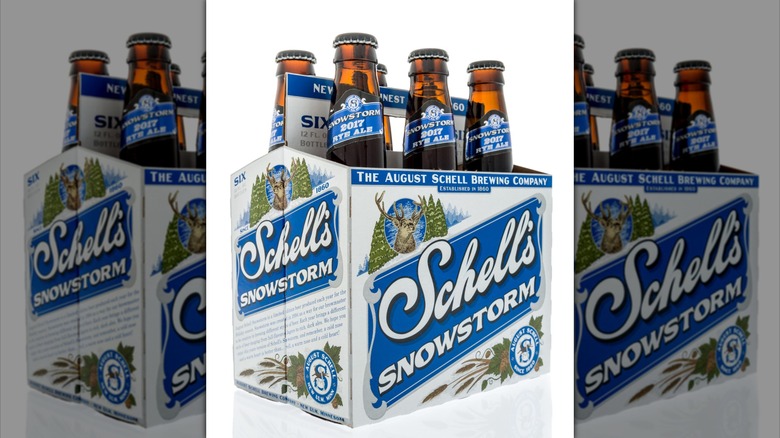
A German immigrant moving to the Midwest is the start of many an American brewery tale. This time it's Schell's, and this time it's Minnesota. New Ulm, Minnesota, to be specific, the place where namesake August Schell settled down and constructed his Old World-influenced brewery (after he apparently complained that he couldn't find a decent beer in America). And it's the place where Schell's beer is still brewed today.
Schell, the man, made his way to the U.S. in 1848, entering via New Orleans on a steamship before making a home and starting a family in Cincinnati. In 1856, Schell and crew relocated up north, to New Ulm, where he started working in a flour mill. Changing tack, Schell took on a business partner and opened a brewery in 1860. In 1866, Schell became the sole proprietor.
The buck deer that adorns Schell's packaging even today is inspired by the founder's family crest from back in the Black Forest region of Germany. You'll find it on the classic legacy beers, year-round crafts, and seasonal crafts that the North Star State brewery still produces.
Frankenmuth (1862)
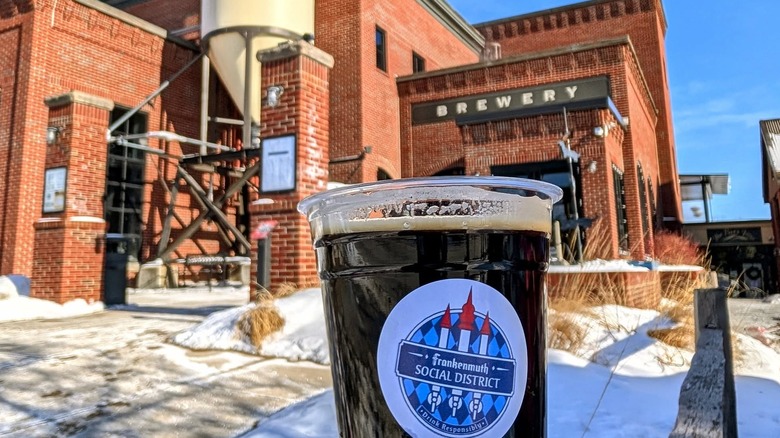
You can't tell the story of Frankenmuth the beer without telling the story of Frankenmuth the city. Nicknamed "Little Bavaria," the Michigan municipality was founded in 1845 by 15 German-Lutheran missionaries who vowed to maintain their traditions and language in their new land. Two cousins from those settlers founded a brewery along the Cass River in 1862, and Frankenmuth beermaking was born.
A man named Johann Geyer, who bought the brewery in 1874, is credited with establishing it as a successful, lasting operation. Geyer's affinity for dachshunds inspired the company's mascot, which has been around since the 1930s. The brewery has had to survive a few setbacks over the long years, including a fire in 1987 and a tornado in 1996.
In 2003, Frankenmuth updated the brewery big-time with a 27,000 square-foot space in the same historic location, adding a restaurant and a patio, among other things. Amazingly, it's not even close to the biggest eatery in Frankenmuth — if you can believe it, the modest town boasts the largest family restaurant in America.
Leinenkugel (1867)
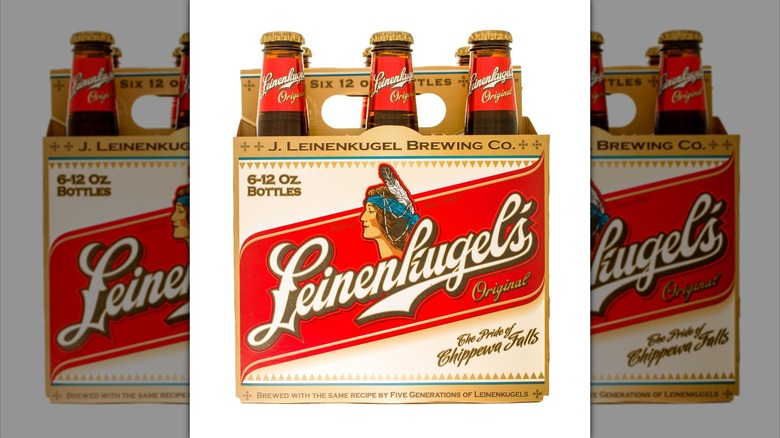
In 1845, the Leinenkugel family immigrated to the U.S. from Meckenheim, Germany. The clan's patriarch, Jacob, was the son of a brewer, and he parlayed his pedigree into opening his own brewery in Chippewa Falls, Wisconsin, in 1867 with a business partner, John Miller (who was not connected to that other relatively well-known brewery, despite the name). The logging town had an excellent environment for everything a brewery needs: excellent water, plus fertile soil for hops and oats.
Leinenkugel's business grew under the stewardship of Jacob's descendants. In 1988, Leinenkugel was bought by Miller (turning the former into a national brand), which was then absorbed into Molson Coors. However, the sixth generation of Leinenkugels is still involved in the business.
Leinenkugel's popular Summer Shandy was released in 2007, and it inspired a fun marketing gimmick in 2021, when the constant mispronunciation of shandy as "shanty" (which is a shack) prompted Leinie's, as it's known, to offer customers the chance to win an actual shanty. Not a summer one, mind you, but an ice shanty, with all the basic amenities one would need to last a Wisconsin winter.
Yuengling (1873)
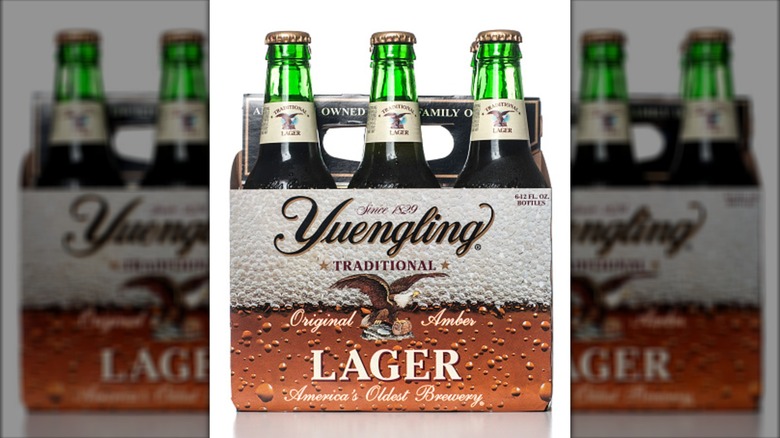
The pride of Pennsylvania, a constant of Philly happy hours, Yuengling is, by all accounts, the oldest American-brewed beer still being imbibed across the U.S., even if the famous name wasn't there from the beginning. Still going strong at nearly 200 years old, the story of Yuengling begins like many an elder stateside beer: with a German immigrant.
David Gottlieb Jüngling emigrated from Wuerttemberg to the coal-mining town of Pottsville at just 20 years old. He brought with him a serious background in brewing, especially with cold-brewed lagers, and aspirations to open his own beer business in America. With that came the Anglicization of his surname to Yuengling.
Within two years of his arrival, he had done exactly as he intended, founding what was then called the Eagle Brewery in 1829. Yet it wasn't until 1873, after a fire destroyed the original factory (which was then replaced nearby in 1831, where it's still brewed today) and his scion Frederick became part of the business, that the company was rebranded as D.G. Yuengling & Son. So, yes, Yuengling is technically from the oldest brewery in the U.S., but the label itself came along a bit later.
Coors (1873)
Alright, we get it, Germany. You are solely responsible for the American beer industry as we know it. This is made clear once again with one of the country's iconic brewing names: Coors. Founder Adolph Coors worked as a beermaking apprentice in his home country of Germany (then known as Prussia) before immigrating to the U.S. in 1868. He worked for a time in the Chicago brewing scene before, as the Coors website puts it, he "fell in love with the Rocky Mountain landscape."
Thus, in 1872, he bought a bottling company. He then turned it into the Coors Brewing Company (actually the Scheuler and Coors Brewing Company, co-named after the candy store owner he initially partnered with), and off the brand soared. The brewery was already producing 800 gallons of beer per day by 1874 (which was, impressively, during a national economic crisis).
Along with huge success, Coors had its share of tragedy down the years. Adolph Coors himself took his own life in Virginia Beach in 1929. In 1960, chairman and scion Adolph Coors III was kidnapped and murdered by escaped fugitive Joseph Corbett. Despite the family turmoil, Coors — with its famous American lager Coors Banquet and the ubiquitous Coors Light — is still a staple label in the beer aisle.
Budweiser (1876)
In 1857, in St. Louis, the Bavarian Brewery was founded. Three years later, the iconic namesakes would start to enter the picture, as Eberhard Anheuser — a man with zero beermaking experience –- bought the brewery and rechristened it E. Anheuser & Co. A year later, Adolphus Busch became both Eberhard's son-in-law and employee at the company.
In the 1870s, the brewery used pioneering pasteurization methods to make the beer shippable across the country — a first in America. In 1876, Budweiser Lager Beer was launched, becoming the signature brand for the company, which was renamed the Anheuser-Busch Brewing Association three years later.
In 1970, Anheuser-Busch produced its 20-millionth barrel of beer, an indication of how much of an industry titan the company became nearly a century since its founding — and how it would hold that place into the 21st century. Sure, by taste, Budweiser may barely crack the top 10 of Anheuser-Busch-owned beers in 2026, but the beer itself is still one of the most recognizable American brands, not just domestically, but around the world.
Genesee (1878)
Arguably the beer that defines upstate New York, Genesee traces its roots all the way back to 1857 with the founding of Rau & Reisky Brewery in Rochester, later called Reisky & Spies –- which came complete with a saloon and a bowling alley. In 1878, Reisky & Spies was bought by Mathius Kondolf, who renamed it Genesee Brewing.
Genesee eventually hired Louis A. Wehle away from Rochester's largest brewer, Bartholamay, making him the youngest brewmaster in the state. After Genesee shut down for the duration of Prohibition, Wehle returned to purchase both the Genesee factory and some of the Bartholomay one, creating the revamped Genesee Brewing Company in 1932.
1960 saw a major development for the brewery with the introduction of Genesee Cream Ale. It would go on to win two Great American Beer medals and become the best-selling ale in America. Genny Cream, along with its other line of brews, remains a staple in bars and stores up and down the East Coast.
Pabst Blue Ribbon (1895)
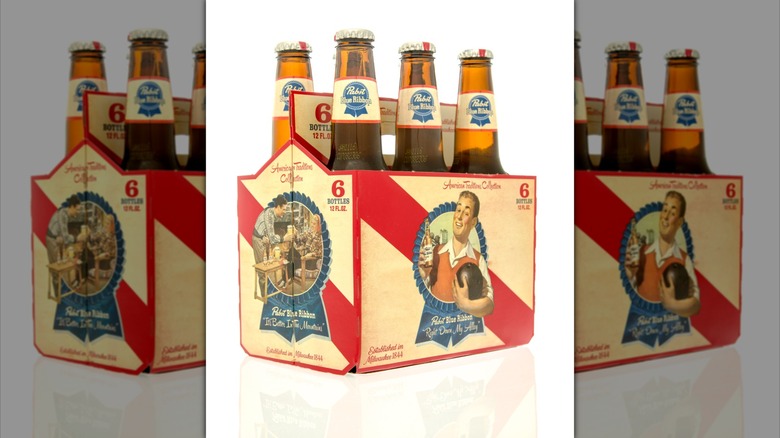
Before PBR-heads get all up in arms about the conspicuously late dating here, this is a friendly reminder that this article is focusing not specifically on the oldest brewers in America, but the oldest beer brands. Many may already know the history here. Pabst started out life as a brewing company founded by one Jacob Best in 1844, later known as Best Brewing Company. It was only when Jacob's granddaughter married German immigrant and steamship captain Frederick Pabst that the famous surname would enter the fray.
Pabst became a partner in the brewery in 1863, and by 1872, he was president. Under his stewardship, Best became the second-largest brewery in the country. This massive success was followed by recognition. The collecting of national and international awards prompted an enduring PR move in 1882: the placing of blue ribbons around the necks of the beer bottles.
Finally, in 1889, the company's name was changed to Pabst Brewing. In 1895, "Blue Ribbon" became officially part of the brand name, and in 1899, it was finally christened Pabst Blue Ribbon, and with it came the signature red stripe on the label.
Anchor (1896)
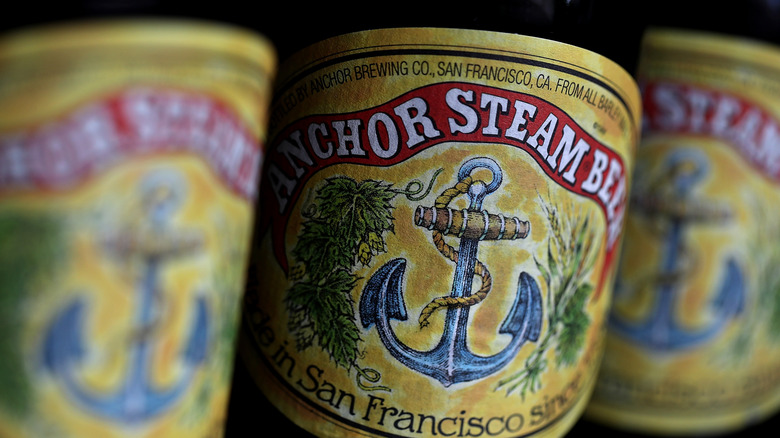
Laying fair claim to being the first microbrewery in the U.S., Anchor produced what's also considered the original American craft beer: Anchor Steam. A true San Francisco original, the brewery first opened in 1896 in the Russian Hill neighborhood of the city.
A turning point for Anchor came in 1965, when a majority stake was purchased by Maytag (yes, the washing machine people). Fritz Maytag III, the new owner, was less a beer aficionado and more of a science buff. He became interested in not mass-produced, factory-line beer, but brew produced in small batches with thoughtful, artisanal ingredients.
The 1970s saw Anchor add a slew of new beers to its lineup, including the popular Anchor Porter. In recent years, however, Anchor has had to fight for survival. In 2023, Anchor shut down its beermaking operations for good. However, the iconic label seems to be heading for a comeback. Since its previous owner, Sapporo, closed its doors, Chobani's billionaire founder has purchased the company and is poised to drop Anchor onto the world once again. Let's hope he does.
Shiner (1909)
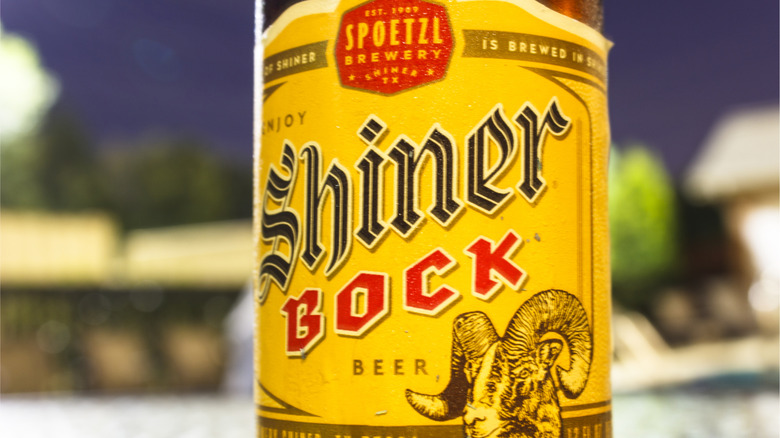
Shiner's first beer was created in 1909 from water out of a well next to a tiny tin shed in the town of Shiner, Texas. That water was what allowed Czech and German immigrants to start brewing the kind of beer they longed for back home. To really take off, however, they needed a proper brewmaster. They found one in native Bavarian Kosmos Spoetzl, who brought an old family recipe with him.
Spoetzl Brewery, as it would eventually be called, allegedly continued to brew Shiner beer throughout Prohibition, with Kosmos Spoetzl being labeled a bootlegger (though presumably few beer lovers in town were unhappy with these apparent transgressions). Kosmos's daughter, Cecile, took over after he died and stewarded the brewery until the 1960s as, according to the company itself, the then-only female brewery owner in the entire U.S.
It wasn't until 1993 that Shiner sold its beer outside of Texas, reaching 14 states. Spoetzl's creation can now be enjoyed throughout the entire country, and in 2025, Shiner's parent company, Gambrinus, was listed as the sixth-largest craft brewer in all the land. Not bad for a tin-shed start.