

I Tried The 9 Most Popular Light Beers In America (And The Winner Shocked Me)
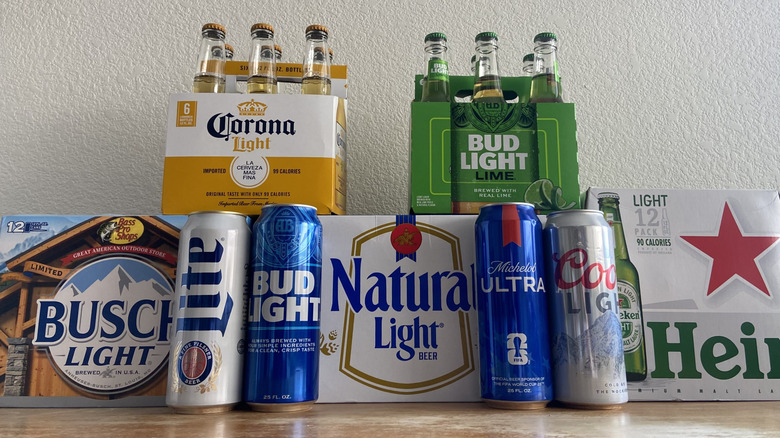
Some beer-drinking occasions call for deep, complex, barrel-aged stouts. Other times, the right call is a classic American light lager. The lower calorie content of a light lager is ideal for a night of drinking with friends, for example, when a beer's quality just isn't as important as keeping the good vibes going. If any cans or bottles are left over, lighter beers are even best for battering fish.
For those times that call for light beer, there's no shortage of options on the shelf of pretty much any store that sells alcohol. To help narrow down that wide variety of products on offer during a light beer run, I tried the nine most popular light beers in America and ranked them based on my thoughts. The best of the bunch, it turned out, probably wasn't the option most would expect to top such a list. Ahead, then, is my ranking from worst to best of the nine light beers I tried, concluding with my unforeseen pick for the single best light beer of them all.
Methodology
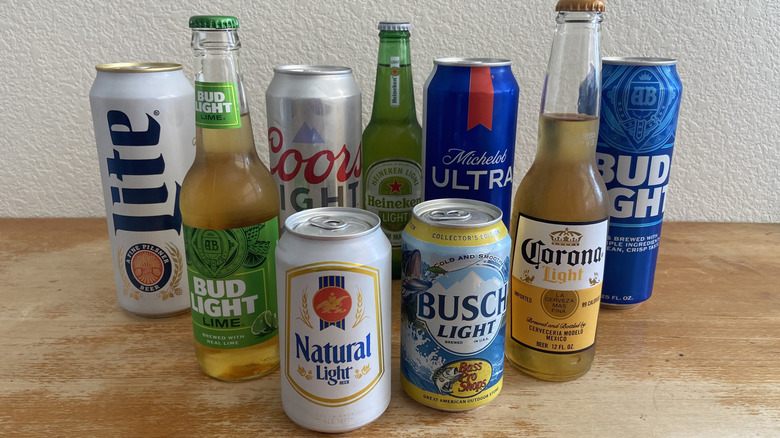
To select the nine most popular light beers in America, I consulted YouGov. Based on its proprietary market research data, YouGov's list determined popularity based on what percentage of adults surveyed shared that they held a positive opinion of a given product. From the top 40 most popular beers overall, I selected the eight products with "light" or "lite" in the name, in addition to Michelob Ultra which makes its status as a light beer abundantly clear in its marketing.
I tried all nine beers in one sitting so that I could best assess their quality relative to one another. While I poured all of my beers into a glass for the sake of best representing their appearances in my photos, I also tried each beer straight from the bottle or can, since I presume that's how most enjoy their light beers. To help cleanse my palate, I kept a cup of water on hand. Beyond my initial tastings, I occasionally returned to some of the beers I had tried previously to better compare them to beers of similar quality. I also retried my number-one pick a day later to make sure my opinion on that beer, in particular, held. My rankings are based entirely on my thoughts after that experience, not taking into account any prior impressions I may have had of the featured products.
9. Michelob Ultra
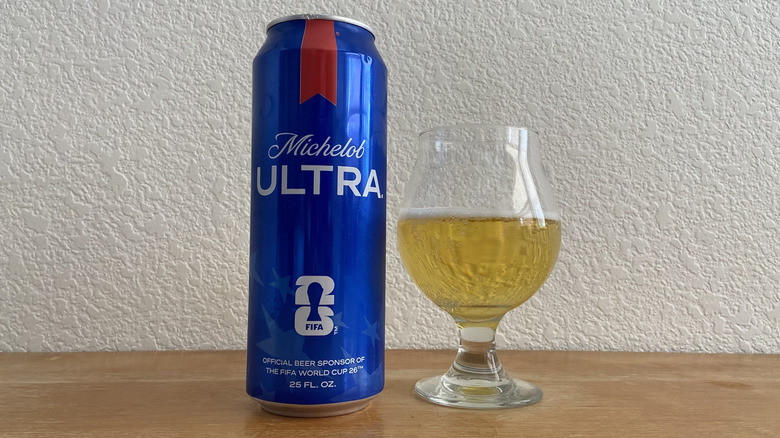
Nearing the end of 2025, Modelo was no longer Americans' favorite beer. Overtaking its spot as the bestselling beer in America was Michelob Ultra. Beyond just its popularity, Michelob Ultra is unique for lacking the word "light" in its name, serving as the Michelob brand's proprietary offering rather than a lighter version of an established product.
My tall can of Michelob Ultra tasted as close to nothing as possible for something that could still technically be described as beer. All in all, I picked up the subtlest hint of bitter hops and nothing else. Its flavor complexity was ultimately less than that of a zero-calorie sparkling water. Compounding my negative impression was an excessive level of fizziness that felt a little uncomfortable on my tongue. With that said, I don't think Michelob's unrivaled popularity conflicts with my assessment — I'd wager that it's precisely because of its extreme simplicity that Michelob Ultra is so popular. For the alcohol-averse, nevertheless, looking for something alcoholic to sip during a night out, Michelob Ultra may well be an okay choice. Those who even just kind of enjoy the taste of beer, however, should opt for literally anything other than a Michelob Ultra.
8. Coors Light
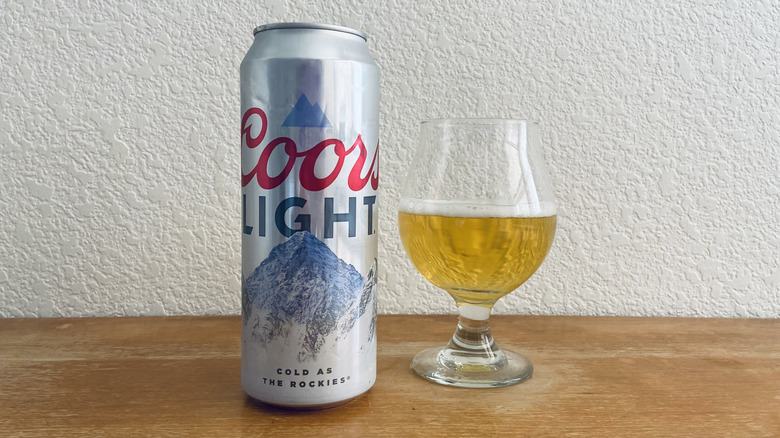
Coors is inseparable from its home town of Golden, Colorado, as marketing materials for the brand make abundantly clear. It's also one of two American beer brands fans of Willie Nelson link to the legendary singer-songwriter. In short, Coors is an iconic American brewery. As recognizable as it may be, Coors produces a pretty bland light beer.
First and foremost, my Coors Light tasted like fizzy water. Its level of fizz, however, was moderate, contrasting with the excessive fizz of a few other light beers I tried. Just like my Michelob Ultra, its flavor was lightly hoppy and not much else, lacking malt character whatsoever. Keeping Coors Light out of this list's bottom spot was the fact that its hop flavor was not entirely negligible, comparable in intensity to the dash of flavor in a typical LaCroix, for instance. Nevertheless, my Coors Light was one of the least complex beers of the bunch, narrowly avoiding the distinction of the worst of the nine most popular light beers in America.
7. Natural Light
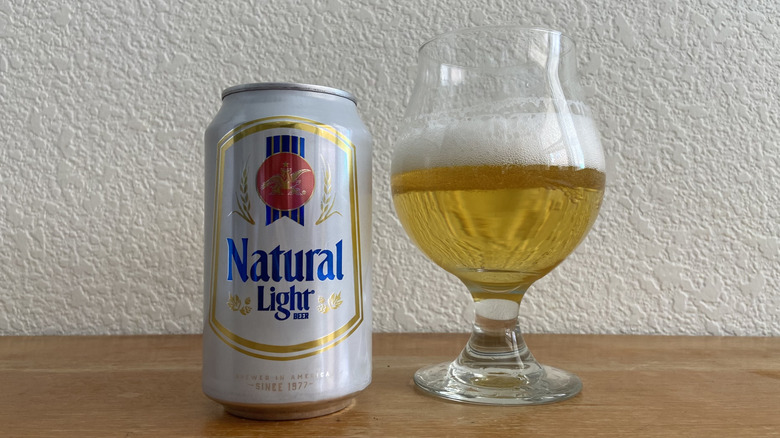
Natural Light is best-known for one thing, and it's not quality — it's the fact that at most stores, Natty Light is the cheapest light beer of all. The lowest quantity I was able to purchase at my local Smith's was a pack of 15 cans, at a $10.49 price point. That's basically equivalent to 70-cents per can. There was even a time Natural Light was available in 77-packs.
I found the flavor of my Natural Light faintly hoppy and lightly sweet. That sweetness was almost reminiscent of banana, reminding me of the banana character that typically colors wheat beers. Those flavors were subtle enough, however, that my Natural Light was closer to a hoppy sparkling water than what I expect beer to taste like. For what it's worth, there are worse options at its budget price point, like Steel Reserve's cheap approach to a high-ABV brew, for example. If price isn't a concern, there are plenty of superior light lager options with a bit more heft than the ultimately forgettable Natural Light.
6. Bud Light Lime
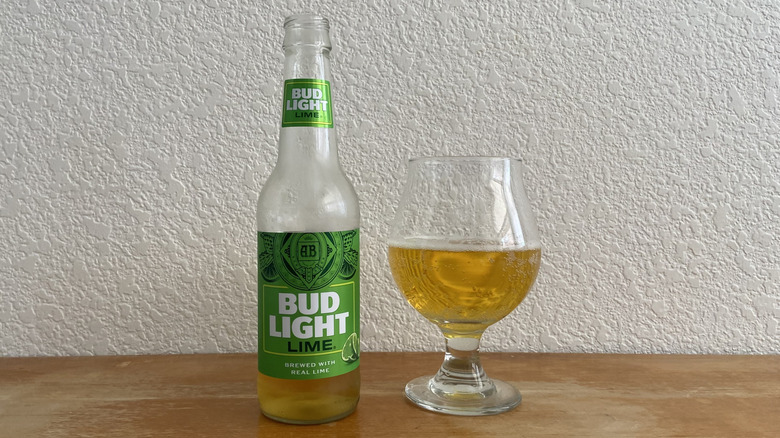
Budweiser is the one brewery that earned two spots on this list, thanks to the lime-flavored variant of its proprietary Bud Light landing among the most popular beers in America. With that said, Bud Light Lime doesn't seem to be a mainstay of the beer aisle like regular old Bud Light — my two closest grocery stores didn't carry Bud Light Lime, so I had to make a side trip to a nearby Total Wine.
Whereas most light beers are bland and watery, the flavor of Bud Light Lime is bold. However, its boldness comes singlehandedly from its adjunct lime flavor. I compared some of the other beers on this list to sparkling water because of their general lack of flavor, but Bud Light Lime genuinely reminded me of a Lime LaCroix, albeit with a higher dose of lime. It was also fizzier than a typical LaCroix, stinging my taste buds a bit. Simply put, Bud Light Lime is a beer in name only, and its lime flavor is excessive. The recognizable taste of a regular Bud Light underscored by lime would have been superior to the watery lime bomb I experienced. Nevertheless, for having some personality, Bud Light Lime is better, at least, than some of the outright blandest light beer options.
5. Corona Light
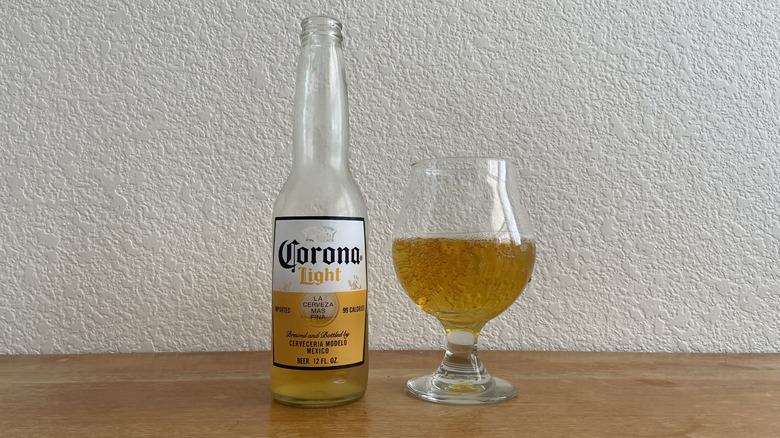
According to YouGov's definition of popularity, Corona Light is the most popular light beer of all. Michelob Ultra may sell at a higher volume, but there are more adults with a favorable opinion of Corona Light than any other light beer.
Immediately apparent in the flavor of my bottle of Corona Light was the signature cereal malt that defines standard Corona. Its hoppy notes, meanwhile, were subtle, barely even bitter but still perceptible. Also like a regular Corona, I picked up a sort of phantom lime flavor — I've never been quite sure if Corona uses lime-y hops, or it's due to a psychological connection between Corona and lime, but it was something I noticed nevertheless. Dragging down my Corona Light was a genuinely excessive level of fizz. While my first sip was basically like a slightly waterier Corona, I found it progressively harder to drink over time as that fizziness built up. Overall, I couldn't help but think about how a regular Corona would have been better. That meant I ended up with a somewhat negative impression of my Corona Light, even if it was ultimately more flavorful than a typical light beer.
4. Bud Light
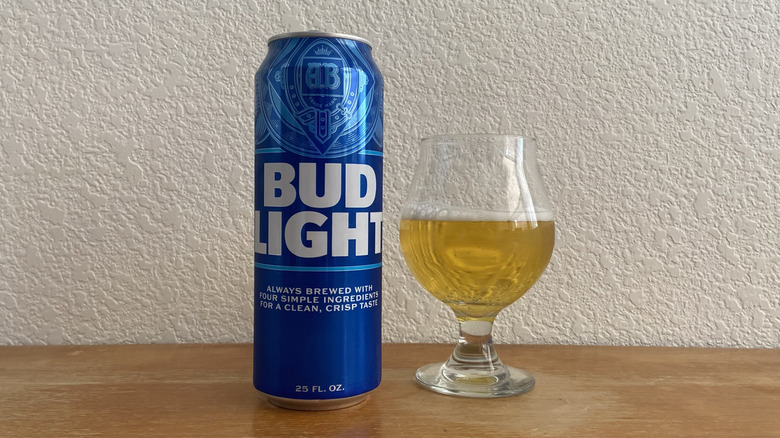
When I think of light beer, I think of Bud Light. While there are multiple light beer brands that beat it in popularity in the present day, Bud Light was, nevertheless, the bestselling draft beer in America based on its number of taps across the country until 2024. It's even David Chang's favorite beer.
Bud Light is perhaps the most neutral light beer option of them all, easier to define by what it's not than any single standout quality — it's not too bitter, not too sweet, not too strong, and, most importantly, it's not too weak. My Bud Light's flavor consisted of light hoppy notes underscoring an identifiably biscuit-y malt character that lingered in its aftertaste. My only knock against it was a slightly excessive fizziness. Bud Light may not be the single best product in the light beer aisle, but it's simple and reliable. Anything weaker than a Bud Light is inherently a little boring, but there are also a few light beers with better and more interesting flavors than Bud Light, hence landing around this list's upper-middle position.
3. Miller Lite
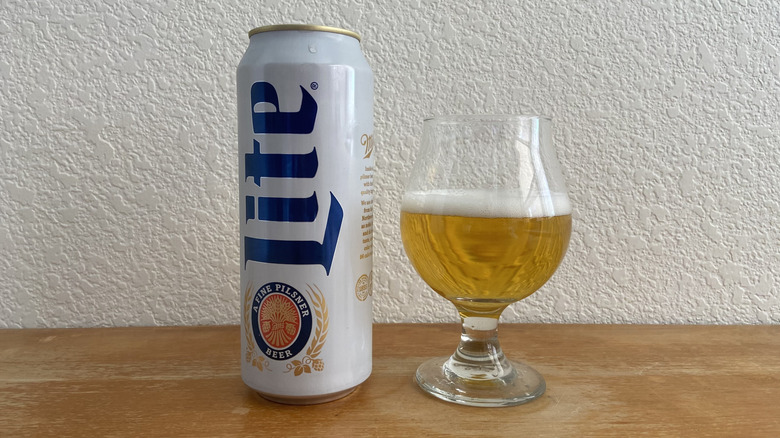
When compared to Coors Light, Miller Lite has occasionally been described as the less flavorful of the two. Both beers are produced by the Molson Coors Beverage Company, so it would stand to reason that the two products might be a little similar at the very least. Before tasting any of my beers, I had no preconceived notion of what Coors Light or Miller Lite was supposed to taste like — as it turned out, I found Miller Lite to be one of the best light beers I tried, with quite a bit more to offer than my flavorless can of Coors Light.
In my first sip of Miller Lite, I immediately picked up an apparent maltiness, contributing a biscuit-y flavor first and foremost. That was accented by some standard hop bitterness, with both elements contributing to a greater whole, as is the case in virtually all non-light beers. Furthermore, its level of fizziness was moderate, avoiding the excessive fizz that brought down a good number of the light beers I tried. While Miller Lite still tastes closer to other light beers than, say, a Czech pilsner, I simply found it more flavorful than competitors like Coors Light and even Bud Light, earning it the distinction of the third-best popular American light beer.
2. Heineken Light
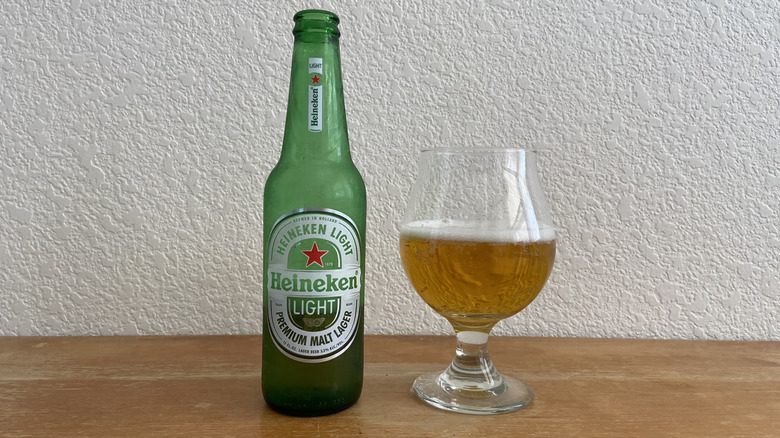
The two outliers among all of the light beers I tried were, of course, Corona Light and Heineken Light. Every other beer is produced by, or at least originated at an American macrobrewery, whereas Corona and Heineken are iconic products from Mexico and the Netherlands respectively. Most macrobrews are still relatively similar to one another, but, whereas it might be hard to differentiate Coors Light and Natural Light from one another in a taste test, the flavors of Corona and Heineken are pretty unmistakable.
While I found my Corona Light to be a pale imitation of standard Corona, my Heineken Light did a pretty respectable job of emulating a regular Heineken, just in a lower-calorie package. Its foremost flavor was that of sweet citrus, almost reminding me of a lemon bar, accented by a moderate hoppy bitterness. A biscuit-y malt character emerged in its aftertaste. Altogether, my Heineken Light certainly wasn't complex, but what I likened to sweet lemon gave it quite a bit more personality than a standard light beer. I did, however, find it just a bit fizzier than I would have liked. Because its distinctness was both enjoyable and helped set it apart from the pack, Heineken Light was one of the very best of all the light beers I tried, landing behind just one superior — and perhaps unexpected — pick.
1. Busch Light
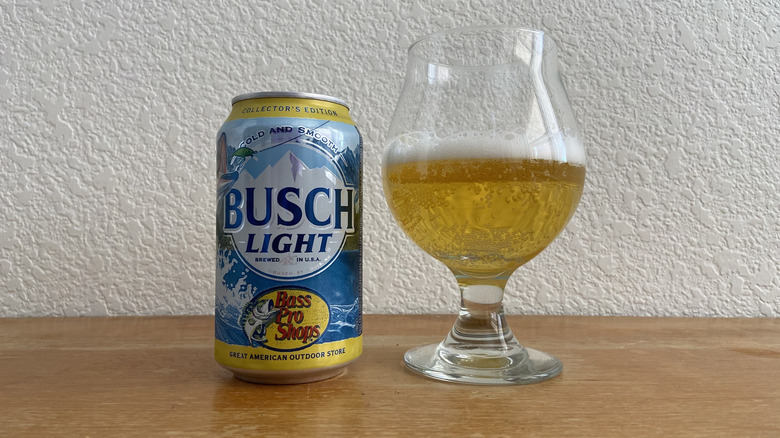
Busch Light happens to be one of the cheapest products in the light beer aisle. My 12-pack was $8.99, equivalent to about 75-cents per can. Accordingly, Busch Light doesn't necessarily have a sterling reputation. On the other hand, Busch Light's seasonal apple-flavored beer — nicknamed "Bapple" — is a crowd pleaser. During its seasonal 2026 release, The Takeout reviewed Busch Light Apple favorably.
Having not tried a regular Busch Light prior to this experience, it's hard for me to say if Busch recently stepped up its game in light of the "Bapple" boom, or if the classic Busch Light recipe is just my preferred take on light beer. Either way, I found my can of Busch Light closer to something I would drink for my own enjoyment than any other light beer. At its forefront was a hoppy bitterness that reminded me of a light pale ale or even a Pilsner Urquell. I also noticed a subtle sweetness accenting its standard biscuit malt flavor. While there are those who find it watery, I found that, of all the light beers I tried, Busch Light was the one I would be most likely to mistake for a full-calorie beer. It was even the least fizzy of the bunch. After trying and analyzing the nine most popular light beers in America in one sitting, I can confidently say that Busch Light has the most complex flavor and was generally the most pleasant to drink of all of them.