

11 Celebrity Chef Tips For Unbelievable Cheeseburgers
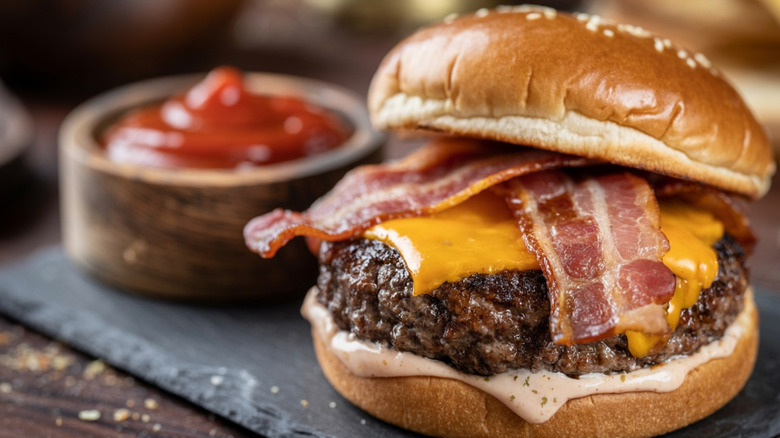
Everyone thinks they know how to make a cheeseburger. If your basics are in order, what could possibly go wrong? After all, once you have your ground beef, salt, and a hot pan, you're basically done. And yet, when it comes down to making a burger you'd order again and again, there are a handful of decisions to make. These include the cut of meat you're working with, the type of cooking technique used, and even the meltiness of your cheese — and if one step goes wrong, you can sabotage your entire burger.
For guidance, we tracked down advice from the experts. Chefs who have already done the hard work and spent real time obsessing over exactly these decisions. While none of them agree on each and every step listed here, each solves a specific issue with their advice, and together they build a pretty darn perfect burger! So, whether you are on Gordon Ramsay's side when it comes to using a custom blend of meat for your patty or prefer Ina Garten's secret seasoning trick, your next cheeseburger is about to get a serious upgrade.
Marcus Samuelsson: Prioritize using the right beef
With Marcus Samuelsson, the trick to a great cheeseburger starts with the foundation — in other words, you need to think about the meat itself. There's no point debating your seasoning or cooking technique if you're just grabbing whatever ground beef is closest to the register and calling it a day. Samuelsson, the chef behind Harlem's Red Rooster, who ran his own Marc Burger concept at Macy's, treats this one step as a dealbreaker.
For Samuelsson, you need to start with fat content. In an interview with Schweid & Sons, the beef supplier behind numerous restaurant burger programs, Samuelsson lays out his formula for success: "75% aged beef, 25% fat and chopped by hand. There's nothing worse than a burger made with beef that has been ground too fine — it makes the end product very dense." As a home chef you may have been defaulting to the standard 80/20 ratio but chef Samuelsson urges you to reconsider.
In addition, the hand-chopped part matters as much as the fat percentage. As noted by Samuelsson, a fine commercial grind packs the meat too tightly, squeezing out the texture that makes a burger feel juicy instead of compact. If you don't have a reliable butcher, he suggests grinding or chopping the meat yourself. If this sounds unthinkable, he does have a way out — buy meat that's at least 25% fat, because lean meat is what turns a burger dry.
Gordon Ramsay: Blend different kinds of beef

For chef Gordon Ramsay, what separates a good burger from a forgettable one starts with what's inside the patty. "For me, the secret to a burger is in the blend," Ramsay told ABC News during a live segment on "Good Morning America" about burgers. "We've got chuck, we've got the most amazing ground beef, and a little bit of brisket."
There's a method to this 'madness'. Chuck brings the beefiness that carries the taste and flavor. The ground beef fills it out, while brisket adds a deeper, almost smoky richness. Each of these cuts would not be able to manage this complex layering of flavors on its own, but together, they create magic.
Ramsay takes it a step further by showing how to shape the patty by hand. He suggests you press a small well into the center of the mix and crack an egg into it before combining everything by hand. The egg binds the meat so the patty holds together instead of falling apart the second it hits the heat. With the perfect blend taken care of, Ramsay also advises forming the patties the day before you actually cook, not the morning of, because letting them firm up in the fridge overnight keeps them from breaking apart on the grill.
Ina Garten: Season with dry mustard powder

Ina Garten has built a fan following thanks to the fact that she doesn't do complicated. Her recipe for burgers is, therefore, an unsurprisingly straightforward set of instructions that ensures a fabulous burger time after time. Where she gets specific, however, is with the seasoning. Most people reach for salt, pepper, and maybe some Worcestershire, but Garten's first move is dry mustard powder because it adds sharpness to the flavor. Usually, adding just 1 ½ teaspoons to the ground beef is enough for four burgers. Its flavor works beautifully with the char and juiciness of grilled meat.
Garten also suggests smashing the patties in a hot cast-iron skillet. That means when you follow her advice, you don't even have to light a grill. So it can be a nice, rainy day, and you can still have great hamburgers. And don't forget to pull them off the heat when they are still that little bit underdone. This promises a crusty outside while keeping the insides still juicy and delicious.
J. Kenji López-Alt: Create a dimple in the patty

It's no surprise that J. Kenji López-Alt treats a burger less like a snack and more like a small engineering problem. He has spent years dissecting how we cook, deep diving into the techniques that work and those that should be avoided at all costs. When it comes to burgers, shaping the patty is where a lot of his thinking lives. He explores why patties come off the grill looking like little domes rather than the flat discs you started with, and, more importantly, how to prevent it.
As Kenji has explained, grilling or broiling exposes the edges of a burger to direct heat from every side, so the outside cooks faster than the center and contracts. That uneven contraction is exactly what pushes the middle up into a bulge. His fix for this is to shape a dimple into the surface. Press down into the center of the raw patty before it ever touches the heat. In his words, "It's shaped a little like a giant red blood cell" (via YouTube). That means the center dips down while the edges stay slightly higher and rounded. That inward slope gives the meat somewhere to expand as it cooks, so it ends up flat rather than ballooned.
Rachael Ray: Cook on a flat surface
Rachael Ray has a go-to rule when it comes to burgers: Don't form a flat, even puck of meat and hope for the best. She prefers burger patties that are thinner in the center and thicker at the edges. Just like J. Kenji López-Alt, she does that to avoid creating a dome patty. By building the extra thickness into the edges from the start, Ray lets the meat rise and even out as it contracts.
She follows this shaping process by letting the chill come off the meat before it hits the pan, then cooking on a flat surface for even caramelization – Ray never cooks burgers on grill grates. For Ray, only if all three steps are done together are you rewarded with the best cheeseburger results. It's a formula she's stuck with consistently, from her appearances at Burger Bash to her own recent social media posts, treating shaping of the patties, pre-cooking temperature, and level cooking surface as one connected process rather than three separate tips to pick and choose from.
David Chang: Don't cook on a grill
On his podcast, "The Dave Chang Show," the Momofuku founder went after one of the most sacred rituals of American summer: cooking burgers on a grill. "We have assumed as a culture that [in] summer we eat hamburgers, and it's grilled. I actually think the grill is a horrible thing for a hamburger."
Chang's argument has two parts, and the first is practical. A juicy patty dripping fat onto an open flame is, in his opinion, a "guaranteed grease fire," and he sees no upside to the risk when a flat surface does the job better and cleaner. The second part goes after the flavor. People usually swear that grilling makes meat taste better, but Chang is not buying this. He points to the residue that builds up on grates that prevents any actual wood or charcoal flavor from making its way into the meat.
What he's really describing is instead a nostalgia for an experience he believes people have talked themselves into liking. Which is all very fine if you are grilling chicken, pork, or even seafood and vegetables. These work out well when cooked on a grill. Burgers, however, should be cooked on a hot griddle or in a cast-iron pan, where you actually control the heat and the delicious crust that forms.
Guy Fieri: Opt for a smash burger
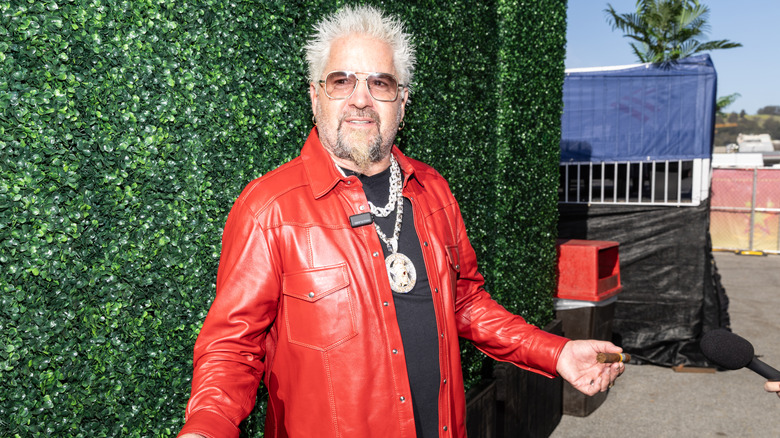
Guy Fieri treats the smash as the whole engine of his burger. He is happy to leave the choice of toppings to personal taste, but the smash burger basics have to be covered, and those basics start with the meat and the heat. Fieri sticks with seasoned 80/20 ground beef, but his technique is where his burger magic really lies. He recommends starting with the ground beef in a ball and placing it on the hottest griddle or cast-iron pan you can find. From there, you smash it down hard until almost only ½ inch thick. "Let it crisp up and get all that delicious caramelization going," he says (via Business Insider).
Fieri's instruction after smashing is to essentially leave it alone and let the edges go properly crunchy before touching it again. Only once those edges have crisped does he flip it over to brown the second side before going in with American cheese. This simple sequence of hot surface, hard smash, and a whole lot of patience leads to a burger that is way more textured and caramelized than a regular grilled patty.
Michael Symon: Smash your patties into onions with force
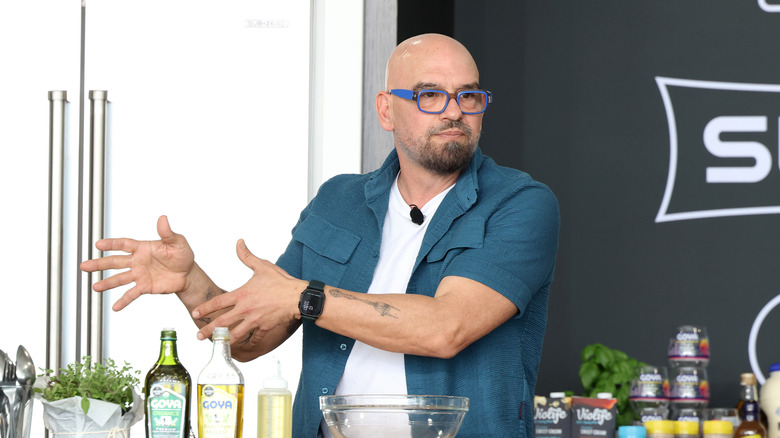
Michael Symon is open about what he considers the most common mistake people make with smash burgers. According to him, most home cooks press down once, half-heartedly, and call it done. Symon insists that a real smash needs force. He sides with Guy Fieri on this and encourages you to spread the meat thin enough to maximize contact with the hot surface, which is where all that crust comes from.
Symon also prefers 80/20 patties as they perform best for smash burgers. More fat means more to render out and crisp against the pan, and it keeps a thin, aggressively smashed patty from drying out the second it hits high heat. He also likes to smash them directly into diced onions for maximum flavor.
Then there's the cheese. Symon likes to brush tallow onto his burger first, then apply cheese. He does this when the patty is still hot on the grill, meaning it melts quickly (and ensures an ooey, gooey burger). He then finishes it off with a potato roll and his secret sauce.
Bobby Flay: Melt the cheese in a steam dome

Bobby Flay has a trick to nail the gooiest, cheesiest possible. The secret? A splash of water. Once the patty is cooked on a flat-top or cast-iron skillet, Flay lays the cheese on top, then goes straight for adding the steam. He takes a splash of water, adds it to the pan, and then covers the burger with a lid or even a flipped-over second skillet. If you want to go fancy or you really make a lot of burgers, a dedicated melting dome may be worth the investment. Covering the burger renders the cheese almost queso-like as it melts.
Flay also notes that the steam finishes cooking the edges of the patty that the direct heat from the flat-top didn't fully reach, and it helps keep the burger juicier overall rather than drying it out. As for which cheese, Flay doesn't hedge. While he also likes fontina and Monterey Jack, he typically chooses American cheese because it melts the best and is the cheese he had on his burgers as a child.
Alton Brown: Deep-fry the patty

Every list of celebrity chef burger tips eventually has one that makes people stop and reread it, and here it's Alton Brown's contribution: he wants you to skip the grill and deep-fry the patty instead. Yes, really. Now, before you protest, his reasoning, which he lays out plainly enough on his website, is: "When you fry, heat evenly surrounds the entire patty, keeping those crust-enhancing, protein-saturated fats (those tasty burger juices) inside the meat, where they belong."
People picture a burger dunked in oil as inherently greasy, but Brown's point is that the steam constantly pushing outward from the meat is what actually keeps the oil from soaking in, so the fat you taste is the burger's own, not the fryer's. His method from scratch is as precise as you would expect. A blend of chuck and sirloin gets pulsed in a food processor to a coarse grind. This is then pressed into thin, irregular patties and chilled before frying in peanut oil held at no lower than 300 degrees Fahrenheit. Each patty goes in for exactly one minute, using a spider strainer to lower and lift it out. This is not a technique built for a casual grill lunch, but it's a genuinely different alternative to every chef's burger quest, locking in juiciness and building a great crust at the same time.
Daniel Boulud: Restrain your combination of flavors
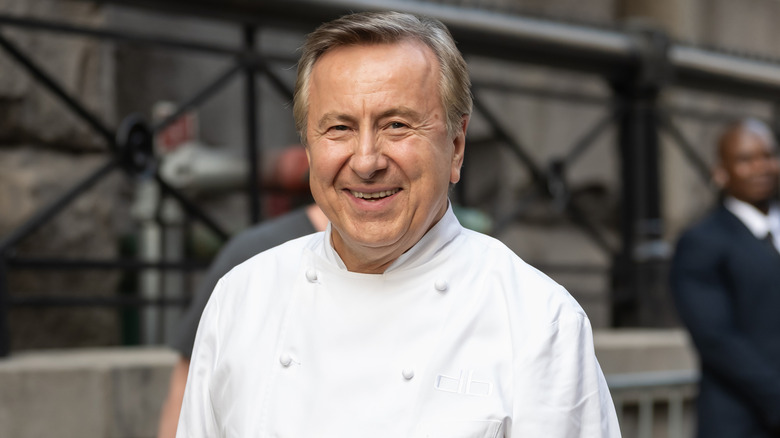
Daniel Boulud, the French chef who practically invented the modern gourmet burger with the launch of DB Burger in 2001, doesn't think a great burger is about piling on ingredients. "Use classic combinations of flavors, use impeccable ingredients, and don't let any one flavor overwhelm the others," he says (via Club Oenologique). Boulud's DB Burger stuffs a beef patty with braised short rib, foie gras, and black truffle — all ingredients that could easily turn into a chaotic, competing mess in less careful hands. His philosophy with each ingredient is tempered, and he believes that one should concentrate each flavor and then use it sparingly.
Boulud builds his burgers from a special blend of 85% lean and 15% fat beef. A stuffed burger needs a patty that holds its shape around the filling rather than one so fatty that it tears apart. His burger is then seared in a well-seasoned cast-iron skillet and finished in an oven at 350 degrees Fahrenheit. While every chef here has a strong opinion about one variable, Boulud's point is that none of those tricks matter if the finished burger doesn't work together as a whole.