

You'll Never Wash Blueberries Straight From The Store Again After Finding Out About This Rule
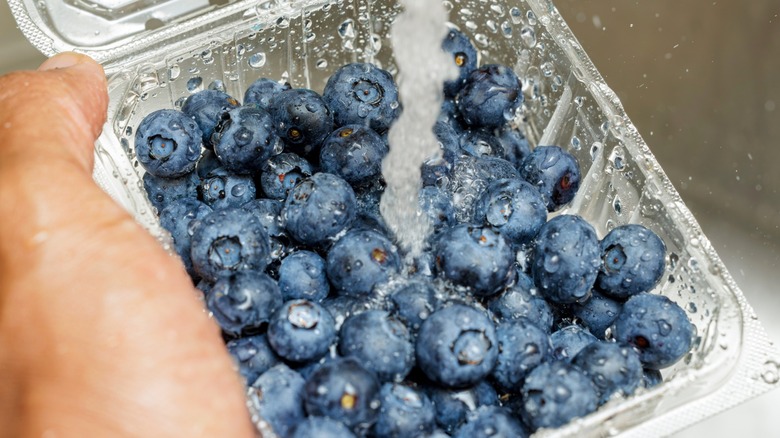
It's no secret that washing produce is a must to prevent foodborne illness and random flecks of debris from tainting a dish, and those plump, perfectly sized blueberries you meticulously source from the grocery store aren't excluded from that standard. However, some people assume that the minute the produce lands on their kitchen counter, it's time to clean it to remove any pesticides or pathogens lingering on the fruit. But that's actually a good way to make the goods spoil faster.
As a rule, washing blueberries immediately after bringing them home is a no-no if you want them to stay fresh for an extended time in the fridge. Even a quick rinse can introduce extra moisture that promotes spoilage. Giving them a quick inspection and removing any blueberries that are squishy or discolored from the container is smart (don't worry about the white coating on blueberries; that's the bloom, and it's a sign they're fresh). But after that, they can go right in the refrigerator in their original packaging. They should only be washed once you're ready to snack on them or whip up some tasty blueberry pancakes.
When that time comes, there are two schools of thought about the best method to wash blueberries. One recommends giving them a thorough rinse in a colander with plain tap water to remove contaminants. The other side suggests that's not an efficient way to eliminate bacteria. They suggest washing them in white vinegar because its low pH can more effectively prevent bacteria from thriving (some support soaking them in a baking soda and water solution for similar reasons). But whichever method you choose, wait until you're ready to enjoy them.
Can other berries be washed before refrigeration?
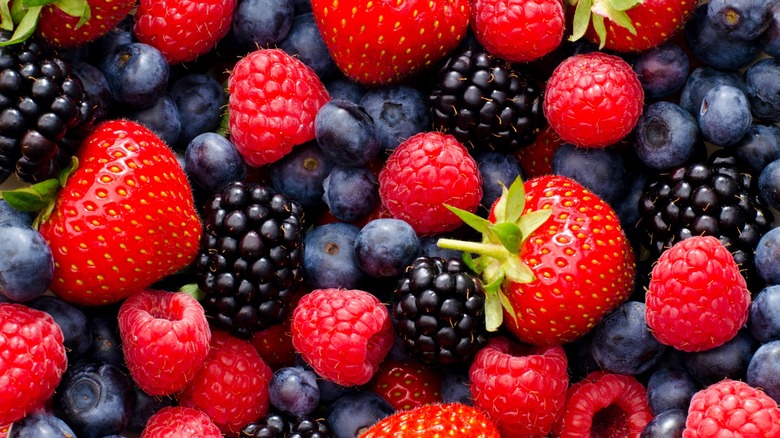
Occasionally, rules that apply to one food aren't necessary with its close cousins, but that's not the case with berries. Like blueberries, raspberries should be washed when you're ready to use or snack on them. Folks can use any of the methods that clean blueberries, though you'll want to be extra gentle with these delicate fruits. The same "clean when you're prepared to use them" guideline applies to blackberries, cranberries, and strawberries too (which, funny enough, aren't actually considered berries).
In general, it's best to hold off on washing most fruits and vegetables until you're ready to use them. Still, like any good rule, it doesn't apply to every type of produce. Leafy greens, for example, can be pre-washed before stashing them in the refrigerator without worrying about spoilage. But most other fruits and veggies can wait for their bath.
As for frozen berries garnishing satisfying breakfast smoothies, they have typically already been thoroughly washed before they are flash-frozen. They should be free of any potentially harmful pathogens, and bacteria won't grow in freezing temperatures. However, one exception is when the packaging specifically instructs people to wash before use. The berries are touched by humans during the cleaning/freezing process, so there is a small chance they may pick up something problematic through the supply chain. Trust what the package says and wash frozen berries if directed to do so.