

18 Burger King Scandals We Almost Forgot About
Every fast food restaurant seems to go through its fair share of scandals. Who can forget the McDonald's hot-coffee-in-the-lap incident, or the Wendy's severed-finger-in-the-chili rumor? When a chain's been around as long as these giants, a little bad press is pretty much guaranteed to come up, whether or not that bad press is actually rooted in any truth. As such, it should be no surprise that 70-plus-year-old Burger King has had the odd scandal.
Much of Burger King's fast food drama has been lost to time, however. The constantly shifting news cycle has buried scandals that, at their time of discovery, may've seemed pretty substantial.
Check out these Burger King scandals that you may've forgotten about. From horse meat to mental health criticisms, foot lettuce (yes, you read that correctly) to a Mister Rogers controversy, some are bound to jog your memory of a fast food era past.
The horse meat scandal
While some cultures chow down on horse meat without batting an eye, Americans generally frown upon the practice. Even though it's not technically illegal to eat horse meat in most states in the United States, it's pretty much impossible to buy it. So when it comes to light that a brand is selling horse meat passed off as some other protein, many Americans are apt to clutch their pearls. In 2013, Burger King was the focus of this pearl-clutching.
That year, Burger King made the grim admission that it had discovered something fishy (or, well, horse-y) when it came to one of its meat suppliers. Following testing, it found that what was intended to be beef was infiltrated with horse DNA. Luckily, the chain assured worried consumers that no one was really affected, as the horse-beef was not served up between two buns at any Burger King locations. Additionally, assuaging American concerns further, the scandal was limited to BKs in Britain and Ireland.
The sexist tweet
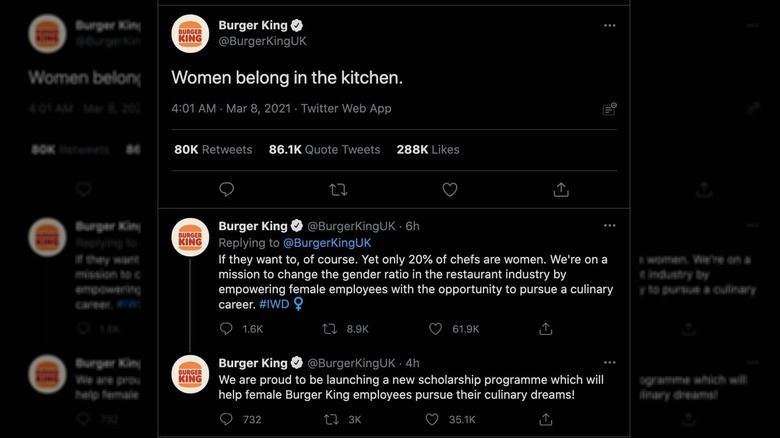
We've all seen a brand's social media post go sideways. They think they're being clever or funny, and it turns out that what that poor social media manager thought was clever or funny is actually quite offensive. This was the case when Burger King U.K. made a 2021 post on X that was highly misleading.
The first post from the account simply said, "Women belong in the kitchen." The post was made on International Women's Day.
Laughing yet? No? You're not alone. Plenty of people took offense, because the actual point of the message was hidden in subsequent posts detailing the gender disparity in culinary roles and how Burger King decided to create scholarships specifically available to women working for the brand. With a little mental gymnastics, one might agree that Burger King's heart was in the right place, but that initial post was certainly cringe-worthy.
False advertising
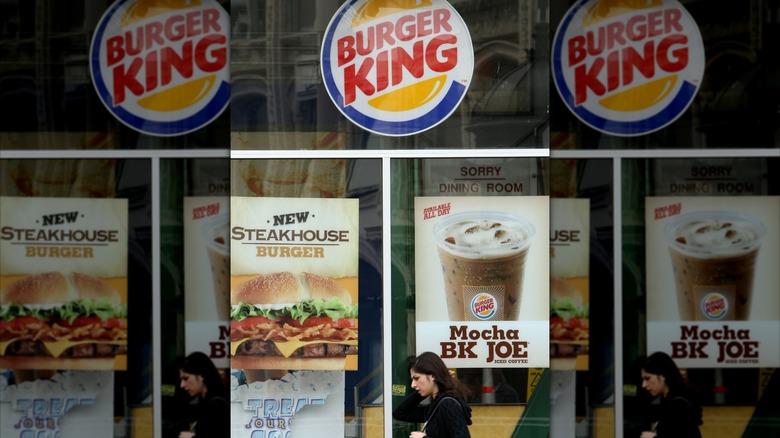
Sometimes, a fast-food scandal results in a lawsuit. For Burger King, this occurred in 2023. This particular class action lawsuit (because Burger King has had multiple) revolved around something many consumers have probably thought sometimes when dining out: "Huh, this doesn't at all look like what was advertised." It's just that most of us don't turn that complaint into a full-blown legal battle.
The case's plaintiff alleged that Burger King's ads oversold the size of its sandwiches, as well as the amount of beef contained wherein. The affected parties asked for monetary compensation, and the lawsuit dragged out over years. In 2025, a judge did not allow Burger King to dismiss the case. Then, in early 2026, the entire case was dismissed after it was discovered that Burger King was using its real-deal beef patties to create the advertisements that the plaintiffs had (pardon the pun) beef with.
Mental health criticisms
International Women's Day was not the only recognition holiday during which Burger King committed a public faux pas. At the start of Mental Health Awareness Month in 2019, the chain introduced a limited series of meals that were based upon mental health. Called "Real Meals," the idea was you could order a meal based on whether you were feeling blue, salty, or apathetic (the chain called that one the "DGAF Meal") among other emotions. The campaign also took a stab at the McDonald's Happy Meal by saying that no one can be happy all the time.
The meals got a whole lot of attention on social media, with many saying the combos made light of a very serious topic, during what's supposed to be a serious month of recognizing the struggles of those living with poor mental health. However, others felt it wasn't a big deal and part of raising awareness.
Impossible Whoppers claims
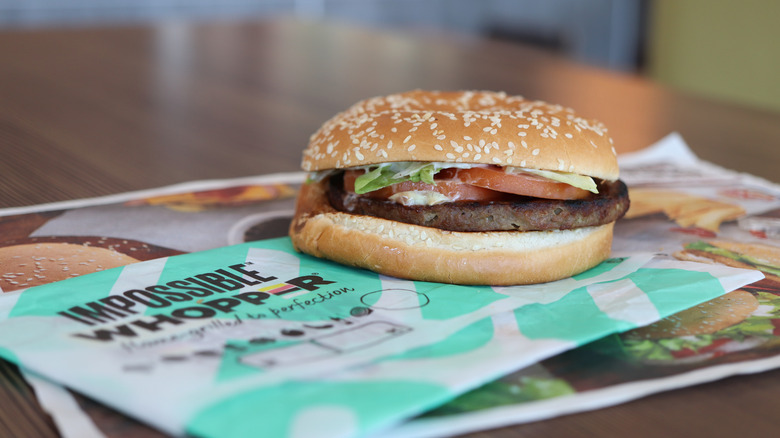
The Impossible brand has been around for a while, but it made lots of food headlines when it was first introduced, especially when restaurant brands began incorporating Impossible products into menus. Burger King was one such brand — great news for those who love BK but maybe are cutting back on their beef consumption.
However, this decision landed Burger King in hot water when the chain became embroiled in another class action lawsuit. Accusers said Burger King was passing off Impossible Whoppers as a vegan alternative. However, the burgers were cooked on the same equipment as regular burgers, effectively making them non-vegan. In response, Burger King asserted that it never actually called the Impossible Whoppers "vegan," and any assumptions were the fault of the consumer.
The Impossible Whopper drama didn't end there. In early 2026, there was an uproar when Burger King introduced an Impossible Whopper that included bacon — making it very non-vegan indeed.
Mary J. Blige ad backlash
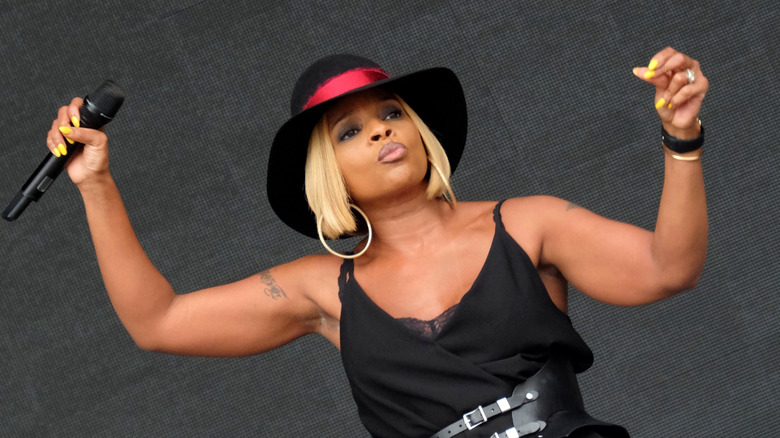
In 2012, R&B singer Mary J. Blige partnered with Burger King to produce an ad promoting the chain's chicken wraps. However, what was intended to be a typical celebrity endorsement turned into a catastrophe when Burger King released a cut of the ad that Blige did not approve of, and that fans criticized as being racially insensitive. The idea of using a Black woman to advertise fried chicken, some thought, was an absolute no-go.
Blige was still talking about the fallout from the commercial as recently as 2026, weighing in on the aftermath on a podcast. Blige implied that the ad's results were purposeful and it's something that still upsets her. She also noted that the ad and its response showed her who she could and could not trust, as she lost relationships.
Burger King pulled the ad and issued an apology. However, the damage was already done and clearly made a lasting impression.
The German undercover investigation
Another scandal that took European Burger Kings by storm was the result of a 2022 investigation by German journalists. Reporters dived into the BK trenches, getting jobs at locations so they could glimpse behind-the-scenes operations. What they found and reported was stomach-turning.
Reporters discovered that employees were serving expired food. There were mice running about. The vegan burgers weren't vegan, because sometimes workers would cook both meat and plant-based burgers on the same surface — and sometimes they'd swap out a plant-based burger for the real deal, on the sly, if they were out of what the customer ordered. Then the journalists published their findings.
That was hardly the first time that German Burger King locales were caught behaving badly. In 2017, a Burger King franchise owner got into legal trouble because employees were consistently trying to drum up business in the parking lot of the Dauchau Nazi concentration camp memorial site.
The foot lettuce controversy
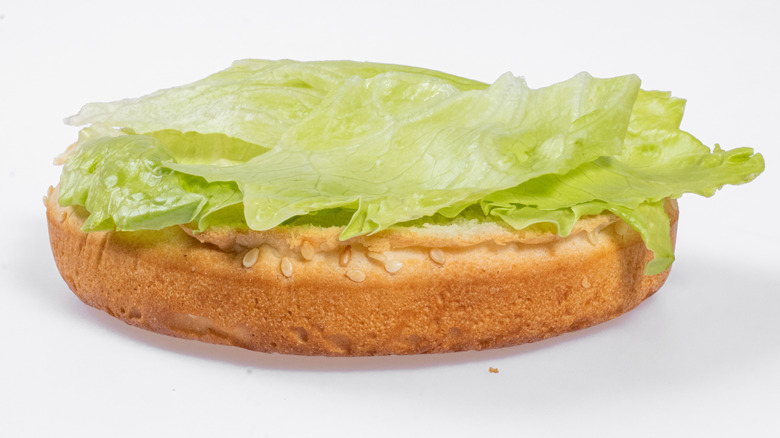
Sometimes, a major brand's snafu becomes internet fodder in a way that's difficult to ignore. This happened in 2012, when photos from an Ohio Burger King went viral. The photos showed a Burger King employee standing, sneakers down, in two containers of the restaurant's shredded lettuce. While the photo was posted anonymously, everyone knows that what you post on the internet isn't truly anonymous in most cases. The specific restaurant from the photo was tracked down quickly.
While Burger King issued a statement and fired three people as a result of the viral photo, this has turned into a fast food controversy the internet will never forget. The photo and discussions around it have made their way into myriad YouTube videos with millions of views. Parodies and music videos have popped up featuring the photo. It's even been referenced on Adult Swim.
The milkshake tweet
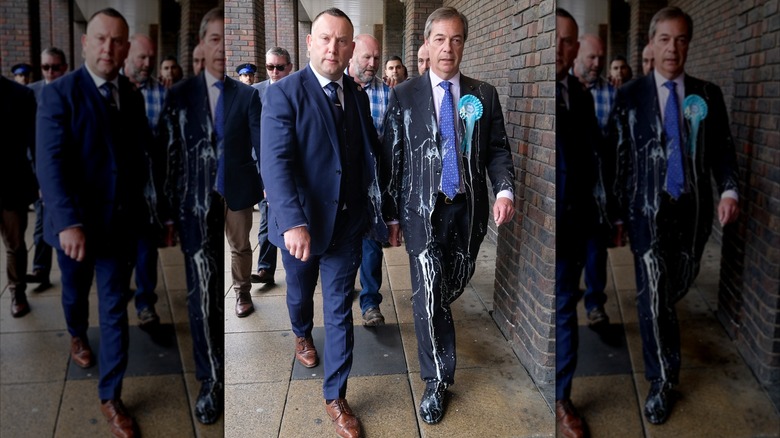
Burger King's bad social media behavior continues — and, once again, it's BKs in Europe that are the bad actors. In 2019, before Twitter became X, the chain simply tweeted out that it was selling milkshakes. Sounds innocent, right? Well, this is where the cultural context comes in.
Around this time, British politicians were scourged with angry folks throwing milkshakes at them during events. In fact, the trend became so popular it gained its own name: milkshaking. As a result, some restaurants in affected areas just stopped offering milkshakes all together for a time. So, Burger Kings' post comes off quite a bit cheeky. What could've laughed off, though, turned into a bit of a scandal, as some accused the chain of promoting bad behavior, or even violence. Burger King later issued a statement clarifying that was not its intention.
The Pokemon Ball recall
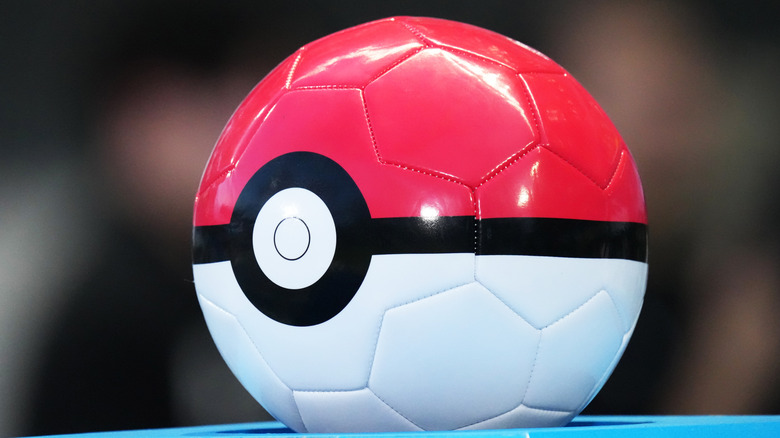
Kids meal toys aren't exactly known to be made of the strongest stuff or all that high quality, but there's a difference between cheap and actually dangerous. Burger King found that out the hard way when it was forced to issue a recall of more than 25 million Pokemon balls that had been featured in kids meals in 1999.
These toys weren't just dangerous; they were deadly, with at least two children suffocating to death after playing with the toys. Reports discovered that a 4-month-old infant suffocated after half of the ball — which was designed to come apart to reveal a Pokemon toy inside — was supposedly suctioned onto his face, preventing breathing. Another infant experienced the same fate, as the half of the ball was large enough to completely cover the 1-year-old's nose and mouth. At least one other child had a similar near-miss but was thankfully saved in time.
Burger King's Russian holdings
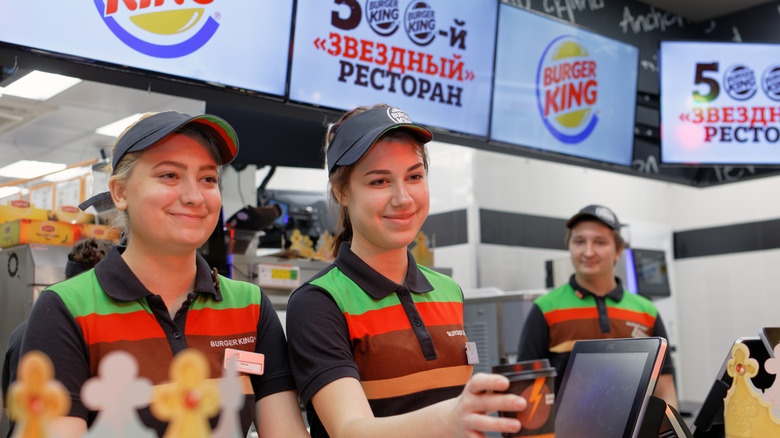
On the surface, Burger King's Russia dealings look straightforward. Burger King's parent company is Restaurant Brands International, which also owns Tim Hortons, Popeyes, and Firehouse Subs. After the war between Russia and Ukraine kicked off, Restaurant Brands International and Burger King corporate issued a statement attempting to separate corporate operations from the BK franchisees in Russia who were conducting normal business, regardless of the corporation's mandates to pause.
However, an investigative report from the International Consortium of Investigative Journalists found that not all was as it seemed, at least not initially. It revealed that Burger King still maintained a stake in its Russian locations via a joint venture that also included the owner of the operator of the Russian Burger Kings, as well as a Russian state bank. Another corporate release verified this.
Getting out of Russia would take time and effort, and Restaurant Brands International said it was impossible to cease BK service in Russia immediately. As of 2026, the Yale School of Management Chief Executive Leadership Institute, which ranks companies leaving Russia due to the war, gives Burger King and Restaurant Brands International a "C" grade for its scaling back efforts, acknowledging corporate lack of support for its Russian franchise locations but still recognizing its ownership stake in the businesses.
The Big Mac copycat
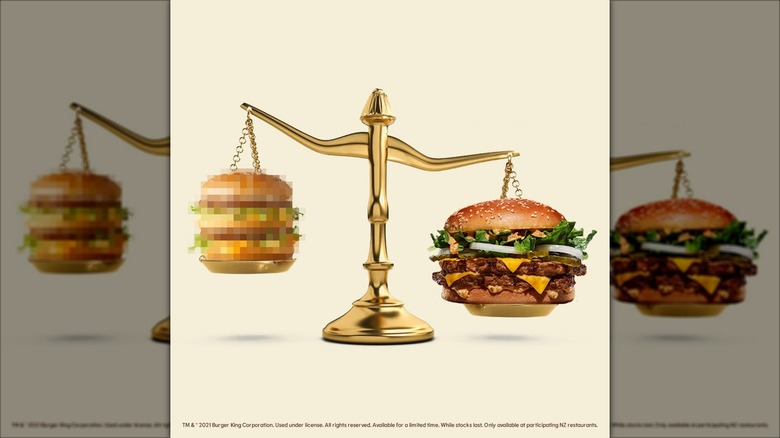
It's no secret that fast food brands have a habit of copying one another. One chain comes out with spicy chicken nuggets and then everyone does. One chain comes out with a wrap and so do the rest. However, sometimes a new offering can feel a little too familiar.
In 2019, Burger King launched what seemed very much like a direct Big Mac copycat. Burger King dubbed its iteration the Big King XL burger. Both sandwiches share specific similarities: two burgers, cheese, pickles, onions, lettuce, and burger sauce.
Don't think for a second that Burger King was attempting to be sneaky with this copycat. It was blatant. In advertisements, BK even told customers that, at certain locales, they could pay for their meal with something known as a MacCoin. The MacCoin was a promotional gimmick McDonald's introduced in 2018 — essentially a commemorative coin. The King knew what he was up to.
The Mister Rogers controversy
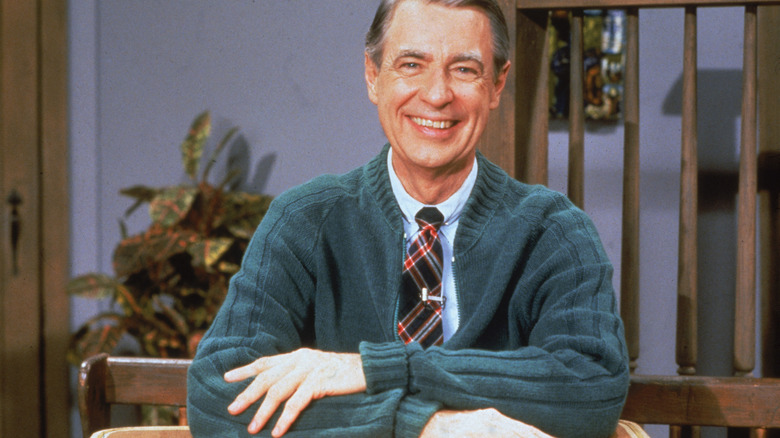
How could as beloved and gentle a cultural icon as Mister Rogers cause a controversy? Well, Burger King made it happen. This scandal goes back to the 1980s. Burger King created its own spoof on the character of Mister Rogers, christened Mister Rodney, and placed him in television ads. According to reports, the ad campaign cost $150,000, but it only ran on television sets for a week.
Just as when Burger King mimicked the Big Mac, the attempt at copying Mister Rogers was painfully obvious. Mister Rodney wore a blue sweater over a tie. He lived in a nice little house and had dark hair parted at the side and a genial, older white guy look.
Turns out the OG Mister Rogers didn't quite like having a cheap copycat shilling fast food to young viewers. He reached out to the brand and that was all it took. Burger King removed the ad.
The Herb advertising mistake
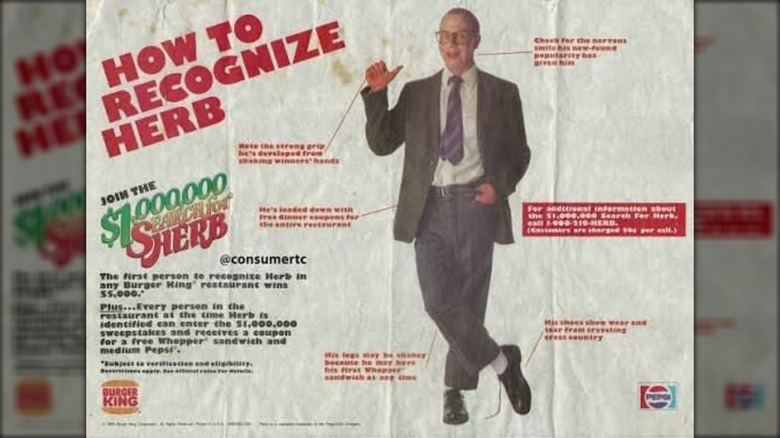
Burger King made another huge advertising mistake in the 1980s. The campaign, which cost $40 million, was called "Where's Herb" and centered around a character named Herb who was so uncool he'd never tried a Whopper. The "Where's Herb" part was a little bit of a "Where's Waldo" situation — Burger King challenged customers to find Herb at locations throughout the United States. If a customer accurately identified the actor playing Herb, they'd win $5,000.
The whole thing was meant to get people out looking for Herb — and if customers came into the stores on this quest, maybe they'd buy some food, too. If you came into the store and even said that you weren't Herb, you could get a discount on food.
Burger King did see an increase in sales as a result of the Where's Herb campaign, but ultimately it's viewed as a marketing and advertising flop. The actor chosen to play Herb wasn't too exciting, and there were disputes regarding the $5,000 prizes that were due to customers who identified him.
The West Bank issue
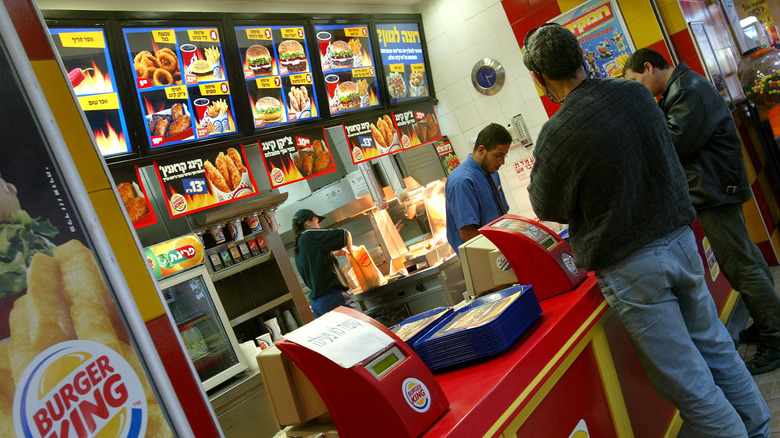
Before Burger King's politics in relation to Russia were discussed on the national stage, the world was examining the chain's goings on in the Middle East, specifically the West Bank. In the 1990s, an Israeli-owned company deposited a Burger King franchise in the midst of the West Bank. Arab Americans and Muslims did not appreciate this seeming disregard for the Palestinians and conversations regarding the occupation of the West Bank. Burger King corporate reacted by telling the franchisee it had to shutter. Then, Jewish organizations and some Israelis further reacted in kind, claiming that closing the restaurant would be anti-Semitic.
Both groups threatened boycotts, leaving Burger King stuck in the middle. All the while, the company overseeing the franchise wasn't about to close up just because corporate demanded it. Burger King ultimately said that the franchisee was in breach of contract, due to misrepresenting its location, and ordered the franchisee to stop using Burger King branding.
Sexual harassment suits
Burger King's been at the center of several sexual harassment suits, and one of the largest and most noteworthy was in 2013. At that time, Carrols Corporation, a subsidiary of Restaurant Brands International and operator of more than a thousand Burger King locations, was ordered to pay $2.5 million as the result of such a suit. This suit, overseen by the U.S. Equal Employment Opportunity Commission, brought together nearly 90 women employees. It determined that these women were victims of all sorts of harassment, ranging from obscene jokes to strip searches and worse. In many cases, the suit claimed, managers were leading the assaults.
Further suits similarly brought by the EEOC would follow. In 2018, a franchisee had to pay $55,000 after a manager sexually harassed a woman employee. In 2023, a franchise had to pay $60,000 following harassment that lasted nearly a year at one North Carolina location.
Religious discrimination suits
It's not just sexual harassment suits that put Burger King in the headlines. In 2012, the owners and operators of a Burger King in Texas were charged after an employee was fired for wearing a skirt, as befitting her religious beliefs.
According to the U.S. Equal Employment Opportunity Commission, the teenage girl had already told her hirer she only felt comfortable wearing skirts to work, per her religious beliefs that dictate wearing gender-normative clothing only. Reportedly, this request was approved. However, upon showing up for what was meant to be her first day of work as a cashier, she was sent home and fired for refusing to wear the chain's typical uniform pants.
The suit ended in a $25,000 settlement in 2013, with the former employee receiving $5,000 in back wages and $20,000 for mental anguish and damage. The defendant also had to implement training for managers, focusing on religious discrimination.
The insensitive chopsticks ad
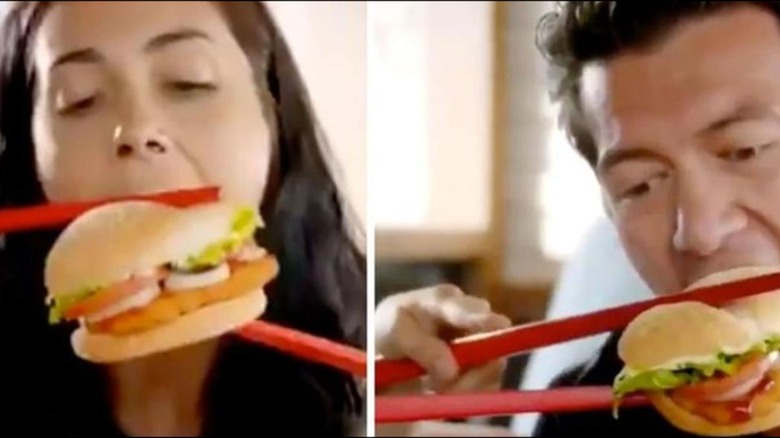
In 2019, Burger King ran an ad intended to promote the chain's Vietnamese Sweet Chili Tendercrisp Burger, which was launching in New Zealand. This was one menu item and ad that upset customers, though.
The ad showed customers attempting to eat the burger using ridiculously-sized red chopsticks. On Instagram, the caption promised followers that the burger would transport their taste buds to Ho Chi Minh City. The ad vanished quickly, but the damage was already done. Followers latched onto the blunder and came out in droves to express their disbelief and distaste.
As one interviewee — Maria Mo, whose criticism of the ad went viral — told CNN at the time, "It's as though their thought process went, 'what's Asian? Chopsticks!' and just ran with it without giving a single thought to what kind of messages could be inferred by their customer base."