

10 Celebrity Chef Tips For Flawless Prime Rib
We may receive a commission on purchases made from links.
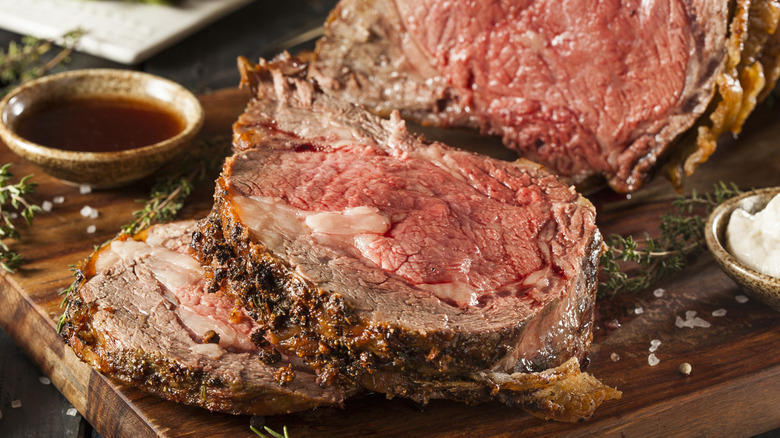
Prime rib is a meal that you likely only enjoy on special occasions, which means you definitely want to cook it up right. However, there's more than one way to perfect it. Some recipes call for a low and slow oven cook with a brief stint on high heat; others start with a high temperature for a period that's then lowered to medium; and some even begin with a hard sear in a cast iron skillet before being finished in the oven. There are many different equations for exact temperature settings, cook times, and techniques, and various chefs will swear by their own tried and true method.
Here's what everyone can agree on: When shopping for the best prime rib, look for substantial marbling and purchase the best quality roast in your budget. The term "prime" refers to the fact that this roast comes from the sizable rib primal — specifically, the area between the sixth and 12th ribs. If you prefer a meatier taste, ask for the section that borders the chuck, also called the second cut. For a more tender roast, the small or loin end is ideal. Go for a standing rib roast if you want the bones in, or ask for boneless or prime rib roast if you want it without — both refer to the same muscle segment.
Since there are so many different schools of thought (most of which will yield an awesome prime rib), we focused on creative advice from celebrity chefs that's broadly helpful, applicable not just to their recipes but to a variety of prime rib preparations. If you've already got a good recipe, there's sure to be more than one tip in this list that can make it even better.
Alton Brown: Wrap it in cheesecloth

Alton Brown's standing rib roast calls for five to seven days of resting in the refrigerator, and he recommends wrapping it in cheesecloth first. For a roast between seven and 10 pounds, he uses 6 feet of cheesecloth, wrapping it around the meat in at least three full layers. The cheesecloth allows for the right amount of air flow but also provides enough coverage that the surface of the beef doesn't dry out too much. Additionally, the wrapping wicks away some of the raw beef's juices that are released. Brown places the wrapped rib roast on a cooling rack placed in a quarter sheet pan, further encouraging sufficient air circulation.
Once it's time for the rest of the process, Brown simply removes the cheesecloth and then rubs the whole roast with beef fat or tallow and plenty of salt and ground black pepper. Brown's roast also gets an additional hour of rest at room temperature, which promotes even cooking.
Guy Fieri: Let the raw roast rest in the fridge for a long time
Many prime rib recipes, like Alton Brown's, call for letting the whole roast rest in the fridge for a period of time, but few suggest as long as Guy Fieri does — 10 days, to be precise. This is effectively a DIY dry age. Without professional-grade equipment, you won't be able to do a month-long (or longer) dry age — which is part of the reason why prime rib tastes better at restaurants — but you can still reap some of the same benefits with this shorter, at-home process.
The roast becomes more tender as enzymes start to break down the proteins, and the controlled drying of the surface helps the roast both retain moisture as it cooks and allows for improved charring. Even a short amount of dry aging also helps the beef develop an extra-complex flavor.
After the cheesecloth-wrapped prime rib's long stint in the refrigerator, Fieri says to trim the outer layer of fat, the ends, and any discolored areas before covering it in a dry rub and roasting it at high heat. Though Fieri may be the Food Network host viewers are getting tired of seeing, this recipe has people convinced (despite the pre-planning required). "This [is] an excellent recipe I've used multiple times and turns out outstanding every time!" commented one Food Network reviewer. "Putting meat in the fridge for days is scary. But, this is my 3rd time using this recipe for Christmas and it works," shared another.
Nigella Lawson: Prop it up with onions

It's important to elevate a prime rib above the liquid that accumulates in the pan. Otherwise, the meat will simmer rather than being fully surrounded by dry heat. You can use a roasting rack, or you can do what Nigella Lawson does and prop up the prime rib with thick slices of onion (a bit less than a ½ inch). This is especially useful when you're cooking up a rib roast because you can use the rounds of onions to keep the beef standing upright.
The onions release their aroma while they cook, and they flavor the beef drippings as they pass through them — making richly flavored pan drippings. Lawson takes it one step further and actually incorporates the onions into the gravy. After discarding only the blackened ones, she blitzes them up with some beef stock before incorporating the mixture into a roux-thickened sauce flavored with port wine, crumbled Stilton cheese, and redcurrant jelly.
Ayesha Curry: Brush the roast with oil

Not every prime rib recipe instructs that you brush the roast with oil before seasoning it — especially those that only call for a shower of salt and pepper. But in preparations where your desired result is prime rib with a thick coating of seasoning that develops into an impressive and deeply flavorful bark, it makes a whole lot of sense.
Ayesha Curry's recipe calls for a dry rub loaded with herbs and spices inspired by the stewed oxtails her mother — who's of Jamaican-Chinese descent — would make for Sunday dinners. The light coating of grapeseed or vegetable oil helps the coarsely milled blend of caraway seeds, fennel seeds, garlic powder, paprika, peppercorns, and dried thyme adhere to the meat. She pairs the finished prime rib with a creamy, spicy sauce made with sour cream, habanero chile pepper, cilantro, lime juice, Worcestershire sauce, and prepared horseradish.
Martha Stewart: Don't season the prime rib in the roasting pan

Whether you keep it simple or create your own signature blend, follow Martha Stewart's guidance and do not season your prime rib in the pan it will be cooking in. That's because a juicy slice of the roast itself is only part of the final plate.
If you sprinkle the uncooked prime rib generously with salt — as you should — not all of it is going to adhere to the beef, even if you brush it with oil first. When the rest falls into the pan, the drippings that you'll later want to use in gravy or Yorkshire pudding will be way too salty. Even if the prime rib itself turns out great, you could accidentally ruin all your hard work by dousing it in over-salted sauce. If you realize your mistake, you can always save the day by using store-bought beef broth or stock, but you'll be missing out on the hard-earned flavor of the roast.
Thomas Keller: Use a blow torch
Thomas Keller, the renowned chef behind The French Laundry, is not necessarily known for approachable recipes that you can recreate at home. His cookbook "Ad Hoc at Home" is the exception to this rule. The collection focuses on family-style comfort meals, including prime rib, and the most interesting step in his recipe is the blow torching.
Keller calls for a propane blowtorch (the kind you might find at a hardware store), which he then uses to lightly brown the entire exterior of the prime rib before seasoning. Though the roast cooks at just 275 degrees Fahrenheit for about two hours, the blowtorch step encourages the prime rib to develop an amazingly caramelized crust. It's the best of both worlds — the low heat helps you achieve a perfect medium-rare cook, and the magic of the blowtorch allows the roast to develop a browned crust without risking overcooked beef with a high-heat oven.
David Burke: Remove the bones (but put them to work)
As mentioned, the difference between a rib roast and prime rib is whether or not the bones have been removed. David Burke's preference is a prime rib, but he also wants you to take advantage of the bones. If you've got the knife skills for it, you can purchase a standing rib roast and debone it yourself. Otherwise, just ask your butcher to do it and reserve the bones.
Then, you can use those bones to support the roast in the baking pan. Rather than sitting against a metal rack, the beef is cooking against something that lends a touch of flavor. The roasted bones will also add depth to the pan drippings.
After you slice and serve this prime rib, give those bones a second life by using them as a base for beef stock. In fact, you can even do this by filling up that very same roasting pan with water and popping it back in the oven to cook for a few hours. This way, you'll be putting every last lingering piece of fat, stray roasted vegetable, and stuck-on browned bit to use along with those bones to make an exceptionally flavorful stock.
Robert Irvine: Trim the fat (but save it)
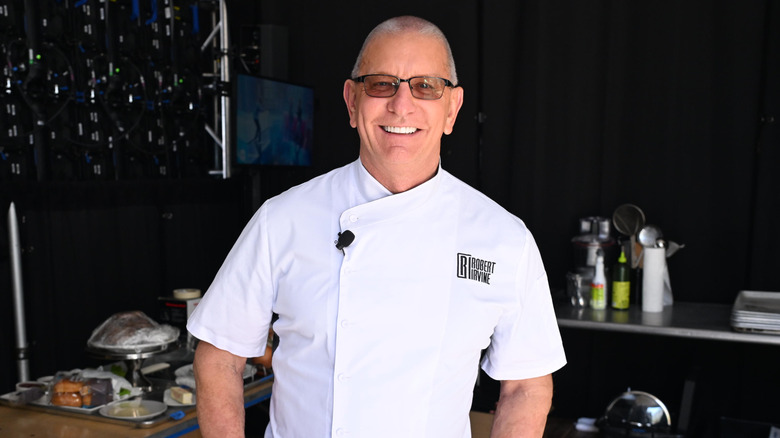
Prime rib typically has quite a bit of fat around the outside, especially if you purchase a bone-in, standing rib roast, though the boneless version is still likely to have a significant fat cap. Marbling, the ribbons and speckles of soft fat throughout the muscle, provide loads of moisture and flavor, and the firmer outer layer does too, but only to an extent. If it doesn't have time to render down and brown, you may end up with a chewy, gelatinous, or hard layer that most folks will cut off at the dinner table — discarding all the delicious seasoning in the crust.
Robert Irvine trims that fatty layer off the bottom, top, and sides of the roast. This way, his seasoning blend of salt, pepper, and fresh herbs (parsley, rosemary, tarragon, and thyme) is in direct contact with the meat itself. However, before popping the prime rib in the oven, he puts the trimmed fat right on top. This way, it bastes the beef as it renders and flavors any vegetables you may want to put underneath the roast, like celery, carrots, onions, or potatoes. Set the trimmed fat aside once the prime rib is finished.
Ina Garten: Check that the oven is clean

No, Ina Garten's prime rib tip isn't about making sure that your home is presentable before having guests over for a dinner party. In her rib roast recipe, the beef has a simple salt and pepper seasoning and is roasted in an oven that starts at 500 degrees Fahrenheit with a couple of adjustments over the cooking time. But before you make a classic mustard and horseradish sauce (like Garten does) or even turn the oven on, be sure to check that the appliance is clean.
Since this recipe calls for cranking up the oven's temperature to 500 degrees Fahrenheit, any stray bit of toasted bread or drop of oil that accidentally got left behind will quickly start to smoke. If there's a whole lot of smoke and you have to remove the roast to let the oven calm down, you're potentially jeopardizing all your effort — especially since Garten's recipe relies on adjusting the oven's temperature without opening the door. It's a pricey cut of beef, which is why Garten prudently reminds folks to inspect their ovens first.
Gordon Ramsay: Make a veggie-forward stuffing

The words "prime rib" evoke such a clear, all-senses experience: a sizable slice of soft, tender, and fatty beef served with savory au jus or pan gravy. Maybe it comes with a zippy, creamy horseradish sauce or puffy, drippings-laden Yorkshire pudding. Either way, you're likely mainly thinking of beef rather than any sort of vegetable side dish.
In Gordon Ramsay's prime rib recipe, you actually get meat and veg all in one (plus some Yorkshire puddings on the side). The stuffing he cooks up is made with sauteed onions, mushrooms, spinach, and garlic — once cooked, the mixture is flavored with fresh tarragon and thyme. Everything is chopped very finely so that the stuffing remains cohesive, and it also contains breadcrumbs and an egg that help bring the whole mixture together.
Now, this preparation does require a bit of skill with a knife. Here's how Ramsay's recipe instructs the cooks: "Insert the tip of a sharp knife on the left-hand side of the meat about 3 centimeters in from the edge and make a long incision just above the ribs, going two-thirds of the way into the joint. The idea is to separate the meat from the bones, but leave it attached along the bottom." The flap that you create is where the stuffing goes, and the whole roast is tied up with cooking twine so that it stays intact as it cooks. Not only does the stuffing bring brightness and earthiness to an otherwise heavy dish, but it looks absolutely lovely once the roast is sliced.