

12 Grilling Tips That Make Chicken Kebabs 10x Juicier

Grilled chicken kebabs should be one of the easiest things to get right on a summer grill, yet somehow they're one of the easiest to ruin. They also have a way of overpromising and very often underdelivering. Whether it's dry, rubbery centers or raw veggies, those colorful skewers going on the grill can disappoint by not living up to their potential. To figure out where things go wrong and how to actually fix it, we turned to three people who grill for a living.
Duce Raymond is an award-winning pitmaster and CEO of SBR Events Group, part of the Sweet Baby Ray's barbecue family, with more than 95 barbecue championships and awards to his name. Chef Alex Reznik is the restaurateur behind SMKD BBQ and Hayworth in Las Vegas, known for his appearances on Bravo's "Top Chef" and Food Network's "Beat Bobby Flay." Rounding out the group is Scott Thomas, founder of The Grillin' Fools, a site built around step-by-step, pic-by-pic, foolproof grilling instructions. Between them, they broke down exactly what it takes to get the perfect kebab — charred and smoky where it should be and delicious to boot.
1. Choose chicken thighs over breast
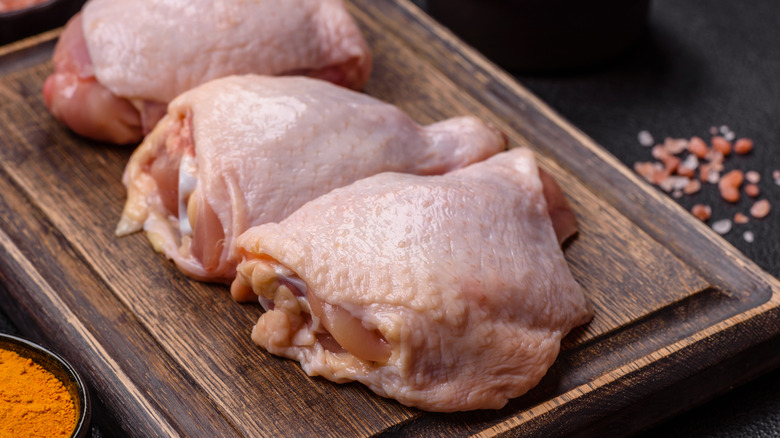
No other piece of advice united all our experts like this one. When it comes to choosing the best cut of chicken for kebabs, the answer was unanimous: choose the thighs. And, skip the chicken breasts. Pitmaster Duce Raymond puts it simply. "Boneless, skinless chicken thighs are my first choice because they are fatter and will stay the juiciest," he says, though he does note that chicken breasts still show up often in catering work because they cuts into cleaner, more uniform cubes and present better on the plate. Chef Alex Reznik is adamant: "Chicken breast is fine if you enjoy unnecessary stress. Thighs have fat, flavor, and enough forgiveness that you can beat the hell out of them over real heat and still end up with something juicy."
It's obvious that thighs give you a better margin for error. With the lean breast meat, even a minute or two of overcooking and you could be looking at dry, unappealing kebabs. The higher fat content of chicken thighs helps it stay juicy even if it sits on the grill a little longer than planned. Scott Thomas, backs this up with actual numbers. According to Thomas, 100 grams of chicken breast contains about 3.5 grams of fat, while the same amount of thigh meat comes in at around 8 grams. That extra fat acts as a buffer during cooking, giving the meat more room for error before it starts drying out.
2. Cut the chicken bigger than you think
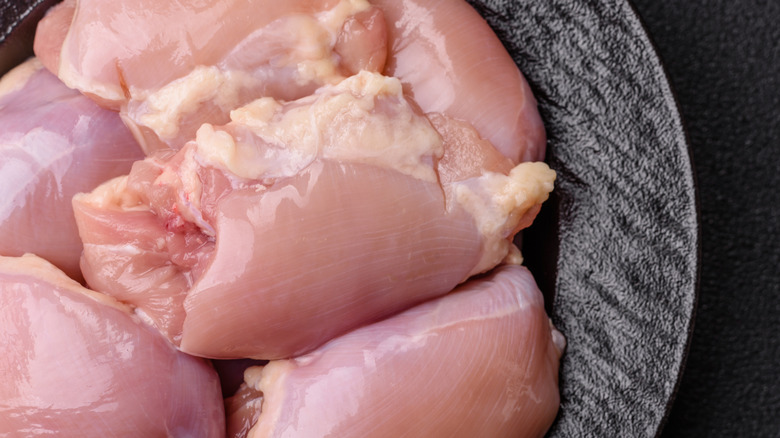
So, you've settled on thigh meat — now what? Well according to the chefs we spoke to, the next (natural) mistake most people make is cutting the pieces too small. Yes, they understand that you want neat, bite-sized cubes, but this instinct actually works against you. Chef Alex Reznik explains: "Cut them bigger than you think, about 1½ to 2 inches," he says. "Those tiny, perfectly symmetrical cubes are adorable. They also eat like erasers." For Reznik, smaller pieces lose moisture faster and cook through much quicker, leaving little room for error before the chicken turns tough.
Pitmaster Duce Raymond takes a slightly different approach depending on the goal. He typically cuts his chicken in 1 inch by 1 inch pieces. This he does for a very specific reason and that is to maintain uniformity with the vegetables on the skewer. "This will give you the best chance of getting the vegetables cooked at the same rate as the chicken," he explains. As a quick aside, he suggests that the trimmings left over from creating these perfect cubes should never be trashed. Instead, use them in soups or tacos. Ultimately, whether you choose smaller cubes or more meatier chunks, keep in mind that your cooking time needs to adapt accordingly.
3. Brine (or dry-brine) before you marinate
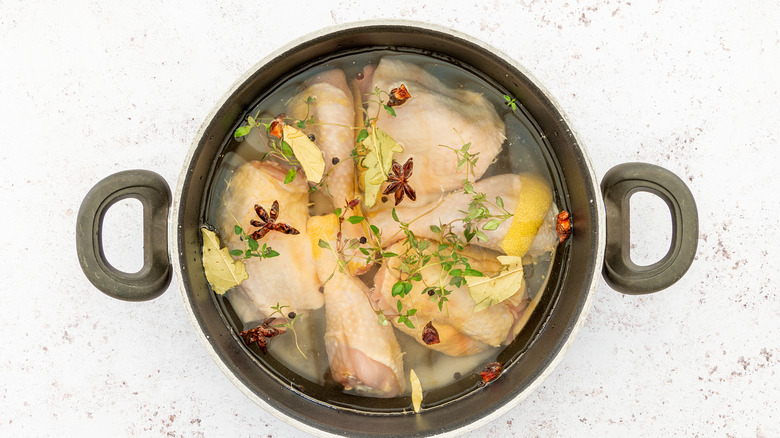
When it comes to brining in advance of the cooking process, you have both the naysayers and the must-doers. Scott Thomas, for example, is the strongest advocate for a full, overnight wet brine, "A brine is simply a marinade with salt in it." His ratio is 1 gallon of liquid to 1 cup of salt, and he explains the science behind it: "The salt in the liquid will push the liquid out of the salt solution and into the cells of the meat, making the meat juicier and giving a larger window to cook it properly without drying it out." He adds that a flavorful liquid, like apple juice or apple cider, does double duty, working on the connective tissue to tenderize the meat while also boosting flavor.
Chef Alex Reznik, however, relies on what is referred to as a dry brine. "I'm essentially dry-brining it by salting the chicken a few hours ahead," he explains. "That gives the salt time to work its way into the meat and helps keep it seasoned and juicy." For Reznik, a bucket of liquid isn't necessary to get the benefits of salt penetration. And finally, pitmaster Duce Raymond skips brining almost entirely for this cut of meat. "I typically do not brine smaller cuts of meat like cubes of chicken," he says. "I would use the marinade in this case," relying instead on his oil and acid based marinade to carry both moisture and flavor.
4. Build your marinade on salt and fat, not just acid
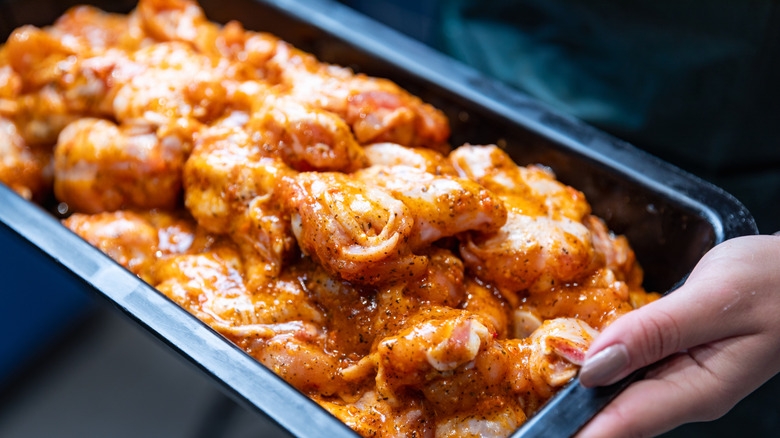
A lot of home cooks think of a kebab marinade as mostly an acid, lemon juice, vinegar, something sharp meant to tenderize the meat. The experts push back on that idea, and instead point to the presence of salt and fat in a marinade as the real necessities. There are a bunch of delicious flavors to experiment with as long as you approach building a marinade methodically. "You want to pick a base flavor first, then apply the same method as vinaigrettes: ⅓ acid or vinegar and ⅔ oil," says Duce Raymond. "Then you want to layer with flavor, typically onions, garlic, and fresh herbs. Fresh herbs are a life hack for flavor."
For chef Alex Reznik, "Salt the chicken a few hours ahead. Then use olive oil, yogurt or mayo, depending on the direction you're going. Fat carries flavor, protects the meat and helps you get that crust we're actually here for." For Reznik, the marinade isn't just about flavor, the fat itself is doing structural work, shielding the meat's surface from the direct heat of the grill. Both experts treat acid as a supporting player rather than the main event. If your marinade is built mostly around citrus or vinegar, you are definitely missing the two most crucial ingredients that keep the chicken juicy and flavorful once it hits the grill.
5. Go easy on the lemon
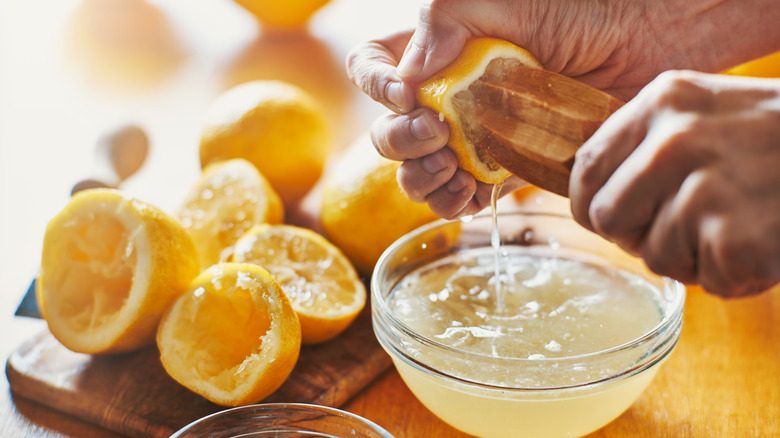
When it comes to building a marinade, there are so many points of view. With regard to chicken kebabs specifically, according to chef Alex Reznik, lemon is public enemy number one when it comes to marinating mistakes. "Acid is where people get into trouble," he says. "I love lemon, but chicken doesn't need to spend the night drowning in it. Too much acid for too long can make the outside weird and mealy." That mealy texture happens because acid doesn't just flavor the surface of the meat, it actively changes its structure.
Chef Reznik's fix is simple: "Add the lemon closer to cooking, then hit it with more when the chicken comes off the grill," he says. That approach lets the chicken get the bright, citrusy flavor lemon is known for, without giving the acid enough time to damage the texture. He also notes that thighs can handle a longer soak in a yogurt or oil heavy marinade with less acid, while breast meat should spend considerably less time marinating regardless of what's in the mix. If you have always believed that a longer marinade means more flavorful meat, this is an important adjustment to make. When acid is involved, a shorter marinade with lemon added closer to grill time, followed by a fresh squeeze after cooking, can actually produce better texture and brighter flavor.
6. Skewer chicken and vegetables separately
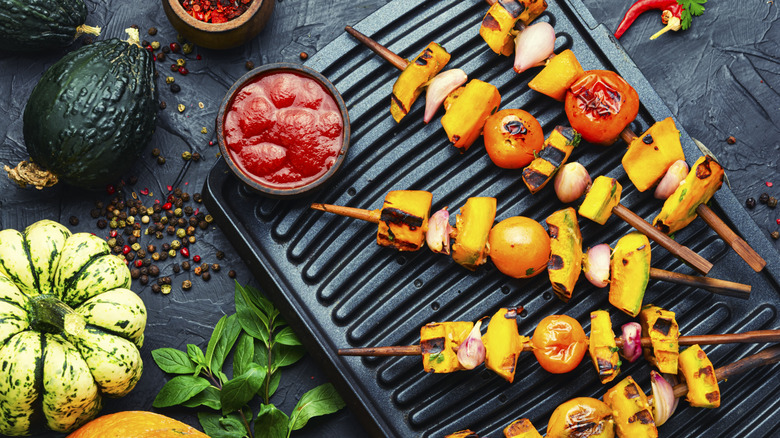
Think chicken kebabs and you immediately imagine the classic image of alternating cubes of chicken, bell pepper, onion, and tomato all sharing one stick. This might look great on a plate, but at least two of our experts believe that this approach is not the best. "Can we please retire the rainbow kebab?" says chef Alex Reznik. "Chicken, onion, tomato, and pepper don't suddenly agree on cooking times because you put them on the same stick. Chicken gets its own skewer. Vegetables get theirs. This isn't couples therapy." It may sounds humorous but his reasoning is straightforward: chicken and vegetables cook at completely different rates, so forcing them onto the same skewer means one ingredient is inevitably overcooked or undercooked by the time the other is done. When cooking vegetables on the grill, also be mindful of this hack to keep them from sticking.
Scott Thomas also suggests you build separate kebabs of chicken and vegetables. Once everything is cooked properly, Thomas recommends removing the ingredients from their skewers and mixing the vegetables together in a bowl, then giving each guest a chicken skewer alongside a scoop of vegetables. "It's not as sexy as handing a kebab with all the different ingredients on it to each guest," he admits, "but the chicken will be juicier and all the other ingredients will be cooked properly too."
7. Pack the chicken snugly on the skewer
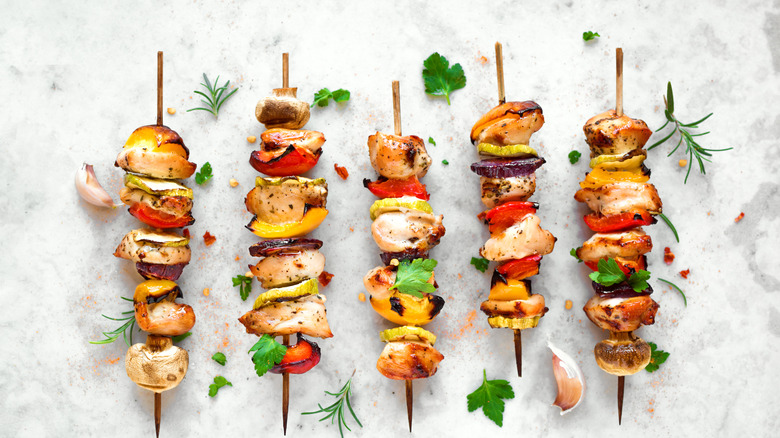
If building kebab skewers (whether they are all-chicken ones or veggie and chicken combination, using regular skewers or this genius hack), chef Alex Reznik has this piece of advice: "Pack the chicken fairly tight," he says. "I actually want the pieces protecting each other a little. The centers stay juicy while the exposed edges get absolutely abused by the fire." When chicken pieces sit flush against each other on the skewer, the touching sides are shielded from direct heat, which slows moisture loss in that part of the piece. Meanwhile, the exposed edges still get full contact with the grill, picking up the char and color that make grilled chicken taste like grilled chicken. Chef Reznik explains, "Where the pieces touch, the meat stays protected and juicy. ... The exposed edges can take the heat and get beautifully charred."
If you have ever thought that leaving breathing room between pieces on a skewer is best, chef Reznik's approach flips that assumption. What he promises by doing so is a kebab with texture in more than one place, rather than an evenly cooked but flatter tasting piece of chicken all the way through.
8. Set up a two-zone grill
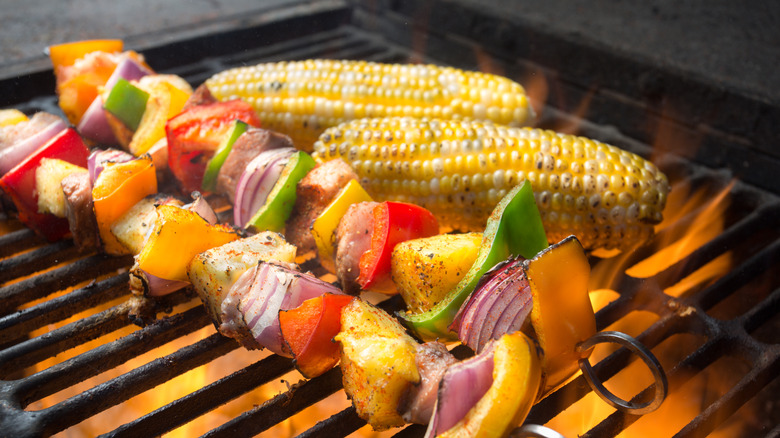
If you struggle to get the perfect char on a kebab without drying it out, our pitmasters are here to help. Our experts point to the same solution: two-zone grilling. Pitmaster Duce Raymond explains how he sets his grill up: "I use a two-zone grill with a medium-high direct-heat area and a cooler indirect area," he says. "The hot side creates browning and grill marks, while the cooler side gives me somewhere to move the kebabs if the exterior is coloring faster than the center is cooking."
Scott Thomas also uses indirect grilling, with hot coals concentrated on one side of the grill or a burner set to medium-high on a gas grill, and no direct heat on the other. As each skewer finishes cooking, he moves it to the cooler side of the grill, close enough to stay warm without continuing to cook further. The reasoning behind this setup is simple, but many don't take it into consideration. With a single-temperature grill, there is a forced all-or-nothing choice. You have either high heat that chars the outside before the inside is safely cooked, or lower heat that cooks the chicken through but never develops much color or crust. When you switch to a two-zone setup, this gives the cook a hot area to build char and grill marks quickly, and a cooler holding area to finish cooking through or simply keep already-cooked skewers warm without drying them out further.
9. Let the fire do the work
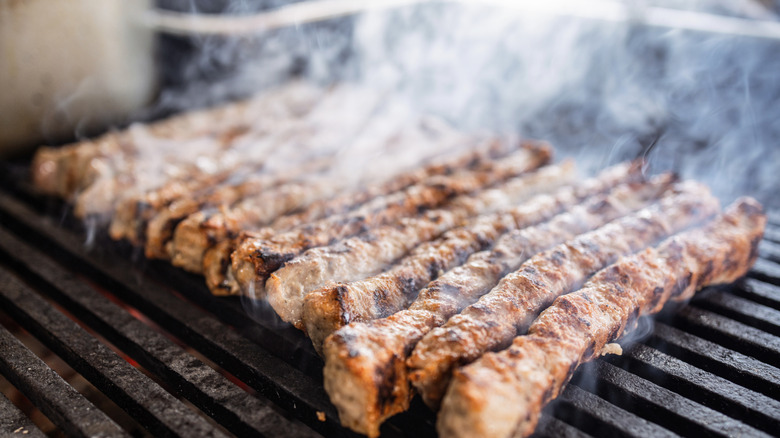
There are two types of people who grill. The confident ones who relax with a beer and flip the meat almost casually and the worrywarts who anxiously flip, check, and nudge the meat and vegetables and in the process ruin the results. Chef Alex Reznik implores, "Put the skewer down and leave it alone," he says. "Let it get ugly. Let those edges go dark. Turn it. Do it again." His frustration with over-flipping is pointed and specific. "People stand there nervously flipping it every 14 seconds for half an hour until they've successfully turned a perfectly good chicken thigh into patio furniture." The image may be exaggerated for effect, but what he is saying is a real issue. The constant flipping interrupts the process that actually builds flavor and texture on the surface of the meat.
Chef Reznik's overall approach mirrors this advice: hot grill, full heat, and the confidence to let the fire do what it's supposed to do without constant interference. Rather than treating every skewer with extreme care and barely touching it, his method calls for committing to each side long enough to develop real color before turning. You need to shift your mindset and trust in the technique, whether you are a home cook or a professional.
10. Use an instant-read thermometer

When it comes to cooking any type of meat, there's one factor that cannot and should not rely on guesswork — and that's checking the internal temperature of the cut. Pitmaster Duce Raymond insists that even after decades of professional experience, "I use an instant-read thermometer and check the center of one of the largest pieces of chicken," he says. "Color and grill marks can tell you what is happening on the surface, but they cannot reliably tell you what is happening inside." He doesn't treat this as a beginner's crutch either. "I'm a trained professional and have been doing this for decades, and I still use an instant-read thermometer every time. It's a no-fail way to make sure you are serving safe and properly cooked food."
Scott Thomas follows the same practice, using a probe thermometer to confirm the chicken has reached above 165 degrees internally before pulling it from the grill. For vegetables sharing the fire, he relies on a quick visual check or a taste test instead, since raw vegetables pose no safety concern the way undercooked chicken does. This is important because a deeply charred exterior can still be hiding an undercooked center, while a lighter colored piece might already be perfectly done. Relying on color alone only tells part of the story. An instant thermometer is often regarded as one of those must-have items in any kitchen as it removes any uncertainty entirely, giving a precise, reliable answer every time.
11. Reserve some marinade to glaze
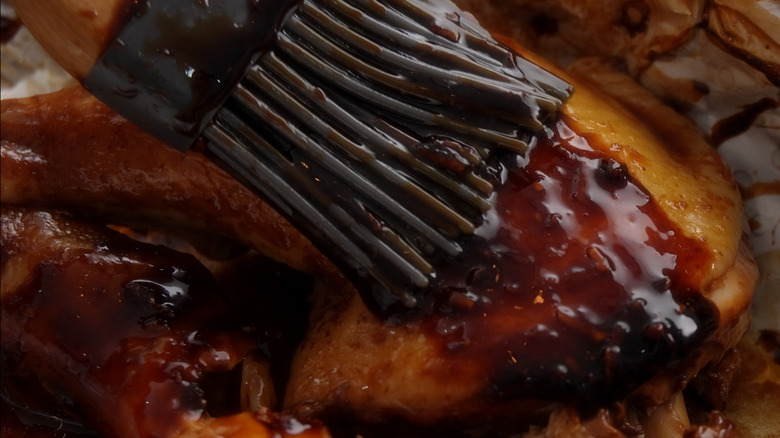
Pitmaster Duce Raymond has something to share about making a marinade, and for him, this step is non-negotiable. "I always reserve some of the marinade before putting it on the chicken so that when the kebabs are done cooking, you can glaze the kebabs with the marinade," he says. "This is important to reinforce the flavors." For Raymond, by doing this, the marinade gets a second moment to shine once the chicken comes off the grill. Plus, you get an added fresh hit of flavor just before serving. "A lot of cooks don't realize how much seasoning is lost during the cooking process," Raymond explains. "That's why I recommend seasoning the meat and applying some of the reserved marinade again after cooking."
There's also an important safety note that goes along with this technique, one Raymond is careful to spell out. "Remember, you need to set some of the marinade aside before adding it to the chicken. Once the marinade has touched raw chicken, it's contaminated and should never be used on cooked chicken." Always keep this reserved portion completely separate from the start, never dipped into or combined with the marinade the raw chicken sits in, or the whole point of a safe finishing glaze is lost.
12. Rest the kebabs before serving
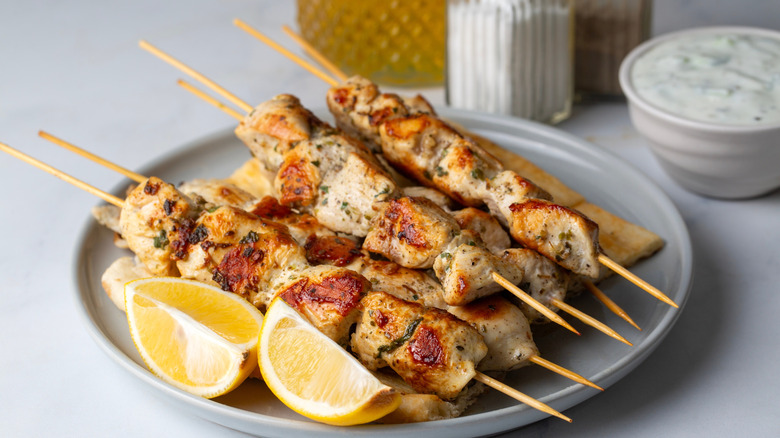
The last step (and some might say the most important one) after all the work that goes into cutting, marinating, and grilling is letting the kebabs rest. Pitmaster Duce Raymond instructs: "I let the kebabs rest for three to five minutes," he says. "Even with smaller pieces of meat, that short rest helps the juices settle instead of immediately running out when someone takes a bite." Even though kebab pieces are far smaller than something like a whole roast or steak, the same principle still applies. He also uses this resting time to reapply some of the reserved marinade before finishing with a glaze and garnish.
Chef Alex Reznik keeps his rest brief. "Let it rest for a minute," he says, "then add lemon, olive oil, garlic and herbs. Maybe something spicy." For Reznik, the rest isn't just a pause before serving, it's the moment when the final layer of flavor gets added, once the chicken is no longer actively cooking and won't burn off any fresh herbs or citrus. Ultimately patience pays off and gives every other technique in this list the chance to shine with the finished product.