

9 Budget Cuts Of Steak You Should Think Twice About Buying

A budget cut of steak can be a genuine bargain, or it can be an expensive lesson in disappointment. Just don't chalk it up to luck! The best results don't just come from learning how to tenderize cheap steak or improving your culinary techniques when cooking steak at home. In reality, it often comes down to matching the right cut to the right cooking method, something that's easy to get wrong when a cheaper steak looks like it could pass for a pricier one.
To sort out which budget cuts of steak deserve a second look and which ones belong in a completely different dish, we turned to two people who spend a lot of time thinking about beef. Joonas Jokiniemi is a chef and BBQ expert, and the founder of Grill Smoke Love, which is dedicated to grilling and smoking recipes and advice. Joining him is Dennis Turcinovic, the owner and executive culinary partner of Delmonico's Hospitality Group, the team behind the revival of Delmonico's, widely regarded as America's first restaurant. Together, they break down exactly which budget steaks to skip, which ones just need a different approach, and what to buy instead.
Eye of round
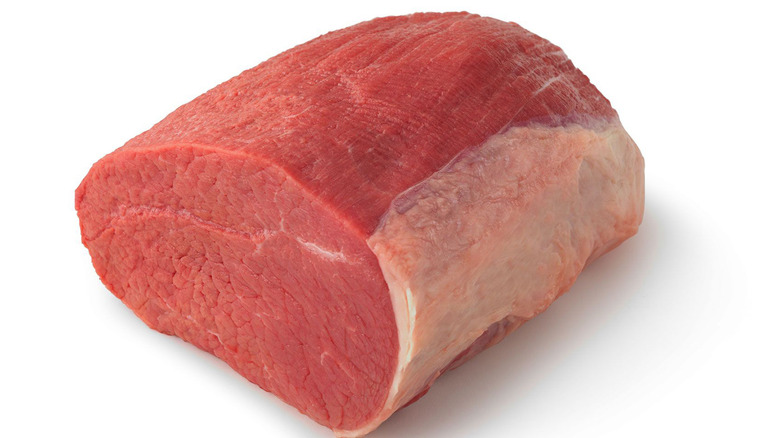
As you walk through the beef aisle for the best deal, the eye of round will probably catch your attention right away. It looks neatly cut and well priced to boot. In fact, it could even pass for a small sirloin steak. It's this resemblance that our experts want to warn us about.
Joonas Jokiniemi flags this one right away as a cut to approach with caution. "I'd be wary of eye of round steaks, especially when they're being sold as an inexpensive alternative to sirloin," he says. "Eye of round is extremely lean and comes from a well-worked part of the animal." While it may look appealing in the package, things can change once it hits the grill. "It's very easy to end up with something dry and stubbornly chewy."
For a cut of meat that is high in muscle content and dense fibers rather than fat, the eye of round has almost no marbling to protect it once it hits high heat. That doesn't mean eye of round is a bad piece of beef; it just needs a completely different approach. This is not the cut to reach for when planning a steak dinner. Instead, slice it paper-thin and against the grain, cook gently, and use it in dishes such as roast beef sandwiches or stir-fry. You could also think outside the box and make your own beef jerky or follow Julia Child's advice and use it in a pot roast.
Top round
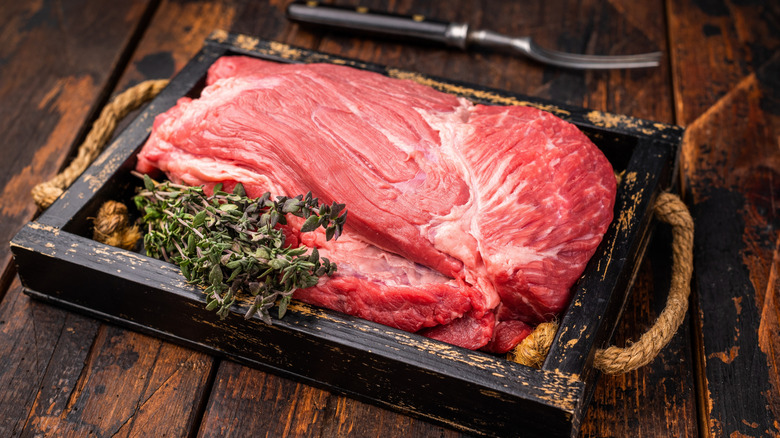
Dennis Turcinovic doesn't mince words when warning cooks about how complicated it can be to cook a top round steak. "[It] looks the part sitting in the case, decent color, fair price, cut like a steak should be," he explains. "But sear it hot and fast like you would a ribeye and you get shoe leather. People blame the recipe. The recipe's fine. The cut just never should've been in that pan."
The disconnect comes down to understanding where the cut actually comes from. Pulled from the rear leg of the cow, this is an area built for movement and support, without much fat marbling. Compared to more conventional steak cuts, such as ribeye or strip steak, less fat means less insurance once high heat gets involved. Any overcooking shows up immediately as toughness, and your meal can go sideways in no time.
What makes this cut particularly frustrating is exactly what Turcinovic points out: The problem usually isn't the cut, but the chosen method of cooking. Home cooks often assume they did something wrong with the recipe in terms of seasoning or timing, when really the cut was set up to fail with a certain cooking method. Top round holds up well to slow roasting or braising. Here, time and moisture can work in its favor instead of against it. Just don't make the mistake of treating it like a quick weeknight steak.
Thick bottom round steak
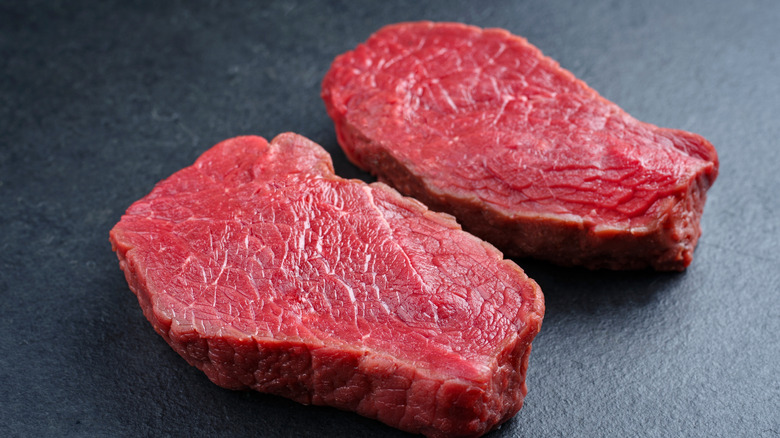
There's a cut in the butcher display with a distinct identity problem. Bottom round gets cut and packaged to look like a steak, and is sold right alongside cuts meant for the grill, but its actual personality should ideally place it somewhere else entirely.
Joonas Jokiniemi stresses that the cut itself isn't the issue so much as how it's being marketed, and that he would "skip thick bottom round steaks if the plan is simply to throw them on the grill. They aren't bad cuts of beef, but they're usually much happier in a braise or sliced very thin." He notes that he'd rather buy bottom round as a roast if the plan is to braise or slow-cook it, rather than as pre-cut steaks meant for a quick grill session.
Bottom round isn't a poor-quality piece of beef. By now, we are beginning to understand that every cut of meat performs completely differently depending on the method. Slow-cooked with plenty of moisture, bottom round can turn beautifully tender and flavorful. Always remember, the cooking method should always follow the cut, not the shape it happens to be sold in.
Cube steak
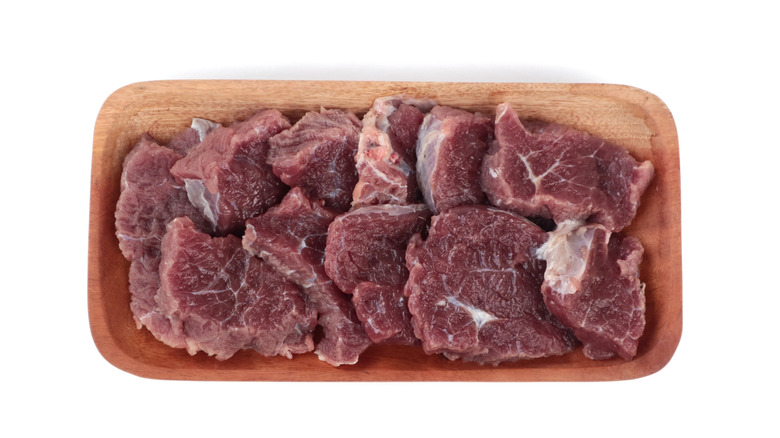
Cube steak is marketed as the saving grace for a busy weeknight dinner. After all, with a pre-tenderized, quick-to-cook meat, surely it's a shortcut worth taking? Well, according to Dennis Turcinovic, that shortcut rarely pays off.
"It's pre-tenderized round steak, mechanically beat up to look friendlier, and it still comes out dry and stringy nine times out of 10," he says. "It's marketed to be a busy weeknight shortcut, but it's actually a tough cut in a costume. I don't buy costumes." Cube steak is a lean cut, much like top or bottom round, but it then gets mechanically pounded with a meat tenderizer, leaving those characteristic dimpled indentations across the surface.
One would assume that breaking up some of the muscle fibers ahead of time should make the finished product easier to chew. In practice, tenderizing the surface doesn't change the fact that this is still a lean cut with tight muscle fibers. It also tends to lose moisture faster during cooking, which compounds the dryness problem. Turcinovic's take gets at something worth remembering about budget cuts generally: mechanical shortcuts don't replace what fat and proper cooking time actually do for meat.
Chuck steak
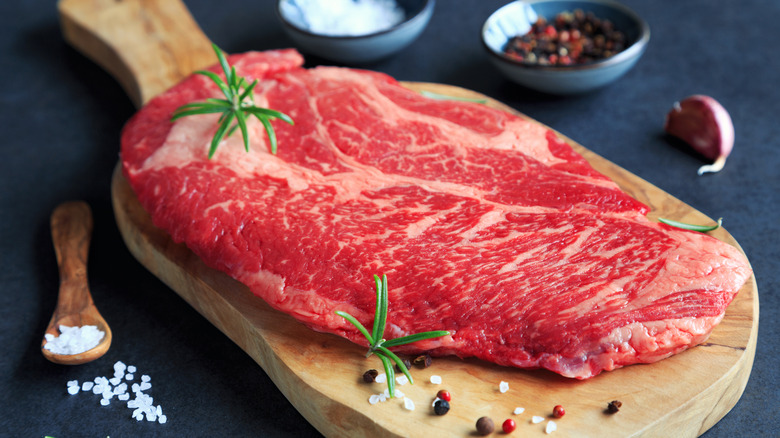
Joonas Jokiniemi points to chuck as a textbook example of a cut that behaves differently depending on the way it is cooked. "Chuck has plenty of beef flavor and often good fat, which makes it excellent for pot roast, stew, shredded beef, or low-and-slow barbecue," he says. "The trouble is that it can contain several muscles and seams of connective tissue in the same piece." If you pan-sear it, you may end up with bites that range from beautifully tender to unpleasant and gristly. "It needs either careful butchering or a slower cooking method," he adds.
Unlike a single, uniform muscle such as a filet mignon, chuck comes from an area of the shoulder where several different muscles meet, each with its own texture and its own band of connective tissue running through it. So, when you cut it into a steak shape and cook it quickly, you're essentially cooking multiple different textures at once — and with staggeringly poor results. You don't necessarily need to give up on one of the more rewarding budget cuts in the entire case as yet. The lesson is to match the cooking method to what's actually going on inside the meat.
Brisket
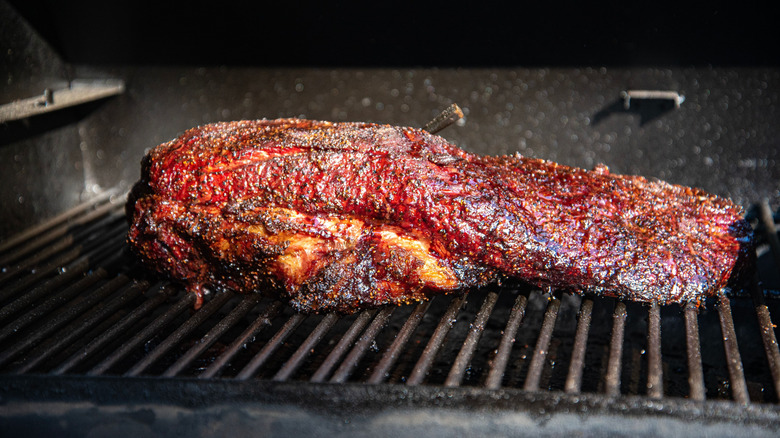
Dennis Turcinovic is very vocal about how one needs to handle cuts like brisket (and chuck). "Get the technique right, low and slow, give the collagen time to do its thing, and you'll get something better than a lot of premium cuts deliver," he says. "Rush it, treat it like a strip steak, and it's inedible. No cut in the case punishes a bad decision faster than chuck."
Turcinovic groups these two cuts together because of one unifying factor: collagen. Both cuts come from areas packed with connective tissue built to support movement and weight. As a result, the collagen present in these cuts is tough and chewy at first. But given enough time and gentle heat, it slowly breaks down into gelatin. Gelatin is exactly what gives a proper braise or slow-smoked brisket its rich, tender texture. Dare to skip this long, transformative cook, and the same collagen just stays as tough, rubbery tissue running through every bite.
Turcinovic reiterates that brisket isn't a lesser cut that needs to be tolerated. Handled properly, with the low, slow time collagen requires, it can outperform steaks that cost several times as much. The catch is that there's no shortcut to perfect results. When cooked fast and on high heat, brisket typically won't live up to its full potential, no matter how good the seasoning or how hot the sear looks. As Turcinovic summarizes, "Respect the process or don't bother."
Skirt steak
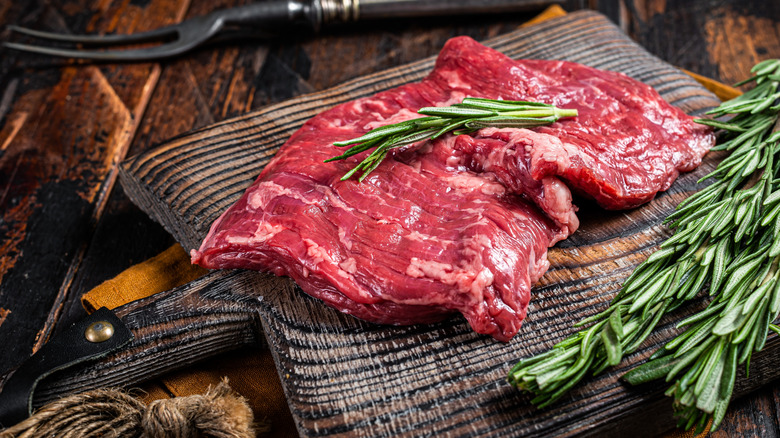
Get the technique right when cooking skirt steak, and it's one of the best budget cuts available. Get it wrong, and there's no hiding behind anything. Joonas Jokiniemi lays out exactly how narrow that margin is. "There's very little room for error. It needs a very hot grill or pan, a short cooking time, and then thin slicing across the grain. Cook it too far or slice it with the grain, and suddenly it feels like you're chewing a belt. Cook it quickly, keep it pink, and slice it properly, and it can be one of the most flavorful steaks on the table," he says.
Dennis Turcinovic points to a similar pattern, noting the exact same piece of meat can turn out completely differently depending on the cooking time and slicing direction. Cut with the grain, and you end up with long, intact muscle fibers that are incredibly chewy and unpleasant to eat. Slice against the grain (like you do for steak fajitas), and those same fibers get cut into short pieces, resulting in tender pieces that belie how chewy the meat technically is.
At its core, skirt steak is a cut that just demands precision. You may be surprised how the right heat, short window of cooking time, and a sharp knife cutting in the right direction are all it takes to turn this budget cut into one of the more memorable meals.
Flank steak
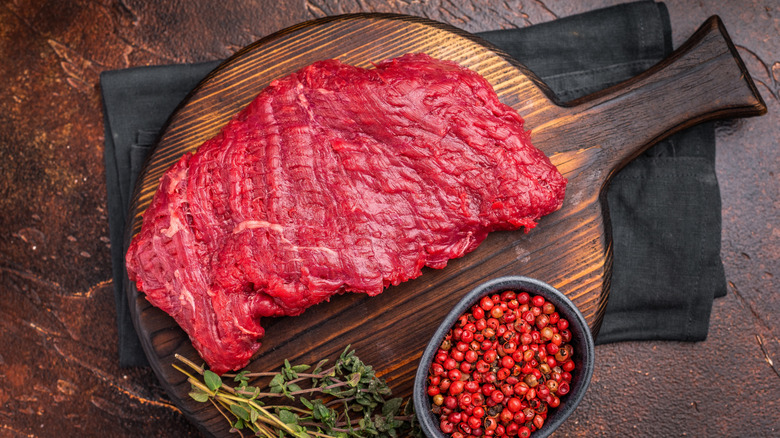
Flank steak is another cut that some may want to avoid. Dennis Turcinovic explains why this is the case. "Sliced thin against the grain for stir-fry, or marinated and grilled quick to medium-rare and sliced properly, they work," he says. But if you try to cook it like a thick-cut steak, overcook it, or slice with the grain, you'll face issues. "The same cut turns tough and stringy. Same piece of meat, completely different outcome, and the difference is entirely in the execution."
Cooked past medium, the little fat that flank has to begin with cooks off, and the fibers tighten up, leaving a chewy, stringy bite no matter how good the marinade was. Slicing matters just as much as cook time. Much like skirt steak, if you cut with the grain, those long fibers stay intact, forcing you to chew through them whole. Cut against the grain, and the same fibers get shortened into small, manageable pieces.
Flank steak really rewards precision. For the best results, cook it to medium-rare (medium at most), rest it properly, and always slice against the grain. If you follow these simple rules, this cut holds up as one of the more flavorful budget options in the case.
Any lean, dense-fibered cut
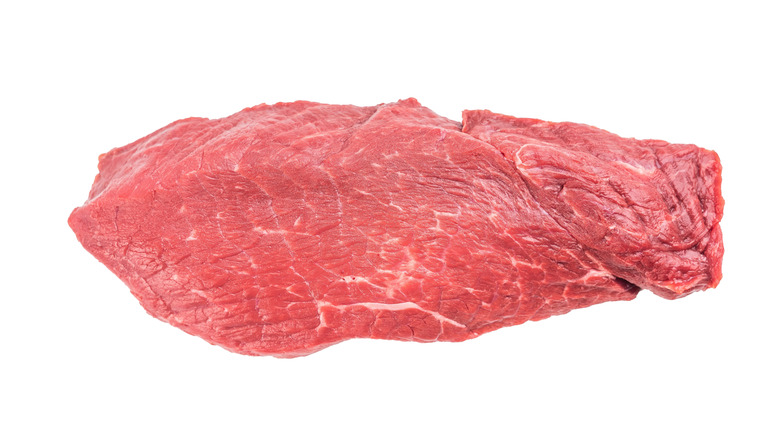
By now, a clear pattern has emerged across nearly every cut on this list. It isn't really about one specific piece of beef being flawed. Rather, it's about what happens when a cut of meat is cooked in the wrong way. And when it comes to lean, hardworking cuts, the worst approach is to handle them as though they were fatty tender cuts.
Dennis Turcinovic sums it up well: "Cheaper cuts have less intramuscular fat, leaving very little margin for error. There's also no marbling in case the pan runs a little too hot or the timing is off by ninety seconds. The muscle fibers are tighter, which means that instead of the tenderness you'd like, you end up with a chewy bite." The fat in a well-marbled steak will melt as it cooks. When you continually baste the meat, you can buy a little extra time before things go wrong. A lean, dense cut has none of that built-in cushion. Once the surface finishes cooking, there's nothing left inside to protect the center from drying out or toughening up.
Now, this is not to say that you should avoid lean cuts altogether. Instead, just be more mindful about matching the method to the meat. Treating a lean, dense cut like a prime steak cut will rarely end well, so choose accordingly.