

10 Cuts Of Meat You Should Never Cook In Your Air Fryer
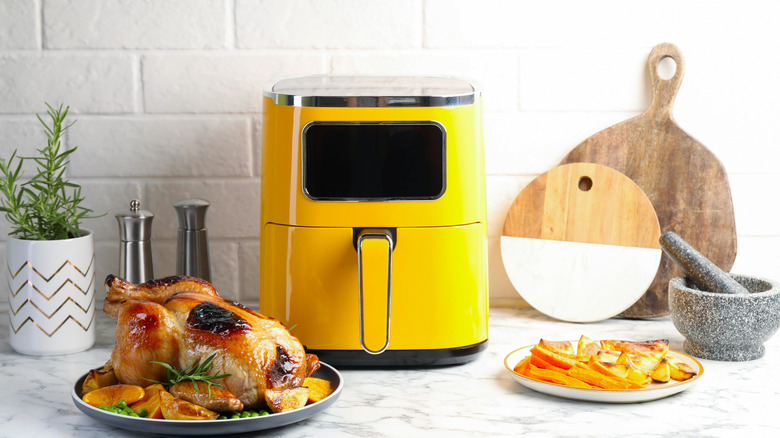
Air fryers are being touted as the single appliance that can do almost anything. From reheating to frying and baking to grilling, see enough of videos and recipes online and it's easy to start assuming that this reputation extends to every cut of meat sitting in your fridge. We are here to inform you that it doesn't.
To sort out exactly which cuts belong in the air fryer and which ones are better left for the oven, stovetop, or smoker, we turned to two experts who know their way around a piece of meat. Ashley Lonsdale is a recipe developer and the chef-in-residence at ButcherBox, where she helps home cooks build kitchen confidence one recipe at a time. Chef Vivian Villa is a chef and product development specialist whose recipes have shaped the shelves of major grocery chains across North America, and whose latest venture, UnButter, is a line of plant-based butters and pestos. Together, they break down the cuts worth skipping, the reasons why, and what to reach for instead. Consider this your guide to knowing both the limits and the advantages of your air fryer.
Chuck roast
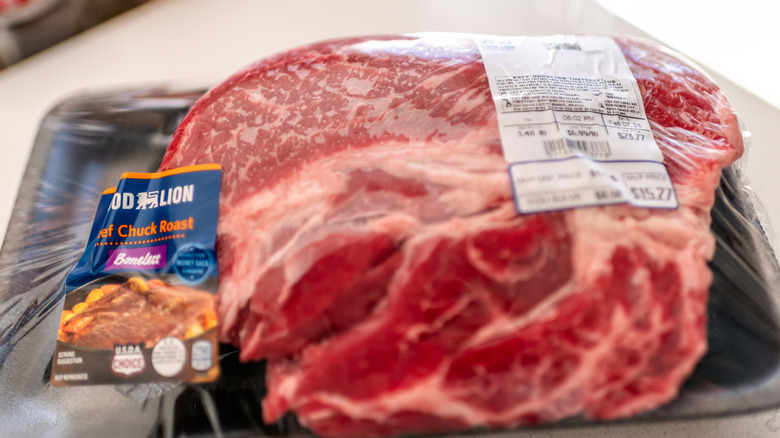
Culinary experts and home cooks all know that a perfectly braised chuck roast comes with time. And, for this reason alone, this cut of meat tops our list of things you should not cook in an air fryer. Chef Ashley Lonsdale explains: "Cuts that are built for low and slow cooking, like brisket or chuck roast, are not ideal candidates for the air fryer. The connective tissue needs time to break down into something tender, and an air fryer is a sprinter, not a marathon runner."
Connective tissue and how it reacts to different types of cooking methods is what is at play here. This is one of the reasons why chuck roast is in fact an ideal budget swap for a pricier brisket. Chuck roast comes from a hardworking part of the cow. What this means is that this cut of meat is laced with collagen that only turns silky and tender through hours of slow and low heat and moisture. On all fronts, an air fryer works in exactly the opposite direction. This is an appliance built for speed. By blasting food with hot air it gives the fastest and crispiest result. If you do insist on cooking a chuck roast in an air fryer, be prepared for something chewy and dense — none of the fall-apart texture you're after. Chef Lonsdale also cautions against trying to crank up the cooking time. What this does is only create a drier, tougher piece of meat instead of more tenderness.
Whole roast
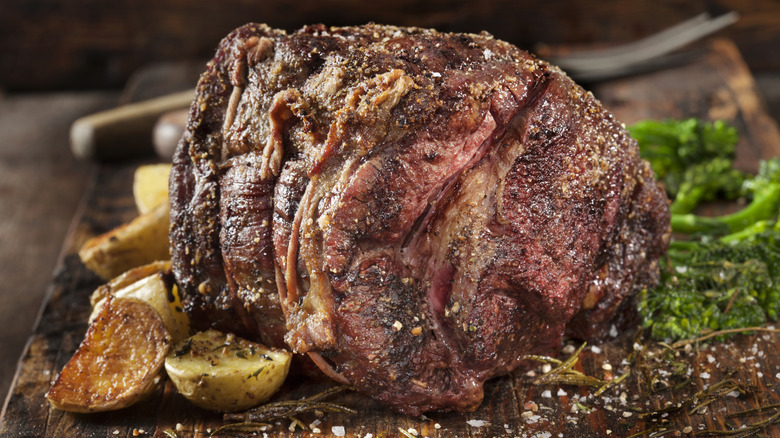
Air fryers have been hyped up considerably, and, while they can be used to replace your oven for smaller portions, Chef Vivian Villa explains that they do not replicate everything an oven can do. Expecting a small air fryer to handle a roast and create oven-like results in half the time, is just asking for too much. "Air fryers do not provide enough air space to circulate, the meat will cook fast. A roast in an air fryer will burn on the outside not on the inside," says chef Vivian.
An air fryer works by circulating hot air rapidly around whatever is placed inside its basket, making it ideal for cooking and crisping up smaller foods, like fries or wings. When you try and cook a whole roast, not only does it take up most of the available space in the air fryer basket, but it also leaves very little room for the much needed circulation of hot air to cook. The result is a cut that chars on the surface long before the center has any chance to cook through. Plus, uneven cooking also raises food safety concerns, as parts of the interior may not reach a safe internal temperature even if the outside looks done. If you want to experiment with turkey or roast chicken and you do have a large air fryer, chef Villa suggests dry brining it first, the same prep she'd recommend before roasting one in an oven for the best results.
Brisket (whole)
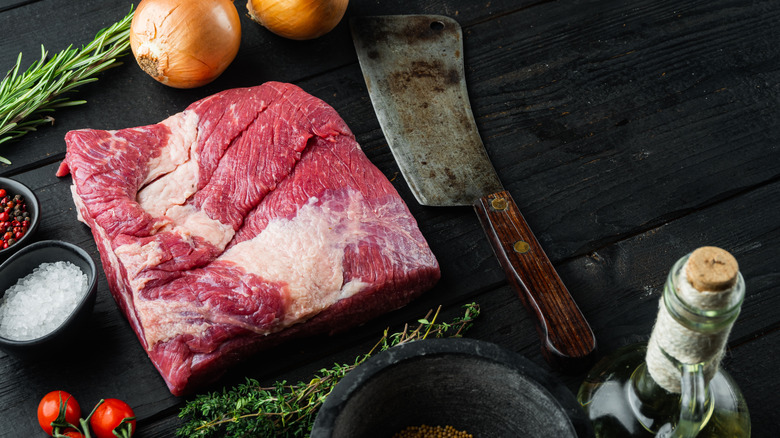
Understanding where a cut of meat comes from goes a long way toward deciding how to properly cook it. Brisket, for example, comes from the cow's chest. Now, this is an area that does a lot of work as it supports the body weight of the animal. This also means that it's dense with connective tissue and collagen. Ideally, you need to cook brisket in a smoker or an oven (avoid the slow cooker here). Using these methods helps break down the collagen into gelatin, giving brisket its signature, melt-in-your-mouth texture.
Another aspect that makes whole brisket especially tricky is its size. A full brisket, whether it's the leaner "flat" or the fattier "point," is a large, thick slab of meat, and air fryers rely on hot air circulating around food to cook it evenly. However, there is a workaround if you're craving that brisket flavor and only have an air fryer at your disposal. Chef Ashley Lonsdale points out that when cut into smaller strips or cubes and well-seasoned, brisket can crisp up quite satisfactorily in an air fryer as a shortcut version of burnt ends. Just don't expect it to work with the entire cut.
Chicken breast
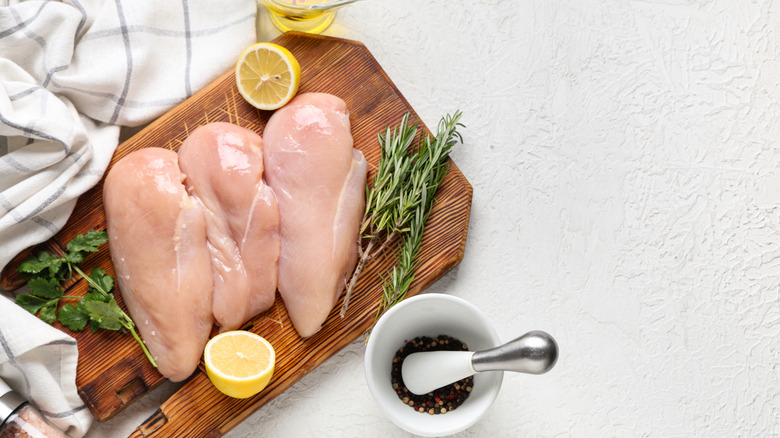
What should be a dream pairing for an air fryer is actually a surprising let-down. We are talking about chicken breasts and how they disappoint when cooked in an air fryer. Chef Vivian Villa doesn't hold back on this one. "Chicken breast! It's always a disappointment. An air fryer behaves like a hair dryer with more heat! Just avoid chicken breast. This is quick, dry cooking!" she says.
The main problem here is the lack of fat on this cut. Chicken breast is one of the leanest cuts of poultry, which, while a boon when you are watching your calories, makes it very difficult to ensure the meat remains moist as it cooks. Cooking chicken breasts in an air fryer will crisp up the meat in no time at all but the intensity and speed will also strip moisture out of this lean cut. Overcooking by even a minute or two is often the difference between juicy and rubbery.
Chef Villa's fix if you're determined to use the air fryer is to change the setup rather than the cut. She recommends keeping the skin on where possible and brushing it with oil, or adding a little water to the tray to soften the intensity of the hot air and keep the environment less punishing. Alternately, you could just follow the foolproof 3-2-1 method and enjoy perfectly cooked chicken breasts every time.
Boneless pork chops
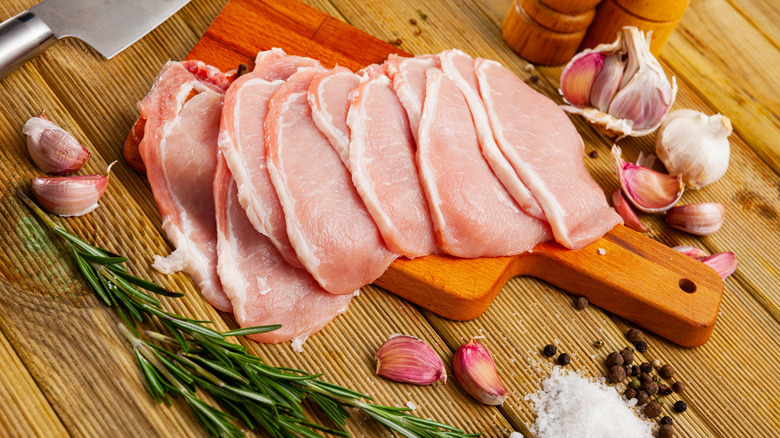
Chef Ashley Lonsdale points to boneless pork chops as one of the cuts people reach for expecting convenience, only to be disappointed by the result. "People reach for them because they're quick-cooking and easy to find, but they're lean enough that a minute or two too long turns them dry and tough. Unlike a fattier cut, there's less margin for error," she says.
You may not realize it but its the bone that plays the biggest role in maintaining the tenderness of the pork chop. A bone-in pork chop has a layer of fat and connective tissue running along the bone that helps insulate the meat as it cooks. This helps slow the process just enough to buy a little wiggle room. Take the bone out, and you need to cook swiftly and decisively because what's left is a leaner, more uniform piece of meat that cooks through fast with almost no cushion between "done" and "overdone." When cooked in an air fryer, a boneless pork chop can go from perfectly juicy to chalky and tough in the time it takes to check your phone. Instead, check out some well worn tips and tricks to keep this cut of meat tender and hassle-free for an easy weekday dinner.
Flank steak
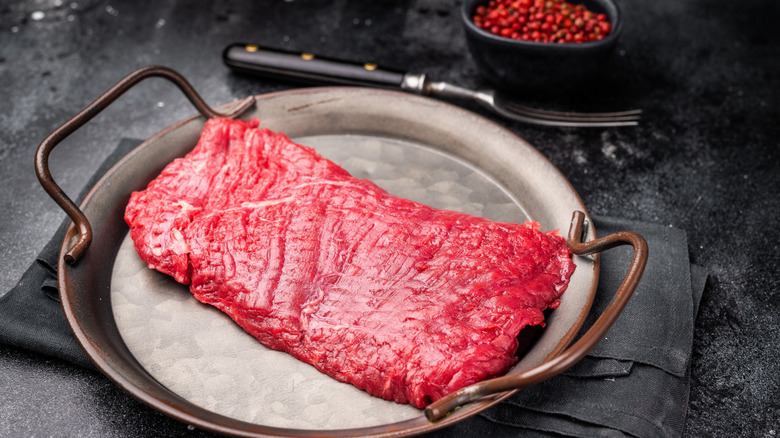
Flank steak has a devoted following for its beefy flavor that lends itself beautifully to marinades. However, it is also one of those trickier cuts that need everything to be right to get the best results. Chef Vivian Villa draws a clear line between what she'd choose and what she'd skip if cooking with an air fryer. "A flank steak I would not cook but I would choose a ribeye steak," she says, pointing to a ribeye as the better fit given its more forgiving balance of fat and thickness.
The problem with flank steak comes down to its structure. This is usually a long, thin, relatively lean cut of meat with visible muscle fibers running in one clear direction. Dishes like fajitas and stir-fries benefit from this structure, especially once it's sliced thin against the grain. But, that same leanness leaves it with very little fat to protect it from an air fryer's fast and high-heat. A ribeye, by contrast, tends to be a more uniform cut with generous marbling throughout, giving it a much wider margin for error since the fat continues basting the meat even if it stays in the air fryer basket for a touch too long.
Rack of ribs
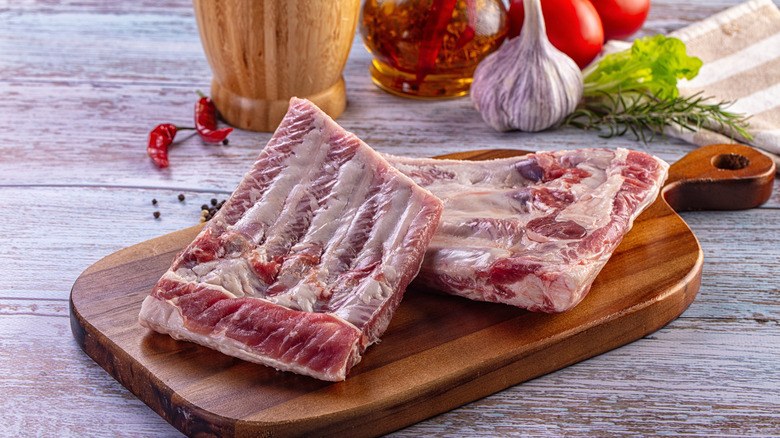
There are countless videos online promising fall-off-the-bone ribs made in an air fryer. According to chef Ashley Lonsdale, unfortunately, that promise doesn't hold up. "People see 'ribs' and 'air fryer' together online and assume they'll get that same fall-off-the-bone result in a fraction of the time. But realistically, an air fryer's quick blast of heat just can't replicate it. You'll get ribs that are cooked through, but nowhere near as tender," she says.
Push a full rack of ribs through an air fryer and you'll get meat that, while safe to eat, is not exactly falling off the bone in tender chunks. Instead of pulling cleanly off the bone, the meat stays firmer and chewier, closer to a quickly grilled cut than a properly slow-cooked rack. A whole rack also takes up significant space adding to the uneven, underwhelming results. An air fryer, however can be used to crisp up already-cooked ribs for a few minutes at the end, but stay away from relying on it to carry the entire dish on its own.
Rump roast, eye of round, and sirloin tips
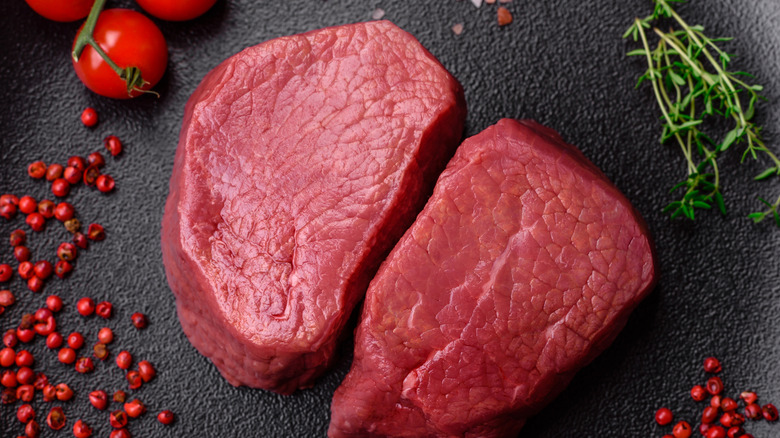
Chef Vivian Villa groups three cuts together that she steers people away fromwhen using an air fryer. "A rump roast, an eye of pork, sirloin tips. Steer clear. Unless you get a larding needle and you can inject the meat with fat! Fat that I would recommend is butter, beef fat," she says.
Rump roast comes from the hindquarters of the animal. Since this is a heavily worked area, there is tough, lean muscle rather than the fatty marbling you need for a tender finish. Eye of round is one of the leanest roasts on the animal. While prized for its ability to be sliced thinly it is also notorious for drying out under high heat. Sirloin tips, meanwhile, while flavorful don't carry much internal fat to buffer against fast cooking.
Chef Villa does have a way to workaround these inherent qualities to ensure the best results, but for an average home cook — it may take some doing! She suggests injecting the meat with fat, like butter or beef fat, using a larding needle before cooking, essentially building in the moisture these cuts don't naturally have. She also acknowledges the fact that this is a pretty sophisticated culinary technique and the average home cook doesn't have a larding needle just laying around. Hence, she flags these as cuts to avoid rather than ones to simply cook carefully.
Thin and lean cuts
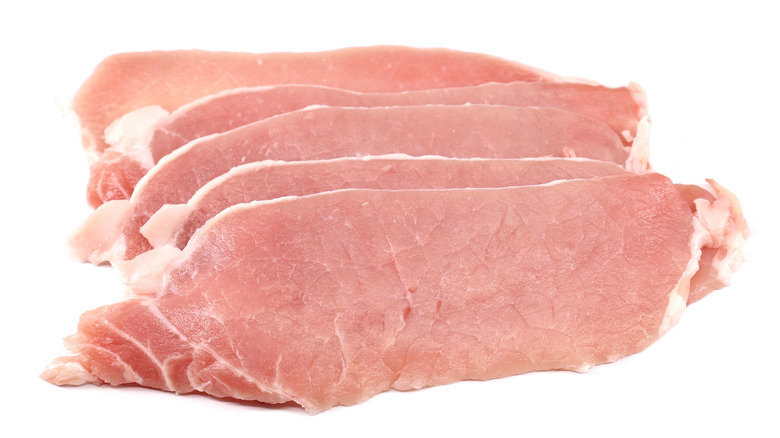
There's a pattern that has emerged through our conversations with both experts, and that is fat is doing a lot of work in a good air fryer result. Chef Ashley Lonsdale points to this relationship directly when explaining what separates a cut that thrives in an air fryer from one that doesn't. "A cut with some marbling, like a ribeye, stays juicy because that fat renders and self-bastes as it cooks. Thickness matters too: the air fryer's superpower is quick, high heat, so thinner cuts with good fat distribution will outperform something thick and lean," she says.
The self-basting effect is the key mechanism here. For the best results, the internal fat must gradually melt and redistribute through the meat. This happens effortlessly in well-marbled cuts of meat. A thin, lean cut has none of that built-in insurance. Once the surface moisture cooks off, there's nothing left to protect the interior. This is exactly why so many lean options appear on this list. From chicken breast to flank steak to eye of round, there is no argument between our experts that these are the cuts to avoid. A thin, lean piece of meat has a high surface-area-to-volume ratio, meaning more of it is directly exposed to that intense circulating heat relative to its overall size.
Thick cuts of steak
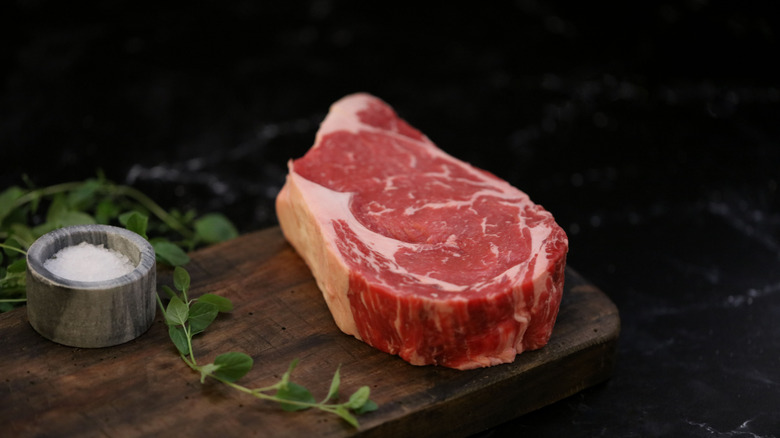
Even though our experts have mentioned the importance of a well-marbled cut of meat when cooked in an air fryer, thickness, though, is its own separate problem. Chef Vivian Villa is direct about where the line sits. "Anything that's too thick will not cook evenly regardless of the fat. It'll be burnt on the outside and raw on the inside. You need ... a good relationship between fat and thickness. A 1 inch ribeye is perfect for an air fryer. Not too thick not too thin," she says.
By now we are well aware of the mechanics of air frying, and what happens when we introduce meats of different sizes into the fryer basket. On a steak of moderate thickness, the blast of circulating heat has enough time to also work its way toward the center of the meat before the surface overcooks. But, push past a certain thickness, though, and the math stops working. A burnt exterior and an uncooked middle is the mess you are usually left with. This is why chef Villa considers roughly an inch as the sweet spot for a ribeye specifically. It's thick enough to hold onto some juiciness and a proper crust, but thin enough that the air fryer's intense heat can reach the center.