

5 Best Cuts Of Meat For Glorious Dry Aging
We may receive a commission on purchases made from links.
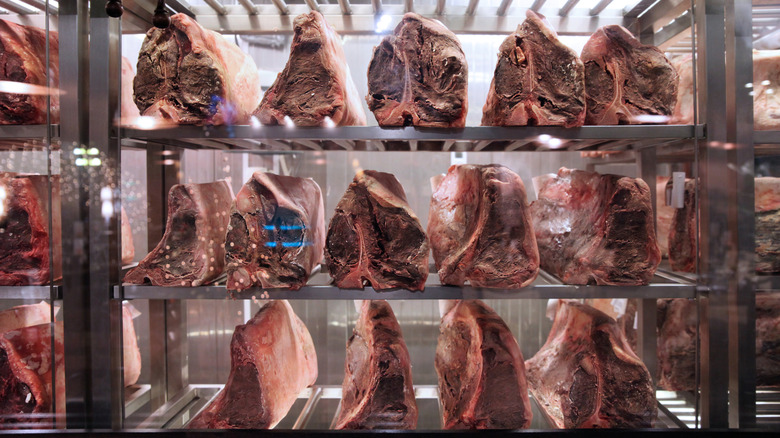
Whenever an article starts out with "There are two kinds of people in this world," you know it's going to be a crock because humans are too complex to fit into a binary equation. The same cannot be said of meat aging, however, since there really are only two main types: wet and dry. Wet aged meat is sealed in a vacuum bag where it sits in its own juices while dry aged meat is exposed to the air and (as the name implies) dries out.
Dry aging not only takes longer, it also tends to shrink the meat, both of which result in a more expensive end product pound per pound. For this reason, you won't see dry aged meat on the menu of a low-end steakhouse like Texas Roadhouse. For similar reasons supermarket steaks tend to be wet aged. That being said, Jenk McBrain, owner of JD Meats & Seafood, says it's possible to dry age your own meat to enhance the flavor as long as you choose the right cut.
"When it comes to dry aging, you need to find the cut with the most fat. Cuts with a thick fat cap protect the meat from drying out too quickly," McBrain told The Takeout. Dry aging meat that's still on the bone can also add extra flavor. Commercially produced dry aged meat often uses cuts that are still on the bone and tend to be quite a bit larger than individual serving-sized steaks. However, McBrain suggested for us a few smaller cuts of meat that are suitable for dry aging at home.
T-bone
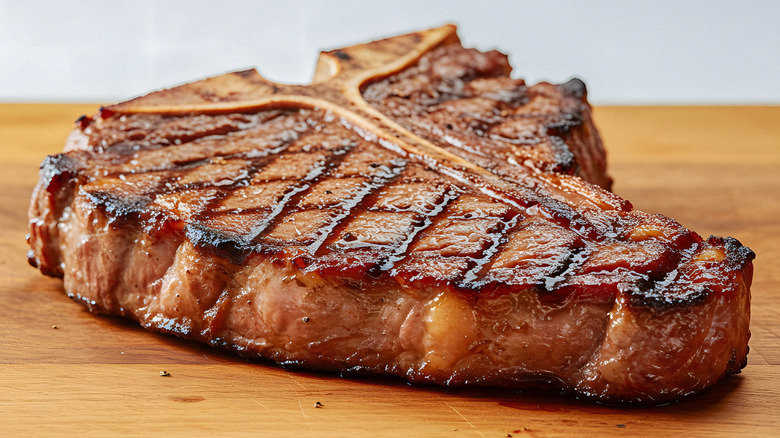
The T in T-bone refers to the shape of the bone in the meat, but it could very well stand for "twin" because this cut consists of two different steaks attached at the bone. Admittedly, they're fraternal twins, not identical ones since one side consists of a strip steak while the other is a filet mignon. Filet mignon on its own is quite lean (almost to the point where it's somewhat lacking in flavor), but when it stays on the bone with the more marbled strip steak, it can be dry aged and still stay tender. As McBrain explained, "The T-bone protects the meat, preventing moisture loss while it ages." In his opinion, "T-bones are a great option for dry aging."
If you're dry aging a steak at home and are looking for the same results you'd get from a butcher, you may need to purchase a pricey meat locker, like the Vevor Dry Aging Fridge (which costs more than $1,000 new). In such a controlled environment, steaks can be aged for 30 days or longer. A cheaper, quicker shortcut involves unwrapping the T-bone and allowing it to sit on top of a rack over a sheet pan in the refrigerator for three days. It will dry out and darken somewhat, but three days is just long enough to intensify the flavor without allowing it to go bad (meat spoils faster when in a wet environment).
New York strip
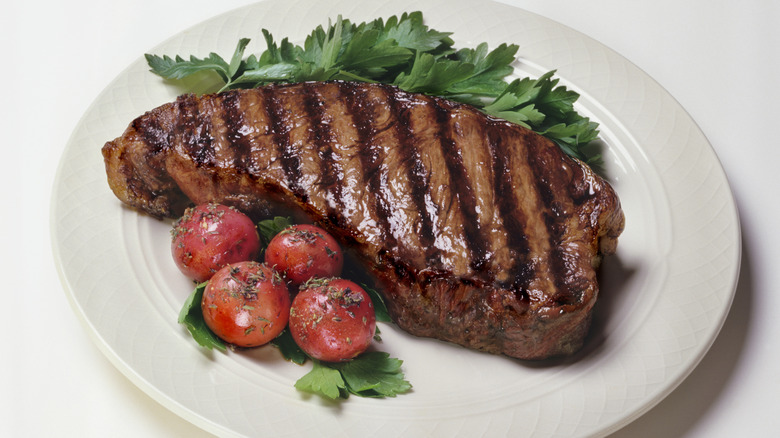
The New York strip steak is basically the other half of a T-bone, but it's the fattier half so it makes for great dry aging all on its own. This could be considered the Goldilocks cut since it maintains a just-right balance between leanness and marbling. This makes for a dry aged steak that is tender but still has some chewiness. As McBrain says of strip steaks, "They give a bolder, beefier flavor than other cuts." He also notes that the fat protects the meat from drying out as it ages even when detached from the bone.
If you are choosing a New York strip steak for the express purpose of dry aging, try to avoid one that looks like a question mark. This shape means it is cut from the side farthest from the rib and it won't be quite as good as a center or rib-end cut. A New York strip steak on its own can be dry aged using the same three days in the fridge method outlined above, but if you're going to give it a few weeks in a meat locker what you really want is the subprimal cut called the strip loin. At a temperature of 35 degrees Fahrenheit and an initial humidity setting of 65% (increased to 70% after 10 days), an entire strip loin can be dry aged for anywhere from 45 to 75 days.
Ribeye
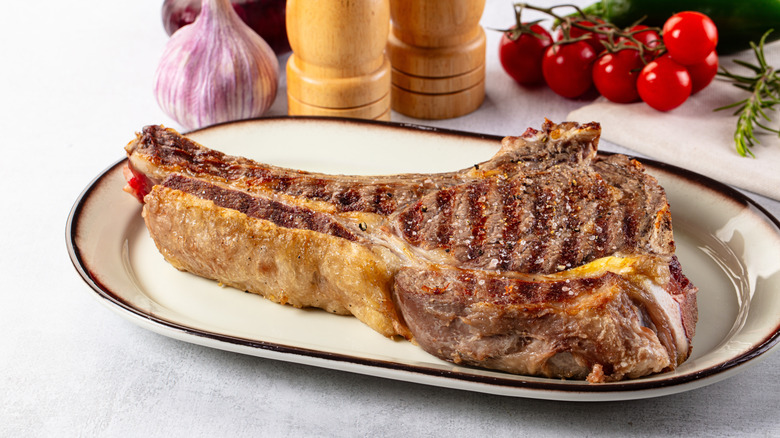
A ribeye steak, as the name implies, is cut from the ribcage area. It's been a favorite cut of everyone from Anthony Bourdain to John Wayne and is considered to be one of the best steaks for grilling. This extends to dry aging, as well. "Ribeye is by far the best for dry aging. It has high fat content, beautiful marbling, and is thick. It's incredibly flavorful," McBrain opined.
If you want to dry age your steak the professional way and you have access to a meat locker, you won't be using a single steak but rather a subprimal cut called a 107/109 rib, which is a large section of uncut bone-in ribeyes. If you're looking for a more DIY-friendly shortcut, though, the same refrigerator method described above will work well with this cut, although home cooks who do this regularly sometimes suggest using a product such as the UMAi Dry Aging Bag for Steaks. One customer review reported success using one of these bags to age ribeyes for 45 days in their fridge, but your mileage may vary.
Bison ribeye
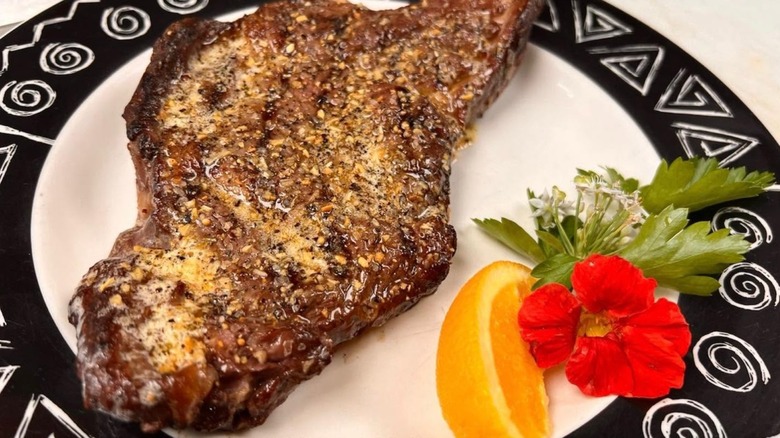
While the term dry aged is most often associated with beef, you can use this technique on meat that doesn't come from a cow. McBrain suggested it would work well with bison, which stands to reason since bison and cows are actually very similar species, genetically-speaking. Bison is often praised as a healthier alternative to beef, in part due to having higher levels of omega-3 fatty acids but primarily because the meat is leaner. You might think this would make it a poor candidate for dry aging, but McBrain pointed out that his suggested cut is still fairly well-marbled.
"Bison ribeye is an excellent choice for dry aging," he said. "It takes less time to age and is still flavorful." Even though it's the fattiest steak cut of bison, it still won't stand up to super-long aging times. If you're using a meat locker, bison ribeye can be dry aged for anywhere from 7 to 21 days, but you won't want to exceed three weeks or the meat will simply shrink too much. Once cooked, dry aged bison won't taste as nutty as beef. Instead, it has a more mineral-like flavor.
Duck breast
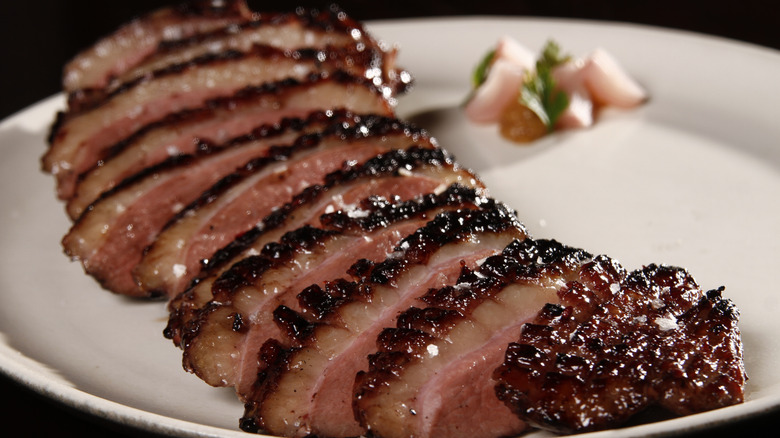
McBrain's four dry aging recommendations all revolve around red meat, but we decided to add a fifth to the list and felt this technique needn't be restricted to beef or beef-adjacent items. Duck is another meat that benefits from dry aging. The drying process makes the skin crispy, while also tenderizing the meat. The easiest way to age duck is to use the breasts. Coat them in a dry rub, then let them sit skin side-up on a rack in the fridge for three days.
If you want to go big, try dry aging a whole duck. It's still smaller than a subprimal beef cut so you may be able to do this in your regular refrigerator if you empty the bottom shelf. You'll need sufficient clearance to hang the duck by its neck from a small tension bar inserted for this purpose. (Most supermarket ducks retain fairly long neck stumps, while ducks bought in Asian markets may include the entire neck plus head.) Put a pan under the duck to catch any drips and empty it as needed. If you don't have room to hang a whole duck, remove the wings and legs and age these separately via the rack-on-pan method.
Whole ducks can be aged from 10 to 14 days without spoiling, but there are a few caveats to ensure safety. For one, make sure the fridge is clean in order to limit the amount of free-floating bacteria. For another, the temperature needs to stay between 35 and 39 degrees the entire time the duck is aging. You can still access the fridge, but don't keep it open too long.