

11 Facts About Saloon Dining In The Old West Not Enough People Know About
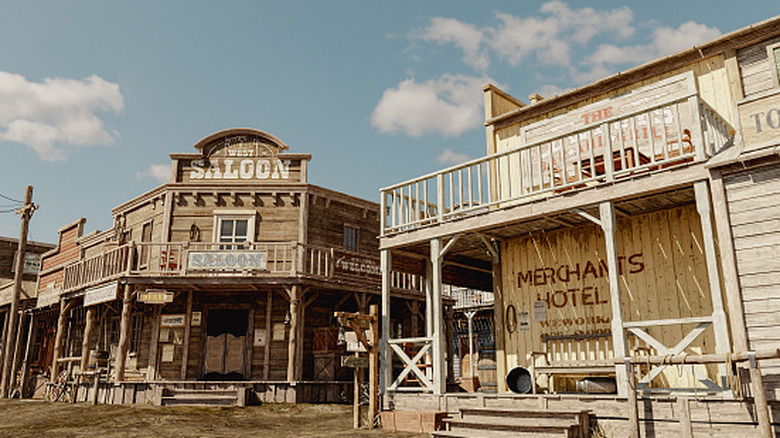
Thanks to Hollywood, there are a few things people often associate with saloons from the Old West. Those include the cowboy-favorite side dish of baked beans. But when looking at the big picture, you may realize saloons were far more than just a great spot for dramatic cowboy showdowns. It was often the very first building when a town was formed, typically a simple cloth tent. The large false-front buildings that are typically thought of when the word 'saloon' is thrown around would usually be built a little later, once the town was more established.
In pictures of saloons, people are often shown holding a glass of whiskey or eating a bowl of beans. But logic dictates that saloons couldn't have been the popular phenomenon that they were if those two things were all they had to offer. To cut through the stereotypes and Hollywood exaggerations about what the dining experience in saloons was truly like, we called in an expert.
Kent Rollins has as much real-world experience with the subject as you can find these days. Back in 1993, he bought a chuck wagon to produce food for ranchers using old cowboy cooking methods. These days, he shares his expertise on YouTube, fronts the series "Cast Iron Cowboy," and is the co-host of the podcast "Cowboy Coffee Hour." Rollins has provided us with some intel on fact versus fiction regarding saloon dining in the Old West.
Wanted signs were less exaggerated
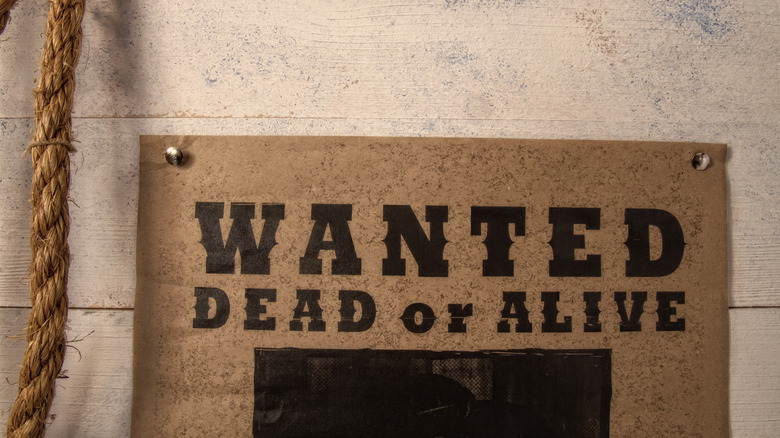
If you've watched any movie about the Old West, then chances are you'll know exactly what a wanted poster is. But for those who simply haven't indulged (or if you did, weren't paying attention), a wanted poster was a sign that officials would put up to seek information about an individual who had committed a crime. These posters often had an amount offered as a reward for those who provided their assistance. While Hollywood often gets the essence of these posters right, a few things are often exaggerated in these movies.
Firstly, wanted posters were not plastered on every available surface throughout the saloon. That appears to be a product of Old West movie producers' imaginations. It's right up there with the giant tumbleweeds that always seem to roll across the screen during a dramatic confrontation. Kent Rollins sheds some light on this feature for us, agreeing, "Wanted posters certainly existed, but they weren't plastered on every wall the way movies portray them." He goes on to say that "most were issued for specific fugitives or crimes and appeared in locations where lawmen expected travelers to pass through." This tactic makes far more sense for catching criminals than a frenzied plastering of wanted posters.
Saloons served a variety of foods beyond pork and beans
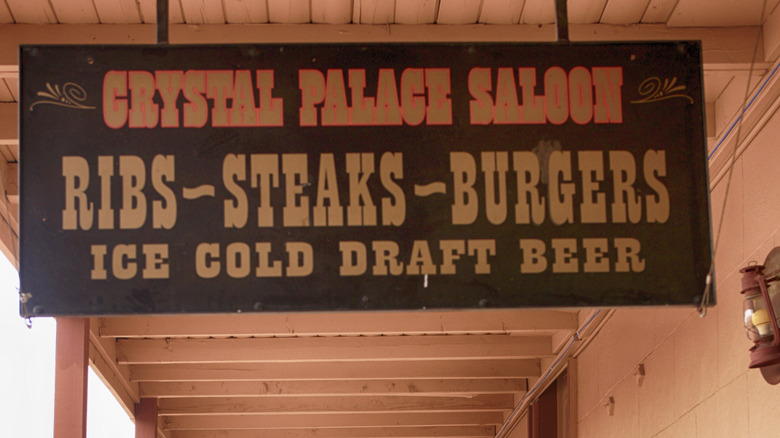
Pork and beans are considered staples that cowboys ate in the Old West. It seems to be one of the main dishes that the media associates with the time period, right alongside an outrageously sized steak. However, these were not the only food options available to those visiting a saloon during this time. In fact, even in the Old West, owners had access to a wider variety of food items than you might assume, and did change up their offerings depending on what was in stock. "Many people assume everyone lived on beans and jerky, but larger frontier towns often had access to a much wider variety of ingredients," Kent Rollins shares.
Rollins also offers further insight into what options the menu would have rotated between. "One day a saloon might serve beef stew; the next it could be venison or a completely different meal. Daily specials were based on what the cook had," he explains. Some of the other items that he lists as being common on a saloon menu are beef stew, hash, chili, smoked meats, and corned beef. "Thanks to expanding railroads, even inland Western towns sometimes received oysters packed in ice, fresh produce, canned goods, spices, and imported foods," he explains. This is certainly an interesting switch-up from the common assumptions.
Many offered free lunches
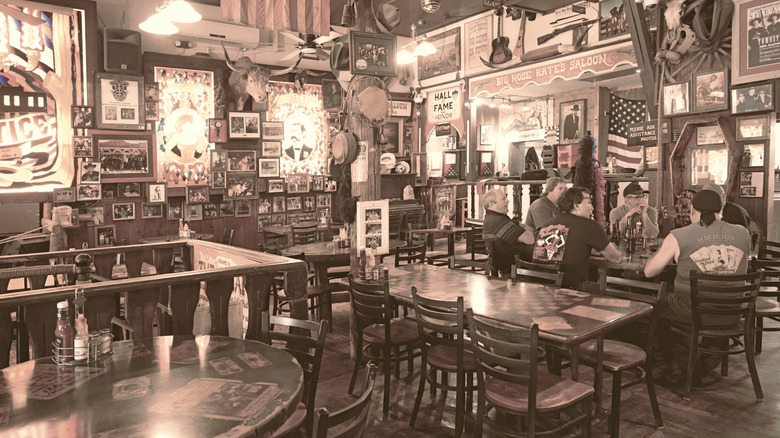
It turns out people have long been lured by the promise of free food to establishments. While these days patrons might be researching how to get free food from loyalty programs, back in the Old West, they could simply participate in a free lunch at their local saloon. The deal was fairly simple, though it wasn't necessarily completely free, as the title would suggest. Typically, the customers would be required to purchase a drink, with free access to whatever food they had on offer given in exchange. The hope, of course, was that patrons would continue to drink as they ate, the total for their drinks covering the cost of the food with room to spare.
The meal itself also looked a little different from the full-sized meal often consumed for lunch in the current day. Often, lunches during this period were considered snacks to tide one over until dinner. As for the items served, this depended on both the city you were visiting and how many other saloons were around. If competition for paying customers was fierce, then sometimes the saloons would step up their game to try to attract patrons with higher-end food offerings.
The hygiene left something to be desired
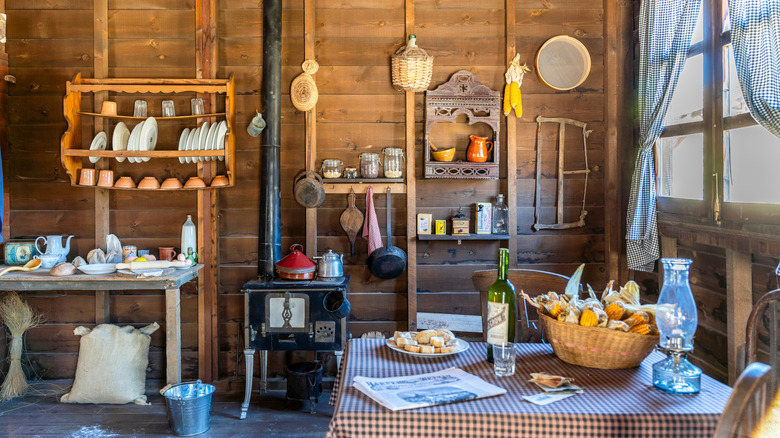
If you've ever been worried about how nasty grocery carts really are, this revelation might make you cringe, but back in Old West saloons, personal hygiene was not at its peak. Few had access to running water at this time, and this meant bathing required carrying buckets of water from either the nearby river or the well. One can only imagine the smells that these many factors would produce, especially when trapped in the small space that was the saloon.
It wasn't just the smells that were concerning in saloons, though. It was the lack of sanitation practices. For example, saloons would often have a communal towel hanging from the bar. This one towel would then be used by whoever was around to wipe their facial hair clean after drinking. Another example is that when serving beans, a glass of water with several forks sticking out of it would be provided in the middle of the table. Patrons would sidle up to the table and grab a fork to use from this glass. When finished, they would put it back into this cesspool of terror in lieu of proper cleaning, for someone else to pick up and use.
The beer was served at near-room temperature
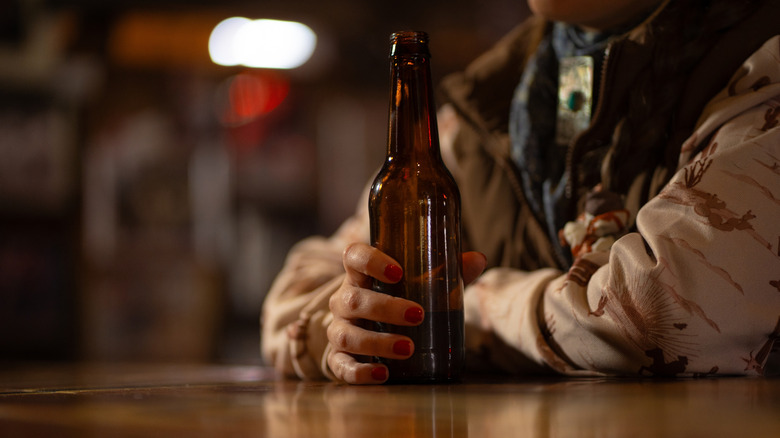
Yet another common theme you might see associated with the Old West, or with saloons during this time, is beer being served to patrons. What you might not have realized, though, is that those rough and hardened cowboys were not kicking back with an ice-cold beer after a long day. A beer in the Old West was typically served at near-room temperature. With the Old West landing firmly between the years of 1865 and 1895 and artificial refrigeration only first introduced to the brewing procedure during that timeframe, it just wasn't a popular practice. After all, it's not like saloon owners were using the 3-30-300 rule for beer storage during this period of time.
Typically, if you were to have ordered a beer from a saloon during this time, it would be presented to you between 55 and 65 degrees Fahrenheit in temperature — considerably warmer than the standard of 38 to 55 degrees Fahrenheit today. The head on the beer was also not as voluminous as you might expect from a beer today. This meant customers needed to drink their beverages quickly to avoid falling victim to a flat beer. As for what types of beer you might see in this scenario, beer that had been brewed in St. Louis and Milwaukee was popular, along with imported options such as English stout, ale, and porter.
The whiskey was pretty different from what we know today
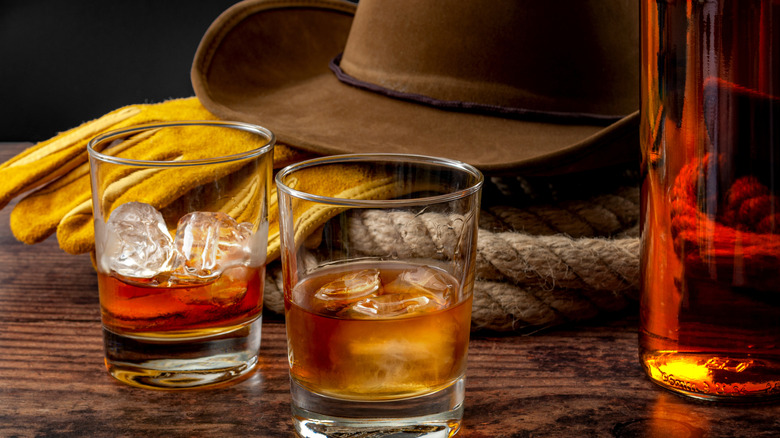
If you've ever done any research on the Old West, or even seen any photos meant to depict the time period, chances are that you've seen a cowboy sitting on an old saloon barstool, drinking whiskey. This sight could lead one to assume that whiskey is a timeless drink. However, it's important to note that the whiskey they used to drink in the days of saloon dining certainly wasn't the drink many know of today. In fact, it seems likely that the concoction labeled as whiskey back then would have caused a current-day whiskey sommelier to flee the establishment.
If you take a quick peek at some of the nicknames for whiskey during this time, it may give you some insight into how smoothly the drink actually went down. Tarantula juice, snake pizen, and bug juice were just some of its nicknames, plus the slightly more visual option of coffin varnish. If the names don't give you pause themselves, taking a quick look at the ingredients will certainly do the trick. Many times, the whiskey served at these spots was a mixture of burnt sugar and chewing tobacco with raw alcohol. In some cases, it would even contain an extra ingredient: strychnine. This is known today as being poisonous and lethal in large quantities.
It was a less hostile environment than what Hollywood would suggest
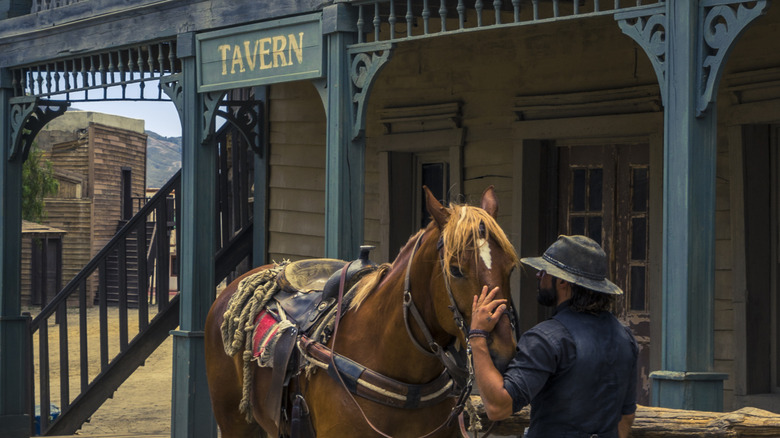
Although Hollywood likes to depict saloons as a popular venue for cowboy-rebel showdowns, the environment wasn't always so tense. From this depiction, you might be picturing entering a saloon during this time as filled with confrontation akin to that experienced by a bouncer in Chicago on St. Patrick's Day. It seems, though, that yet again this has been exaggerated for effect. Ultimately, very few would have their interest piqued by a movie where everyone just calmly eats their plate of beans in a saloon.
Kent Rollins provides us with some insight into this subject. "Fights certainly happened, but they were far less common than Hollywood suggests," he shares. He also makes a very good point about saloon owners and their intentions with the business, explaining, "Most saloons were businesses trying to make money, and owners generally wanted paying customers, not furniture flying across the bar." He continues, "If every evening ended in a gunfight, those establishments wouldn't have stayed in business very long."
On the topic of exposing the realities of dramatic Western escapades at saloons, chances are you have seen at least one scene where a character leaps on the back of a random horse and takes off. However, the odds of actually witnessing this while dining at an Old West saloon were slim. "Horses were valuable property, and most owners recognized each other's animals," Rollins confirms. He goes on to say, "Horse theft was considered one of the most serious crimes in the West."
Saloons weren't just for drinking and dining
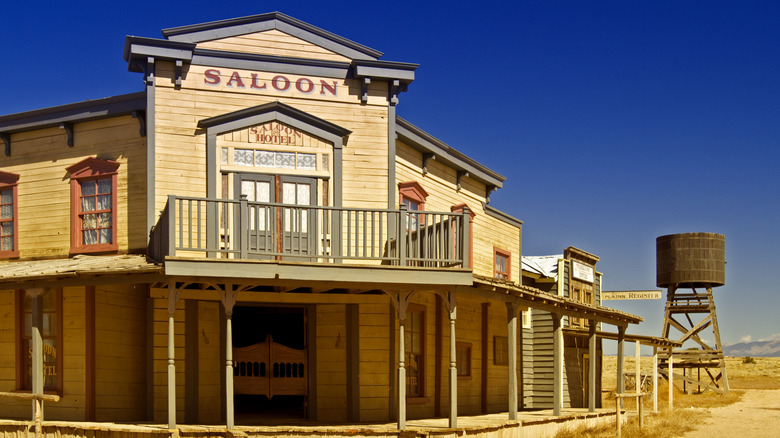
With the saloon considered a social meeting place of sorts, the space was often used for more than just drinking and eating. As one of the first buildings erected within a budding town, the saloon would host events and celebrations, and was where townsfolk would head to get the latest news and stories, and sometimes even served as a courthouse or post office. The saloon seemed to be the place to go for most of the city's needs.
What's more, saloons also contributed to a town's cash flow. The business provided jobs for those living in the vicinity, hiring bartenders, cooks, entertainers (such as the iconic saloon piano player), and even additional staff for security purposes. At times, they would purchase goods from ranchers or sellers in the area, stimulating the local economy. With Virginia City, Nevada, boasting one saloon for every 52 men within the town in the year of 1860, it was easy to see that this, combined with the popularity of these saloons, could have a huge effect on the economy and finances of a town.
There was usually a poker table
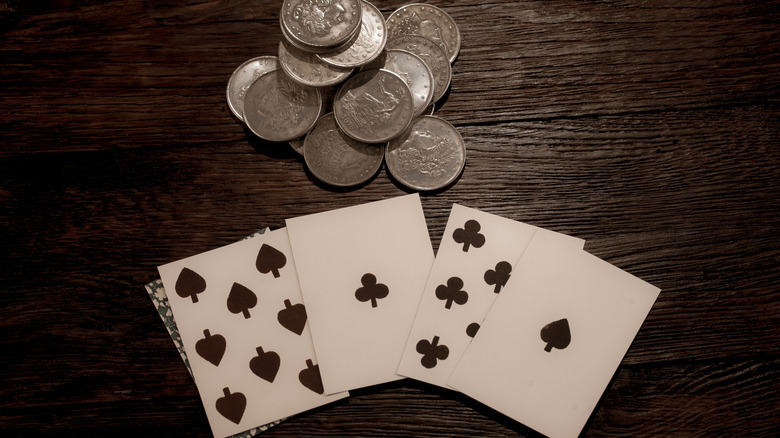
Gambling dates back much further than the Old West, with historians finding evidence of the practice as far back as 2000 B.C. With this in mind, it's no surprise that gambling was a popular activity in the times of the Old West as well. Even if saloons didn't boast the slot machines and bright, flashing lights found in modern casinos, they typically offered a dealer and a table for those interested in making money alongside grabbing something to eat or drink.
What's interesting is that during these times, gambling wasn't just considered a leisure activity to pass the day. It was regarded as an actual profession. If a gambler in the saloon had good luck, it could leave them with a small fortune at the end of the night. Of course, alternatively, they could leave the poker table with little more than the shirt on their backs, one of the many dangers of gambling.
As for the games they played, one of the most popular was faro. Although it's not all that common to play these days, it was popular in the Old West as the rules were straightforward, many people could play at once, and the odds of winning were believed to be higher than other options. They also played many games that have been adapted into games of chance that we know today, such as poker and a game called 21, which is now referred to as blackjack.
The drink selection was diverse
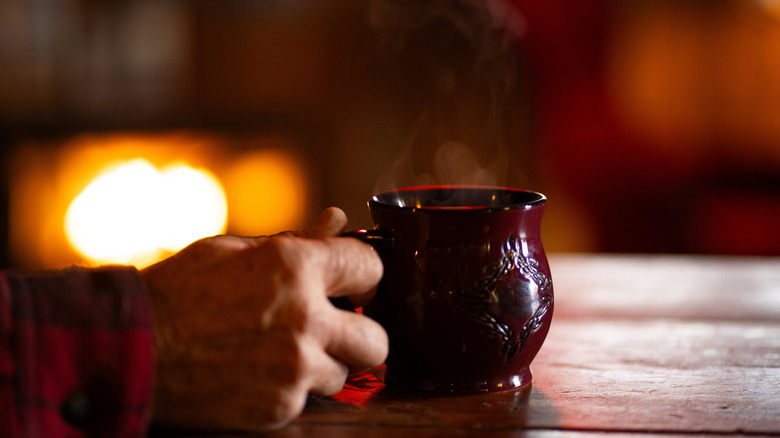
The local saloon back in the 1800s may not have had access to a refreshing two-ingredient watermelon cocktail, but that doesn't mean your only option was beer or a poison-riddled glass of Tarantula Juice. Patrons could wet their whistle with a wide variety of beverages at the local saloon, including wine and mixed drinks (although these were often more available in higher-end saloons). Some of the mixed drink examples are mint juleps, whiskey punch, and gin slings. Just as with pricing norms today, the downside was that these mixed drinks were (understandably) more expensive than simple options like a shot of whiskey or a glass of wine.
Kent Rollins also provides us with some insight into what options were available for patrons to drink during this time. "Whiskey was undoubtedly king in the Old West, but it wasn't the only choice," he confirms. "The biggest misconception is that everyone walked into a saloon and ordered a shot of cheap whiskey." Beer was popular as breweries grew larger and more transportation options made it easier to stock saloons beyond the local area around each business. Non-alcoholic options were also available. "Coffee was another staple, especially for working cowboys [and] travelers," he adds.
Not all saloons had swinging doors
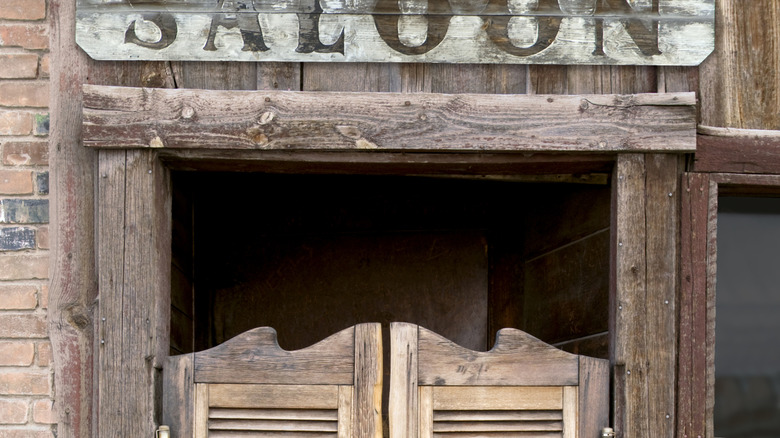
Swinging doors are great for Hollywood flair and dramatic effect during a showdown, but in practical terms, they aren't the best for security. This is why the saloons that did have these fun swinging doors (or batwing doors, as people often called them due to their shape) also had a second set of doors outside. At night, when the saloon was finally closed down, this second set of doors would be shut and locked to keep out the riff-raff. These additional doors could also be closed during inclement weather to protect patrons from rain and snow.
These doors were also meant to be multifunctional and had practical uses (beyond simply being doors and dramatic entry points). They provided saloon owners with the ability to let some fresh air into the saloon, where patrons would often smoke. The fixture was also considered to be the perfect height for protecting innocent young children who may be passing by from the debauchery that was likely taking place inside the saloon. In this way, the batwing door seems to be the perfect example of a striking and functional feature of the period.