

The Type Of Dry Rub To Avoid When Extra Savory Brisket Is Your Master Plan
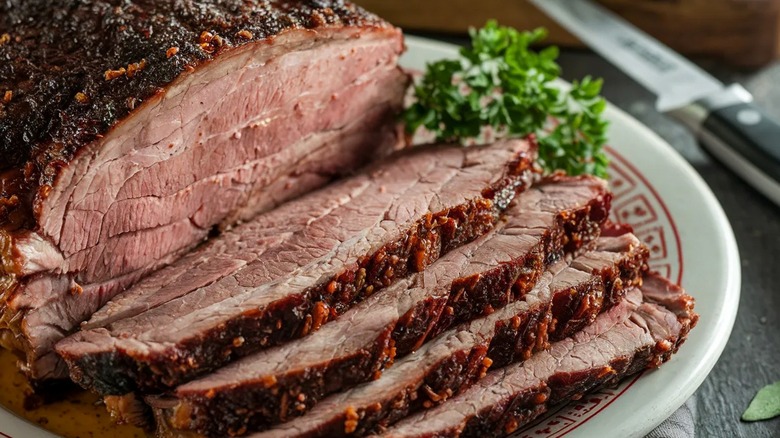
Cooking authentic, mouthwatering barbecued brisket is a science as much as it's an art form. Some people dedicate years to mastering the craft, learning how to slice brisket like a pro pitmaster and studying the impact various dry rubs have on the meat. Scott Thomas, the owner of The Grillin' Fools (who's also active on Instagram), is one such brisket expert and he strongly disagrees with recipes that include a common ingredient.
When most folks think of brisket, savory, meaty umami is usually the flavor profile that comes to mind. According to Thomas, that's exactly what it should taste like and introducing sugary elements to the rub obscures that goal. "Beef does not pair well with sweet," he said. "We've got no problem adding say pineapple and/or brown sugar to pork like ham or chops. But we would never add those things to a steak."
There's a strong argument to be made that people only need two seasonings for brisket with knockout flavor — salt and pepper. That simple dalmatian seasoning lets the extra-savory character of the meat take the spotlight. Thomas' go-to rub is similarly straightforward, but he does add one more ingredient that boosts the meaty taste. He said, "For brisket, the same flavors that pair well with beef work well here: salt, pepper, and garlic." Of course, how the dry rub is applied is also crucial in achieving that signature brisket bark.
Nailing a cook on a brisket requires ample seasoning
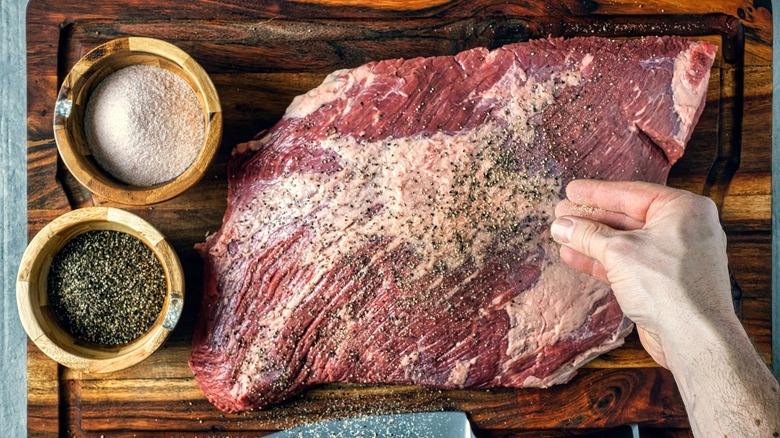
Using a simple dry rub to season brisket is nearly as integral to the overall result as allowing it to smoke for a long enough time and using the best type of wood for the ultimate flavor (hickory). Thomas indicated that all those factors work in tandem to set BBQ brisket apart from other methods of cooking beef by giving it its distinctive char. "That seasoning, along with heat, smoke, and the excreted fat and juices from the brisket as it cooks, creates that glorious black, and oh so tasty bark around the outside," he said.
Some supplemental seasonings could be added to a dry rub while maintaining the savory profile, like paprika and mustard powder. Still, wherever people land on their choice of spices, Thomas noted that it's crucial to use a heavy hand when applying them to the meat. "And those seasonings can be laid on thick. Really thick," he said. "Why? Because the average piece of brisket is a thin slice with a little ribbon of that delicious bark around the outside."
For brisket aficionados as well as amateurs who only enjoy the smoked beef on rare occasions, the crispy bark on the outside is the highlight of each bite, so you want as much as possible. "The meat-to-bark ratio is very high toward the meat. So that seasoning and resulting bark can be laid on thick," Thomas continued. Layering a dry rub on thick will still only produce a humble supply of bark, but being stingy with it nearly guarantees a brisket will be deficient of its most appealing aspect.