

The Only 2 Seasonings Brisket Actually Needs For Knockout Flavor
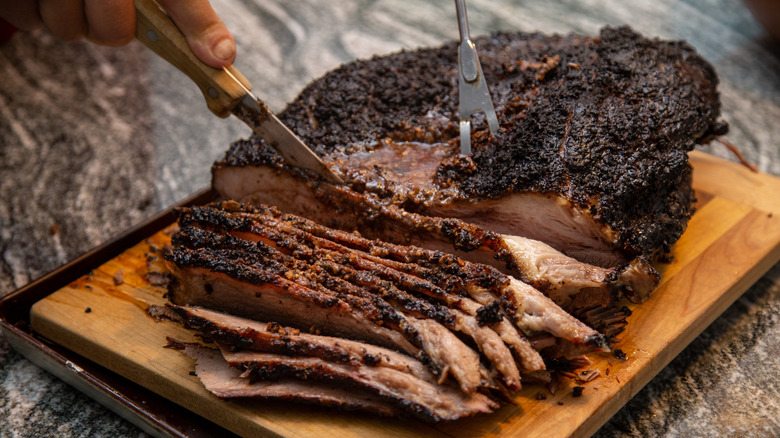
Brisket is one type of beef that is notoriously difficult to make taste just right, and many people tend to blame it on several different factors. While experts are more likely to point to a lack of patience as the biggest blunder when barbecuing a brisket, beginners will likely blame a lack of seasoning for their meat's shortcomings. However, this is typically not the case, as brisket should really be seasoned using only salt and pepper — anything else will likely distract from the meat's inherent flavor.
We spoke to Jorge Thomas, founder of Swaledale Butchers, who confirmed that, when it comes to the variety of seasonings you use, less is most certainly more. "If the beef is good, I don't want to bury it under sugar, paprika, and half the spice cupboard," Thomas admitted. "Coarse salt, cracked black pepper, smoke, and time. That's the backbone of it."
However, as far as how much of these two seasonings you use, he noted that using a lot of both salt and pepper can enhance the beef's flavor. "I'd season it generously all over. Salt first, then black pepper," Thomas added.
When to add salt and pepper to your brisket
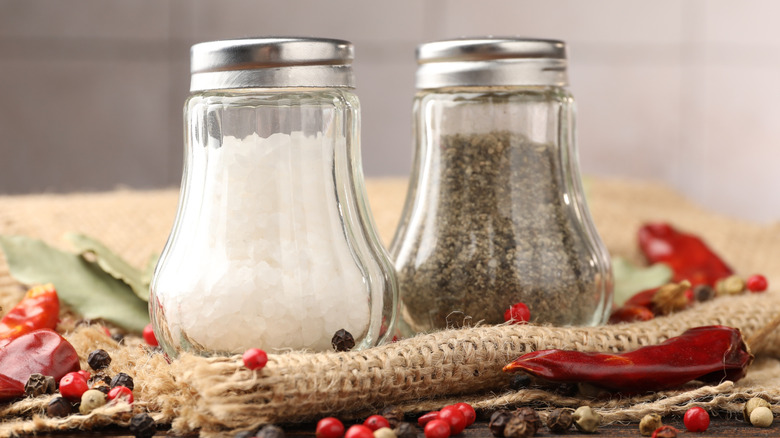
Now, while the incomparable pairing of salt and pepper is all your brisket needs to be truly great, the timing of when you add the two key ingredients to the meat can make or break your end result. According to Jorge Thomas, adding both salt and pepper well before you actually cook it is a highly important technique. "Do it the day before if you can, then sit the brisket on a wire rack over a tray and leave it uncovered in the fridge overnight," Thomas explained before adding, "You just want the surface in better shape before it hits the smoker. Wet meat won't take smoke or color as well. Then leave it alone long enough for the bark to form."
This bark provides immense flavor to your meat and is the result of the Maillard reaction. In fact, the bark is such a crucial aspect of a brisket that some recommend adding sugar to get an even more pronounced bark through caramelization. Thomas recommended that you avoid covering the brisket in foil when cooking, as this will leave you with a bark that isn't quite as crispy as it could be. "Once the bark is properly set, wrap it in butcher paper or baking parchment," Thomas added.
And if for some reason your bark or brisket turns out underwhelming, the issue probably isn't the seasoning. "If a salt and pepper brisket tastes flat, I'd look at the beef and the cooking before adding more seasoning," Thomas advised. " ... More spice won't save dry brisket."