

10 Easily Fixable Mistakes That Are Ruining Your Potato Salad
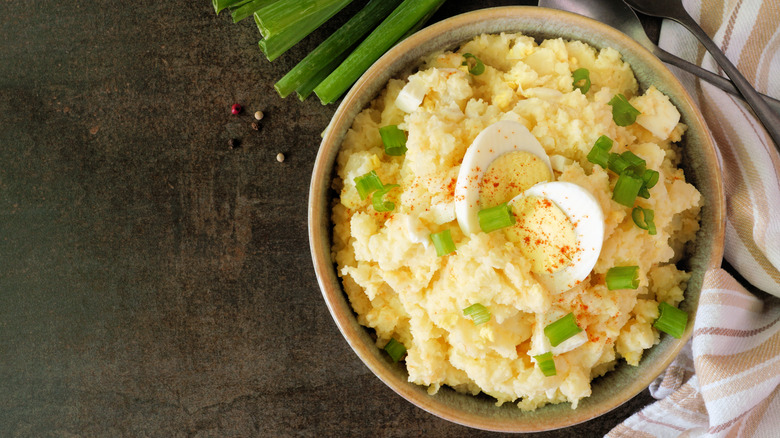
On paper, there's no reason why a potato salad should go wrong. After all, there are no complicated techniques or unfamiliar ingredients involved. Yet, most of us have probably eaten a flat, watery, or extra-heavy version of potato salad at some point of time. And before you reach for that list of things to do to uplevel a plain potato salad, let's look at the what mistakes are being made at the building block level. For instance, which potatoes to choose? What add-ons to include? When to mix up the salad? Each of these decisions seems reasonable in isolation. Together, they produce a salad that may or may not be genuinely mediocre.
So, without further ado, let's run through what are the series of small decisions that make a potato salad worth eating. None of these steps are difficult. Most take no extra time at all. They just require knowing that they matter. This is everything you need to know.
You are using the wrong potato
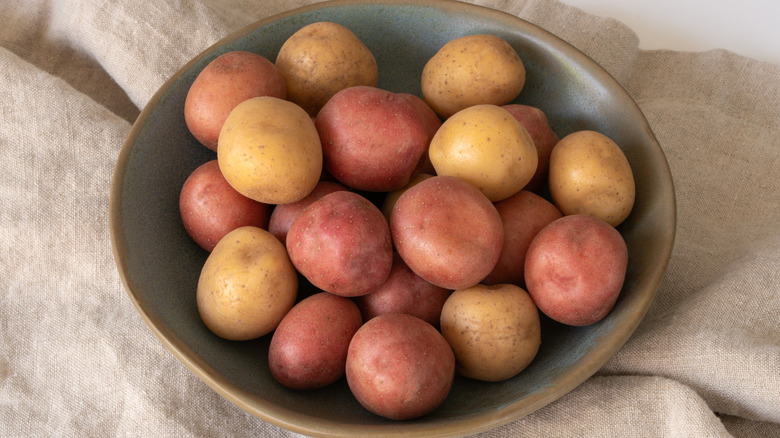
When mixing up a potato salad, it's not unusual to reach for whatever potato is sitting around in your pantry. Nine times out of 10, it's a russet. And don't get us wrong — while there's no huge problem with using a russet (Hey! it's amazing for baked potatoes or for frying up), in a potato salad, this variety works directly against what you are hoping to create.
Russets are inherently high-starch potatoes. When boiled, they the starch breaks down easily and can become soft and mushy. Great if you want a smooth mash; not so great if you are hoping for a potato salad that falls apart if you stir it. Waxy potatoes, on the other hand, are what you need. Potatoes like red, new, and fingerling all have low starch content which means that they hold their shape through boiling and sitting in the fridge overnight. A potato salad should have some bite. Additionally, these kinds of potatoes have thinner skins, meaning you don't even need to peel them, saving you an extra cooking step and adding a little texture to the finished salad.
If waxy potatoes aren't available, Yukon Golds are your next best bet. They fluff like a starchy potato but still hold their shape. Plus their light golden color looks great against a creamy dressing. Moral of the story? Choose the right potato for potato salad before anything else. Everything that follows when making a great potato salad depends on it.
You are not salting your water
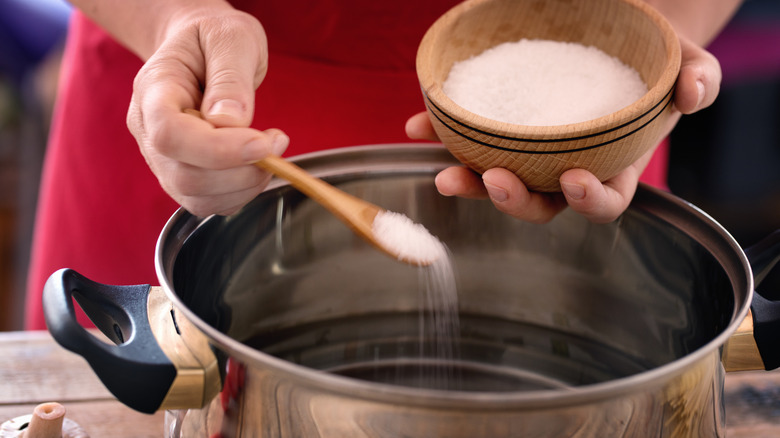
Many times, when making a potato salad, the problem lies in a step that most people don't think about: The salting of the boiling water. If you cook potatoes in unsalted water, you have basically missed the only real window to season them from the inside. As you may know (or maybe you don't), when you boil vegetables, especially potatoes, the process carries water into the cells of the spuds as they cook. When that water is salted, the flavor is infused from the get go. Unsalted water boils the potatoes, sure, but it also leaves them tasting like nothing much.
And when we say salt your water, we mean salt your water. The water should be noticeably salty. Now is not the time for a meager ½ spoon. Think of it less like seasoning the water and more like seasoning the potato itself. For potatoes, about a teaspoon of table salt per pound is a solid starting point. This fix is an easy add-on to remember, and everything you taste and whisk up later will thank you for it.
You are cooking the eggs wrong
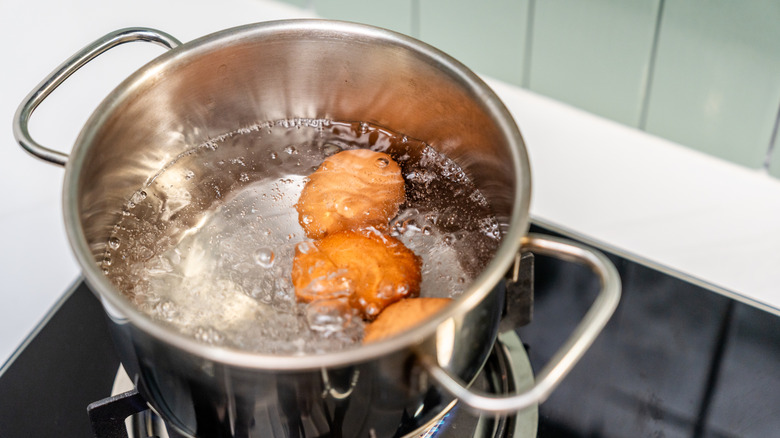
Let's leave aside for a moment the very real contention that eggs may or may not have a place in a potato salad. For that, you can check out the numerous Reddit threads online. For the purpose of this argument, we say, eggs should be included in a potato salad — but they should not just be an afterthought. Eggs add richness and break up the texture of what could otherwise be a bowl of white mush. Eggs also give the dressing something extra to cling to. But most people cook their eggs the way they've always cooked them. This might result in either rubbery whites or worse still, a yolk ringed in grey-green.
Let's tackle the more obvious issue first. If your boiled eggs end up with a ring of grey or green, this happens when eggs are overcooked or cooled down too slowly. It does not make the egg inedible, but it doesn't exactly look appealing. So what should you do? Well, bring your eggs to a boil. Remove from the heat and let them sit for not more than 12 minutes. Then plop them straight into an ice bath. The ice water stops the cooking process and retains the bright color of the yolk, keeping the white tender and bouncy. Therein also solving the problem of rubbery eggs that just add an unpleasant layer to your cool, creamy potato salad.
You do not taste as you go
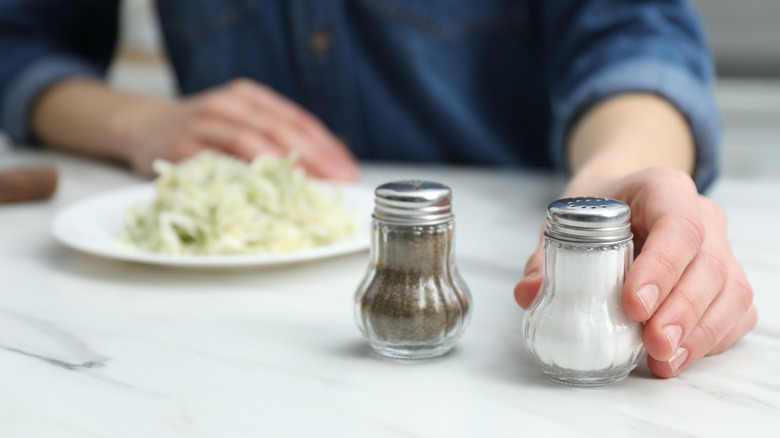
Potato salad is a dish that needs attention at every stage. What you ultimately serve up can mean that following a recipe without tasting it every step of the way results in something flat and uninspired.
Because potato salad is eaten cold, it needs more seasoning than potatoes served hot. But, and here's the caveat, adding extra seasoning to warm, freshly drained potatoes is a better move than trying to fix bland potatoes once they are cold. If you scatter salt over cold potatoes, it is not the same as seasoning that has been absorbed and integrated. So you need to taste the potatoes while they're still warm and you can still do something meaningful about it.
In the same way, try your dressing before it goes in, and then taste once again after it has been folded through. After that, taste it one more time after the salad has rested in the fridge, because by then it is a completely different dish than the one you mixed up an hour ago. If you are aiming for a potato salad that is equal parts salty, sweet, tangy, and tasty, none of that can be measured in advance. It has to be tasted and tweaked at every step.
You are dressing the salad at the wrong time
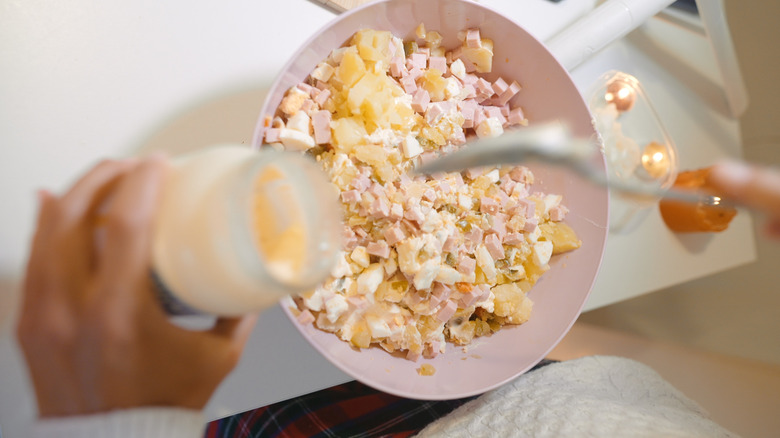
Let's deal with dressing the potato salad now. Most people treat it as a final step. Your potatoes are cooked and cooled, and you mix in the mayo and fold it all together. Unfortunately, by doing so, you have missed the one opportunity to keep things fresh and interesting.
When you mix in the dressing is almost as important as what you put into your potato salad dressing. If you are working with a vinaigrette, you will need to dress your potatoes while they are still warm, like Martha Stewart does. This will ensure they absorb some of the dressing and not just remain coated.
If you prefer a mayo-based salad, the opposite is true. For this, it is imperative you cool the potatoes for at least 30 minutes before mixing in the mayo. This is because warm potatoes will cause the mayo to melt and leave an oily, unpleasant slick. You could also experiment with a third method — a middle path that works well with creamy salads. For this, you must dress the warm potatoes first with just your acidic component, such as vinegar or pickle juice. This works brilliantly to season the potatoes. Then once cooled (and tangy), toss in the mayo dressing and let the entire bowl chill for the best results.
You skip the acid element
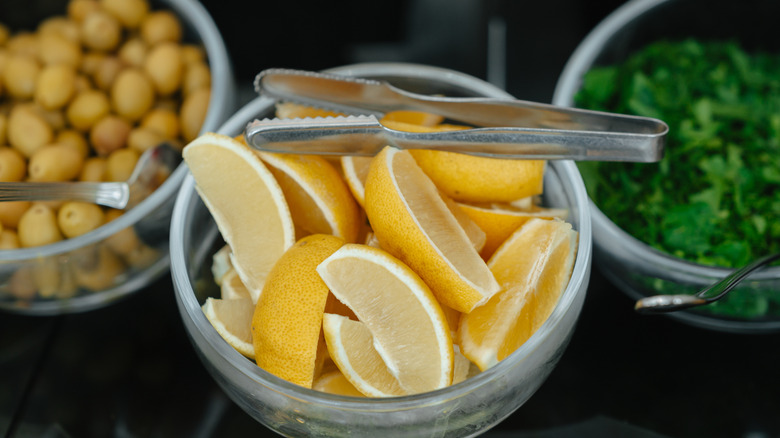
Chances are that even though you have done everything right — the potatoes are properly cooked, there's mustard and herbs in your dressing, and enough salt to keep things interesting — it still feels incomplete. Nine times out of 10, the missing thing is acid. With creamy dishes of any kind, that little bright hit of acid changes the entire flavor profile. Contrary to opinion, it won't tip your salad into sharp or vinegary territory. Instead, all the other flavors and tastes will just pop. Salt may be a flavor enhancer, but the acid element is what lifts a creamy, potentially stodgy dish and lightens it. Without it, a mayo-based salad can feel dull and heavy with every spoonful tasting monotonous.
Here, you can play around with all sorts of acidic additions. Apple cider vinegar, for example, is mild enough not to dominate but strong enough to do the work expected of it. White wine vinegar is cleaner and a little sharper. Lemon juice brings brightness without the fermented funk. Pickle juice is another option, and a very good one – the mix of vinegar and faint sweetness it brings is ideal for a potato salad. Whatever you use, add it to the warm potatoes before the mayo goes in. And don't forget to taste again once everything is dressed and cold; there is a high possibility you might want to add a bit more.
You are using mayo all wrong
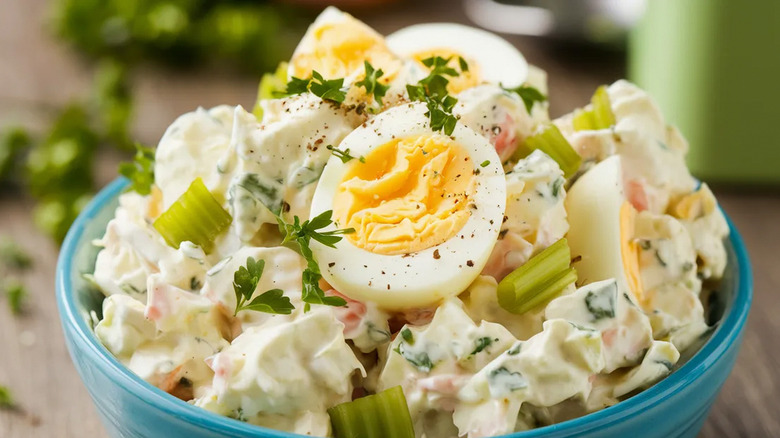
Let's get down to the nitty gritty. It shouldn't come as a surprise that the better the quality of your ingredients, the better the quality of your salad. When buying or making the mayonnaise for your potato salad, try and stay away from anything that is too processed. Look for one that tastes "eggy" and fresh for the best results. How much you add also matters. Too much, and the salad is heavy and overwhelming. Too little, and it will end up dry and unappetizing. The ratio matters, and a useful starting point is roughly a ½ cup to a cup of mayo per 2 pounds of cooked potatoes. This much should be enough to coat the potatoes without drowning them. However, it is safer to add mayo or any dressing in small increments. This allows for absorption between additions and prevents over-saturation.
When you add the mayo also matters. Ideally, mix it in stages rather than all at once. This way you are ensuring you give the salad what it needs rather than blindly following what a recipe says. Taste once more after chilling, and decide whether the amount needs tweaking or is good as is. This ensures that everything is evenly coated and delicious. And finally, always mix at least one other ingredient with the mayo. For most, this is mustard, but you can also play around with vinegar, herbs, hot sauce, and seasoning.
You are not chopping everything the same size
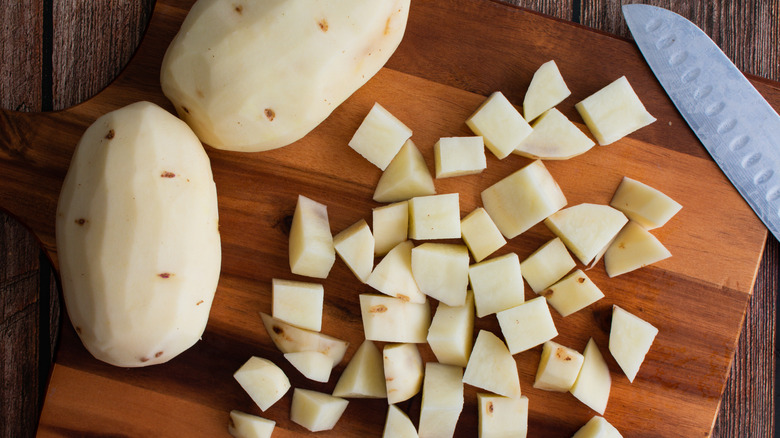
If you think cutting everything to the same uniform size is more about how the salad looks than it tastes, you are sadly mistaken. Cutting everything to a consistent size is a cooking decision, not a styling one. Not doing so affects how the salad tastes as well as how it feels when you eat it, and more importantly — if whole thing holds together or falls apart.
When potato pieces are cut unevenly, the smaller ones can overcook while the larger ones still remain underdone. This leaves you with a bowl of two entirely different textures and, needless to say, this is not what you want. The goal is a potato that is just fork-tender all the way through, and for this a ½-inch dice is a reliable size to aim for. When you go smaller than this, what you effectively end up with is a chunky mash. That said, you could totally switch things up and try this unique smashed potato salad technique instead.
Use the same logic for other ingredients, as well. For example, celery and eggs should be cut in proportion to the potato size. If you are adding onion to the mix, you may want to cut them slightly smaller and finer, or else face a rather aggressive taste through your salad. Size also affect how much of each ingredient and flavor you get in every bite, so it's definitely worth paying attention to.
You are not letting the salad rest
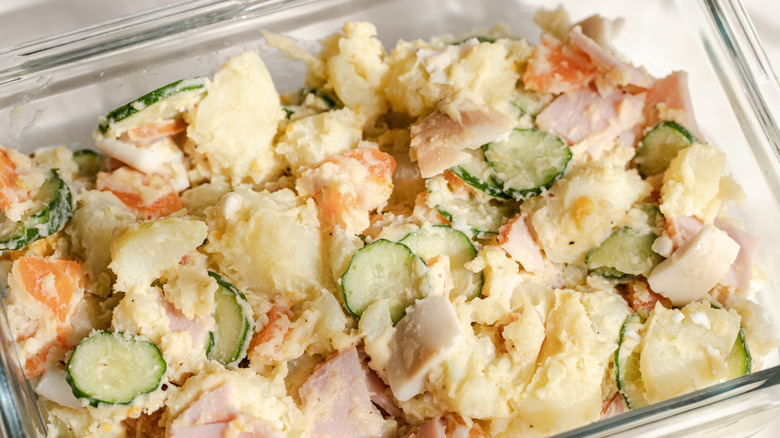
You might think that most potato salad mistakes happen during prep. But there's one thing that happens right at the end that has the power to undo all your efforts so far. If you serve your potato salad too soon after assembling, what lands on the table is a salad that tastes unfinished. Not allowing your potato salad the adequate resting time will result in dressing sitting on the surface of the potato, and all the ingredient acting as individual components rather than working together.
Resting is not optional. You will need to refrigerate for at least an hour to allow the flavors to meld properly. If you can make it a day in advance, even better: This will allow the dressing to work its way into every component. Plus, the mustard and acid elements will soften and the herbs slowly release their fragrance and flavor into the dish.
An invaluable tip is to keep aside a small portion of the dressing (about ¼ cup should do). The next day, or after chilling the salad enough, you will notice that the potatoes have absorbed a fair amount of the dressing and may look a bit drier than when you first mixed it up. Here's when the extra dressing comes in handy, to loosen and freshen it up before serving.
You're forgetting the fresh element at the end
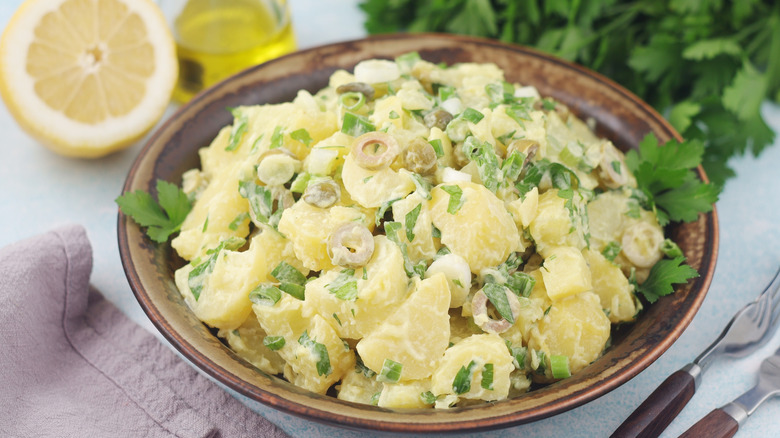
By now, you have been told repeatedly that a potato salad that has rested overnight is a better potato salad. But there's also a downside to chilling the salad, and it's worth knowing about. Cold mutes — and while the flavors tend to deepen and integrate, the brightness that was there when you assembled it will be considerably less loud the next morning.
The fix is small, and takes not more than 30 seconds. Reserve a small amount of fresh herbs when you first assemble the salad, and add them right before serving along with a final taste for seasoning. Fresh herbs added at the end cut through the richness and give the first bite a brightness that may be missing after chill time. Popular additions are chives and dill, mainly because they hold up well without becoming too limp. Flat-leaf parsley, when chopped finely, is another great flavorful alternative. Or you could take inspiration from the traditional German salad, topped with a crumble of crispy bacon bits. Ideally, what you are aiming for is to wake up the salad before it's served, so experiment accordingly.