

8 Classic Candies You'll Never Eat Again And 6 That Are Getting Harder To Find
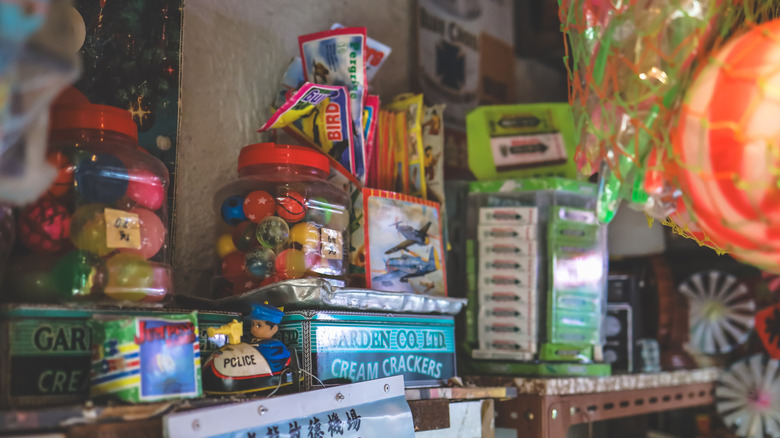
"All is ephemeral," wrote Marcus Aurelius. Chances are the Roman philosopher-emperor wasn't talking about candy — especially considering the Stoic tenet of temperance doesn't really square with indulging in sugary sweets — but the concept fits all the same. Even candies that were once staples on store shelves can come and go in this life as easily as pleasure, pain, and free trials. But the feeling our favorite candy once gave us can remain, sending us in search of these bygone goods, often fruitlessly (or, Fruit Stripe-lessly).
Although many famous brands have remained readily available for decades — such as Hershey's, Crunch, Twix, and Haribo – the 14 candies below have either become increasingly rare finds or fallen off the map completely, for one reason or another.
Thankfully, where brick-and-mortar may fall short in this regard, the internet steps up, with no shortage of vendors and resources for acquiring lost sweetmeats. Despite this, eight of the candies will be nigh impossible to acquire, while you might have a shot with six of them with a bit of snooping. Let's dive deeper into some disappearing vintage treats.
Never eat again: Fruit Stripe
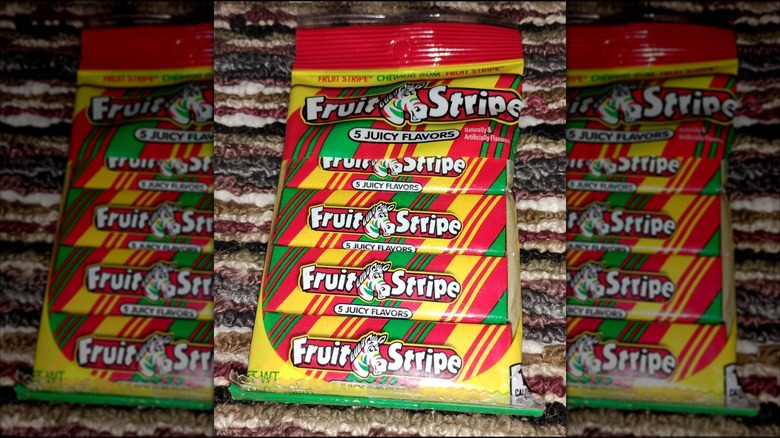
Admittedly, gum has become a bit boring. A bit one-note. Your average store counter or shelf will have a number of different brands, all with the same, small range of mint, super mint, wintergreen, or whatever. When you first bite into some of them, your mouth is sent into numbing shock, and you have no idea where you are for about 1.8 seconds. But there was a time when gum was fun, and it started in the 1960s when Fruit Stripe first debuted.
The zebra-striped chewable strips came in orange, peach, cherry, and the amusingly named Wet n' Wild melon. Adding to the fun was a temporary tattoo in each pack, which depicted the Yipes the Zebra — the instantly recognizable mascot of the brand.
Despite having a helluva run, Fruit Stripe was discontinued in 2024 by its owner, Ferrara (the grim reaper of many a once-popular candy), even though the gum's heyday reached well into the 1990s. Sure, the flavor of each stick may have lasted roughly eight seconds, but it was fun while it lasted.
Harder to find: Atomic Fireballs
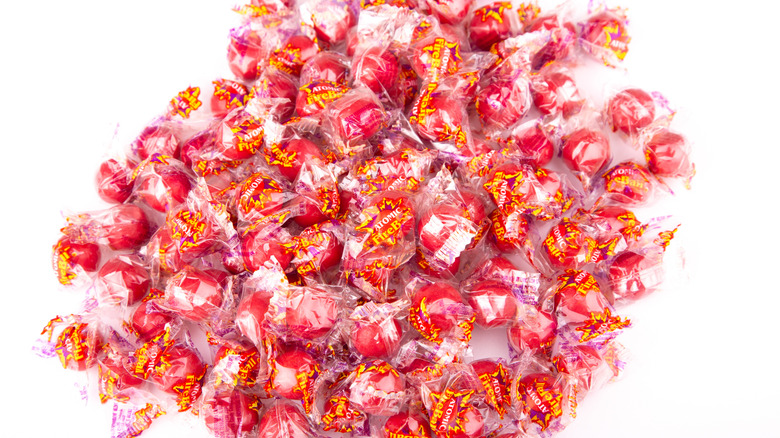
One of the absolute great things about a lot of candy branding is that there is no subtlety. Nor should there be — this is candy we're talking about, after all. Candy is shameless, candy is over-the-top, candy is an infusion of unhealthy sugar for the sake of it. Why beat around the bush with nuance? You want a candy that's gonna kick you in the mouth with spice? Well, look no further than Atomic Fireballs.
Ferrara debuted Atomic Fireballs in 1954 as a spicy version of the popular Jaw Busters candy. It also brazenly called itself "Atomic" amid the world-shaking Atomic Age, with the "Fireballs" part of the candy's name coming from capsaicin (this wasn't just mere cinnamon, oh no).
Fortunately, for many fans of this deliverer of both pain and pleasure, they are still available in bulk through both Amazon and Walmart. But if you'd rather buy them in-person, inside an actual store, that might be a futile endeavor. But it hasn't stopped the Fireballs' star from rising, as the heated candy was named one of the 250 greatest American foods.
Never eat again: Bonkers!
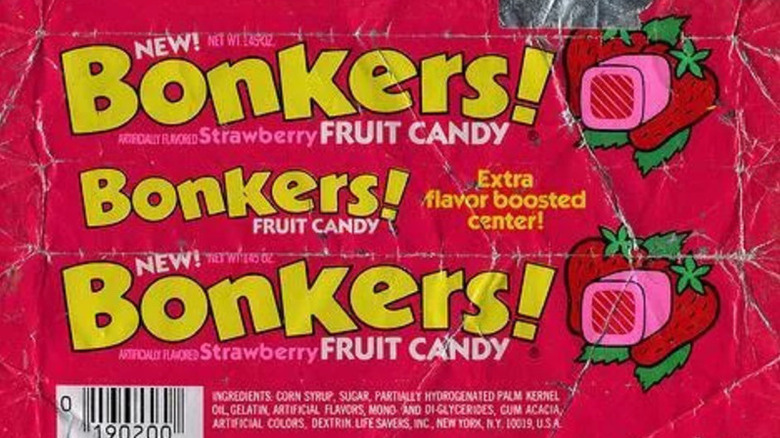
Ever look at a pair of dice and think, man, I wish I could chew on that? Or maybe you've peered at an ice cube and wondered, I'd love it if that were room temperature, squishy, and filled with fruit jelly. Well, even if you haven't, then a candy like Bonkers! is still an absolute hunk of delight, a miniature box of masticating bliss. At least while the flavor lasted. Then it was kind of like chewing mounting putty. But never mind that.
Bonkers! first came out in the 1980s and was manufactured by its original owner, Nabisco. The hexahedron with a tangy center had a profound effect on candy eaters of a certain age, as all these years later, it's still regularly on some of their minds. It came in flavors such as orange, grape, watermelon, strawberry, and (interestingly) chewy chocolate.
As its popularity and marketing slowly dissipated throughout the '90s, it was ultimately discontinued by Nabisco at the end of the decade. Yet hope sprang eternal, especially when a company called Leaf Brands bought the trademark to Bonkers! in 2012 and made plans to re-release the candy. However, it seems like those plans never came to fruition, with Bonkers! still off the market today.
Harder to find: Pixy Stix
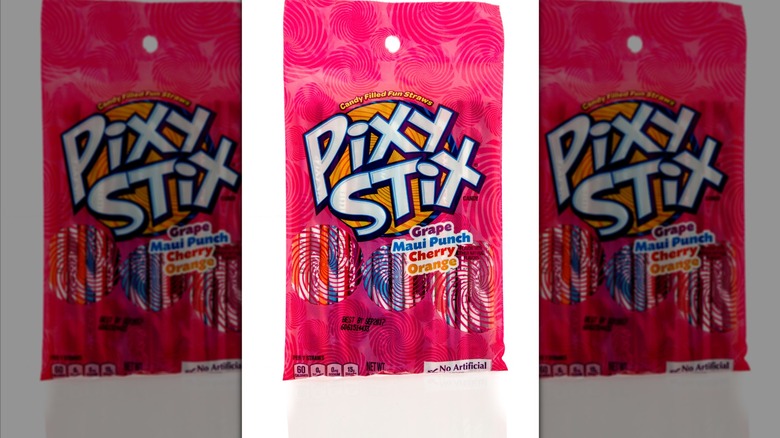
Some candies just scream "unhinged child darting around in a fevered sugar rush." Pixy Stix were, in essence, pure sugar. Unsurprisingly, they were a hit with children — and probably still would be, if they were available to the same degree today.
Although predated by the first powdered candy, Lik-M-Aid (which became Fun Dip in the 1970s, and which itself was an offshoot of a popular powdery drink in the '40s called Fruzola), Pixy Stix took the idea of powdered sugar, nixed the drink part, and put it in a readily suck-down-able straw.
Although Wonka previously made it, Ferrara eventually took ownership of the brand. There were a number of reports that the product was discontinued. Yet you can still find Pixy Stix in stores, according to Ferrara's website, although it's apparently not easy. Otherwise, you'll be forced to scour Amazon for these sweet and sour paper vials.
Never eat again: Red Hot Dollars
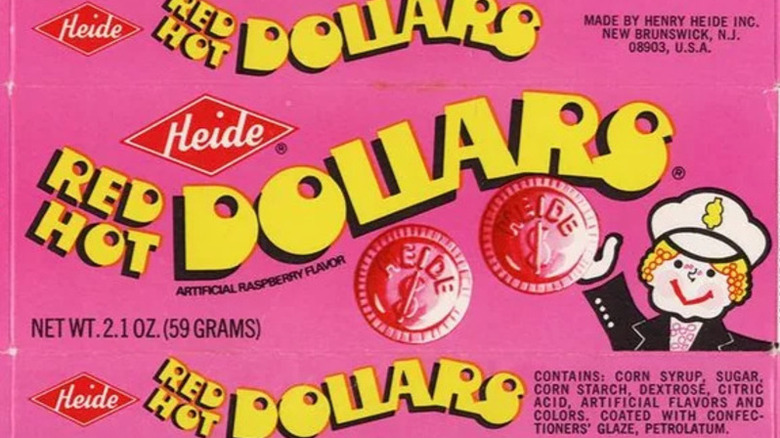
Unlike Atomic Fireballs, Red Hot Dollars are actually a bit misleading. They are neither spicy nor are they currency (that one might've been obvious). What they are, however, is named for an old-timey phrase that reflected something new and fresh. But just like an outdated saying, the original Red Hot Dollars are difficult to find today.
It was the now-long-defunct Henry Heide Company that created these red raspberry, coin-shaped candies in the 1920s. The candy survived its parent corporation's purchase by Hershey and then by a subsidiary of Ferrara (a foreboding sign). Curiously, and confusingly, Ferrara changed the flavor profile of Red Hot Dollars to make the candy actually hot. The original Red Hot Dollars were then renamed Red Raspberry Dollars, even though they were the actual, original flavor.
This portended ill for both candies, as Ferrara stopped manufacturing the pair in 2009. While you can't find the original, there is a handful of extremely accurate imitation brands out there, formulated by brands such as Candy Favorites. Right now, that's the closest you'll get to the OG.
Harder to find: Abba-Zaba
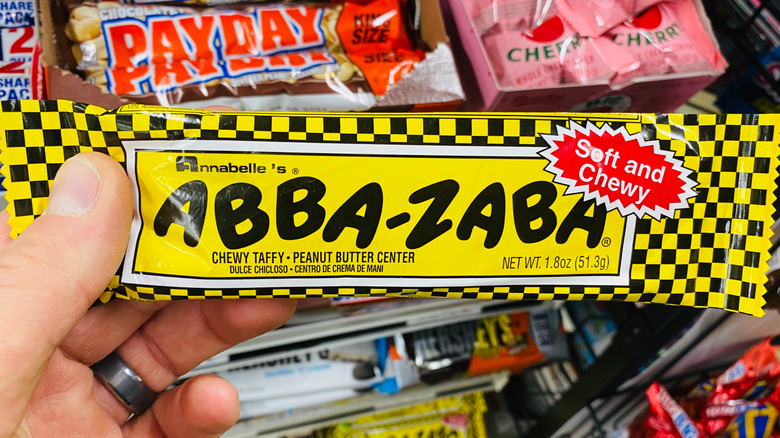
The 1998 movie "Half-Baked" helped shine a spotlight on a particular chewy treat. It was Dave Chappelle's character who declared, "Abba-Zaba, you my only friend," before taking a stretchy bite of the peanut butter-centered, vanilla-flavored taffy bar. This not only put Abba-Zaba firmly into the stoner movie canon alongside the likes of White Castle, but it also prompted a renewed interest in a candy that had already been around a long while.
And it's still around today, even after contending with the closure of its manufacturer, Annabelle Candy Factory's California facility in 2024. Abba-Zaba itself has been in existence since the 1920s, the same decade the Reese's Peanut Butter Cup debuted.
However, it's not always easy to track down an Abba-Zaba. You can buy Abba-Zaba on the Annabelle Candy website, but it's often out of stock — including at the time of writing. You won't find it in all major grocery stores, but the company's store locator indicates that you might have luck at some old-school candy stores, gas stations, and occasional grocery stores. As people who have been fortunate to enjoy the treat know, the Abba-Zaba is one of the most criminally underrated candy bars of all time.
Never eat again: Jaw Busters
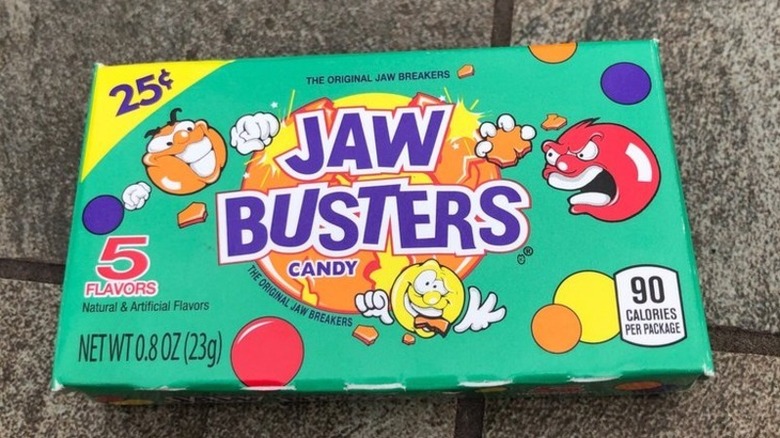
It doesn't always pay off to be the first version of something. You're responsible for setting the template, and then someone else comes along later, takes your template, and either through accident, enhancement, or pure PR, surpasses you and takes the crown. Candy may not have the ability to process such complex sentiments (being an inanimate edible), but the people behind the candy might, especially those behind Jaw Busters.
No, not jawbreakers. Jaw Busters. Yep, Busters. The ones we alluded to before with Atomic Fireballs. Jawbreaker is actually a generic term for that type of hard candy ball. This includes the Everlasting Gobstopper, which has outlasted Jaw Busters, even though it didn't come along until 1976 — inspired by the candy of the same name in the movie "Willy Wonka and the Chocolate Factory."
Jaw Busters, on the other hand, had been around for roughly a century before they were discontinued by Ferrara in 2023 (Ferrara, now a subsidiary of the Ferrero Group, currently owns Gobstoppers). It took time for some devotees of the Jaw Busters candy to realize this, and they've been disappointed by subpar dupes on Amazon. So, you can say Gobstoppers won the battle of the jawbreakers.
Harder to find: Mallo Cup
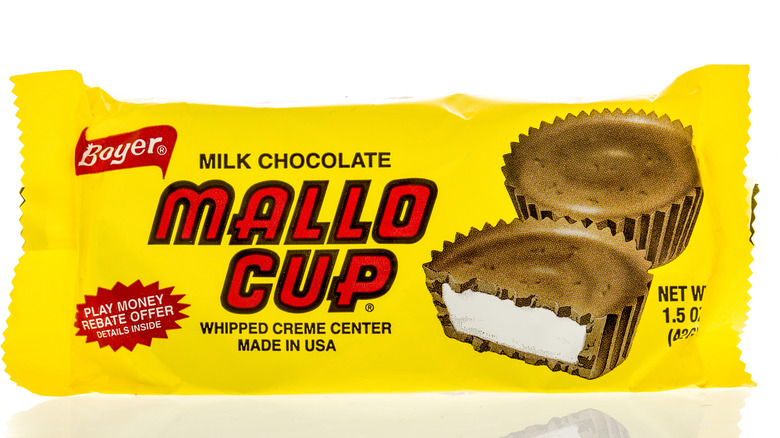
It's hard to imagine a chocolate cup candy that's anything other than a Reese's Peanut Butter Cup. But there's a similar, old-school Halloween treat that was invented back in the 1930s and had an extensive ubiquity on shelves — though not so much nowadays. The good news is, you can still get your hands on the cream-filled Mallo Cup. It just might take a little road trip to find one in person.
Like the popular Sheetz convenience store, Mallo Cup is an export of Altoona, Pennsylvania, and a flagship product of the Boyer Candy Company (along with the famous Clark bar). Ever since it was created during the Great Depression, Mallo Cups have been a marshmallow-filled chocolate cup with a hint of coconut flavoring, enjoyed by many.
People are still munching on these time-tested goodies to this day, the product having survived a rather tumultuous early 2000s for the Boyer Company – which included the owner's death, a fierce inheritance battle, and problems with distribution and production. However, you can't keep a good candy down. They are available in some stores, and you can also take a trip to the factory outlet in Altoona if you get a hankering while in the neighborhood.
Never eat again: Seven Up
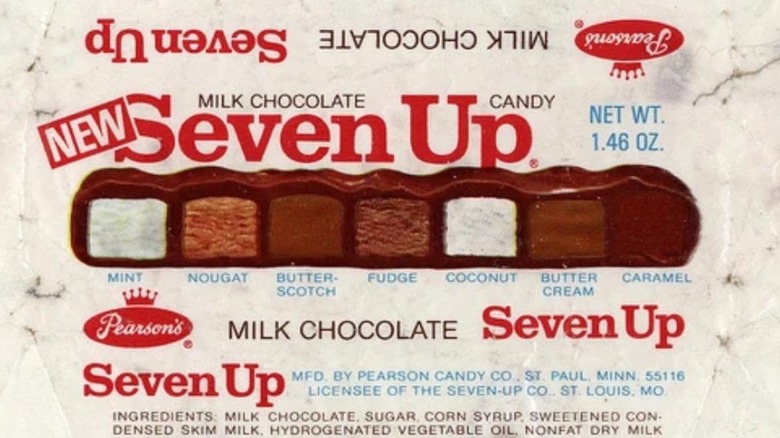
Having the same name as another immensely popular product can be both a blessing and a curse. A curse in the sense that you may forever be overshadowed by this other product, and a blessing in that this other product may remind people that you exist — or once existed. The irony may even be that the name in question is actually more accurate to what you are. We hear you, Seven Up candy bar. And we're here for you.
Created by a company called Pearson's during the Great Depression, the innovative chocolate treat contained seven pockets, each with a different flavor: mint, nougat, butterscotch, fudge, coconut, buttercream, and caramel. The cruelty was that the candy bar was discontinued in the 1970s, allegedly after a lawsuit by, you guessed it, 7 Up, the soda company. Today, you'll have to make do with Sky Bar, which has four little nooks of various fillings instead of seven. Boo. You can see why people really want to bring Seven Up back.
Harder to find: Teenee Beanee Jelly Beans
If you're not a jelly bean person, it's hard to discern through the sea of jelly bean brands out there. Aren't they all the same? What can really be the difference between one weak-shelled, semi-soft, almost mealy fruit-flavored bite and another? Add to this that a lot of jelly beans seem to be anonymously packaged, like they're just in a clear, plastic bag that looks like a rando off the street dropped it off in the store. To the discerning jelly bean eater, however, each jelly bean is as individual as a crowd of libertarians. Therefore, each brand is also distinct — including the beloved brand Teenee Beanee and the "gourmet" jelly beans in its Americana Medley.
For lovers of this particular jelly bean iteration (who don't want to just go for Brach's new line of jelly beans), it's tough going. The company that makes them, Just Born, hasn't exactly discontinued them, but it has paused production as of 2026. What that means for the future is unclear. For now, you can try to find them in bulk online — or even, in the case of Candy Warehouse, in a 5-pound bag featuring one single flavor: La Jolla Lemon.
Never eat again: Marathon
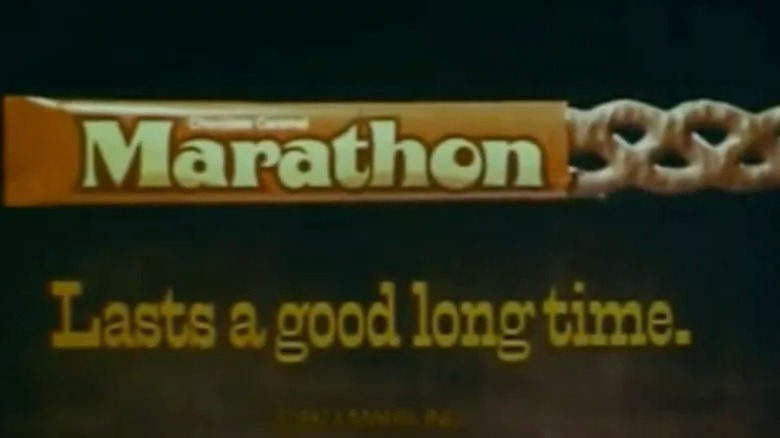
For some folks from the U.K., this one might be a bit mystifying. What Brits previously knew as the Marathon bar is what the Snickers bar first came to those shores known as. In the U.S., there was a Marathon bar that was very different from a Snickers — and, surprisingly to those who enjoyed it, had a much shorter life span.
The thin braided chocolate and caramel bar called Marathon –- with its distinctive orange and yellow packaging –- came out in 1973. It was created by Mars (the same candy giant that makes Snickers and, therefore, made the other Marathon bar across the Atlantic), and adopted the tagline "The candy bar you can't eat quickly" (hence, the Marathon name).
People dug it, but sales apparently dropped to the point that Mars discontinued the Marathon bar in 1981, less than a decade after it hit shelves in the U.S. Technically, you still won't find it in stores today, or even online anywhere today. Your best bet is to get Cadbury's Curly Wurly – which is considered to taste nearly exactly the same — from British retailers or specialty stores.
Harder to find: Chuckles
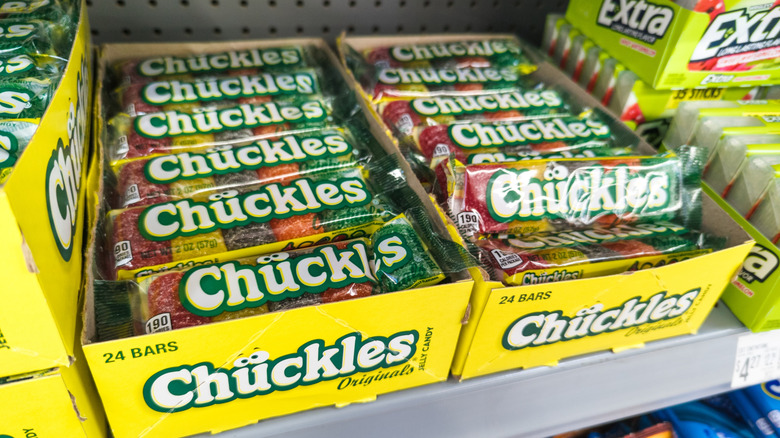
Gumdrops don't have a credited originator. The pectin or gelatin-based, soft, sugary treats that we know, usually covered in granulated sugar, just kind of appeared in the confectionery landscape of 1800s America. Few candy types have had the staying power of the gumdrop, as it's still a sweetmeat eaten to this day and seen in many an end-table bowl (even if it's treated more like furniture than a snack).
But a brand of gumdrops that took off from its creation in Illinois in 1921 is the iconic Chuckles. Like a few others mentioned in this article, Chuckles was owned by a succession of large candy companies: Nabisco, Leaf, Hershey, Farley's & Sathers, and, yes, inevitably, Ferrara. It comes in five flavors: lemon, lime, orange, cherry, and one of the more pleasant candied licorices around.
Despite Ferrara's ownership, Chuckles is still alive and well, and — although perhaps diminished in retailer presence — can still be found on store shelves every so often. One Redditor even suggested trying Ace Hardware if you're on the lookout. For the candy obsessive, no rock shall go unturned.
Never eat again: Life Savers Holes
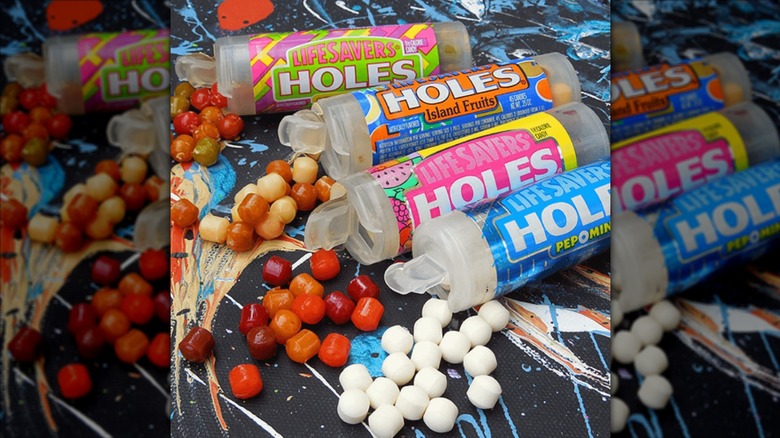
For a candy, there's one, simple way to send yourself directly into obsolescence: be literally dangerous. The original, ringed Life Savers candies are still plenty available, with their iconic shape and cylindrical packaging. But there was a Life Savers offshoot in existence, once upon a time, that tried to take a donut-Munchkins approach to things. Ultimately, it didn't work out, and for hazard-stricken reasons.
Life Savers Holes was a 1990 candy through and through, first released by then-owner Nabisco at the start of the decade. You noticed it says "1990 candy" and not "1990s candy." That's because in 1991, Life Savers Holes were recalled and discontinued. It was the packaging that was the problem. The plastic tube Holes came in were very different from the unwrappable tin foil containing regular Life Savers.
Apparently, some kids, including very young ones, bit off the cap and gagged on it –– though no record of casualties or even serious injuries exists. While the company claimed that it planned to bring the candy back with safer packaging, Life Savers Holes never returned. You'll probably have to hit up eBay or Etsy for a package of them now — and they will literally be thirty-plus years old.
Never eat again: Good & Fruity
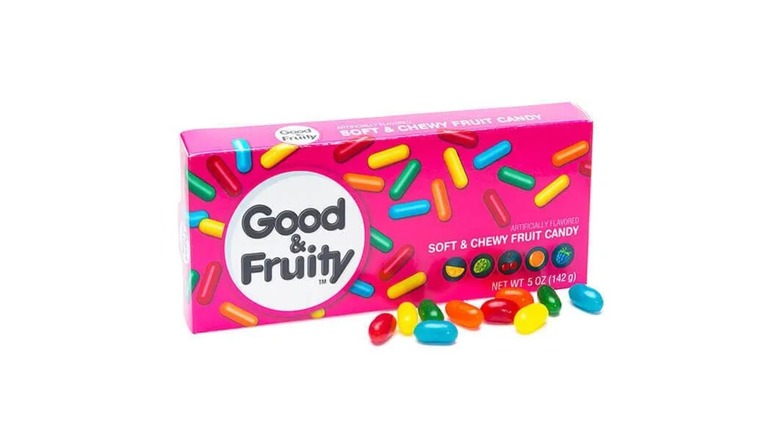
There are few more iconic old-timey candy brands than Good & Plenty. The very name conjures crackly radio ads and quaint, cheery animated commercials. And to this day, you should have really no problem finding a pack of Good & Plenty when you want to snack on the tiny licorice capsules. It's Good & Plenty's candy cousin, Good & Fruity, that's become a scarcity.
Remembered fondly, and sometimes favored over Good & Plenty, Good & Fruity has sent people flocking to find adequate replacements in their lives, and spreading the word to others when they do. Good & Fruity came in five flavors: orange, lime, blue raspberry, cherry, and lemon. No licorice to be found here.
Perhaps sensing the yearning desire of hard-done-by Good & Fruity fans, Candy Warehouse had attempted to bring them back into circulation, selling the 5-ounce packs in boxes of 12. Alas, even here they seem to now be unavailable. A noble attempt, Candy Warehouse, and fans certainly salute you for the effort. Hey, there's always blind optimism for the future.