

This Is What Makes KFC's Chicken So Delicious
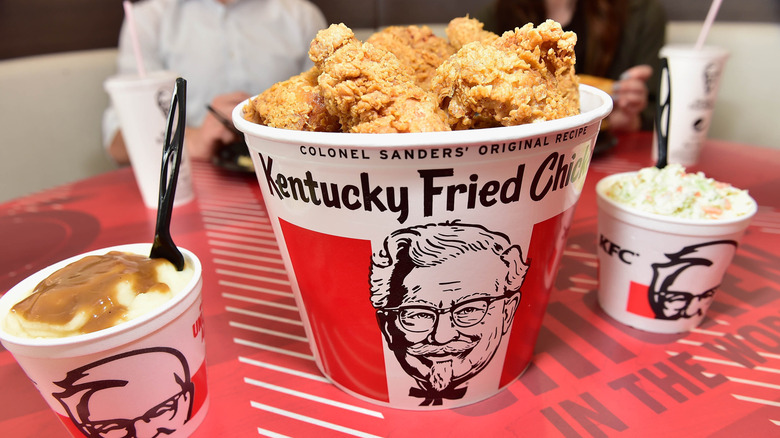
KFC is an internationally recognizable restaurant brand that has more than 30,000 locations worldwide. In many ways, KFC pioneered the fast-food chicken industry, and remains a leader in the space today. The success of the restaurant is built on a foundation of serving delicious fried chicken. There are several contributing factors to the unique flavor, including the super-secret spice mix, specialized cooking equipment, and scientifically backed innovation.
Most diners know what KFC stands for, even though the restaurant officially rebranded from Kentucky Fried Chicken in 1991. That's incredible when you stop to think about it. More than 30 years after rebranding, the original name is still commonly known, even by younger diners. Despite multiple rumors, the reason behind the change seems to be that Kentucky Fried Chicken wanted a shorter name that corresponded with what it was already being called colloquially.
The restaurant was founded by Harland Sanders, who served fried chicken from his service station cafe in Corbin, Kentucky. In 1939, the restaurant received a boost when it was mentioned in Duncan Hines restaurant guide, "Adventures in Good Eating." Think of it as a precursor to "Diners, Drive-Ins, and Dives". Hines called the restaurant a good place to eat en route to Cumberland Falls and the Great Smokies. Many of the same elements that made Sanders' restaurant a great place to stop back then are still utilized today, and are the secret to what makes the chicken so tasty.
It started with the Colonel
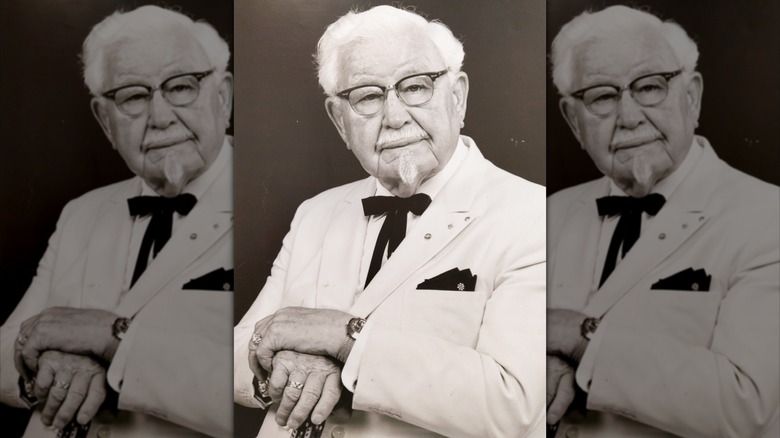
It's easy to mistake Colonel Sanders for a marketing gimmick, but he was a real man who had a profound impact on why KFC chicken is so delicious. Yes, he served in the military and, no, he wasn't a colonel. His military career ended in 1907 when he was just 17 years old. Nearly three decades later, he was granted an honorary title of "Kentucky Colonel" by the governor. He embraced the title, and started wearing a black string tie and a white suit (that hid flour stains) to complete the now familiar look.
Prior to getting into the chicken business, Sanders was was a true jack-of-all-trades. Among other things, he worked as a farmhand, a train conductor, and a ferry boat driver. He even had a brief law career that was derailed by a courtroom brawl. He started in the chicken business in 1929, and continued to perfect his recipe until franchising in the early 1950s. By the time he sold the restaurant in 1964, there were more than 600 franchises in the U.S. and Canada.
After selling the business, Sanders remained the face of the company, and toured locations to ensure quality and consistency. In the early '70s, when a conglomerate bought the chain, Sanders was critical of some of the changes they introduced. It culminated in a $122 million lawsuit, but Sanders settled out of court for $1 million and an opportunity to give the corporate executives a cooking lesson.
Industrial grade pressure fryers
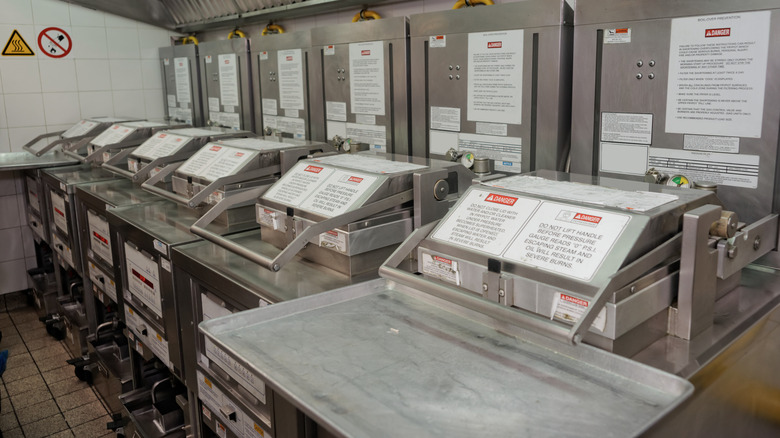
While the secret blend of herbs and spices provides a compelling narrative for what distinguishes KFC chicken, what really sets it apart is a piece of industrial-grade kitchen equipment. Instead of being pan fried or dropped into a deep fryer, KFC chicken goes into a pressure fryer. It works similarly to a pressure cooker, but uses oil rather than water. This method not only cooks the meat faster, which is ideal for a quick service restaurant, but it also retains more of the moisture, making the meat extra juicy with a crispy crust.
Celebrity chef Tyler Florence has a baked fried chicken recipe that results in an extra-juicy bird, but the most straightforward way to recreate KFC's unique texture is to invest in a pressure fryer. Countertop models start around $1,000, but commercial-grade ones like those used at KFC are in the $20,000 to $40,000 range. That's a hefty investment, and the most accessible option for most diners is to visit a restaurant, such as KFC, that pressure-fries chicken.
Pressure fryers are ingrained in the DNA of the restaurant. Colonel Sanders didn't invent them, but he was an early adopter and pioneer. Sanders' business model was to license other restaurants to serve Colonel Sanders Kentucky Fried Chicken, and in exchange, they gave him five cents for each chicken sold and bought the equipment and special recipe from him. The equipment was a pressure fryer.
It's inspected and breaded by hand
The first step in KFC's chicken-making process is inspecting the chicken. A former employee who worked at a KFC in Canada for nearly six years described the chicken cooking process on Quora. They said the chicken arrived pre-cut and bagged, making the prep process simple. They said it mostly consisted of removing excess fat and de-boning the thigh. But it was also an opportunity to visually inspect the chicken and ensure that each piece looked ready to cook.
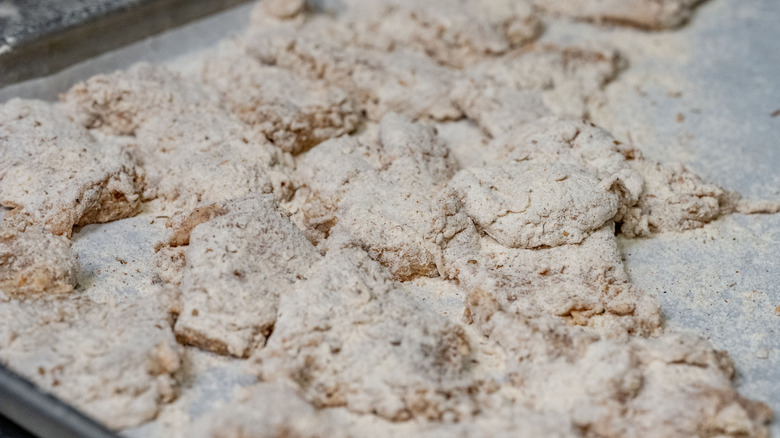
The chicken is then rinsed and battered using Colonel Sanders' unique "7-10-7" process. After being rinsed, the chicken is placed in a wire basket and shaken seven times to remove excess moisture. It's then tossed in the flour 10 times using a "scoop and lift" method, according to the company's website. Finally, it is pressed in the flour seven times to ensure an even coating of batter before it is placed on wire racks and pressure fried.
Not only does the hand-breading process ensure that a human is inspecting each piece of chicken, it's also one of the reasons that the chicken is remarkably consistent across locations. When a customer bites into a fried chicken thigh in Austin, it should taste exactly like the one in Los Angeles or Memphis. Following a consistent process ensures that chicken everywhere gets the same amount of coating and spices and diners know exactly what a piece of KFC chicken is going to taste like.
The secret (but not so secret) 11 spice blend
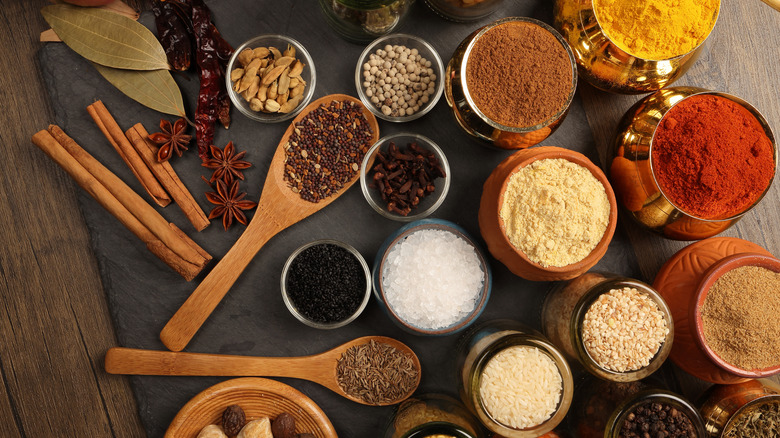
Colonel Sanders' secret recipe relied on two key elements: a pressure fryer and his signature blend of 11 herbs and spices. The spices provide the punch of flavor that has defined KFC chicken since the Colonel perfected the blend, and the company takes extreme measures to protect it. According to KFC, the secret recipe is locked in a vault at the company headquarters, and only two people have access to it.
KFC uses three suppliers to make the mixture to ensure none of them know the full recipe. During a 2019 marketing campaign, KFC hired RoboCop to transport an encrypted digital copy to a secure vault buried inside a Swiss mountain. Now, a post-apocalyptic society will be able to enjoy Colonel Sanders' flavor bouquet — if they can get past the encryption.
Despite the precautions taken to protect the recipe, it may have been inadvertently leaked by the Colonel's own nephew. He was giving a reporter from the Chicago Tribune a tour of the Colonel Sanders museum when the reporter discovered a handwritten 11-spice recipe tucked into a family album. According to the note, the blend consists of salt, thyme, basil, oregano, celery salt, black pepper, mustard, paprika, garlic salt, ginger, and white pepper. Many of those same herbs and spices were included in previous copycat versions, and some people believe it is the secret recipe, though it has not been officially confirmed.
The 12th spice, MSG
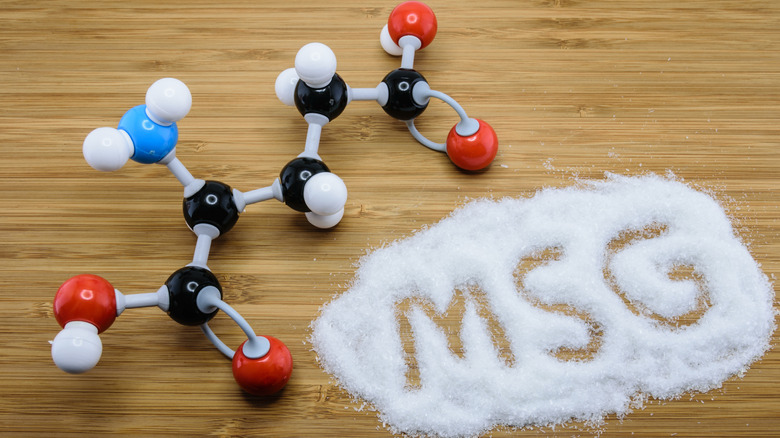
One ingredient that wasn't included in the recipe the reporter found was monosodium glutamate, or MSG. However, a review of KFC's ingredients reveals that MSG is not only in the chicken, but it is also used in many of the sides, including gravy and corn. Although MSG is known to be safe, there is a negative connotation surrounding it among some American diners. Anthony Bourdain had a fierce opinion on MSG, and thought the negative perception was rooted in racism.
So what is MSG and why do we love it? The spice is made from sodium and L-glutamatic acid, an amino acid that is found naturally in foods such as tomatoes, parmesan cheese, aged beef, and anchovies. It is an odorless white powder that doesn't taste like much on its own. But when it is added to other foods, it brings out an umami-rich flavor boost that makes the dish crave-worthy.
Fried chicken already has well-rounded flavors that tick a lot of boxes. It's salty from the seasoning and slightly sweet from the Maillard reaction that occurs during frying, which are both tastes our brains are hard-wired to crave. MSG ups the umami — the fifth taste that adds a savory richness to foods. While it's not advertised in marketing campaigns, MSG is the secret ingredient that boosts the flavor in KFC chicken and contributes to its recognizable taste.
KFC uses fresh chicken
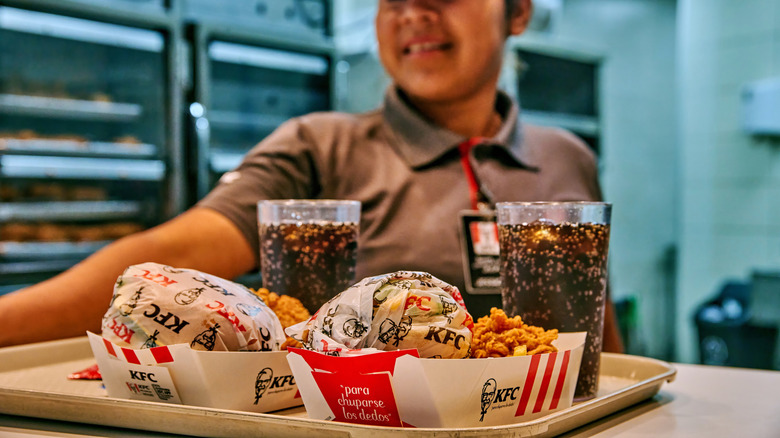
A good rule of thumb is: For the most delicious fried chicken, start with the main ingredient. It's a simple rule, but easy to overlook. No amount of spices or fancy cooking techniques will hide a bad piece of meat. KFC uses fresh, never frozen chicken. Former employees describe it as being delivered to the restaurant looking similar to what is found in the butcher department at the grocery store.
Freezing meat is a great way to extend the shelf life, but how it is frozen impacts the flavor and juiciness. Generally, when meat is frozen slowly there is damage to the cellular structure that results in meat that can be less juicy and flavorful. When the meat is frozen quickly, there is less damage, and once thawed it tastes nearly identical to fresh meat. Since the freezing process adds another (potentially negative) variable into the recipe, starting with fresh chicken contributes to the consistency KFC strives for.
Not having to wait for frozen meat to thaw also fits within KFC's strategy of getting hot chicken to customers quickly. The number seven recurs throughout KFC's playbook (remember the 7-10-7 breading technique), and pops up again here. The company adheres to a seven-minute rule, that states a customer will get fresh, hot chicken within seven minutes of ordering. Serving fresh, piping hot chicken is part of the KFC experience, and is one of the reasons it is so good.
It offers sauces to enhance the flavor
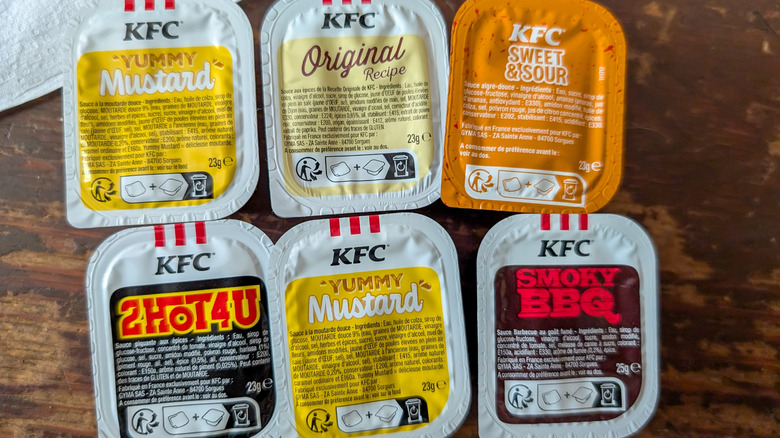
Restaurants such as KFC that helped define a genre of food face an interesting dilemma. How does the brand stay true to the roots that formed the foundation of its success while not getting boring and predictable? One strategy KFC employs is offering a line of sauces, including its signature KFC Sauce that is tangy, sweet, and slightly smoky.
Sauce is a high-stakes game for the company. KFC quoted the results of a DoorDash survey that found that 75% of Americans said their meal is ruined if the sauce is missing. A full 20% claimed that sauce was the most important part of a fried chicken meal. Getting the sauce right is something that modern diners demand.
KFC has a variety of dipping sauces that allow customers to cater the meal to their specific tastes. There are savory ones such as ranch and gravy. Or, for those who want a spicy kick, there are options such as jalapeño ranch and hot sauce. There are also plenty of dips such as honey bbq and sticky-chicky sweet-and-sour that add a touch of sweetness. Whatever the customer is craving, KFC has a sauce designed to scratch the itch.
The crunchy texture stimulates our senses
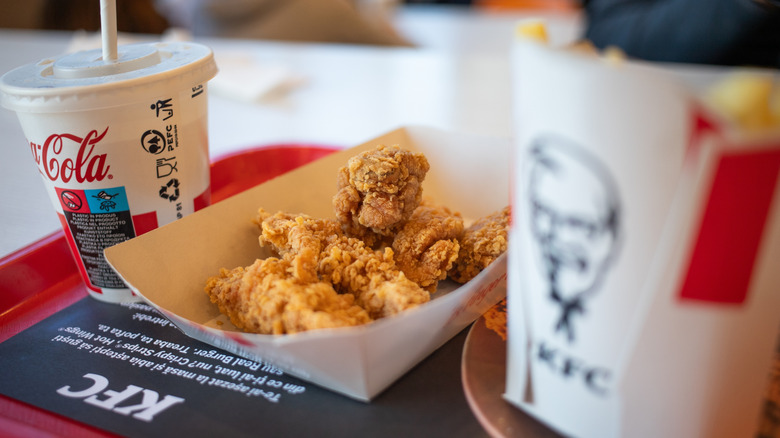
Our brains are hardwired to crave the fatty and salty flavors of KFC fried chicken, but the crunchy texture is also telling our brain that the food is fresh and delicious. Research shows that texture elicits emotional responses while eating. The crunchy sound of biting through the crust on a piece of KFC chicken triggers pleasure receptors in the brain. Many fruits and vegetables are crisp at their peak ripeness, and it's thought that the brain associates the sound of crunching with freshness.
Eating crunchy foods can also be a stress reliever. According to WebMD, chewing crispy foods, such as a freshly fried piece of KFC chicken (okay, the example was a raw carrot, but the same principle applies), can alleviate stress in a mechanical sense. It takes energy to chew, and this leads to the relaxing of a clenched jaw and a release of tension.
Additionally, the actual work of chewing forces diners to slow down and enjoy each bite more. When food has a smooth texture that doesn't take much effort to eat, such as pudding, it is easy to overindulge before the body has an opportunity to send signals that it is full. The effort of chewing slows the process down and gives the body more time to know when it's full. That can be good, because as delicious as KFC chicken is, it calorically dense and overindulging in the fried goodness is not necessarily the healthiest option.
The sides make a complete meal
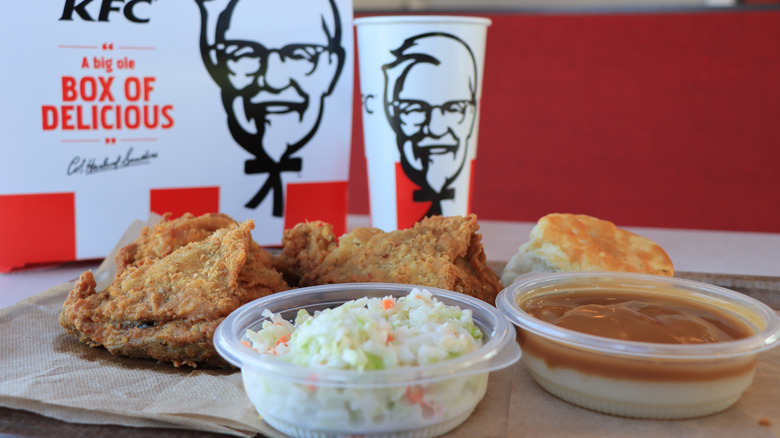
Crunchy isn't the only texture offered by KFC — there are also creamy sides such as mashed potatoes that provide variety. The emphasis is on classic flavors and pairings. That's reflected in the sides menu that consists primarily of southern staples such as mac and cheese, coleslaw, french fries, and green beans. Fluffy buttermilk biscuits are a perennial fan-favorite that match well with the juicy chicken. Mashed potatoes are also popular, and typically perform well in rankings of KFC sides.
While the potatoes are popular, there was a kerfuffle regarding the gravy. When Sanders became frustrated with the new owners in the 1970s, gravy was one of the flashpoints. The Colonel was highly critical of the side, and said it tasted like slop and the company was run by a bunch of booze hounds. It was one of the issues that led to the lawsuit he brought against the company, and culminated in the executive cooking lesson. Maybe the lessons worked, because it has remained a staple on the menu.
Dessert options are limited at KFC, but pie poppers and chocolate chip cake are on the menu for those with a sweet tooth. The flaky buttermilk biscuit can also pull double duty, and tastes great drizzled in honey. Whether you are craving sweet, savory, or salty KFC likely serves a nostalgic country-inspired side dish that is reflective of Sander's Kentucky roots.
KFC innovates to meet evolving consumer demands
KFC was at the forefront of the quick service fried chicken industry, and it has not strayed far from its roots during its long history. The company still relies on the 11-spice mix and pressure fryer that Colonel Sanders used. But consumer preferences evolve over time, and KFC continues to innovate to satisfy new generations of diners. "Quality, value, and flavor — those are the ingredients we've added to our original 11 herbs and spices," Renee Reeves, Consumer Insights and Market Intelligence Manager at KFC U.S., told Cint.
KFC is a global brand, and as it expanded into foreign markets the restaurant had to find ways to incorporate different cuisines into the menu. KFC serves shrimp doughnuts in Thailand, egg tarts in Singapore, and debuted a Double Down Dog in the Philippines, which is a hot dog wrapped in a fried chicken bun. Other innovations in foreign markets have included chicken tender tacos, pizza with a fried chicken crust, and bags of fried chicken skin.
In the American market, the innovations are typically more subtle, but have a profound impact in keeping the chain relevant. KFC uses market research to specifically target niche audiences and ensure there is something to appeal to everyone. The Comeback Sauce that debuted in 2024 was specifically targeted towards Millennial diners. Younger diners are looking for bold flavors and new products, which led KFC to introduce flavors such as hot honey and rotate specials in on a limited time basis.