

Do You Really Need A Microwave? Here's How The Alternatives Stack Up
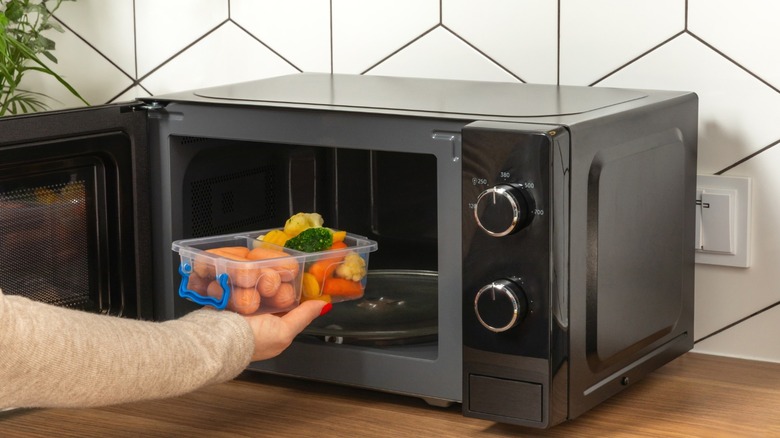
The microwave has been a staple of kitchens since its introduction to consumers in the 1950s (once they stopped being so gigantic and expensive, anyway). In terms of convenience and utility it was pretty much unmatched, as it made reheating leftovers and preparing frozen dinners a breeze. Today, there are still plenty of uses for microwaves and there's a good chance you have one in your kitchen already, but what if you had other options for preparing food which could do the same job as a microwave but better? We'll take a look at microwaves, air fryers, and other cooking appliances to weigh the pros and cons and let you decide which one you need.
Let's get into microwaves first. You're probably familiar with all the benefits and drawbacks of this particular machine, but just in case: Microwaves use radiation to heat the molecules in your food. That's certainly handy, and if a certain food is designed to be prepared in a microwave all is well. It also makes reheating and defrosting a cinch, although there are some foods you should think twice before reheating. One major weakness, however, is that it's pretty bad at cooking raw food due to a number of cold spots and a lack of browning. So, if you're looking to cook a steak you shouldn't reach for your microwave.
Does an air fryer work better than a microwave?
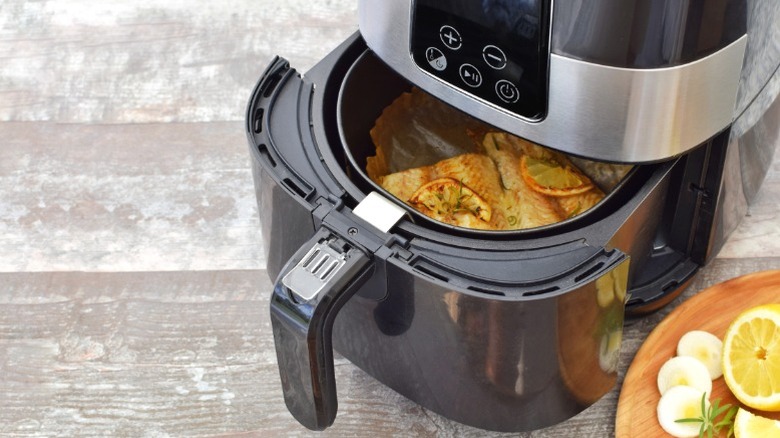
You've probably heard all about air fryers already. They've been the hot, trendy kitchen gadget for the better part of a decade, after all. They use hot, circulated air to cook your food (if you're familiar with convection ovens, air fryers are basically the same concept but smaller). Unlike microwaves, air fryers can actually cook food, including hot dogs, chicken wings, potatoes, and more. Food cooked in the air fryer will have a relatively crisper texture, which can approximate the taste of deep frying without the oil (or extra calories).
But air fryers aren't quite as straightforward to use as microwaves, as they require preheating to get the best results as well as more frequent cleaning. If counter space is a concern, you may want to use a microwave since they can typically be wall-mounted. (While you can wall mount air fryers by using a shelf, the heat they give off as well as their individual parts means more care ought to be taken when doing so.) Microwaves are also better at reheating and defrosting, so it's not like there aren't any tradeoffs. In short, if you'd prefer something quick and easy to use on the regular, you might want a microwave; if you'd rather use a more versatile but slightly fussier appliance, go for an air fryer.
Toaster ovens and smart ovens are also good options
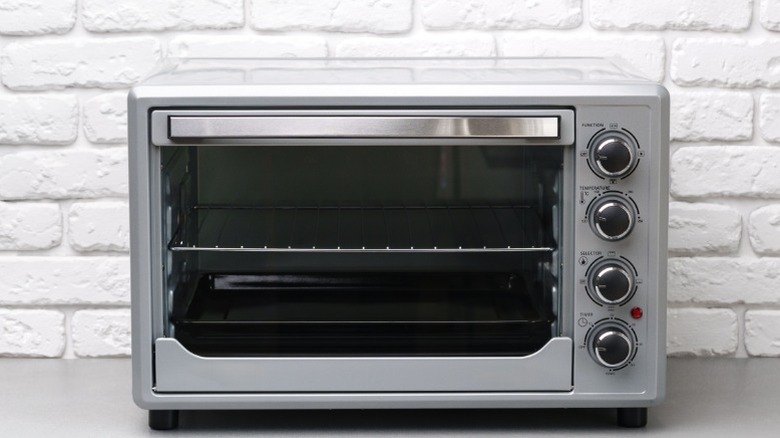
The options don't end there, either. Despite the name, toaster ovens can do more than just toast bread. Using infrared radiation (a different kind of radiation than microwave radiation), it can bake, roast, and prepare all sorts of food with a texture that's admittedly less crispy than an air fryer but nonetheless quite balanced. It is, however, slower than both air fryers and microwaves, being closer to a conventional oven than either of those. They also have a lot of individual parts you need to clean (as in, trays and racks) and can get dangerously hot on the outside when cooking.
As for smart ovens, there are plenty of newer ovens which allow you to preheat and activate functions remotely. Not only that, some models have air fryers built in, which means you can get all the benefits of an air fryer without it taking up valuable counter space. With that kind of versatility, you may choose to forgo a microwave entirely. With that being said, there's the usual problems that come with smart appliances; namely, that they need to be connected to the internet to function properly and are difficult to repair. (Also, someone can hack into them to spy on you, which is frankly not something we need from our oven.) It all depends on what you value in your cooking, as you know your own kitchen best. Microwaves are best for convenience, air fryers and toaster ovens are versatile but a little fussy, and smart ovens are wonderful but can quickly get pricey.