

12 Fried Chicken Chains That Don't Exist Anymore
While the hamburger is the quintessential American food item, fried chicken isn't far behind. It's impossible to pinpoint when chicken became Southern fried, but the 20th century was the golden era when crispy pieces of breasts, thighs, wings, and drumsticks were doled out en masse across the country. We can thank Colonel Harlan Sanders and his original recipe for this tasty explosion. Kentucky Fried Chicken first franchised in 1952, and not only did it spawn a behemoth global franchise, but, in turn, gave rise to a whole slew of fried chicken chains all hoping to capture their own juicy magic.
For one reason or another, many floundered and are sadly no longer with us. Let's rev up the ye olde Takeout time machine and take one last bite of these once "Glori-Fried" chains.
Chicken In The Rough
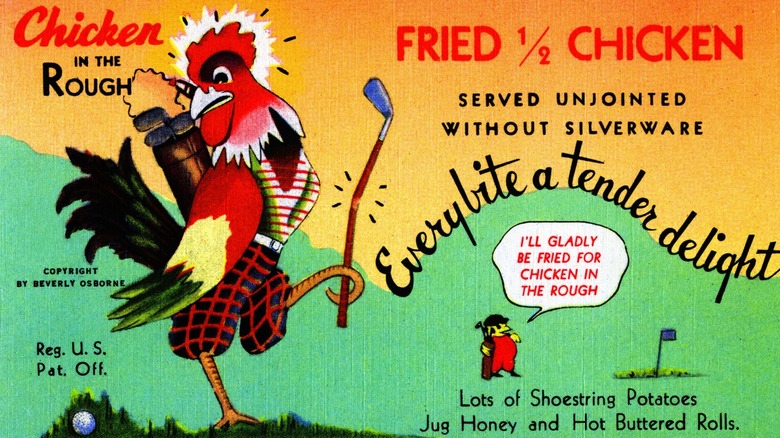
In 1936, Beverly Osborne's wife dropped a piece of fried chicken on the ground and reportedly said: "This is really eating chicken in the rough." The last four words of that sentence were borrowed for the name of their silverware-less, down-and-dirty fried chicken chain that by the 1950s, had over 250 locations in 36 states, ringing up 335 million orders of his recipe.
The brand languished, and by the late 1970s, had dwindled to 18 locations. The remaining pieces of the franchise were picked up by a son of the first franchisee of the brand, Jack Carroll, who purchased the rights, cooking methods, and recipes from Beverly Osborne. Carroll told the Franchise Times in 2008, "We've got work ahead of us to build the brand again, and it's tough, because we're a small company." He added, "We'll do everything we can to build a brand where people see the logo, and know they'll get great chicken."
For those looking to "rough" it today, the chicken can still be found on the menus at Palms Krystal Bar and Grill in Port Huron, Michigan, McCarthy's Grill in Sarnia, Ontario, and Miller Grille at Shenvalee Golf Resort in New Market, Virginia.
Pioneer Take-Out/Pioneer Chicken (almost gone)
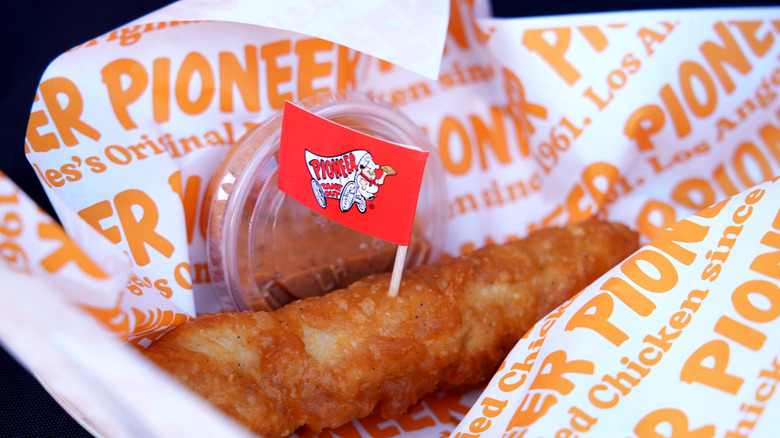
Rick Kaufman was a successful laundry and shoeshine businessman and gave fried foods a try when he opened his first Pioneer Take-Out in Los Angeles' Echo Park in 1959. Success bred expansion in the '60s and '70s, and the chain later aired ads starring Kareem Abdul-Jabbar and Muhammad Ali and made cameo appearances in the El DeBarge video "Rhythm of the Night" and the opening credits of "Full House."
Despite reaching its peak at 270 locations, the 1980s were a trying time. Mexican grilled-chicken restaurant chain import El Pollo Loco started making a dent in its sales, and there was a lot of finger-pointing between management and the franchisees. The latter accused the former of poor advertising and unpaid bills, and even stopped paying royalties, creating financial instability. This led to Pioneer's first bout with bankruptcy in 1988, with a new group taking charge a year later. That didn't seem to help, as they reported a loss of $6.64 million in 1990 and declared bankruptcy again in 1991.
In 1993, Pioneer's downfall began when it was acquired by Popeyes parent company, America's Favorite Chicken Co. It sought to expand Popeyes' presence in Southern California and converted Pioneer locations in the process. Within three years, it had been reduced to two locations. As of 2026, those two Los Angeles locations are trying their best to keep the name, branding, and pioneering chicken alive and clucking.
Red Barn Chicken Pantry
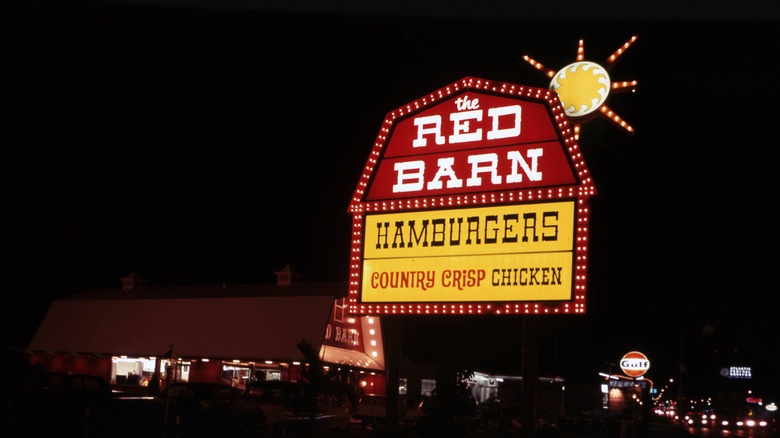
Red Barn was a once-popular nationwide hamburger chain, easily spotted on the road thanks to its edifice that matched both its titular shape and color. The first location opened in 1961, and beyond the bun, another popular item was its fried chicken, called country crisp chicken. It was a proven winner enjoyed at 200 locations, and in 1967, Red Barn created a spin-off business centered around it. This poultry-centric venture, which also sold fried shrimp, was dubbed Red Barn Chicken Pantry and began with a pilot location in Dayton, Ohio, and another in Kansas City, Missouri.
By 1968, Red Barn Chicken Pantry had branched out into 8 locations, with plans to add 40 nationwide by the following year. Company president Richard Kearns told The Dayton Daily News at the time, "The chicken business is following the pizza business. We feel the demand is there and we are underpricing all of the other chicken operations, not through cheaper products, but because we have developed an automatic chicken fryer that provides programmed cooking."
The chicken offshoot chain was shuttered by the end of 1971, but the main Red Barn restaurants carried on in the following decades. Red Barn became a subsidiary of Motel 6, which seemed to show little interest in it, ceasing advertising, not renewing franchise leases, and closing all the stores by 1988.
Minnie Pearl's Chicken
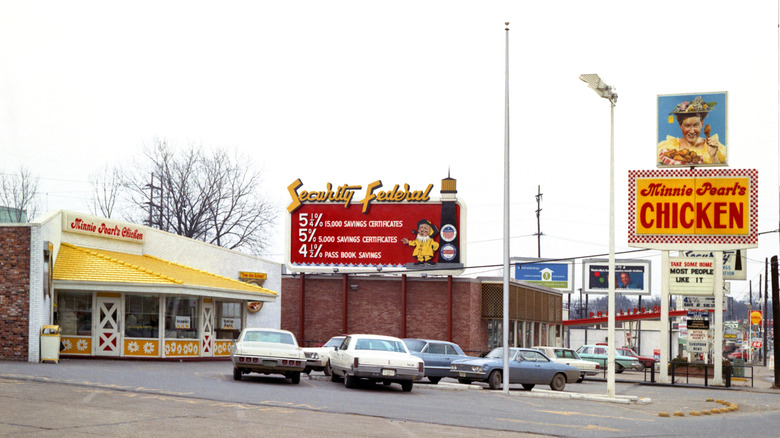
Sarah Ophelia Colley made quite a name for herself as the comedic persona Minnie Pearl. In 1967, the actress partnered with politician and lawyer John Jay Hooker Jr. to start an eponymous chicken chain. For her name, appearances, and trouble, she earned $102,500.
In 1968, 1,200 franchises had been sold, and yet only 120 stores were in operation. Two years later, those numbers ballooned to 263 stores in service, with around 1,600 franchises sold. The Hookers and their friends, including football coaches, congressmen, and judges, did quite well as early investors of Minnie Pearl's Chicken System, Inc. The stock was actually very buzzy at the time, and when the stock price sank, this financial fallout warranted investigations by both the SEC and the Senate.
All this attention didn't help the chain, nor its offshoot, Minnie Pearl's Beef, or the other fried chicken franchise it invested in, Mahalia Jackson's Glori-Fried Chicken, as well as John Jay Hooker Jr.'s unsuccessful campaign for Tennessee governor. The chain floundered in the '70s, and all 300 locations had gone bankrupt or simply closed up shop. By 1978, parent company, now known as Performance Systems, Inc., next turned its attention to converting data to microfilm, while Ms. Colley attempted to move past the ill-fated Minnie Pearl chicken venture by trying her hand at dramatic acting.
All-Pro Chicken
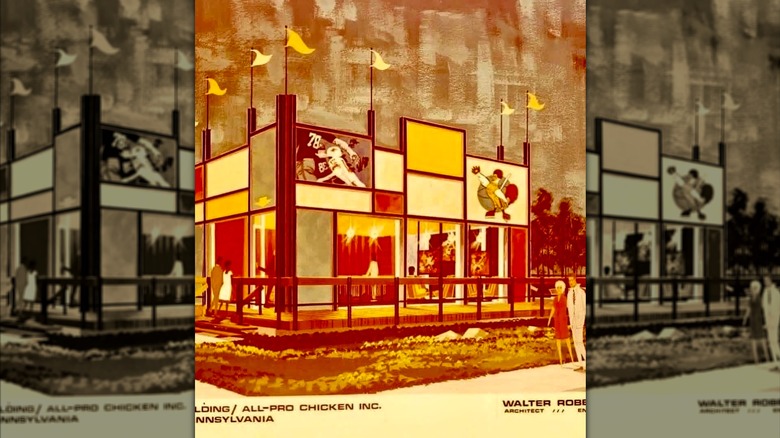
NFL cornerback Brady Keys Jr. kept busy off the field, moonlighting at Douglas Aircraft and running a real estate firm. In 1967, he added restaurateur to his resume when he opened Brady Keys's All-Pro Chicken in San Diego. Within two years, it had 7 locations with an eye for 200 more, and this milestone made him one of the first African Americans to launch a national franchise. Keys told The New York Times in 1969, "My objective is to be a model for the jillions of black people who want to go into business. What I'm trying to do, I think, will do more to ease the racial problem than all the poverty funds."
The chain leaned heavily into the theme of sports. Its logo had a star inside the "o" in "Pro" and used a baseball-playing chicken as its mascot. The menu also included football wordplay, like first down, touchdown, extra point, and field goal.
50 franchises eventually opened, and Keys even partnered in a joint venture with Kentucky Fried Chicken, to open locations with his name possessively preceding the Colonel's chain at some locations. The franchiser then became a franchisee of not only KFC, but Burger King as well. Business boomed for him with those restaurants, but not so much with All-Pro, and that chain retired from the chicken game in 1974. Brady Keys Jr. passed away in 2017, but his legacy lives on with the Keys Group, which owns several businesses, including nostalgic Italian restaurant, Fazoli's Fast Fresh, in central Florida.
Yogi Bear's Honey Fried Chicken (almost gone)
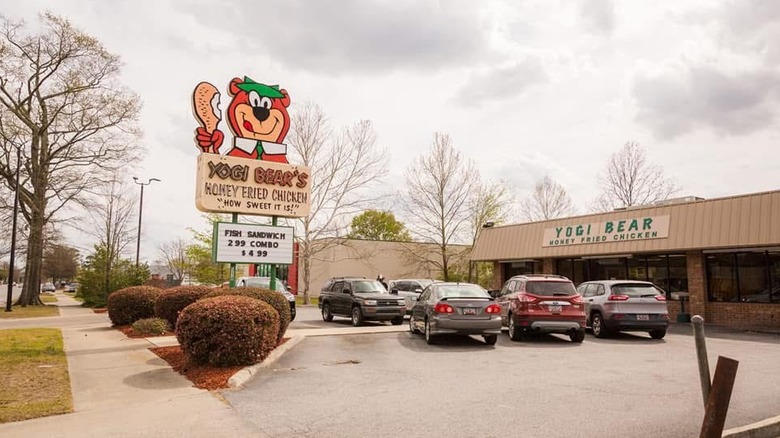
In 1968, the hamburger chain Hardee's acquired control of the Columbia, South Carolina-based Honey Fried Chicken Corporation and put its own spin on it. Licensing the Hanna-Barbera cartoon character, Hardee's renamed its fried chicken venture Yogi Bear's Honey Fried Chicken.
By the summer of 1969, there were 20 stores in operation, with Yogi even making in-store appearances, and the plan was to open 60 more by year's end. The prototype building was designed to look like a rustic ranger's cabin from Yogi's home, Jellystone Park, with pictures of the characters hanging on the walls, and wagon-wheel chandeliers lighting up its interior. The menu centered around fried chicken, borrowing nomenclature from Yogi's world, with meal names like Cindy Bear's, Yogi's Beehive, Boo Boo's Lunch, and the 20-piece Jellystone Feast. There were also fish dinners and salads available.
Yogi Bear became a financial liability to Hardee's, and in 1972, it began to phase it out. It eventually was whittled down to a single Yogi Bear's Honey Fried Chicken in Hartsville, South Carolina, which, as of 2026, continues to be represented by the cartoony iconography and slogan "How Sweet It Is." The menu still features mainly familiar names and sights, such as the Boo Boo Basket.
Mickey Mantle's Country Cookin'
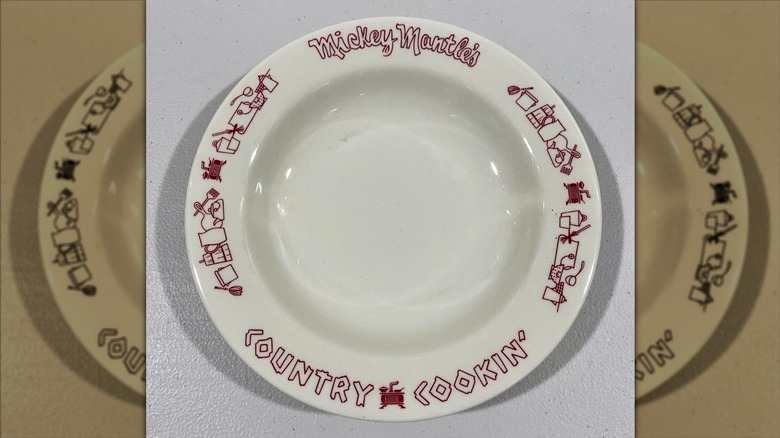
In 1968, with his playing days winding down, New York Yankees great Mickey Mantle branched out into off-field business ventures. One was a string of men's clothing stores, and the other was being awarded a $100,000 salary and 110,000 shares to front a down-home restaurant chain serving country-fried chicken, steaks, and Mantle's favorite, chicken fried steak. While it was originally named Mickey Mantle's Country Kitchen, a trademark suit led to a quick rebrand as Mickey Mantle's Country Cookin', with its first location opening in Longview, Texas. In a launch event, The Longview Daily News quoted Mantle saying, "I'm basing my future on the belief that most people still appreciate good old fashioned country cooking, although it is almost impossible to find."
In early 1969, 45 franchises were sold, with 100 by that year's end, all with Mantle planning on appearing at each opening. The slugger even came up with the restaurant's slogan, "To get a better piece of chicken, you'd have to be a rooster." Within a year, the chain proved it wasn't exactly major league-ready, and by mid-1970, Mantle resigned as chairman, and all 11 locations shuttered.
In 1971, Mantle had already moved on to his next restaurant venture with the standalone Mickey Mantle's Restaurant in Birmingham, Alabama. He hoped it would spawn a franchise, but it never materialized. Mantle had better luck with a popular namesake restaurant that opened in New York City back in 1988 until it closed its doors in 2012.
Mahalia Jackson's Glori-Fried Chicken
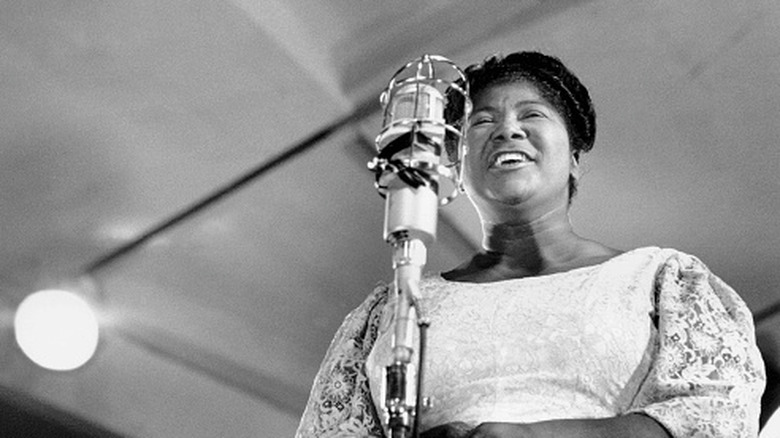
Mahalia Jackson used her marvelous voice to push gospel music into the mainstream, as well as to champion the Civil Rights movement. She agreed to lend her image and name to a fried chicken chain from the same group that brought Minnie Pearl's Chicken to life. This new venture, Mahalia Jackson's Glori-Fried Chicken, had a mission to create an African American-owned and staffed franchise system, operating in African American communities. In a company booklet (via The Omaha Star), Jackson noted, "When I see hundreds of profitable Mahalia Jackson's Glori-Fried Chicken restaurants all over the country, I'll feel like I've helped write a new black Declaration of Independence."
The very first Mahalia Jackson's Glori-Fried Chicken opened in Memphis in 1969. The chain partnered with Gulf Oil to quickly convert its defunct gas stations, and locations soon sprouted up in cities like Charlotte, Chicago, Detroit, Houston, and even in the Bahamas. Mahalia Jackson's encouraged customers, in its slogan, to "stop licking and start eating," and behind the lead menu item, it also sold catfish and an affordable "Soul Bowl" filled with chicken giblets, rice, and gravy.
Despite its high ideals and even being housed in beautiful buildings that resembled churches, the Mahalia Jackson's Glori-Fried chain never reached the heights that her voice did. Mahalia Jackson's Glori-Fried Chicken was also an innocent victim wrapped up in the messy SEC investigation into the sister chain Minnie Pearl's Chicken. Its owners sold off their shares, forcing Mahalia Jackson's into bankruptcy in 1971. Jackson died a year later at age 60.
Parklake Fried Chicken/Ollie's Trolleys/Ollie's Family Restaurants
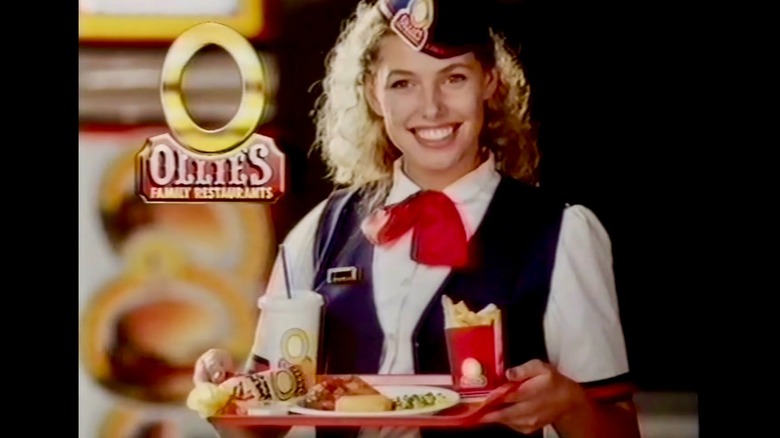
Australians Peter and Maria Copulos visited the U.S. in 1964 and returned home so impressed by chains like Kentucky Fried Chicken that five years later they opened their own spot back home, Parklake Fried Chicken. KFCs then started sprouting up in their backyard, and the Copulos family expanded its own footprint. The chain was rebranded in the '80s as Ollie's Trolleys and Ollie's Family Restaurants.
Ollie's specialized in fried chicken, but customers made sure to save room for dessert with its signature Fluffy Ducks sundaes. In a holder that looked like a wine glass, this treat was filled with three scoops of ice cream, fresh bananas, chocolate fudge and banana syrup, marshmallows, nuts, whipped cream, a wafer, and finished with a cherry on top, as well as a mini umbrella. The ads in the '80s zinged with a really catchy jingle, where it reminded customers, "We call it Ollie's quality — it has to be the best, at Ollie's Family Restaurants, you're our guests!"
In 1990, Kentucky Fried Chicken acquired all 32 units of Ollie's Family Restaurants, eventually converting them into its own chicken brand. Ollie's chairman, Peter Copulos, told The Australian Financial Review at the time, "It was a commercial decision. They have been trying to buy us for a number of years. We were in direct competition with them, so I guess the aim was for them to get bigger." The Copulos family went on to own and run over 90 KFCs.
Holly Farms Fried Chicken
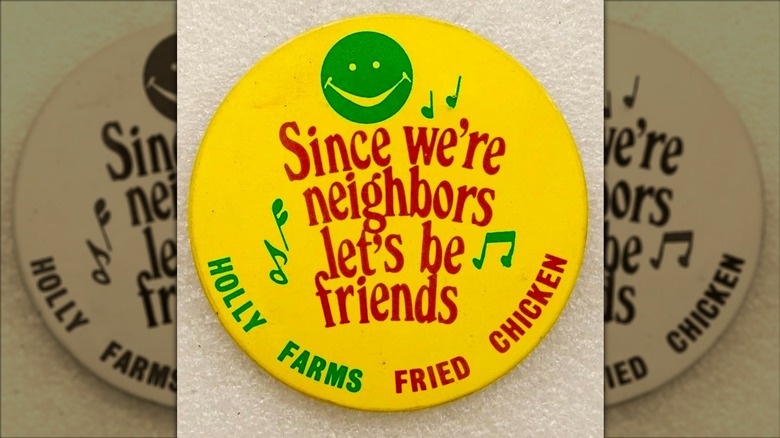
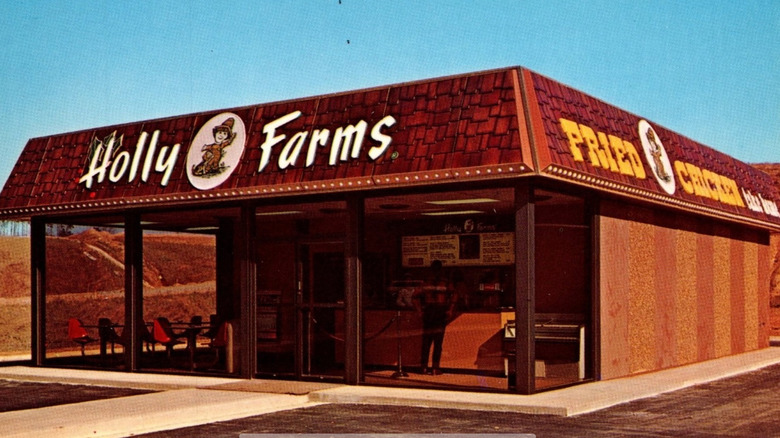
Holly Farms got into the chicken game in 1951, and by the following decade, it became one of the biggest names in fresh poultry. Looking to expand on its good name, Holly Farms opened a chain of fried chicken restaurants by the end of the '60s. In a full-page ad from 1969, Holly Farms Fried Chicken caught the eye with the headline, "We've been in the chicken business for years. Now we're cooking," with a bucket of its new fried product sporting the motto — "Honest-To-Goodness Farm-Fresh Chicken." In addition to the signature product, it sold chicken livers, Holly Taters, slaw, rolls, and salads.
Homer Brookshire, vice president of Holly Farms Fried Chicken, told The Washington Post, in 1981, "Holly Farms has a decided advantage because it is owned by the finest name in chicken. Our customers come to us because of the freshness of our product, not because of side orders." By 1984, it had 113 locations in operation, spread across North Carolina, South Carolina, Virginia, Tennessee, and Washington, D.C. It was that same year that Holly Farms decided to get out of the restaurant business, selling 69 of them to Texas-based chain Golden Fried.
Rival Tyson Foods bought the Holly Farms parent company in 1989 and phased out the brand in the following decade. The Holly Farms name sat dormant until 2009, when Tyson Foods partnered with Food Lion to package a new line of fresh chicken in the latter's chain of grocery stores.
Chicken George
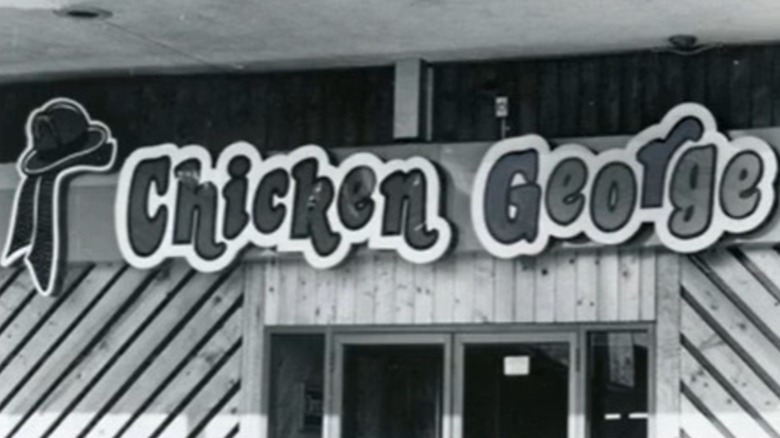
After testing some 300 recipes and sacrificing 17,000 pieces of chicken in the process, Ted Holmes and company found the perfect one to serve up at his new restaurant — Chicken George. The chain took its name from the Alex Haley character from the acclaimed, bestselling 1976 book "Roots," which helped to reinforce its focus on marketing and nourishing the underserved African American community.
Chicken George started selling its secret marinated fried chicken in 1979 in Maryland. The chicken was so good that rivals took notice, and reportedly even sent spies to stores to try and unlock their mystery recipe. In addition to its fried chicken and sides, it also sold chicken gumbo and chicken salad. The company had an eye on 65 company-owned stores and 300 franchises, and even hired Stan Levi, who helped to take U-Haul and IHOP nationwide. However, at its height, Chicken George only had 21 locations spread across the country, with the majority in the Baltimore area.
In 1986, Chicken George filed for bankruptcy, marking the slow beginning to the chain's demise. The final proprietor of Chicken George was Meldon S. Hollis Jr., but he couldn't keep the final four locations afloat, filing for Chapter 7 bankruptcy in 1991. The name lives on in a unrelated chicken chain of the same name in England, which was founded in 1985 by George Cheah.
Sisters Chicken and Biscuits
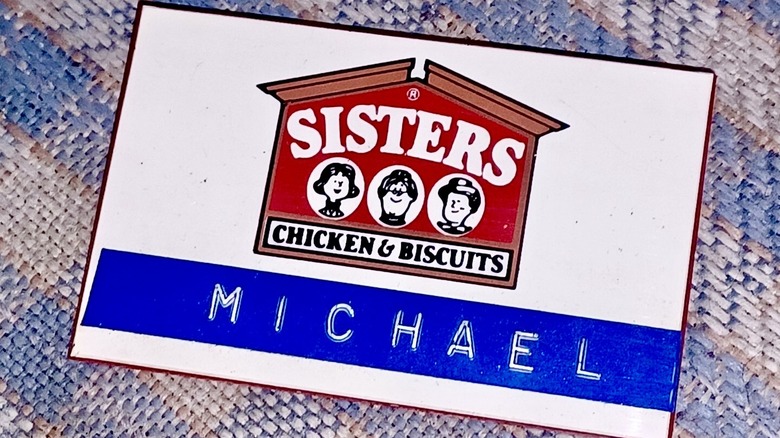
Dave Thomas' mentor was Colonel Harlan Sanders, and he put his skills as a Kentucky Fried Chicken franchisee to work when he opened the first Wendy's in 1969. The old-fashioned hamburger joint was named after his daughter, Melinda, and when it came time to branch out into a fried chicken concept, Thomas named it after Melinda's sisters, hence Sisters Chicken and Biscuits. Sisters was developed by Wendy's franchisee James W. Near, with the first location opening in 1980. Within a year, Sisters became a subsidiary of Wendy's.
The stores looked more like a Cracker Barrel than a Wendy's, with white picket fences and flowers adorning the exterior and the inside filled with antique china and old-school gaslight-like lighting. The menu naturally included various pieces of chicken, and sides like Sisters Rice, baked beans, fried potatoes, corn, and coleslaw. There was also a dedicated space on the menu for various kinds of biscuits and savory options like ham, sausage, and steak, as well as breakfast items.
By 1985, Sisters Chicken and Biscuits had 79 locations, but a year later, the company had written down a net loss of $4.9 million. In order to refocus its attention on burgers, and right on the heels of KFC being sold to Pepsi, Wendy's sold Sisters to franchisee SIS Corp. in 1987. SIS Corp. filed for bankruptcy in 1990, and while Robert Wyman attempted to keep Sisters Chicken and Biscuits cooking, the chain faded into memory by the mid-1990s.