

11 Oat Milk Brands, Ranked Worst To Best
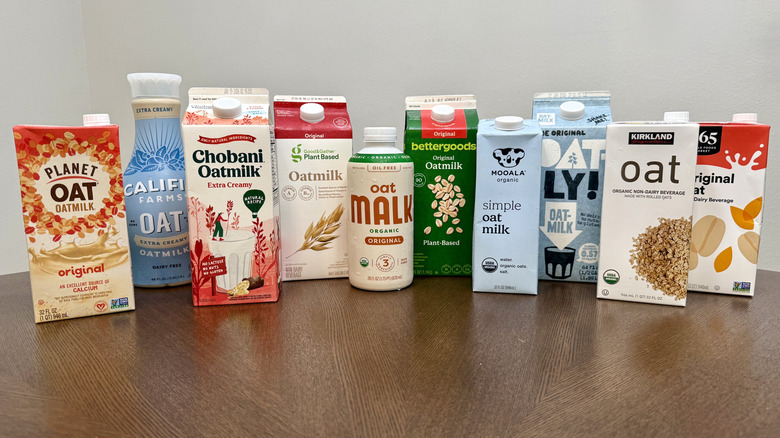
When it comes to plant-based, non-dairy options, grocery store shelves are positively stuffed with choices. From the classic soy milk to newer options like macadamia milk, there are alternatives for any taste. Within each variety, you'll find a growing number of brands vying for influence and shelf space. Oat milk is one of those options that has breached the divide between those looking for dairy alternatives and other consumers who simply like how it tastes. It's become so popular that there are even those who recommend making oat milk in your own home.
Oat milk has a variety of unexpected uses. Oprah's chef makes dairy-free pasta sauce with it, and it's also the best plant milk to use for creamy mac and cheese. Not to mention, some of the best non-dairy ice creams are made of oat milk. More commonly, you'll find it as an option in your favorite coffee shops. It's delicious in both matchas and lattes — and as a fan of both, it's my milk of choice at coffee shops and when I'm making my own shaken espressos and iced matchas at home.
Although I typically go with Oatly, I've long wondered if that's truly the best option. With this tasting, I found my answer. To figure out the very best oat milk, I assembled a variety of brands and tasted each one, giving them a score for texture, flavor, and smell. My favorite varieties may just surprise you.
Malk
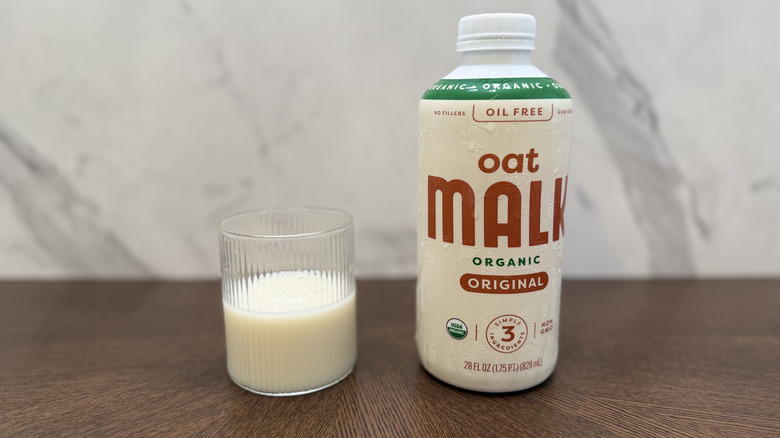
Out of any of the many oat milks I picked up, I was most curious about the brand Malk. The company offers almond, oat, coconut, soy, and cashew options. There's also a growing line of creamers. They're distinctive on the shelf because of the bottle's design. It looks elevated and premium, so I was wholly disappointed when it landed squarely in last place in my ranking.
The label proudly advertises that it only includes three ingredients: filtered water, gluten-free oats, and Himalayan pink salt. As far as a scent goes, this one had a very basic oat milk smell that I've come to recognize as pretty typical among most oat milks. In fact, it's a little strange when it's not there. The flavor very much tasted like overly watered-down oatmeal. In the case of Malk, flavor seems to be less of a focus than keeping a minimum ingredient list. While I didn't put much focus on the ingredient list of these milks, I can imagine this being a big draw for some. Still, with the minimal ingredients, it also meant that Malk offered no additional calcium support with the recommended daily value percentage at zero.
I should also note that Malk was one of the most expensive brands I purchased at $6.49 from Target. At that price point, I definitely expect a better flavor experience, and Malk just doesn't offer that in the brand's oat milk.
365
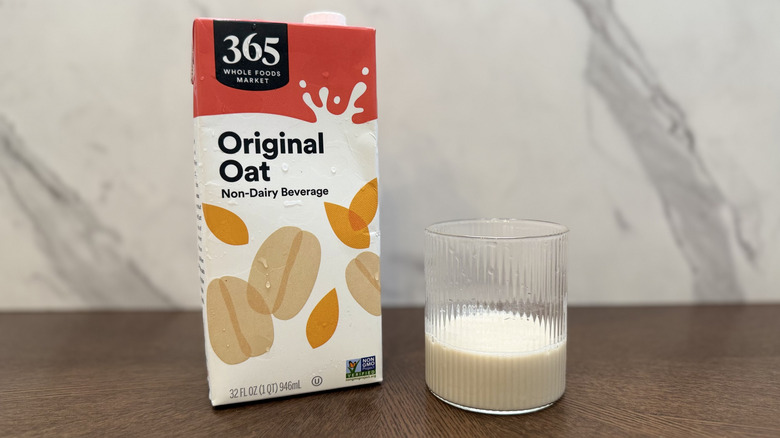
Since oat milk has become so popular, many stores have devised their own versions of the drink. Whole Foods Market, known for its clean, healthy, wholesome brands, offers an oat milk enriched with 350 milligrams of calcium to account for 25% of your daily value. Though my numbers placed Malk and 365 in a dead heat for the lowest spot on this ranking, I gave 365 a slight boost due to its added calcium content.
The added calcium didn't do much for the milk's flavor, unfortunately. Whole Foods Markets' 365 brand oat milk had a taste to it unlike many of the other oat milks. It definitely didn't remind me of oatmeal, as I had come to expect. Instead, it reminded me of some kind of nut milk. Perhaps there was too much salt in this one compared to some of the others.
365 had a very smooth texture which was enjoyable, but it wasn't enough to overcome the flavor. Admittedly, it was so bad that it was one of the few oat milk drinks that I actively disliked the taste of. Most of the others were not as enjoyable to drink on their own as they are mixed in with matcha or espresso, but I didn't enjoy this one at all.
Elmhurst
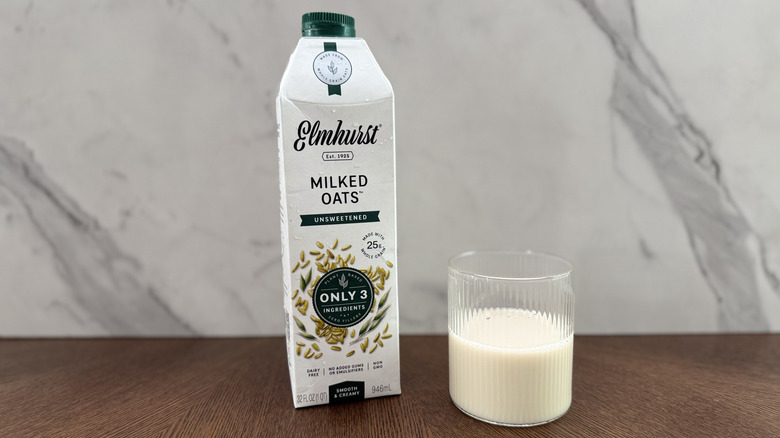
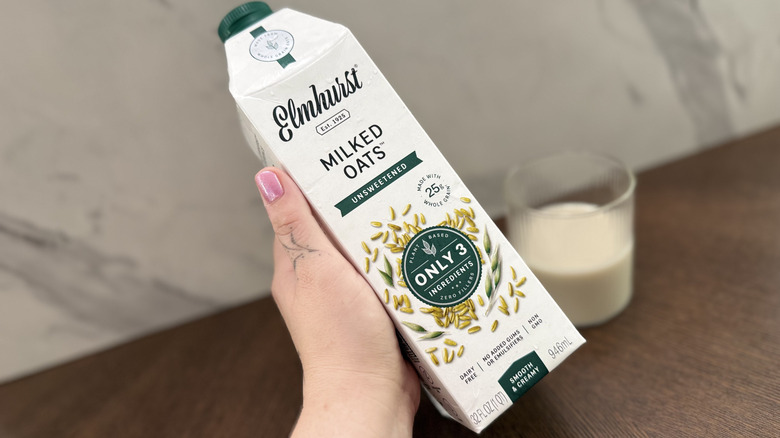
When formulating my list, I knew I wanted to include Elmhurst, but I had quite a bit of trouble finding it in my local stores. Thankfully, the good folks at Elmhurst sent me a sample of the oat milk so I could taste it in person. Unfortunately, the milk just didn't taste like one of the top performers.
Elmhurst's stripped-down, three-ingredient oat milk tasted something like severely watered-down oatmeal. Interestingly, the first ingredient listed here is filtered water rather than oat base or oat flour. The labeling around the container intends to make consumers feel really good about the option, especially compared to those made with oat flour as opposed to whole-grain oats like Elmhurst.
Unfortunately, those good vibes about the ingredients just didn't transfer to great taste delivery. Not to mention, the low number of ingredients translates to no added calcium, which might be a problem for those looking to replace calcium-rich cow's milk. Like Malk, this brand is also rather expensive, easily jumping over that $6 mark in stores, provided you have better luck than I did at finding it.
Planet Oat
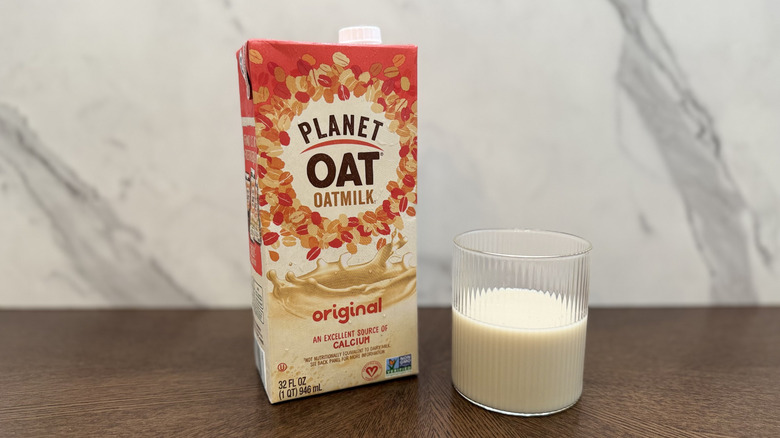
The brands I tried had oat milk among the products offered, but it wasn't the specialty. Planet Oat, however, focuses entirely on oat milk (which should come as no surprise given the name). The brand offers original, barista lovers, extra creamy, and even flavor varieties. It's also the brand of oat milk Dunkin' uses in its drinks.
Though the dark chocolate was tempting, to keep the comparisons on level ground, I sampled Planet Oat's original variety. The ingredients were fairly comparable to other oat milks that don't focus on keeping the ingredient load down. Overall, the flavor was pretty similar to Elmhurst's oat milk, though not quite as watery tasting. Oddly, it had something of a baby formula smell to it, even though you obviously don't want to use oat milk as a baby formula.
With the different areas I considered for my ranking, Elmhurst and Planet Oat ended up with the same score. But because Planet Oat had calcium added to it, I gave a slight advantage here, putting it only slightly ahead of Elmhurst in my ranking.
Good & Gather
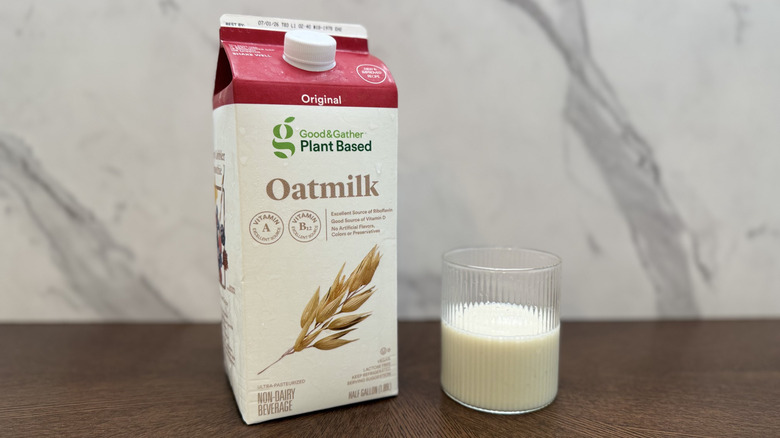
If there's one thing I've learned about Target's store brands, it's that these products aren't to be underestimated. In this case, the brand fell toward the middle of my ranking. I should have suspected as much when the label proudly claimed that the oat milk I was holding had been new and improved. Though an optimistic sentiment, I've never found this statement to instill much hope in the product.
Good & Gather's oat milk had nearly no scent at all, which was very different from some of the other oat milks that I sampled. What it didn't have in scent, it made up for in taste, certainly in quantity over quality. This oat milk was extraordinarily sweet compared to the others, and looking at the ingredients, it was immediately clear why: Sugar is listed right along the rather long list of other included items.
With the addition of sugar, I suspected that this brand of oat milk was trying to be an enjoyable drink all on its own, but I found it just too sweet. Though people certainly drink regular milk all on its own, and Good & Gather may be trying to claim that territory, there was a small amount of additional calcium to make this direct substitution worthwhile.
Oatly
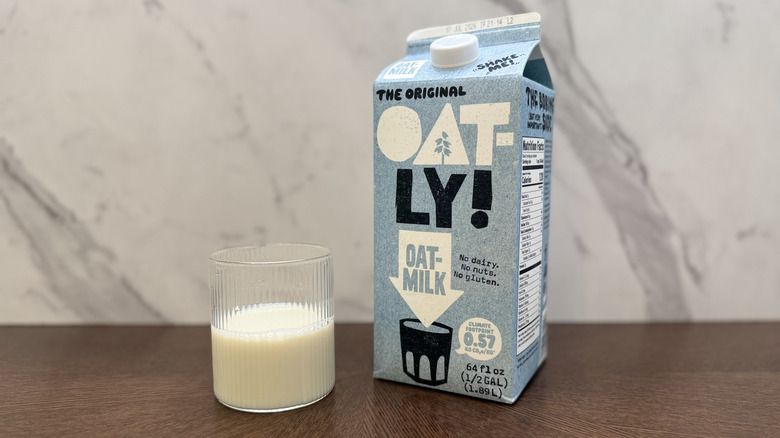
Though oat milk's popularity is still fairly new, the concept is not. In fact, Oatly, the first commercially available oat milk brand, dates back to the era of boy bands in the 1990s. As my go-to brand of oat milk, I was admittedly a little nervous to stack it up against others. Though it may have been the first brand, it wasn't my favorite tasting between the options I tried.
Oatly, like Planet Oat, focuses on oat milks, so there's an impressive range of varieties to choose from, with the original being the option I selected for this tasting. As expected, the original was a very basic oat milk that definitely had that oatmeal-like flavor to it that is far from being something you might happily sip all on its own. Mixed in with other items, the brand is enjoyable, but on its own, it's nothing you would want to really seek out.
It honestly tasted like the most basic of the options, and that's why it landed in the middle of my ranking. You shouldn't be displeased if you see a barista pulling this out to make your favorite matcha, but there are tastier options out there for sure.
Califia Farms
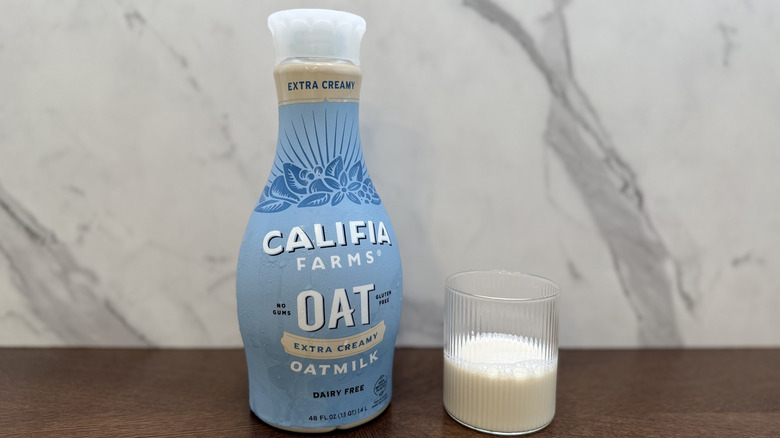
Califia brand items are easy to recognize because of its bottle that is bulbous on the bottom and thinned out toward the cap. There are only two oat milk options in the Califia line: organic and extra creamy. Typically, an extra creamy offering would indicate an originally creamy choice, but with only two options, we must assume that the organic offering is the regular, non-extra creamy choice.
My grocery store only stocked the extra creamy option, so that's what I sampled for this brand. Immediately upon pouring it, I noticed that it looked quite a bit more like regular cow's milk than some of the other brands I had sampled. Thankfully, it was also missing any kind of formula odor. Still, the oats were very forward in taste with only some wateriness. The texture was definitely richer, which made for an enjoyable drinking experience, and while it wasn't one of my top performing oat milks, this is the inflection point where the brands go from okay to pretty good.
Mooala
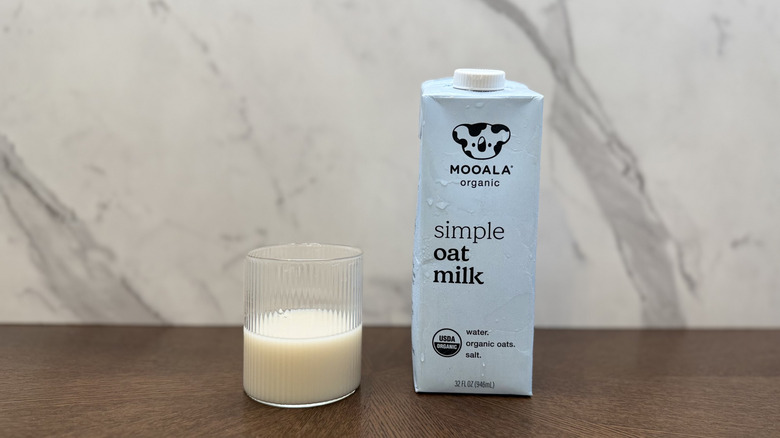
Of all the brands that promised to be simple in ingredients, Mooala was easily my favorite. Plus, Mooala absolutely wins the award for having the cutest oat milk branding of the options I tried. I'm a total sucker for a quality logo, and you can't really get much better than a little cartoon koala. Along with oat milk, Mooala offers varieties of almond milk and banana milk.
The drink itself had a very thin look to it that immediately screamed that it's nothing like regular milk and might not be very appetizing to drink, but I was blown away to discover the flavor itself is pretty enjoyable. It had a richer oatmeal flavor to it than most of the other brands, but it wasn't necessarily extra sweet.
For ingredients, it's a simple collection of filtered water, organic oats, and Himalayan sea salt. With no added sugar or artificial sweeteners, there's only a slight sweetness to the taste. Since this is another brand that's mostly focused on the quality of the ingredient list, there's no added calcium, which some may see as something of a deficit.
Kirkland Signature
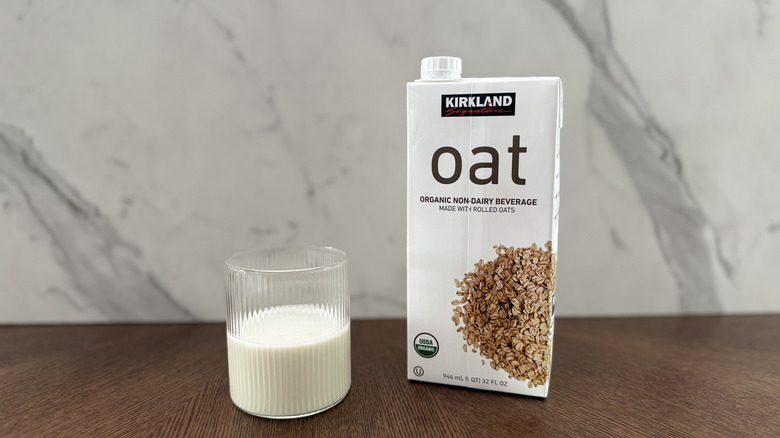
If there's one thing I've learned since becoming a regular Costco shopper, it's that Kirkland Signature groceries aren't to be overlooked. Previously, I had assumed that the lower price tag would mean a less tasty product. After all, at Costco, you'll pay $10.79 for a box of six 32-ounce Kirkland Signature oat milks. With as expensive as some of these brands are, that's quite a deal. I assumed it meant they just wouldn't be as enjoyable. Happily, I was wrong.
Kirkland Signature's oat milk had one of the highest calcium contents at 390 milligrams for 30% of your recommended daily value. Taste-wise, I was reminded of freshly made oatmeal, though the look was something closer to milk and the smell reminded me of opening a fresh bag of granola.
I was hesitant to try this one because it came in shelf-stable containers, but I should've known that like most other Kirkland Signature products, it would be quite a bit better than my expectations allowed it to be. Though the sugar content is minimal, I found the oat milk had a certain sweetness to it.
bettergoods
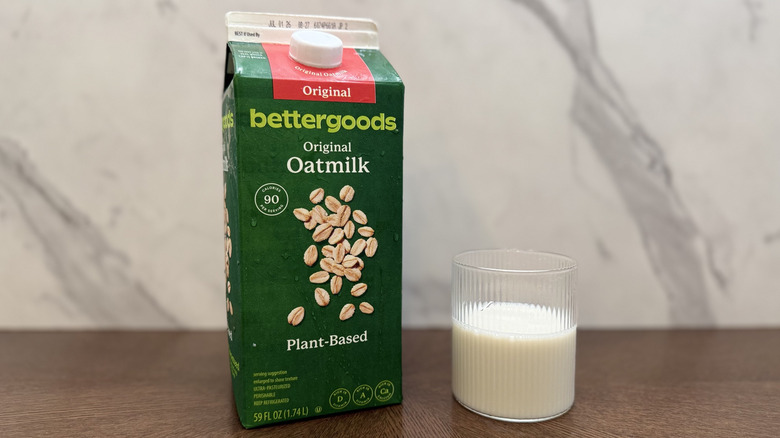
At Walmart, you're likely familiar with the store brand Great Value, but it's far from the only Walmart exclusive brand. In 2024, Walmart launched bettergoods. I expected the same kinds of foods you might get with Great Value, but, like the name suggests, the items seem to be overall better goods.
Bettergoods oat milk is limited in its offerings, but the flavor was definitely better than I expected it to be. Like the other brands, it had a recognizable oatmeal flavor, but it was less overpowering and even a little sweet-tasting. Surprisingly, I found this to be a very good basic oat milk with an impressive white look that creates a convincing substitution for typical cow's milk and a taste similar to Kirkland Signature and Mooala. Between the taste and look, this was definitely one of my favorite offerings, and it was also one of the least expensive.
Chobani
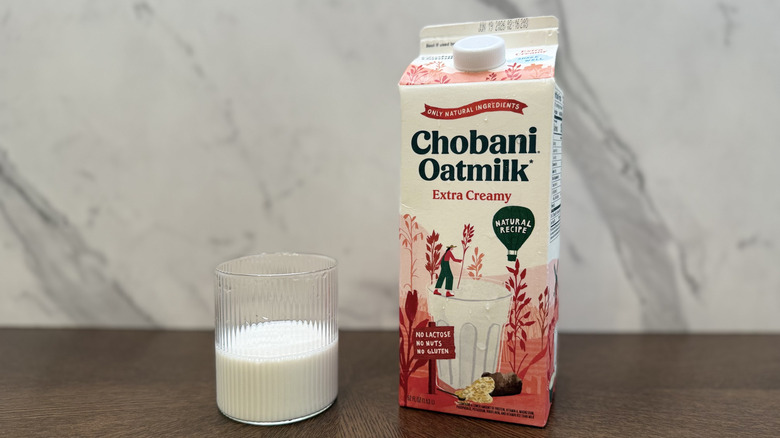
After achieving yogurt dominance, Chobani moved onto oat milk, and it wasn't terribly surprising that the brand's oat milk would be as impressive as it was. Of any of the brands I tried, this was easily the best, boasting a scent, texture, and feel that made for the ideal oat milk.
While some of the oat milks weren't enjoyable to sip on as a basic milk drink, Chobani's oat milk is a surprisingly tasty sip. The extra creamy offering I tried had a slight sweetness to it that comes through on the sniff, revealing that it's different from regular milk, even if it's pretty white for an oat milk.
The flavor is something closer to a fresh, richly prepared bowl of oatmeal than a watery mix of oats and milk like some of the other oat milks trend toward. For most oat milks, I absolutely insist on drinking them as part of a larger recipe, but Chobani does well all on its own and as a mixture.
Methodology
After compiling my list, I sampled each oat milk and gave them a number for taste, smell, and texture or look of the milk. Then, I used these metrics to create a ranking, giving extra weight to flavor. In instances when the sum of the numbers was the same, I was able to use the calcium presence to give advantage to one oat milk over another.
Since many use oat and plant milks as an alternative to regular milk and look for this added calcium, I felt this would be a way to give the most calcium-abundant offerings an extra boost. I also used the various oat milks in my homemade lattes and matchas throughout the week, comparing how they tasted when mixed.